
The blunt bob looks completely different depending on length, face shape, and hair texture. Each style below comes with a realistic styling time and the exact words to use at your salon appointment.
What Makes the Blunt Bob Different
What Makes the Blunt Bob Different
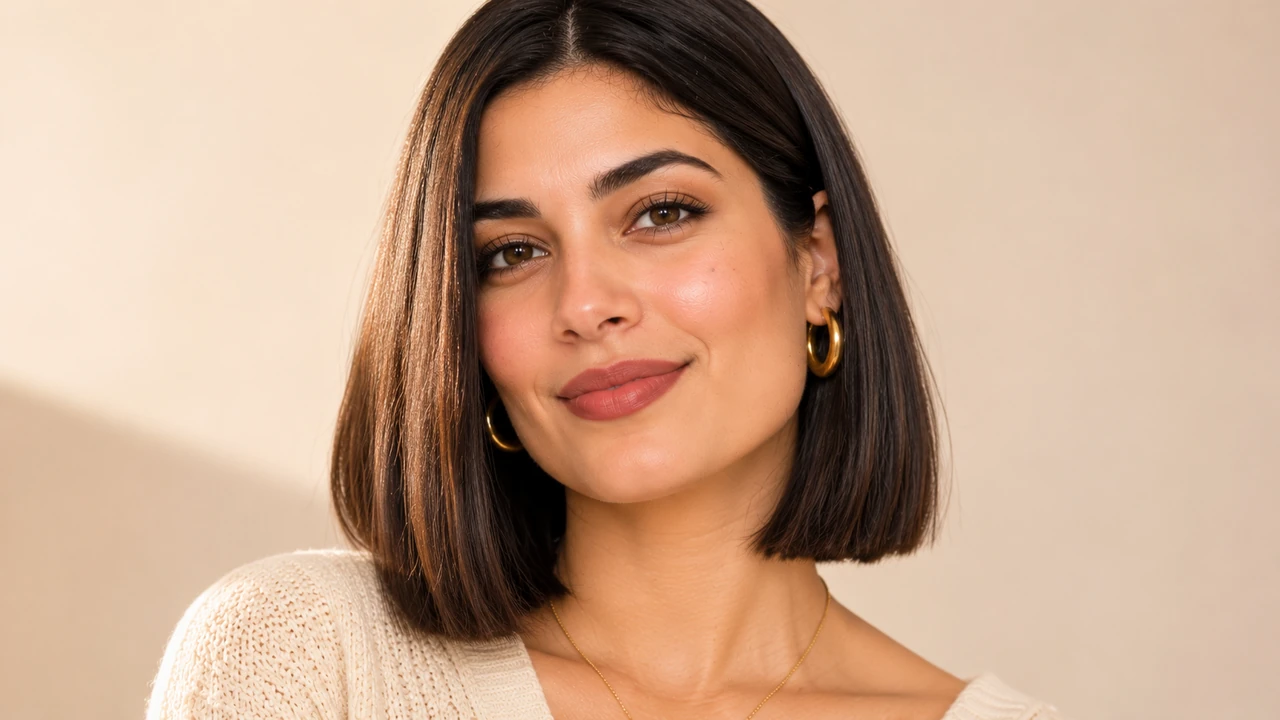
Three visually distinct finishes are driving the blunt bob right now, and they look nothing alike. The glass-hair bob is mirror-smooth at the ends, sealed with a shine serum and a flat iron for a lacquered, high-polish effect. The Korean silhouette has a rounded crown and a perimeter cut that sits heavy and low with no graduation toward the nape, giving the style a graphic, structured quality. The French-girl undone texture sits at the other end, with air-dried or rough-dried movement and a deliberately imperfect finish.
These three directions are a clear shift from what was popular in 2024 and 2025. The 2024 version leaned on the beveled C-curl blow-out, which gave the ends a soft inward curve. In 2025, curtain bangs became the default pairing, softening the cut’s sharper edges. The current blunt bob drops the middle ground and splits into two extremes: ultra-polished glass hair or purposely undone texture, with curtain bangs now optional rather than expected.
Technically, “blunt” describes how the perimeter is cut. A blunt cut removes all graduation and tapering from the ends, which creates a denser, heavier appearance at the hem line. That density is what makes the style look intentional, whether the finish is sleek or tousled.
Blunt Bob by Length: Short, Chin, Jaw, and Shoulder Options
Blunt Bob by Length: Short, Chin, Jaw, and Shoulder Options


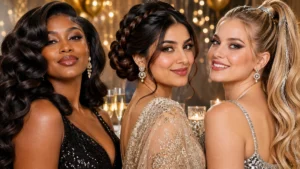
Length is the first decision to make before thinking about face shape or texture. It determines how long you spend styling in the morning and how quickly the cut grows out. The four most popular lengths each fit a different schedule and silhouette.
Short Blunt Bob (Ear to Nape)
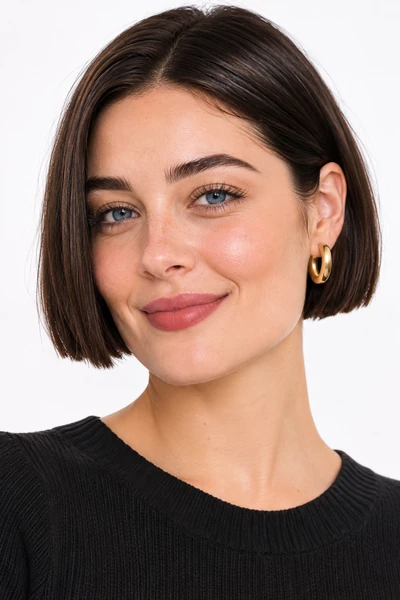
This length works best for oval and heart face shapes with fine-to-medium density. It sits between the earlobe and the nape of the neck, and reads sharp and precise right after a fresh cut. Daily styling takes 5 to 10 minutes with a flat iron or round brush. Because grow-out becomes visible fastest here, most stylists recommend a trim every 5 to 6 weeks. At your appointment, ask for: “A blunt bob that hits between my earlobe and the nape of my neck. Keep the perimeter flat with no graduation. No stacking.”
Chin-Length Blunt Bob
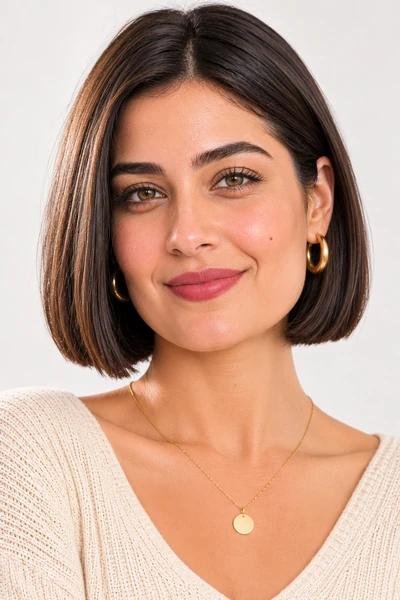
The chin-length version works for oval, long, and oblong face shapes, and suits straight, wavy, and fine hair without much adjustment. Daily styling runs 10 to 15 minutes, and the length is just long enough to tuck behind the ear for a slightly different look without reaching for extra product. At your appointment, ask for: “A one-length bob that hits at my chin. Keep the bottom edge straight and parallel to the floor with no layering.”
Jaw-Length Blunt Bob
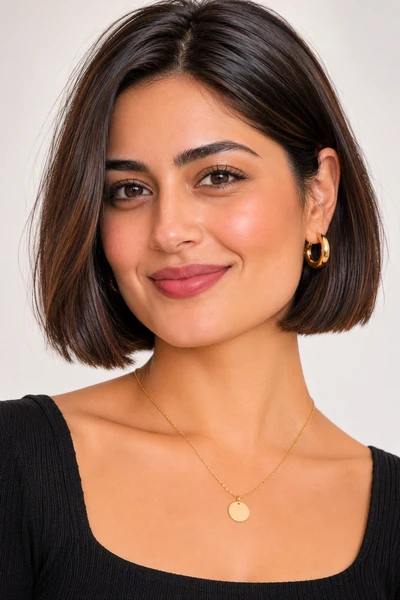
The jaw-length bob is best for heart and diamond face shapes because the blunt perimeter weight lands at the jaw, creating natural balance from top to bottom. It sits in a sweet spot between short and medium, long enough to tuck behind the ear and short enough to feel intentional rather than grown-out. Styling takes 10 to 20 minutes depending on thickness, and this length pairs easily with a curtain bang if you want to soften the forehead area. At your appointment, ask for: “A blunt bob landing at my jawline. No tapering at the nape, just a clean horizontal line.”
Shoulder-Length Blunt Bob (Blunt Lob)
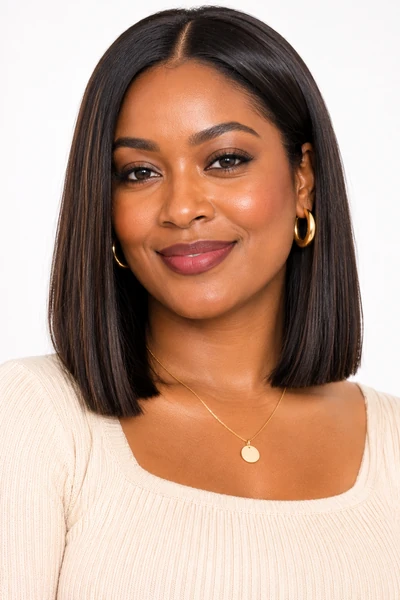
The lob haircut suits all face shapes and handles thick hair particularly well because the extra length allows bulk to distribute naturally, preventing the silhouette from looking top-heavy. It is also the lowest-maintenance option because grow-out is slower to show and wavy hair can air-dry without looking unkempt. Styling with heat takes 15 to 25 minutes, but wavy hair can skip the flat iron entirely with the right curl cream. At your appointment, ask for: “A blunt lob, one length, hitting the shoulder, with no graduation or taper. Just a clean blunt line.”
Browse our short bob styles roundup to see 55 blunt cut bob styles and classic variations across different lengths and silhouettes before you commit to a blunt perimeter.
Which Blunt Bob Suits Your Face Shape
Which Blunt Bob Suits Your Face Shape
If you are unsure of your face shape, use our face shape guide before reading below. Oval faces have the most flexibility — the chin and jaw lengths are especially photogenic, so your decision can focus entirely on lifestyle and texture rather than shape-flattery. Heart-shaped faces are a natural match for a jaw-length bob, where the perimeter weight lands at the narrowest point and creates visual balance from top to bottom; a center part enhances the effect by drawing the eye downward from the wider forehead.
Round faces do better with chin-length and longer blunt bobs, which create a vertical line that visually lengthens the face — a center part amplifies this without any extra styling effort. Square faces benefit from a jaw-length bob with curtain bangs or a soft side part, and the rounded Korean silhouette also works well because its curved crown softens the forehead corners naturally. Long or oblong faces look best with chin-length and short blunt bobs, which draw the eye outward and reduce the appearance of extra vertical length; a one-length cut without internal layers keeps all perimeter weight visible as a horizontal line.
Which Blunt Bob Suits Your Hair Type

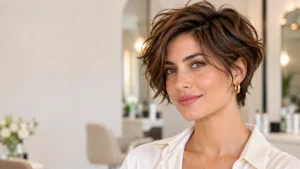
Which Blunt Bob Suits Your Hair Type
Blunt Bob for Fine or Thin Hair
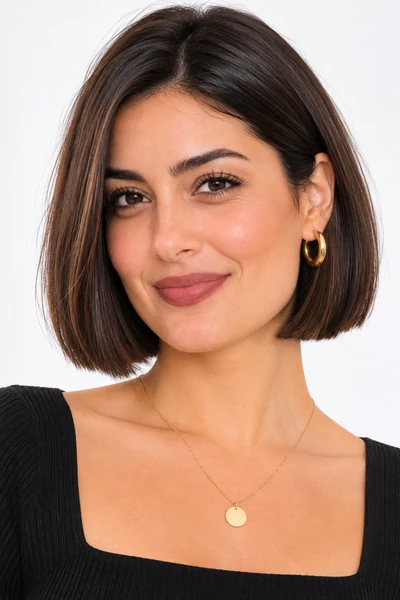
The blunt cut is one of the most genuinely useful haircuts for fine hair because removing all graduation concentrates weight at the perimeter, making the ends appear thicker and denser than they actually are. Chin-length and shorter cuts work best, since the shorter the bob, the more visible the weight concentration becomes at the hem. Avoid adding interior layers, since they remove the very weight that makes fine hair look full at the perimeter.
Daily styling takes about 10 minutes using a round brush blow-dry followed by a short blast of cool air. Avoid applying heavy conditioners directly to the ends before heat styling, as they soften the blunt line and make fine hair look weighed down. For more volume-building techniques, see our fine hair styles roundup.
Blunt Bob for Thick Hair
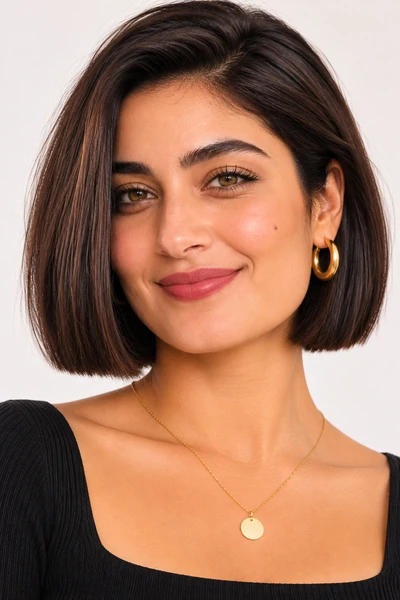
Thick hair holds the blunt shape better than any other texture because the natural density at the perimeter stays in place without product. Shoulder-length and jaw-length cuts work best because the extra length gives the weight somewhere to go, preventing the silhouette from looking top-heavy. A blunt lob is popular with thick hair because it keeps the shape clean without requiring aggressive thinning of the interior.
When booking your appointment, give your stylist this guidance: “I have thick hair. Please point-cut the interior to remove bulk without disturbing the blunt perimeter.” Point-cutting removes weight invisibly, so the outside line stays sharp while the hair sits flat and manageable day to day. Finish with a flat iron in sections (20 to 25 minutes for most thicknesses) and a lightweight shine serum on the ends.
Blunt Bob for Wavy Hair
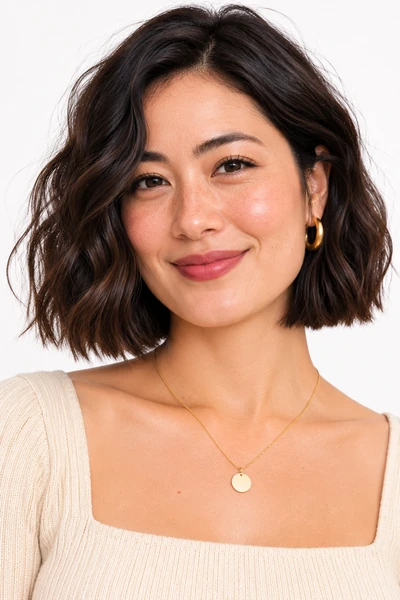
Natural wave is an asset in a blunt bob because it adds movement to the cut without any extra styling effort. Jaw-to-shoulder lengths work best for wavy hair because they allow the wave pattern to complete a full curl before the ends, giving the perimeter a natural softness rather than a frizzy edge. Air-drying is a fully valid styling option for this variation.
To style a wavy blunt bob without heat, apply a curl cream or styling milk to damp hair, scrunch lightly, and air-dry for 30 to 45 minutes. If you prefer a sleeker result, rough-dry with a diffuser first and then run a flat iron over the ends only to smooth the perimeter.
Blunt Bob for Coily and Afro-Textured Hair
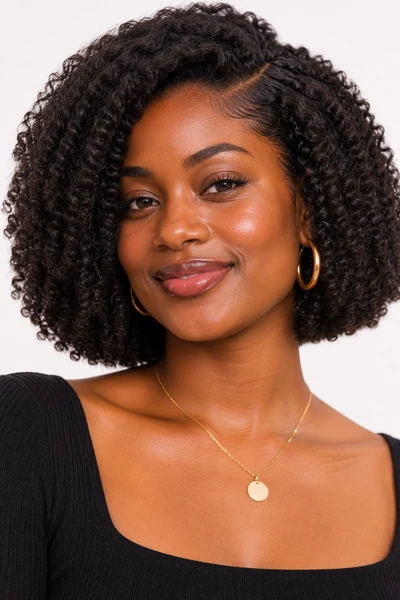
The blunt bob works well on coily and 4C hair, but the cut needs to account for shrinkage, and this is the step that separates a great result from a disappointing one. A stylist must cut at the stretched length target rather than the resting curl length, or the finished bob will sit significantly shorter than intended. Cutting in sections while the hair is stretched gives the most control over the final perimeter line.
When booking your appointment, share this script: “I want a blunt bob at [target length] when my hair is stretched. Please cut in sections to account for shrinkage and keep the perimeter line clean.” For styling, a blow-out gives the sleek glass-hair finish; a twist-out or braid-out creates a textured blunt silhouette; and a rod-set produces defined coils with a clean, visible perimeter.
Blunt Bob Maintenance, Styling Time, and Grow-Out Tips
Blunt Bob Maintenance, Styling Time, and Grow-Out Tips
A precision blunt bob needs a trim every 5 to 8 weeks to keep the perimeter sharp and the shape visible. The shorter the bob, the faster the grown-out ends become noticeable, so a short blunt bob at the nape needs attention closer to the 5-week mark while a blunt lob can stretch to 8 weeks. Precision trims are often priced higher than a standard trim, so ask about maintenance pricing upfront before you commit to the cut.
Daily styling time varies by length. Thicker hair and older tools will add time to each estimate, so use these as planning guides rather than firm guarantees.
- Short blunt bob (ear to nape): 5 to 15 minutes
- Chin-length blunt bob: 10 to 20 minutes
- Jaw-length blunt bob: 10 to 20 minutes
- Shoulder-length blunt lob: 15 to 25 minutes
At weeks 5 to 8, the blunt perimeter naturally softens and the ends begin to look rounded rather than sharp. This is normal. At that point you have three practical choices: book a trim to restore the original line, let it grow into a longer blunt style, or add a curtain bang to refresh the shape without changing the overall length.
For tools, a 1 to 1.25-inch flat iron works best for chin-length and jaw-length bobs, while a 1.5-inch plate suits shoulder-length versions. A paddle brush speeds up the blow-dry stage, and a lightweight shine serum on the ends delivers the glass-hair finish. The American Academy of Dermatology notes that repeated high-heat styling can weaken the hair shaft over time, so use a heat protectant before every flat-iron session.
FAQ: Blunt Bob
FAQ: Blunt Bob


What is the difference between a blunt bob and a layered bob?
A blunt bob is cut with a straight horizontal line at the perimeter, with no graduation and no layers. A layered bob has sections of hair cut at different lengths throughout the style to add texture and movement. The blunt version appears denser and sharper at the ends; the layered version looks softer and lighter overall.
Does a blunt bob work on curly hair?
Yes, and it works particularly well when the stylist accounts for your curl pattern during the cut. On naturally curly or coily hair, ask your stylist to cut the length while the hair is stretched and to keep the perimeter clean and consistent across sections. The result can be styled sleek with a blow-out or worn naturally for a textured blunt silhouette.
How often do you need to trim a blunt bob?
Every 5 to 8 weeks is the standard recommendation for keeping a blunt line looking intentional. The shorter the bob, the faster a grown-out perimeter becomes noticeable, so short bobs at the nape typically need trims closer to the 5-week mark. Shoulder-length blunt lobs can usually stretch closer to 8 weeks between appointments.
Is a blunt bob high maintenance?
The cut needs regular trims to keep the line looking sharp. Daily styling is straightforward, and most lengths take 10 to 20 minutes with a flat iron or round brush. The shoulder-length blunt lob is the lowest-maintenance option because grow-out is slowest to show and air-drying works for wavy and textured hair.
What is a blunt lob?
A blunt lob is a one-length long bob that falls at or just below the shoulder, with a clean, straight perimeter and no graduation or tapering. It suits almost all face shapes and hair types because the extra length softens the graphic quality of the blunt line. It is also the most forgiving length in terms of grow-out, which makes it a popular starting point for people who want the structure without the maximum upkeep commitment.
Our pixie versus bob comparison walks through the key differences in maintenance, styling time, and face-shape suitability side by side if you are still deciding between a pixie and a longer bob length.
Found your blunt bob match? Save this post to your Pinterest board and bring it to your stylist at your next appointment. Every style above comes with a stylist script, a realistic styling time, and a face shape note.


Your email address will not be published. Required fields are marked *