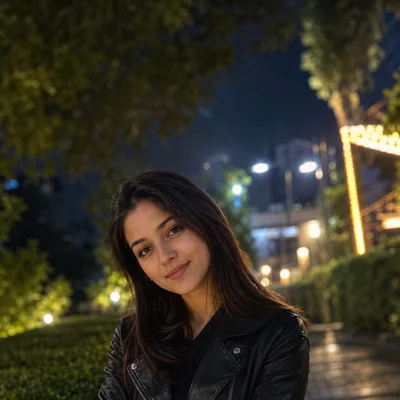
Long hair that just hangs there can start to feel flat, heavy, and a little shapeless after a while, no matter how healthy it actually is. Long layered haircuts fix that problem without asking you to give up length, because the right layer placement adds lift at the crown, movement through the ends, and a shape that catches the light instead of falling like one flat curtain. This guide pulls together 20 long layered haircuts, each paired with the face shape and hair type it flatters most, the exact words to use with your stylist, and an honest maintenance rating so you know what you are actually signing up for. Save your favorites, screenshot the salon scripts, and bring them straight into your next appointment.
What Are Long Layered Haircuts (and Why They Add Movement)
What Are Long Layered Haircuts (and Why They Add Movement)
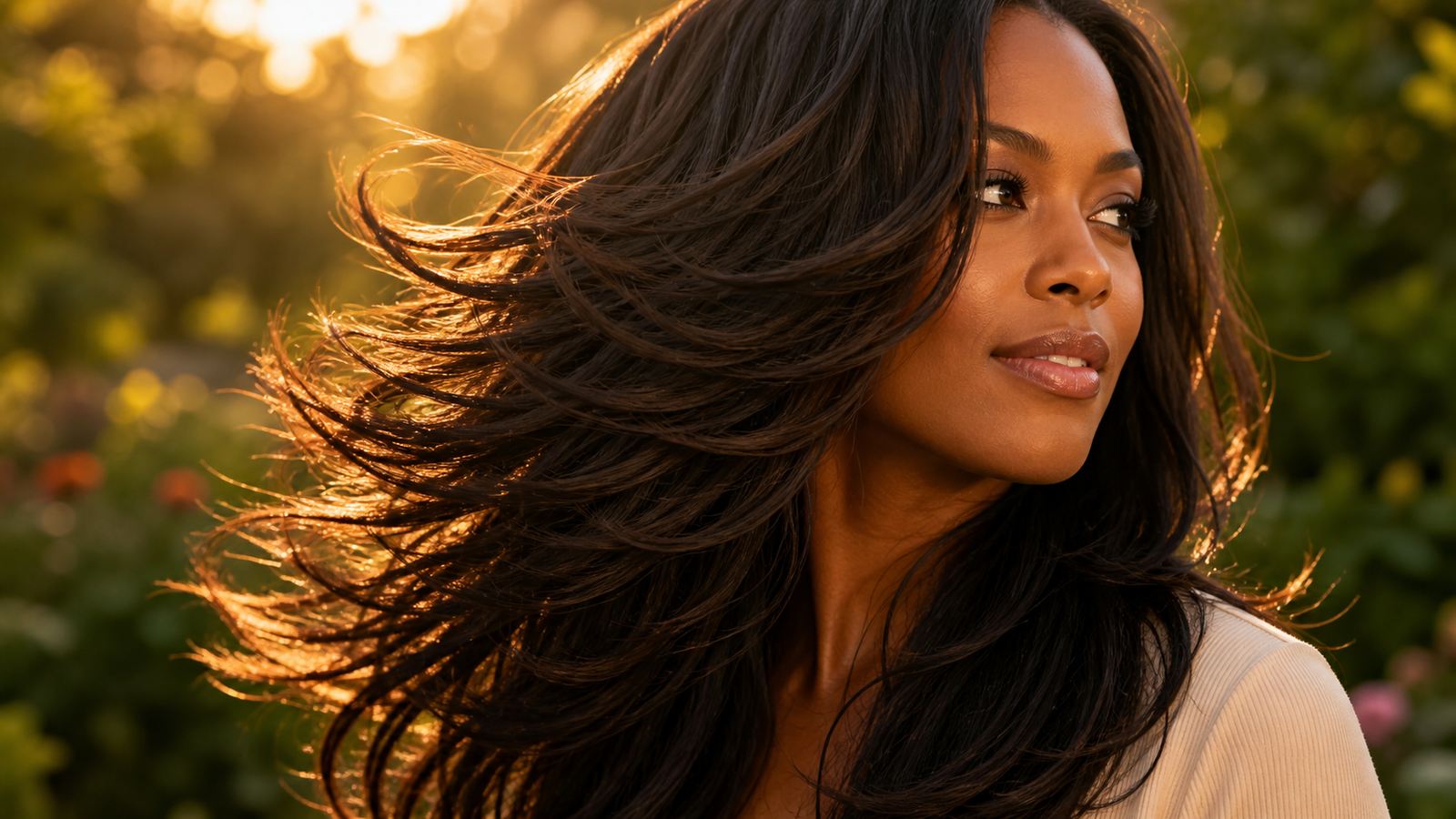
Layering means cutting sections of hair at different lengths throughout the style instead of trimming everything to one uniform length at the bottom. A blunt cut vs layered cut comparison makes the difference obvious: a blunt cut is one heavy length that swings as a single sheet, while a layered cut removes weight in stages so the ends move independently and the whole style looks lighter and more dimensional. Long layers work on straight, wavy, curly, and coily hair, and they flatter fine and thick densities alike, but where a stylist places the shortest layer changes everything about the final shape.
If you want a broader look at how long hair can wear beyond layering alone, our guide to long hair styles covers plenty of other options worth bookmarking. The sections below break down exactly how layer placement should shift based on your face shape and your hair's natural texture and density, so keep reading before you pick a favorite from the gallery.
How to Choose the Right Long Layered Cut for Your Hair and Face
How to Choose the Right Long Layered Cut for Your Hair and Face
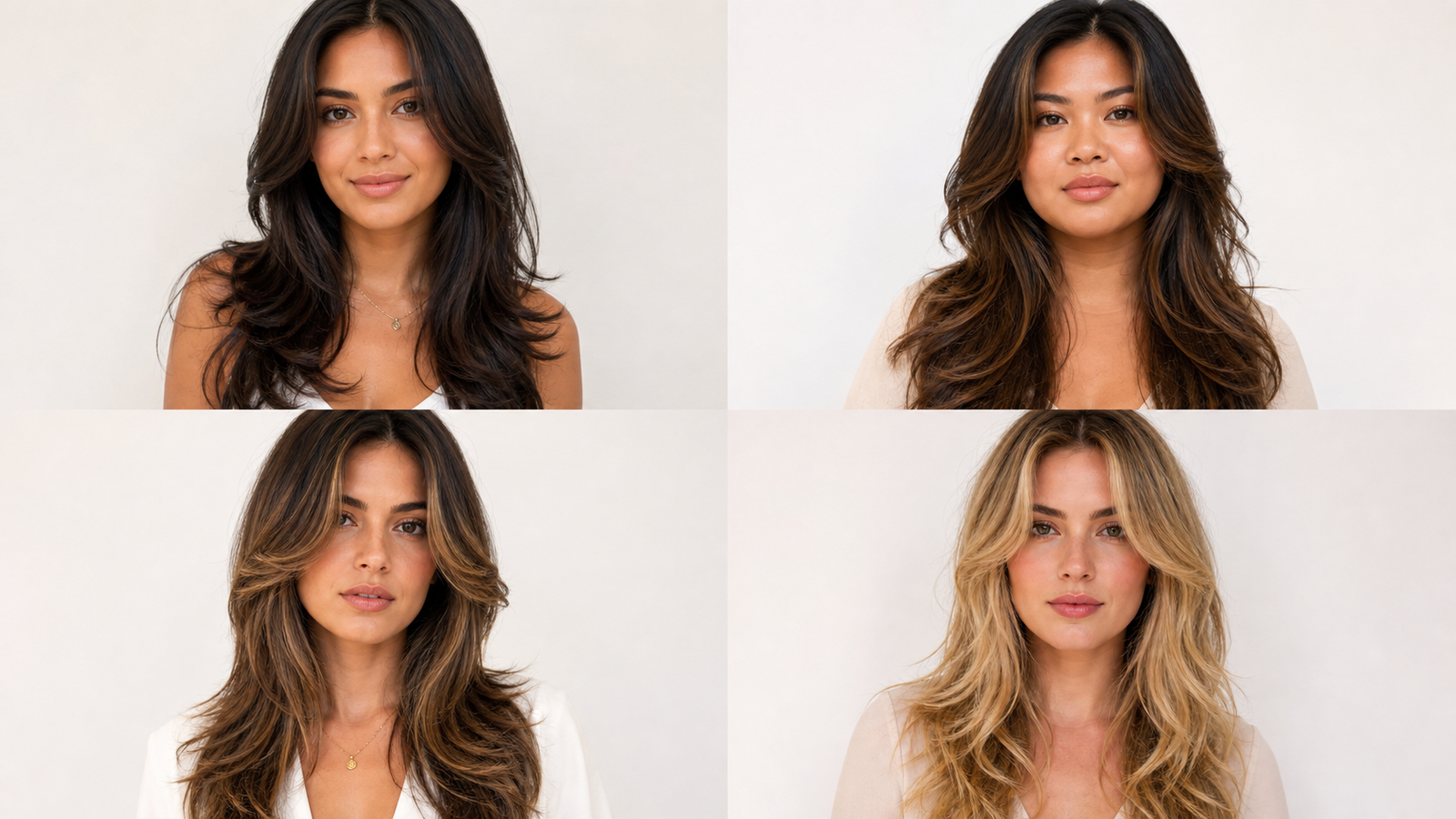
Round faces tend to look most balanced with face-framing layers that start below the chin, since shorter layers cut right at the cheekbone can widen the face instead of elongating it. Square faces do well with soft, feathered layers around the jaw that soften strong angles rather than choppy layers that emphasize them further. Heart-shaped faces, which are wider at the forehead and narrower at the chin, benefit from layers that add width and fullness right around the jawline to balance out the proportions. Oval and long face shapes have the most flexibility of all and can wear almost any layer placement, from short face-framing pieces to layers cut through the full length.
For a deeper breakdown of which cuts flatter which features, our face shape guide walks through every shape in more detail.
Hair type and density matter just as much as face shape when you are deciding where layers should fall. Thick, dense hair can handle heavier, choppier layers cut throughout the length because there is enough hair underneath to keep the style from ever looking sparse or thin. Fine hair usually looks fuller with layers concentrated around the face rather than layers cut evenly through the whole head, since removing weight everywhere on fine strands can make hair look thinner instead of more voluminous. Curly and coily hair needs layer placement that accounts for how much the curl pattern will shrink up once it fully dries, which is why a curl-experienced stylist should always cut curly layers dry or with the curl pattern already activated.
How to talk to your stylist: the right wording in the chair makes the biggest difference between getting the photo you saved and getting something close but not quite right. Try one of these exact phrases, adjusted to your own hair goals:
- "Face-framing layers starting at the chin, not the cheekbone."
- "Point-cut ends for texture, not a lot of length removed."
- "Long layers with movement, but don't take weight out of the length."
- "Curl-by-curl dry cutting so the layers sit right once it dries."
20 Long Layered Haircuts to Save and Show Your Stylist
20 Long Layered Haircuts to Save and Show Your Stylist
Every style below follows the same format so you can compare them at a glance instead of guessing from a photo alone. Each entry tells you who the cut suits by face shape and hair density, gives you the exact salon wording to copy, and rates the real-world maintenance level with an honest styling time estimate. Take a screenshot of any style that catches your eye, and don't be shy about bringing the salon script straight into your appointment.
Classic Face-Framing Layers
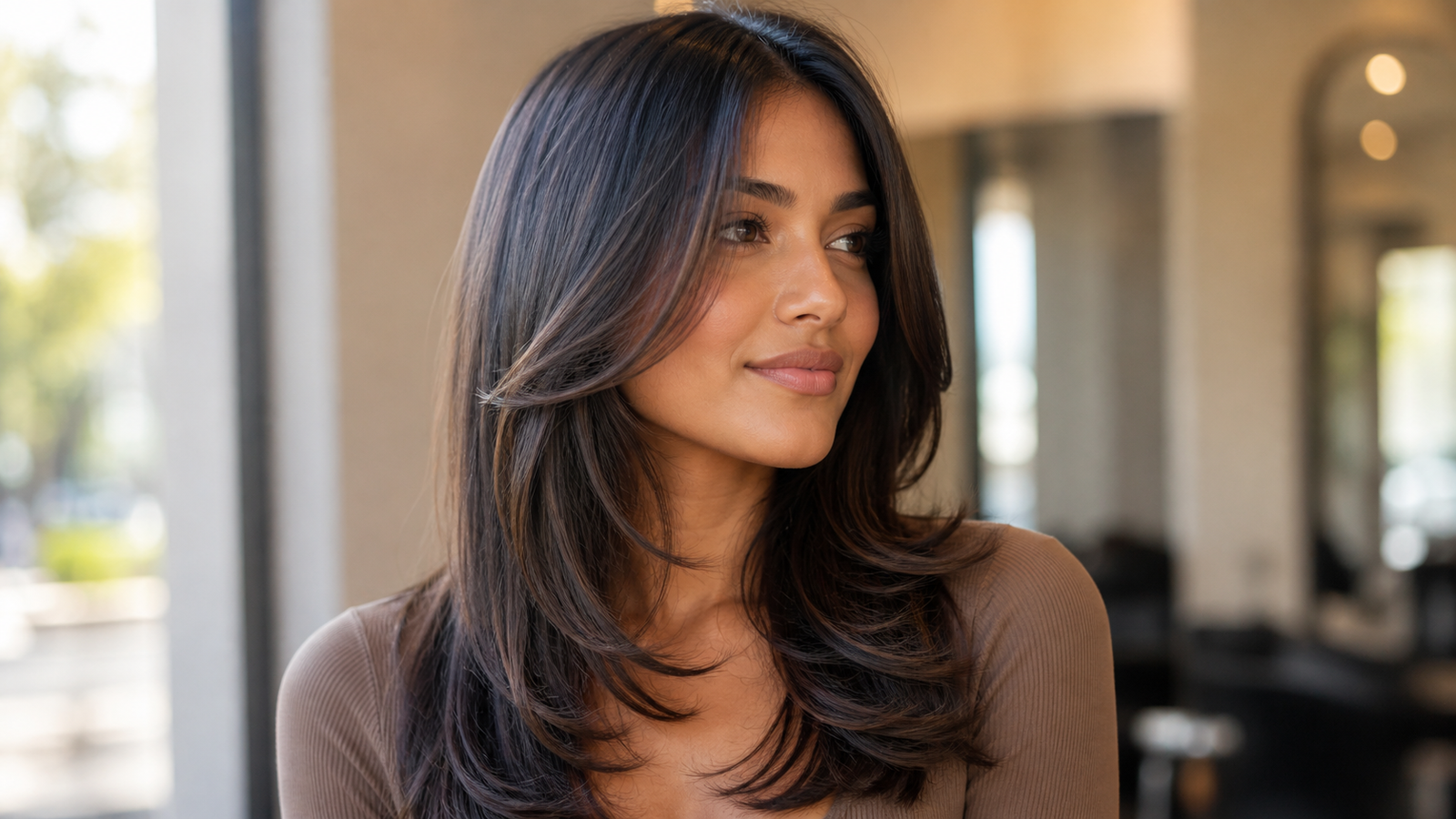
Classic face-framing layers keep the bulk of your length intact while adding shorter pieces around the face to soften and brighten your features. This style suits round or oval faces with medium-to-thick, straight-to-wavy hair, since the shorter framing pieces need enough density to hold their shape without looking wispy. Ask your stylist for "face-framing layers starting at the cheekbone, blended into the rest of the length" to get this exact look.
- Maintenance: Medium, about 10 minutes with a round brush to curve the face pieces inward. Grows out gently and typically needs a refresh trim every 3 to 4 months to keep the framing crisp.
Curtain Bangs With Long Layers
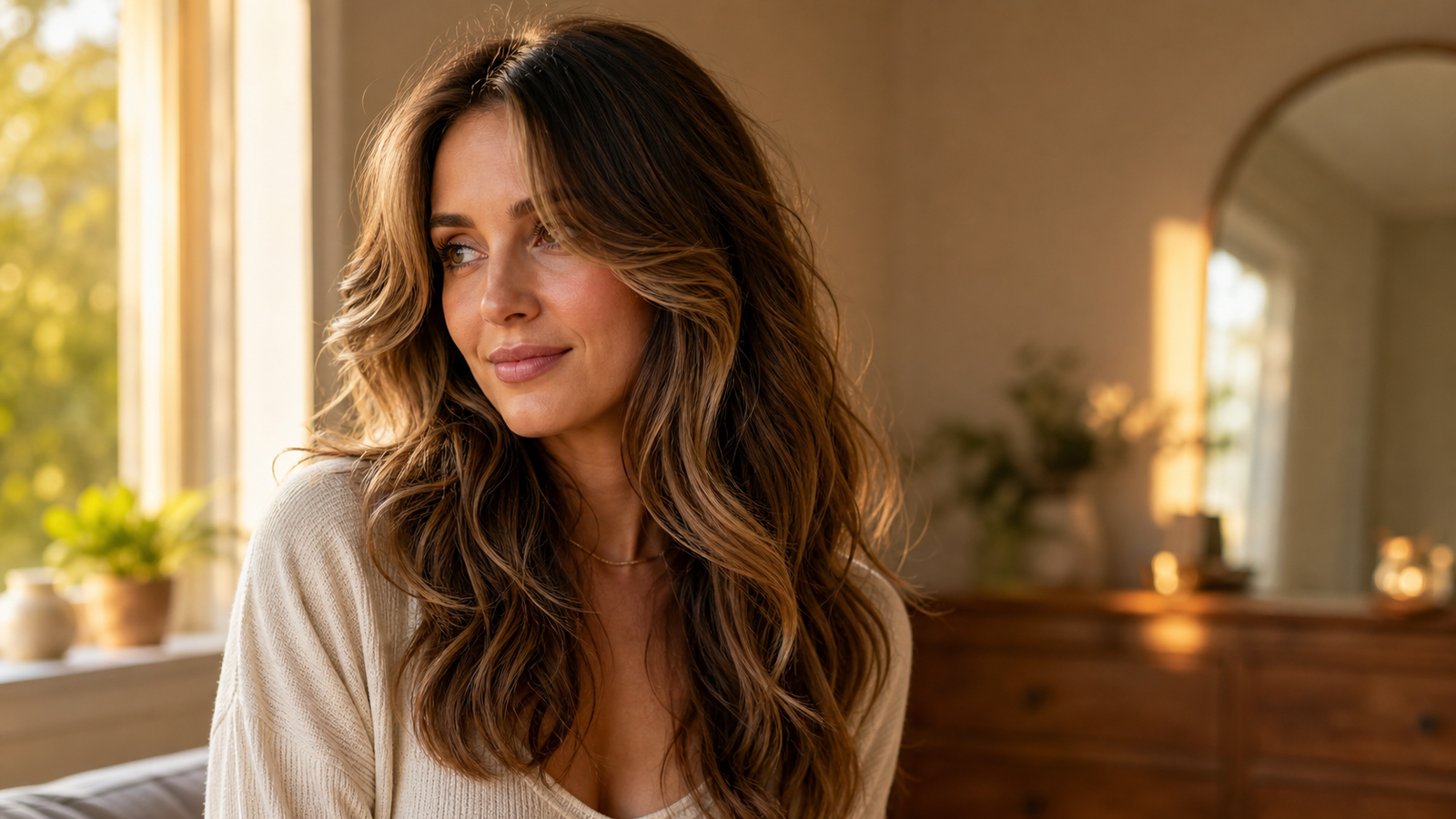
Curtain bangs split down the middle and sweep away from the face, working with long layers underneath to create one continuous, face-opening shape. This combination flatters nearly every face shape but works best on medium density hair with some natural wave, since pin-straight fine hair may need extra styling to keep the curtain shape from falling flat. Tell your stylist you want "curtain bangs blended into long layers, cut to hit at the cheekbone."
- Maintenance: Medium-high, roughly 10 to 15 minutes daily with a round brush or wand to curl the bangs away from the face. Bangs need a trim every 4 to 6 weeks to stay in shape, even though the length behind them can go longer between visits.
Butterfly Cut Layers
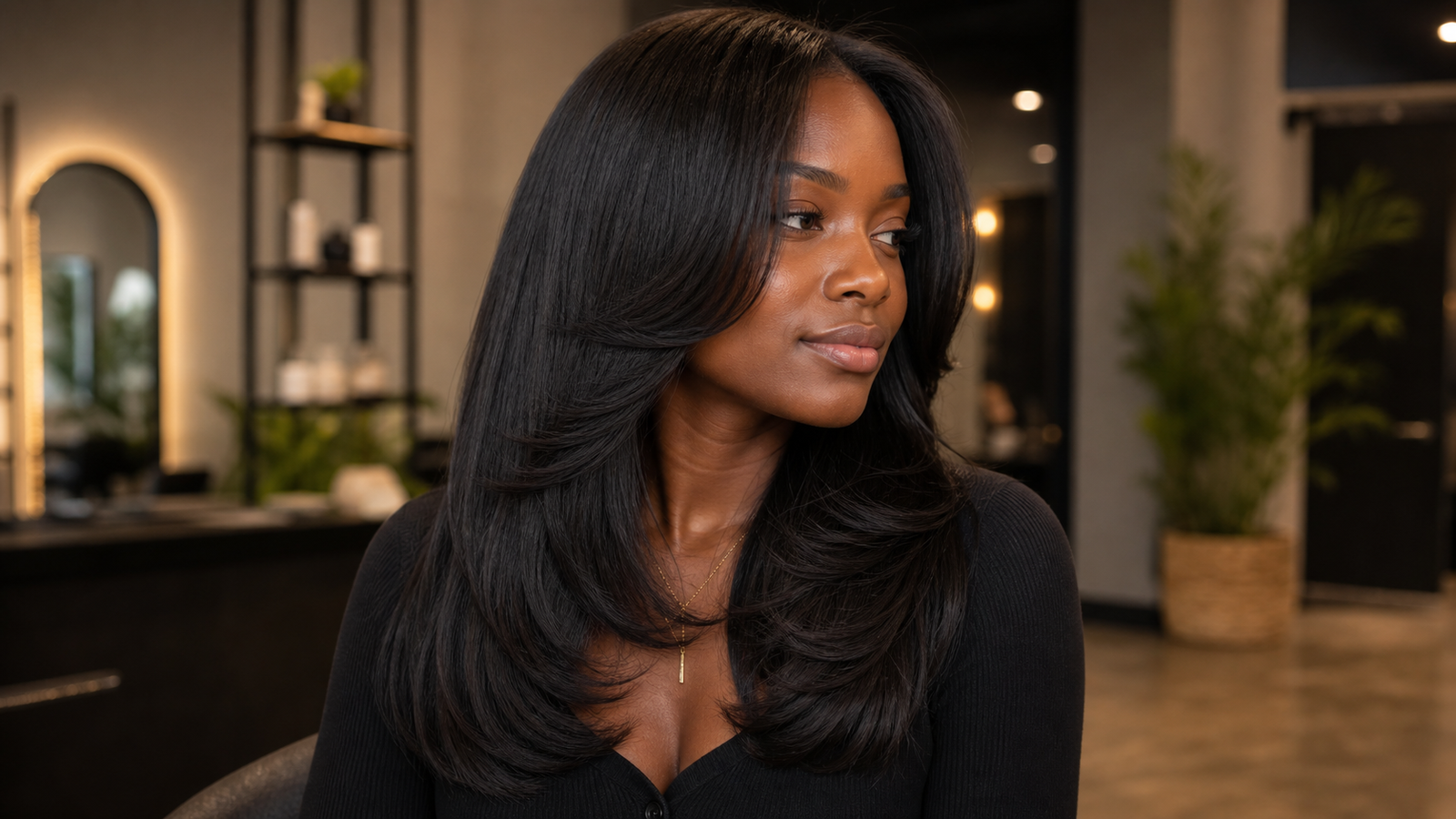
The butterfly cut uses short, voluminous layers on top that gradually get longer toward the ends, so the silhouette looks like wings when your hair is down. It works best on thick to medium density hair with straight to wavy texture, since the shortest top layers need enough body to fan out rather than lie flat against the head. Say "butterfly layers, short on top and blending into long layers underneath" to get this exact structure.
- Maintenance: Medium, about 10 minutes with a round brush and light volumizing spray at the roots. Grows out into a softer, more subtle version of itself and can usually go 4 to 5 months before it needs reshaping.
Long Shag With Feathered Ends

A long shag is built entirely around choppy, feathered layers from the crown all the way to the ends, giving the whole style a lived-in, textured finish. It suits thick to medium hair with natural wave or curl best, since the choppy layers rely on texture to separate rather than lying in one smooth sheet. Ask for "a long shag with heavy feathering through the ends and point-cut layers throughout" to get the full effect.
- Maintenance: High, expect 15 to 20 minutes with a texturizing spray and either a wand or diffuser depending on your natural texture. This style needs a trim every 8 to 10 weeks to keep the choppy shape from growing into something shapeless.
Choppy Layers for Thick Hair
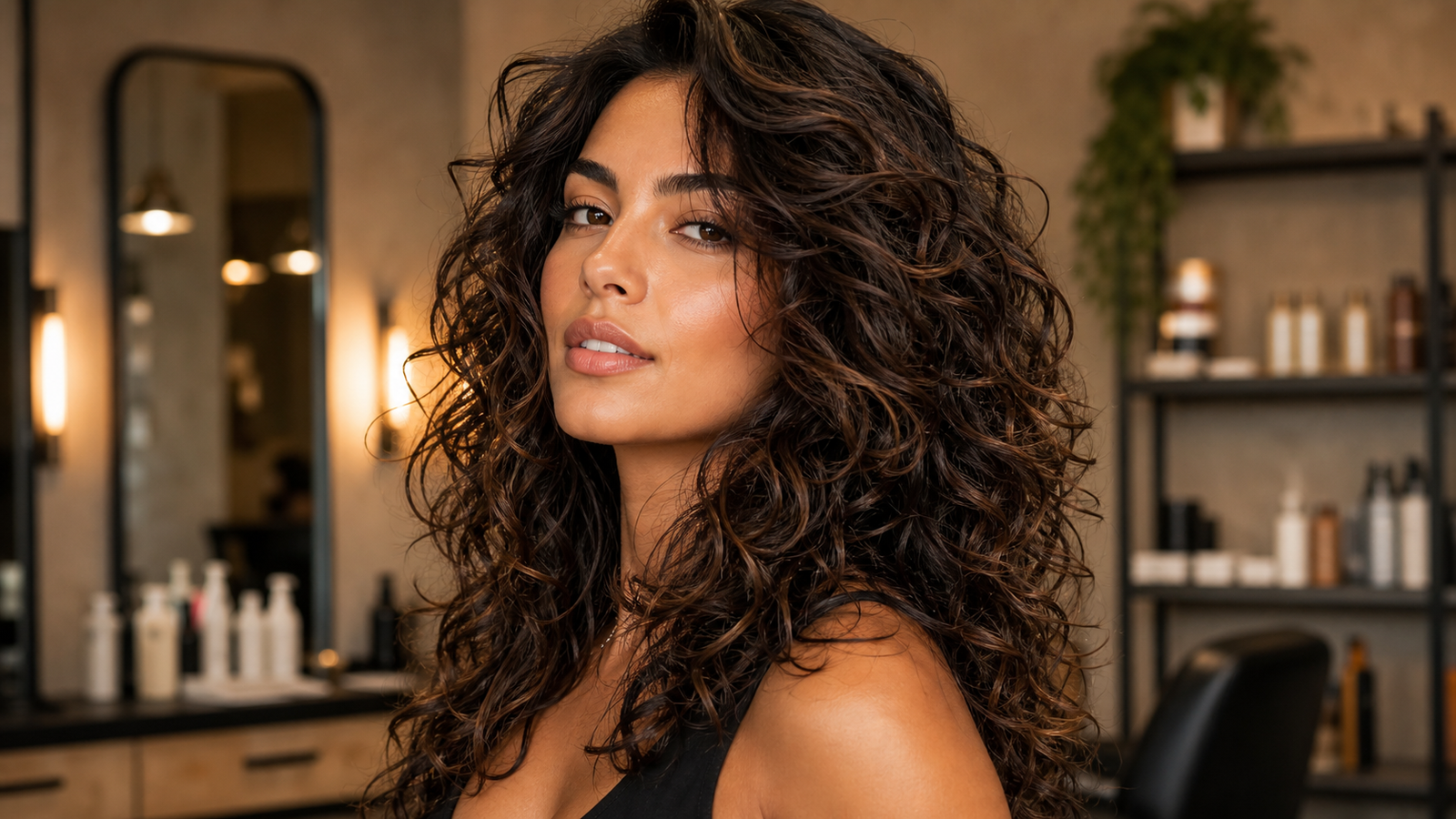
Choppy layers cut throughout thick hair remove serious bulk and weight, which is exactly what dense hair needs to move instead of sitting like a heavy curtain. This cut is built specifically for thick to very thick density in straight, wavy, or loosely curled textures, since fine hair would lose too much fullness with this much layering. The phrase to use is "choppy layers throughout to thin out the bulk, not just at the ends."
- Maintenance: Medium, roughly 10 minutes air-drying with a texturizing cream once the choppy shape is established. Grows out well on thick hair and can typically stretch to 4 months between trims without losing its point.
Soft Feathered Layers for Fine Hair
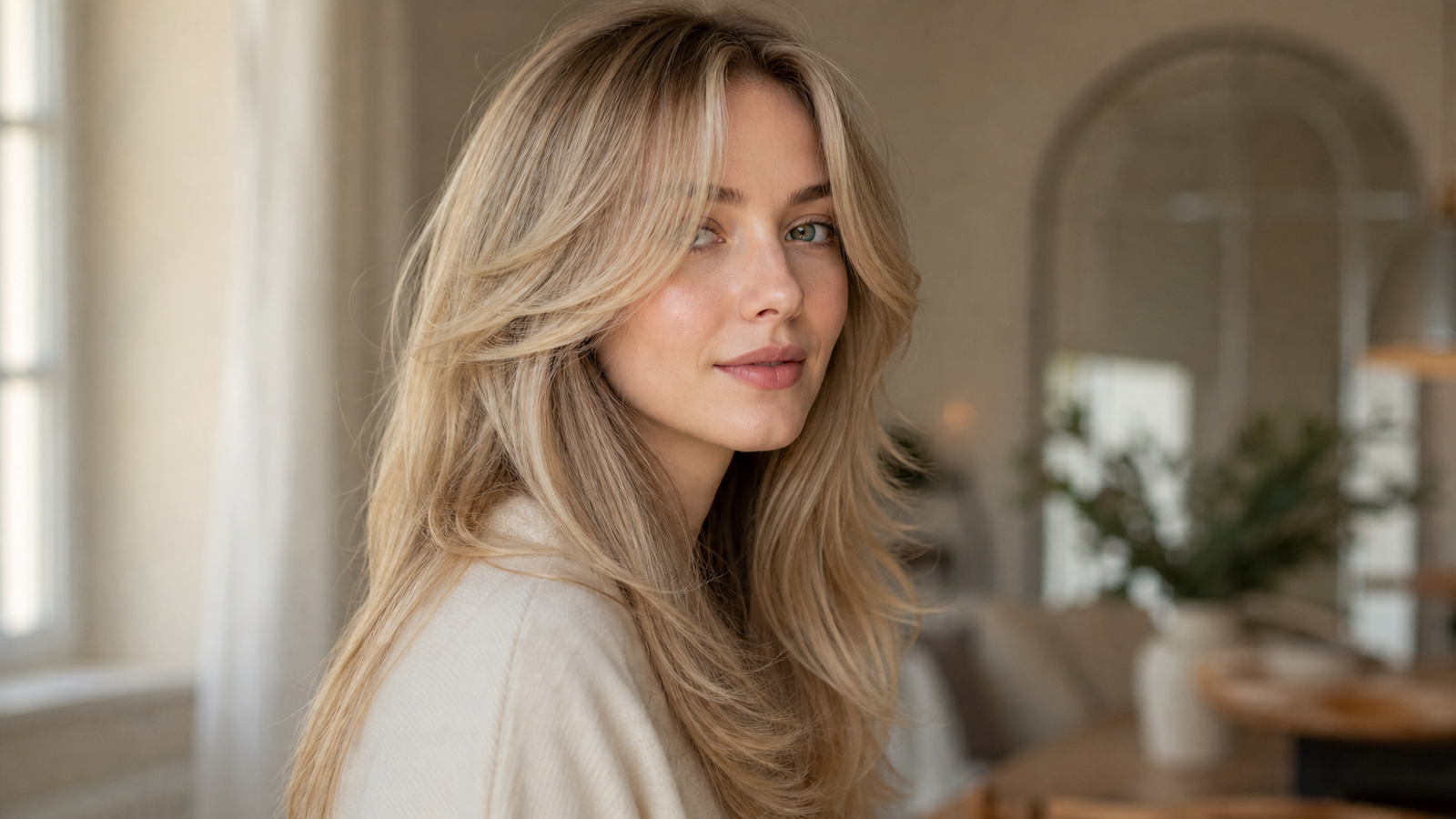
Soft feathered layers are cut lighter and more concentrated around the face rather than through the entire length, which keeps fine hair from looking thinned out or see-through. This style is built for fine to medium density hair in any texture, and it specifically avoids the heavy, all-over layering that can make fine strands look sparse. Ask your stylist for "soft feathered layers around the face only, minimal layering through the length" to protect your fullness.
- Maintenance: Low to medium, about 8 to 10 minutes with a round brush focused mainly at the crown for lift. Fine hair grows out slowly into a blunter shape and can often go 4 to 5 months before a trim is needed.
Waterfall Layers
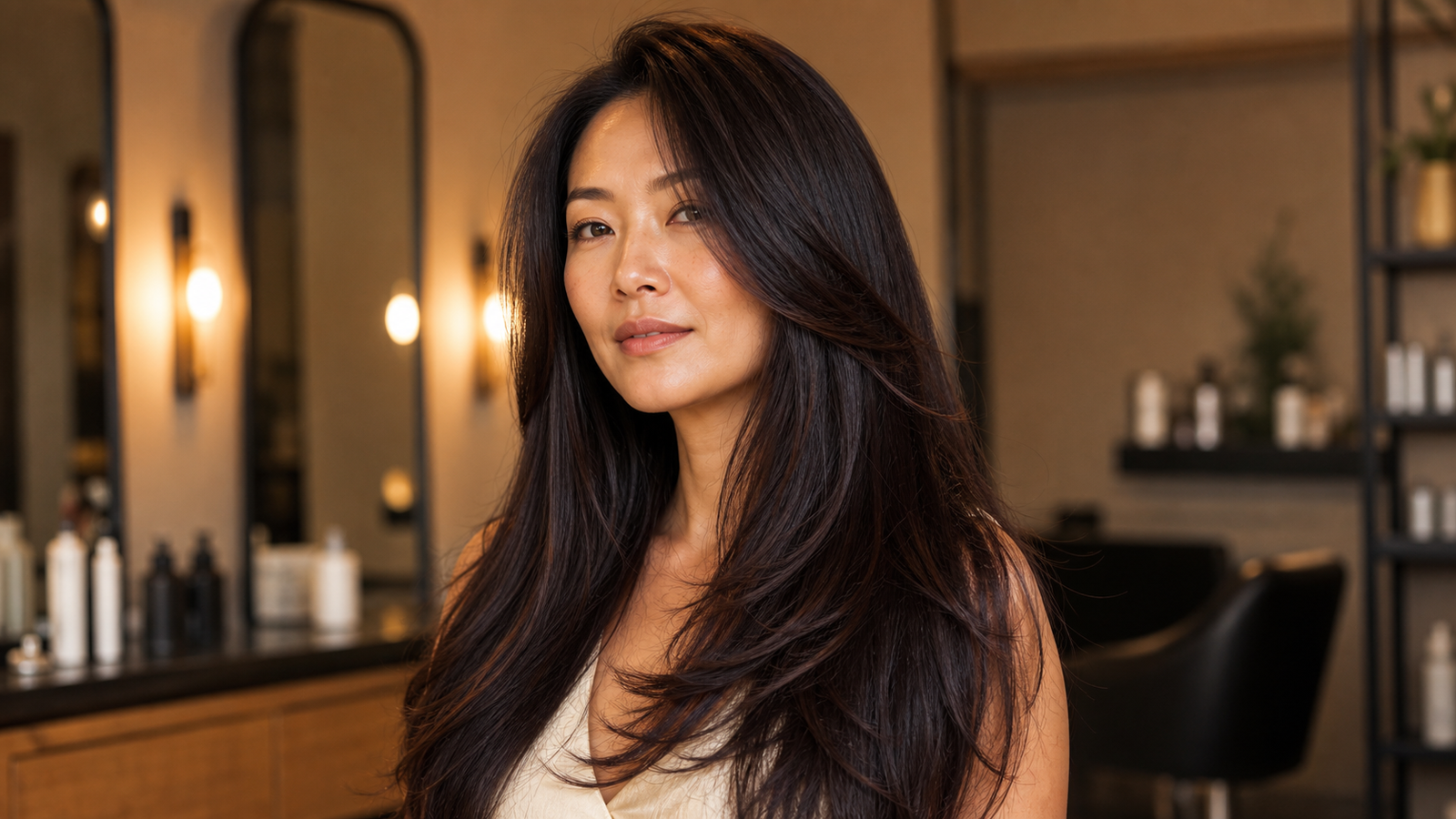
Waterfall layers cascade gradually from shorter pieces near the crown down to the longest layer at the ends, creating a smooth, graduated flow rather than choppy separation. This subtle style suits nearly any face shape and works especially well on medium to thick hair with straight to wavy texture, where the gradual layers can catch light softly. Request "waterfall layers, soft and graduated, not choppy or heavily textured" for this gentler take on long layers.
- Maintenance: Medium, around 10 minutes with a round brush to smooth the graduated sections into place. Grows out smoothly, with no sharp shape to lose, so you can comfortably go 4 to 5 months between trims.
Blunt Ends With Subtle Layers
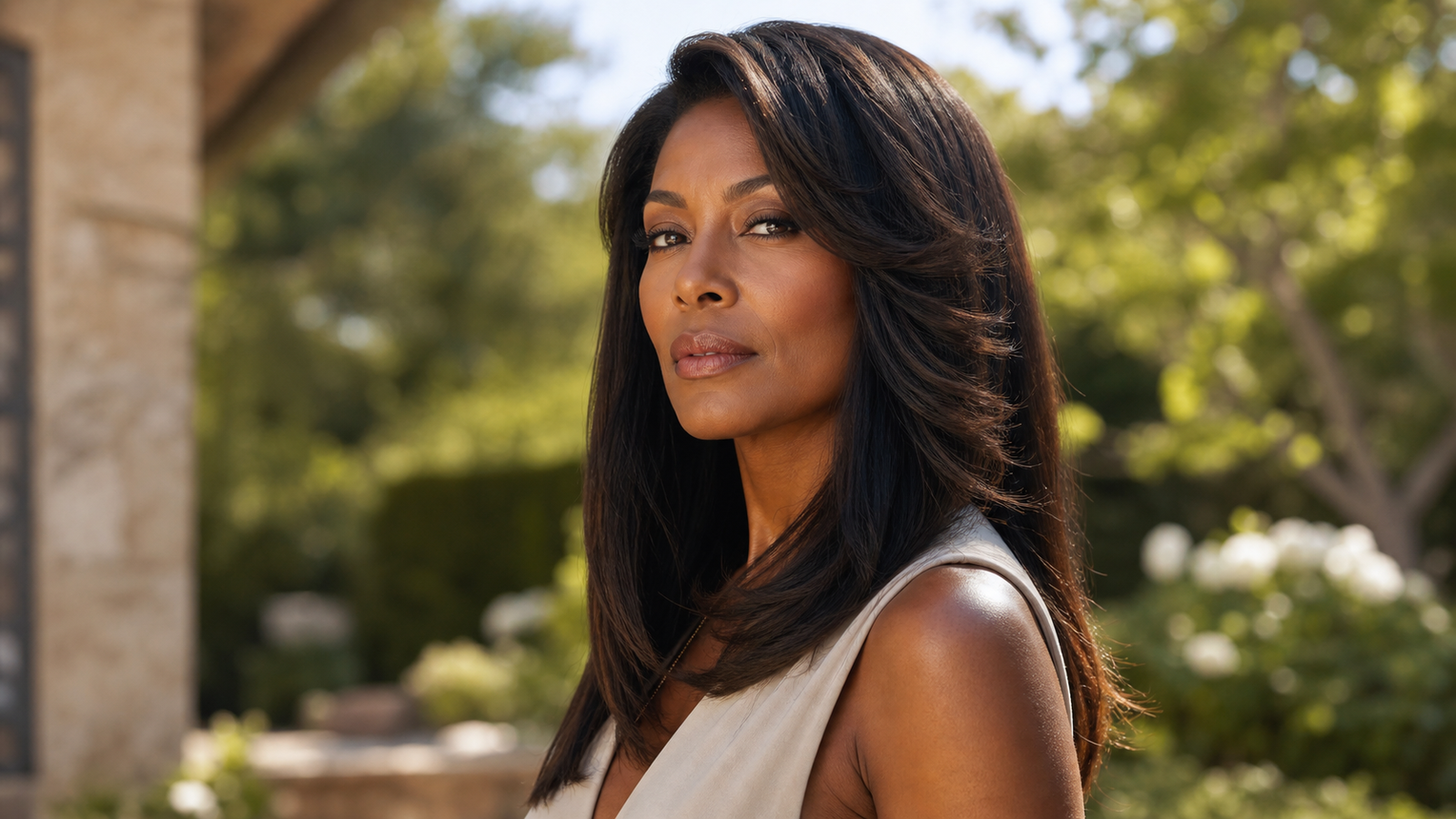
This style keeps most of the length blunt and heavy while adding just a few subtle layers near the crown for lift, giving you movement without sacrificing thickness at the ends. It is best for thick to medium hair in any texture that wants a hint of shape without committing to a fully layered look. Say "mostly blunt ends with subtle layers only at the crown for lift" to keep this cut as low-key as possible.
- Maintenance: Low, about 5 to 7 minutes with a blow-dryer and round brush since there is minimal shaping required. Grows out with almost no visible change and can often stretch past 5 months between trims.
Money-Piece Layers
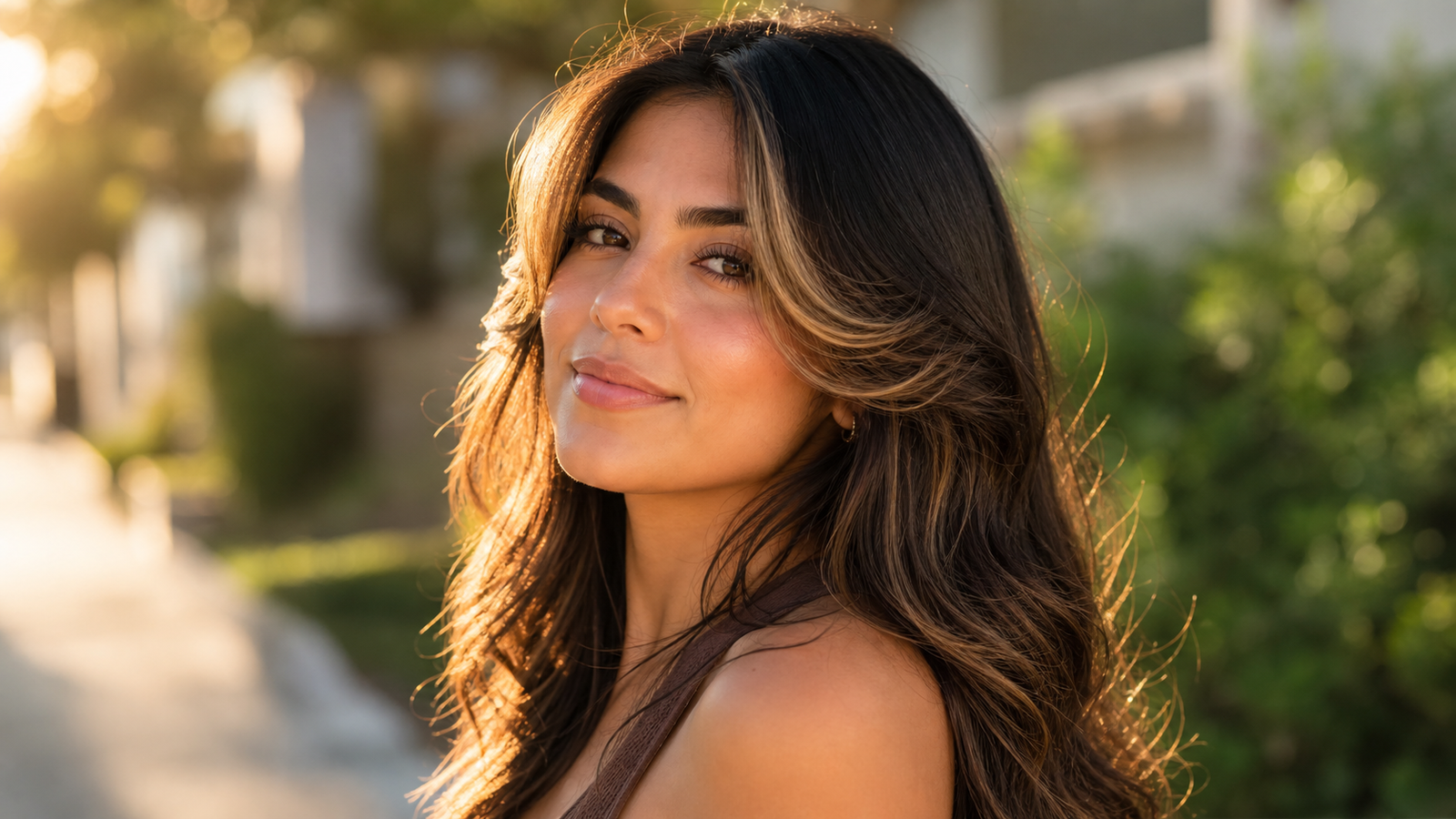
Money-piece layers focus shorter, face-framing pieces right around the front hairline, often paired with lighter color there too, while the rest of the length stays largely untouched. This works on any face shape and hair type since it only affects a small, targeted section rather than the whole head. Tell your stylist you want "a money piece cut short at the front, rest of the length left alone."
- Maintenance: Low, about 5 minutes with a small round brush or flat iron to curve just the front pieces. Grows out quickly into longer face-framing layers and generally needs a refresh only every 4 to 6 months.
Long Layers With Side-Swept Bangs
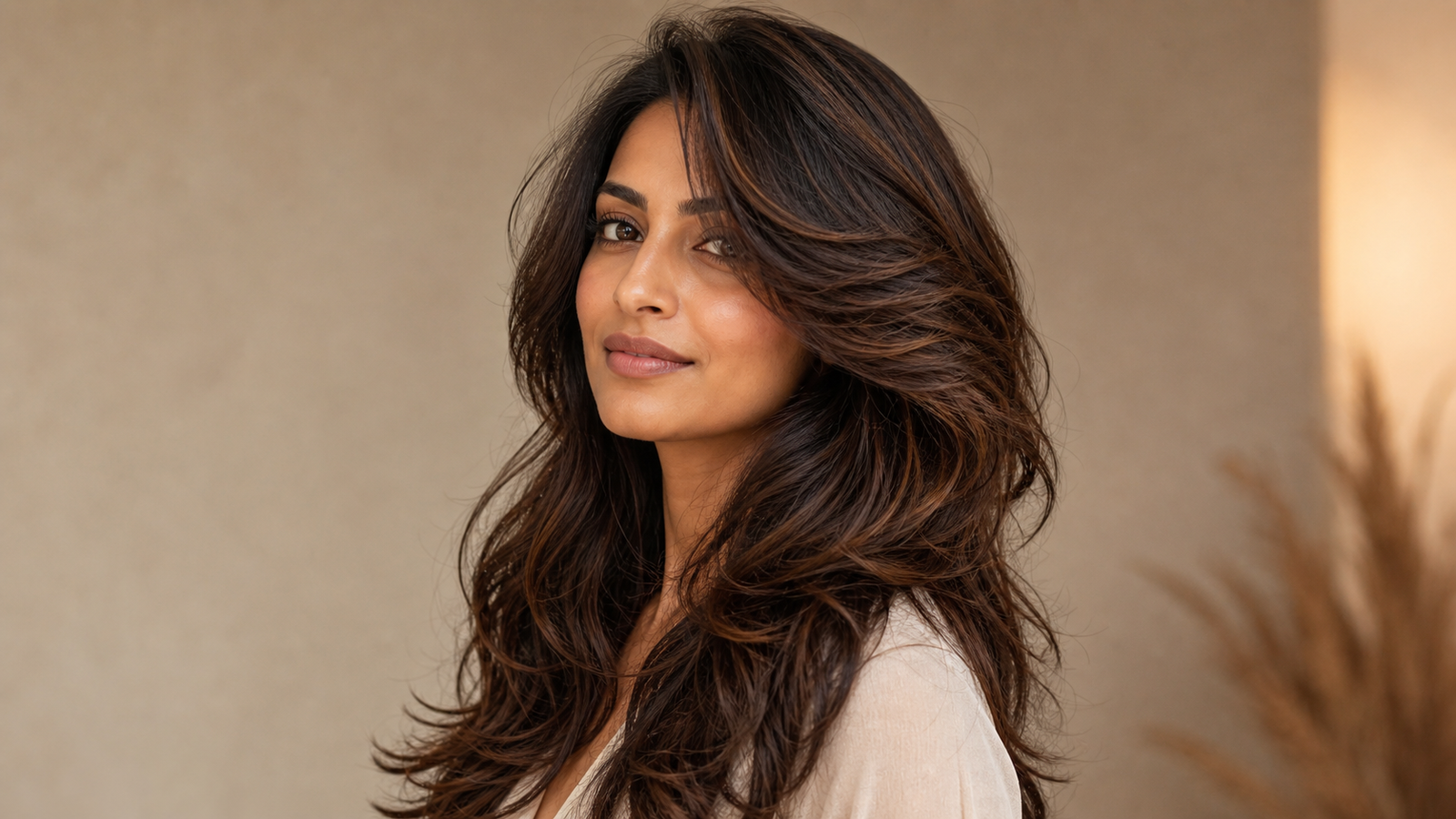
Side-swept bangs blend diagonally into long layers, softening the forehead while still leaving most of the length loose and flowing. This pairing flatters square and heart-shaped faces especially well and suits fine to medium hair, since side bangs need to be light enough to sweep rather than sit heavy. Ask for "side-swept bangs blended into long layers, cut long enough to tuck behind the ear."
- Maintenance: Medium, roughly 8 to 10 minutes with a round brush to direct the bangs to one side. Needs a trim every 6 to 8 weeks to keep the bangs from growing too heavy and falling into the eyes.
Long Layered Wolf Cut
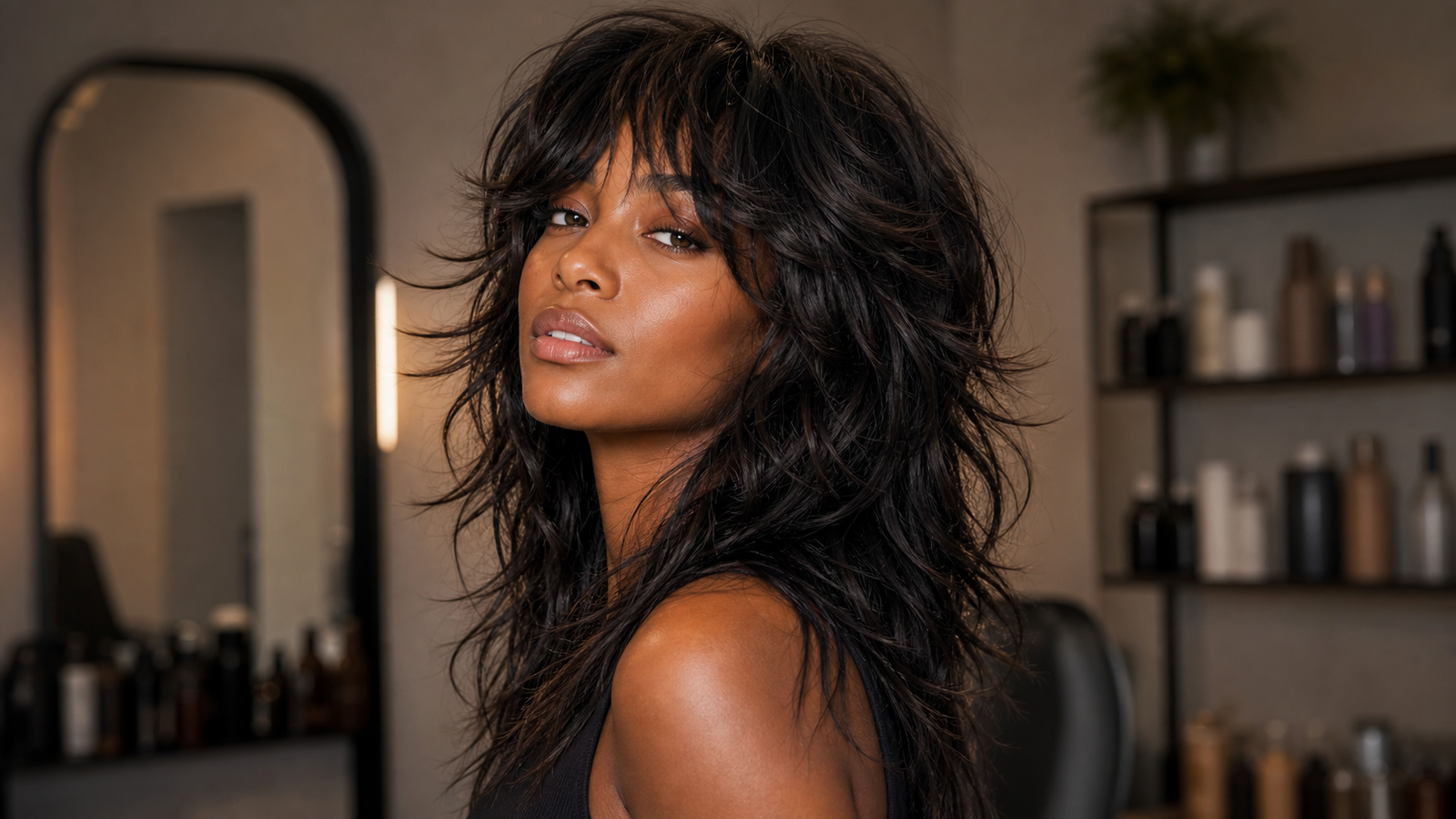
The wolf cut combines heavy layering at the crown with shaggy, choppy texture through the rest of the length, borrowing shape from both the shag and the mullet for a bold, textured result. It suits thick to medium hair with natural wave or curl best, since the style depends on visible separation between layers to read correctly. The exact phrase to use is "a long wolf cut with heavy layering at the crown and choppy texture throughout."
- Maintenance: High, expect 15 minutes with a texturizing spray and either fingers or a diffuser to keep the separation defined. Needs a trim every 8 weeks to maintain the shaggy shape, since it grows out into a much softer, less defined style.
Point-Cut Layers for Wavy Hair
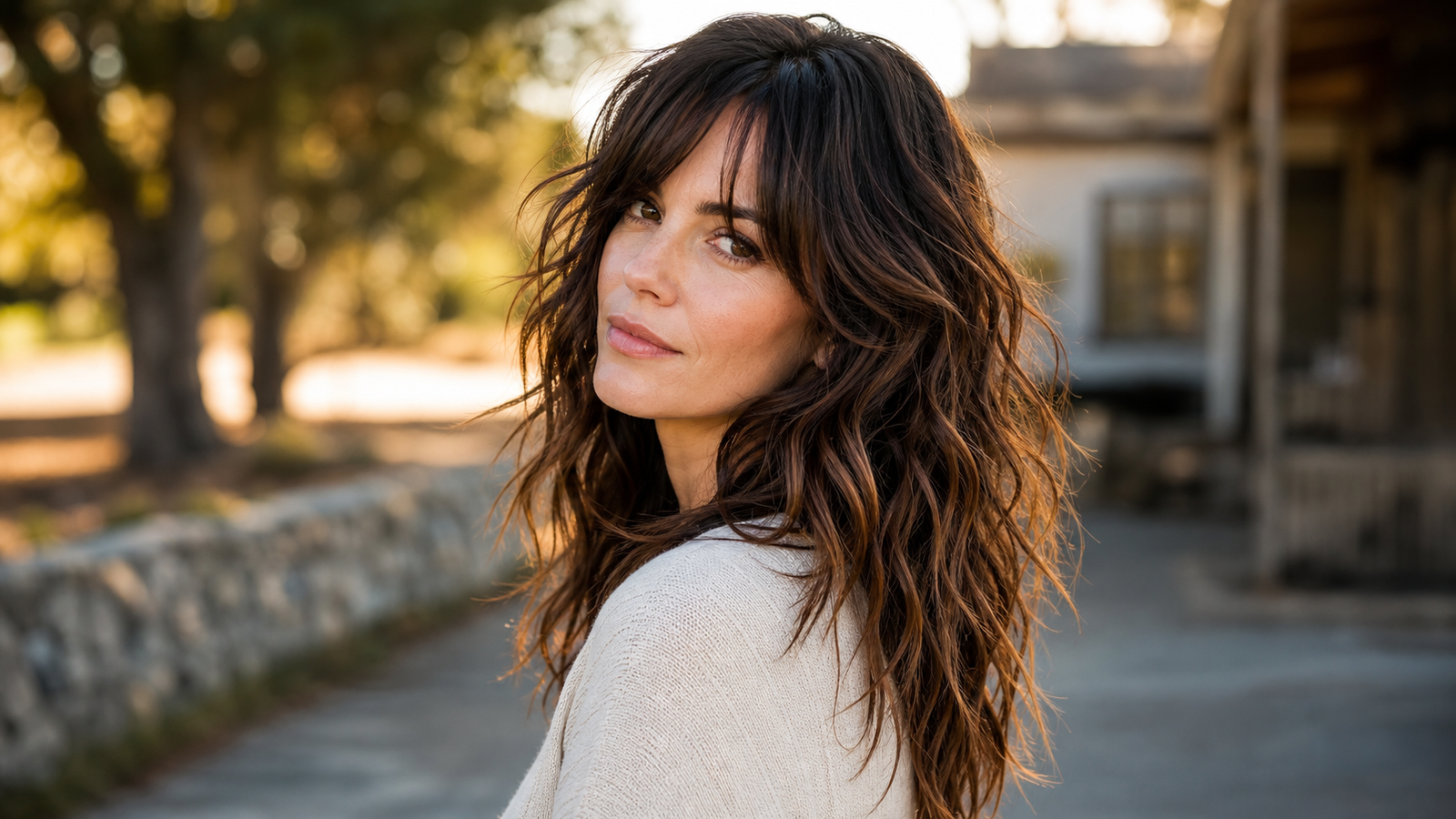
Point-cutting involves snipping into the ends at an angle rather than straight across, which adds texture and helps wavy hair separate into defined pieces instead of clumping together. This technique is built specifically for wavy hair of any density, since the angled cuts work with the wave pattern rather than against it. Ask for "point-cut layers through the ends to add texture and break up the wave" to get this finish.
- Maintenance: Medium, about 10 minutes air-drying with a curl cream or texturizing spray to bring out the natural wave. Grows out softly since there is no sharp line, and most people stretch trims to every 3 to 4 months.
Long Layers for Curly Hair
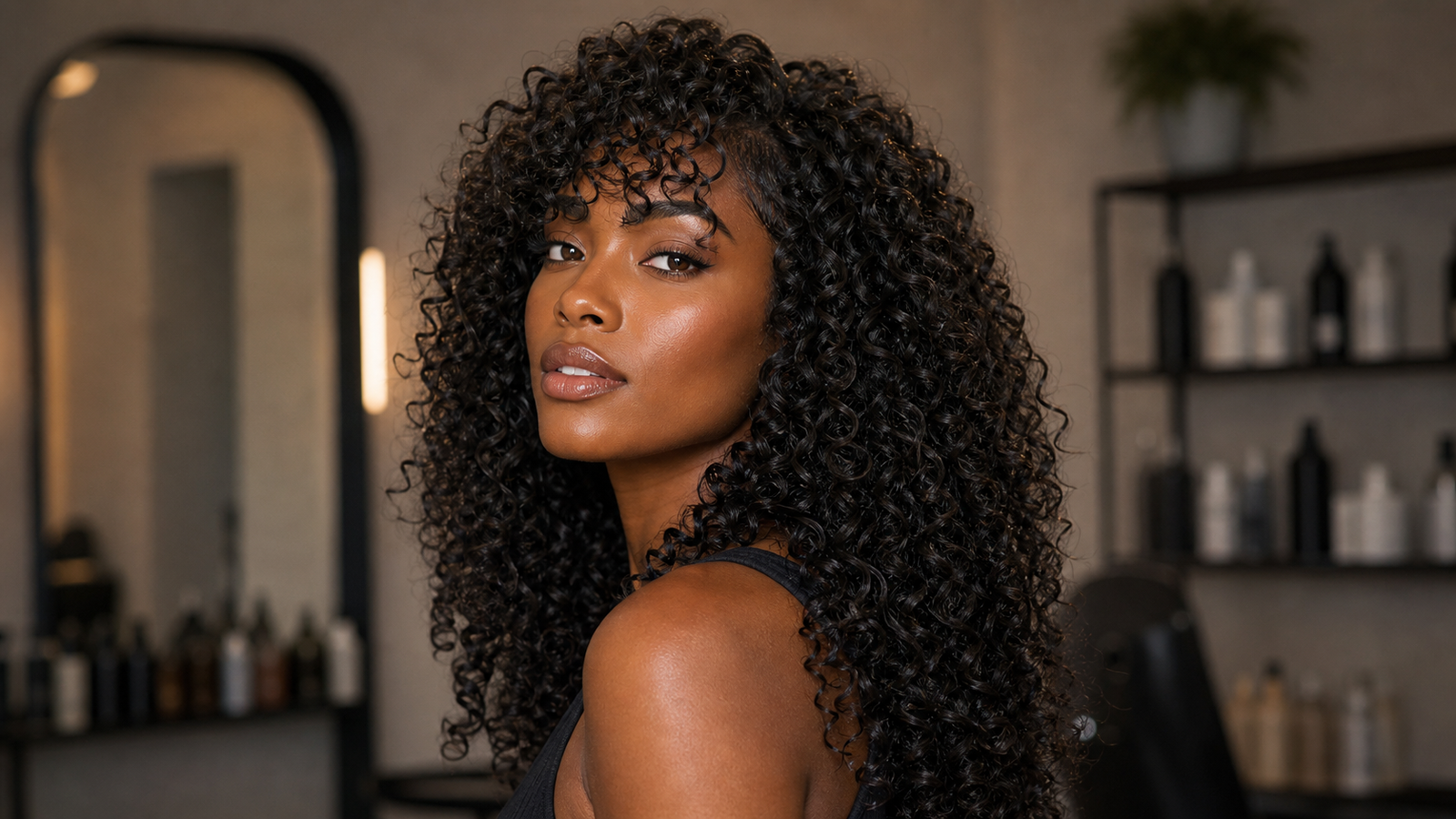
Long layers on curly hair remove weight from the bottom of the curl so ringlets can bounce and spring instead of being pulled down into one heavy, elongated shape. This cut works on all curl patterns from loose waves to tight coils, though a curl-specialist stylist should always cut it dry or with the curls fully activated to see how each ring will actually fall. Say "long layers cut dry, curl by curl, so the layers show once it's dry" to avoid a cut that looks great wet but falls flat once dry. If you are looking for more ways to wear curly layers through warmer months, our summer curly styles has plenty of styling ideas.
- Maintenance: Medium-high, around 15 minutes with a diffuser and curl cream to define each section. Grows out unevenly compared to straight hair since curl shrinkage varies, so a trim every 10 to 12 weeks keeps the shape looking intentional rather than uneven.
V-Cut Layers
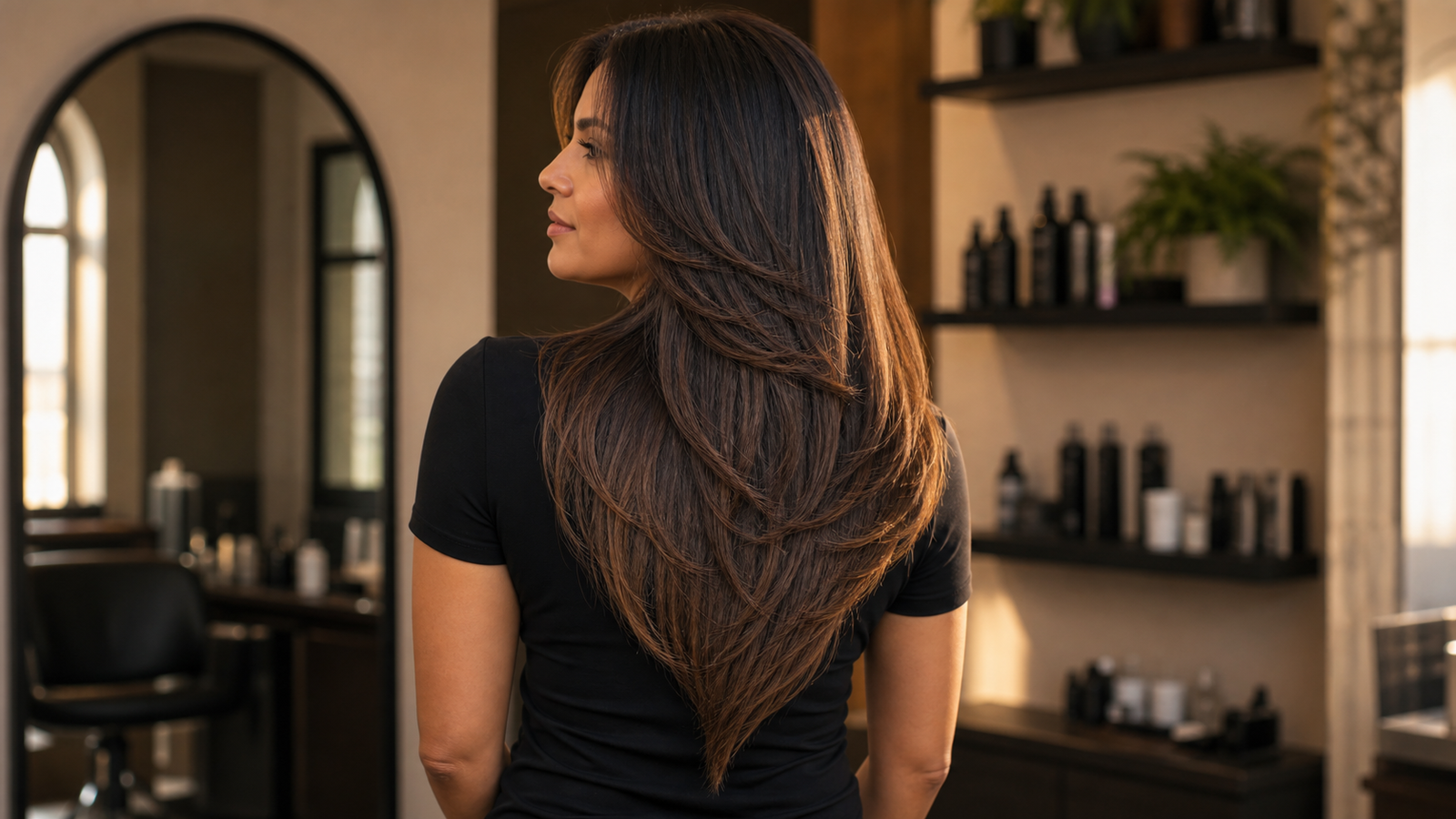
A V-cut brings the ends to a deep point at the center back, with layers built up gradually toward that point to create a dramatic, elongating silhouette. This style suits round and square faces particularly well because the deep V draws the eye downward, and it works best on medium to thick hair that can hold the sharp point without splitting apart. Request "a V-cut with layers built up toward a deep point at the back" for this specific shape.
- Maintenance: Low to medium, about 8 minutes with a flat iron or round brush to smooth the point into place. The V shape grows out into a softer point rather than disappearing, so trims every 3 to 4 months keep it looking deliberate.
U-Cut Layers
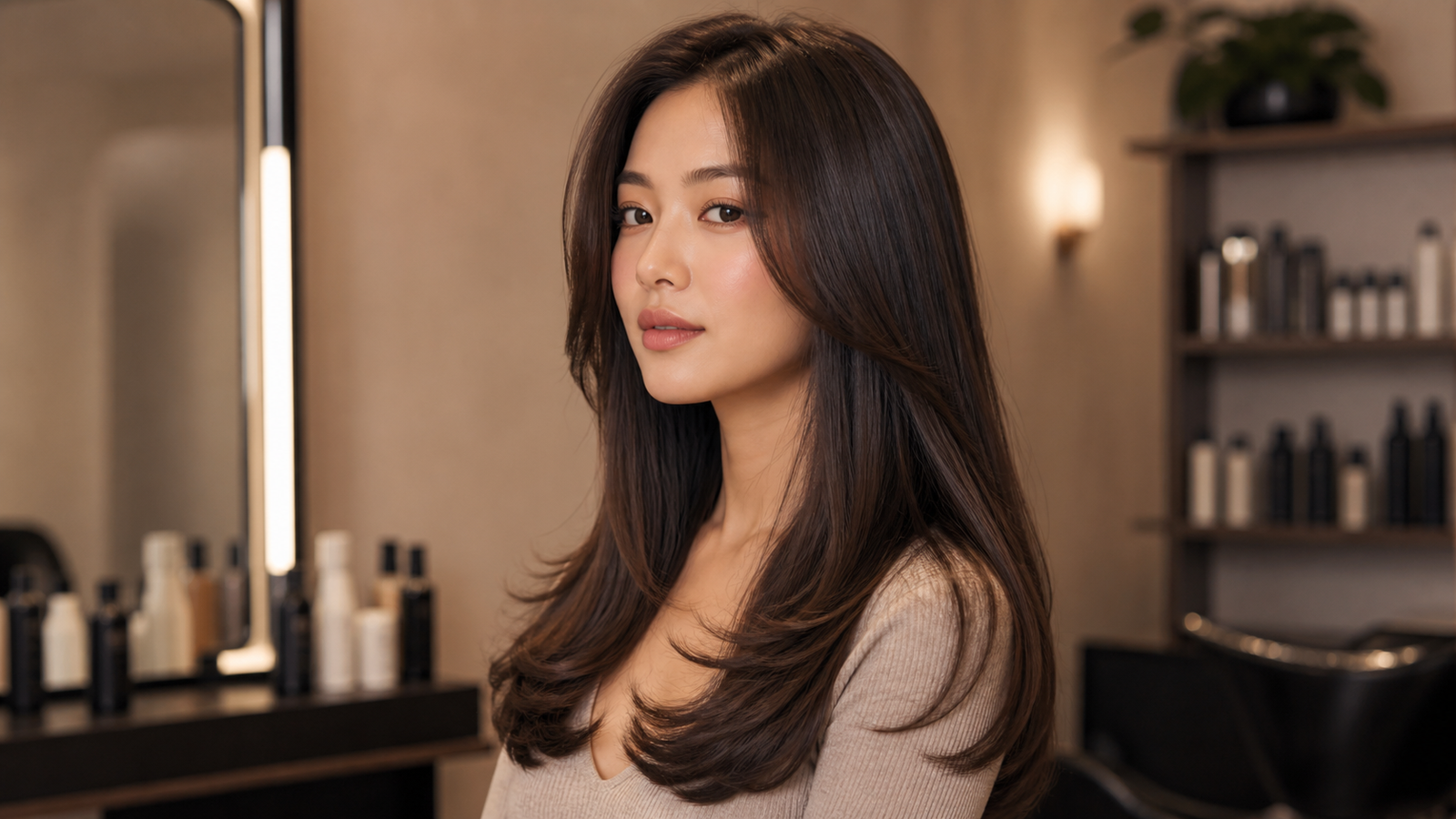
The U-cut rounds the ends into a soft curve instead of a sharp point, giving long layers a gentler, more romantic finish than a V-cut delivers. It flatters most face shapes and works especially well on fine to medium hair, since the rounded ends read as fuller than a sharply pointed shape would on thinner strands. Ask your stylist for "a U-cut with softly rounded ends and layers blended throughout, not a sharp point."
- Maintenance: Low, roughly 7 minutes with a round brush to curve the ends inward slightly. Grows out almost invisibly since the rounded shape has no sharp line to lose, often stretching to 5 months between trims.
Long Layers With a Curtain Fringe
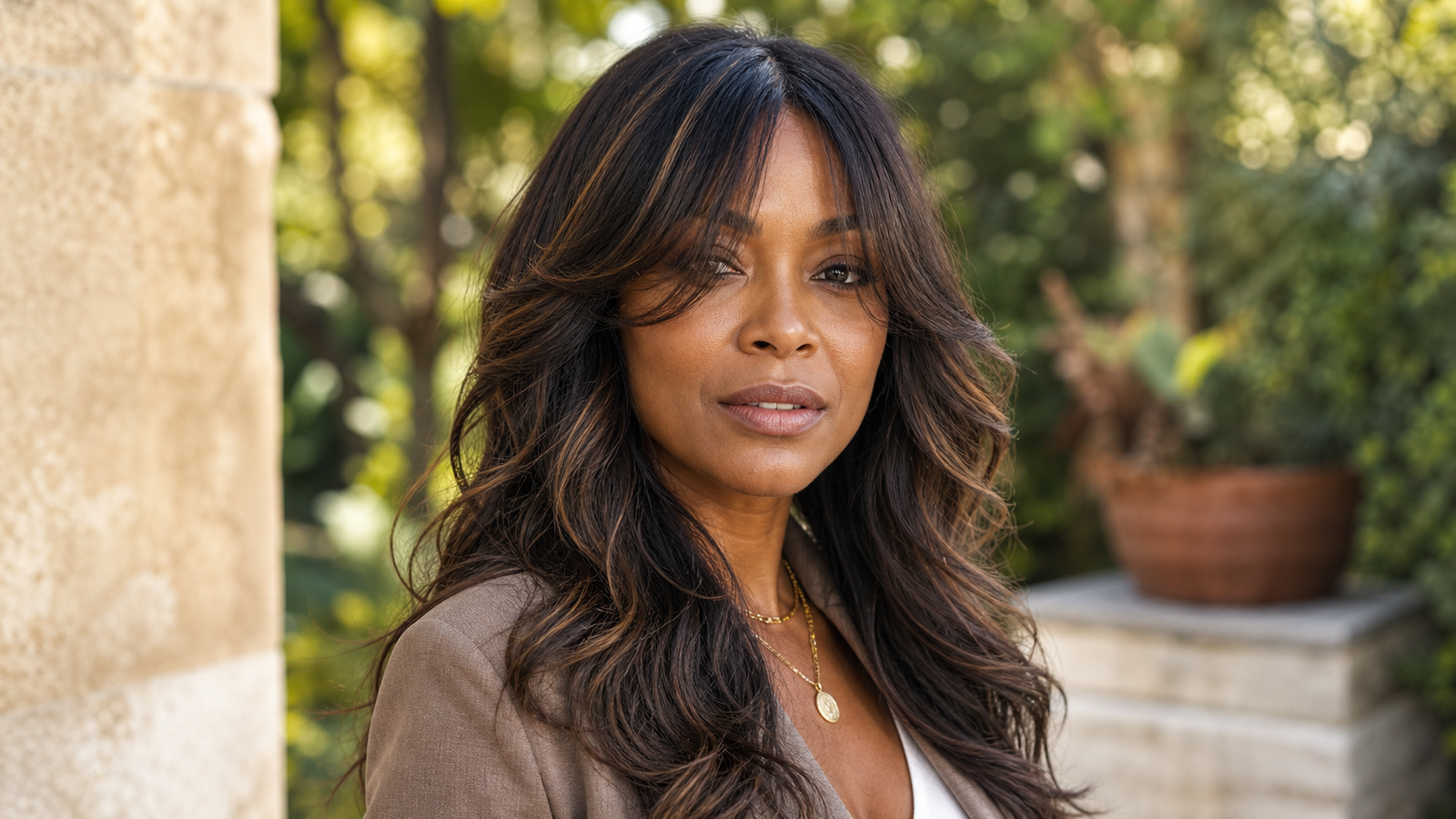
A curtain fringe is longer and wispier than traditional bangs, parting naturally down the middle and blending directly into the long layers below it. This combination flatters nearly every face shape and works on fine to medium hair especially well, since the wispy fringe needs lightness to sweep rather than sit heavy on the forehead. Say "a wispy curtain fringe, long enough to tuck back, blended into long layers" to get this exact effect.
- Maintenance: Medium, about 10 minutes with a round brush to curve the fringe pieces away from the face. Needs a light trim on the fringe every 5 to 6 weeks even though the rest of the length can go much longer.
Textured Ends on Long Layers
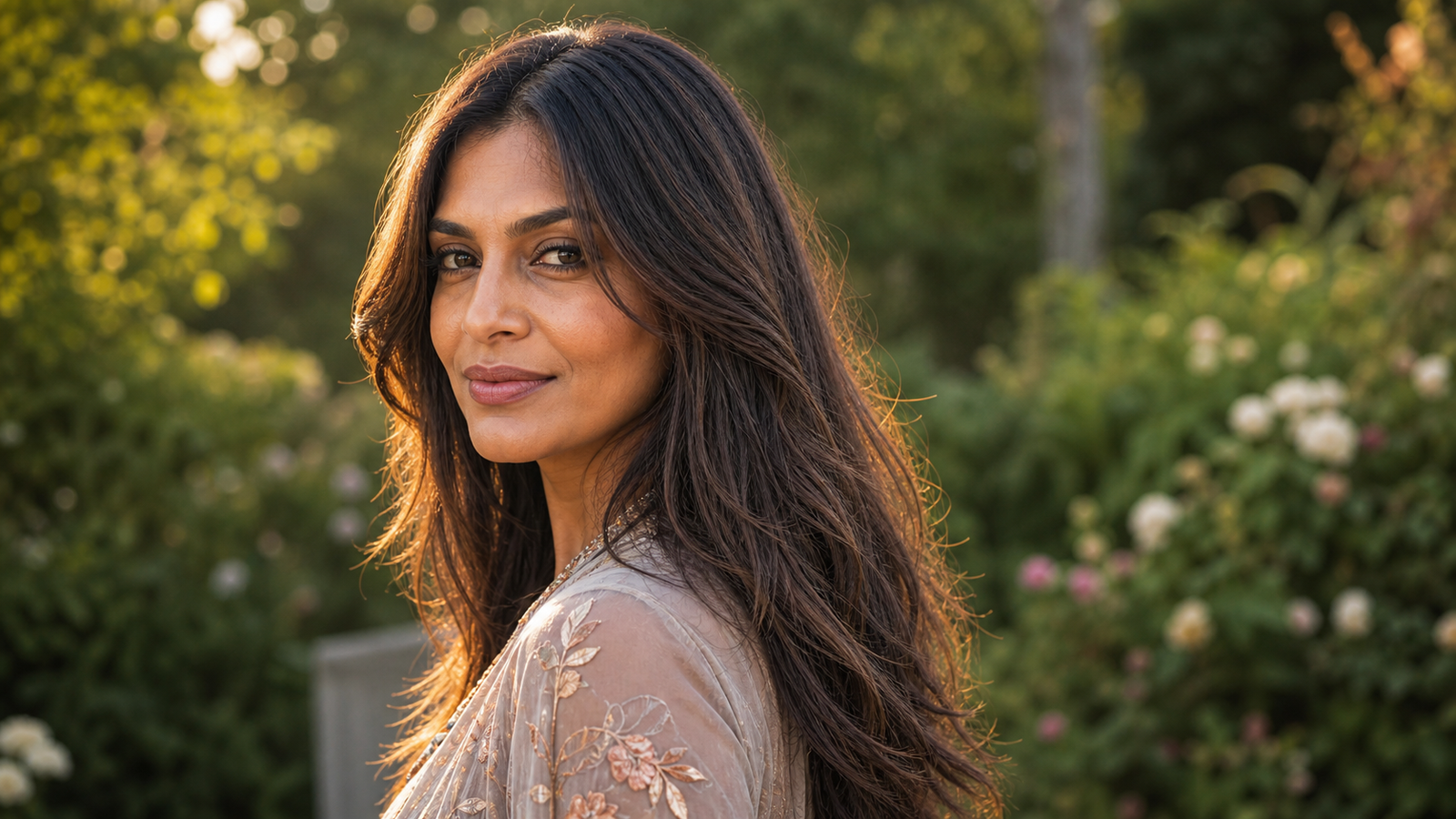
This style keeps the overall shape simple and mostly one length, but the stylist point-cuts and thins the very ends to add texture and prevent a blunt, heavy line. It suits thick to medium hair in straight or wavy textures, since the thinning technique needs enough hair to remove without looking sparse. Ask for "texturizing shears on the ends only, no layers cut higher up in the length."
- Maintenance: Low, about 5 minutes with a texturizing spray scrunched into the ends. Grows out with barely any visible change and often goes 5 to 6 months before it needs any real attention.
Long Layers for Round Faces
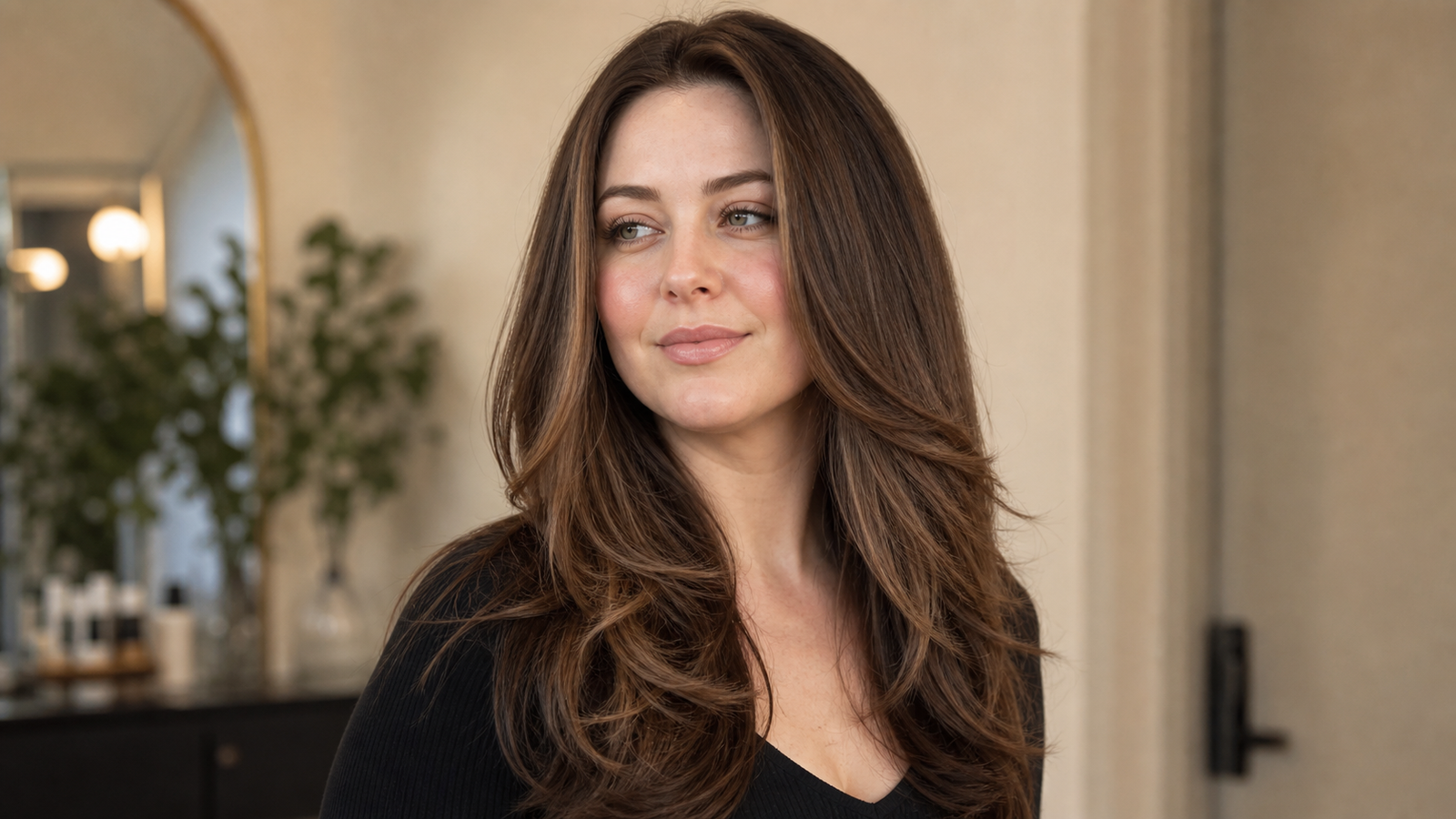
This version of long layers deliberately starts the shortest layer below the chin rather than at the cheekbone, avoiding extra width right where round faces are already fullest. It works on any hair density but shows up best on medium to thick hair that can hold the elongating shape without collapsing. Tell your stylist "long layers starting below the chin to elongate, nothing shorter cut at the cheekbone."
- Maintenance: Medium, about 10 minutes with a round brush directed downward and slightly back. Grows out gently into an even more elongating shape, so trims every 4 months are usually enough.
Long Layers for Square Faces
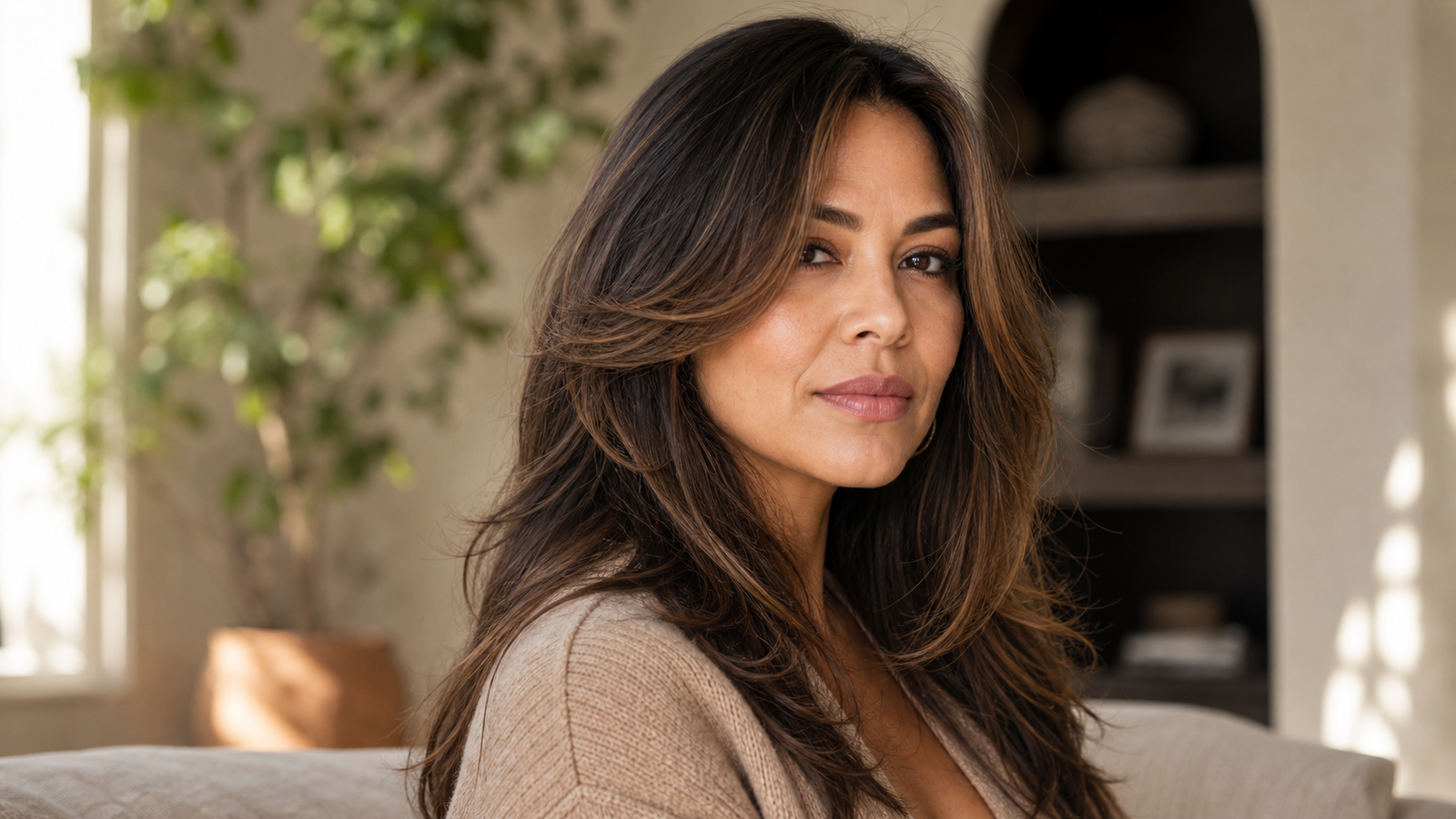
For square faces, the goal is softening strong angles rather than sharpening them further, so this cut uses feathered, rounded layers around the jaw instead of choppy, blunt ones. It flatters fine to thick hair in any texture, since the softening effect comes from the layer shape rather than density. Say "soft, feathered layers around the jaw, nothing choppy or blunt right at the jawline" to get this softening effect.
- Maintenance: Medium, roughly 10 minutes with a round brush curved inward at the jaw. Grows out smoothly since the layers are soft rather than sharply defined, allowing 4 months or more between trims.
Long Layers for Heart-Shaped Faces
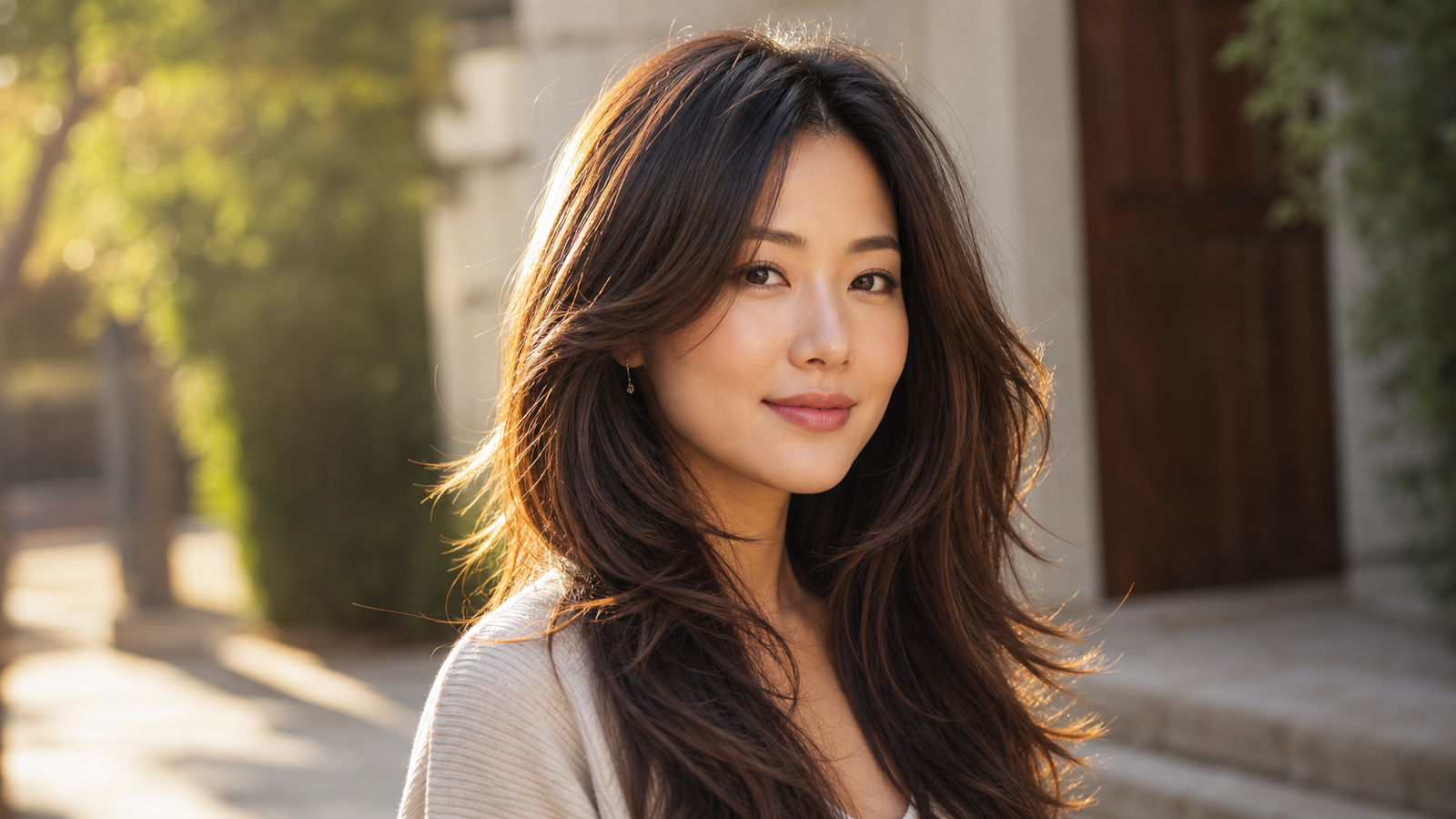
Heart-shaped faces are wider up top and narrower at the chin, so this cut adds width and fullness specifically around the jawline to balance the proportions out. It works well on fine to medium hair, since the added width comes from strategic layer placement rather than sheer density. Ask for "layers that add fullness at the jawline to balance a narrower chin" to get this exact balancing effect.
- Maintenance: Medium, about 10 minutes with a round brush flipped outward slightly at the jaw for width. Grows out into a slightly softer balance over time, so a trim every 4 months keeps the width in the right place.
How to Care for and Maintain Long Layered Haircuts
How to Care for and Maintain Long Layered Haircuts
Most long layered haircuts hold their shape best with a trim every 8 to 12 weeks, though you can stretch that timeline if you are intentionally growing the layers out into one length. Curly and coily texture behaves differently than straight hair as it grows, since the curl pattern can hide how much length has actually been lost between trims, so a curl-specific stylist visit every 10 to 12 weeks helps preserve the intended shape. A few simple styling basics go a long way regardless of texture: apply a lightweight heat protectant before any hot tool, use a round brush for smooth styles or a diffuser for wavy and curly ones, and reach for a texturizing spray when you want more definition on choppier layers. The American Academy of Dermatology offers guidance on minimizing high heat exposure and using a protectant whenever you reach for a flat iron or blow-dryer, which applies just as much to layered styles as any other cut.
It also helps to set realistic expectations before you sit down in the chair, especially if your inspiration photo was taken on hair that is denser than yours. Hair that is fine or has lower density will often show layers with less visible separation than the same cut looks like in a photo of thick hair, and that is completely normal rather than a sign of a bad haircut. If your daily routine leans toward low-effort mornings, our roundup of work hairstyles has plenty of quick styling ideas that pair well with any of the layered cuts above. Give your new layers at least one full wash and style cycle at home before deciding whether the shape is working, since salon blowouts always look a little different than day-two hair.
Frequently Asked Questions
Frequently Asked Questions
How often do long layered haircuts need to be trimmed? Most long layered cuts need a trim every 8 to 12 weeks to keep the shape from growing out into something shapeless. Choppier, more textured styles like a shag or wolf cut need trims closer to the 8-week mark, while softer cuts like a U-cut or blunt-with-subtle-layers can often stretch to 4 or 5 months.
Do long layers work on curly or coily hair? Yes, long layers work well on curly and coily hair, but the cutting method matters more than it does on straight hair. Curly hair should be cut dry or with the curl pattern fully activated so the stylist can see exactly how each section will spring up once it dries, rather than cutting it wet and guessing at the shrinkage.
Will long layers make fine hair look thinner or fuller? Long layers can go either way depending on where they are placed, which is why fine hair does best with layers concentrated around the face rather than cut evenly through the whole length. All-over heavy layering on already-fine strands tends to remove too much weight and can leave hair looking wispy instead of full.
How long does it take to grow layers out into one length? Growing long layers out into a single blunt length typically takes 12 to 18 months, depending on how dramatic the layering was to begin with and how fast your hair grows. Regular trims during that stretch, even small ones, help blend the different lengths gradually so the in-between stages look intentional rather than uneven.
Long layered haircuts let you bring shape and movement back into long hair without cutting off the length you worked hard to grow. Pick the style above that matches your face shape and hair texture, save the exact salon wording, and bring it with you to your next appointment. If you want more inspiration before you book, browse our full long hairstyle roundup or check the face shape breakdown to confirm which shape you're working with first.
Your email address will not be published. Required fields are marked *