

You’ve been staring at photos of both cuts for weeks and still can’t decide. This guide gives you a real, face-shape-aware, texture-honest comparison of the pixie cut vs short bob, plus a word-for-word script you can hand to your stylist on the day. Unlike most comparison guides, this one explains the reasoning behind every recommendation so you leave with a real answer, not just more options to scroll through.
Most comparison posts give you a definition of each style and then leave you exactly where you started. This one is different. By the end, you’ll know which cut suits your face shape, texture, and routine, and what the grow-out looks like so nothing catches you off guard.
The Core Difference Between a Pixie Cut and a Short Bob
The Core Difference Between a Pixie Cut and a Short Bob
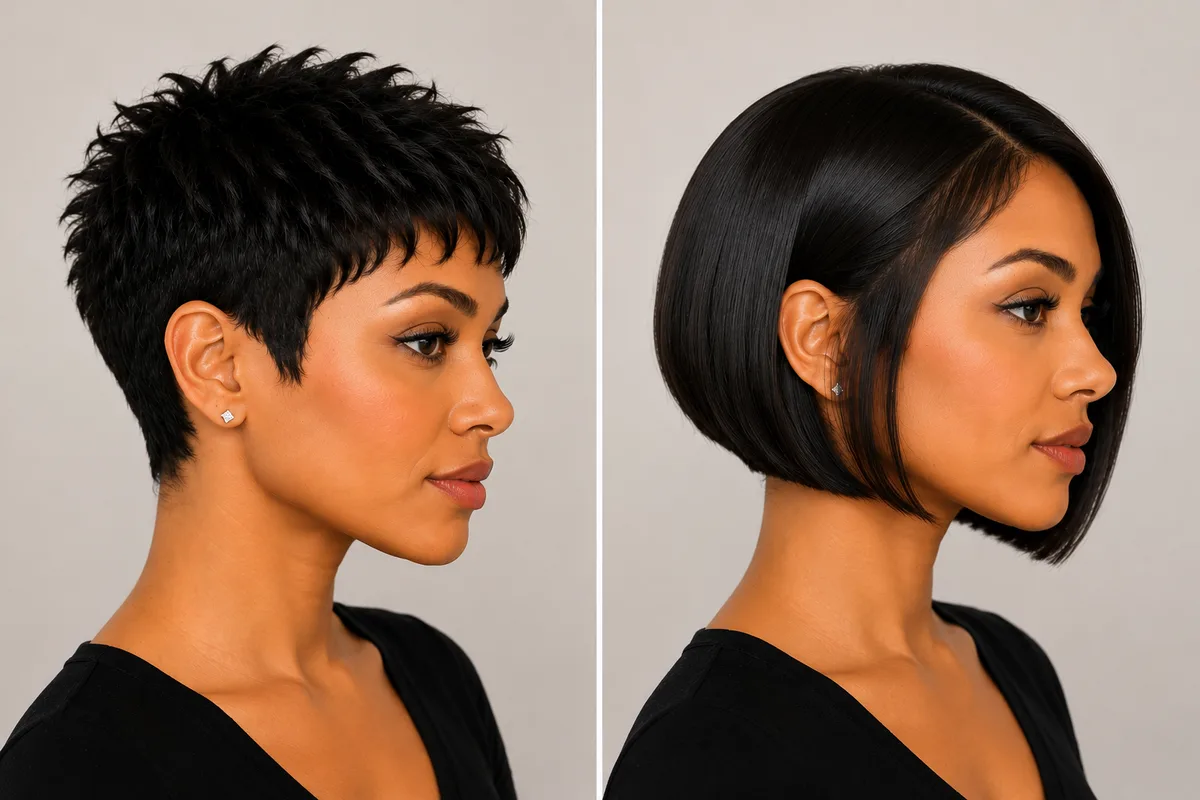
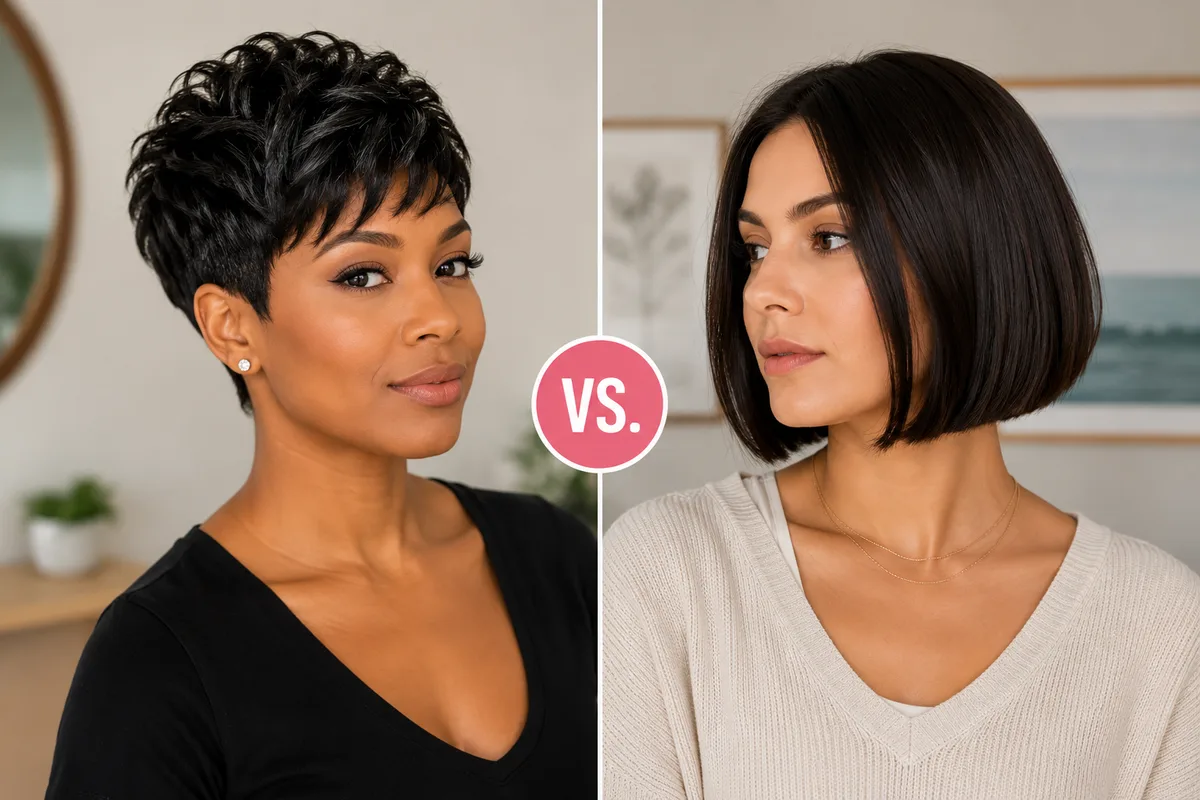
The pixie cut is cropped close to the head, typically with 1–3 inches of length on top and tapered or shaved sides and back. It exposes the ears and neckline, and goes from sleek and polished to textured and edgy depending on how it’s cut. It’s the shorter of the two options and the more dramatic change if you’re coming from medium or long hair. Common variations include the classic tapered pixie, the shaggy pixie with longer layers on top, and the undercut pixie with closely shaved sides.
The short bob sits at jaw-to-chin length all the way around. The most popular variations include the blunt bob, the stacked bob (with volume built at the back through graduated layers cut close at the nape and progressively longer toward the crown), and the angled bob (longer in the front, shorter at the nape). A micro bob lands just below the ears and sits between a standard short bob and the pixie.
On that middle ground, the bixie (pixie-bob hybrid) is worth considering. It has a cropped nape and sides with a slightly longer top layer: short-hair confidence without fully committing. Ask your stylist to show you a reference photo first.
| Feature | Pixie Cut | Short Bob |
|---|---|---|
| Length | 1–3 inches (top) | Jaw to chin length |
| Exposed neckline | Yes | Partially (depends on style) |
| Daily styling time | 3–5 minutes | 10–20 minutes |
| Trim frequency | Every 4–5 weeks | Every 6–8 weeks |
| Best known for | Drama, low morning effort | Versatility, soft femininity |
Which Cut Suits Your Face Shape?
Which Cut Suits Your Face Shape?
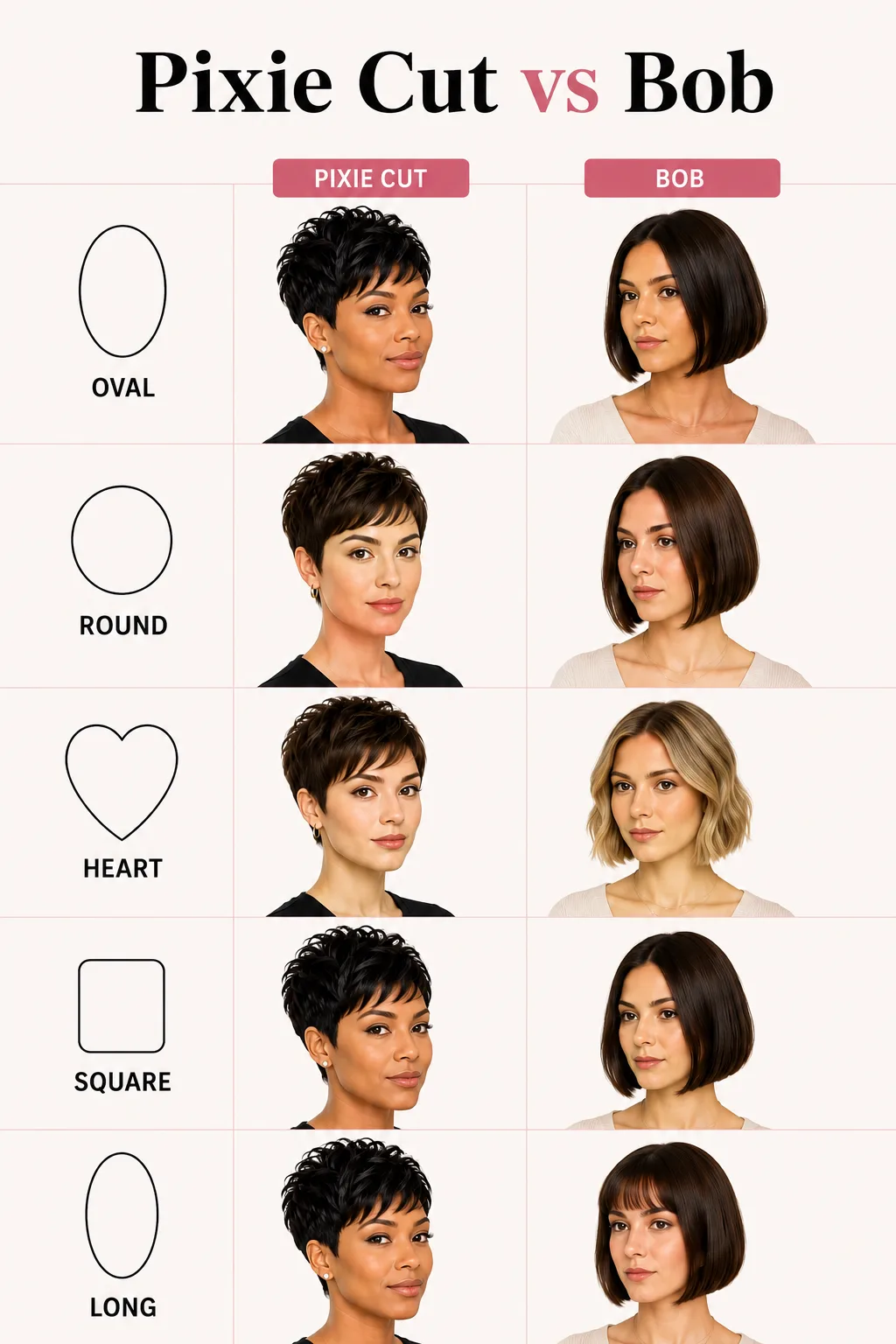
Face shape is one of the most useful filters in the pixie vs bob decision, but most guides state the conclusion without explaining the reasoning. Here is the reasoning for each shape, along with what to avoid, because an honest heads-up now saves a disappointing salon visit later. If you only have two minutes to prep before your appointment, this is the section to read.
Oval Face
An oval face has balanced proportions, slightly wider at the cheekbones than at the forehead and jaw. Both cuts work well here, which is why oval faces are the easiest starting point. A pixie with side-swept texture flatters an oval face, and so does a blunt or layered bob with ends that frame the cheekbones. If your face is oval, the decision comes down to texture and maintenance preference rather than face-shape restrictions.
Round Face
A round face has similar width and length, with soft, curved edges at the jaw. A short bob that extends just past the jaw or has angled layers is the stronger choice because it creates visual length. A very short cropped pixie can draw attention to the roundness of the face unless it has height on top and minimal volume at the sides. If you want the pixie with a round face, ask your stylist to build height at the crown and keep the sides flat. Steer clear of a blunt, ear-length pixie with no height, as it can make the face appear wider.
Heart-Shaped Face
A heart-shaped face is wider at the forehead and temples, with a narrower chin. A pixie with soft, wispy bangs works well here because the fringe reduces the visual width of the forehead and draws attention to the eyes. For a bob, keep length below the chin and avoid adding volume at the jaw level, since the jaw is already the narrowest point and extra bulk there can create an uneven silhouette.
Square Face
A square face has a strong, defined jawline with similar width at the forehead, cheekbones, and jaw. A layered or textured bob softens that jawline by adding movement rather than a hard line, making it a slightly better default than a blunt pixie. A pixie can also look great on a square face when it includes side bangs or wispy texture at the temples, since those details soften the forehead corners. Avoid a very blunt, cropped pixie with no softness around the face, as it can emphasize the angular jawline instead of balancing it.
Long or Oblong Face
A long face has more vertical length than horizontal width, so the goal is to add visual width. A blunt bob ending at or just below the jaw does this well. A pixie can work on a long face, but avoid styles with flat sides and a tall top: that combination elongates the face further. A side-parted pixie with soft texture at the temples is the safer choice.
Stylist tip: Find one reference photo on a woman with a similar face shape before your appointment. It is far more useful than describing your face shape in words, and a good stylist will immediately know what you’re going for. If you are unsure of your face shape, use this face shape guide to identify it before you book.
Pixie Cut vs Short Bob for Your Hair Texture
Pixie Cut vs Short Bob for Your Hair Texture
This is the section most comparison posts skip, and it is often the deciding factor. Your hair texture affects not just how the cut looks on day one, but how much effort you put in every morning after that. What works on straight fine hair and what works on 4C coils are genuinely different answers.
Fine or thin hair tends to benefit from a pixie cut because cropping close to the head removes the weight that makes fine hair look limp. A short bob on fine hair can look flat and sparse at the ends unless your stylist adds internal layers or uses a blowout technique to build volume at the crown. If you have fine hair and lean toward the bob, make sure your stylist layers the interior rather than leaving it blunt.
Thick hair is handled well by a short bob when the stylist texturizes the interior and removes bulk through point cutting or thinning shears. A pixie on thick hair looks sharp and full-bodied, but it needs more frequent trims, every 4 weeks rather than 5, to prevent the sides from growing wide and losing the shape. The annual cost difference for thick-haired pixie wearers is real, so factor that in.
Wavy hair (roughly 2A–2C) makes a bob look naturally styled with almost no effort, since the wave pattern adds texture and movement without requiring product. A wavy pixie is equally flattering, but the nape area can frizz as it grows, so a small amount of pomade or texturizing spray on the nape hairs keeps it looking clean. Both cuts suit wavy hair well.
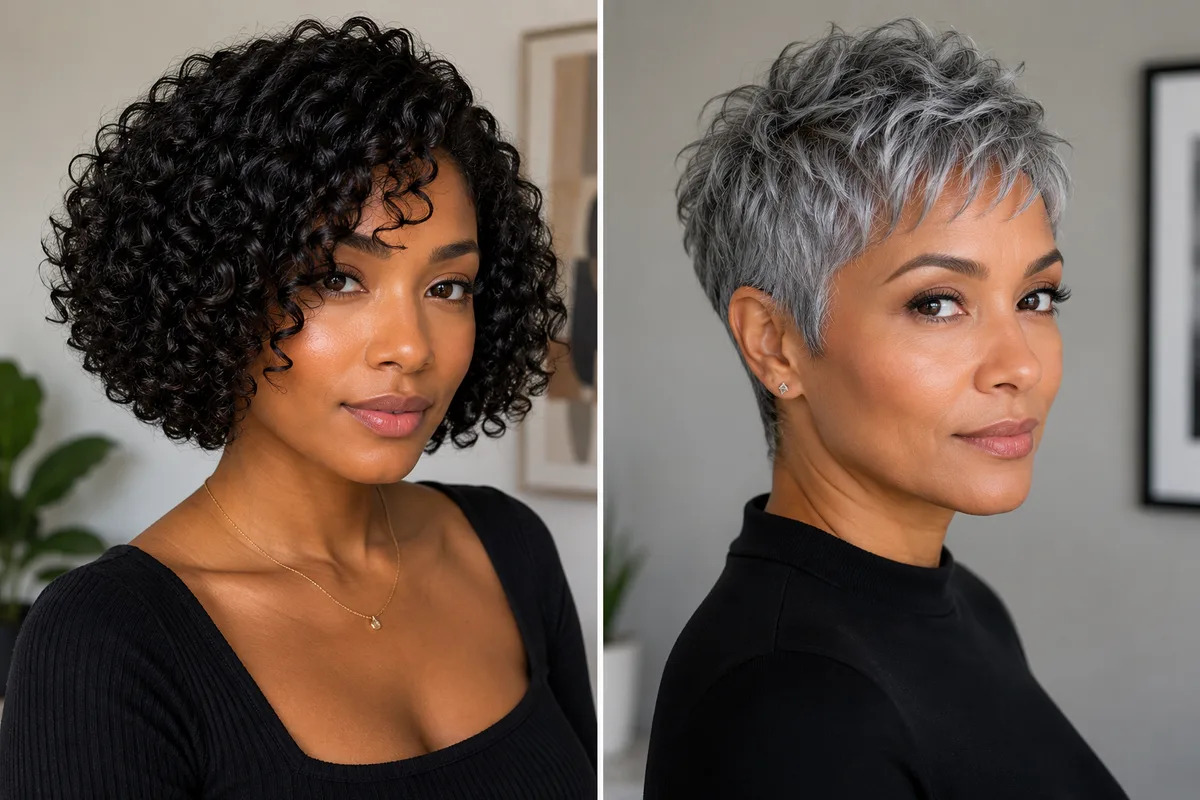
Curly and coily hair (3A–4C) gets skipped in most pixie vs bob guides. A short bob on curly hair (sometimes called a curly bob) works well because the curl pattern adds volume and shape on its own. You’re not fighting the hair, you’re letting it do the work. Expect more volume and visual fullness than straight-haired reference photos suggest, since curly hair shrinks as it dries.
For tightly coiled or 4C hair, a pixie cut requires a consultation with a stylist who specializes in natural hair, because shrinkage can significantly affect the final length. A cut that looks like 2 inches on stretched hair may land much shorter once your curls contract. Bring reference photos showing the cut on your specific curl pattern, not on straightened hair. If you are exploring our guide to summer hairstyles for curly hair, that post has styling ideas that translate well to short curly bobs.
Gray and silver hair looks striking in both cuts, but the textured pixie suits gray hair particularly well. Silver tones can make thick hair appear heavier than it feels, and a close-cropped pixie removes that weight while letting the silver tone catch the light. A layered gray bob is equally chic and gives more versatility for styling with a diffuser or round brush.
Women in their 40s, 50s, and 60s often find that a textured pixie or layered bob becomes the most reliably flattering cut they’ve had, not because short hair is age-appropriate, but because it takes less daily effort to look polished. If you have been curious about going short for years, this might be the decade to try it. Both styles work with gray, highlighted, or natural hair at any shade.
Maintenance, Trim Costs, and Daily Styling Time
Maintenance, Trim Costs, and Daily Styling Time
This is the section that flips the conventional wisdom on the pixie cut vs short bob debate. Short hair is often marketed as low maintenance, and in some ways that’s true. But the full picture is more complicated than the marketing suggests.
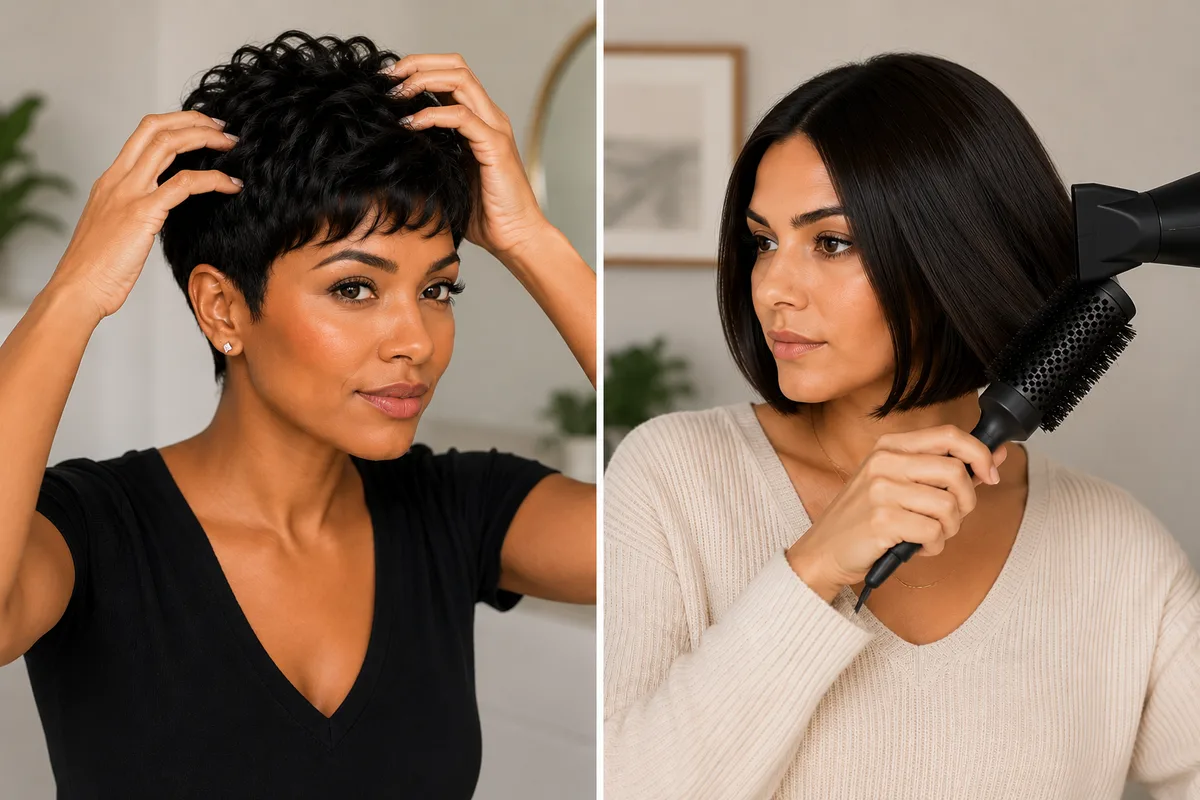
Trim frequency is where the pixie and the bob differ most. A well-shaped pixie needs a trim every 4–5 weeks to hold its silhouette. Once the back and sides grow out, the shape changes fast. A short bob can go 6–8 weeks between trims and still look deliberate, since a few weeks of growth blends into the length rather than disrupting it. Over a year, that difference adds up to roughly 2–4 extra salon visits for a pixie wearer.
Cost in real numbers: At an average trim cost of $35–$60, a pixie adds $70–$240 more per year in maintenance visits compared to a short bob. That spread is wide because salon prices vary significantly by city and salon type. The gap is worth knowing before you commit, especially if budget is part of your decision.
Daily styling time is where the pixie wins. A pixie can be styled in 3–5 minutes with a small amount of pomade, clay, or texturizing cream worked through the top with your fingers. A short bob typically needs 10–20 minutes for a basic blow-dry with a round brush plus any flat iron or wave work. If you wash and go in the morning, a pixie is the lower-effort daily choice. The short bob is low effort only on the days you skip heat styling entirely.
Products to keep on hand: A pixie needs a lightweight pomade or clay for definition and hold, applied sparingly so the style does not look stiff. A short bob benefits from a heat protectant before blow-drying, a medium-hold styling cream for smoothness, and a round brush for volume at the roots. For texture-specific recommendations, the short hair products guide covers the most useful options by hair type without overwhelming product lists.
The Grow-Out Stage by Stage (Months 1–12)
The Grow-Out Stage by Stage (Months 1–12)
The fear of being stuck in a short cut stops a lot of women from committing at all. It’s worth taking seriously, but the reality is less dramatic than you’re probably imagining. Both grow-outs follow a predictable timeline, and a good stylist can shape through every awkward phase.
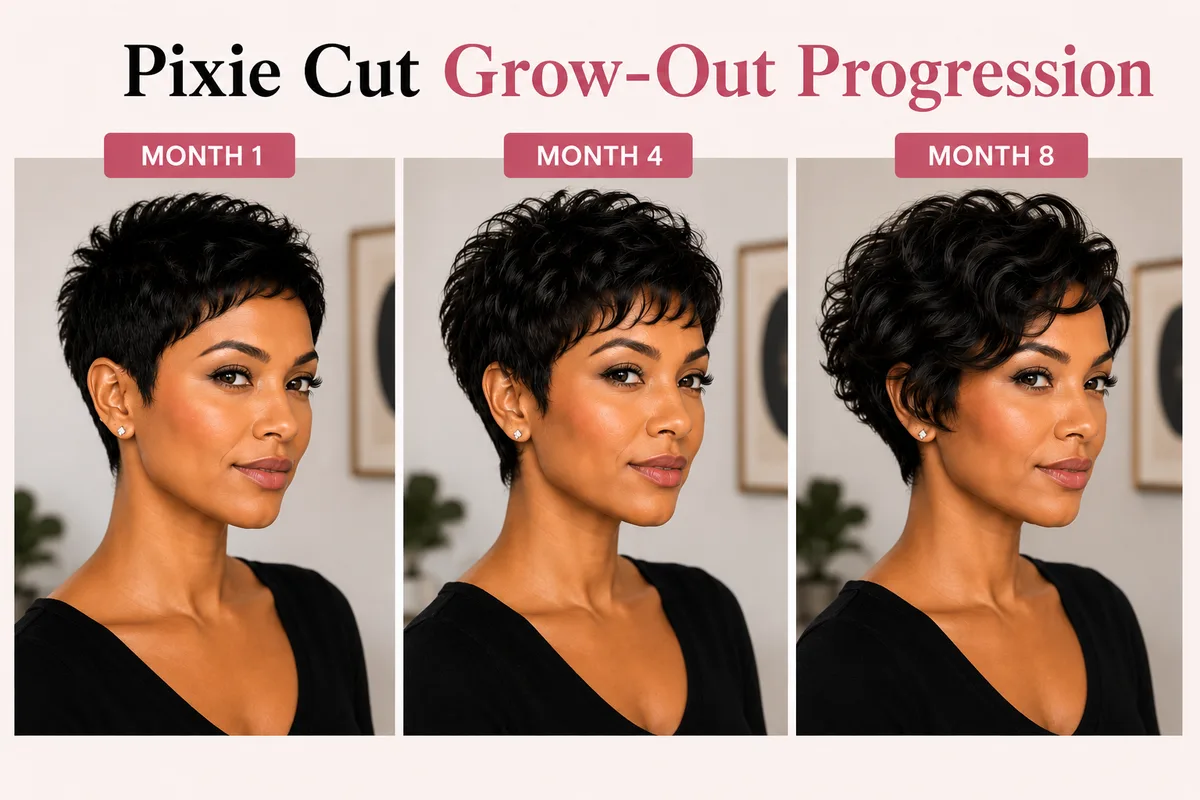
Pixie Grow-Out: What to Expect
- Months 1–2: The shaggy start. The nape and sides grow unevenly and the shape begins to soften. Style the top with a texturizing product and embrace a slightly piecey, undone look. It reads as intentional on a short cut and looks far better than trying to keep it tight.
- Months 3–4: The bixie window. You now have enough length to style as a pixie-bob hybrid. This is one of the most flattering in-between stages, especially if you ask your stylist for a light shaping trim that reinforces the bixie silhouette without cutting away the length you have grown. A small amount of texturizing cream or light wax worked through the top gives the bixie its signature undone, effortless shape.
- Months 5–7: The back-grows-faster phase. The nape grows more quickly than the sides and crown, which can create an uneven back line. A nape trim every four weeks keeps the back looking clean without losing overall length progress. This is the stage where many women feel the most frustrated, but a good stylist can shape through it.
- Months 8–12: Arriving at a short bob. By month eight or nine, you have roughly enough length to style as a soft short bob. Adding curtain bangs or loose layers at this point makes the transition look completely intentional. Ask your stylist for a light shaping trim that blends the sides and nape into the top length, and the grow-out phase is effectively over.
Bob Grow-Out: What to Expect
- Months 1–3: Welcome to the lob. A short bob grows into a long bob (lob) quickly, and the lob is a universally flattering, low-effort length. Many women who set out to grow their bob out discover they love the lob so much they stay there for months. A loose wave with a 1-inch curling iron or a simple blowout with a round brush is all it takes to keep it looking polished at this stage.
- Months 4–6: Shoulder-length territory. At this stage, the hair can start to feel flat and shapeless if left unstyled. Layers added at a regular trim keep the shape looking clean, and lightweight styling cream gives movement without weight. Curtain bangs added at this point are a flattering option that makes the in-between length feel completely deliberate.
The short version: a bob grows out more gracefully, with fewer obvious in-between phases. A pixie takes longer and needs a few strategic trims along the way, but a good stylist can get you through it. Neither cut is permanent.
What to Tell Your Stylist
What to Tell Your Stylist
Pre-Booking Tips That Make a Real Difference
- Bring 2–3 reference photos that match your hair texture. If you have wavy or curly hair, a photo on straight hair gives your stylist the wrong blueprint. Browse our short haircuts for women for a starting collection.
- Book a separate consultation before your cut if the salon allows it. Ten minutes to look at reference photos and talk through your face shape costs nothing and prevents expensive misunderstandings.
- Tell your stylist how much time you actually spend on your hair in the morning. That shapes how they layer the cut, and it gets you a result that fits your real routine, not an idealized one.
Conclusion
Conclusion
The pixie cut vs short bob decision comes down to how much time you want to spend in the salon chair versus how much you want to spend getting ready in the morning. The pixie is faster to style daily; the bob is easier to grow out. Pick the trade-off that fits your actual life.
Save this post before your appointment, then browse our guide to short haircut styles for face-shape-matched inspiration. If you want a cut that handles summer heat, check out summer cut inspiration for more ideas. Whichever cut you choose, you have everything you need to walk in and make the call.


Your email address will not be published. Required fields are marked *