
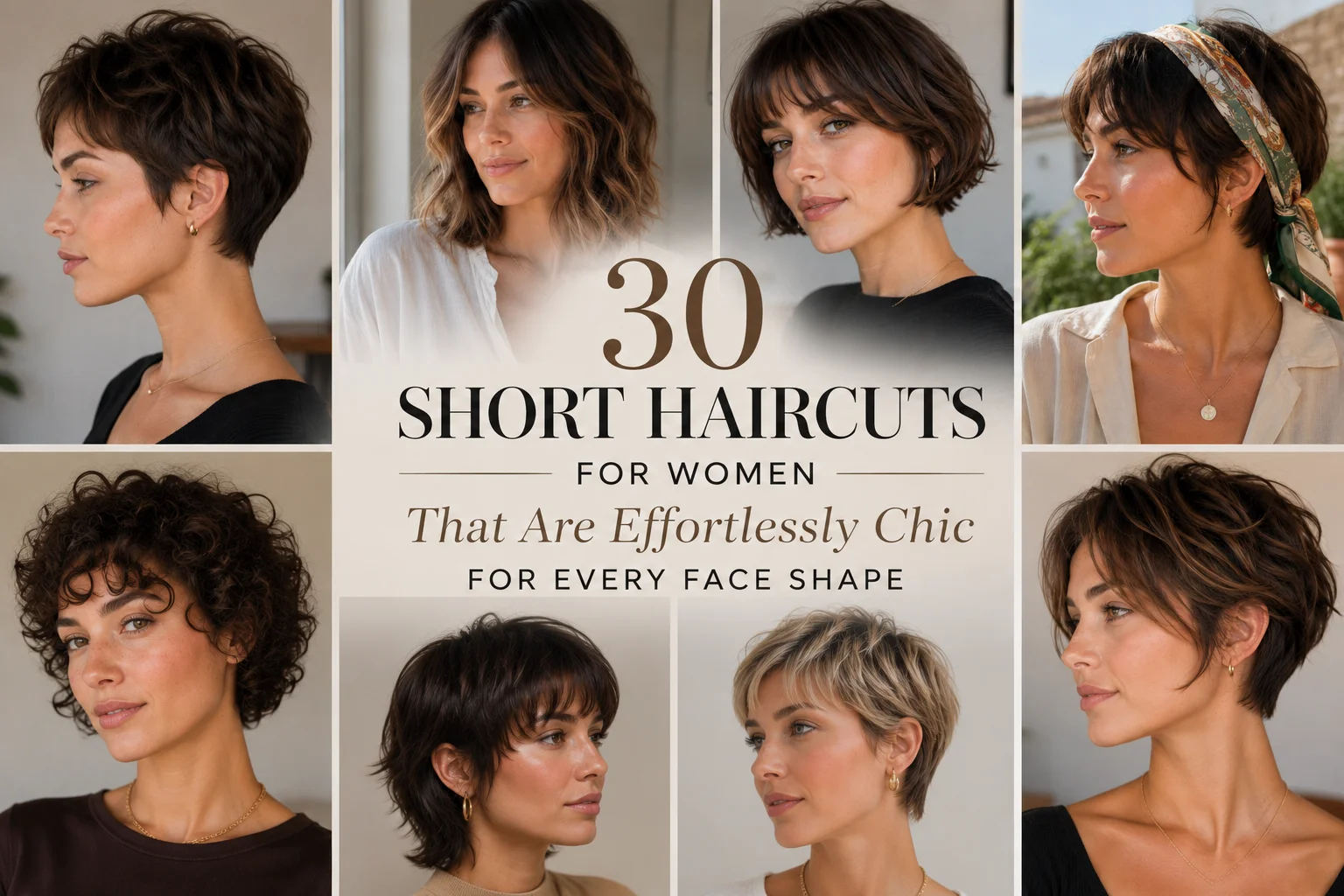

Short hair is having its biggest moment in years, and the salon chair has never felt less scary. Walk down any street or scroll any feed and the proof is everywhere, from Zendaya’s sharp bixie to the soft, French-girl bob that suddenly seems to be on everyone. The right short cut does one thing really well. It frames your face, plays up your best features, and cuts your morning routine in half.
But here is the part most guides quietly skip. A short haircut is not one-size-fits-all. The exact same cut that makes one woman look instantly sculpted can wash out and overwhelm another. The real secret has nothing to do with chasing the trendiest shape. It comes down to matching the cut to the shape of your face and the texture of your hair. Get that pairing right, and a short cut becomes the most effortless, expensive-looking thing you own. For summer-ready picks, see our guide to summer short haircuts for women.
That is exactly what this guide helps you do. Below are 30 short haircuts for women, sorted by face shape and rounded out with the trending cuts of 2026, plus the honest details on cost, upkeep, and grow-out that most lists leave out, so you can walk into the salon knowing exactly what to ask for.
How to Choose a Short Haircut for Your Face Shape
Before the cuts, one quick rule that stylists swear by. A flattering haircut is really about balance. Round faces want length and angles. Square faces want softness. Heart faces want width at the jaw. Oval faces can wear almost anything.
There are five main face shapes to know.
- Oval: Balanced proportions, slightly longer than wide. The most versatile shape.
- Round: Full cheeks, soft jaw, similar width and length. Wants elongating styles.
- Square: Strong, defined jawline. Wants soft, rounded layers.
- Heart: Wide forehead, narrow chin. Wants volume at the jaw.
- Oblong or long: Longer than wide. Wants width and horizontal volume.
Not sure which one is yours? Pull your hair back, look in the mirror, and trace your hairline. If your face looks about as long as it is wide with a rounded jaw, you are round. If your jaw is as wide as your forehead with sharp corners, you are square. For the full breakdown of the best cut for every shape, see our complete face shape breakdown.
Find Your Cut in 30 Seconds: The Short Hair Decision Guide
Most articles make you scroll through 30 photos hoping one clicks. This is faster. Answer these three questions and you will land on the right starting point.
Step 1. How much styling time do you actually want each morning?
- Under 5 minutes, wash and go: lean pixie or French bob
- 5 to 10 minutes, a little effort: bixie, textured bob, or shag
- I enjoy styling: lob, A-line bob, or a longer layered pixie
Step 2. What is your hair texture?
- Fine or thin: blunt shapes (French bob, blunt bob, sharp pixie) for the illusion of density
- Thick: layered or textured shapes (shag, textured pixie, bixie) to take out weight
- Curly: shapes cut to your curl pattern (curly crop, rounded pixie)
- Straight: precision shapes (sleek lob, sharp bob, classic pixie)
Step 3. What is your face shape?
- Round: add height. Textured pixie, asymmetrical bob, lob with deep side part
- Square: add softness. Waved bob, tousled bixie, curtain bangs
- Heart: add jaw width. Chin-length bob, side-swept bangs, A-line bob
- Long or oblong: add width. French bob, blunt bangs, voluminous bixie
- Oval: nearly anything works. Start with what fits Steps 1 and 2
Where your three answers overlap is your cut. A fine-haired, low-effort, round-faced reader lands on a blunt-cut textured pixie with height. A thick-haired, square-faced reader who likes to style lands on a tousled, layered bixie. Bring that combination, plus a photo, to your stylist.
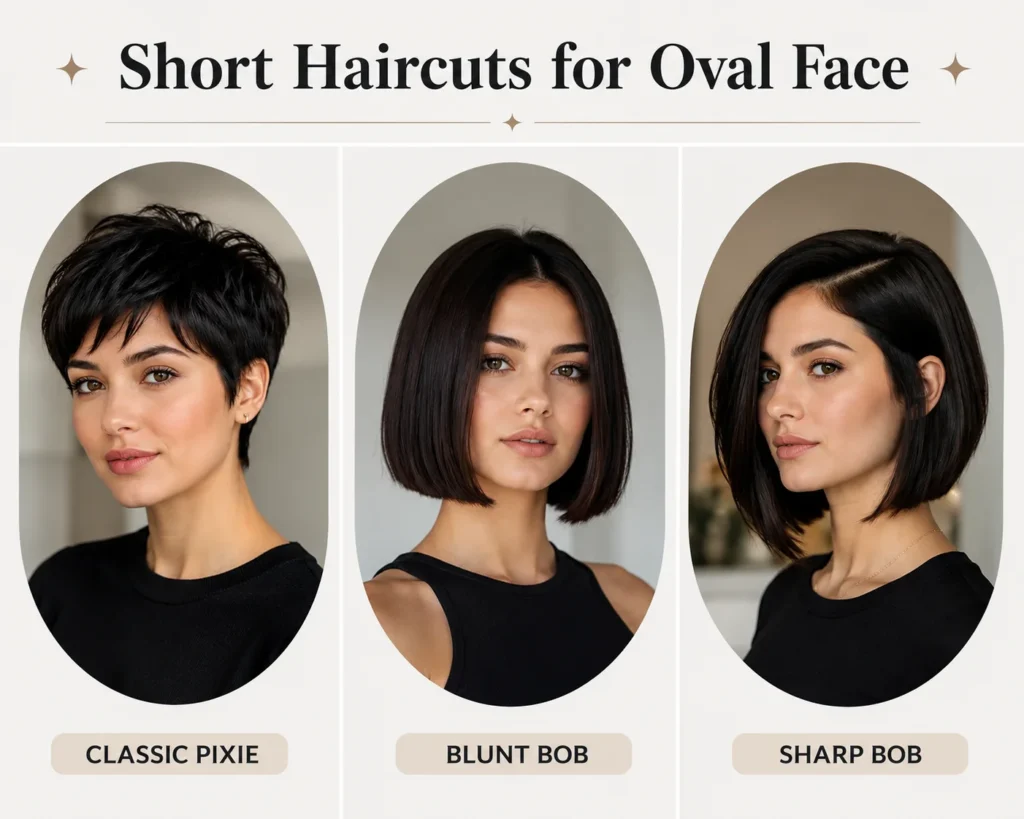
Short Haircuts for Oval Faces
Oval faces are the most balanced and can pull off nearly any short cut. The only thing to watch is adding too much length at the chin, which can stretch the face. Lucky you, almost everything works.
- Classic Pixie Cut. Short, cropped, and timeless. An oval face lets the pixie do all the talking without any feature looking out of proportion.
- Blunt Bob with a Middle Part. A symmetrical, chin-skimming bob that plays up the natural balance of an oval face.
- Sharp Short Bob. Clean lines and a precise edge that reads polished and confident.
- Choppy Pixie. A 90s-inspired textured crop with plenty of personality and edge.
- Sleek Center-Parted Lob. Very polished, and especially striking on straight hair.
- Long Pixie with Side Fringe. A grown-out pixie with a sweeping fringe for a soft, modern finish.
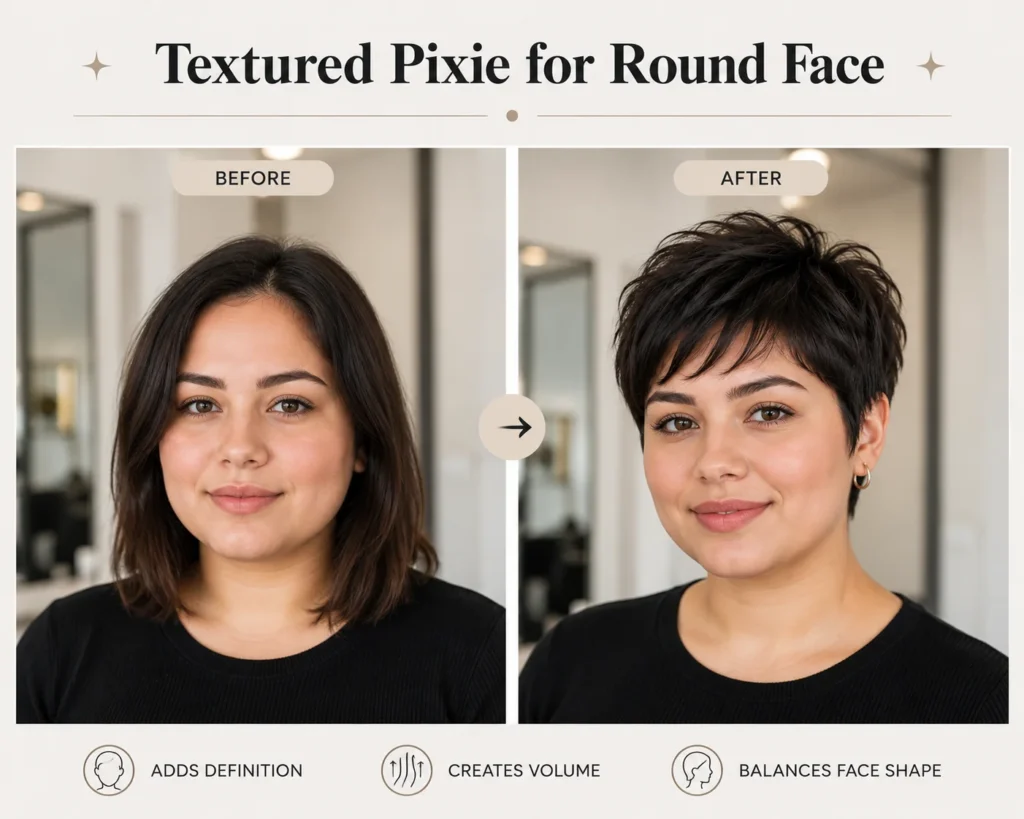
Short Haircuts for Round Faces
Round faces do well with cuts that add height and angles to draw the face longer. The aim is to pull the eye up and create the illusion of length, so volume on top and styles that hit just above or below the cheeks work beautifully. The general rule from stylists is to lean toward cuts that play up the area either just above or just below the widest point of the face.
- Voluminous Textured Pixie. Height and volume on top stretch the face upward.
- Asymmetrical Bob. An uneven length pulls the eye diagonally and slims the cheeks.
- Long Bob (Lob) with a Deep Side Part. Length plus an off-center part creates a flattering, angular drop.
- Wispy Bangs with a Top Knot Pixie. Soft fringe and height pull a rounder face longer.
- Sweeping Side-Fringe Crop. Diagonal lines break up width and add structure.
- Stacked Bixie. Short graduated back with a longer top adds the lift round faces love.
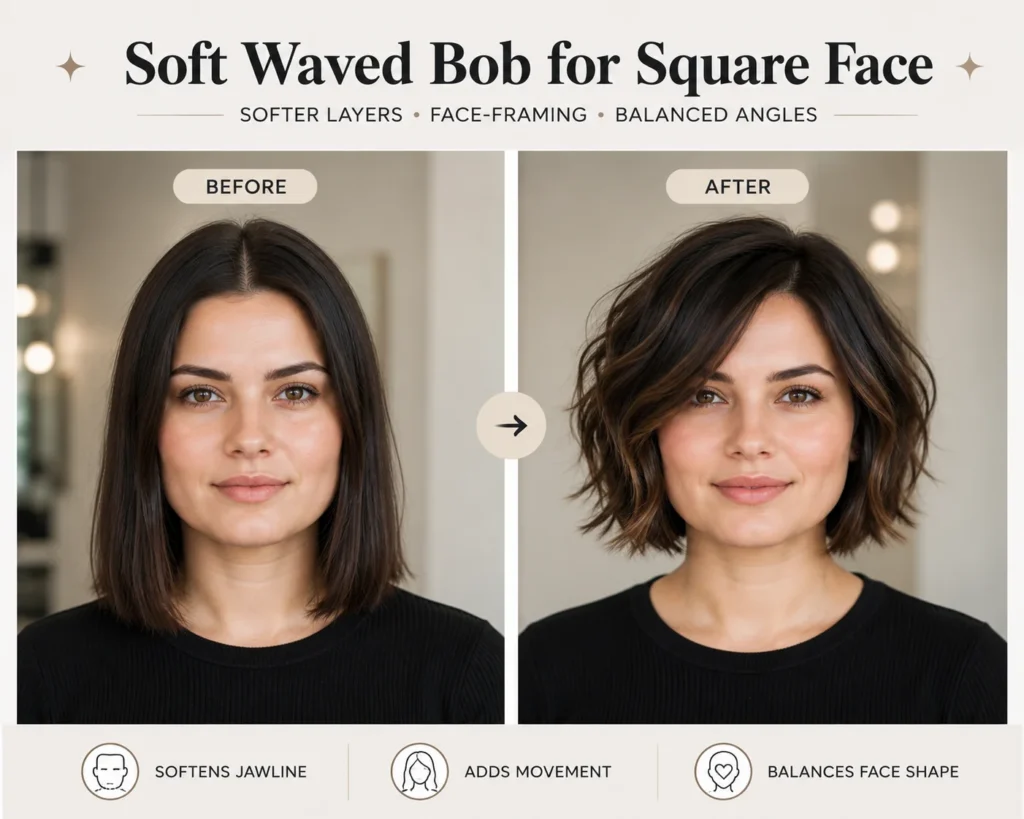
Short Haircuts for Square Faces
Square faces have a strong, defined jawline, so the goal is to soften those angles. Curved, layered, and rounded cuts balance sharp corners far better than blunt, geometric lines do.
- Waved Chin-Length Bob. Soft, vintage waves bend gently around the temples and jaw.
- Tousled Bixie. A bob-pixie hybrid with soft, face-framing layers that round out the jaw.
- Wispy Bangs with a Shoulder-Grazing Shag. Choppy, soft movement that breaks up straight lines.
- Curtain Bangs with a Soft Bob. Pulls attention to the center of the face and softens a strong forehead.
- Textured Lob. Movement and volume instead of harsh, blocky edges.
- Side-Swept Pixie. A diagonal sweep across the forehead softens the jawline.
Short Haircuts for Heart-Shaped Faces
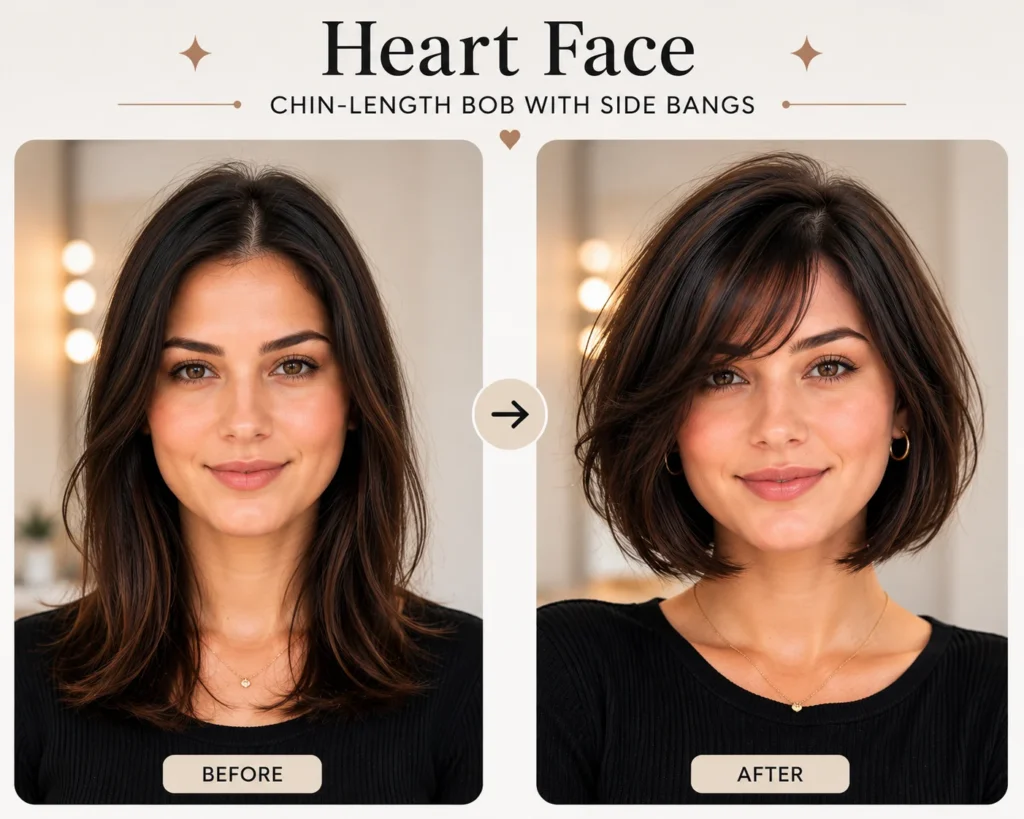
Heart faces are widest at the forehead and narrowest at the chin. The trick is to add fullness around the jaw and avoid going too heavy on top, so the lower half of the face catches up. Soft, side-swept bangs are a stylist favorite here, since they add a little polish while framing the face without throwing off its proportions.
- Jaw-Length Blunt Bob. Adds fullness exactly where a heart face needs it, around the narrow chin.
- Chin-Length Bob with Side-Swept Bangs. Soft bangs bring width to the lower half and frame the jaw.
- A-Line Bob. A little longer at the front to frame the jaw and balance the forehead.
- Overgrown Pixie with Soft Curls. Fullness lower on the face keeps the look balanced.
- Shoulder-Grazing Crop with Minimal Layering. Easy movement around the neck and collarbone.
- Deep Side-Parted French Bob. Opens the face without piling on weight up top.
Short Haircuts for Oblong and Long Faces
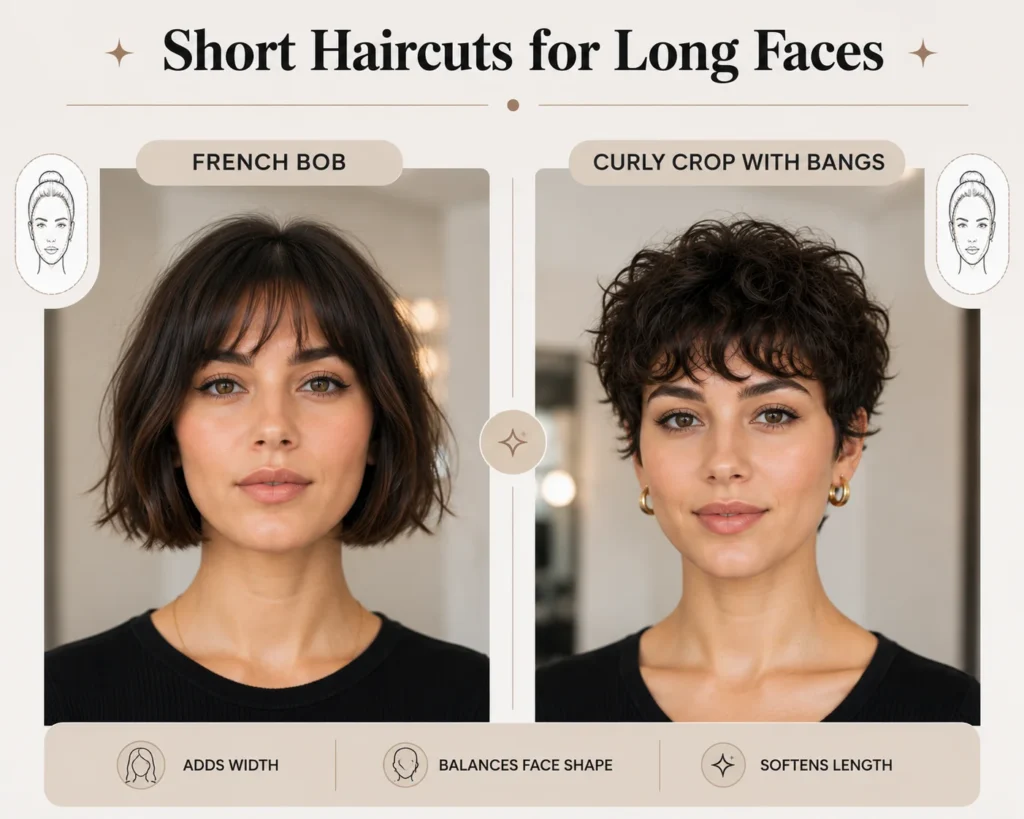
Long faces look most balanced with cuts that add width and horizontal volume so the face does not read stretched. Bangs and chin-length shapes are your friends here.
- Curly Crop with Blunt Bangs. Width from natural curls paired with a shortened forehead.
- Chin-Length Bob with Curtain Bangs. Cuts down the look of a longer face.
- Voluminous Bixie. Wide, layered sides create the illusion of a broader face.
- Short Shag with Heavy Fringe. Wide, choppy layers add horizontal volume.
- Flouncy Wavy Lob. Body and width right alongside the cheeks.
- Classic French Bob. Sits right at the cheekbones to add instant width.
The Trending Short Haircuts of 2026 (Save These for Your Stylist)
Beyond face shape, a handful of cuts are everywhere right now. The mood for 2026 is clear, and it leans classic, sophisticated, and effortlessly chic, with less fuss than the last few years. Bringing these named styles to your appointment makes it much easier to communicate exactly what you want.
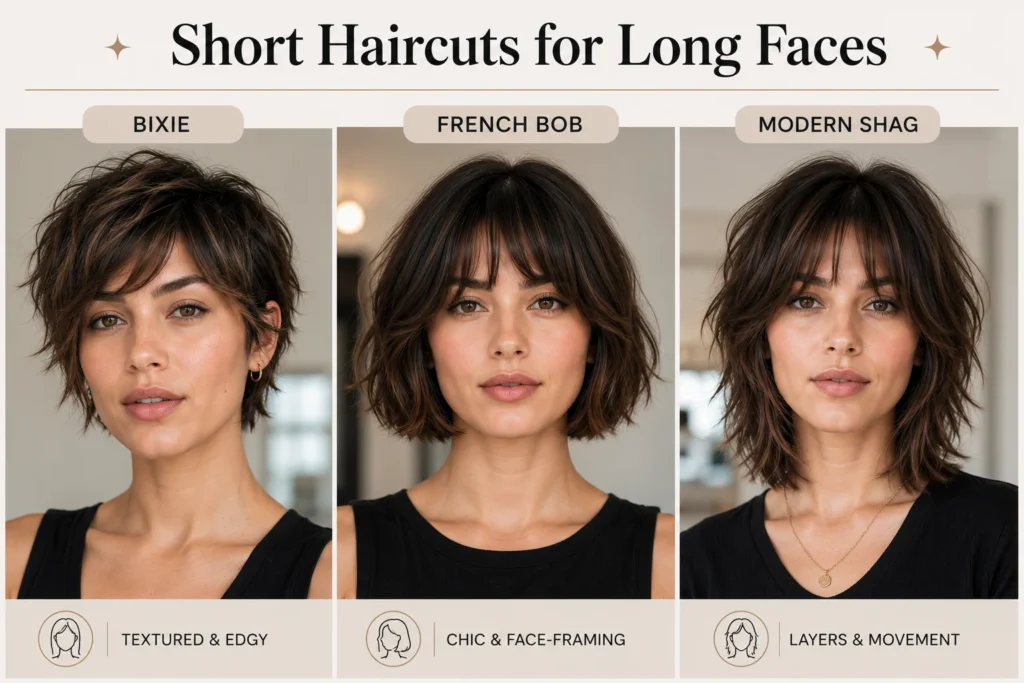
The Bixie. Somewhere between a bob and a pixie, the bixie gets its name from its ear-skimming length and tousled texture. It works on most face shapes and is perfect for moving between lengths, which is exactly why it has stayed at the top of trend lists into 2026. Zendaya wore several versions in a single week, which tells you how flexible it is. Our dedicated bixie cut guide breaks down the cut in more detail, including how to ask for it and what makes it different from a straight pixie or bob.
The French Bob. Inspired by Parisian style, this cut sits right at the chin or just below, usually with soft, blunt bangs. Stylists keep calling a very textured French bob the short cut of 2026, partly because the slightly messy vibe never really dates and it works with natural wave and movement. Its charm lies in that easy imperfection, and it suits almost every hair type and face shape.
The Modern Shag. A 70s-inspired, textured look with choppy layers and a face-framing fringe. The 2026 take is best described as precision with ease, leaning toward fluid shags and modern pixies with movement built into the shape. It works beautifully with dimensional color and adds instant movement.
The Pixie Bob (Pob). A 90s revival, think Scarlett Johansson circa 2015, with one side sharp and cropped and the other a little longer and sweeping. It feels architectural and still wearable.
Scandi Layers and the Tassel Cut. A sleek, above-the-jawline blunt cut with a fashion-forward, polished edge. The theme for the year is strong shapes with softness. Less boho and undone, more sleek, structured, and refined.
Short Haircuts by Hair Type (The Part Most Guides Skip)
Your hair texture matters as much as your face shape. Here is a quick guide.
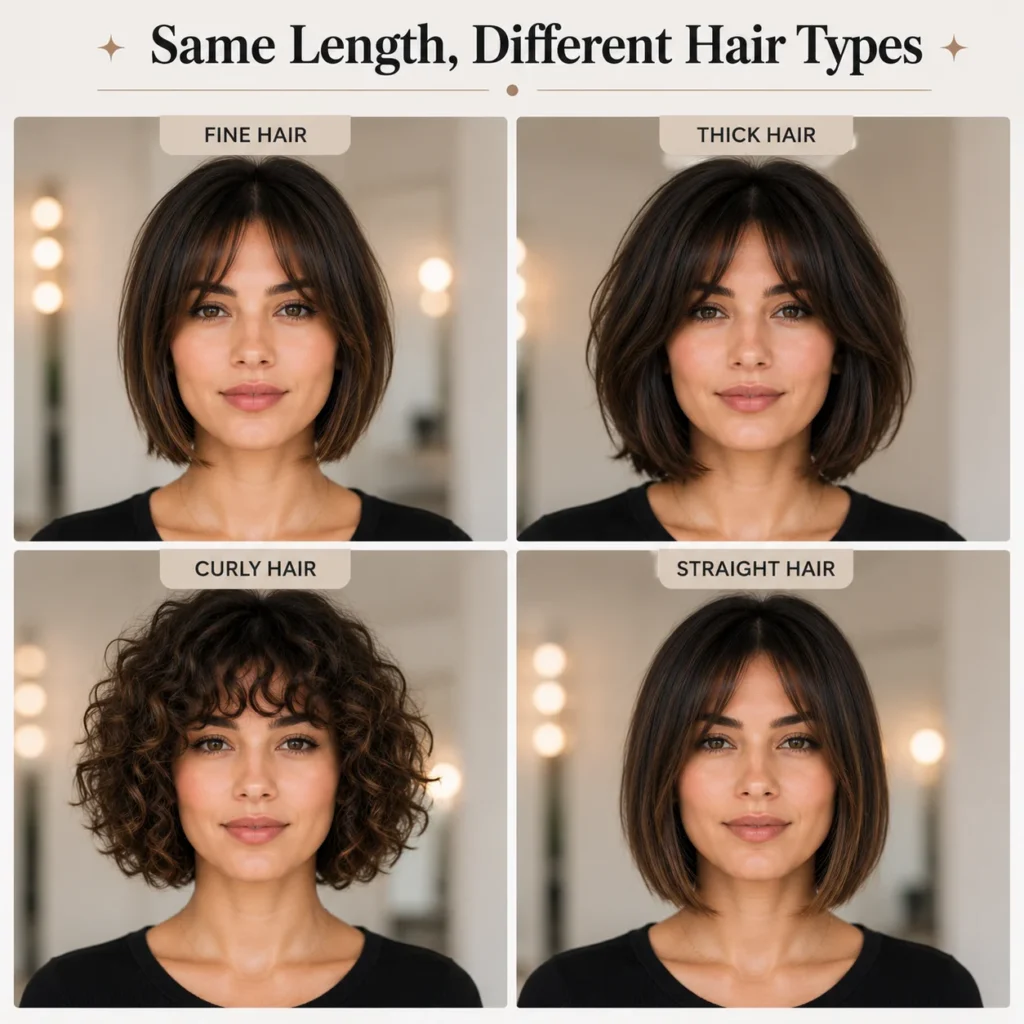
- Fine or thin hair: Blunt cuts and a sharp French bob fake the look of density. Go easy on heavy layering, which can read sparse. A blunt bob makes hair look instantly thicker.
- Thick hair: Layered and textured cuts like the shag or a heavily textured pixie take out bulk and add movement without weight.
- Curly hair: Curly crops and pixies work beautifully short. A shape cut to follow your curl pattern keeps it neat and defined. Curly hair is also naturally drier than straight hair, so the American Academy of Dermatology recommends conditioning the whole length, not just the ends.
- Straight hair: Sleek bobs, lobs, and precision pixies show off clean lines and crisp edges.
Short Haircuts for Women Over 50
Short cuts are some of the most flattering and lowest-maintenance options for women over 50. Soft, textured pixies add lift and movement, while a chin-length bob with subtle layers keeps things polished without ageing the face. The key is texture over stiffness. A soft, lived-in finish reads modern and youthful, while overly structured or flat styles can feel dated. Face-framing layers and a few soft pieces around the jaw flatter beautifully at any age. If you are looking specifically at your 40s rather than 50s and beyond, our hairstyles over 40 roundup covers 30 cuts, both short and long, built around that same texture-over-stiffness principle.
What a Short Haircut Really Costs to Maintain
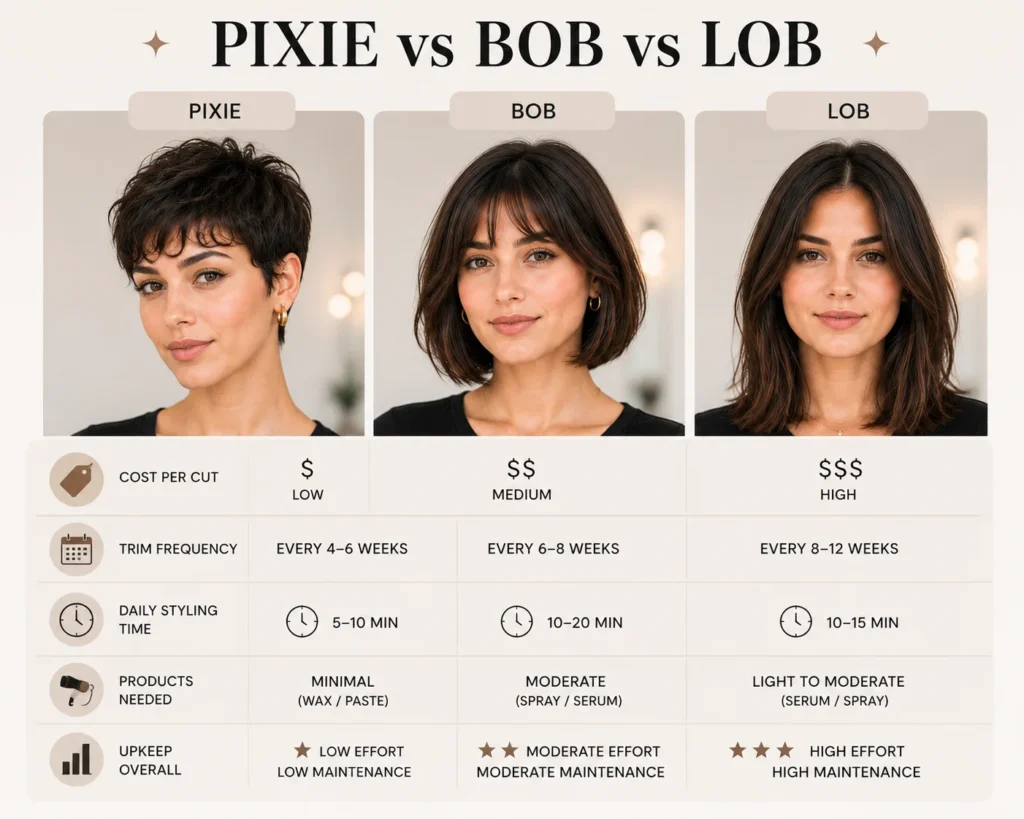
Here is the part almost no inspiration post tells you. A short cut is cheaper per visit but needs visits more often, so the real cost is in the upkeep rhythm, not the first appointment. These are 2026 US averages, before the customary 20 percent tip.
A women’s haircut averages around 39 dollars at a value chain like Supercuts, about 66 dollars at a mid-range salon such as Ulta, and around 93 dollars at an independent high-end salon, based on industry price tracker data reported by Yelp. In major cities like New York or Los Angeles, a standard women’s cut can start at 100 to 150 dollars. A basic bob or pixie usually falls in the 20 to 50 dollar range at most salons, while adding layers pushes it to roughly 30 to 70 dollars.
Now the rhythm. A pixie holds its shape for about 4 to 6 weeks before it needs a reshape. A bob generally lasts 6 to 8 weeks, because a little growth changes its line more gently than it changes a pixie’s. That difference adds up. One writer who tracked a full year of pixie upkeep logged 11 cuts and just under 570 dollars, simply because the sharp shape needed a trim roughly every four weeks. A bob on the same budget might mean only 7 or 8 visits a year.
The takeaway: if you want the lowest total upkeep, go for a softer, longer short cut like a lob or grown-out bob that hides regrowth. If you want the sharpest look and do not mind the standing appointment, a pixie delivers it, at a higher yearly cost.
Quick upkeep snapshot
- Pixie: trim every 4 to 6 weeks, lowest daily styling, highest visit frequency
- Bob: trim every 6 to 8 weeks, moderate styling, moderate visit frequency
- Lob and longer layers: trim every 8 to 10 weeks, most forgiving of regrowth, lowest visit frequency
- Bangs of any kind: free or low-cost bang trims every 2 to 4 weeks between cuts
How Each Cut Grows Out (So You Are Not Stuck)
The thing that keeps most women out of the salon chair is the awkward grow-out phase. Knowing where a cut goes next takes that fear away, and it is information competitors rarely bother to give you.
- Pixie grows into a bixie, then a bob. As the top and sides get longer, a pixie turns into a bixie within a couple of months, then a chin-length bob. The trick is regular reshapes so the layers grow in proportion instead of going shapeless.
- Bixie grows into a bob or lob. Already a hybrid, the bixie is the easiest short cut to grow out. Its layers blend into a textured bob with almost no awkward stage.
- French bob grows into a longer bob, then a lob. Because it sits at the chin, a French bob just keeps lengthening past the jaw. Curtain or grown-out bangs make the transition easy.
- Shag grows out gracefully on its own. Its built-in layers mean a shag looks intentional at almost every length, which is part of why stylists call it low-commitment.
- Blunt bob is the trickiest. A precise, one-length bob shows growth fastest and can feel heavy as it lengthens. Working in a few face-framing layers as it grows keeps it from going flat.
How to Style and Maintain Your Short Cut Day to Day
Styling takes seconds. A pinch of matte wax or dry paste worked through a pixie gives you texture, while a light pomade or shine cream gives a sleek, polished finish. The golden rule with short hair is less product, more often, because overloading the hair quickly makes it look flat. Between salon visits, ask whether your stylist does a quick bang or fringe trim, which many do for free or a small fee, and which keeps the whole shape looking fresh.
Frequently Asked Questions
Conclusion
A great short haircut is not about chasing the boldest trend. It is about finding the shape that works with your face, your hair texture, and the amount of effort you actually want to spend each morning. Whether you go for a soft French bob, a sharp pixie, or the of-the-moment bixie, the right cut should feel like the easiest, most flattering version of you.
Save the styles that caught your eye, bring a photo to your stylist, and ask for a shape made for your face. The chop is almost always less scary, and a lot more freeing, than you expect. Once you have your cut, see our picks for the top styling products to keep it looking salon-fresh at home.
If you are open to switching things up entirely, protective styles are another way to give your hair a break from heat. Our roundup of braided looks covers 37 looks from simple cornrows to statement box braid looks, all with styling notes to help you pick the right one for your hair texture.
If you want something bolder, our full guide to edgy short cuts rounds up 35 daring shapes worth trying this year.
Haircut for Small Face Female
Finding the right haircut for small face female starts with knowing your hair texture and how much styling time you realistically have. The cuts that look best long-term are the ones designed around your specific hair behavior, not just the aesthetic in a photo. Bring two or three reference images to your stylist and ask which elements of each they can adapt to your texture.

Your email address will not be published. Required fields are marked *