

The bixie cut is the haircut everyone is asking their stylist for right now, and for good reason. It borrows the cropped, breezy shape of a pixie at the crown and sides, then keeps just enough bob-length layers through the back and nape to give it real versatility. If you have been scrolling save-worthy short hair photos and keep landing on this exact silhouette, this guide walks you through who it suits, exactly what to say in the chair, and how to keep it looking sharp long after you leave the salon.
What Is a Bixie Cut?
What Is a Bixie Cut?
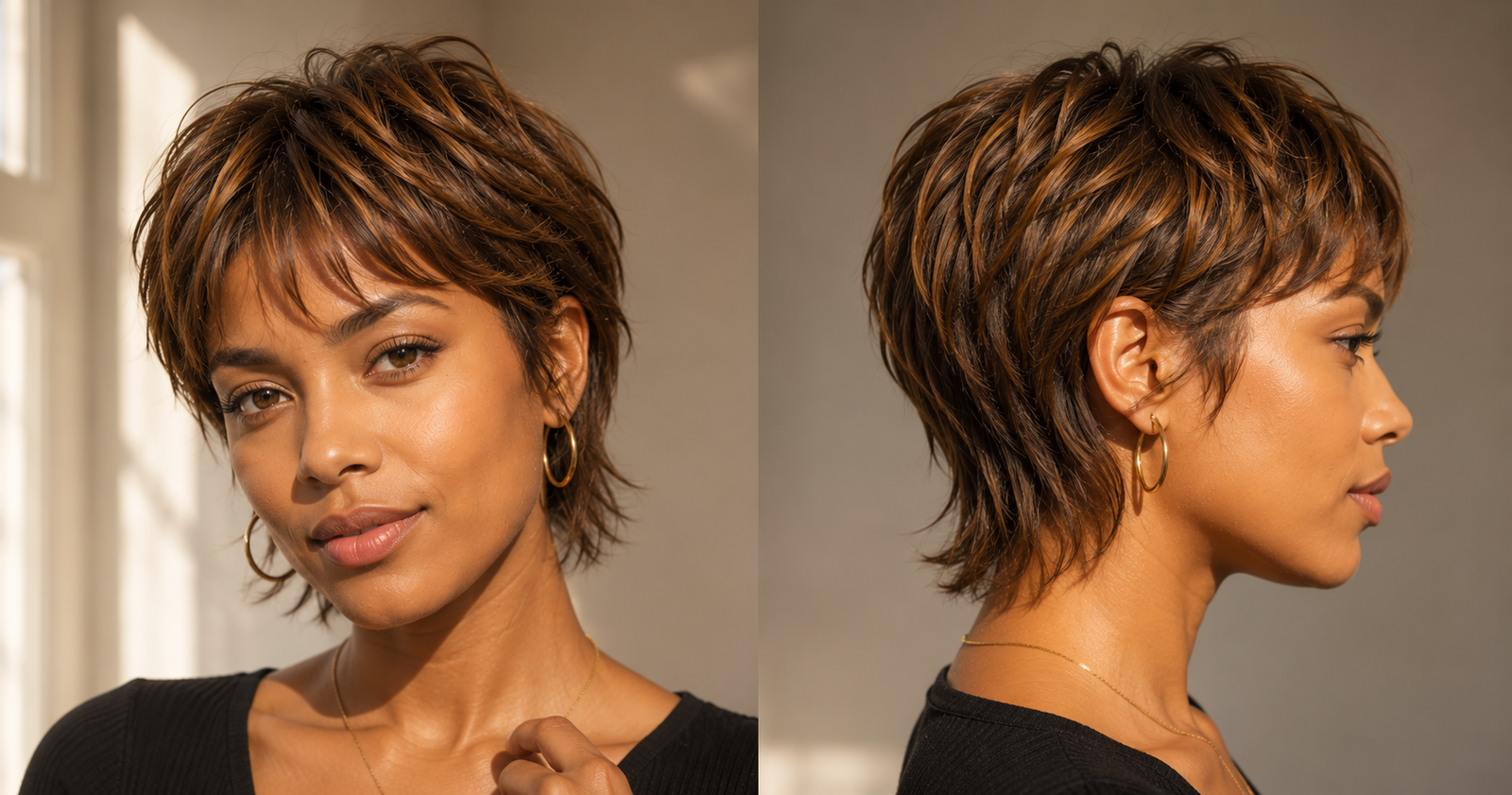
A bixie cut is a pixie-bob hybrid: short through the crown and sides like a pixie, with longer layers left at the back and nape like a bob. That extra length gives it more versatility and a gentler grow-out than a blunt pixie, which is why it has taken over 2026. The next section compares all three cuts directly.
Bixie vs Pixie vs Bob: What Is the Difference?
Bixie vs Pixie vs Bob: What Is the Difference?
Choosing between a pixie, a bixie, and a bob usually comes down to how much length you are willing to give up and how much time you actually want to spend styling in the morning. Below is a side-by-side look at how the three cuts compare across the details that matter most: length at the crown, length at the nape and sides, how much daily effort each one asks for, and how forgiving each cut is as it grows out. Use this table as a quick gut check before you book, then read the "who it suits" notes underneath for a little more context on each style.
| Feature | Pixie Cut | Bixie Cut | Bob Cut |
|---|---|---|---|
| Length at crown | Very short, close to the scalp | Short, slightly longer than a pixie | Chin-to-shoulder length |
| Length at nape/sides | Very short, tapered | Longer layers left through nape | Full length retained around the perimeter |
| Daily styling effort | Low, a few minutes with product | Low to moderate, 5 to 10 minutes | Moderate, blow-dry and smoothing time needed |
| Grow-out ease | Can look shapeless without a trim | Grows out into a shag or longer pixie gracefully | Grows out into a lob with minimal awkward stages |
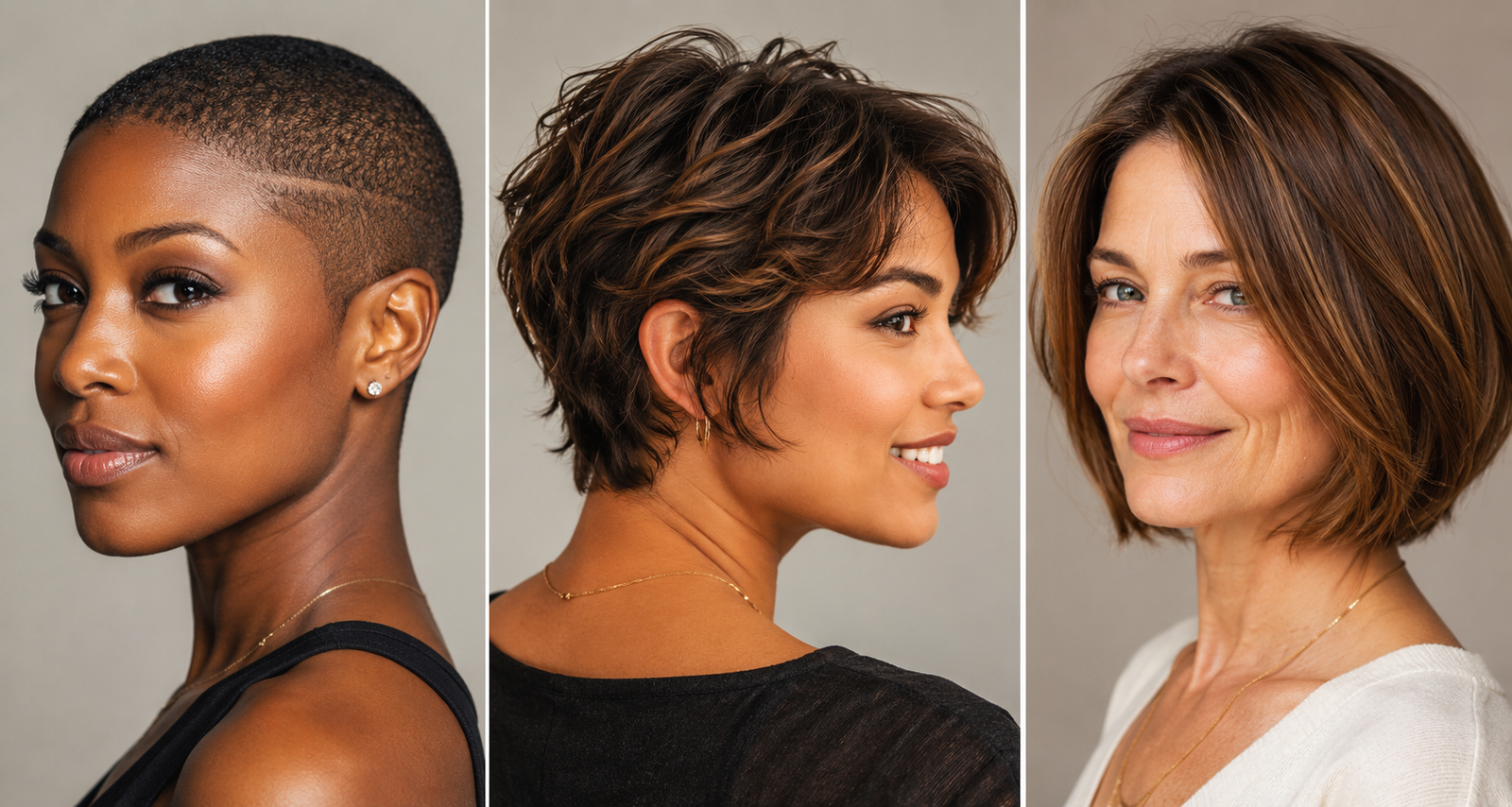
A pixie suits anyone who wants the boldest, lowest-maintenance option and does not mind trimming every few weeks to keep the shape crisp. A bixie sits in the middle: it offers nearly the same daily ease as a pixie but with more versatility, which makes it the most flexible of the three. A bob keeps the most length and gives a softer, more polished shape for anyone not ready to go quite this short. See our pixie versus bob comparison for a closer look at how the two hold up side by side.
Who Suits a Bixie Cut? Face Shape and Hair Texture Guide
Who Suits a Bixie Cut? Face Shape and Hair Texture Guide
Face shape and hair texture both change how a bixie falls, and this is the part most trend roundups skip past with a single vague line. The truth is a bixie can work on nearly every face shape and texture, but the specific variation you ask for should shift based on your features and your hair's natural behavior. Below is a breakdown by face shape first, followed by texture, so you can walk into your consultation with a much clearer idea of what to request.
- Round faces do well with a bixie that has more height built into the crown and a side-swept fringe, since added vertical lift helps elongate the face instead of widening it further.
- Oval faces are the most flexible of all the face shapes and can wear almost any bixie variation, from a blunt fringe to a soft curtain fringe, without much risk of it looking wrong.
- Square faces usually look best with a bixie that has softer, rounded layers around the jaw rather than a blunt, geometric fringe, which helps soften strong jaw angles.
- Heart-shaped faces benefit from a bixie with a side part and longer pieces framing the jawline, which balances a narrower chin against a wider forehead.
- Long faces look best with a bixie that keeps some fringe or length across the forehead, since this breaks up vertical length and keeps the face from reading as too narrow.
Straight hair shows every layer clearly, so ask your stylist for precise, well-blended lines since any unevenness will be easy to spot. Wavy hair tends to fall into shape with minimal effort, which makes it one of the more forgiving textures to maintain between salon visits. Curly and coily hair need extra length left at the crown to account for shrinkage once the curl pattern settles, so a slightly longer cut than you expect usually works best. Fine hair gains the appearance of volume from a bixie’s shorter layers, since the cut removes weight that would otherwise pull hair flat. Thick hair loses some of its bulk and density instead, so ask your stylist to point-cut the ends if your hair tends to look too heavy or triangular.
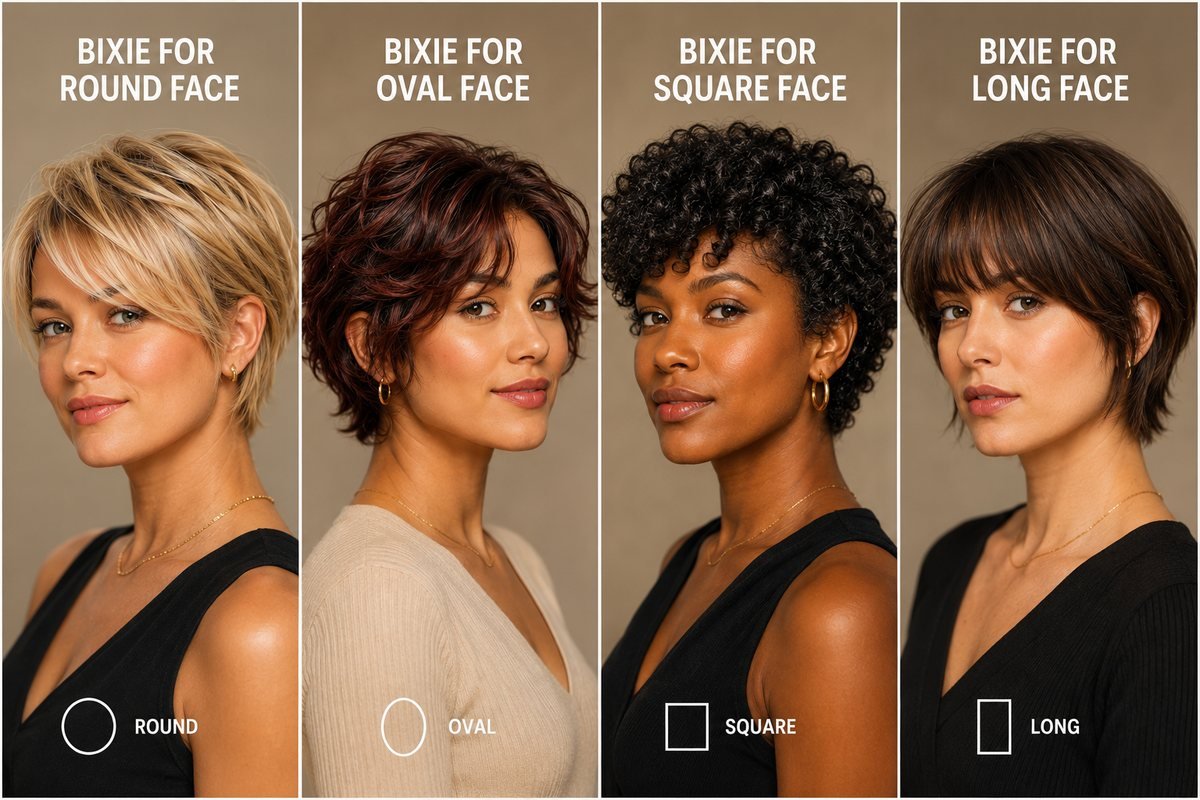
If you are still deciding between a bixie and a fully cropped pixie based on your face shape, our pixie cut guide goes even deeper into face-shape matching for the shortest end of the spectrum. Reading both guides side by side is the fastest way to walk into your consultation already knowing which direction fits you best.
Popular Bixie Cut Variations to Try
Popular Bixie Cut Variations to Try
Once you know the bixie is the right general direction, the next decision is which variation to ask for, since "bixie cut" covers a wide range of finished looks. Below are the most requested variations right now, each with a note on who it suits and the specific styling technique that defines it.
- Classic bixie: Even layering from crown to nape with a soft, blended fringe. Suits oval and heart face shapes especially well and is finished with a lightweight pomade worked through damp hair before air-drying.
- Shaggy bixie: Choppier, more disconnected layers with extra texture through the crown. Suits women who want a lived-in, undone look and is achieved with a texturizing spray scrunched into the ends while the hair is still damp.
- Wolf bixie cut: A shaggier, edgier take with heavy layering and often curtain bangs, borrowing from the wolf-cut trend. Suits thick and wavy hair best, since the extra layering keeps volume from feeling top-heavy, and is styled with a diffuser or rough-dried with fingers for lift.
- Curly bixie cut: Cut specifically to work with a curl pattern rather than against it, usually with slightly more length left at the crown to account for shrinkage. Suits curly and coily textures and should always be styled with a diffuser and a curl-defining cream rather than a flat brush.
- French bixie cut: A softer, more polished version with a blunt fringe and rounded ends, inspired by the effortless French-girl aesthetic. Suits straight and slightly wavy hair and is finished with a light-hold hairspray for a natural, unfussy shine.
- Bixie with bangs: Any bixie variation paired with a full or curtain fringe for extra face-framing softness. Suits long and square face shapes and needs a small round brush during blow-drying to keep the fringe from separating.
- Textured, choppy bixie: Point-cut ends throughout for a piecey, deliberately imperfect finish. Suits fine hair that needs the appearance of extra density and is styled with a matte texturizing paste worked through dry hair with fingertips.
- Side-parted bixie: A deep side part that shifts more length over one side of the face for asymmetry. Suits round and square face shapes since it breaks up symmetry, and is set with a small amount of pomade to keep the part from sliding back to center.
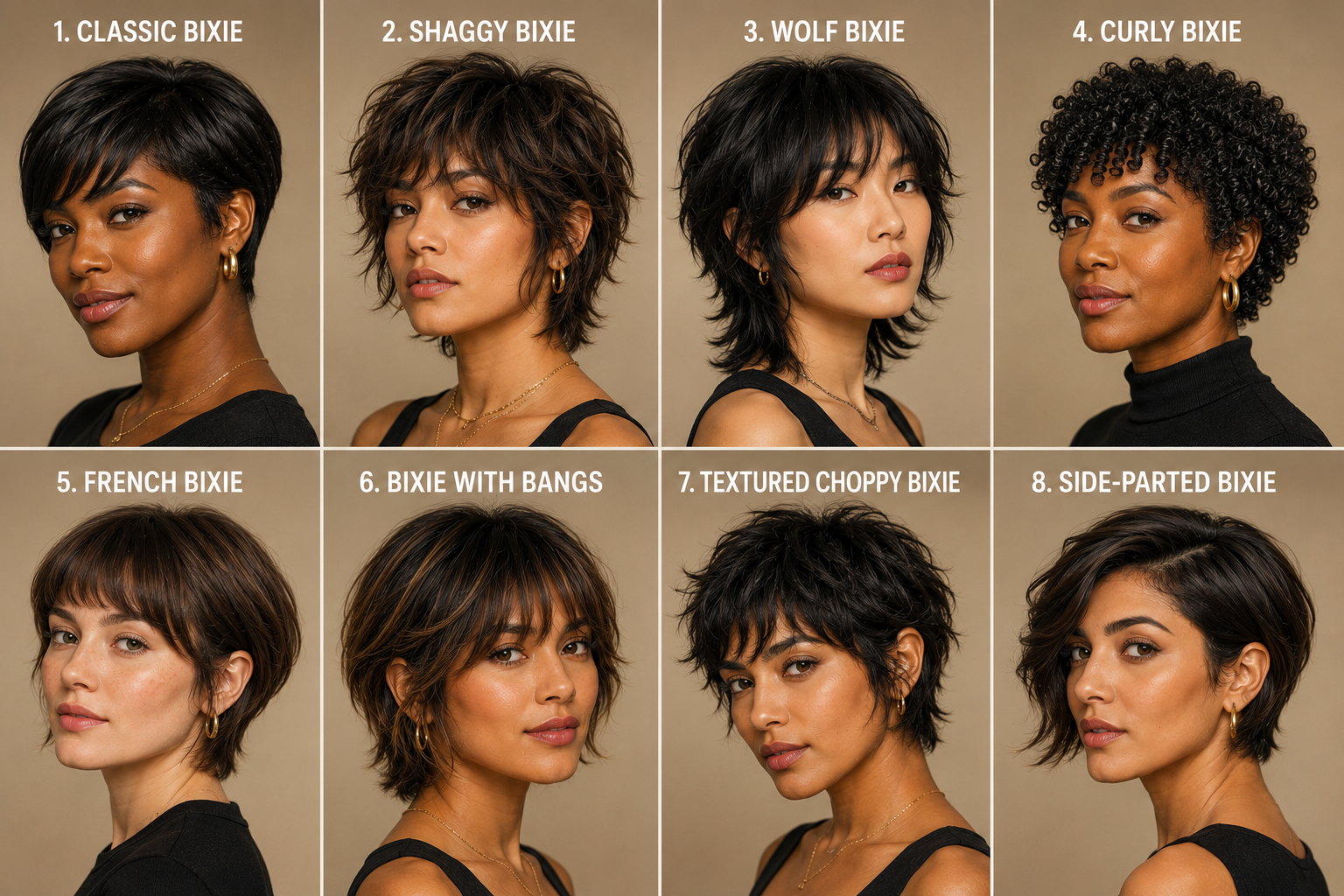
Notice that the shaggier variations, the wolf bixie and the classic shaggy bixie, both borrow techniques from the shag family of haircuts, which is worth exploring further if that undone texture appeals to you. Our shaggy haircuts roundup shows several longer shag options if you want to compare how much length you would need to give up to go from a bixie to a full shag, or vice versa.
How to Ask Your Stylist for a Bixie Cut
How to Ask Your Stylist for a Bixie Cut
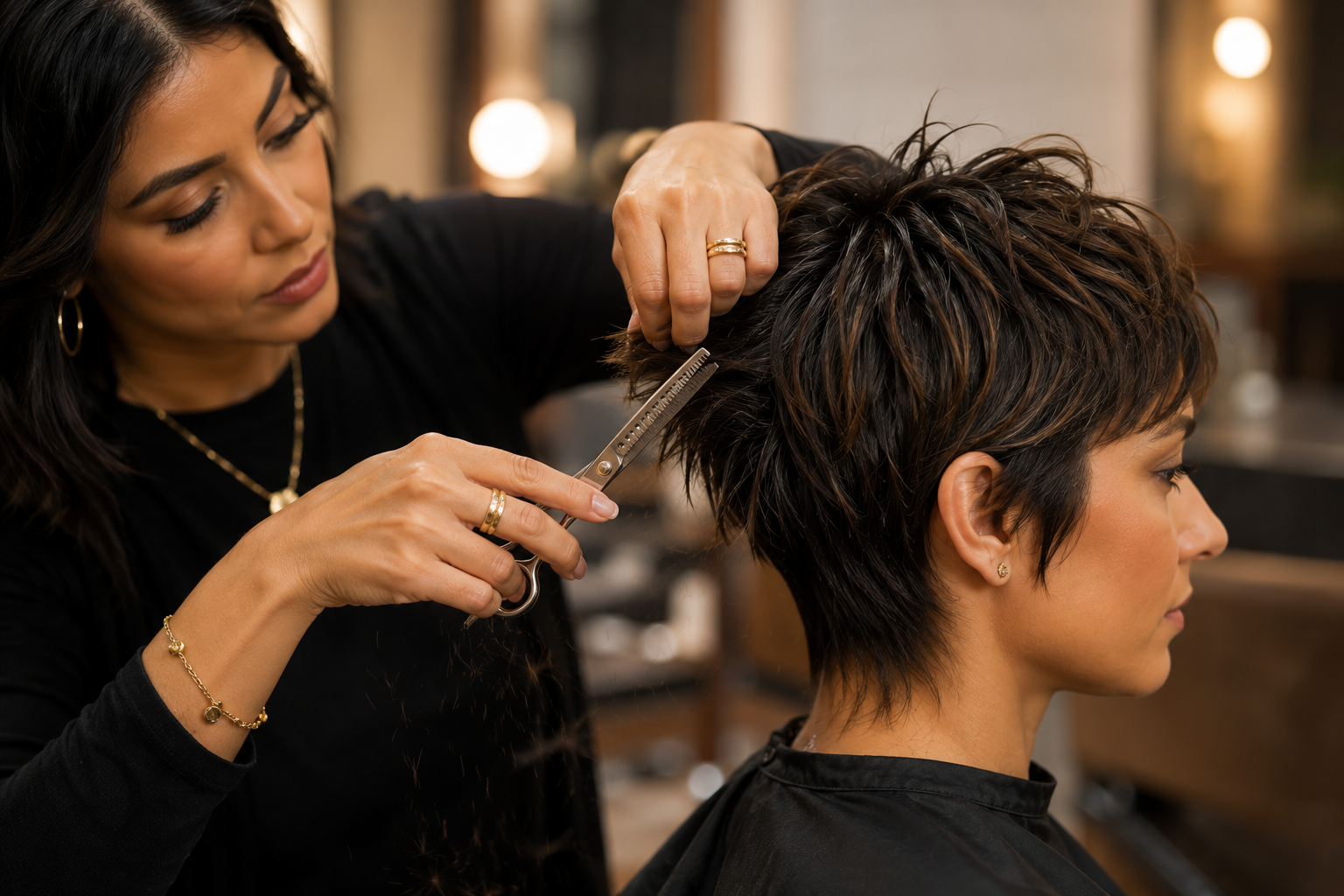
Tell your stylist: "I want a bixie, a pixie-bob hybrid — short at the crown and sides with longer layers at the back and nape. Keep some length at the crown so it grows out gracefully, and let's set a trim schedule." Before the appointment, be ready to describe your hair's natural texture and how it typically dries, since that shapes exactly how much length the stylist leaves and which variation suits you. Bring a reference photo too.
Bixie Cut Styling, Maintenance, and Grow-Out Timeline
Bixie Cut Styling, Maintenance, and Grow-Out Timeline
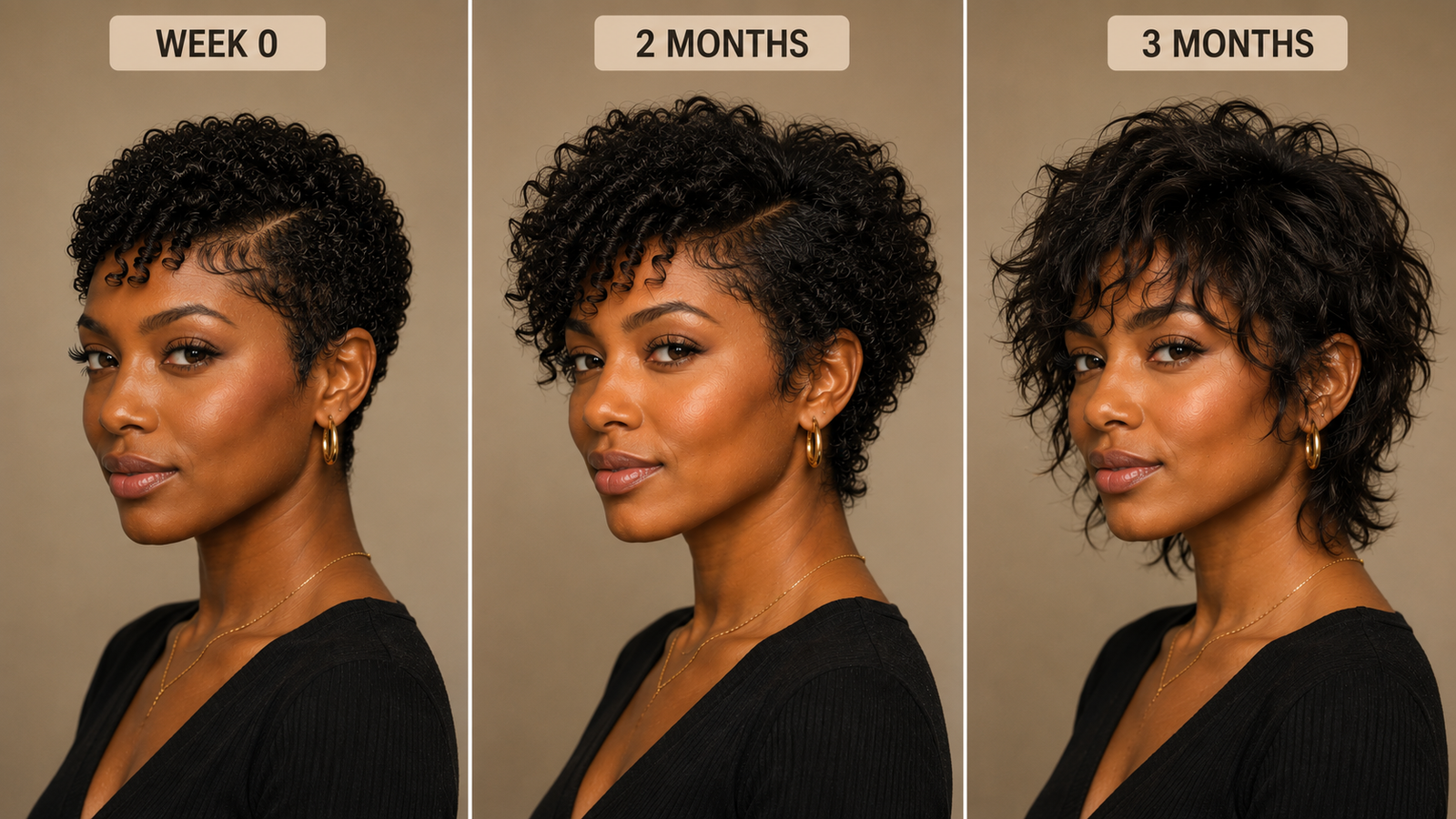
Styling takes about 5 to 10 minutes on a normal day, usually with a texturizing spray for a piecey, undone finish or a lightweight pomade for something sleeker — see our styling products guide for specific picks. Trim every six to eight weeks to keep the shape defined, though the layers naturally blend together and become more forgiving by the two to three month mark. Stretch a little longer between trims and you will get a softer, shaggier version of the cut rather than a shapeless one.
- Flat crown: Dry hair upside down for the first thirty seconds, then finish styling right side up, and add a light mousse at the root for extra lift.
- Cowlicks: Style hair in the direction the cowlick naturally wants to go rather than fighting it, and consider asking your stylist to cut slightly around it rather than straight through it at your next trim.
- The awkward two-week stage: This usually shows up as hair that feels like it is "in between" lengths and refuses to sit right. A texturizing spray and a deep side part almost always solve this until the layers catch up with each other.
- Fine-hair volume loss: As fine hair grows past the initial cut length, it can start to look flatter than it did fresh from the salon. A volumizing mousse at the roots and a slightly earlier trim, closer to six weeks instead of eight, usually keeps things looking full.
By four months, a bixie usually grows into a shaggier pixie or lob instead of hitting an awkward stage. Blend into a bob if you like the length. The American Academy of Dermatology recommends a heat protectant and the lowest effective heat setting on flat irons or diffusers.
Bixie Cut FAQs
Bixie Cut FAQs
What's the Difference Between a Bixie and a Pixie Cut?
A pixie cut is short all over, with very little length left anywhere on the head, while a bixie keeps the crown and sides pixie-short but leaves longer bob-length layers through the back and nape. That extra length is what gives a bixie more styling versatility and a more gradual grow-out compared to a fully cropped pixie.
Does a Bixie Cut Work for Curly Hair?
Yes, a bixie cut works well for curly and coily hair, though it should be cut slightly longer than a straight-hair bixie to account for shrinkage once the curl pattern settles. Ask for an experienced curly-hair stylist and plan to style it with a diffuser and a curl-defining cream rather than a flat brush.
How Do I Grow Out a Bixie Cut?
A bixie grows out more gracefully than a straight pixie because there is already length built into the back and nape to work with. Expect a slightly awkward two-week stage around the two to three month mark, when a texturizing spray and a deep side part will help the layers blend until they catch up with each other.
Is a Bixie Cut Low Maintenance?
A bixie is low to moderate maintenance, with most women spending around 5 to 10 minutes styling it on a normal day using a lightweight pomade or texturizing spray. Trim cadence generally falls every six to eight weeks to keep the shape defined, though this varies based on your hair's growth rate.
What Face Shape Suits a Bixie Cut Best?
Oval faces can wear nearly any bixie variation, while round faces look best with added height at the crown, square faces suit softer rounded layers, heart faces suit a side part with longer framing pieces, and long faces suit a bixie that keeps some fringe across the forehead. The right variation depends on your specific features, so bring a reference photo that matches your face shape to your consultation.
Bixie Wolf Cut
Finding the right bixie wolf cut starts with knowing your hair texture and how much styling time you realistically have. The cuts that look best long-term are the ones designed around your specific hair behavior, not just the aesthetic in a photo. Bring two or three reference images to your stylist and ask which elements of each they can adapt to your texture.
Bixie Cut 2026
Finding the right bixie cut 2026 starts with knowing your hair texture and how much styling time you realistically have. The cuts that look best long-term are the ones designed around your specific hair behavior, not just the aesthetic in a photo. Bring two or three reference images to your stylist and ask which elements of each they can adapt to your texture.
Choosing a bixie cut comes down to how much versatility you want out of short hair, and this guide gives you a clear answer along with the exact words to use at your next appointment. Save this guide to your Pinterest board so you have the face-shape notes, the stylist script, and the maintenance timeline ready before you book. For more short-hair inspiration to compare before you commit, browse pixie cut ideas and see how a bixie stacks up against your other favorite cropped styles.



Your email address will not be published. Required fields are marked *