
Updated for July 2026.
A pixie is the one haircut that gives back time. You wash it, push it around with your fingers for about two minutes, and you are out the door. That alone explains why it keeps trending, from Halle Berry’s sharp crop to the soft, lived-in pixies all over your feed right now. The right one frames your face, plays up your features, and shrinks your morning routine to almost nothing. Comparing with other short styles? Our guide to short hairstyle ideas covers every length and texture.
But here is the part most guides skip. A pixie hides nothing. There is no length to fall over your jaw or soften your forehead, so the cut and your face shape have to actually agree with each other. The same crop that makes one woman look instantly sculpted can overwhelm another. The real secret has nothing to do with chasing the trendiest shape. It comes down to matching the pixie to the shape of your face and the texture of your hair.
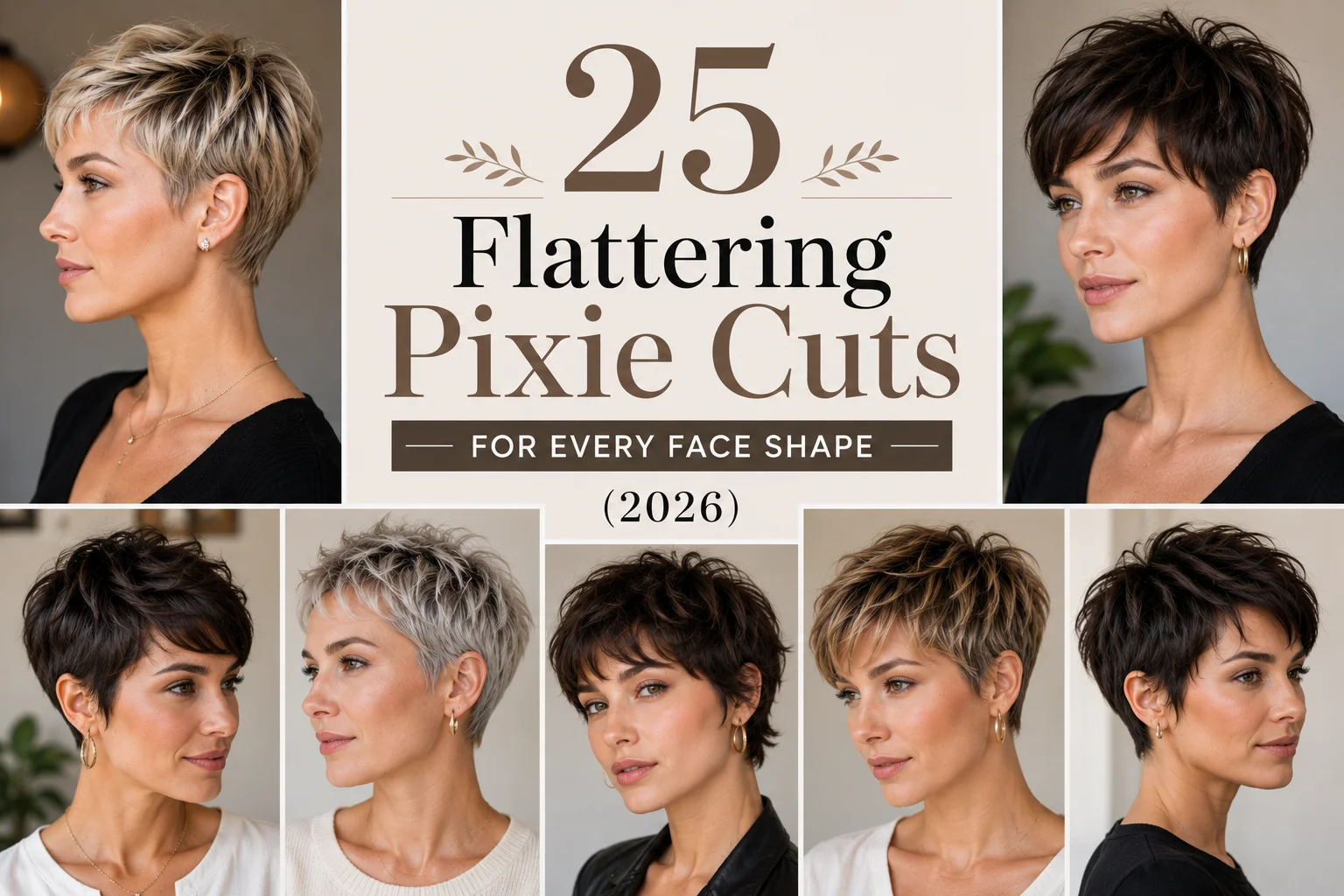
That is exactly what this guide does. Below are 25 pixie cuts sorted by face shape, with a note under each one explaining why it works and the thing to say to your stylist, plus honest sections on texture, glasses, age, the front and back view, and the grow-out phase that most lists leave out. If you only have a minute, start with the quick table.
How to Choose a Pixie Cut for Your Face Shape
Before the cuts, one rule stylists swear by: a flattering pixie is about balance. Round faces want height and vertical line. Square faces want softness. Heart faces want width near the jaw. Oval faces can wear almost anything.
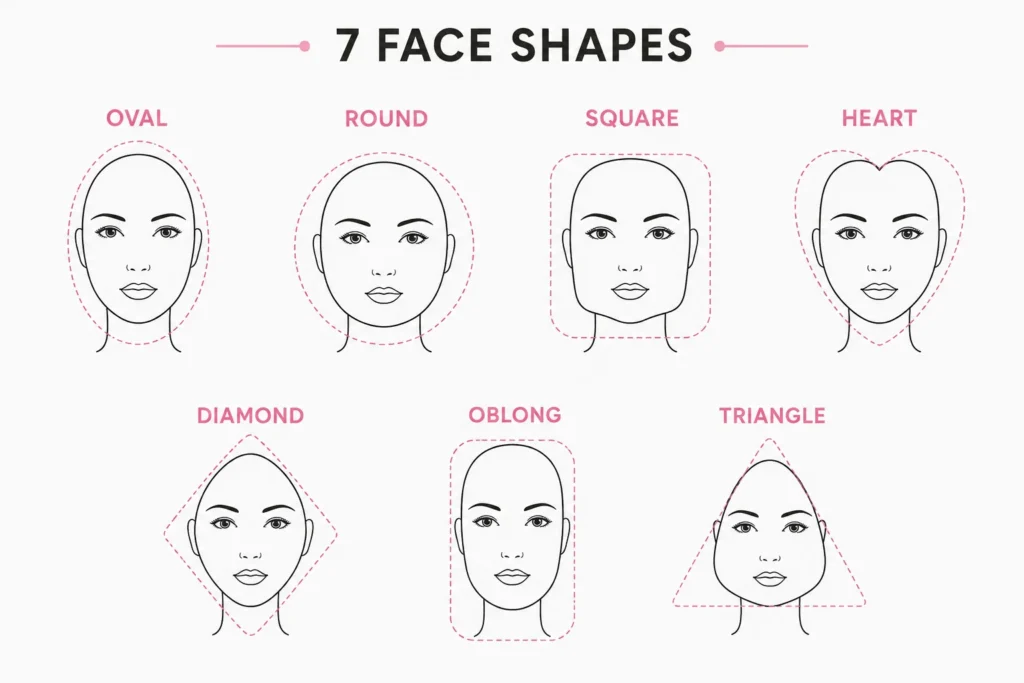
The seven face shapes to know:
- Oval: balanced, slightly longer than wide. The most versatile shape.
- Round: full cheeks, soft jaw, similar width and length. Wants elongating styles.
- Square: strong, defined jawline. Wants soft, rounded layers.
- Heart: wide forehead, narrow chin. Wants weight near the jaw.
- Diamond: narrow forehead and chin, wide cheekbones. Wants fringe and forehead width.
- Oblong or long: longer than wide. Wants width, not extra height.
- Triangle or pear: widest at the jaw. Wants volume up top.
Not sure which is yours? Pull your hair back, look straight in the mirror, and trace your outline. If your face is about as long as it is wide with a rounded jaw, you are round. If your jaw is as wide as your forehead with sharp corners, you are square.
Find Your Pixie in 30 Seconds: The Quick Decision Guide
Most articles make you scroll through 25 photos hoping one clicks. This is faster. Answer three questions and you land on the right starting point.
Step 1. How much styling time do you actually want each morning?
- Under 2 minutes, wash and go: classic pixie or curly pixie
- 2 to 5 minutes, a little effort: textured crop, side-swept pixie
- enjoy styling: long pixie (bixie), undercut, or asymmetrical pixie
Step 2. What is your hair texture?
- Fine or thin: choppy, textured pixies for the illusion of density
- Thick: internally texturized pixies to take out bulk
- Curly: a curly crop cut to your curl pattern
- Straight: soft point-cut layers so the lines stay clean but not helmet-like
Step 3. What is your face shape?
- Round: add height. Textured crop, side-swept, long pixie
- Square: add softness. Tousled crop, wispy fringe
- Heart: add jaw width. Longer pixie with chin-length pieces
- Diamond: add forehead width. Full-fringe pixie
- Oblong or triangle: add width or crown volume to rebalance
- Oval: nearly anything works. Start with what fits Steps 1 and 2
Where your three answers overlap is your cut. A fine-haired, low-effort, round-faced reader lands on a textured crop with crown height. A thick-haired, square-faced reader who likes to style lands on a tousled long pixie. Bring that combination, plus a photo, to your stylist.
Which Pixie Suits Your Face Shape?
The most flattering pixie depends on the proportions you want to balance. Round suits side-swept and longer pixies with crown height. Oval suits almost any pixie. Square suits soft, textured pixies. Heart suits weight near the chin and a wispy fringe. Diamond suits a full fringe and forehead width. Oblong suits fuller, shorter styles. Triangle suits crown volume.
| Face Shape | Best Pixie Types | What to Avoid |
|---|---|---|
| Round | Side-swept, long pixie, asymmetrical, textured crop with crown height | Blunt micro fringe, equal side volume, flat buzz pixie |
| Oval | Classic, blunt, undercut, bixie, ultra-short | Heavy flat slick-downs |
| Square | Soft textured pixie, wispy fringe, rounded layers | Sharp blunt lines that echo the jaw |
| Heart | Side fringe, weight near the chin, longer pixie | Heavy top volume with bare sides |
| Diamond | Full or side fringe, width at the forehead | Slicked-back styles that expose cheekbones |
| Oblong | Rounded, fuller pixie that adds width | Tall crown height that lengthens the face |
| Triangle | Crown volume, tapered nape, soft top texture | Heavy width at the jaw |
Pixie Cuts for Round Faces
A round face is about as wide as it is long, with full cheeks and a soft jaw. The job of the cut is to add vertical line and take width off the sides: height at the crown, a diagonal fringe, tapered temples. Skip anything that puts equal volume on both sides.
1. Side-Swept Pixie. A deep part and a sweeping fringe draw a long diagonal line, the single best trick for a round face. Ask for length through the top and fringe, tapered sides and nape.
2. Long Pixie (Bixie). The in-between length that brushes the ears and cheekbones. The strands along the jaw break up the roundness.
3. Asymmetrical Pixie. One side longer than the other forces the eye to travel diagonally instead of around the circle.
4. Textured Crop with Crown Height. Piecey, choppy layers lifted at the crown add the height a round face needs. For a fuller textured look, see our guide to short shaggy haircuts. Matte clay holds the lift.
5. Undercut Pixie. Shaving the sides removes width exactly where a round face carries it, leaving textured length on top.
Pixie Cuts for Oval Faces
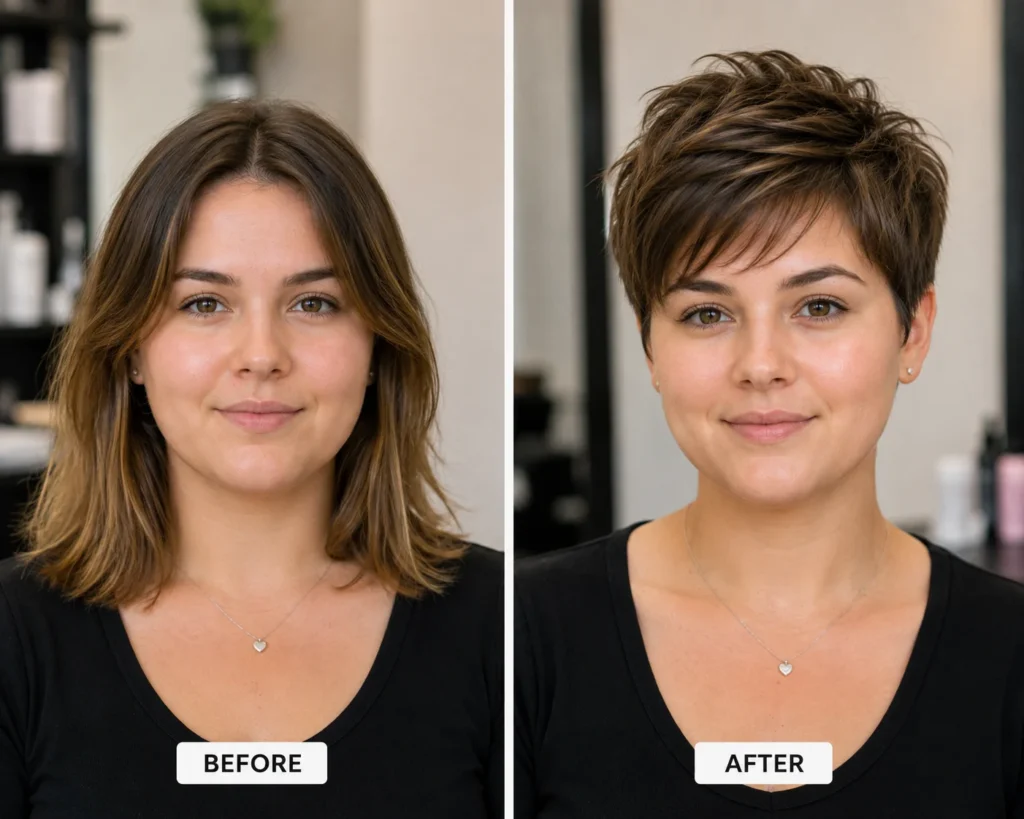
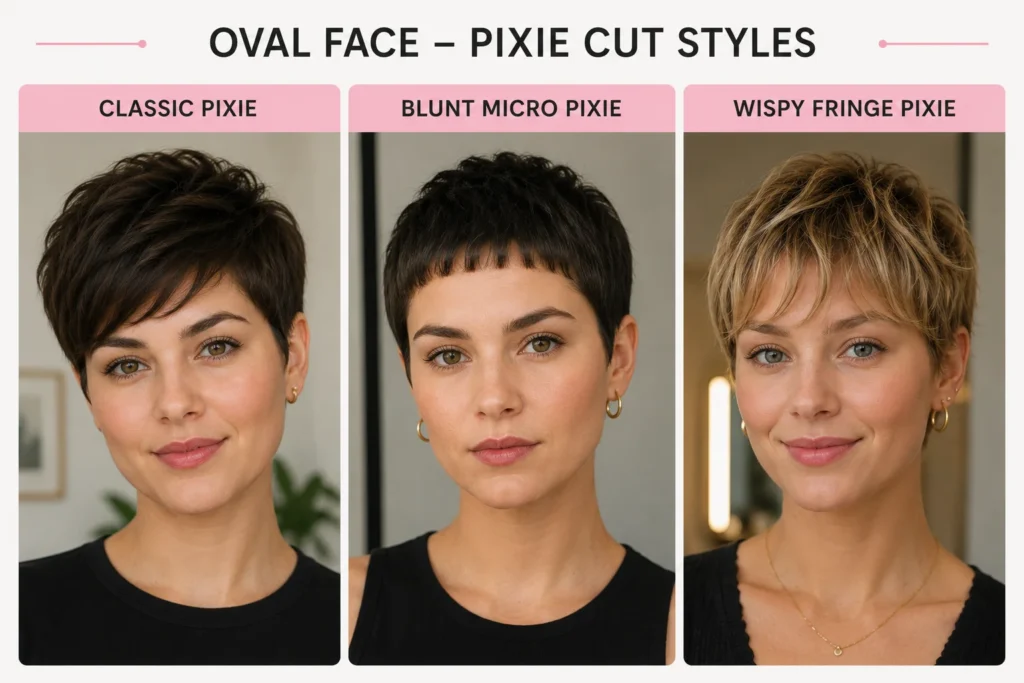
If your forehead is a touch wider than your chin and the whole face is balanced and a little longer than it is wide, you have an oval. Stylists quietly envy this shape, because nearly every pixie works. You can go blunt, ultra-short, or editorial without correcting proportions.
6. Classic Pixie. Short sides and back, an inch or two on top, minimal layering. Audrey Hepburn in 1953 is still the reference.
7. Blunt Micro Pixie. Cropped close all over with a sharp baby fringe. Most face shapes cannot carry this; an oval can.
8. Contoured Pixie. Cut to follow your cheekbones and jaw for a sculpted look. The new-for-2026 favorite, softened or sharpened to taste.
9. Wispy Fringe Pixie. Soft, piecey bangs over a textured top. The strongest 2026 reading, light and lived-in rather than severe.
Pixie Cuts for Square Faces
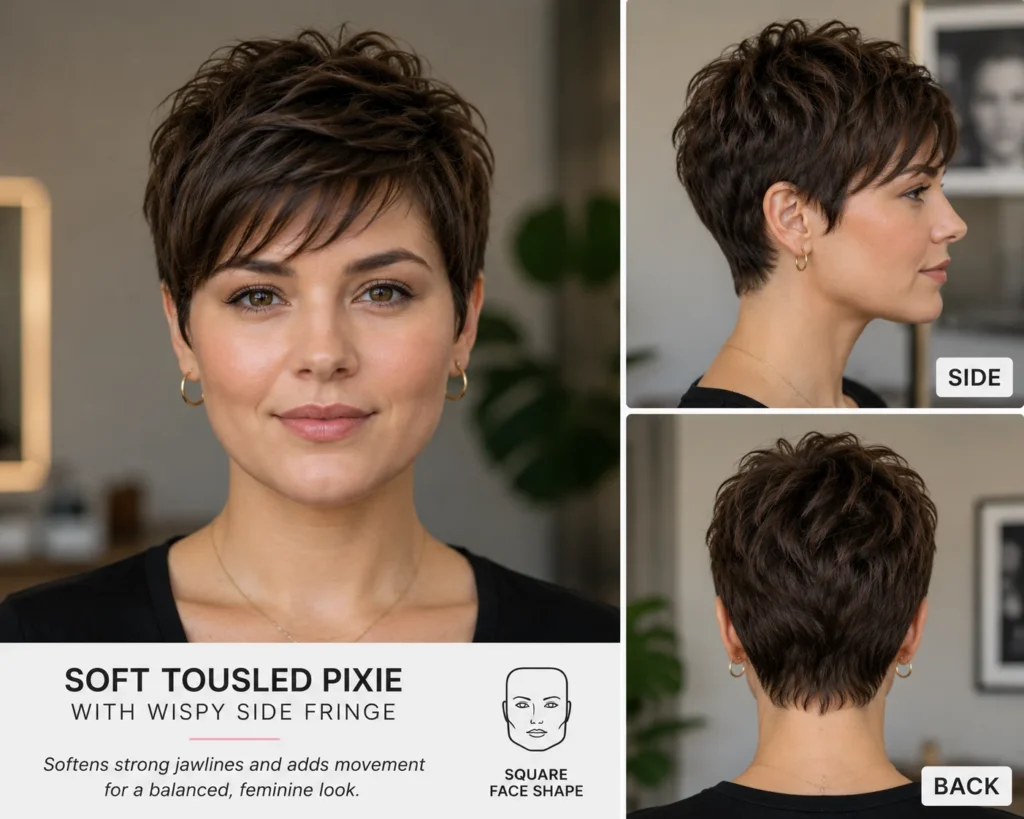
A square face has a strong, straight jaw and a forehead of similar width. Sharp blunt cuts only echo those angles, so the goal is softness: wispy texture, rounded layers, and a fringe that breaks the straight line of the brow.
10. Soft Textured Pixie. Feathered, irregular layers blur the corners of the jaw. Ask for soft point-cut layers, nothing blunt around the perimeter.
11. Side-Swept Wispy Fringe. A diagonal fringe pulls attention up and away from the jawline.
12. Rounded Layered Pixie. Curved layers around the ears and nape introduce the roundness a square face is missing.
13. Tousled Crop. A messy, piecey finish keeps things soft. Slicked-down versions read harder on square faces.
Pixie Cuts for Heart-Shaped Faces
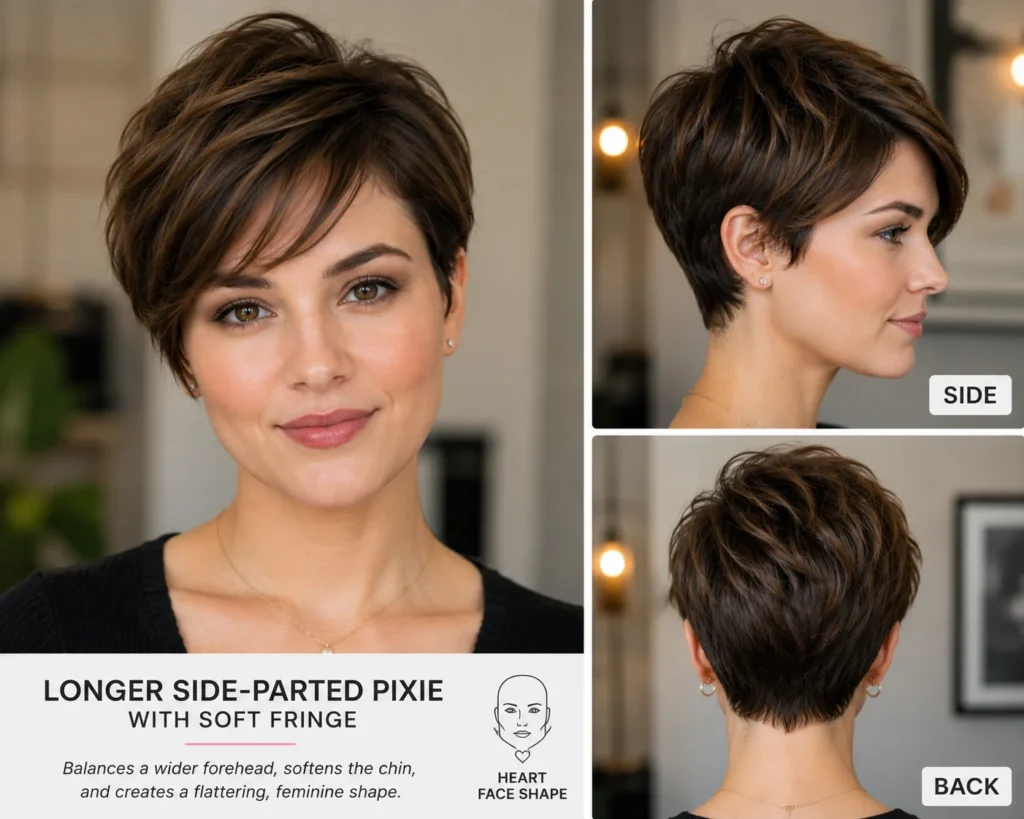
A heart-shaped face is widest at the forehead and narrows to a delicate chin. The trick is to avoid piling volume on top, which exaggerates the wide forehead, and instead add a little weight and width lower down near the jaw.
14. Long Pixie with Chin-Length Pieces. Strands that reach the jaw add the width a narrow chin wants. Ask for a longer pixie left heavier at the front.
15. Side-Parted Pixie with Fringe. A soft side fringe covers part of the wider forehead and balances the face top to bottom.
16. Tapered Pixie with Full Sides. Keeping the sides fuller rather than shaved stops the face from looking top-heavy.
Pixie Cuts for Diamond Faces
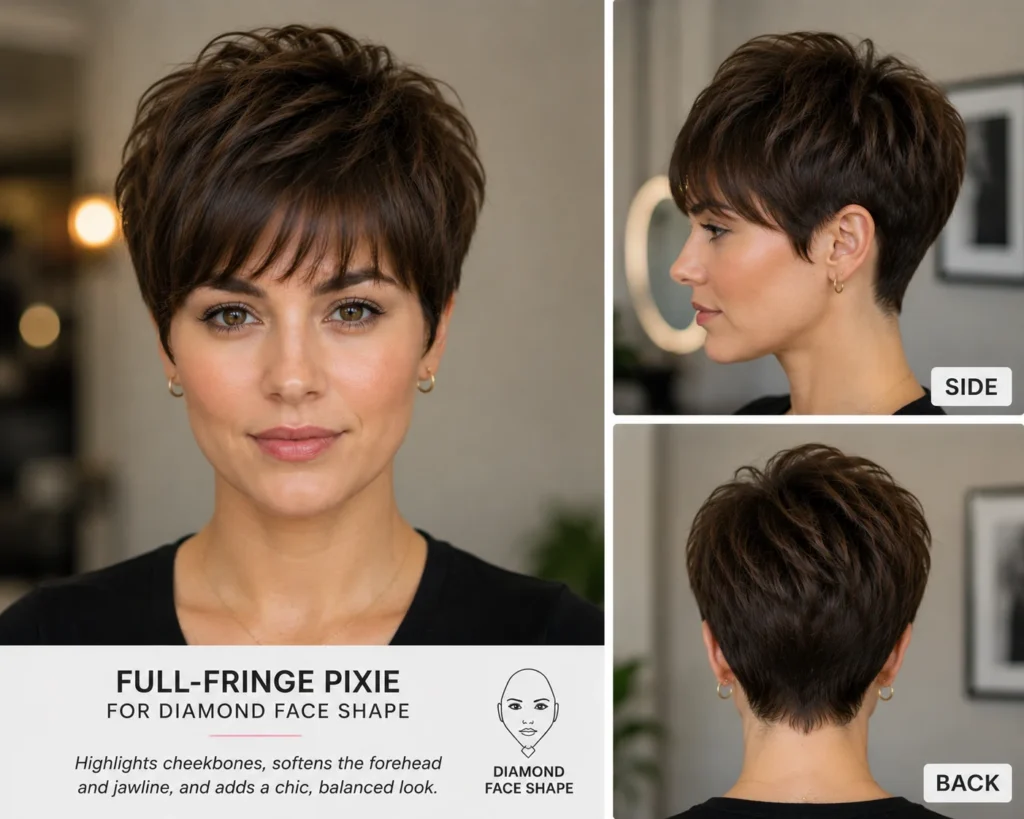
A diamond face is narrow at the forehead and chin and widest across the cheekbones. The aim is to add width at the forehead and avoid styles that expose and emphasize the cheekbones.
17. Full-Fringe Pixie. A fuller fringe broadens the narrow forehead and shifts focus off the cheekbones.
18. Side-Swept Pixie with Volume Up Top. Crown and forehead width balances the wide middle of the face.
19. Textured Pixie with Soft Sides. Avoid slicked-back styles here; a little softness over the cheekbones keeps the width from dominating.
Pixie Cuts for Oblong and Triangle Faces
These two shapes get left out of most pixie guides, so here they are. An oblong (long) face is noticeably longer than it is wide, so you want width and fullness, not extra height. A triangle (pear) face is widest at the jaw, so you want volume up top to balance the lower half.
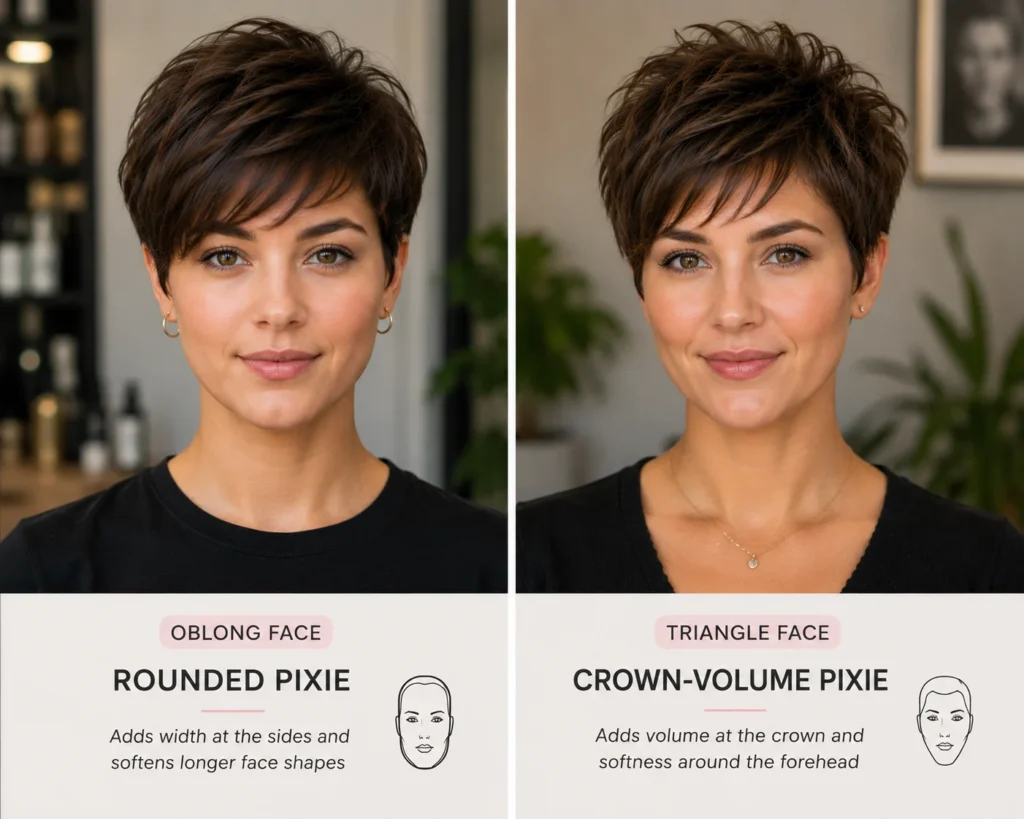
20. Rounded Full Pixie (Oblong). Fuller sides and a low, soft crown add width across the middle instead of lengthening the face.
21. Side-Fringe Pixie (Oblong). A horizontal fringe visually shortens a long forehead.
22. Crown-Volume Pixie (Triangle). Height and texture on top draw the eye up and away from a wider jaw.
23. Tapered-Nape Pixie (Triangle). Cleaning up the nape and keeping width near the crown rebalances the proportions. That is all 25.
The Trending Pixie Cuts of 2026
Beyond face shape, a few pixie variations are everywhere right now. The 2026 mood leans soft, refined, and lived-in, with less fuss than the last few years. Naming these at your appointment makes it far easier to communicate what you want.
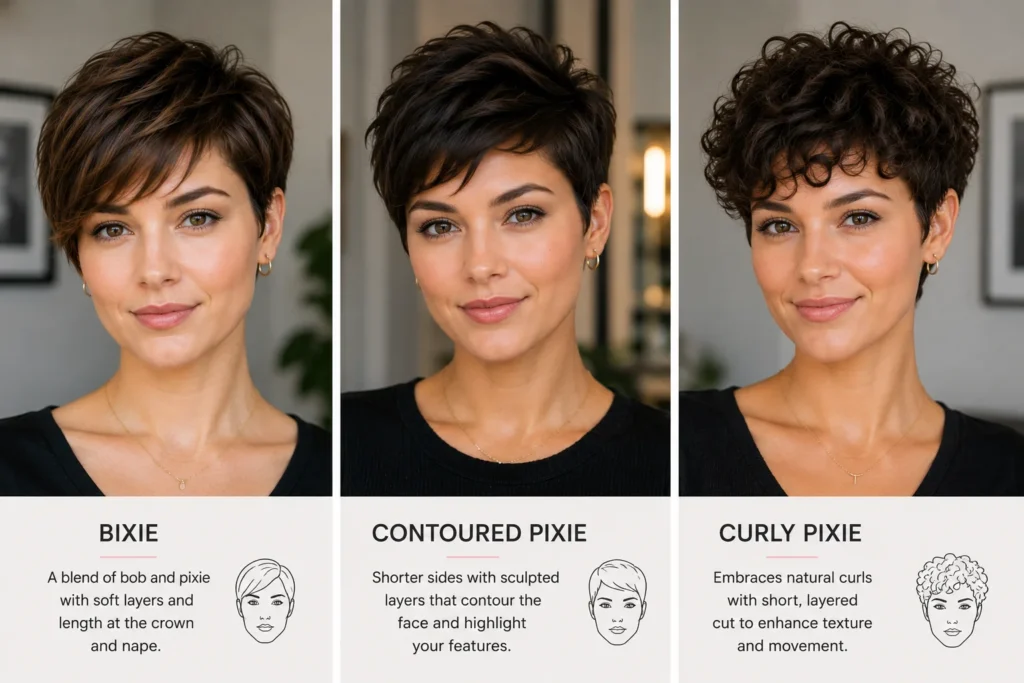
The Bixie. Somewhere between a bob and a pixie, named for its ear-skimming length and tousled texture. It works on most face shapes and is perfect for moving between lengths, which is why it has stayed at the top of trend lists.
The Contoured Pixie. Cut to follow your bone structure around the cheekbones, jaw, and temples. It flatters nearly every face shape because the contouring can be softened or sharpened, and it gives an instant visual lift.
The Wispy Fringe Pixie. Piecey, feather-light bangs over a textured top. This is 2026’s softest, most wearable pixie, the antidote to the severe ultra-short crops of years past.
The Curly Pixie. Short sides and back with a curl-rich top. The curls supply their own bounce and volume, so it is one of the lowest-maintenance cuts here.
The Undercut Pixie. A shaved or closely cropped underlayer with longer length left on top for bold contrast. Architectural, but still wearable.
Pixie Cuts by Hair Type (The Part Most Guides Skip)
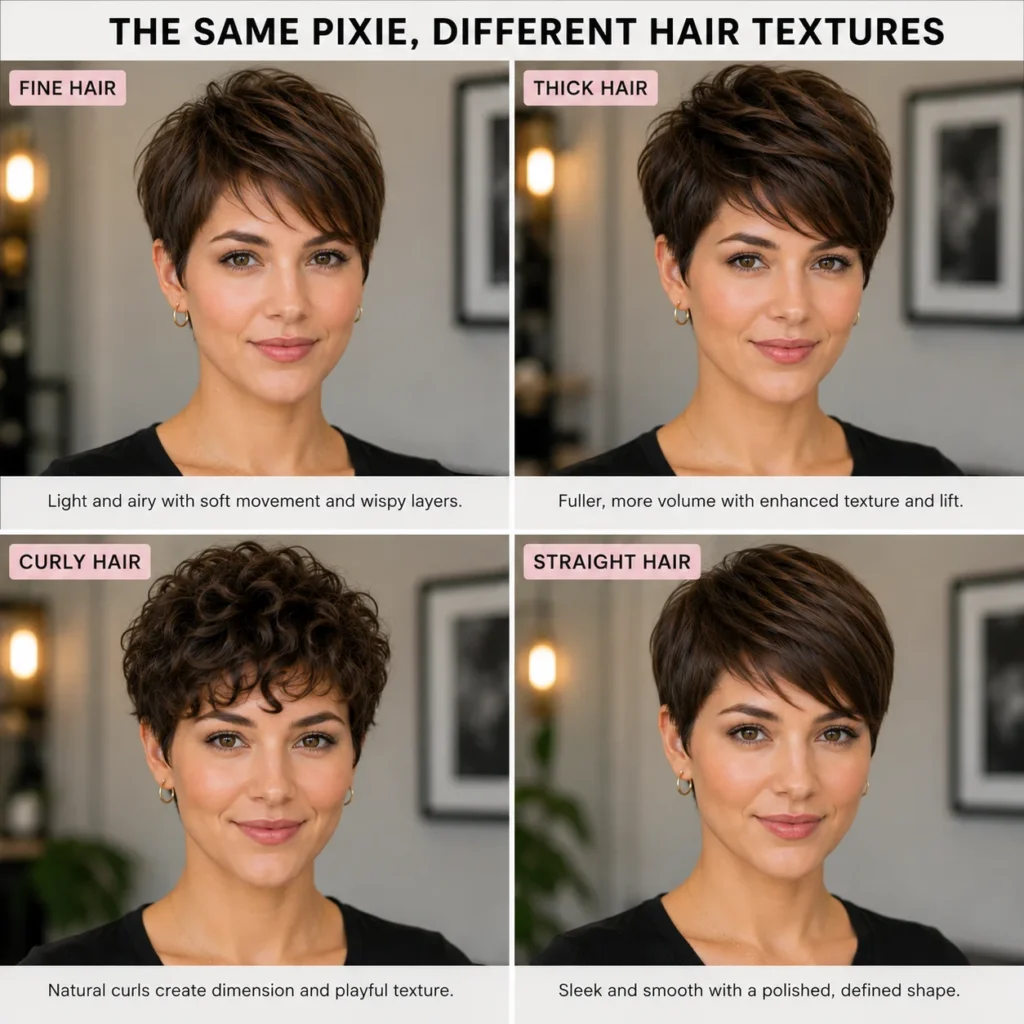
Face shape decides the silhouette. Your hair texture decides whether that silhouette is easy or a daily fight. Here is the honest version.
| Hair Type | How a Pixie Behaves | How to Make It Work |
|---|---|---|
| Fine / Thin Hair | Pixie cuts are ideal for fine hair because the shorter length prevents strands from looking flat or lifeless. | Choose choppy layers and use a lightweight matte clay to create texture, volume, and the appearance of thicker hair. |
| Thick / Coarse Hair | Without proper shaping, a pixie can become bulky or develop a bowl-like silhouette. | Ask for internal texturizing and schedule trims every 4–5 weeks to maintain shape and remove excess weight. |
| Wavy Hair | Natural waves give a pixie a soft, effortless, and modern look with minimal styling. | Apply a light styling cream or sea salt spray, then air-dry for natural movement and definition. |
| Curly / Coily Hair | A curly pixie creates beautiful volume, texture, and personality while requiring surprisingly little styling. | Have curls cut dry and define them with a leave-in conditioner using your fingers instead of a brush. |
| Straight Hair | Straight hair creates a sleek, polished pixie, but every line and shape is highly visible. | Add soft point-cut layers to create movement and prevent the style from looking stiff or helmet-like. |
Pixie Cuts If You Wear Glasses
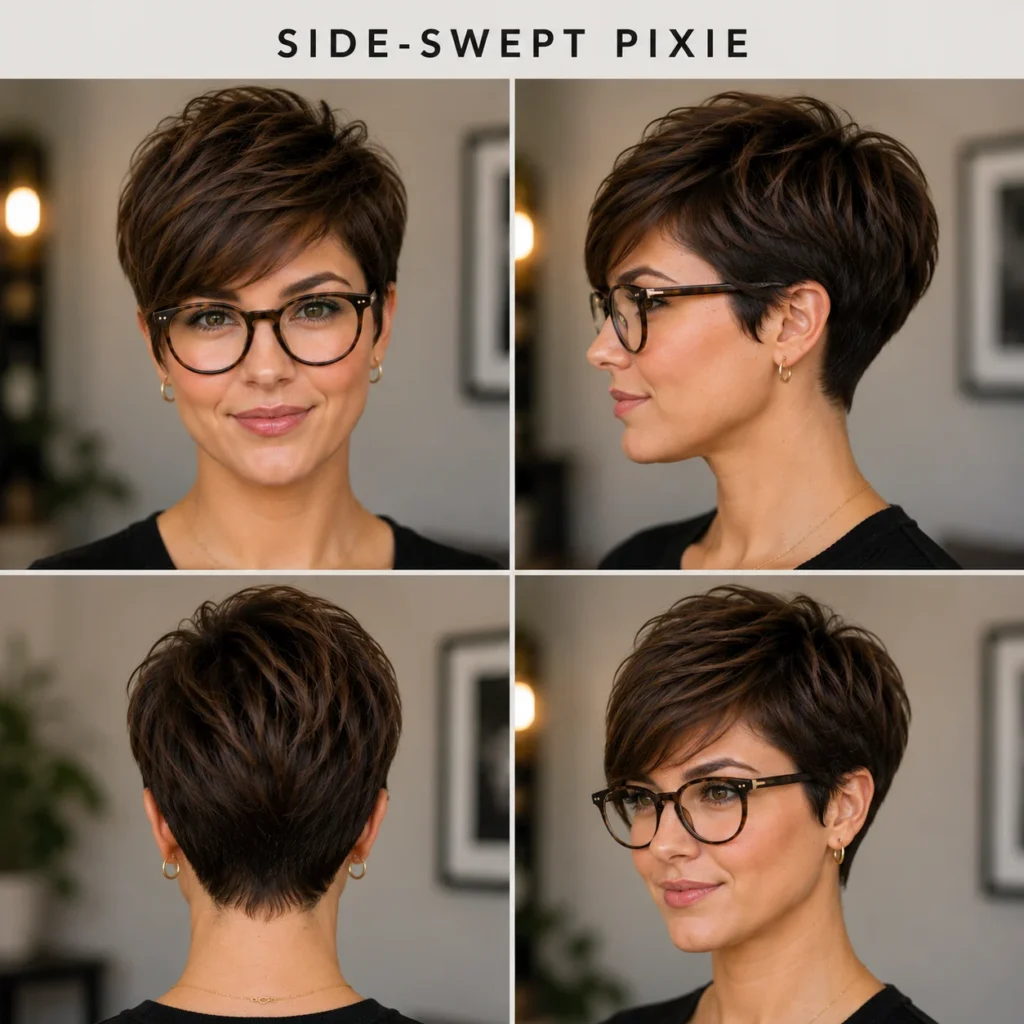
Glasses sit in the exact zone a pixie frames, so the two have to share the space. The rule is contrast. If your frames are bold and rectangular, soften them with a wispy, textured pixie. If your frames are round or rimless, you can carry a sharper, more graphic cut. Keep the fringe off the top edge of the frames, swept to the side or short enough to clear them, so your eyes and glasses are not competing with hair. A side-swept pixie is the safest, most universally flattering choice for glasses-wearers.
Pixie Cuts for Women Over 50
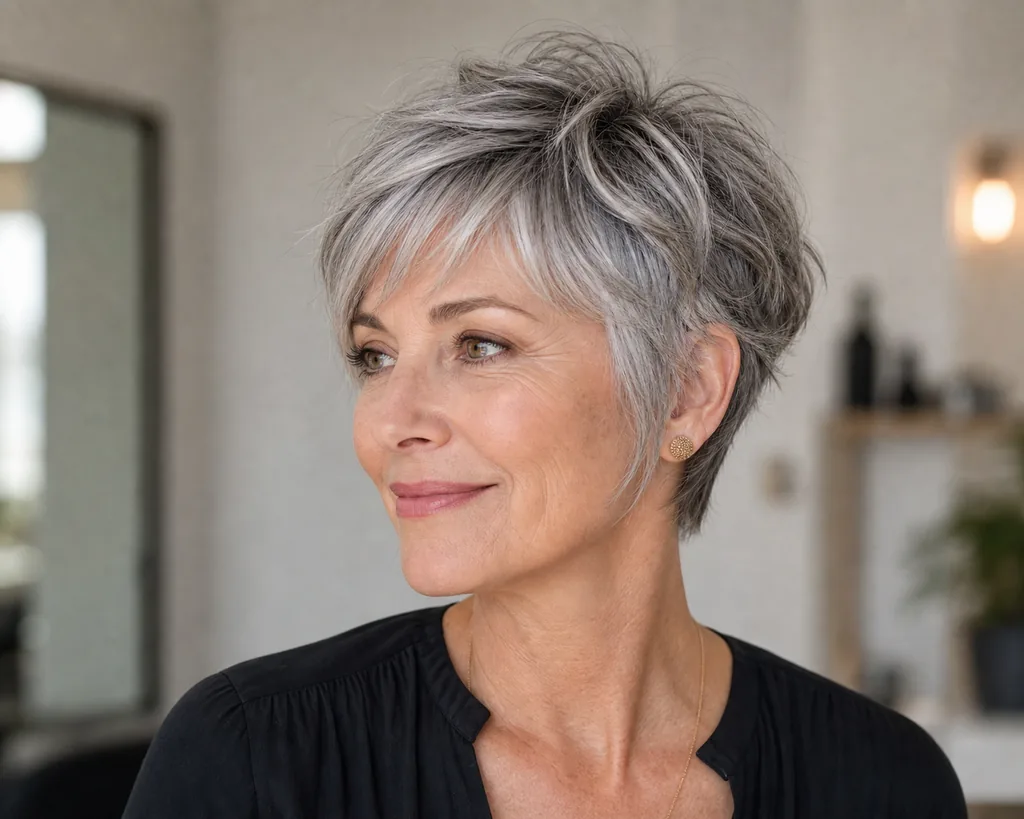
A pixie is quietly one of the best and lowest-maintenance cuts for women over 50, and the reason is mechanical, not marketing. Long hair carries weight that drags the face downward. A pixie does the opposite: it exposes the neck to lengthen the silhouette, adds crown volume to lift the upper face, and shifts attention to the eyes and cheekbones. The key is texture over stiffness. A soft, lived-in finish reads modern and youthful, while flat or slicked styles can feel dated. Face-framing layers and a few soft pieces near the jaw flatter at any age.
The Front and Back View: What Nobody Shows You
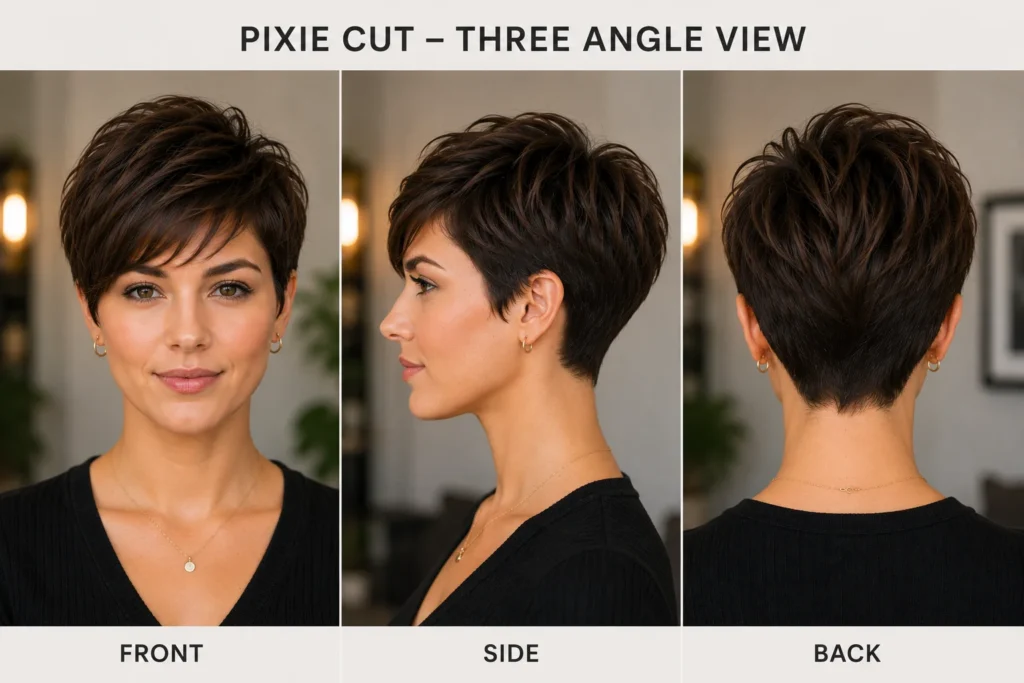
Almost every pixie photo online is a front-on glamour shot, which is useless when you are trying to picture the actual haircut. The back and sides are where a pixie is really made. Two things matter most.
24. The nape. The band of hair at the base of your neck. A clean, tapered nape looks polished and sharp; a softer, longer nape reads feminine and grown-out. Decide which you want, because it changes the whole feel of the cut from behind.
25. The sides over the ears. Tucked-tight sides look edgy and architectural. Slightly longer sides that brush the tops of the ears look soft. Bring a back-view photo to your appointment, not just a front one. It is the best way to avoid a result you did not expect.
What a Pixie Cut Really Costs to Maintain
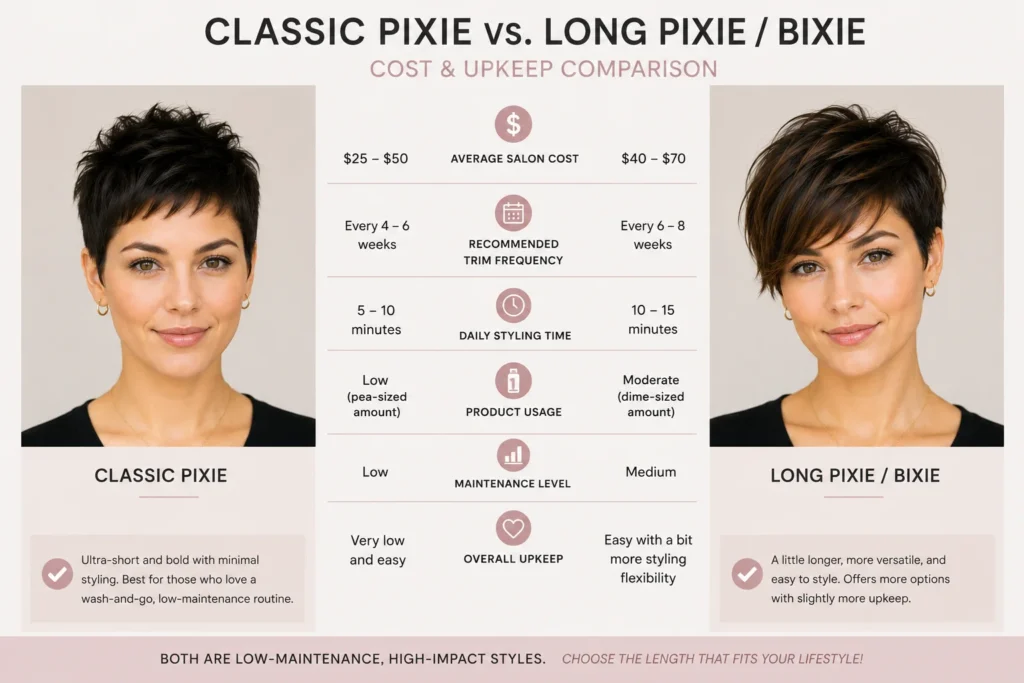
Here is the part almost no inspiration post tells you. A pixie is cheap per visit but needs visits often, so the real cost is the upkeep rhythm, not the first appointment. These are rough 2026 US averages, before the customary 20 percent tip.
A women’s short cut runs roughly 20 to 50 dollars at a value chain, more at a mid-range salon, and 90 dollars and up at an independent high-end salon. In major cities a standard women’s cut can start at 100 to 150 dollars. The bigger factor is frequency. A pixie holds its shape for only about 4 to 6 weeks before it needs a reshape, because the sharp lines show growth fast. Over a year that can mean 9 to 11 cuts, more visits than almost any other style. If you want the lowest total upkeep, grow it toward a longer pixie or bixie that hides regrowth. If you want the sharpest look and do not mind the standing appointment, a true pixie delivers it at a higher yearly cost.
Quick upkeep snapshot
- Classic pixie: trim every 4 to 6 weeks, lowest daily styling, highest visit frequency
- Long pixie / bixie: trim every 6 to 8 weeks, more forgiving of regrowth
- Fringe of any kind: free or low-cost bang trims every 2 to 4 weeks between cuts
How a Pixie Grows Out (So You Are Not Stuck)
The thing that keeps most women out of the salon chair is the awkward grow-out phase. Knowing where the cut goes next takes that fear away, and it is information competitors rarely bother to give you.
Healthy hair also grows out more evenly. The American Academy of Dermatology recommends regular trims, gentle detangling, and limiting heat styling to keep hair breakage-free while it lengthens, all of which make the pixie-to-bixie-to-bob transition look intentional instead of accidental.
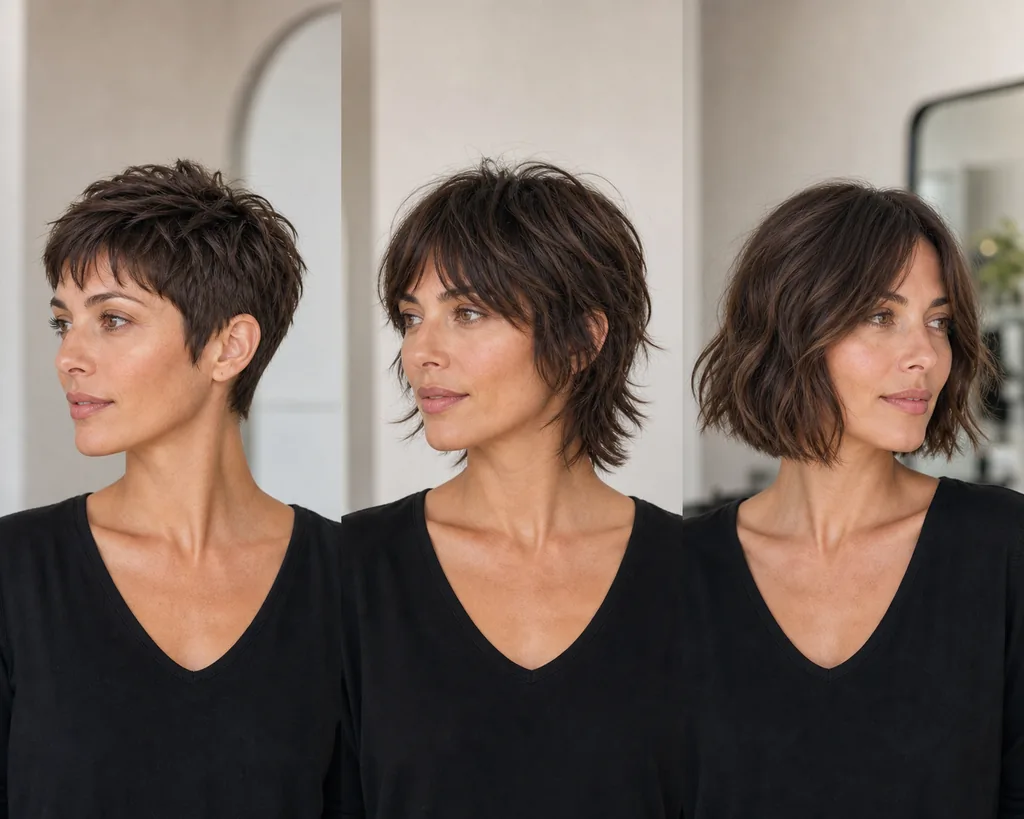
• Pixie grows into a bixie, then a bob. As the top and sides lengthen, a pixie becomes a bixie within a couple of months, then a chin-length bob. The trick is regular reshapes so the layers grow in proportion instead of going shapeless.
• Lean on accessories. Bobby pins, small clips, thin headbands, and scarves tame the pieces stuck at an impossible length.
• Experiment with your part. As the hair lengthens, a different part often suits the emerging shape better than the one you wore short.
• Keep using texturizing products. They give you control over sections that are not long enough to fall naturally yet.
How to Style and Maintain Your Pixie Day to Day
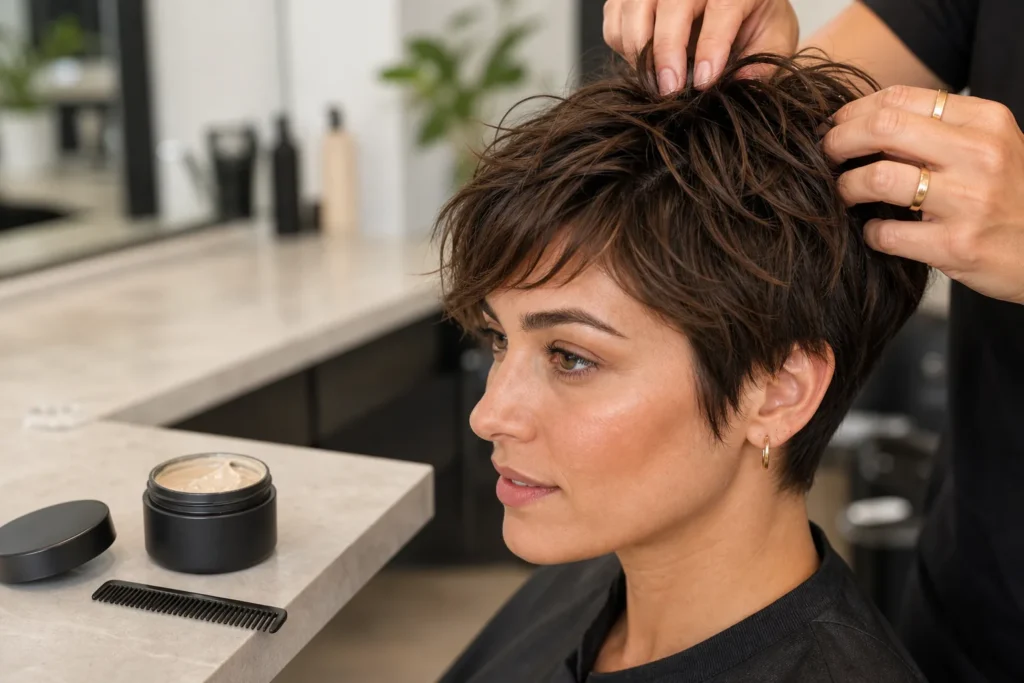
Styling a pixie takes two to five minutes, but it does take the right product, probably one you have never bought before. A pea-sized amount of matte clay or wax, warmed between your palms, separates pieces and adds hold without grease. A light pomade gives a sleeker, shinier finish. Sea salt spray builds that lived-in texture, especially on fine and wavy hair, and texturizing powder dusted at the roots adds instant crown lift. The golden rule with short hair is less product, more often, because overloading it makes the hair look flat. Ask whether your stylist does a quick fringe trim between cuts, which many do for free or a small fee.
Frequently Asked Questions
Conclusion
A great pixie is not about chasing the boldest trend. It is about finding the shape that works with your face, your hair texture, and the effort you actually want to spend each morning. Whether you go for a soft wispy fringe pixie, a sharp classic crop, or the of-the-moment bixie, the right cut should feel like the easiest, most flattering version of you.
Save the styles that caught your eye, bring a front and back view photo to your stylist, and ask for a shape made for your face. The chop is almost always less scary, and a lot more freeing, than you expect.
Found your match? Once your pixie is in, see our guide to the hair styling essentials to keep it looking sharp between salon visits.
Your email address will not be published. Required fields are marked *