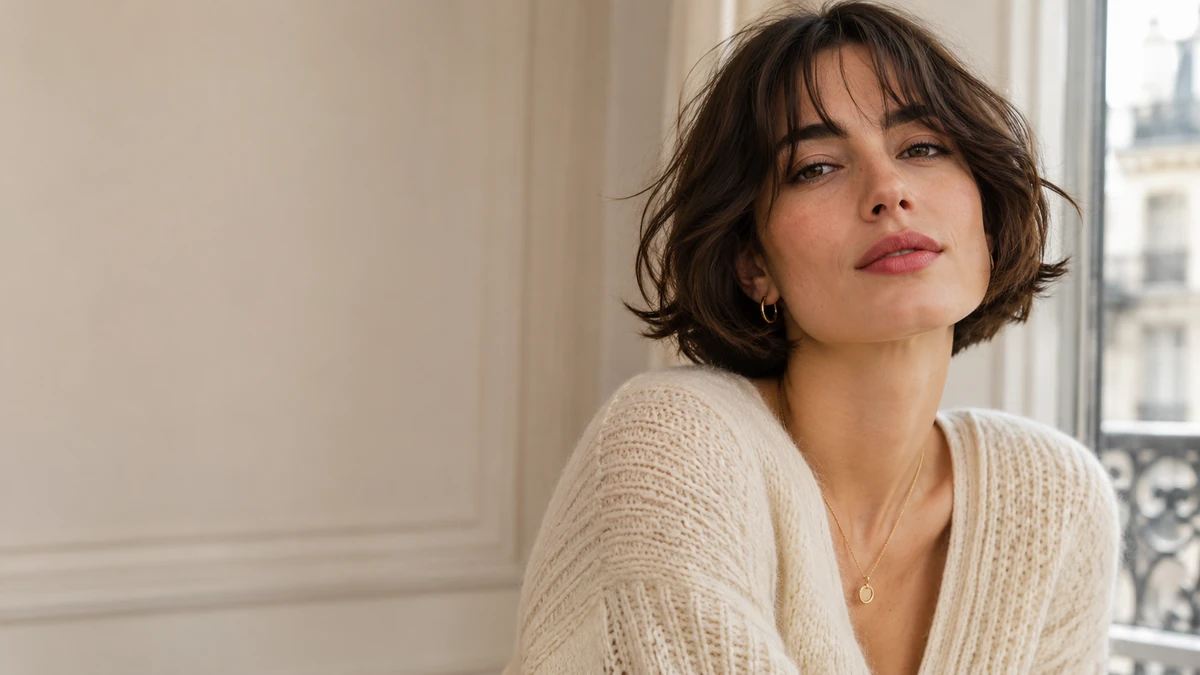
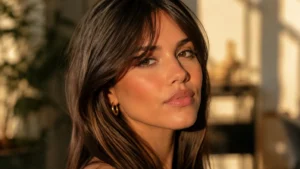
The textured French bob with wispy bangs is having a moment on Pinterest right now, surging faster than almost any other cut this season. And honestly, it's easy to see why. This chin-length cut looks naturally effortless, photographs beautifully against a winter coat, and suits far more hair textures and face shapes than most style galleries bother to show. This guide covers all 10 versions of the textured French bob, compares it to similar bob styles, tells you exactly what to say at the salon, and gives you a cold-weather styling routine that handles hats, scarves, and static on the worst mornings.
Which Version of the Textured French Bob Is Right for You?
Start here before you read anything else. The table below maps all 10 versions of the textured French bob to face shape, hair texture, and maintenance commitment, so you can jump straight to the description that fits you.
| # | Version | Face Shape | Hair Texture | Commitment |
|---|---|---|---|---|
| 1 | Classic Textured French Bob | Oval, heart | Straight/wavy | High |
| 2 | Wispy Bangs French Bob | Oval, long | Fine/medium | High |
| 3 | Blunt Textured French Bob | Square, heart | Thick, straight | High |
| 4 | Curly French Bob | Oval, round | Curly/wavy | Medium |
| 5 | Asymmetrical French Bob | Oval, heart | Straight/wavy | High |
| 6 | French Bob with Curtain Bangs | Oval, heart | Medium | High |
| 7 | Layered French Bob | All face shapes | All textures | High |
| 8 | French Bob with Fringe | Oval, round | Fine/medium | High |
| 9 | Shaggy French Bob | Oval, heart | Wavy/curly | Medium |
| 10 | Sleek French Bob | Square, round | Straight | High |
How the Textured French Bob Compares to Similar Cuts
The French bob, the classic bob, and the Italian bob all sit in a similar length range, but they deliver very different results at the salon. Knowing the difference before your appointment prevents the most common booking mistake: asking for a "French bob" and leaving with something that's technically a classic bob with a different name on it.
| Factor | French Bob | Classic Bob | Italian Bob |
|---|---|---|---|
| Length | Jaw-length | Jaw to collarbone | Below jaw |
| Texture | Textured, piecey | Clean, structured | Soft, curved |
| Bangs | Wispy or curtain | Optional | Optional |
| Best for | Oval, heart, long | All face shapes | Oval, heart |
| Grow-out | Difficult, shaped cut | Easier | Medium |
| Styling | Air-dry or light product | Blow-dry shaped | Blow-dry curved |
The grow-out column is worth a close look before you book. The French bob is the most precisely shaped of the three cuts, which means it loses its silhouette faster than the other options. If you can't commit to a trim every four to five weeks, the classic bob is the more forgiving starting point for a short textured bob haircut. For more context on bob varieties and their styling differences, see French bob hairstyle breakdown.
10 Versions of the Textured French Bob
1. Classic Textured French Bob
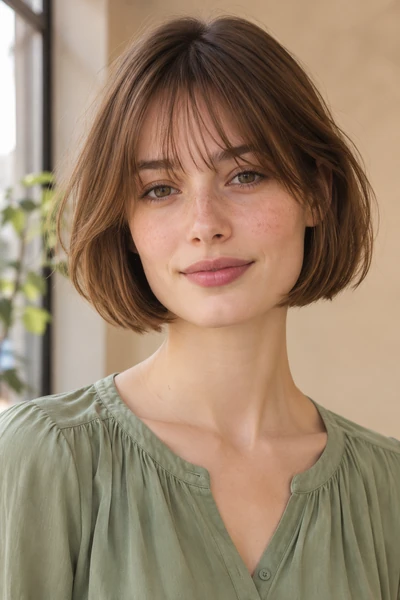
The original version sits at jaw-length with point-cut or razor-cut ends that create a soft, piecey finish at the perimeter. There's no fringe here, and the whole focus is on the movement and lightness of the ends themselves. It's the most versatile starting point, and it suits women who want that effortless French haircut aesthetic without committing to a fringe.
Best for: Oval and heart face shapes with straight or wavy hair.
Ask for at the salon: "A jaw-length French bob with point-cut ends for texture. Keep the perimeter soft, not blunt."
Pro tip: Scrunch a small amount of texturizing cream into damp ends and air-dry. Skip the brush entirely for the best piecey finish.
2. Wispy Bangs French Bob
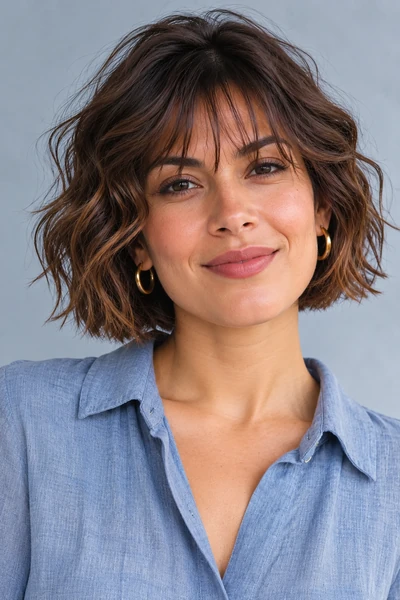
Of all ten options, the textured French bob with wispy bangs is the version driving the Pinterest surge, and for good reason. The razored fringe falls softly across the forehead with separated, feathery tips that add face-framing detail without visual weight. It's also the most forgiving bang option when it comes to grow-out, transitioning naturally into a curtain shape over six to eight weeks. Fine hair benefits most because the light fringe adds no weight at the forehead while still creating a genuinely effortless look.
Best for: Oval and long face shapes with fine or medium hair.
Ask for at the salon: "A jaw-length textured bob with wispy bangs, razored at the tip. I want the fringe to fall just above the brow with soft, separated ends."
Pro tip: Blow-dry the bangs forward with just two fingers on medium heat. Don't brush them flat, or you'll lose the feathery separation that makes this fringe look right.
3. Blunt Textured French Bob
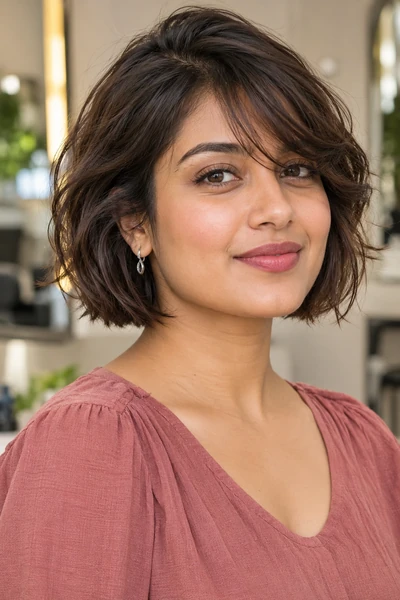
The blunt version has a more structured perimeter that looks intentional and defined at the jaw line, while still keeping some soft point-cutting at the very tips so the edge doesn't come off too severe. It suits thick, straight hair that holds a clean line without extra product, and it pairs well with strong jaw lines. This is your cut if you love the French bob length but want a more polished finish over the classic choppy French bob look.
Best for: Square and heart face shapes with thick, straight hair.
Ask for at the salon: "A jaw-length French bob with a relatively clean perimeter, softened at the very tips with light point-cutting. More structured than a wispy finish, but not a fully blunt line."
Pro tip: Smooth the ends under with a paddle brush during blow-drying to keep the perimeter looking sharp and intentional without product buildup.
4. Curly French Bob
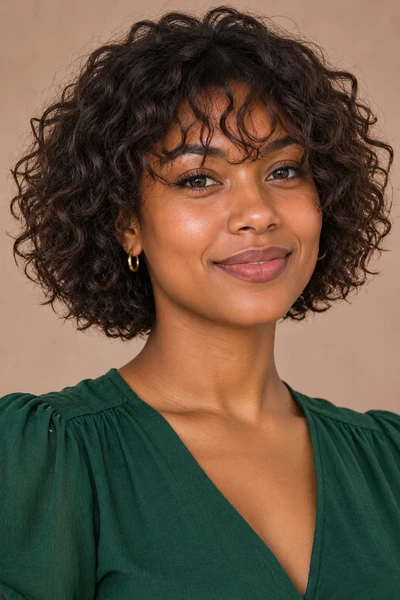
This version works with your natural curl pattern rather than against it, making it the best option for curly and wavy hair types that want this look without heat. Your stylist shapes the cut on dry hair so they can see the true curl shrinkage and final length before cutting, and the result is a rounded, face-framing bob that air-dries beautifully on wash day. It's the most underserved version in mainstream style galleries, which is exactly why it's worth knowing about.
Best for: Oval and round face shapes with curly or wavy hair.
Ask for at the salon: "A French bob cut on dry hair to account for curl shrinkage. Leave a little extra length at the front, and keep the perimeter soft so my curls can move naturally."
Pro tip: Style on wash day with a curl-defining cream, scrunching from ends upward. Pineapple overnight and refresh the next morning with a light water mist and minimal cream.
5. Asymmetrical French Bob
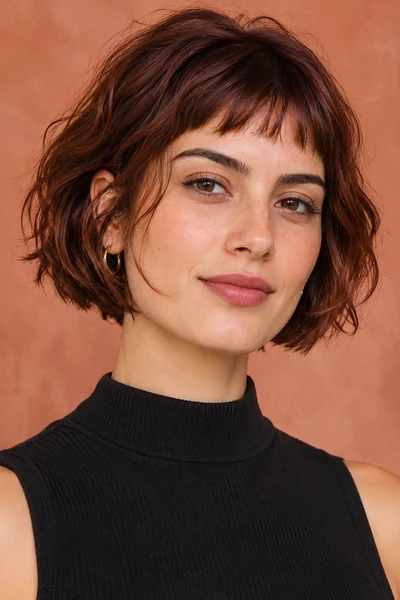
One side sits one to two centimeters longer than the other, adding a modern, angular element to the rounded silhouette. The asymmetry reads clearly in photos and from the front, but it stays subtle enough for most workplaces. This is the right choice if you want a French bob that feels current and fashion-forward rather than classically soft.
Best for: Oval and heart face shapes with straight or wavy hair.
Ask for at the salon: "A jaw-length French bob with a slight asymmetry, with the right side about one centimeter longer than the left. Keep the ends point-cut for texture."
Pro tip: Let the longer side fall forward naturally and use a small amount of pomade to separate and define the ends on that side.
6. French Bob with Curtain Bangs
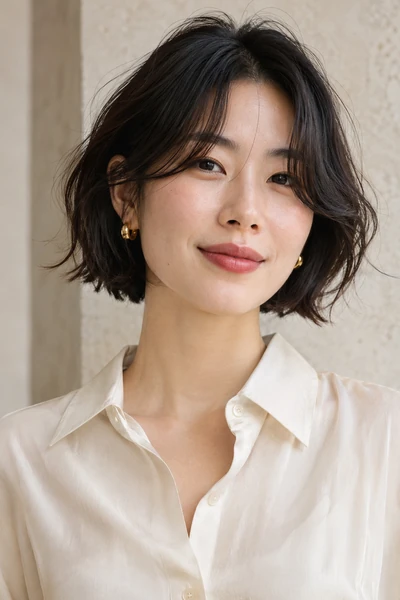
Curtain bangs part at the center or slightly off-center and sweep away from the face on both sides, creating a wider, more romantic frame than wispy bangs. They blend naturally into the face-framing layers of the textured bob, which makes the grow-out phase one of the easiest to manage out of all the bang options in this list. This version suits women who want a defined fringe presence without the full commitment of a straight-across fringe.
Best for: Oval and heart face shapes with medium hair.
Ask for at the salon: "A jaw-length textured French bob with curtain bangs parted slightly off-center. The bangs should sweep away from the face and blend into the layers at the sides."
Pro tip: Blow-dry each side of the curtain bangs outward with a small round brush, working from the center part outward on both sides for a clean sweep.
7. Layered French Bob
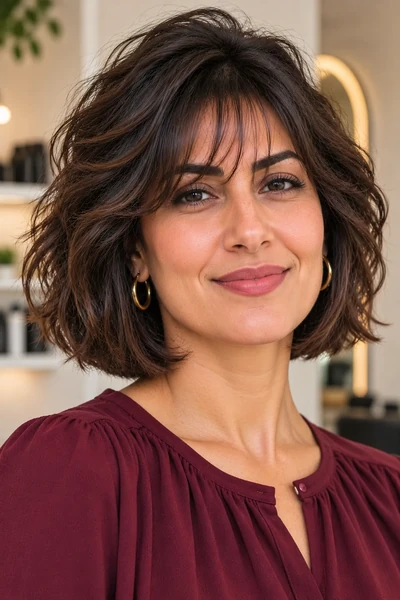
Interior layers throughout the length create bounce and movement that the classic single-length version doesn't have. This is the most universally flattering option in the list because layers work for both thin and thick hair at the same time: they add lift to fine hair and remove bulk from thick hair without touching the jaw-length perimeter. If you're not sure which version suits you best, this is your safest starting point across all textures and face shapes.
Best for: All face shapes with any hair texture.
Ask for at the salon: "A jaw-length French bob with interior layers throughout for movement and volume. Keep the perimeter at jaw length and point-cut the ends for texture."
Pro tip: Flip your head forward and diffuse on low heat to maximize volume at the roots. The layers fall into place naturally once you flip back upright.
8. French Bob with Fringe
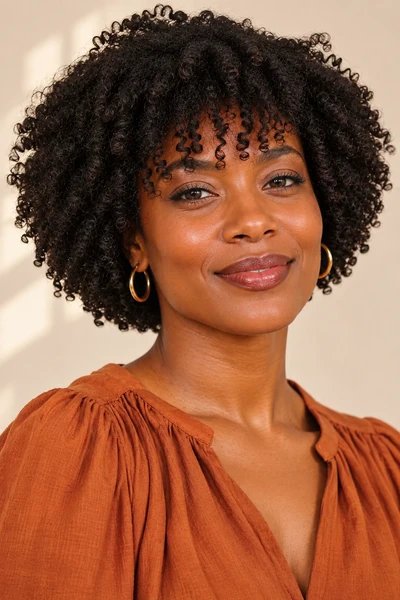
A heavier fringe than wispy bangs, with more coverage across the forehead, but still with soft point-cutting at the tips so it doesn't read as a solid blunt wall. It's the most editorial version of the cut and photographs with the strongest bang presence of all ten options. Fine hair benefits most here because the fuller fringe adds visual weight at the forehead without weighing down the ends.
Best for: Oval and round face shapes with fine or medium hair.
Ask for at the salon: "A jaw-length textured French bob with a full fringe, lightly point-cut at the tips. I want it to sit just above the brow with enough coverage to feel like a statement fringe."
Pro tip: Blow-dry the fringe straight down with a flat brush on medium heat. Avoid tilting the dryer too far upward or the fringe will lift and lose its flat, deliberate shape.
9. Shaggy French Bob
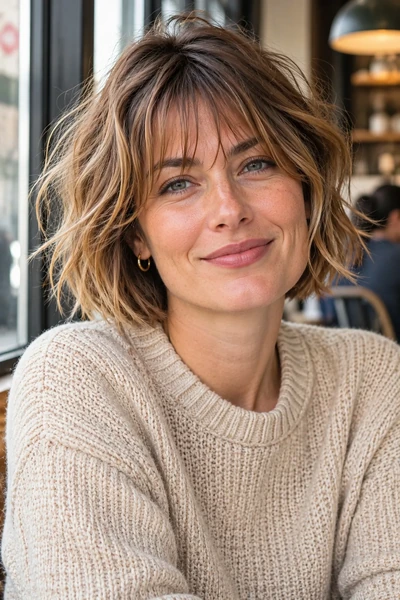
Heavy point-cutting and a curtain fringe give this version a laid-back, undone energy that suits wavy and curly hair especially well. The shaggy finish is the furthest from polished of all ten versions, so it's also the lowest effort to maintain between trims. For more shaggy short cut ideas alongside this style, see our shaggy haircuts roundup.
Best for: Oval and heart face shapes with wavy or curly hair.
Ask for at the salon: "A jaw-length shaggy French bob with heavy point-cutting throughout and a curtain-style fringe. I want it to feel very textured and lived-in, not polished or structured."
Pro tip: Use sea salt spray on damp hair and scrunch before air-drying. The shaggier the finish you want, the less you should touch it while it dries.
10. Sleek French Bob
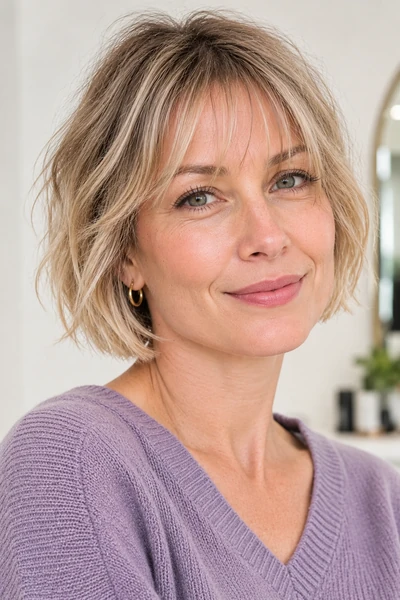
The sleek version is a polished, smooth-finish take on the jaw-length French bob, with clean, lightly tapered ends and a controlled surface that photographs with a sharp, high-contrast look. It still qualifies as a French bob because of its jaw-length cut and slight softness at the perimeter, but the daily finish is neater and lower-frizz than any of the other nine versions. It suits women who prefer a refined look that calls for a quick blow-dry rather than a tousled air-dry routine.
Best for: Square and round face shapes with straight hair.
Ask for at the salon: "A jaw-length French bob with clean, lightly tapered ends and a smooth finish. Not a fully blunt perimeter, but controlled rather than wispy."
Pro tip: Blow-dry with a paddle brush using downward tension on the ends to smooth the cuticle. Finish with a light serum on the perimeter only to control frizz without product weight.
Winter Trim Calendar: Keeping Your French Bob in Shape
The textured French bob is a high-commitment cut because it loses its shape faster than longer, blunter styles. The jaw-length perimeter needs consistent precision at the ends, and the fringe, if you have one, grows faster than the bob itself. Build these timing markers into your calendar from day one, so you're not chasing a lost shape six weeks into winter.
| Timing | Action | Why |
|---|---|---|
| Every 4-5 weeks | Full shape trim | French bob loses its precise shape quickly |
| Every 6-8 weeks | Fringe/bangs trim only | Bangs grow into eyes faster than the bob |
| Monthly | Glossing treatment | Textured cuts look best with shine |
A monthly glossing treatment earns its place in this routine because point-cut ends have more exposed cuticle than blunt-cut ends. That means they absorb color and shine treatments faster, and they show dullness more quickly when you skip the treatment. If in-salon glossing isn't in your budget, a rinsed-out at-home gloss used weekly delivers a noticeably similar result in about ten minutes.
Who This Cut Works Best For
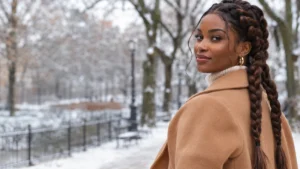

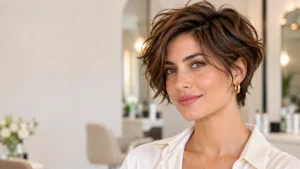
Oval and heart faces have the widest range of options across all ten versions, while square and round faces do best with softer fringe choices that balance the jaw line visually rather than emphasizing it. If you're not sure where your face shape falls, our face shape guide covers every shape with photo examples and practical recommendations. Heart-shaped faces especially benefit from the wispy or curtain bang versions, which add width at the forehead and balance a narrower chin without any structural change to the bob itself.
Fine hair is the most naturally suited texture for a short textured bob because point-cut ends create visible volume by removing weight, which lets the remaining hair lift at the crown and move at the ends. Thick hair needs extra interior weight removal from the stylist so the perimeter doesn't sit heavy at the jaw. For fine-hair-specific product picks that pair well with this cut, see our fine hair styles guide.
What to Tell Your Stylist
Screenshot this checklist and bring it to your appointment. These are the words that communicate this cut clearly, regardless of which version you chose from the table above. If your stylist isn't familiar with any of these terms, the descriptions below give them enough context to understand what you're after.
- Length: "Chin-length bob, sitting at or just below the jaw. Not shorter."
- Perimeter technique: "Point-cut or razor-cut the ends for texture. No blunt scissor cut on the perimeter."
- Fringe: "Wispy fringe, razored at the tip rather than cut blunt. Keep them long enough to sweep across the forehead and fall just above the brow."
- Weight removal for fine hair: "Remove interior weight, not perimeter length. I want volume at the roots and movement at the ends."
- Curly or coily hair: "Please do the final texture shaping on dry hair so we can account for shrinkage."
- Winter note: Let your stylist know you wear hats and scarves regularly. She may adjust the nape length slightly to prevent hat-hair compression at the back, which makes morning recovery much easier on cold days.
10-Minute Winter Morning Styling Routine
Cold air, wool scarves, and static are the three enemies of any textured bob in winter. This five-step routine handles all three so your cut cooperates with your schedule even on the coldest mornings. Work through these steps once and you'll have a routine that takes the guesswork out of cold-weather styling entirely.
- Moisture barrier (1 minute): Spritz damp or slightly damp hair with a lightweight leave-in conditioner before anything else. This creates a moisture barrier that cuts down static buildup from cold air and wool scarf fibers. It's the most underrated step in any winter short-hair routine, and it takes under 60 seconds.
- Texture product (3 minutes): Apply a small amount of texturizing cream or mousse to mid-lengths and ends only, never to the roots. Scrunch gently and avoid smoothing the product through, because over-smoothing removes the texture this cut is built to show. For fine-hair product picks that give hold without weight, see our fine hair styles guide.
- Low-heat drying (3 minutes): Diffuse on low heat, or air-dry if you have time. High heat in cold, low-humidity air increases static charge on fine hair, so low or no heat is the better choice in winter across all textures.
- Hat-hair recovery (2 minutes): After removing a hat, spritz roots lightly with water or dry shampoo, flip your head forward for ten seconds, then flip back upright. The textured ends re-separate without needing a brush or heat tool.
- Static control finish (1 minute): Finish with one to two spritzes of a light-hold hairspray held at arm's length to tame flyaways from scarves and coats throughout the day.
Avoid silicone-heavy serums in winter. They seal the hair shaft and prevent moisture absorption, which makes static worse in already dry conditions. Stick with water-based texturizing products instead, and the whole routine gets considerably easier, even on the coldest mornings. For more quick-styling options across all short cuts, see our fast styling tips guide.
Frequently Asked Questions
What is a textured French bob? A textured French bob is a jaw-length bob haircut where the ends are point-cut or razor-cut to create a soft, piecey finish instead of a solid blunt edge. The technique removes weight from the perimeter and allows the hair to move naturally rather than sitting in a rigid line at the jaw. It often includes a wispy or curtain fringe, though fringe-free versions are equally popular and suit a wide range of textures.
What face shape suits a French bob best? Oval and heart face shapes suit the textured French bob most easily because balanced proportions allow almost any bang placement to work without corrective framing. Round faces do well with a side-parted wispy fringe that draws the eye downward and adds visual length. Square and heart faces benefit from softer, curtain-style bangs that break the jaw line visually rather than emphasizing it.
Can I get a textured French bob with curly hair? Curly hair is actually a great fit for the textured French bob. The natural curl pattern provides the texture that straight hair needs razoring to achieve, so the finished look often requires less product and styling effort than it does on straight hair. Ask your stylist to cut on dry hair so the final length accounts for curl shrinkage before the scissors come out.
What is the difference between a French bob and a regular bob? A French bob sits at jaw-length with a soft, textured perimeter and usually includes a wispy or curtain fringe. A classic bob typically falls between the jaw and the collarbone with a cleaner, more structured edge and no fringe required. The French bob prioritizes effortless, air-dried movement, while the classic bob leans toward a polished, blow-dried finish.
Is the textured French bob hard to maintain? It's a high-commitment cut that needs a full shape trim every four to five weeks to stay precise. The fringe, if you have one, needs a separate trim every six to eight weeks since bangs grow faster than the bob itself. If you're not already on a regular trim schedule, factor that cost and time into your decision before booking.
The textured French bob with wispy bangs offers 10 distinct versions across a wide range of face shapes and hair textures, so there's almost certainly a fit for you in the quick-choice table above. Find the version that matches your starting point, save your favorites to your hair inspiration board, and bring the salon script to your next appointment. For more short haircut inspiration year-round, our roundup of short haircuts covers 30 more styles across all hair types.

Your email address will not be published. Required fields are marked *