
A veil can turn a lovely hairstyle into a true bridal moment, but only when the two actually work together. Choose the wrong pairing and you'll spend the ceremony worrying about a slipping comb or a flattened crown. This roundup covers 18 wedding hairstyles with veil looks, organized by hair type and face shape, so you know which ones will hold on your own hair. Each entry tells you who it flatters, how it pairs with a veil, what to tell your stylist, and how much upkeep to expect, so save your favorites and bring the list to your trial.
How to Choose a Wedding Hairstyle With a Veil
How to Choose a Wedding Hairstyle With a Veil
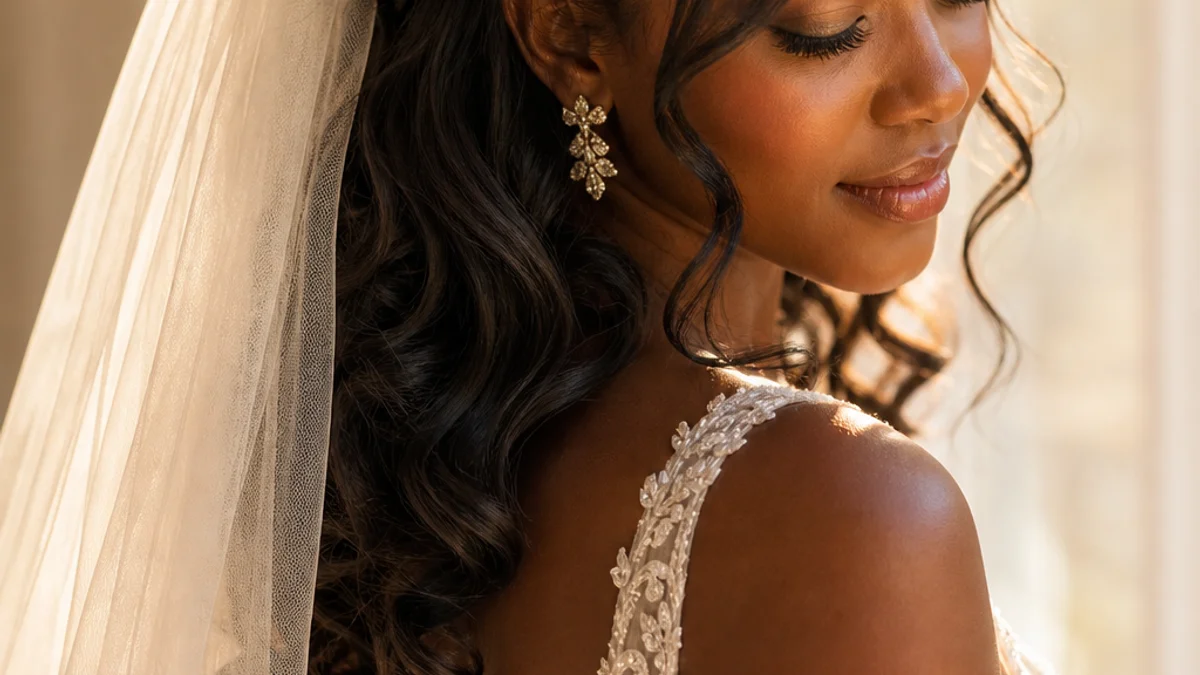
Face shape is a helpful starting point, not a rulebook: round and square shapes tend to look most balanced in styles that add height, like a high bun or a half-up style with crown volume, while oval and heart shapes have more flexibility and can wear almost anything. Hair texture matters just as much once a veil comb enters the picture. Fine or thin hair has the hardest time supporting a heavy chapel or cathedral veil, since there's less for the comb and pins to grip, while thick, coarse, or coily hair holds them far more securely. According to The Knot, veil lengths range from short birdcage styles to full cathedral length, and the heavier the veil, the more support your hairstyle needs underneath it.
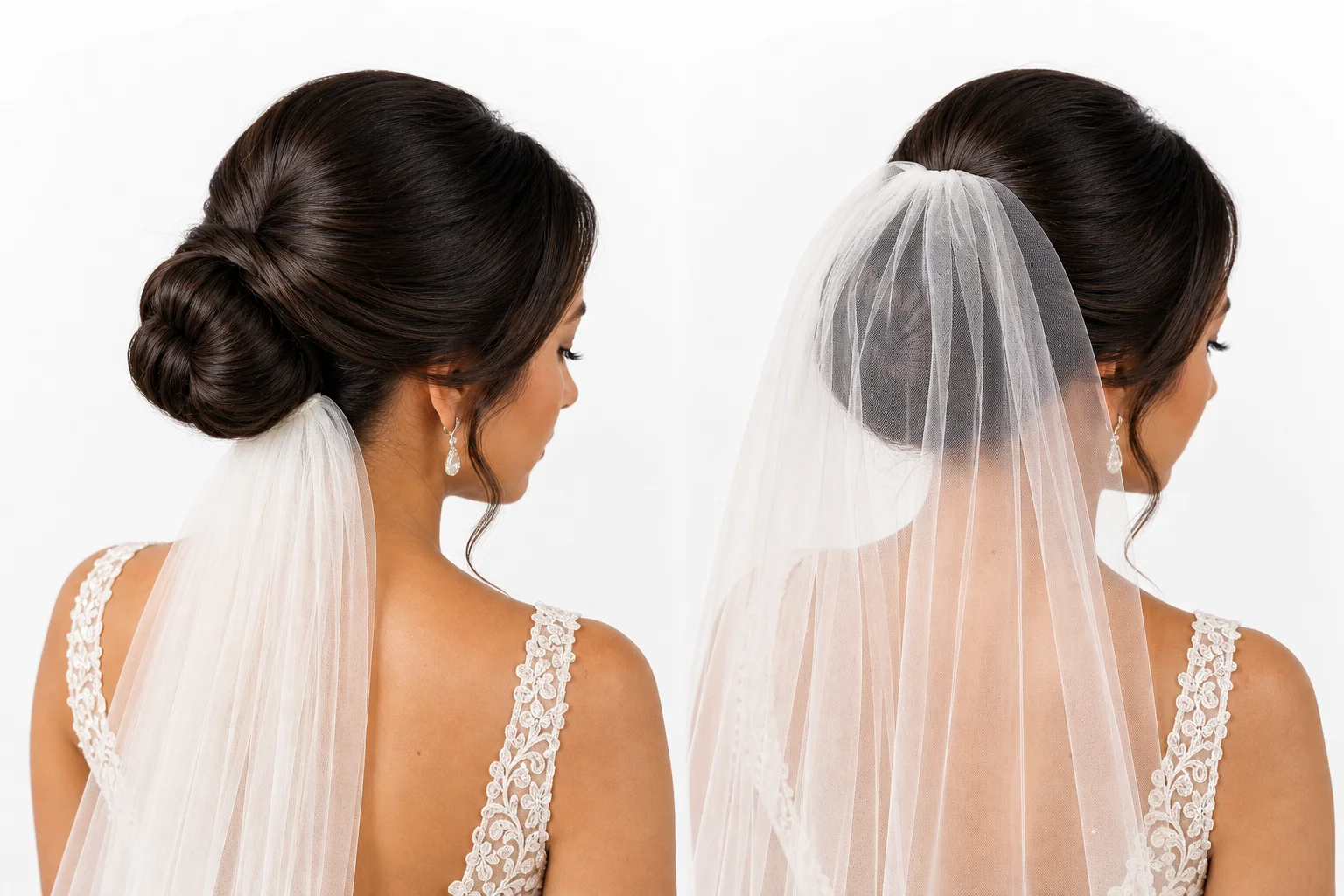
Veil placement is the detail most brides forget to ask about. A veil can sit under a finished updo for a classic look, or over it so it drapes down the back for photos and comes off easily later, a call usually made at your trial. If you're deciding between a soft updo and something more structured, our bridal braided updos and face shape guide pages are worth a look first.
Half-Up Half-Down Wedding Hairstyles With Veil
Half-Up Half-Down Wedding Hairstyles With Veil
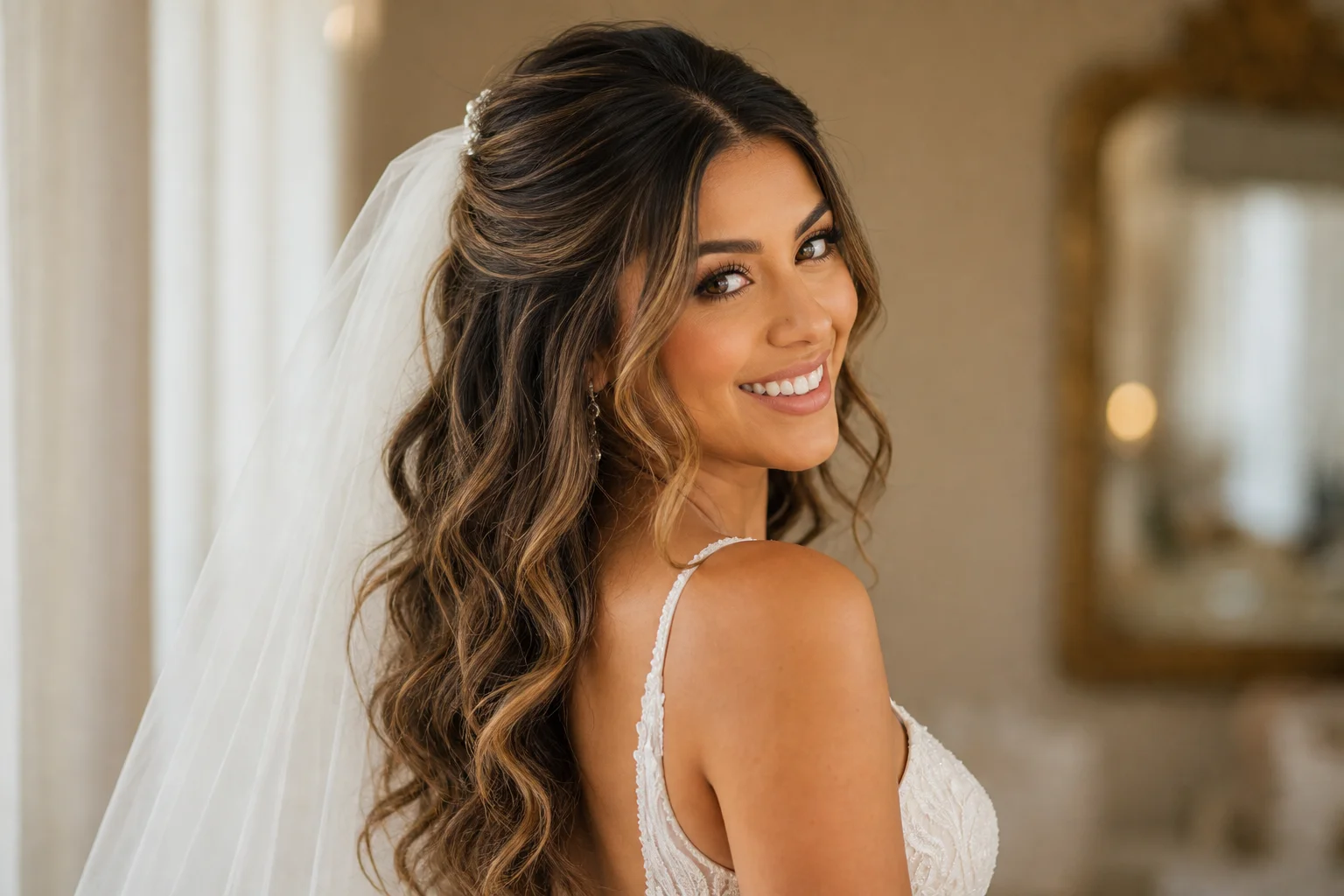
Half-up half-down styles are the most versatile veil pairing across face shapes, balancing crown volume without covering the whole head. The comb is typically pinned at the crown, right where hair splits into the up and down sections, so it works for either under or over placement. Expect some flyaway touch-ups after a few hours, especially in humid weather, and see our half up half down roundup for more everyday versions.
Classic Half-Up Half-Down With Loose Waves
This look suits fine to medium hair and flatters nearly every face shape. Loose waves are set with a curling wand, then the top section is gently gathered and pinned to give the veil comb a secure base. Ask for beachy, undone waves rather than tight ringlets, and expect to refresh a few pieces if your ceremony runs long.
Half-Up Half-Down With a Braided Crown
A braided crown adds a vertical line through the top of the head, flattering round and square face shapes. It works especially well on thick or curly hair, since the braid gives veil pins something dense to grip. Ask your stylist to braid slightly looser than usual for soft volume and minimal touch-up.
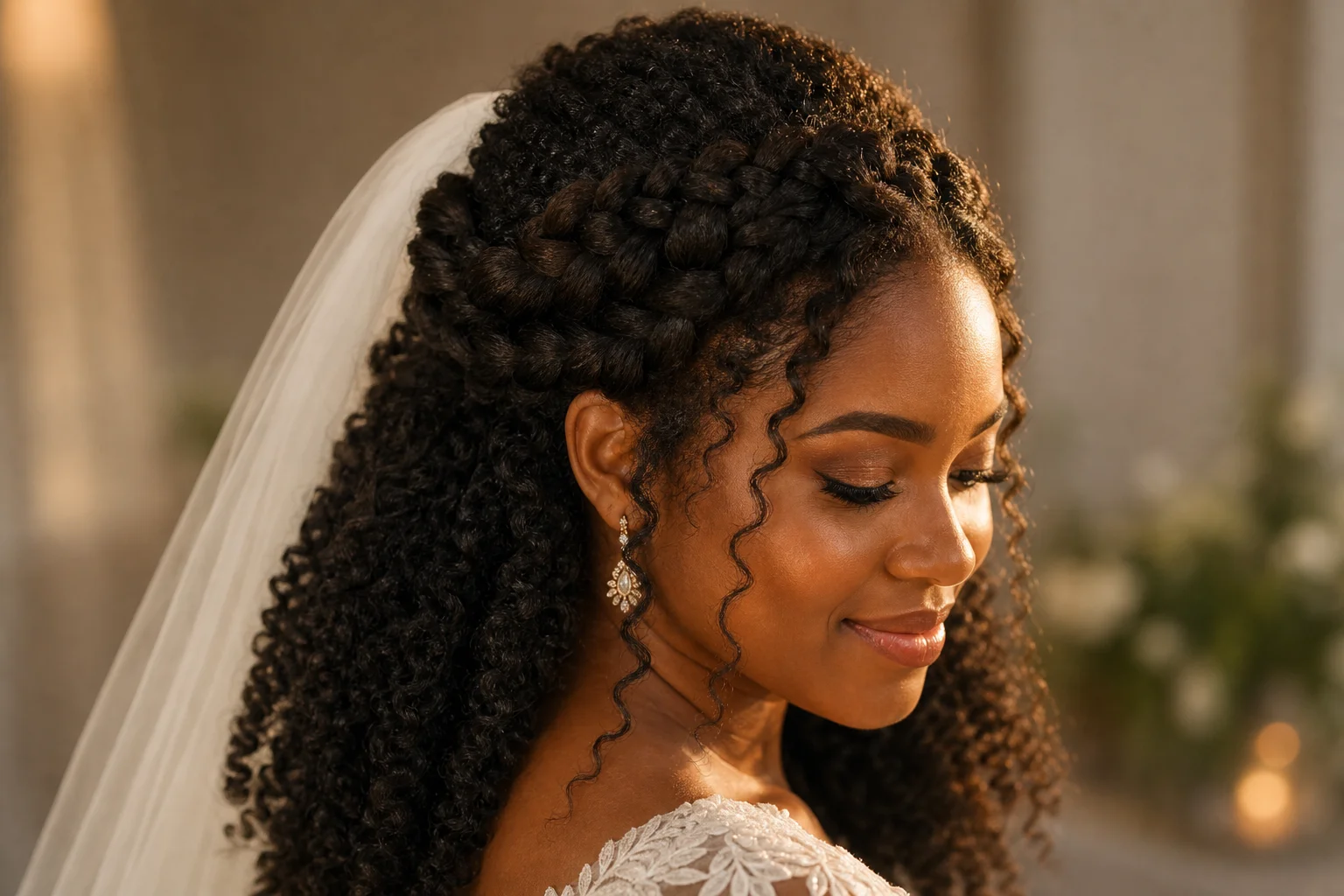
Half-Up Twisted Half-Down With Veil
Twisted half-up styles suit medium to thick hair and brides who want polish without hours in the chair. Two sections are twisted back from each temple and pinned at the crown, creating a hidden base for the veil comb. Ask for face-framing twists pinned high enough to hide the comb, and expect them to hold through the last dance.
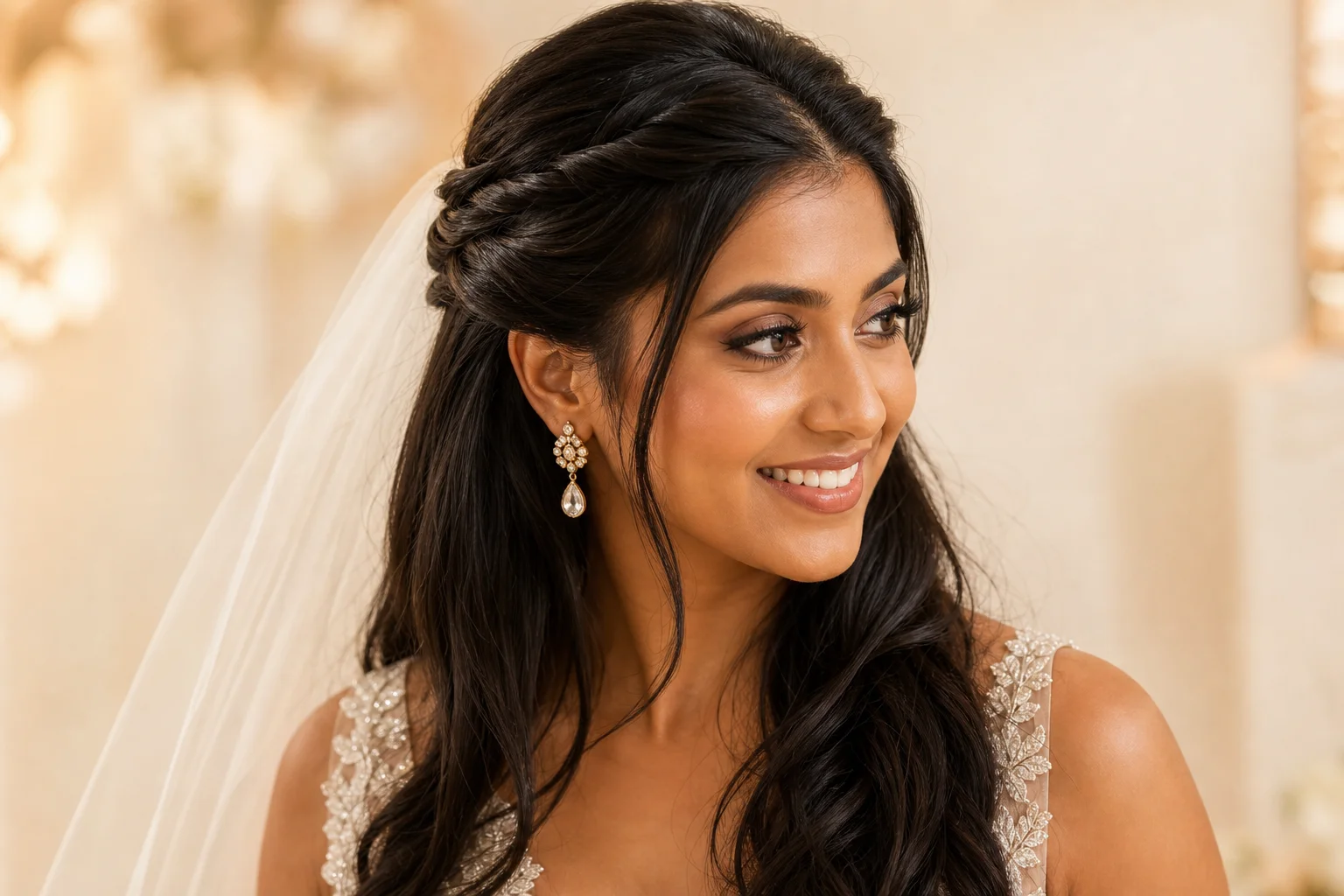
Half-Up Half-Down Bun With Face-Framing Pieces
This variation suits heart and square face shapes, since loose face-framing pieces soften a strong jawline or wide forehead while the bun stays tidy. The top section is twisted or braided into a small crown bun, with the veil comb sitting just behind it. Ask your stylist to curl the face-framing pieces separately, since they'll need a quick re-curl once the veil comes off.
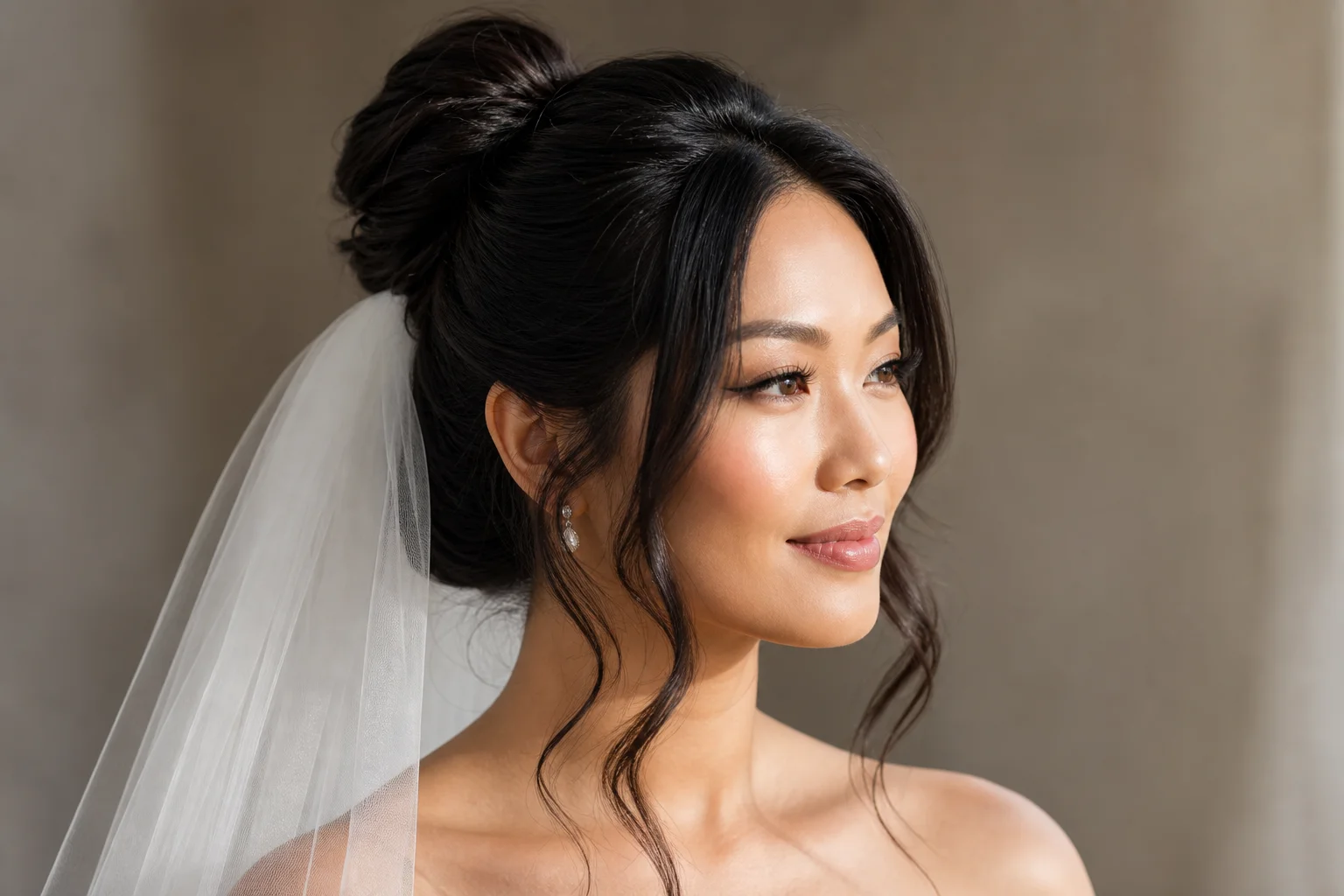
Half-Up Half-Down With Flower Accents Under the Veil
Coily and natural hair textures look beautiful in this style, since fresh or silk flowers add color that photographs well against richer hair. The top section is twisted or pinned into a textured knot, with flowers tucked around the base before the veil comb goes on top. Tell your stylist to secure the flowers first so the comb sits carefully around them.
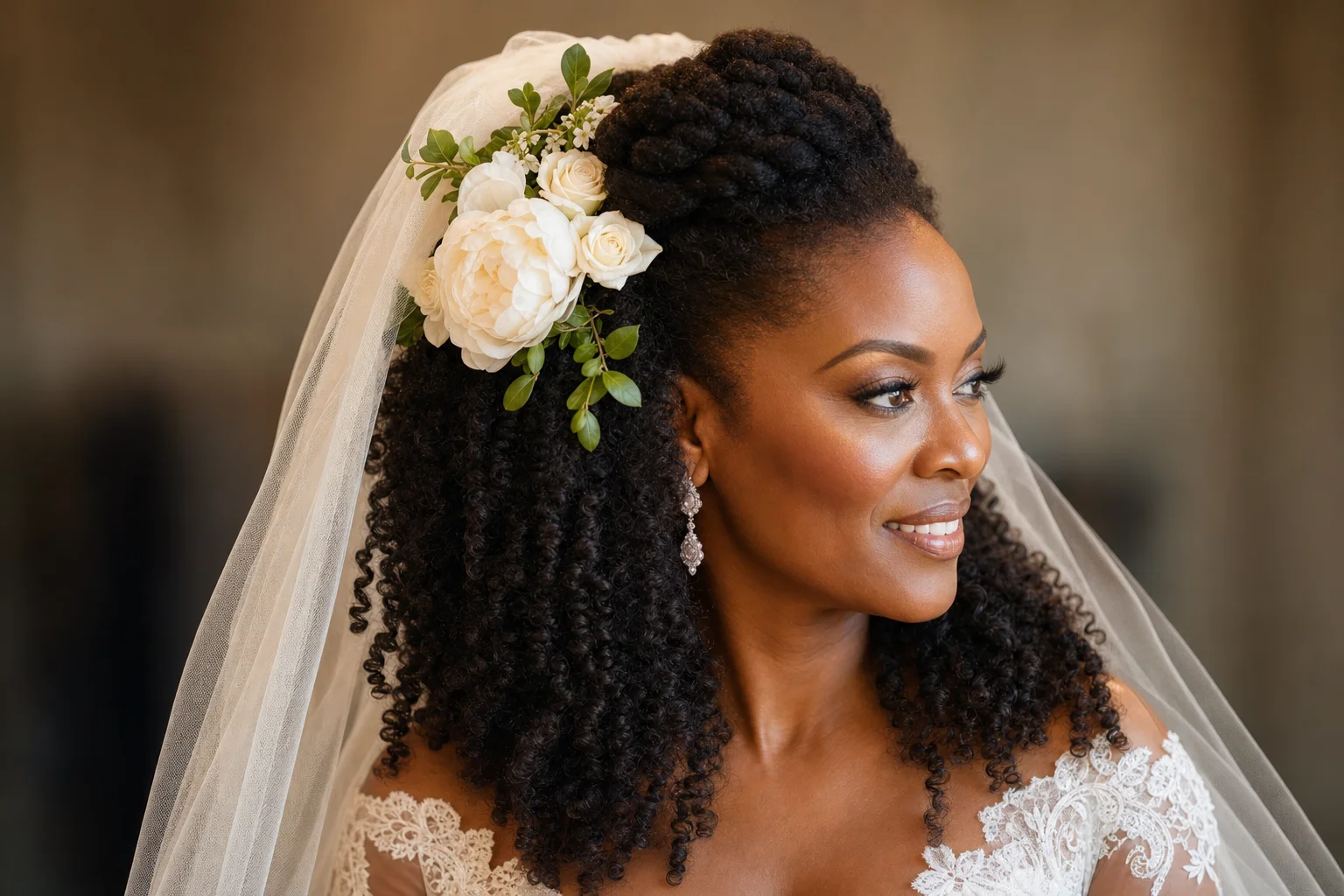
Wedding Hair Down / Loose Hairstyles With Veil
Wedding Hair Down / Loose Hairstyles With Veil
Fully loose, all-down styles pair the veil comb directly into the crown with no updo to anchor it, so fine hair may need light backcombing or a hidden pin cluster underneath. Curl or wave patterns generally hold up better through a full day than pin-straight styles. Oval and heart face shapes have the most flexibility with loose hair, while round or square shapes often prefer a soft side part for asymmetry.
Loose Curls With Cathedral Veil
This pairing suits thick to medium hair best, since a long cathedral veil needs a fuller curl underneath or it reads flat. Large, soft curls are set through the whole head and left loose, with the comb clipped in at the crown before the veil is smoothed over the shoulders. Ask how much curl definition will show through the veil, since this look relies on soft movement over tight definition.
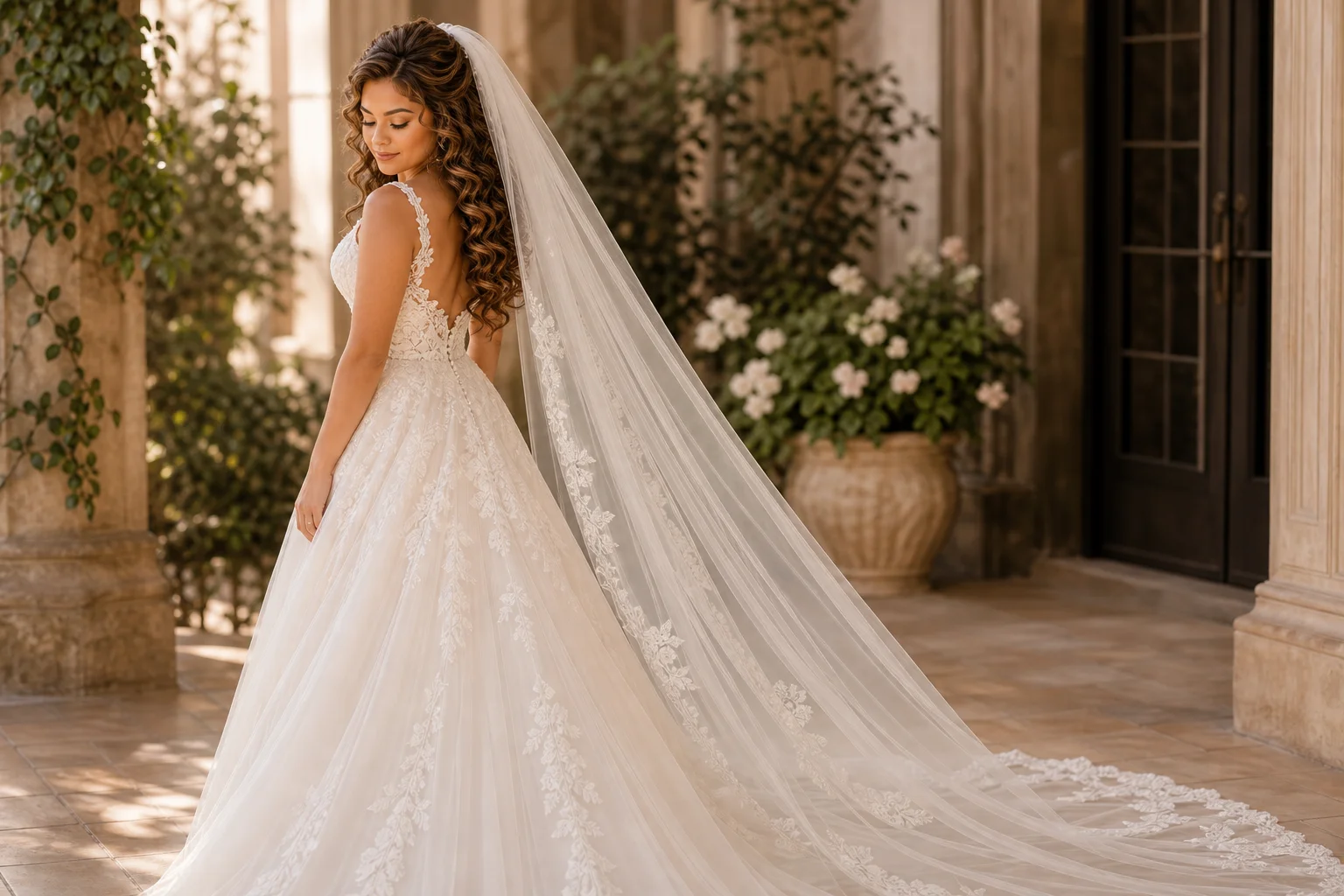
Soft Waves With Veil for Fine Hair
If your hair is fine or thin, this is one of the more realistic loose options, since it's built around veil security. Soft waves are set with a wand, and your stylist backcombs a small hidden section at the crown before clipping in the comb for extra grip. Ask about the backcombing technique at your trial, since not every stylist defaults to it.
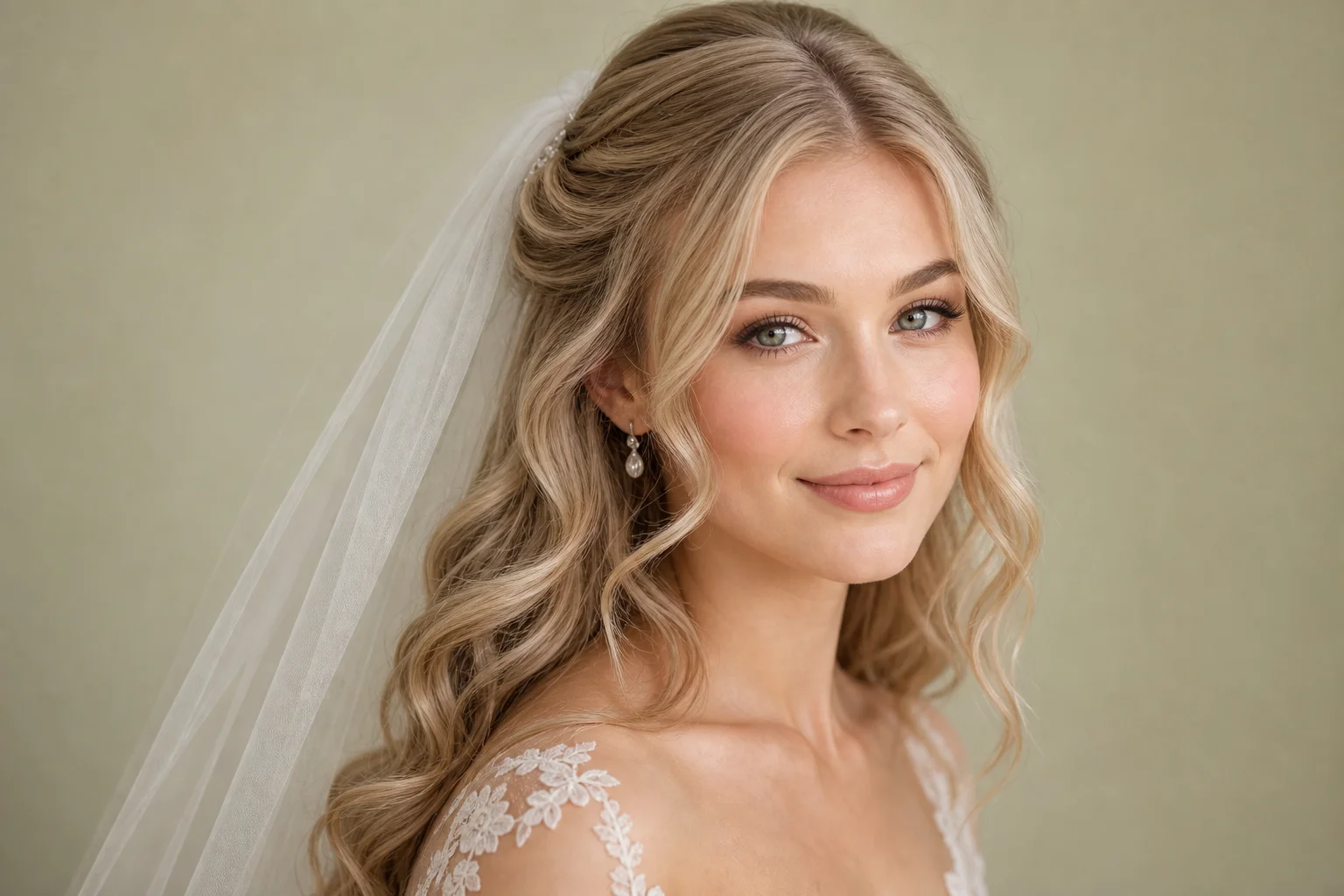
Sleek Straight Hair With Veil
Sleek, straight styles flatter oval and heart face shapes, since the smooth lines elongate the face without adding width at the jaw. Hair is flat-ironed for a glassy finish, then the veil comb is clipped in with a section smoothed back to hide the hardware. Ask for a heat protectant and light-hold spray, since straight styles react fastest to humidity.
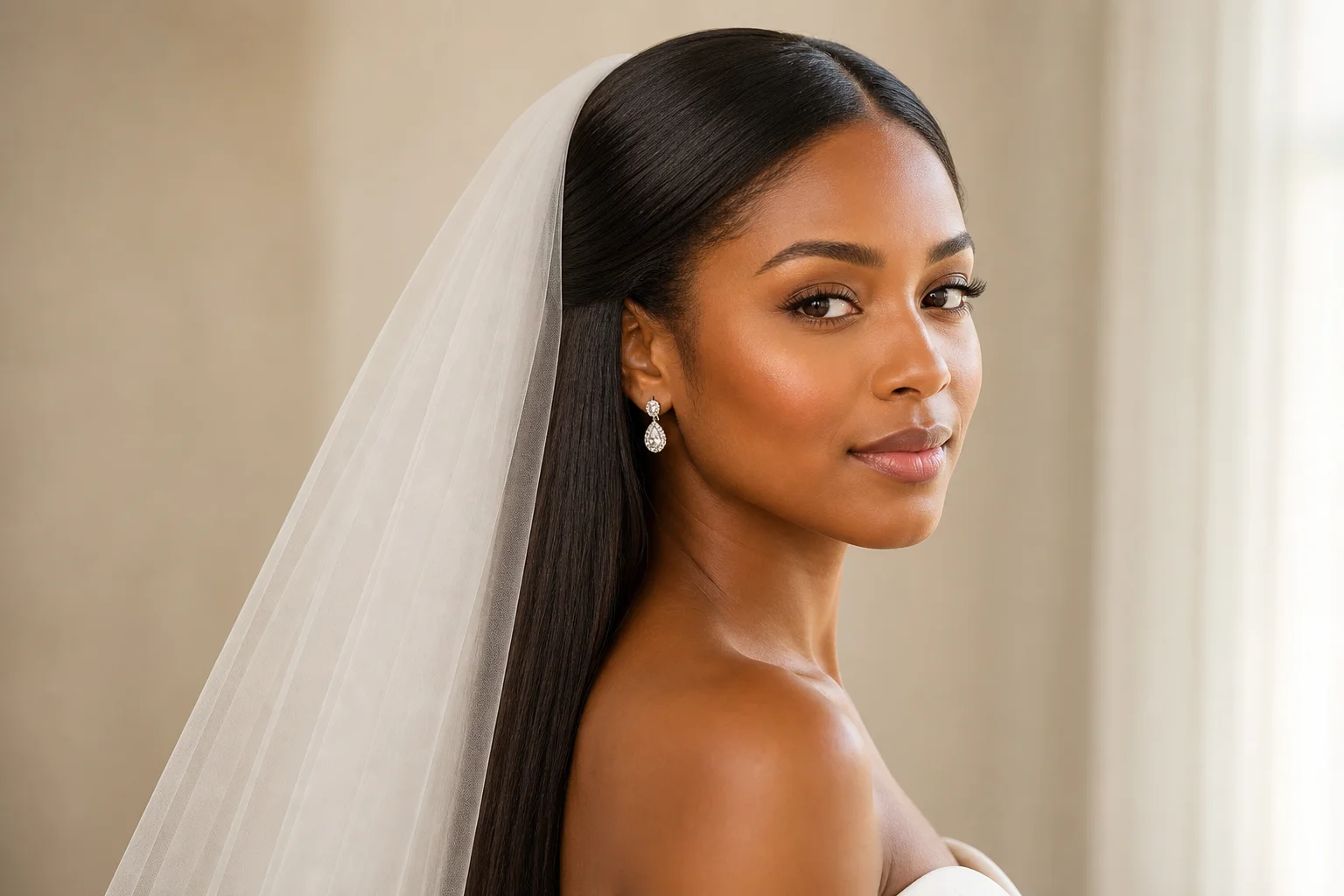
Loose Waves With Side-Swept Veil
Round and square face shapes generally benefit from this style, since a side-swept veil adds visual angles a centered style doesn't. Loose waves are set through the whole head, and the comb is pinned slightly off-center so the veil drapes toward one shoulder. Ask your stylist to secure it with an extra pin near the temple for the ceremony.
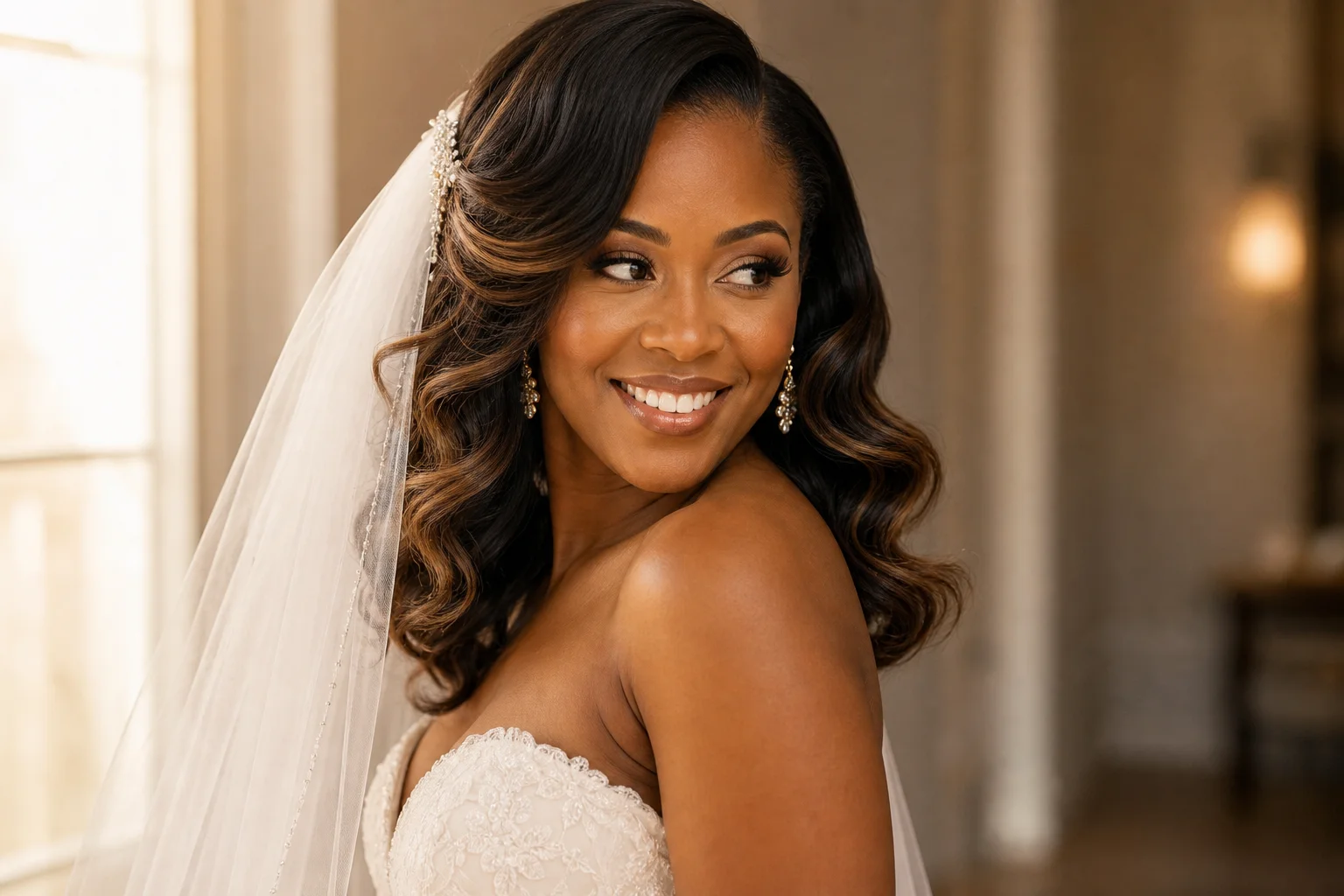
Wedding Updos With Veil (Buns, Chignons and Low Buns)
Wedding Updos With Veil (Buns, Chignons and Low Buns)
Updos generally hold veil weight better than any other category, since the comb anchors into a secured base instead of loose or half-pinned hair. Thick and coily hair textures typically hold an updo the longest without touch-ups, while fine hair may need extra pins or a small hairpiece for volume. For more inspiration, our wedding updo guide and braided bridal updos roundup have more textured options worth bringing to a trial.
Low Bun Wedding Hairstyle With Veil
This is the most requested updo at bridal trials, since it suits nearly every face shape and makes veil removal simple. Hair is smoothed into a low, polished bun at the nape, and the comb slides in just above it so the veil lifts straight out for the reception. Ask about the veil-over-versus-under conversation early, since this low-maintenance choice tends to stay put all day.
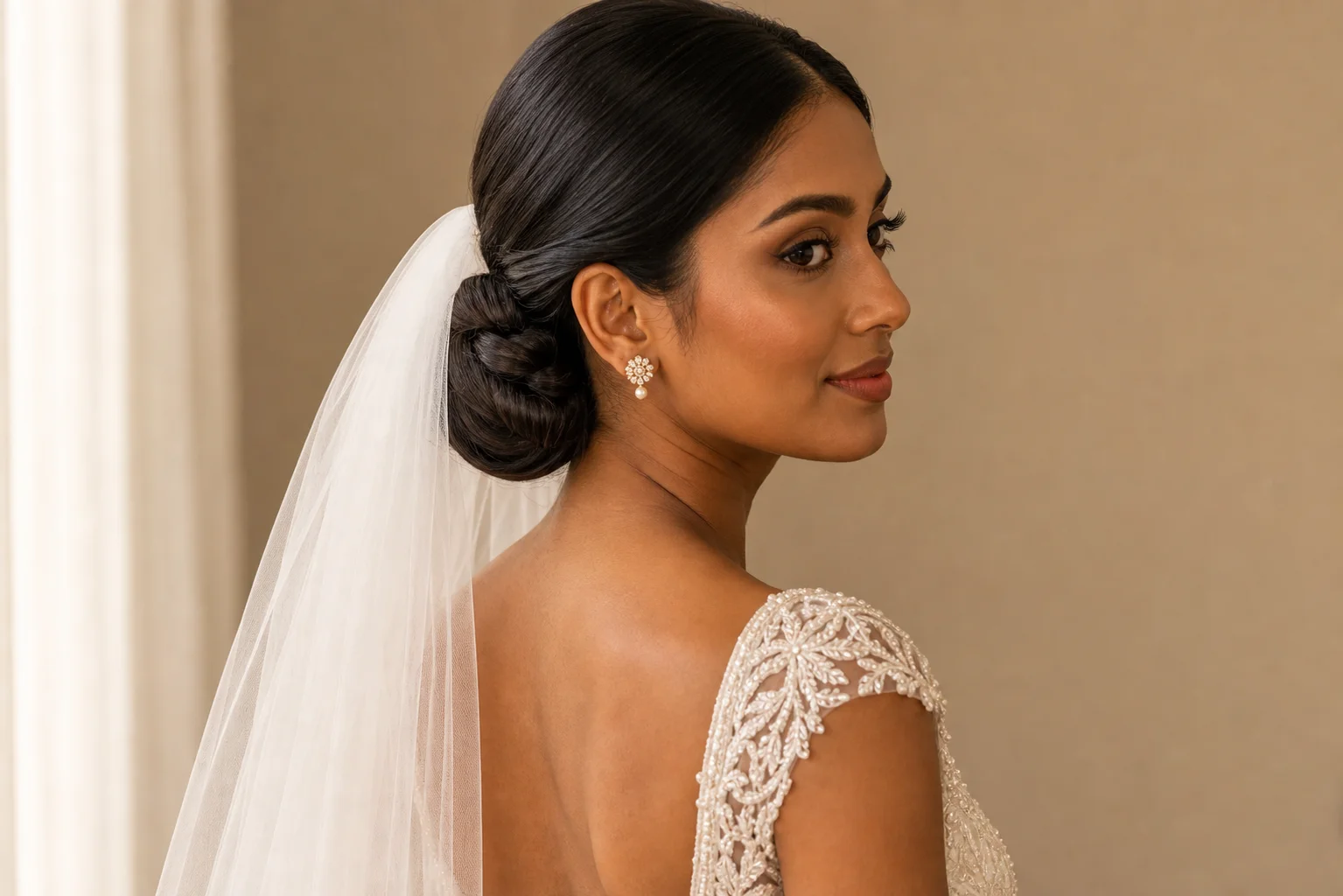
Classic Chignon With Veil
A classic chignon flatters oval and longer face shapes, since the smooth, rounded shape at the nape balances extra length. Hair is gathered low and looped into a neat coil before the veil comb is tucked in just above the roll. Ask for a polished, low chignon with minimal loose pieces if you want the cleanest line and least touch-up.
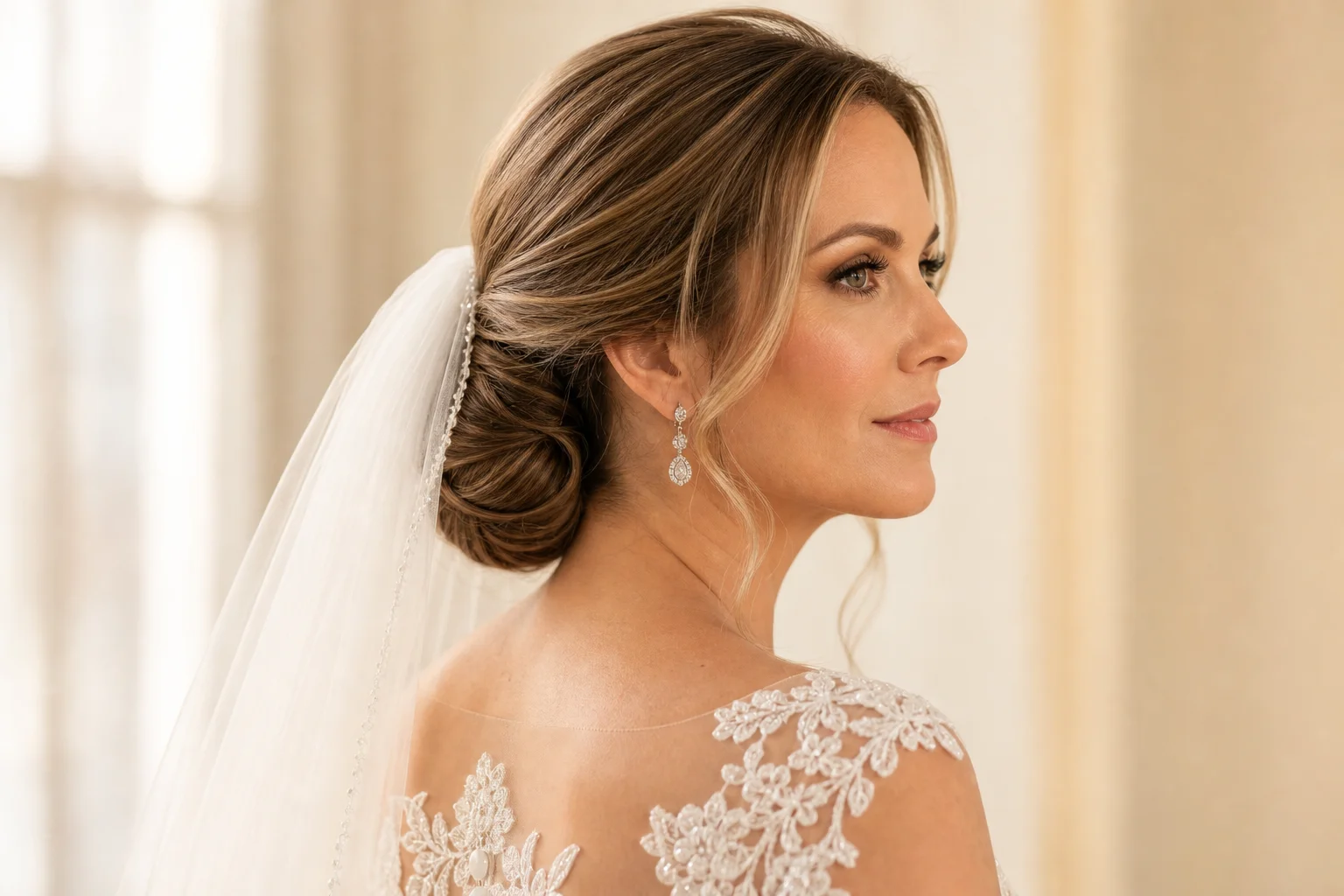
Textured Low Bun With Veil for Thick Hair
Thick or coarse hair looks especially beautiful in this style, since there's enough volume for a full, textured bun without extensions. The bun is left slightly undone, with soft pieces pulled out around the crown, and the comb anchored into the thickest part for maximum hold. Let your stylist know you want lived-in texture rather than a smooth finish.
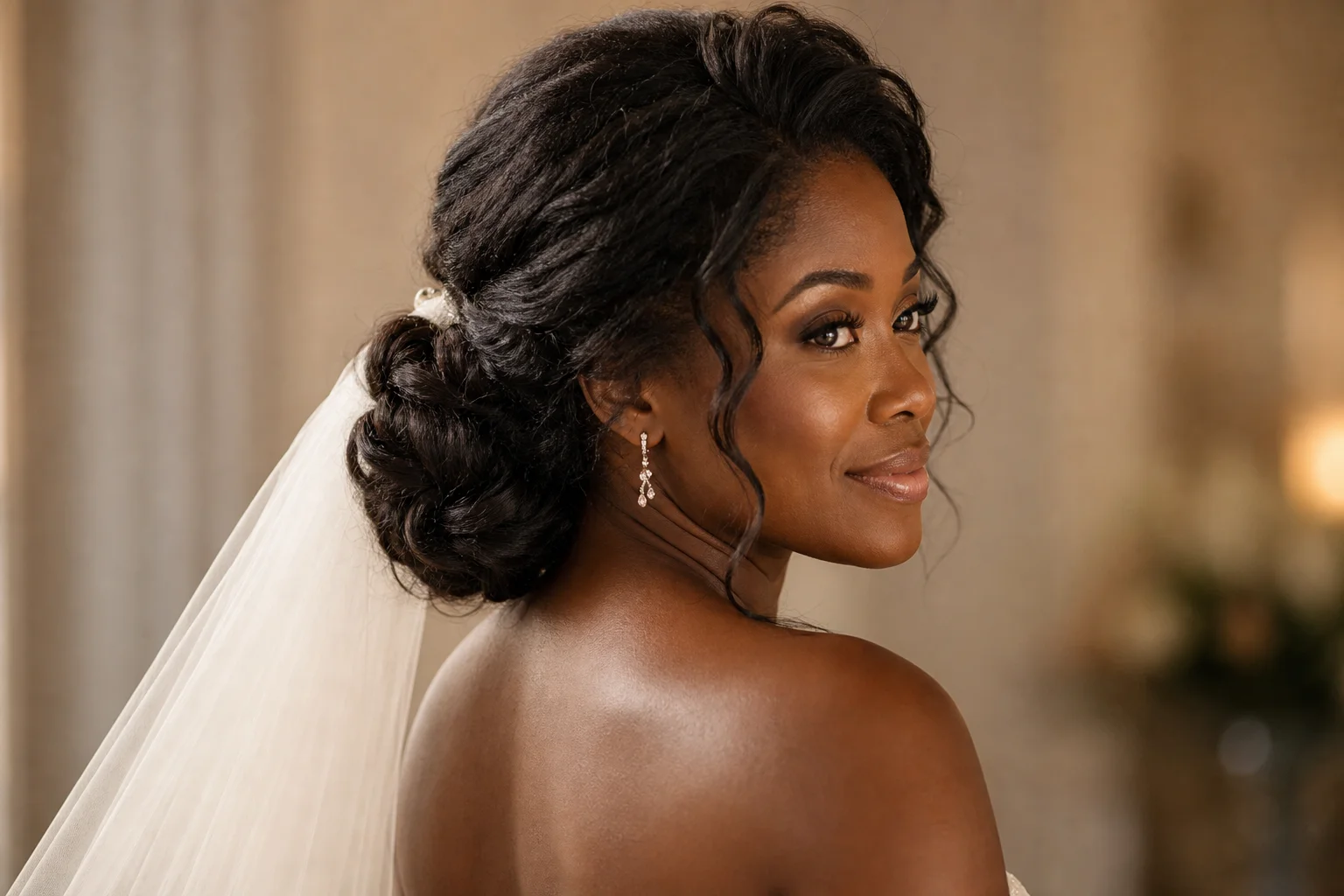
Braided Low Bun With Veil
Curly and natural hair textures shine in this style, since the braid pattern works with the hair's texture instead of fighting it. Two or three sections are braided and wrapped into a low bun, distributing the veil comb's tension evenly rather than pulling one section. Ask your stylist to keep the braids slightly loose at the crown for a soft, secure shape.
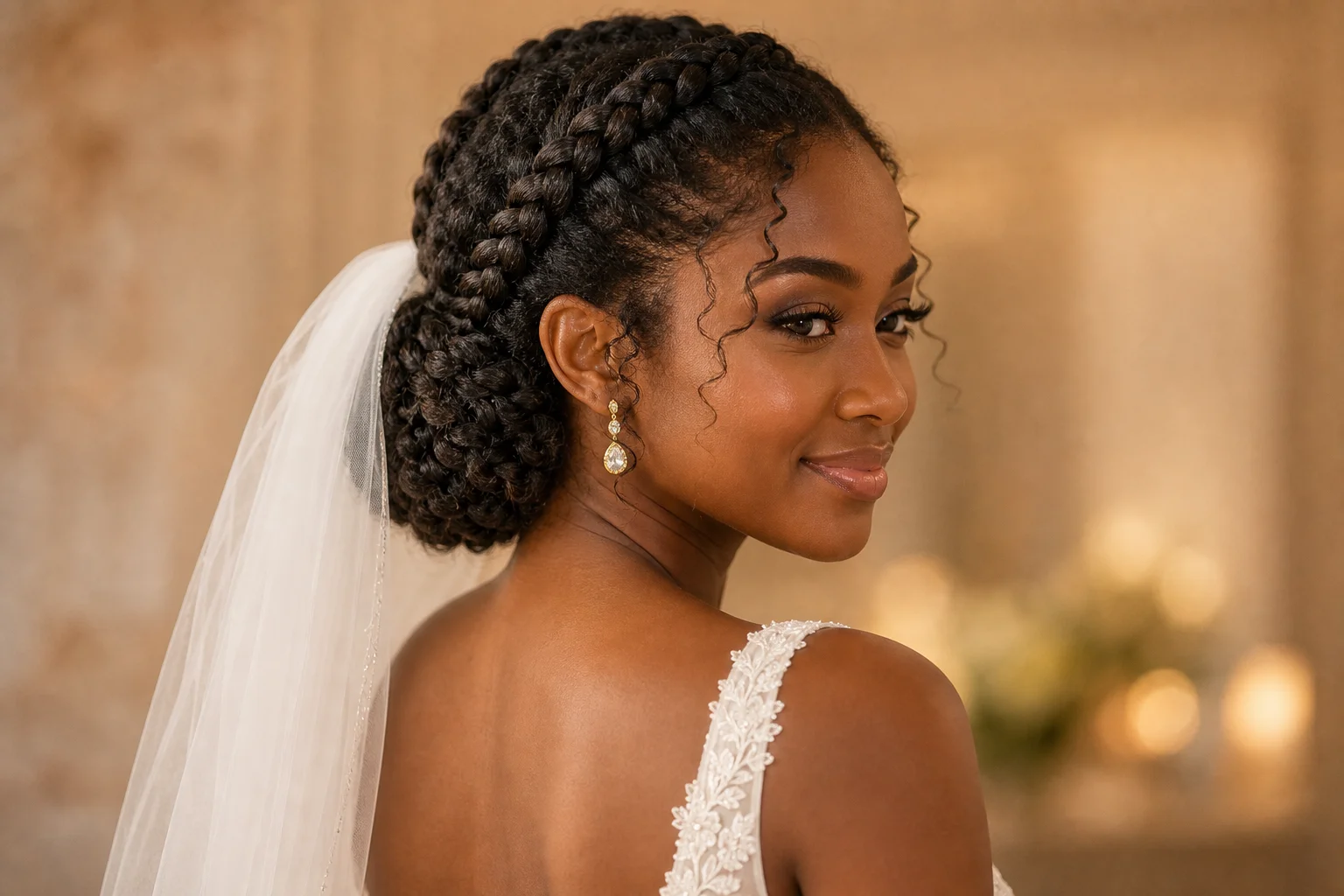
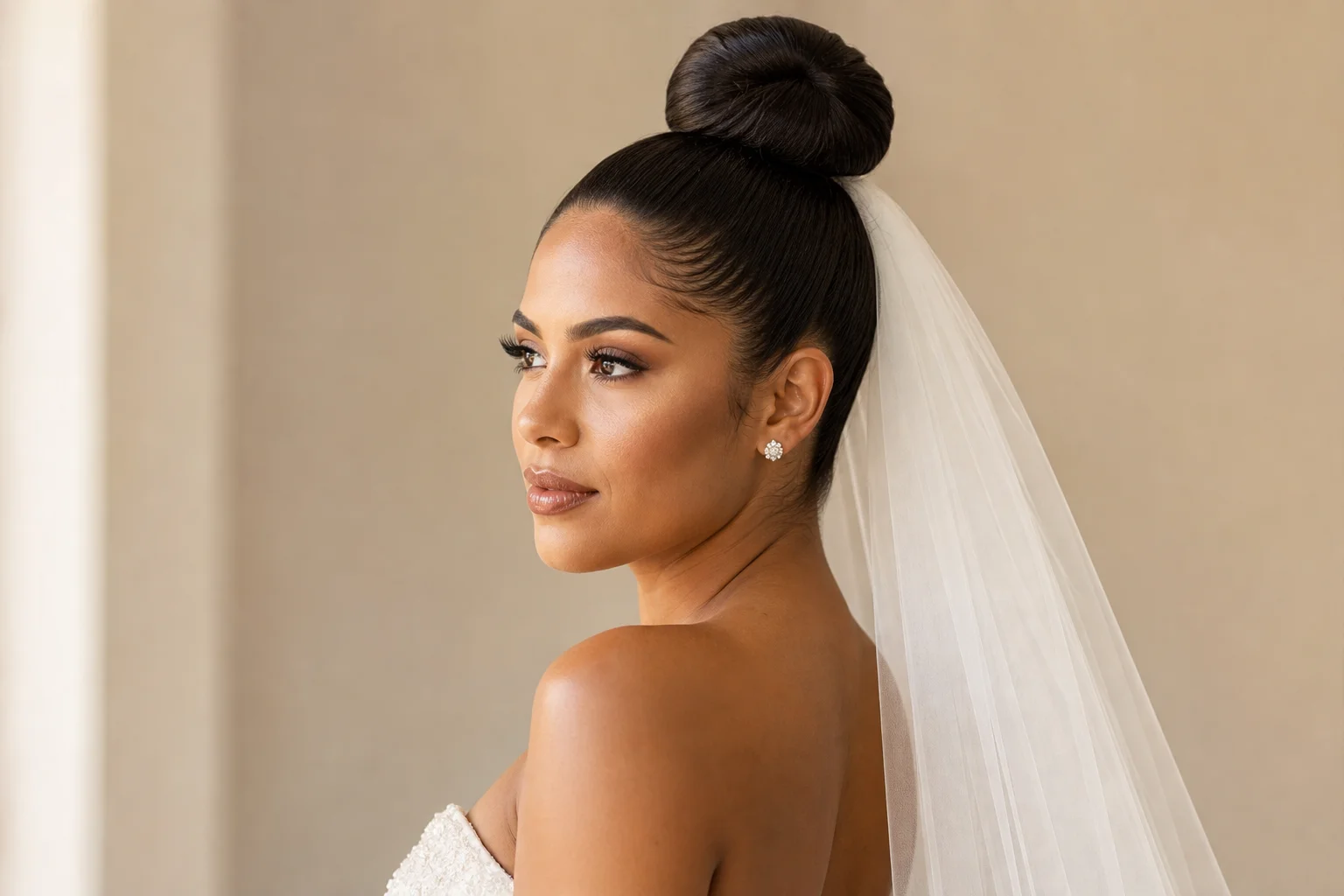
Sleek High Bun With Veil
A sleek, high bun elongates the neckline, making it a strong pick for square and round face shapes that benefit from added height. Hair is pulled back tightly and secured high, with the comb placed at the base so the veil drapes dramatically down the back. Ask for a sleek, no-flyaway gel finish, since this style holds well through long ceremonies.
Wedding Hairstyles With Veil and Tiara or Headpiece
Wedding Hairstyles With Veil and Tiara or Headpiece
Layering a tiara, comb headpiece, or floral crown with a veil changes the approach slightly, since your stylist has to plan for two accessories instead of one. The order of attachment gets decided at your trial based on your hair volume and headpiece style. Heavier pieces like tiaras usually need a secured base underneath, while a lighter floral crown can sit directly on loose or half-up hair.
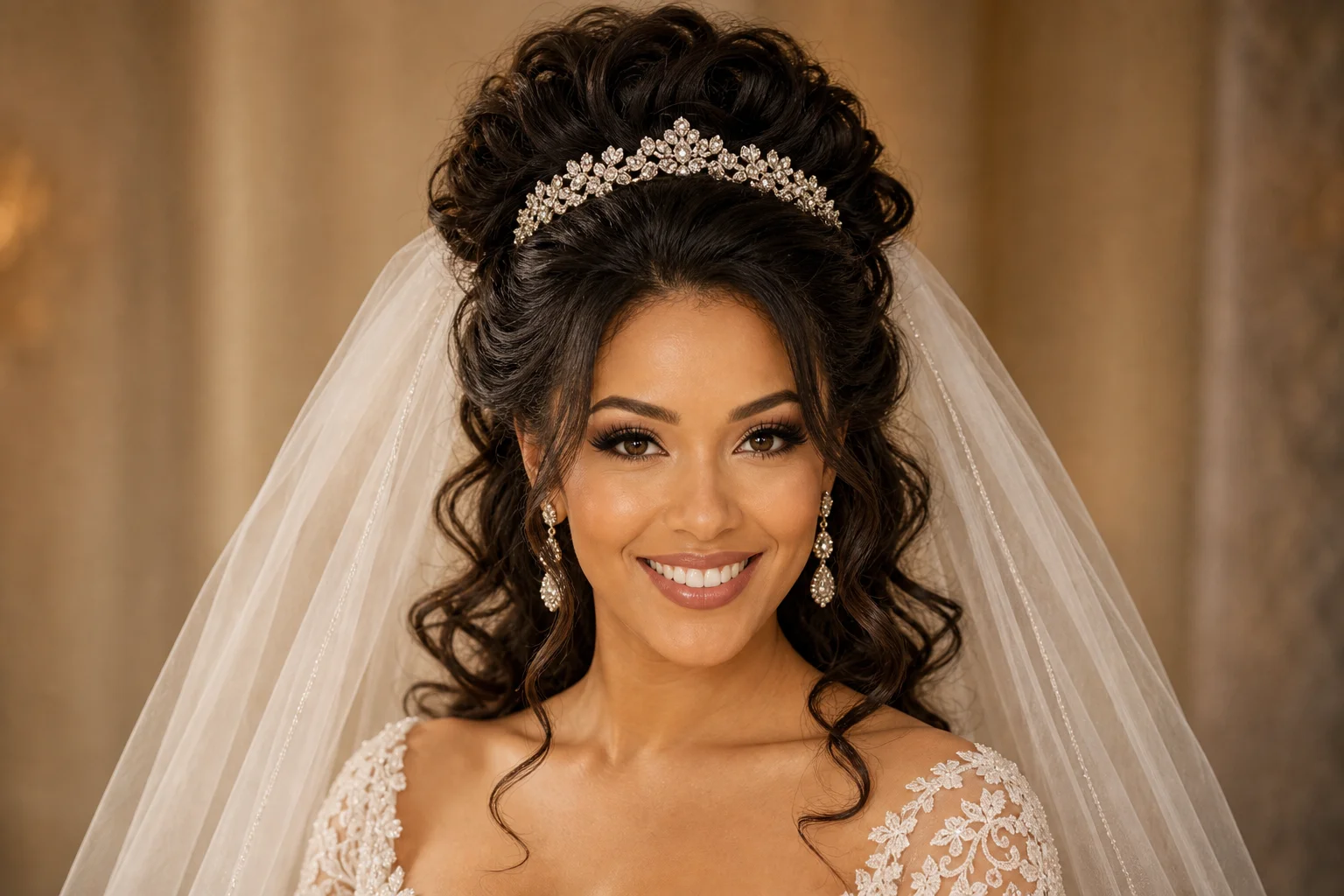
Voluminous Updo With Tiara and Veil
This combination suits brides planning a formal, cathedral-length look who want maximum drama in their bridal portrait. Hair is teased and built up at the crown before being pinned into an updo, creating the volume needed to support both the tiara and the veil comb. Ask how much backcombing is planned, since that volume is what keeps a heavier tiara sitting securely.
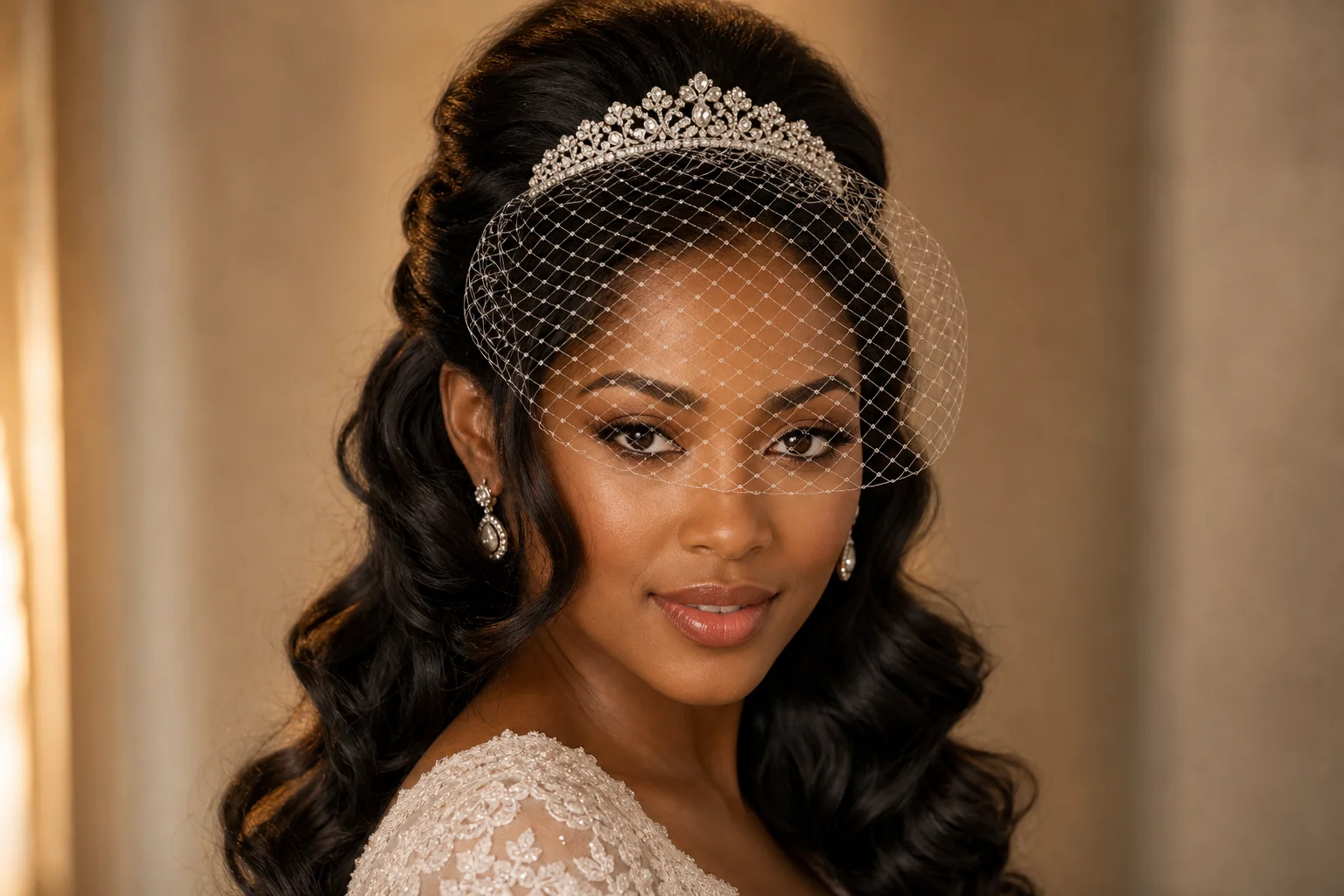
Half-Up Style With Tiara and Birdcage Veil
Vintage-inspired weddings and shorter veils pair beautifully with this look, since a birdcage veil works best with some height built at the crown. The top section is pinned up for lift, the tiara sits just in front, and the birdcage veil attaches slightly forward to frame the eyes. Ask for the netting angled, not flat, for that classic old-Hollywood feel.
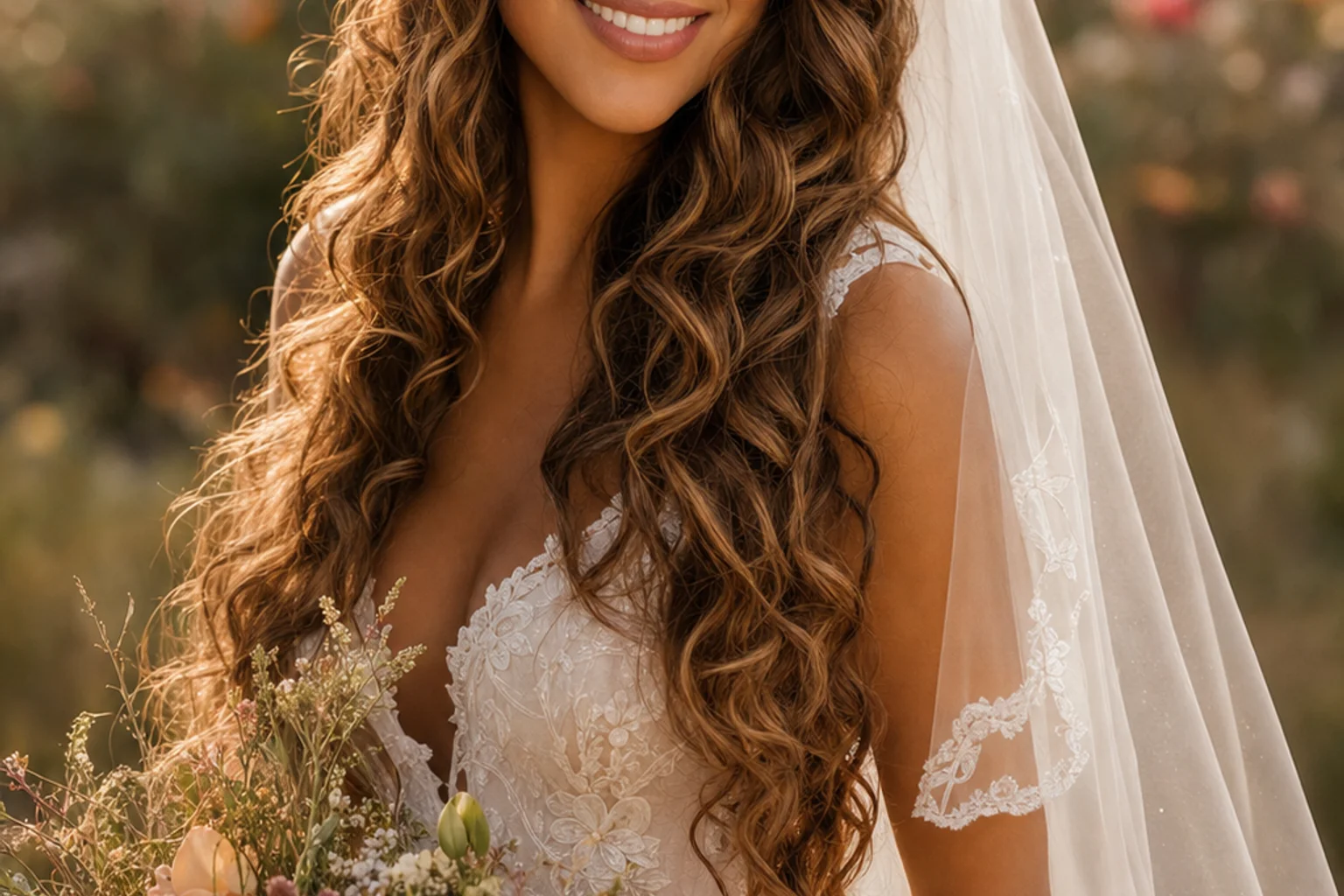
Loose Curls With Floral Headpiece and Veil
Boho and outdoor weddings are the natural setting for this pairing, where loose curls, a floral crown, and a soft veil work together for a relaxed look. Flowers are secured first around the crown before the veil comb is added underneath or just behind them. Ask your stylist to place the flowers so they frame the face rather than sitting flat on top.
Sleek Updo With Comb Headpiece and Veil
Minimalist bridal styling often leans on this combination, where a sleek updo provides a clean base for a comb headpiece and veil layered together. Hair is smoothed into a low or mid-height bun, with both accessories layered into the same pinned section to avoid extra bulk. Let your stylist know you prefer a minimal, uncluttered look for the most secure hold.
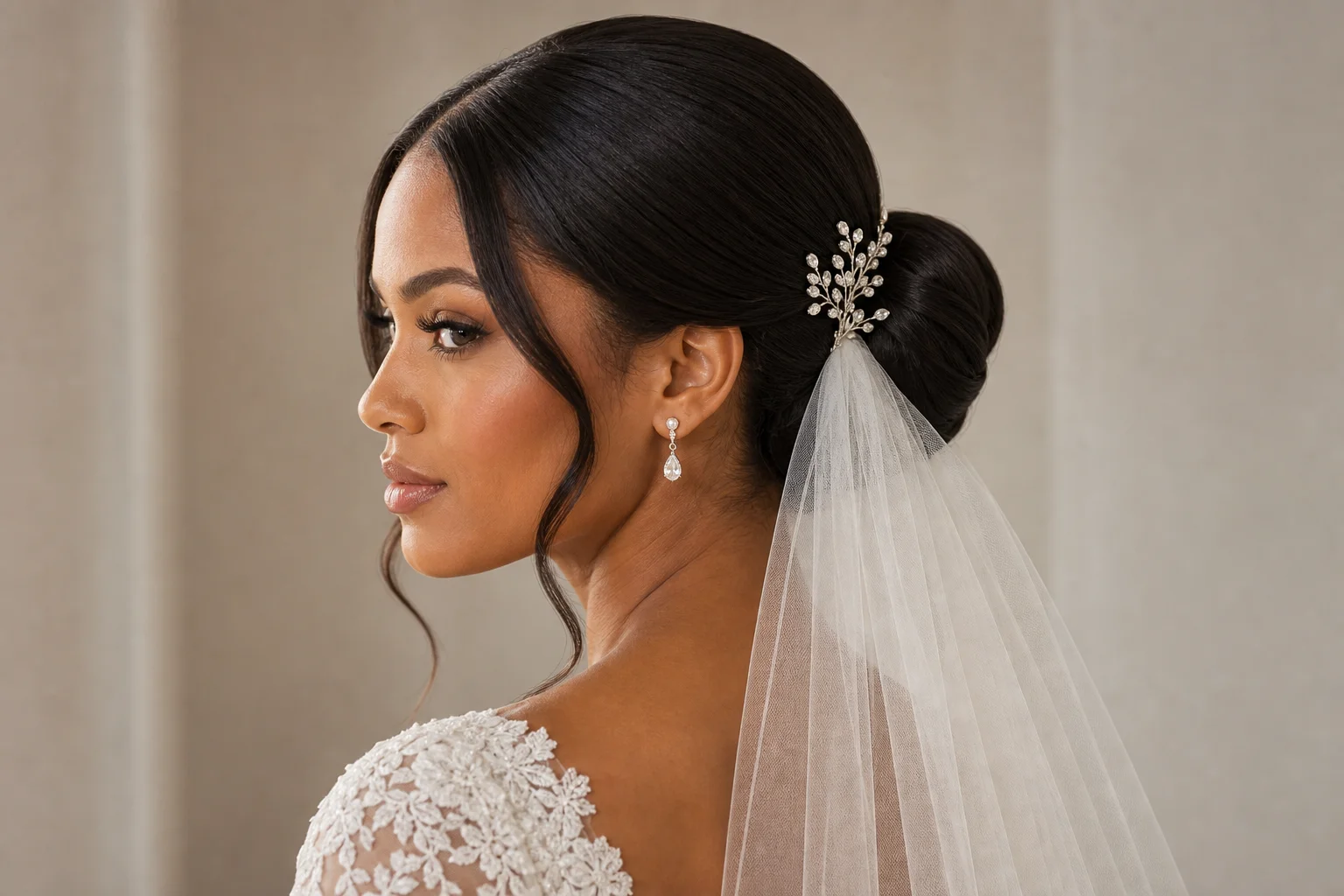
Styling Tips, Veil Placement and Frequently Asked Questions
Styling Tips, Veil Placement and Frequently Asked Questions
A few small habits keep any of these 18 wedding hairstyles with a veil looking as good at the reception as during the first look. If your comb feels loose at your trial, ask about a double-pin technique that secures the comb's teeth to the hair underneath so it can't slide during dancing. Apply a light-hold finishing spray after the veil is in place, not before, for the best hold through photos.
Removing the veil cleanly before the reception is worth practicing at your trial rather than improvising on the day. Have your stylist show you or your maid of honor exactly how the comb releases, since pulling the wrong way can tug loose the pins underneath. Before you leave your trial, run through a quick checklist: veil weight, under-versus-over placement, and a touch-up plan for photos.
Should the Veil Go Under or Over a Bridal Updo?
Both placements are common, and the right choice depends on the updo and how you want the veil to look in photos. Under-placement sits beneath the bun and looks more traditional, while over-placement shows off more of the hairstyle and lets the veil drape more dramatically. Most stylists show you both options at your trial so you can decide.
Will a Veil Be Too Heavy for Fine or Thin Hair?
A heavier chapel or cathedral veil can be a real challenge for fine or thin hair without the right prep, but it's rarely impossible. Backcombing, a hidden pin cluster, or a discreet hairpiece all give the comb more to grip, and updos generally support veil weight better than fully loose hair. Bring your actual veil, or one close to its weight, to test this at your trial.
How Do I Keep My Hairstyle Intact After Taking the Veil Off for the Reception?
The comb's pins can pull loose surrounding hair as the veil comes out, so a slow, steady removal technique matters. Have your stylist walk you or a bridesmaid through the exact motion at your trial so it isn't the first time. Keep a small kit with bobby pins, finishing spray, and a comb in your reception bag for touch-ups.
How Far in Advance Should I Book a Hair Trial With a Veil?
Booking a trial six to eight weeks before your wedding gives you time to test a style and book a follow-up if needed. Bring your actual veil, headpiece, and accessories rather than a substitute, since weight and comb type change how a style behaves. If your hair color or cut is changing before the wedding, schedule the trial after.
What Hairstyles Work Best With a Cathedral or Chapel-Length Veil?
Secured updos and low buns generally handle long, heavy veils the most reliably, since the comb anchors into a dense, pinned base. Loose curls can also work well, particularly on thick or medium hair, though they typically need backcombing at the crown for extra support. Ask your stylist to test the veil's actual weight at your trial rather than guessing.
Eighteen wedding hairstyles with a veil is a lot to fall in love with, but the right one comes down to your hair texture and your face shape. Just as important is how honest your stylist is about what your hair can actually hold for a full day, from the first look through the last dance. Save your favorites, screenshot the stylist notes, and bring this list to your trial six to eight weeks before the wedding. If you're a bridesmaid choosing a look for a strapless or sweetheart dress, see this strapless bridesmaid hair guide.



Your email address will not be published. Required fields are marked *