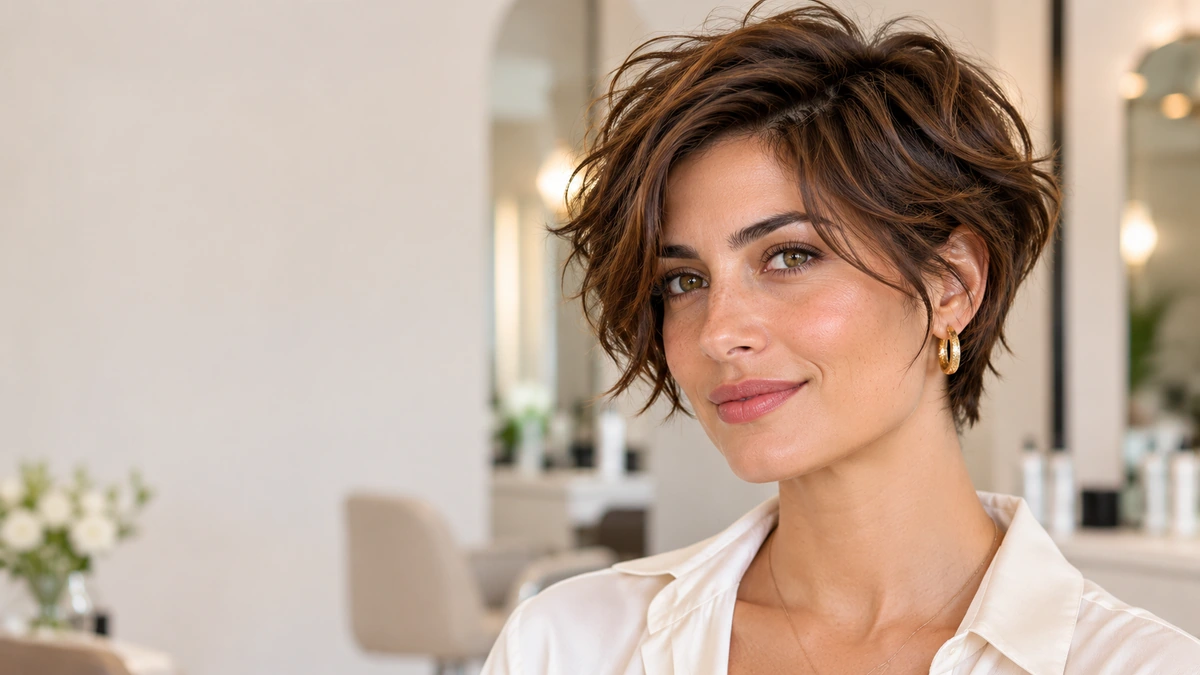
The textured bixie cut is one of those rare short styles that feels both effortless and intentional at the same time, and right now it's one of the fastest-rising cuts on Pinterest. If your feed has been filling up with soft, choppy short haircuts lately, you're seeing this trend peak in real time. The bixie has become the go-to for women who want something shorter but aren't ready to commit to a close-cropped pixie.
It sits between a pixie and a bob, and the layering technique is what turns a simple short cut into something with real dimension and movement. This guide covers 10 specific versions with face shape matches, styling times, and the exact words to use in the salon chair.
Not all textured bixie cuts look alike, and that's the whole point of choosing one over the other. The right version depends on your hair texture, face shape, and how much time you realistically want to spend on styling each morning. Use the quick-choice table below to narrow your options before reading through the full descriptions.
Which Bixie Is Right for You? Quick-Choice Table
| # | Version | Face Shape | Hair Texture | Styling Time |
|---|---|---|---|---|
| 1 | Classic Textured Bixie | Oval, heart | Straight/wavy | 10 min |
| 2 | Curly Bixie | Oval, round | Curly 2C-3B | 5 min (diffuse) |
| 3 | Blunt Bixie | Square, heart | Straight/thick | 15 min |
| 4 | Shaggy Bixie with Bangs | Oval, long | Wavy/medium | 10 min |
| 5 | Sleek Bixie | Round, square | Straight/fine | 15 min |
| 6 | Asymmetrical Bixie | Oval, heart | Straight/wavy | 12 min |
| 7 | Bixie with Curtain Bangs | Oval, long | Medium, any | 10 min |
| 8 | Layered Bixie | All face shapes | Thick, wavy | 10 min |
| 9 | Bixie with Fringe | Oval, round | Fine/medium | 10 min |
| 10 | Natural Textured Bixie | Oval, heart | Wavy/air-dry | 5 min |
What Is a Textured Bixie Cut?


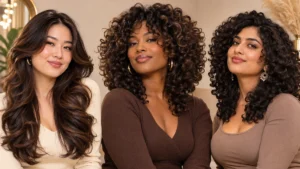

A textured bixie cut is a hybrid short haircut that lands between a pixie and a bob, usually carrying 2 to 4 inches of length on top with shorter, blended sides and nape. The "textured" part isn't just an aesthetic preference. It refers to a specific cutting technique where the stylist uses point-cutting, razoring, or slide-cutting to remove weight and create movement through the layers. Without that technique, the same length reads as a standard short cut rather than the lived-in, dimensional look that defines the bixie.
For a closer look at how stylists apply these texturizing methods across different hair types, texturizing techniques for short hair is a solid reference before your consultation. For a full history of the style family, bixie cut guide covers the broader bixie range before you book your appointment.
Textured Bixie vs. Pixie vs. Bob
| Factor | Bixie | Pixie | Bob |
|---|---|---|---|
| Length | Between bob and pixie | Very short, neck exposed | Jaw to shoulder |
| Nape | Short but not shaved | Very short/shaved | Longer |
| Styling flexibility | High (top length) | Low (all short) | High |
| Grow-out | Medium (6-8 months) | Long (12+ months) | Easy |
| Best for | Wanting short but not all in | Bold, low maintenance | All lengths |
| Face shape | Most face shapes | Oval, heart best | All face shapes |
The bixie gives you the drama of a short cut without committing to the cropped nape that makes a pixie feel so permanent. It grows out more gracefully, which makes it a smart first step if you've been thinking about cutting your hair shorter but aren't quite ready to go all the way. If you want to compare the bixie and pixie side by side before deciding, pixie cut guide covers the pixie family in similar detail so you can make a direct comparison.
10 Textured Bixie Cut Ideas
Each version below is built on a different cutting technique or finishing approach, not just a different name for the same style. For each one, you'll find a description, the face shape and hair texture it suits best, the exact salon wording, and a pro styling tip to make it work at home. For a broader roundup of short cut options to compare the bixie family against, short haircuts is a great starting point before you decide.
1. Classic Textured Bixie
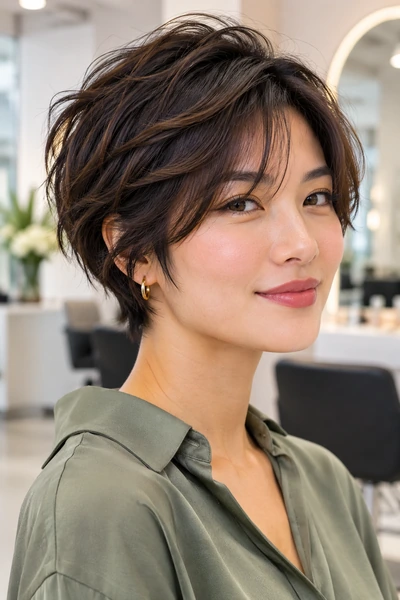
The classic textured bixie uses point-cut ends throughout the top and sides, creating sections that separate into distinct pieces when you style it. It sits at about 2.5 to 3 inches on top with slightly shorter sides that blend rather than taper sharply. The finished shape has a deliberately undone quality that's genuinely hard to get with any other technique. This version suits most hair types and works especially well on medium-density hair where the choppy ends have enough substance to show without looking sparse.
Best for: Oval and heart face shapes, straight or wavy hair. Ask for at the salon: "A textured bixie, about 2.5 to 3 inches on top, with point-cutting on the ends and blended sides." Pro tip: Work a dime-sized amount of texturizing paste through the ends on damp hair before diffusing.
2. Curly Bixie
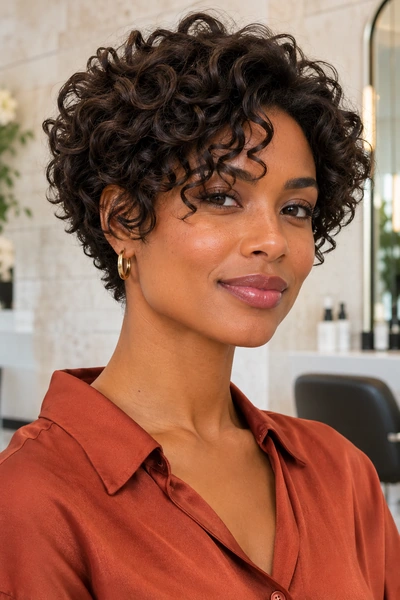
The curly bixie works around your natural curl pattern rather than fighting it, and the most important thing here is that the stylist dry-cuts this version. Dry-cutting lets each curl cluster sit in its natural state, which prevents the guesswork that happens when curly hair is cut wet and then shrinks unpredictably once it dries. The result is a shape-defined short style that holds well between washes and suits 2C through 3B curl types particularly well.
Best for: Oval and round face shapes, curly 2C-3B hair. Ask for at the salon: "A bixie cut dry, curl by curl, with definition on each cluster rather than a uniform blunt perimeter." Pro tip: Diffuse on low heat for 5 minutes rather than fully air-drying to prevent frizz forming at the root.
3. Blunt Bixie
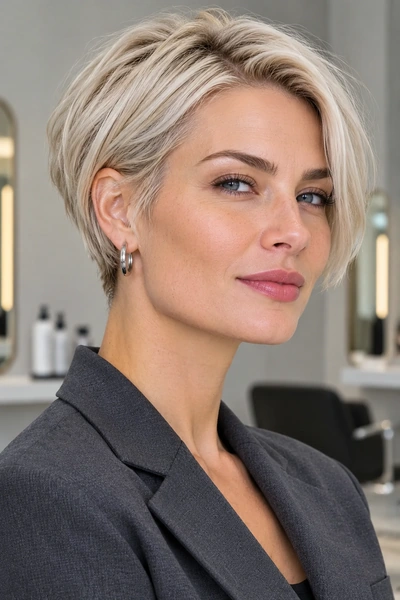
The blunt bixie keeps the perimeter at a clean, single-length line rather than using point-cutting or razoring on the ends, giving it a polished, architectural quality. That sharp perimeter makes the cut feel structured and intentional, which suits square and heart face shapes that benefit from defined shape over softness. This version does need a round brush blowout or flat iron pass to look its sharpest, so it carries the longest styling time of the 10. The precision pay-off is worth it, though.
Best for: Square and heart face shapes, straight or thick hair. Ask for at the salon: "A bixie with a clean blunt perimeter, no point-cutting on the ends, and minimal interior layering." Pro tip: Use a small round brush on the top section while blowdrying to push the hair forward for soft front volume.
4. Shaggy Bixie with Bangs

The shaggy bixie adds a curtain-style fringe and heavier internal layers for a looser, more relaxed feel than any other version on this list. The bangs blend into the top layers so the whole style feels like one cohesive cut rather than two styles joined at the forehead. This one suits oval and long face shapes especially well because the layers create width through the cheekbones while the fringe breaks up the vertical length of the face.
Best for: Oval and long face shapes, wavy or medium-density hair. Ask for at the salon: "A bixie with heavy internal layers and a curtain fringe that blends directly into the top sections." Pro tip: Scrunch the layers while rough-drying with your fingers to bring out the shagginess without reaching for a diffuser.
5. Sleek Bixie
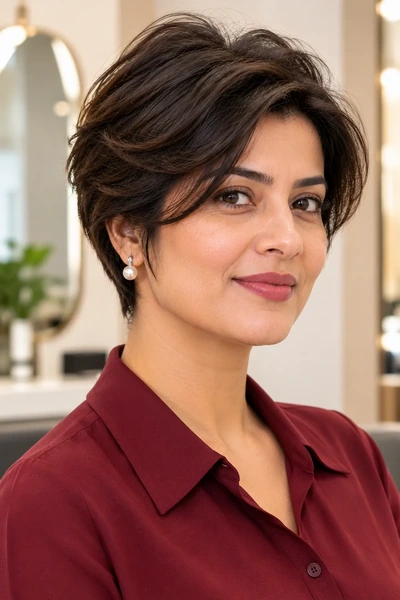
The sleek bixie is styled smooth with a round brush blowout or light flat iron pass, trading choppy texture for a glossy, polished finish that suits fine hair particularly well. The controlled shape lets the stylist direct lift exactly where it flatters most, making it a strong choice for round and square face shapes that need precise volume placement. It's the dressiest version of the bixie and transitions easily from the office to an evening out without needing a restyle.
Best for: Round and square face shapes, straight or fine hair. Ask for at the salon: "A bixie with minimal point-cutting, slight internal layers, and a smooth finish suited for blowout styling." Pro tip: Use a heat protectant spray before the round brush blowout and finish with a few drops of shine serum through the ends.
6. Asymmetrical Bixie
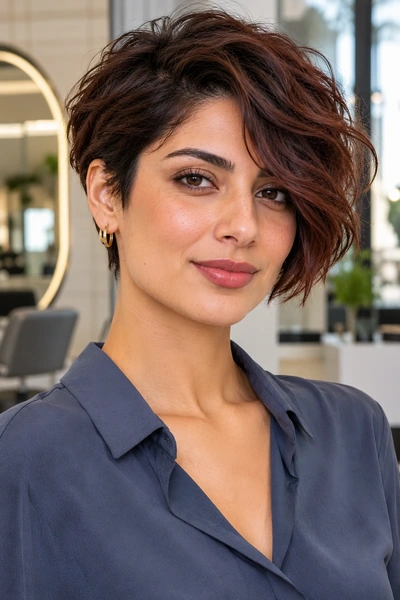
The asymmetrical bixie cuts one side slightly shorter than the other, usually by half an inch to an inch, and the result is a silhouette that photographs beautifully from any angle. That difference in length draws the eye along the jaw and gives the style an editorial quality that feels intentional, not just short. It suits oval and heart face shapes best because the natural balance of those proportions accommodates the asymmetry without making the cut look uneven.
Best for: Oval and heart face shapes, straight or wavy hair. Ask for at the salon: "An asymmetrical bixie, one side about half an inch shorter than the other, with point-cut ends throughout." Pro tip: Style the longer side forward for a soft, face-framing effect, or push it back for a sleeker finish when you want variety.
7. Bixie with Curtain Bangs
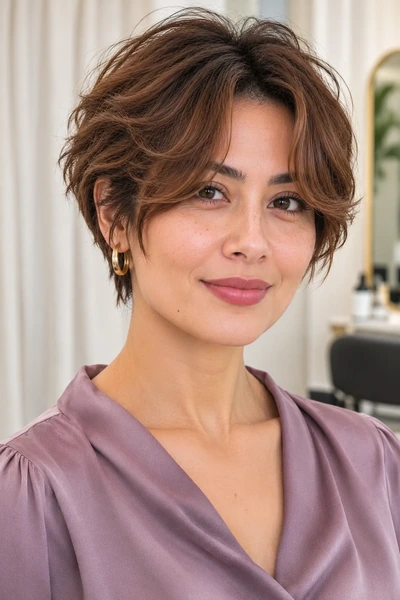
Curtain bangs part in the center and sweep to either side, integrating with the top layers of the bixie so the fringe grows out gradually without an awkward in-between phase. This version works for a wide range of face shapes and styling preferences, adding visual width at the forehead without covering it fully or requiring precise daily styling to stay in place. It's one of the more grow-out-friendly fringe options for a short cut, which really matters when you're committing to bangs for the first time.
Best for: Oval and long face shapes, medium-density hair of any texture. Ask for at the salon: "A bixie with curtain bangs parted in the center, blended into the top layers so the transition is seamless." Pro tip: Use a round brush and low heat to push each side of the bangs outward and downward for the signature sweep shape.
8. Layered Bixie
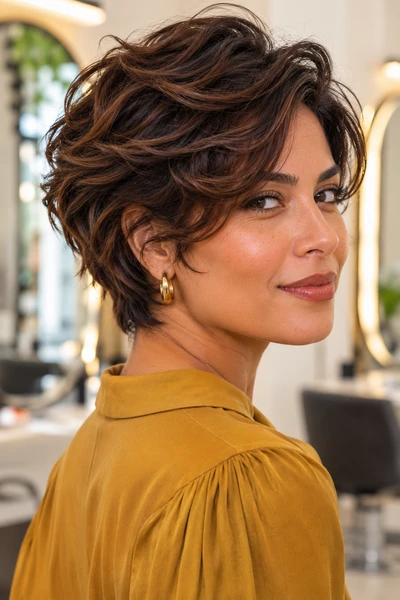
The layered bixie uses more layers than any other version on this list, with sections cut at multiple different lengths throughout the top and sides to create serious volume and movement. Thick and wavy hair types benefit most here because the multiple layers remove bulk from the interior without shortening the perimeter, which cuts your daily styling effort considerably. It suits all face shapes because you can direct volume upward for elongation or sideways for width depending on what your proportions call for.
Best for: All face shapes, thick or wavy hair. Ask for at the salon: "A heavily layered bixie with multiple length breaks through the top and sides, using slide-cutting or thinning shears on the interior." Pro tip: Use a lightweight mousse on wet hair before diffusing to give the layers lift without weighing them down.
9. Bixie with Fringe
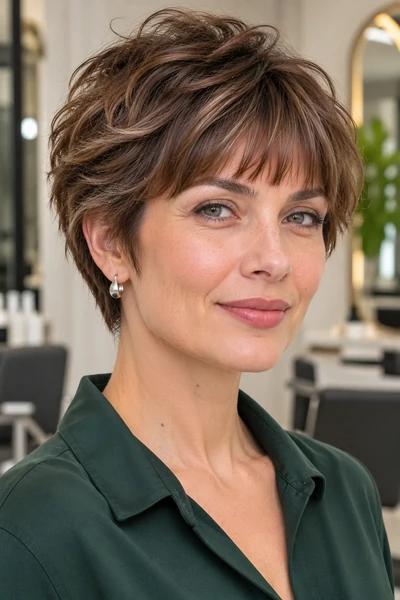
This version features a straight or softly curved fringe that sits at or just above the brow, keeping the front section at a defined edge while the back and sides stay textured and layered. The contrast between the neat fringe and the choppy back sections gives the cut a balanced, structured feel that works especially well for fine or medium-density hair. It also frames the face with intentional shape at the hairline, which is genuinely helpful if your front hairline is uneven or thinner than you'd like.
Best for: Oval and round face shapes, fine or medium-density hair. Ask for at the salon: "A bixie with a straight fringe at the brow, point-cut lightly for some softness, and textured layers through the crown and back." Pro tip: Blow-dry the fringe straight down first, then use your fingers to push it slightly to one side for variety on days the cut feels too neat.
10. Natural Textured Bixie
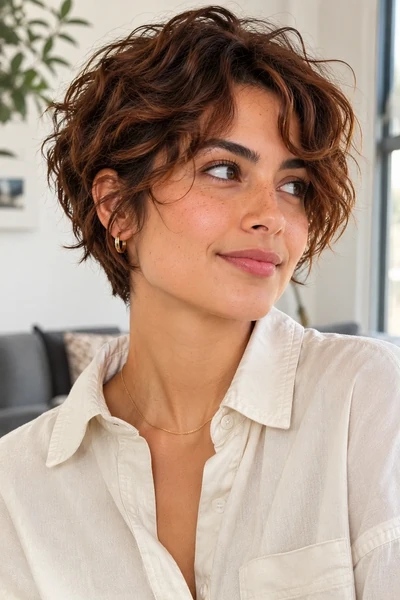
The natural textured bixie is designed from the first cut for air-drying. The stylist uses slide-cutting and point-cutting to enhance whatever wave or texture is already in your hair, so the result looks intentional once it dries without any tool assistance. At just 5 minutes of styling time, it's the lowest-maintenance version on the list. It suits wavy hair and air-dry lovers best, and for other texture-forward short styles that pair well with a wash-and-go routine, edgy short cuts covers a wide range of bold, low-effort options worth saving.
Best for: Oval and heart face shapes, wavy or naturally textured hair. Ask for at the salon: "A natural-finish bixie, slide-cut through the mid-lengths and point-cut at the ends, designed to air-dry with definition." Pro tip: Apply a curl-enhancing cream to damp hair and do not touch it until it is completely dry to get the cleanest air-dry result.
Face Shape Guide for the Textured Bixie Cut

The 10 versions above each suit different face shapes for specific reasons, and knowing yours helps you pick the right variation and the right layer placement before you book your appointment. Here's a direct breakdown by face shape with specific layer and fringe recommendations so you can tell your stylist exactly what your proportions need. For detailed face shape guidance across all haircut lengths and styles, face shape guide is worth reading alongside this guide before you decide.
Oval face: Any bixie version works. Oval proportions are balanced enough that you can prioritize your texture preference and lifestyle over structural adjustments.
Round face: The Classic or Sleek Bixie adds vertical length to the face. Keep the sides softer rather than adding width through the cheekbones, and avoid fringe that sits low on the forehead and shortens the visible face length even further.
Heart face: The Bixie with Curtain Bangs balances a wide forehead. Keep the sides softer and ask for layers that fall toward jaw level rather than lifting all the volume to the crown.
Square face: A Layered Bixie with soft, point-cut edges works best. Avoid very blunt perimeter cuts that emphasize the angularity of the jaw without softening the overall shape.
Long face: The Shaggy Bixie with volume at the sides suits a long face well. Avoid styles that add height on top since they extend the vertical line of the face rather than balancing it with width at the cheekbones.
Diamond face: A Textured Bixie with side-swept bangs balances wide cheekbones. The side sweep draws the eye toward the forehead and chin rather than emphasizing the widest part of the face.
Your 5-Minute Textured Bixie Morning Routine
The textured bixie doesn't need a lot of time or product to look its best, but a consistent routine makes the difference between texture that reads as intentional and hair that just looks unstyled. Here's a realistic five-step morning routine that works for most bixie lengths and textures, based on what stylists actually recommend for short layered cuts worn daily. For more quick styling ideas for short hair, fast styling tips is worth saving to your phone before your next morning rush.
- Apply a dime-sized amount of texturizing cream to damp hair.
- Scrunch or tousle the roots with your fingers while rough-drying on medium heat.
- Use a round brush on the top section only if you want a smoother shape rather than natural texture.
- Finish with a light-hold spray worked through the ends for all-day texture.
- Smooth any stray pieces with a fingertip of pomade rather than re-wetting the hair.
Frequently Asked Questions About the Textured Bixie Cut


What is a bixie cut? A bixie cut is a hybrid short haircut that sits between a pixie and a bob in terms of length and structure. It keeps more length on top than a pixie (usually 2 to 4 inches) while the sides and nape are shorter and blended rather than tapered or faded. The textured version adds choppy layer separation through point-cutting or razoring to give the style movement and dimension that a standard short cut doesn't have on its own.
What face shape suits a bixie cut? The bixie works well for most face shapes, which is a big part of why it's become such a consistent Pinterest trend for women of all ages. Oval and heart faces can wear almost any version without structural adjustments, while round faces do best with styles that add vertical height at the crown. Square faces benefit from softer, wispy fringe versions, and long faces suit shaggy bixie styles with volume at the sides that balance the vertical length of the face.
Is a bixie cut high maintenance? It falls somewhere in the middle of the maintenance spectrum, not on either extreme. Most women visit the salon every 6 to 8 weeks to keep the shape looking sharp, and daily styling takes 5 to 10 minutes once you've got a consistent product routine in place. The natural textured versions that air-dry well require the least effort, while the sleek and blunt versions need a round brush or flat iron and take closer to 15 minutes to finish properly.
What is the difference between a bixie and a pixie cut? The main difference is in length and nape treatment. A pixie cuts the nape and sides very short, often tapering or even fading, while a bixie keeps those areas noticeably longer and blended rather than tapered. A bixie also gives you significantly more styling flexibility since there's more length on top to work with, and it grows out more gracefully over 6 to 8 months compared to the 12-plus months a pixie typically takes to reach a comfortable in-between length.
Can I get a bixie cut with curly hair? Yes, and the curly bixie can be one of the most beautiful versions of this style because the natural curl volume creates organic shape that straight-haired clients have to work for with a diffuser and product. The key is asking for a dry cut so each curl is honored in its natural state rather than being cut wet and unpredictably shaped by shrinkage. For more curly short cut ideas that use a similar approach, curly haircut roundup covers the full spectrum of curl-friendly short styles with practical cutting and care advice.
The textured bixie cut earns its place as one of the most versatile short haircuts right now because the layering technique does the real work, not just the length. Pick the version that matches your texture and face shape, use the salon language above, and you'll walk out with a cut that makes sense for how your hair actually behaves each morning. Save this post to your phone before your next appointment and show it to your stylist so you both start the conversation from exactly the same page.

Your email address will not be published. Required fields are marked *