Bottleneck bangs are the one fringe trend that keeps showing up in your feed and refusing to fade out. If you have seen the term floating around TikTok or in a 2026 hair trend roundup and wondered whether it is just curtain bangs with a rebrand, you are not alone. This guide breaks down what bottleneck bangs are, how they compare to curtain, bardot, and birkin bangs, and whether your face shape and hair texture are a good match before you book the appointment.
What Are Bottleneck Bangs?
What Are Bottleneck Bangs?
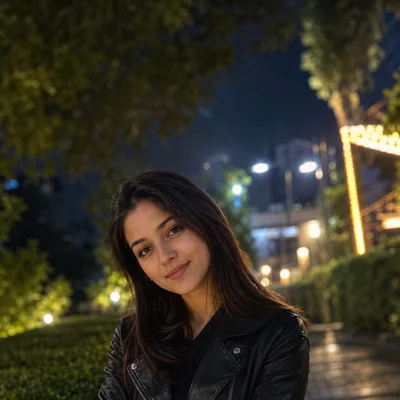
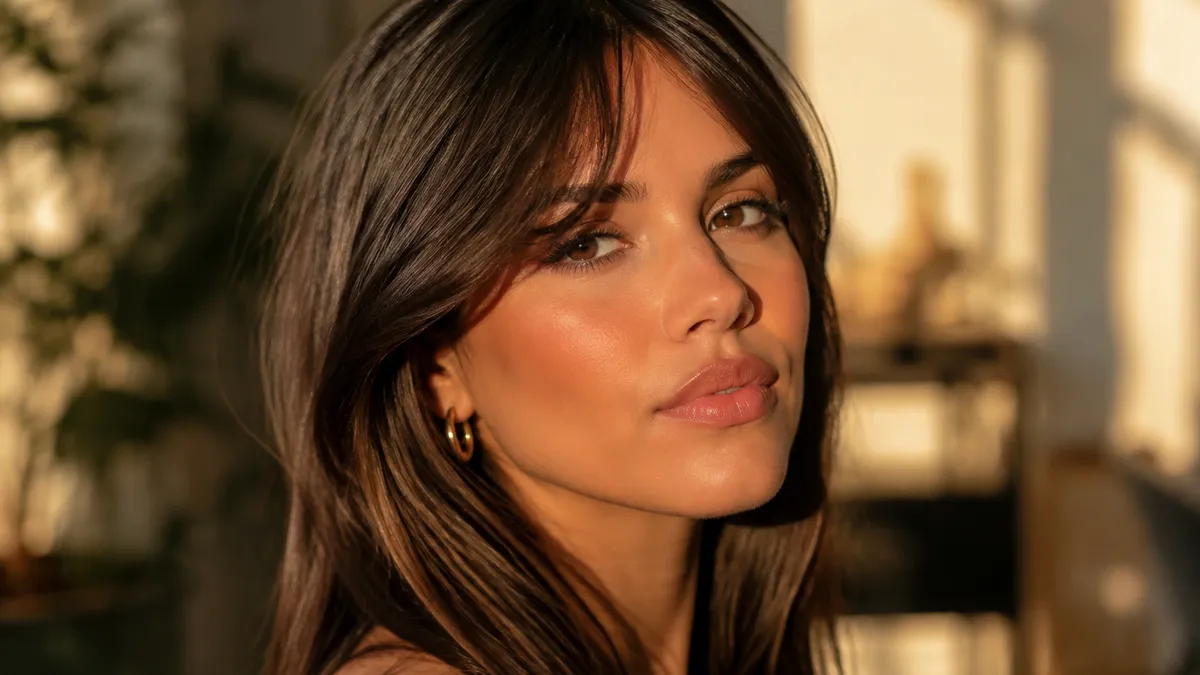
Bottleneck bangs are a face-framing fringe that starts narrow near your part and gradually flares out wider as it reaches your temples, echoing the shape of a wine bottle neck. Unlike a blunt, straight-across fringe, this cut is designed to blend into the surrounding layers rather than sit as a separate block of hair on the forehead. The result is softer movement around the face with a shape that photographs well from almost any angle.
The style traces back to Margot Robbie's August 2021 British Vogue cover, where longtime hairstylist Bryce Scarlett cut the original fringe before celebrity stylist Tom Smith coined the "bottleneck bangs" name that made it go viral on TikTok. It has stayed in steady rotation ever since rather than fading out like a typical one-season trend. Bottleneck bangs are still called out as a standout style in Who What Wear's 2026 fringe report, which confirms the shape has held its momentum rather than fizzling out after its first viral moment.
Part of the appeal is how little commitment it takes. You do not need a dramatic haircut, since a skilled stylist can usually reshape existing curtain bangs or grown-out layers into the bottleneck silhouette in one appointment. That accessibility is probably why it never dropped off the celebrity styling rotation and keeps showing up on "trend to try" lists years later.
Bottleneck Bangs vs. Curtain Bangs vs. Bardot Bangs vs. Birkin Bangs
Bottleneck Bangs vs. Curtain Bangs vs. Bardot Bangs vs. Birkin Bangs
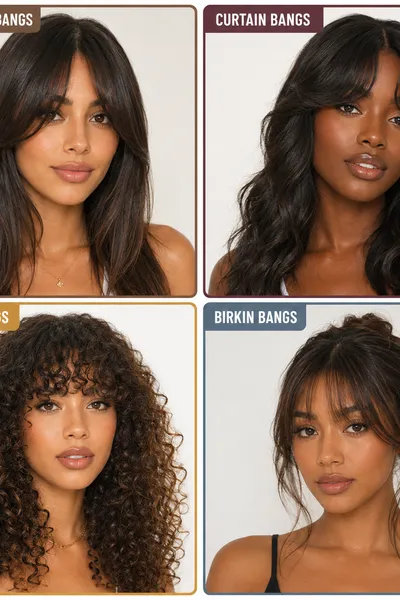
If you have researched this cut at all, you have probably seen it compared to curtain bangs and stopped there. Bottleneck bangs actually sit in a family of four closely related fringe styles: bottleneck, curtain, bardot, and birkin. Knowing how each one differs helps you walk into your appointment with a clearer request instead of guessing at salon terminology.
| Style | Silhouette | Best Face Shapes | Maintenance | Associated With |
|---|---|---|---|---|
| Bottleneck Bangs | Narrow-to-wide, face-framing | Oval, heart, square, long (can work for round with careful styling) | Medium, roughly every 6-8 weeks | Margot Robbie |
| Curtain Bangs | Center-parted, swept to both sides | Works well across most face shapes | Low to medium | Dakota Johnson |
| Bardot Bangs | Full, softly rounded, worn low on the forehead | Oval, round, long | Low to medium | — |
| Birkin Bangs | Wispy, softly parted, thinner coverage | Round, square | Low | — |
Bottleneck Bangs
Bottleneck bangs are defined by that narrow-to-wide shape that hugs the face rather than sitting as a separate piece. They blend directly into your layers instead of parting cleanly down the middle, which is the detail that trips people up when comparing this cut to curtain bangs at a glance. That blended finish is what gives them their soft, almost undone look even on a day when you have not touched a styling tool.
Curtain Bangs
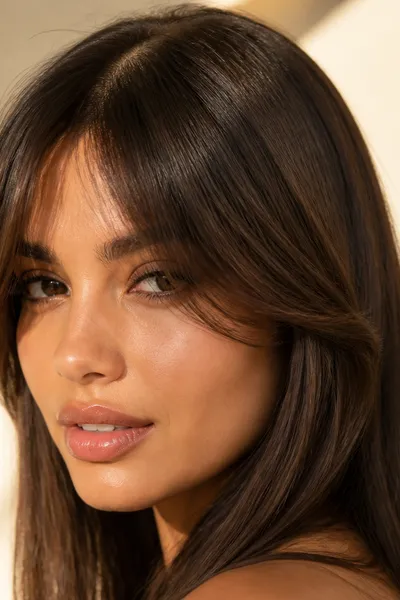
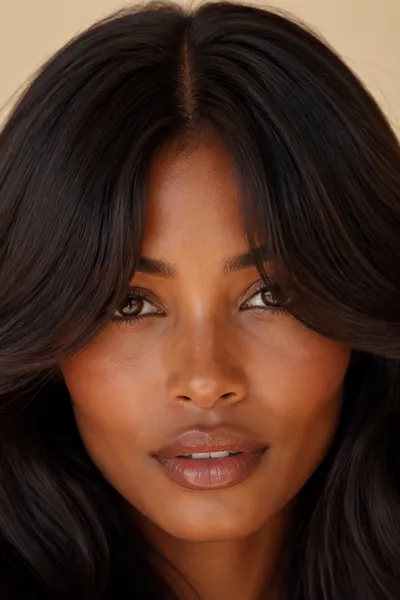
Curtain bangs are the style bottleneck bangs get confused with most often, and the confusion is fair since both frame the face and both can be worn side-swept. The real difference comes down to the part: curtain bangs have a defined center part with two clear "curtain" pieces sweeping to either side, while bottleneck bangs blend into the sides without that hard division. If your current fringe has a strong center part you can see even after styling, you likely have curtain bangs rather than the bottleneck shape.
Bardot Bangs
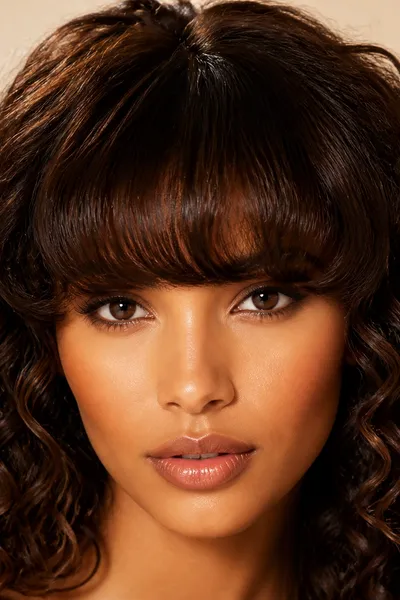
Bardot bangs go in the opposite direction of bottleneck bangs, favoring a fuller, softly rounded fringe worn lower on the forehead with noticeable volume. Where this style is wispy and gradually widens toward the temples, bardot bangs read as one thicker piece with a more dramatic, retro-glam finish, though the soft edges make them fairly forgiving to maintain. If you want serious volume and a bolder statement fringe, bardot leans that direction far more than the lighter bottleneck shape does.
Birkin Bangs
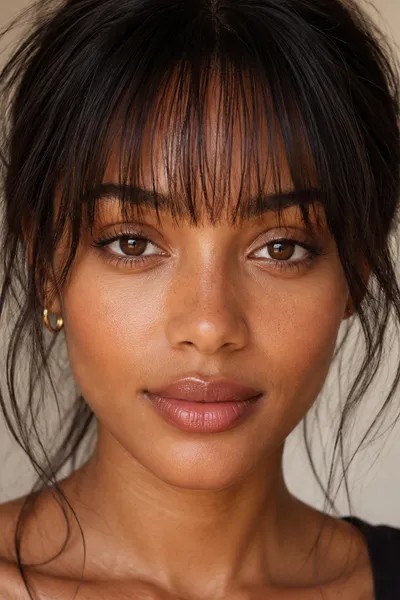
Birkin bangs are the closest cousin to bottleneck bangs, and honestly the two get mixed up almost as often as bottleneck and curtain do. Both are wispy and softly parted, but birkin bangs are cut thinner and more uniformly narrow across the whole forehead, while bottleneck bangs deliberately widen out toward the temples for more face-framing coverage. If you like the birkin look but want a bit more width and blend at the sides, this style is the natural next step to ask your stylist about.
Who Do Bottleneck Bangs Suit Best?
Who Do Bottleneck Bangs Suit Best?
Bottleneck bangs tend to look most effortless on oval, heart, square, and long face shapes, though the exact styling adjustment changes depending on which one you have. If your face is oval, you can pretty much copy the inspiration photos as-is, since the shape is already balanced. Heart-shaped faces do better with the flare kept a little softer near the jawline, which avoids adding width right at the chin. Long faces benefit from the fringe's horizontal movement, since it visually shortens the face, while square faces do well when the bangs are cut slightly longer and wispier at the ends to soften a strong jawline without covering it up entirely.
Hair texture matters just as much as face shape. Straight hair holds the narrow-to-wide shape cleanly and needs the least daily styling. Wavy hair adds natural texture that softens the blend into your layers, though a light smoothing balm helps control frizz at the part. Curly hair can absolutely wear this style too, but the curl pattern shrinks the length, so most curly-haired clients ask their stylist to cut the bangs slightly longer than the finished, dry length they want. If you are not sure which face shape you have, our face shape guide walks through how to identify it before you commit to any fringe.
Bottleneck Bangs for Round Faces
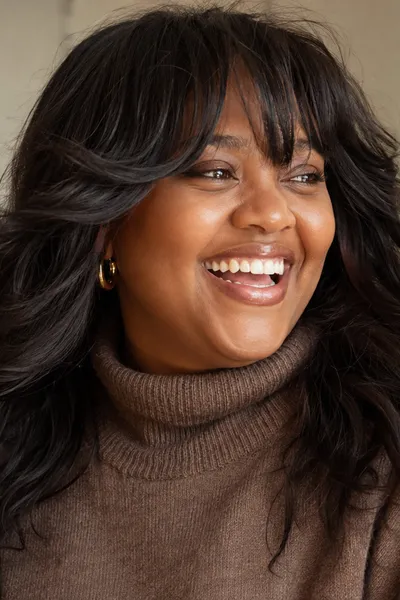
Round faces are where bottleneck bangs need the most careful handling, and this is the detail most bang guides skip entirely. The risk with a round face is that the widest part of the flare naturally lands near the cheekbone or jawline, which visually adds width exactly where you do not want it and can make the face look even rounder. The fix is placement, not avoidance: ask your stylist to keep the widest point of the flare higher, closer to your temple, rather than letting it drop down toward your cheek or jaw.
Bring this instruction to your appointment: ask for more length and movement at the outer corners near your temples, and less width lower down near your cheekbones. This keeps the eye moving upward and outward instead of drawing a horizontal line across the widest part of your face. Paired with side-swept styling rather than a fully centered flare, this adjustment lets round-faced readers wear bottleneck bangs with genuinely flattering results, and our haircuts for round faces guide rounds up more cuts built around this exact face shape.
How to Style Bottleneck Bangs at Home
How to Style Bottleneck Bangs at Home
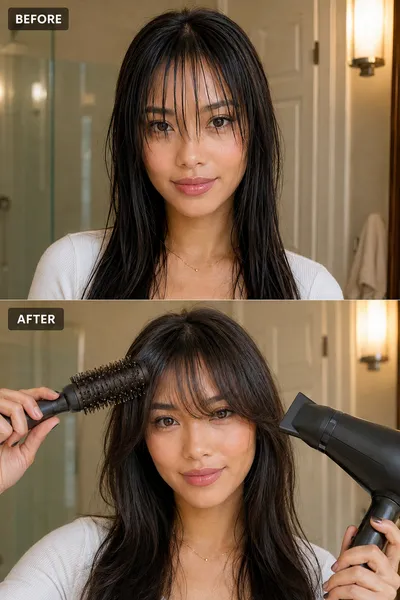
Styling bottleneck bangs at home is manageable once you know the basic round-brush technique, and most people get salon-quality results in under ten minutes. The heat-styled version gives the most polished, camera-ready shape and is worth learning even if you only use it for special occasions. Follow these steps with a small to medium round brush and a blow dryer with a concentrator nozzle.
- Section off your bangs and clip the rest of your hair out of the way.
- Starting from the root, roll a small round brush under and away from your face, following the direction you want the bangs to flare toward.
- Apply low to medium heat while rolling the brush slowly outward, holding each section for a few seconds before releasing.
- Finish with a cool shot to lock the shape in place, then run a small amount of light-hold pomade through the ends to control flyaways.
On low-effort days, a no-heat approach works just as well. Comb your bangs into place while still slightly damp, tucking them gently toward your temples, and let them air dry without touching them. A dab of texturizing spray or a lightweight curl cream helps wavy or curly bangs settle into the flared shape naturally as they dry.
How Bottleneck Bangs Grow Out (and When to Get a Trim)
How Bottleneck Bangs Grow Out (and When to Get a Trim)
One of the most underrated things about bottleneck bangs is how gracefully they grow out compared to a blunt, straight-across fringe. In the first one to two weeks after your cut, the shape looks its freshest, with the clearest contrast between the narrow section at your part and the wider flare at your temples. By weeks three and four, the bangs blend more naturally into your face-framing layers as the length catches up with the rest of your haircut, which reads as an intentional part of your layering rather than an awkward in-between stage.
Most people can stretch to week six or eight before the shape loses enough definition to need a trim, noticeably longer than the four-week cycle a blunt fringe demands. To stretch it further, keep a set of clip-in bangs on hand for days you want a freshly-cut look without a salon visit, or lightly texturize the ends yourself between trims. If you like this kind of low-commitment cut that grows out gracefully, our bixie cut guide covers a similar hybrid approach.
FAQ: Bottleneck Bangs
FAQ: Bottleneck Bangs
What are bottleneck bangs? Bottleneck bangs are a face-framing fringe that starts narrow at the part and gradually widens toward the temples, creating a silhouette similar to the neck of a wine bottle. They blend into the surrounding layers rather than sitting as a separate blunt piece, giving them a softer, more lived-in look than a traditional straight-across fringe. The name comes from that shape rather than any connection to actual bottles or hair products.
How do bottleneck bangs differ from curtain bangs? The biggest difference is the part: curtain bangs have a defined center part with two symmetrical pieces swept to either side, while bottleneck bangs blend into the sides without that hard division. They also sit closer to the face throughout, whereas curtain bangs are cut with more length to sweep further away from the forehead. If you can see a clean center part in your current fringe even after styling, you have curtain bangs rather than bottleneck bangs.
Which celebrities have bottleneck bangs? Margot Robbie is the celebrity most closely associated with popularizing the style after her 2021 British Vogue cover. Dua Lipa, Kaley Cuoco, Dakota Johnson, and Elizabeth Olsen have also been photographed wearing variations of the style, which is part of why it has stayed visible across red carpets and street style for years. Seeing it on such a range of face shapes and hair types is a big reason stylists keep recommending it to clients who ask for a low-commitment fringe.
What should I ask my stylist for bottleneck bangs? Bring a few reference photos and ask for bangs cut shortest at the center part, with a soft, choppy line that gradually lengthens toward your cheekbones rather than a blunt edge. Describing the shape this way helps a stylist nail the cut even if they are not familiar with the "bottleneck" name. Plan on a trim every four to six weeks to keep the shape defined.
Do bottleneck bangs work for thin or fine hair? Yes, this style is a popular pick for fine hair because the face-framing shape adds visual volume without needing thick strands to pull it off. Very fine, straight hair may need a little help holding the bend, so a lightweight volumizing mousse at the roots plus a quick round-brush pass usually keeps the shape from falling flat. Ask your stylist to cut slightly more hair into the bang than you think you need, since fine hair reads as thinner once separated from the rest of your style.
Bottleneck bangs earn their spot on every 2026 trend list, including NewBeauty's winter 2026 bang trends roundup, because they feel fresh without demanding a total haircut overhaul. Whether you are drawn to the soft, blended shape itself or you just needed a clear answer on how it differs from curtain, bardot, and birkin bangs, you now have the full picture to bring into your next salon visit. Save this comparison before your appointment, screenshot the table above, and tell us in the comments which bang trend you are trying next.


Your email address will not be published. Required fields are marked *