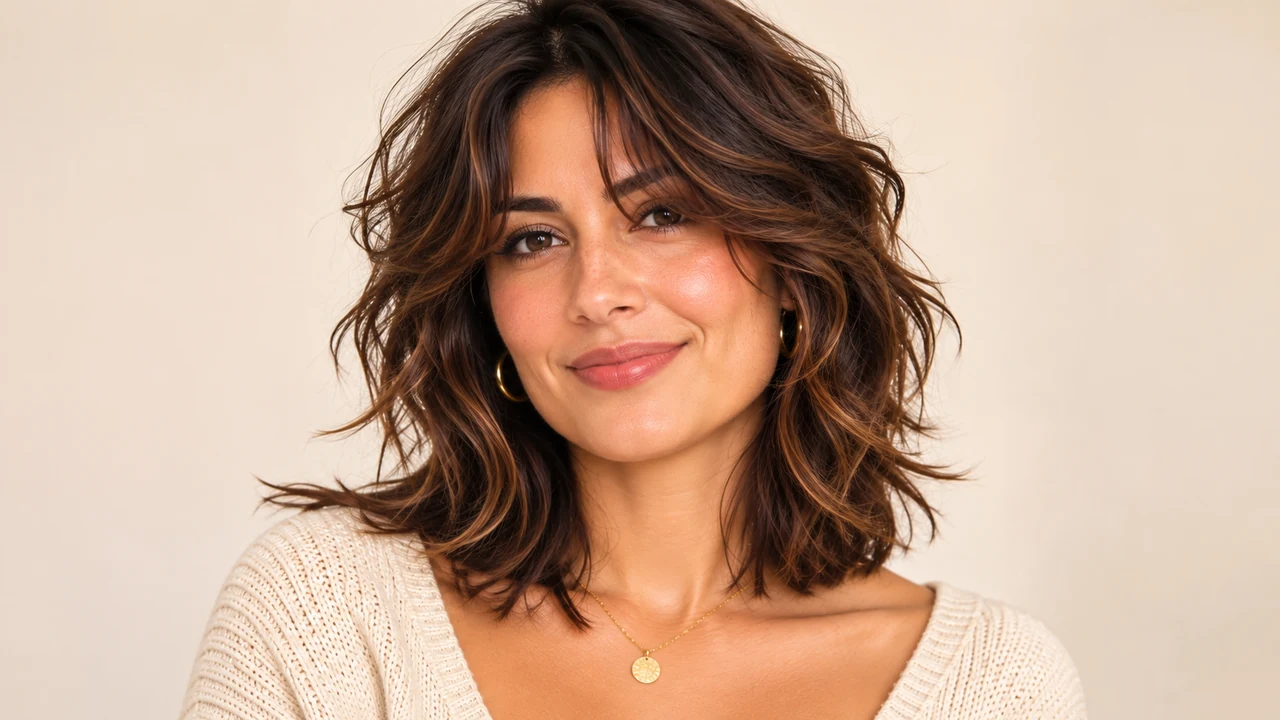
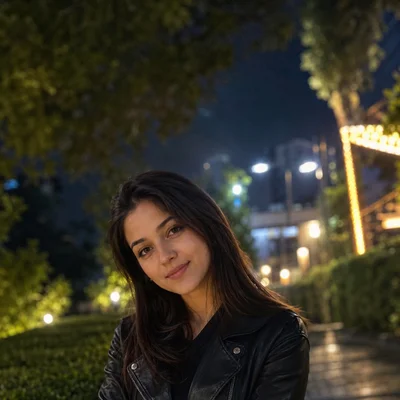
The shag is having a quieter moment right now. Not the aggressively choppy, heavily textured version that dominated a few years ago, the current version is softer, with feathered ends and lived-in layering that holds up whether you style it or just let it air-dry. It looks intentional even when you've done nothing to it.
Is the shag haircut still in style?
Still in style, yes. But the version being worn now looks quite different from what it was a few years ago. The heavily layered, aggressively choppy shags that peaked in 2021 have given way to something softer, more feathered, less processed.
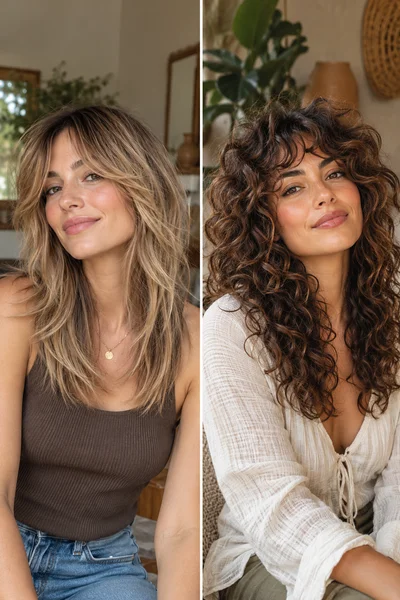
The current shag has softer graduation, lighter feathering at the ends, and a top section that actually carries some weight. The mid-lengths are where most of the texture lives, and the ends are point-cut or razor-finished rather than blunt. It looks effortless and slightly grown-in.
The 70s influence is real but subtle. Think Farrah Fawcett-era layering translated through a modern, lighter lens. The feathered movement is there; the helmet-round blowout is not.
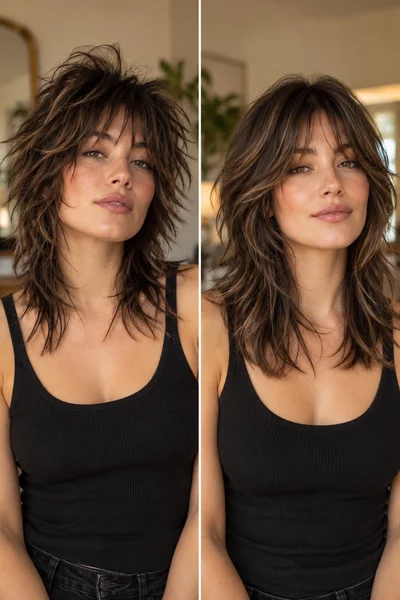
Shag styles by hair length


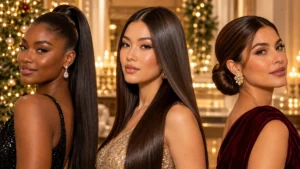
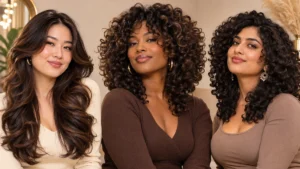
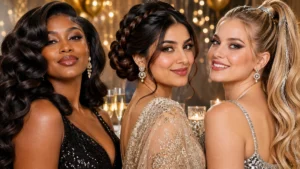
The shag adapts to every length, but what works at chin level doesn't necessarily translate to past-the-shoulder. Layer placement, graduation depth, and finish technique all shift depending on where you're starting from.
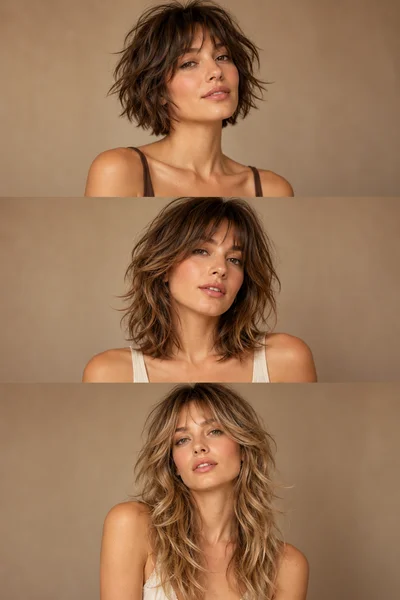
Short shag haircut

At chin length or above, less weight means more visible texture. Point-cutting and feathered tips do most of the work, giving the cut that piece-y, lived-in look even air-dried with nothing in it.
It pairs naturally with a fringe. Curtain bangs or a soft wispy fringe extend the face-framing effect downward and keep the top from looking too blunt compared to the textured ends. For more short shag inspiration, shaggy haircuts covers a wide range of styles across different face shapes.
Medium shag haircut
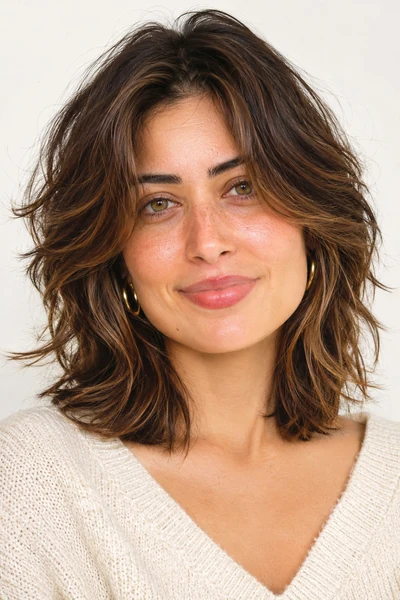
Collarbone to shoulder is the most popular base for the shag right now. There's enough weight for the layers to move freely, but not so much that the ends get overwhelmed by graduation. Curtain bangs also integrate most naturally at this length, since the face-framing layers align with the fringe at a proportionate distance from the chin.
Layers typically start around chin level rather than the crown, this keeps the top with enough density to sit flat while the mid-lengths and ends feather out. That's also what separates a medium shag from a wolf cut: the shag has more gradual, blended graduation while the wolf cut has sharper, more visible contrast between sections. Not sure which you're looking at in a photo? Check whether the crown looks noticeably shorter and puffier than the mid-lengths. If it does, wolf cut.
Long shag haircut
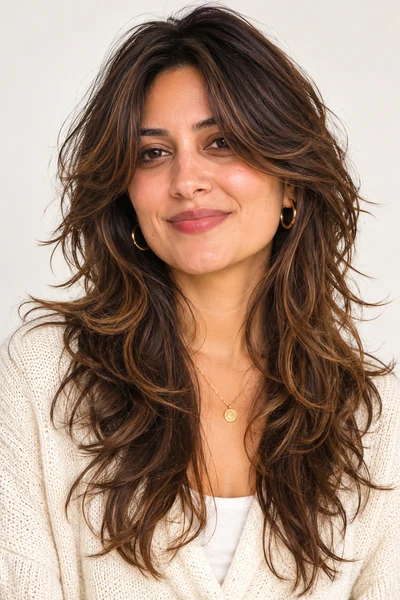
Long shags work best when the layering is lightweight and focused through the mid-lengths rather than heavy from root to tip. Too much graduation on very long hair thins the ends and makes the style look stringy rather than feathered, hair past the bra strap is especially prone to this, so graduation should generally start no higher than the shoulder blade.
Starting the layers at the collarbone or below keeps the top anchored while the ends have enough movement to read as intentional texture rather than just growing out. For long layered options that pair well with a shag finish, long layered cuts covers a range of lengths and layering approaches.
Shag haircut for every face shape
Layer placement, fringe choice, and how much the layers graduate at the sides all need to adjust depending on face shape. A shag that looks soft and flattering on an oval face can emphasize the wrong features on a round or square face if the graduation falls in the wrong place. If you're not sure of your face shape, the face shape guide has a clear walkthrough.
Shag for round face
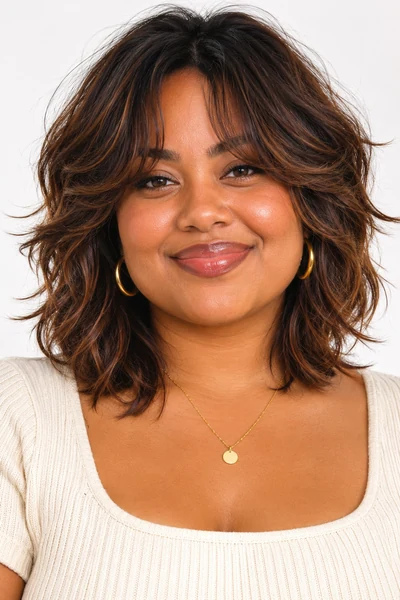
The shag's layering naturally works in favor of a round face because the feathered ends draw the eye downward and add vertical visual length. Opt for layers that start at chin level or lower rather than at the cheekbones, high graduation emphasizes horizontal width rather than reducing it. Keeping the graduation lower also lets the feathered ends fall past the jawline, which creates the visual elongation that works best for round face proportions.
Curtain bangs work particularly well here because they part at the center and taper outward, drawing attention toward the nose bridge rather than the cheekbones. Avoid very short, heavily layered shags that sit at jaw level, that placement frames the widest point rather than softening it.
Shag for oval face
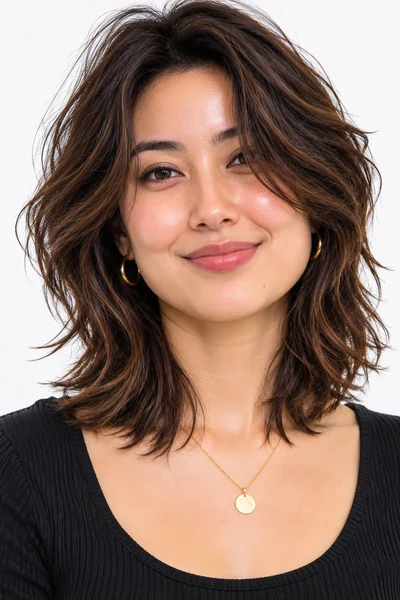
Oval faces have the most flexibility. Almost any length or layer placement works, so the choice comes down to personal preference. The medium shag is a strong match, enough structure to frame the face, enough movement to keep things soft.
Shag for heart face
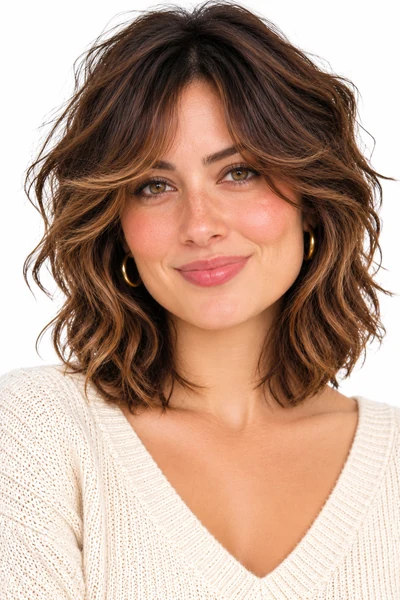
On a heart-shaped face, wider at the forehead and narrowing toward the chin, medium to long shag lengths tend to work better than short versions. The added length at the ends creates visual weight near the jaw, which balances the broader top of the face. A collarbone-length shag with soft layers starting at the chin is a reliable option; side-swept or curtain fringe softens the forehead and draws the eye toward the center rather than the widest edges.
If you want a shorter shag on a heart face, ask for extra length at the sides rather than heavy graduation at the jaw, this keeps some fullness near the chin where the face narrows most.
Shag for square face
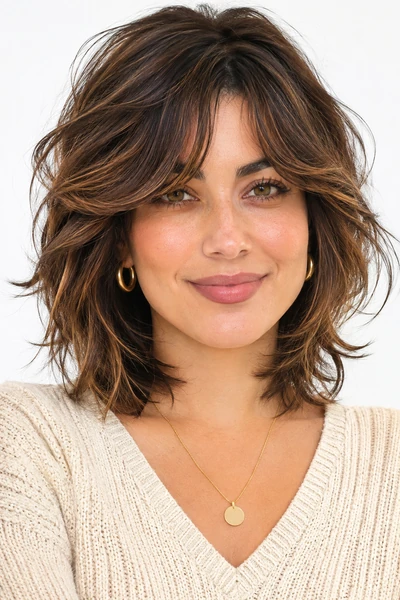
On a square face with a strong jaw, the shag's layering does useful work by breaking up the symmetry and softening the perimeter. Longer shag lengths at collarbone level or below work better than chin-length versions where the layers end right at the jaw and draw attention to its angularity. Feathered ends that fan slightly outward at the bottom add roundness to the lower face without diminishing the strong bone structure.
Soft curtain bangs or a side-parted fringe add asymmetry around the face perimeter. Avoid very straight, blunt fringes, a wispy or side-swept fringe creates the softer horizontal line across the forehead that rounds out the overall frame.
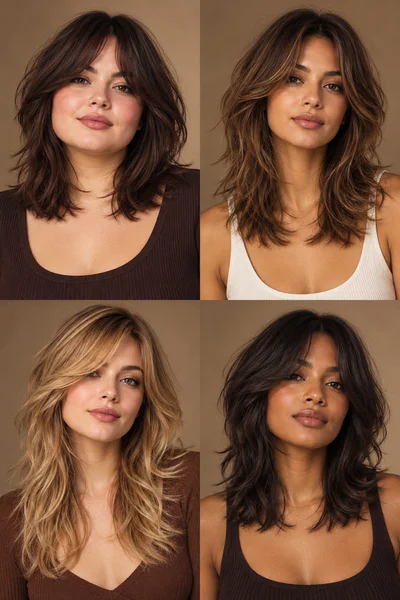
Shag haircut for fine, thick, and curly hair
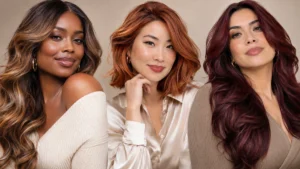



The shag behaves very differently across hair types. The technique, maintenance schedule, and styling approach all need to shift. Before committing to a graduation depth, it's worth discussing your texture with your stylist, what looks great on thick hair can make fine hair look flat, and what works on straight hair can leave curly hair unexpectedly short. The American Academy of Dermatology has general hair care guidance by texture if you want a reference point before your appointment.
Shag for fine hair
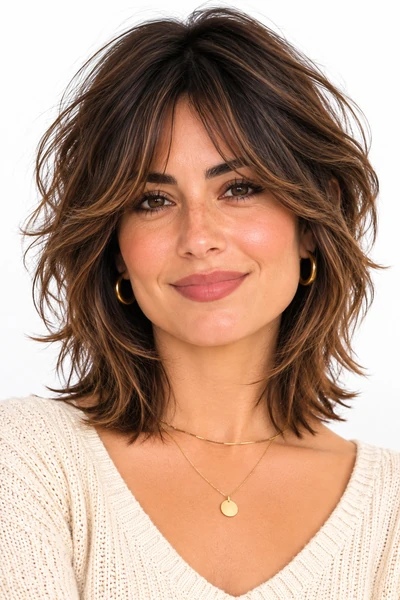
Fine hair benefits from the shag's layering because removing internal weight prevents the hair from dragging flat under its own density. But the layers need to be longer and more gradual, leave at least 2 to 3 inches of length at the ends after graduation so the tips have enough hair to feather rather than taper to near-nothing. Ask your stylist to point-cut rather than razor-cut the ends; it gives a softer edge that holds shape longer on fine strands.
Over-layering is the main risk. Too much graduation on fine hair thins the ends past the point of texture and into territory that's just wispy and hard to manage.
Style with a lightweight volumizing mousse on damp hair, then diffuse or rough-dry with a round brush at the roots only. Fine hair benefits from a trim every 6 to 8 weeks before the graduation grows into the mid-lengths and flattens the cut. A volumizing dry shampoo at the roots refreshes the lift between washes.
Shag for thick hair
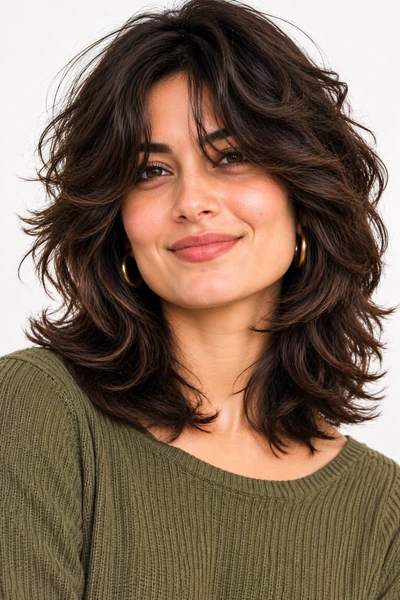
Thick hair gives the shag natural body and definition, but removing internal weight is the critical step. Without proper internal thinning, thick hair absorbs the layering and the shag ends up looking like a shorter blunt cut rather than a textured, feathered style.
Point-cutting or slide-cutting through the mid-lengths removes bulk without reducing the outside silhouette. Without it, thick shag layers push outward and create a triangular silhouette, check the back, not just the sides, because that's where it's usually more visible.
Style with a light hold cream on damp hair and air-dry. Thick hair holds the shag shape longer, so trimming every 8 to 10 weeks is usually enough. A light texturizing spray through the mid-lengths can restore movement if the ends start feeling dense before the 10-week mark.
Shag for curly and wavy hair
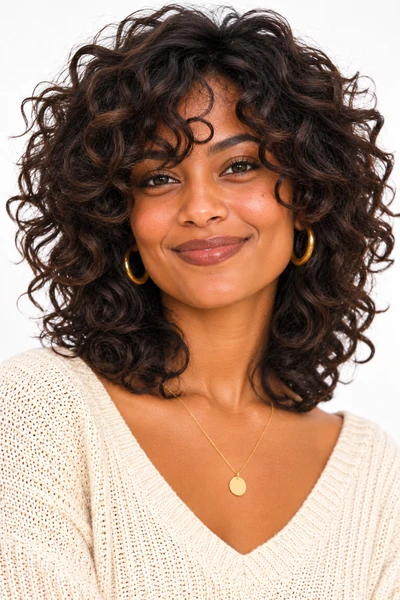
The shag on naturally curly or wavy hair creates the most dramatic texture effect of any version. The layers separate the curl pattern and create volume that straight-hair shags have to simulate with product and technique. Even a modest amount of graduation produces lift and definition on curly hair that typically requires significant product on straight strands.
The most important step is cutting dry. Curly hair shrinks significantly when it dries, and a shag cut on wet hair can end up far shorter than expected once the curls spring up. Many stylists who specialize in curls use a dry-cutting approach for exactly this reason.
Style with a curl-defining cream or lightweight gel on damp hair. Diffuse on low heat or let air-dry. Don't brush out the shag once dry, it disrupts the curl pattern and creates frizz throughout the layered sections.
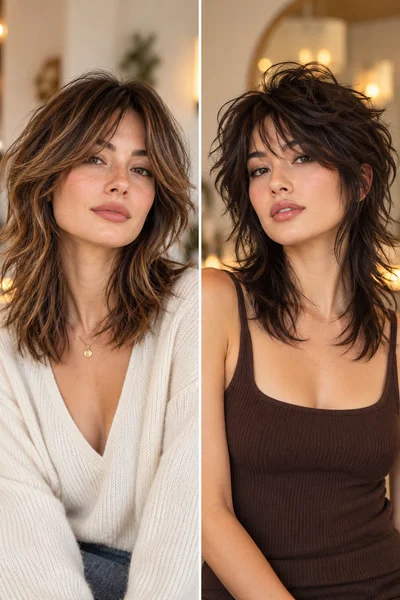
Shag vs wolf cut: what is the difference?
This is the most common source of confusion at the salon. Both cuts use layering and texture, but the silhouette and graduation are quite different, and knowing which one you're asking for before sitting down will prevent you from walking out with a crown section that's far shorter and puffier than you expected.
The shag graduates softly from the mid-lengths to the ends. The top section keeps its weight. The finish looks effortless, slightly lived-in, and holds up air-dried. It's been around since the 70s and works at any length.
The wolf cut layers are much shorter at the top and crown, creating a strong visible contrast between the top section and the longer lengths below. The shape is more defined, almost deliberately wild. It requires styling (diffusing, rough-drying, scrunching) to look right, and the graduation grows out unevenly, so maintenance between cuts is higher.
The simplest tell: if the top of the hair looks noticeably shorter and more voluminous than the lengths below, it's a wolf cut. If the top has weight and the layering is more gradual, it's a shag. Texture alone isn't a reliable indicator, both cuts depend on it. Look at the crown silhouette.
For most people who want a low-maintenance textured cut they can air-dry and leave alone, the shag is the better option. For people who enjoy styling and want a stronger statement shape, the wolf cut delivers that. They're not interchangeable, and asking for "something textured" without specifying which can result in a crown that's heavier and shorter than you wanted.
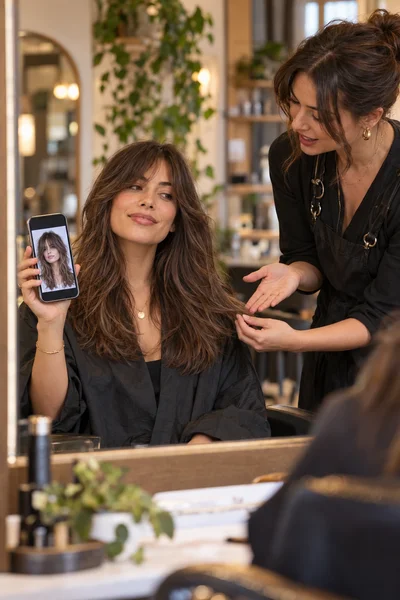
How to ask for a shag haircut at the salon
Stylists interpret "shag" differently across experience levels and regions. Being specific prevents you from leaving with something much choppier or shorter than you wanted.
Bring a photo. This removes ambiguity in a way words rarely can. Find a reference that looks like the soft, feathered version you're after, screenshot two or three images from different angles so your stylist has more than one view to work from.
State your base length. Say exactly where you want to keep the length: shoulder, collarbone, jaw, wherever. "Shag" doesn't specify length, and your stylist needs that anchor point before deciding where to start the graduation.
Specify your fringe preference. Shags often come with a fringe. If you want curtain bangs, say so. If you want no fringe at all, make that clear before scissors go near your hairline.
Describe your maintenance level. "I want it to look good air-dried with minimal product" points your stylist toward softer, longer graduation. "I style every morning with a round brush and blow-dryer" means they can use heavier graduation since you'll be managing the shape daily.
Mention your texture. Fine, thick, and curly hair each require a different cutting technique. Don't assume your stylist will adjust without hearing it from you.
A simple script that covers all of it: "I want a shag at collarbone length with curtain bangs. I air-dry most days and have fine hair, so I want the layers to add texture without making the ends look too thin, soft graduation rather than dramatic."
Frequently Asked Questions


Is the shag haircut high maintenance?
Not compared to most textured cuts. The feathered ends grow out more gracefully than a sharp line, so most shag wearers can go 8 to 10 weeks between trims without the shape looking obviously overgrown. Fine hair is the exception, 6 to 8 weeks works better since fine strands lose shape faster. The current version especially leans into a lived-in, slightly grown-out look, so there's built-in flexibility on timing.
What is the difference between a shag and a wolf cut?
Where the layers start. On a shag, the top section keeps its weight and layers graduate softly from the mid-lengths down. On a wolf cut, layers start much shorter at the crown and create strong contrast between the top and the lengths, it's a more defined, wilder silhouette that requires actual styling to look right. The shag holds up air-dried; the wolf cut usually doesn't.
Can you get a shag haircut with fine hair?
Yes, fine hair is actually a good candidate because the layering removes internal weight and adds the illusion of texture and volume. The key is longer, more gradual graduation and point-cutting at the ends rather than razor-cutting, which can make fine strands look stringy. Use a lightweight mousse at the roots before drying and keep heavy products out of the lengths.
How often do you need to trim a shag haircut?
Every 8 to 10 weeks for most people, 6 to 8 weeks for fine hair. The shag is designed to look good slightly grown-in, so there's more flexibility on timing than you'd have with a blunt cut or a wolf cut, where the shape depends on a precise line.
Does the shag haircut work on curly hair?
Yes, curly and wavy hair produce the most dramatic shag result because the curl pattern amplifies the texture the layering creates. Just make sure your stylist cuts your hair dry or uses a curl-specific dry-cutting method. Wet cutting on curly hair can leave the shag significantly shorter than intended once the curls spring up.
The shag is one of the more versatile cuts out there, which is why it keeps coming back. Whether you want a short, textured style with curtain bangs or long feathered layers that work with your natural curl pattern, there's a version that fits. Save the salon script section before your next appointment, it's useful to have the exact words ready when you're in the chair. And let us know in the comments whether you prefer the shag or the wolf cut.


Your email address will not be published. Required fields are marked *