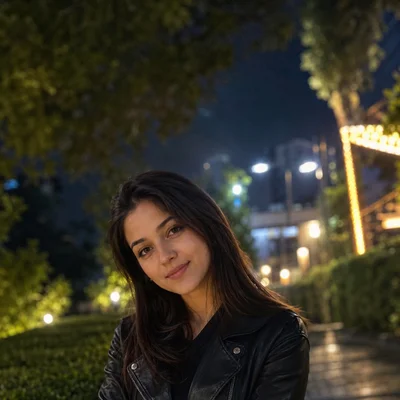
Curtain bangs are still one of the most requested bang styles, but the version getting pinned right now looks noticeably different from the heavy center-parted styles that dominated 2021. The curtain bangs trend has softened: longer, more grown-in, and styled with a slightly off-center part that feels lived-in rather than freshly cut. The shift makes them easier to maintain between trims and more forgiving to grow out, which is part of why they have lasted so much longer than most bang trends usually do.
Are Curtain Bangs Still in Style?
Are Curtain Bangs Still in Style?
Yes, curtain bangs are still in style. The trend has outlasted most other bang styles from the early 2020s because it is genuinely flattering across face shapes and hair types. What has shifted is how they are being worn, not whether they are being worn at all.
The 2021 version was defined: sharp center part, bang sections that fell symmetrically to the cheekbones, freshly trimmed every four weeks. The version is softer. A barely-off-center natural part, longer curtain sections that graze or pass the cheekbone, and a low-maintenance finish with some texture is what the current look actually is.
The quiet-luxury and soft-minimalist influence on hair trends has made over-styled bangs feel dated. Curtain bangs fit perfectly into this moment because they look good even when you are not trying very hard. The styling effort required on any given morning can be as little as finger-combing the section into place with a small amount of texturizing cream, which is part of why they have stayed popular far longer than most other bang trends.
Curtain Bangs Styles by Hair Length
Curtain Bangs Styles by Hair Length


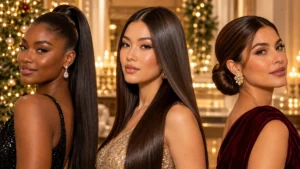
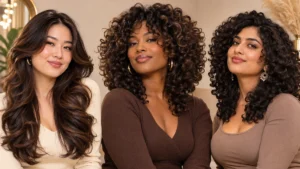
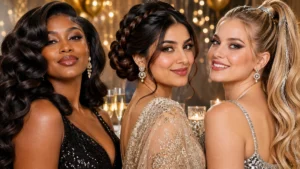
Curtain bangs adapt to every base cut, but the ideal bang length and how they sit shifts depending on how long the rest of your hair is. On shorter cuts the bang section is proportionally shorter to stay in balance with the cut, while on longer lengths it can be cut to cheekbone level or below without looking heavy. Getting the length relationship right is what makes the difference between curtain bangs that look like they belong and ones that feel like an afterthought.
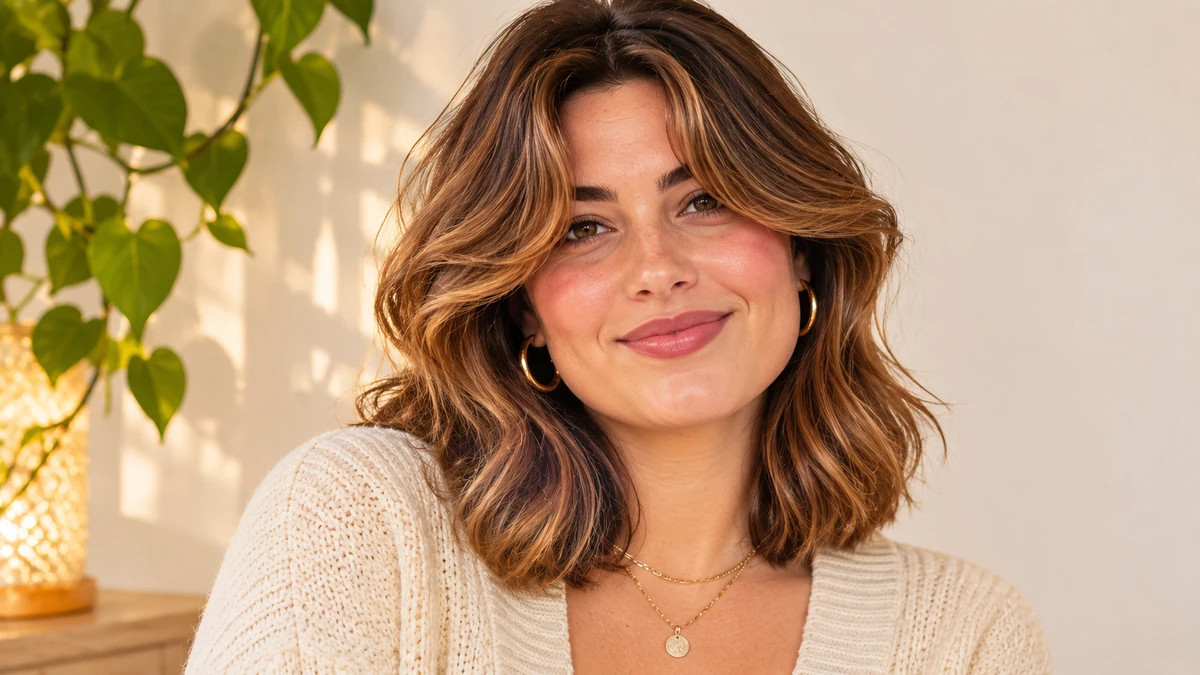
Curtain Bangs on Short Hair and Bobs
On a chin-length or collarbone-grazing bob, curtain bangs work best kept at eyebrow to cheekbone length, which is longer than classic blunt bangs and shorter than the sweeping face-framing layers you would wear on long hair. That range keeps proportion balanced and stops the bang from looking out of scale with the cut. Oval and heart-shaped faces tend to wear the shorter end of the range well, while round and square faces benefit from the extra length toward the cheekbone to help create vertical visual proportion.
The bob with curtain bangs is one of the most requested salon combinations. It is versatile enough to wear sleek and polished for work or texturized and lived-in on weekends without feeling off either way. The combination also frames the face from two directions: the curtain bang adds soft vertical movement at the front while the bob's length adds horizontal structure at the jaw, which together create a proportional balance that works for most face shapes.
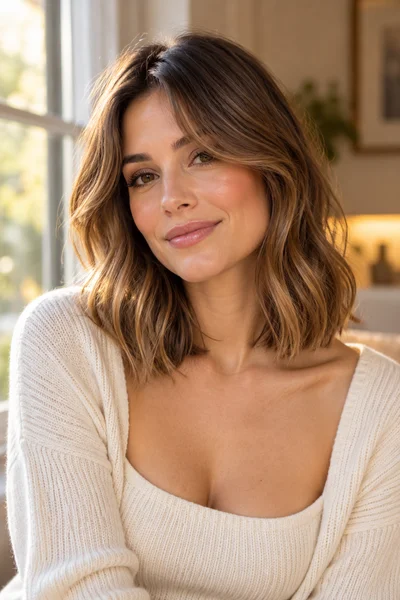
Curtain Bangs on Medium Length Hair (Lob)
The lob is the easiest base for curtain bangs. There is enough weight for the bang to fall naturally into face-framing sections without looking heavy, and enough movement to blend seamlessly with longer layers around the face. On a lob, the curtain bang does not need to be perfectly defined to look right. A little grow-in still reads as intentional.
The lob with curtain bangs works especially well when the layers start at the jaw rather than the collarbone, so the bang section flows into the rest of the cut. For layer length ideas that work well with this placement,
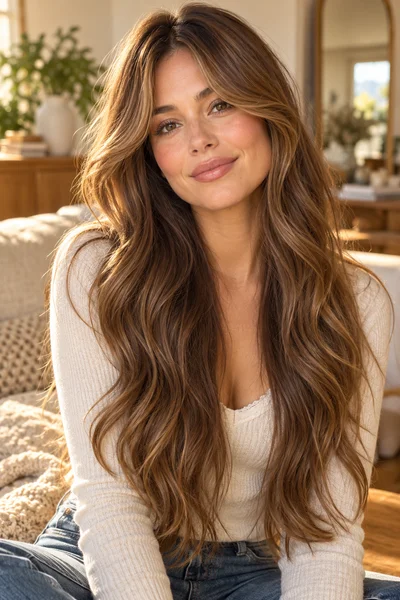
Curtain Bangs on Long Hair
Long hair with curtain bangs is still widely requested. On longer lengths, the bang section can be a little longer (grazing the cheekbone or even the jaw) because there is enough hair weight to prevent it from springing up. The key is making sure the rest of the cut has enough length and movement to make the bang feel connected rather than floating.
Lightweight layers through the lengths prevent the bang section from looking disconnected from the body of the style. For long hairstyle ideas that pair well with curtain bangs across different textures,
Curtain Bangs for Every Face Shape
Curtain Bangs for Every Face Shape
The length of the bang, where it parts, and how far it sweeps to each side all shift depending on your face shape. Getting those details right is what separates curtain bangs that look genuinely flattering from ones that feel slightly off. For a quick breakdown of how to identify your face shape, the
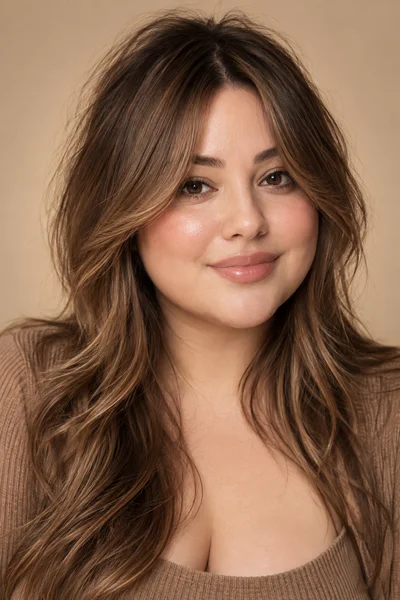
Curtain Bangs for Round Face
On a round face, curtain bangs that are longer (grazing the cheekbone or just below) add vertical visual length instead of emphasizing horizontal width. A barely-off-center part rather than a strict center split adds a small amount of asymmetry that naturally lengthens the face. The combination of extra bang length and a shifted part consistently gives a round face the appearance of more oval proportions without requiring any styling tricks beyond your normal routine.
Avoid blunt, heavy curtain bangs or any version that stops right at the widest point of the face. That placement anchors the eye exactly where you do not want attention to linger. A longer, wispier bang that grazes the cheekbone or extends past it is consistently more flattering on a round face because it draws the eye downward and creates the appearance of vertical length.
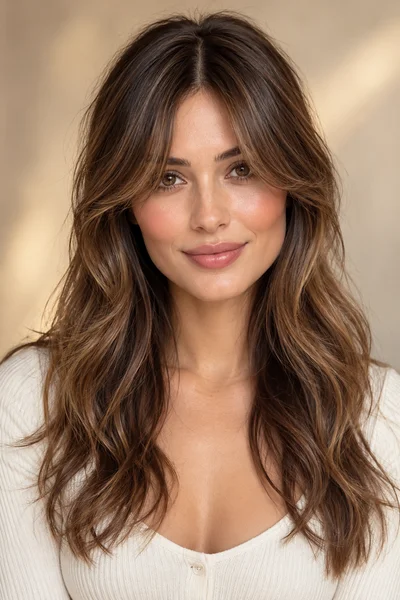
Curtain Bangs for Oval Face
Oval faces have the most flexibility with curtain bangs. Almost any length or parting works, which means you can choose purely based on what you like rather than needing to correct or balance any particular feature. The longer, slightly grown-out curtain bang suits an oval face particularly well because it creates gentle movement without extra effort.
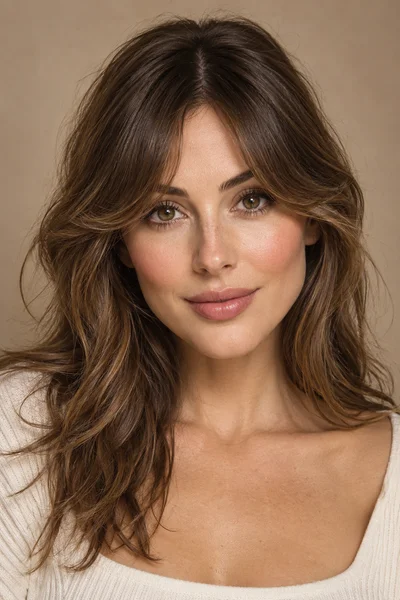
Curtain Bangs for Heart Face
A heart-shaped face is wider at the forehead and narrower at the chin. Curtain bangs that are long enough to draw the eye downward help balance that proportion. A long, wispy curtain bang grazed at cheekbone level adds softness near the widest point of the face without adding bulk.
Avoid short, angular curtain bangs that sit right above the brow, as that placement adds visual weight exactly where the face is already widest. The longer the curtain bang, the more it pulls visual emphasis toward the chin and away from the forehead, which is the exact proportion correction a heart-shaped face benefits from. When in doubt, ask your stylist to cut the bang section at least to cheekbone level and leave room to trim shorter later if you want.
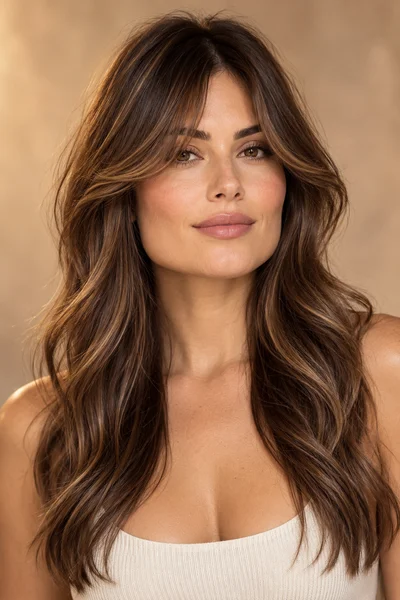
Curtain Bangs for Square Face
On a square face, a softly parted curtain bang with a gentle diagonal sweep works better than a sharp center-parted version, which can make the face look even more angular. The sweep breaks up that symmetry and creates a softer perimeter. Curtain bangs that graze the cheekbone or longer also help elongate the face visually rather than emphasizing horizontal width at the jaw.
Curtain Bangs for Fine, Thick, and Curly Hair
Curtain Bangs for Fine, Thick, and Curly Hair

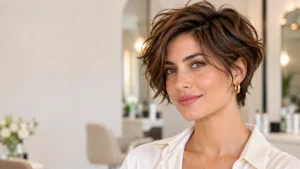
The same curtain bang technique behaves very differently depending on hair type. Fine hair goes flat. Thick hair creates a shelf. Curly hair springs up. Each texture needs a specific approach to get the soft, face-framing result that makes curtain bangs worth having.
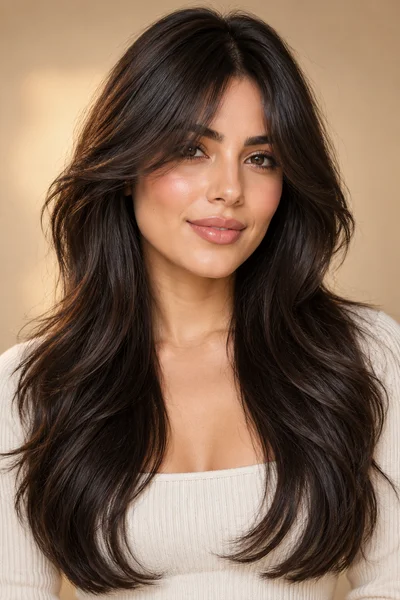
 wearing curtain bangs , wispy feathery curtain bangs that blend seamlessly into fine hair texture” class=”wp-image-4061″/>
Curtain Bangs for Fine Hair
Fine hair's main challenge is flatness. Curtain bangs on fine hair tend to go limp by midday unless you take a few extra steps at styling. Cut them slightly shorter than you would on medium hair to build in some bounce, and apply a light volumizing mousse to the bang section while it is still damp before blow-drying.
When drying, use a small round brush and roll each bang section outward in alternating directions rather than straight down. That creates a natural separation that holds longer than a single-direction blowout. Trim every 4 to 5 weeks, since fine hair loses the curtain bang shape faster than any other texture.
Curtain Bangs for Thick Hair
Thick hair gives curtain bangs natural body and shape. The problem is that without texturizing, the bang section can look like a heavy shelf sitting across the forehead rather than a soft frame falling to the sides. Thick curtain bangs that are not thinned at the perimeter will also push forward when the weather is humid rather than falling sideways, which defeats the entire point of the style.
Ask your stylist to point-cut or razor the perimeter of the bang section. That removes bulk at the edge and creates the wispy, airy finish that defines the curtain bang look. Without that step, thick curtain bangs tend to push forward and outward instead of falling flat and face-framing.
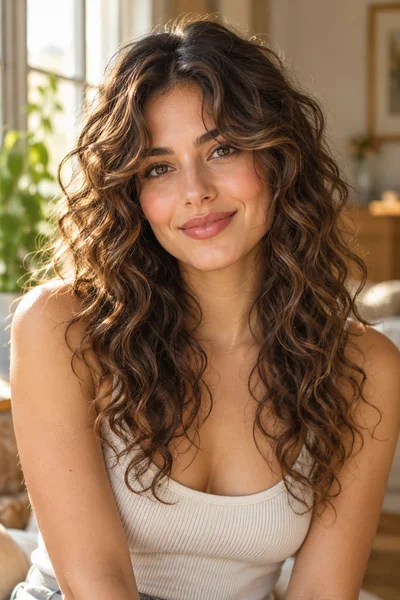
Curtain Bangs for Curly and Wavy Hair
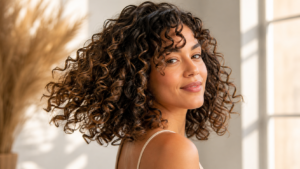
On naturally curly or wavy hair, curtain bangs need to be cut longer than feels right, because they will spring up as the hair dries. Cutting too short is the most common mistake on curly curtain bangs, and even experienced stylists sometimes underestimate shrinkage on tighter curl patterns. If you have a tight curl or coil, ask your stylist to cut the bang section dry rather than wet so you both see the real finished length before anything is trimmed too short.
For styling, let the bangs air-dry with a small amount of curl-defining cream and a gentle scrunch. Blow-drying them straight creates a triangle of frizz above the face that is difficult to manage. The curl-friendly curtain bang is a genuine look. The key is working with the texture rather than trying to eliminate it.
How to Cut and Style Curtain Bangs at Home
How to Cut and Style Curtain Bangs at Home
Only cut curtain bangs when your hair is completely dry. Wet hair stretches, so what looks like the right length when wet ends up noticeably shorter once dry. Even half an inch of unexpected shrinkage changes the whole look.
Step by step:
- Section off a triangle of hair from the center of your hairline back to just behind each temple. Clip everything else out of the way.
- Comb the triangle section straight down from your natural part.
- Hold your scissors pointing downward toward your nose at a diagonal angle, not straight across the hair. The diagonal is what creates the soft swept edge of a curtain bang. A straight horizontal cut creates a blunt fringe instead.
- Trim a very small amount, half an inch or less per pass.
- Point-cut upward into the ends after each pass to soften any blunt line at the edge.
- Separate the bang into its two curtain sections and let them fall naturally before cutting more. Assess from straight ahead in the mirror, not at a downward angle.
Cut less than you think you need. You can always take more off, but you cannot put length back. The
Styling without a round brush: Apply a small amount of lightweight volumizing mousse to damp bangs. Use your fingers to divide the bang into two sections and roll each one outward away from the center part. Blow-dry on medium heat while holding each section outward. Finish with a light-hold flexible spray. Stiff-hold spray makes curtain bangs look crunchy and flat rather than soft and natural.
Curtain Bangs vs Birkin Bangs vs Bottleneck Bangs
Curtain Bangs vs Birkin Bangs vs Bottleneck Bangs
These three bang styles get mixed up constantly in salon requests and tutorial titles. They are all face-framing, but they look and behave differently. Knowing which you are actually asking for before you sit in the chair is the difference between leaving with what you pictured and leaving with a fringe you need to grow out.
- Curtain bangs: parted in the center or slightly off-center, with the sections falling softly to each side of the face. The most versatile and forgiving of the three: they grow out gracefully and suit almost every face shape.
- Birkin bangs: thick, full, and cut straight across the forehead. Named after Jane Birkin. Less about a soft side-sweep and more about a statement fringe that sits visibly across the forehead. Require trimming every 3 to 4 weeks to hold their shape and weight.
- Bottleneck bangs: a graduated style that is shorter in the center (between the eyebrows) and longer at the sides. More structured and visible than curtain bangs, with a distinct arched or rounded line across the forehead.
If you want the most low-maintenance and adaptable option of the three, curtain bangs are the right call. They grow out without looking awkward, work across the widest range of hair types, and require the least upkeep between trims. Birkin bangs and bottleneck bangs have more visual impact but also more commitment, and curtain bangs give you the option to simply stop trimming if you decide the style is not for you.
Frequently Asked Questions
Frequently Asked Questions

Are curtain bangs high maintenance?
Curtain bangs are lower maintenance than blunt fringe or Birkin bangs because the soft edge grows out more gracefully than a straight-across cut. For most hair types, a trim every 6 to 8 weeks is enough to keep the shape looking intentional rather than overgrown. The version actively leans into a slightly grown-in look, so you have even more room before a trim feels urgent.
How often do you need to trim curtain bangs?
Every 6 to 8 weeks for most textures, and every 4 to 5 weeks for fine hair, which loses the shape faster. The beauty of curtain bangs is that slightly grown-in still looks good, so you do not need to be as precise about timing as you would with a blunt fringe. If you are comfortable with scissors, a quick 5-minute at-home trim to remove the last half inch of growth is usually enough to refresh the shape between full salon appointments.
Can you get curtain bangs if you have thin hair?
Yes, but the technique matters. Ask your stylist to cut the bang slightly shorter than usual and point-cut the ends rather than creating a blunt edge. Use a volumizing mousse at styling and a light dry shampoo at the roots between washes to add grip and volume that thin hair naturally lacks.
How long do curtain bangs take to grow out?
Most people can grow out curtain bangs to a length that blends fully with the rest of their hair in 4 to 6 months. Because curtain bangs are already layered and longer than blunt bangs, the grow-out phase tends to be less awkward. They typically transition through a face-framing layers phase before they are indistinguishable from the rest of the cut.
What is the difference between curtain bangs and regular bangs?
Regular or blunt bangs are cut straight across the forehead and sit as a visible fringe. Curtain bangs are parted in the center and swept to each side of the face, creating a softer frame rather than a horizontal line across the forehead. Curtain bangs are more forgiving to grow out and more adaptable across face shapes than most other bang styles.
Curtain bangs are worth trying if you have been on the fence. The style is softer and more flexible than the version you may have written off a few years ago. It is longer, easier to maintain, and flattering across face shapes when you match the bang length and parting to what your face actually needs. Save this guide for your next salon visit or DIY trim, and tell us in the comments which face shape section helped you most. We read every reply.
Your email address will not be published. Required fields are marked *