

Thick hair holds a short cut beautifully, but the wrong shape can leave you with bulk at the ends, a triangle silhouette, or a blow-dry routine you never signed up for. The best short haircuts for thick hair are chosen with your density and texture in mind, not just a pretty photo from Pinterest. Below you’ll find 15 real, wearable cuts, each labeled with who it suits, the exact words to use with your stylist, how much daily effort it takes, and what happens as it grows out. Every entry follows the same format, so you can scan, compare, and walk into your next salon appointment already knowing what to ask for.
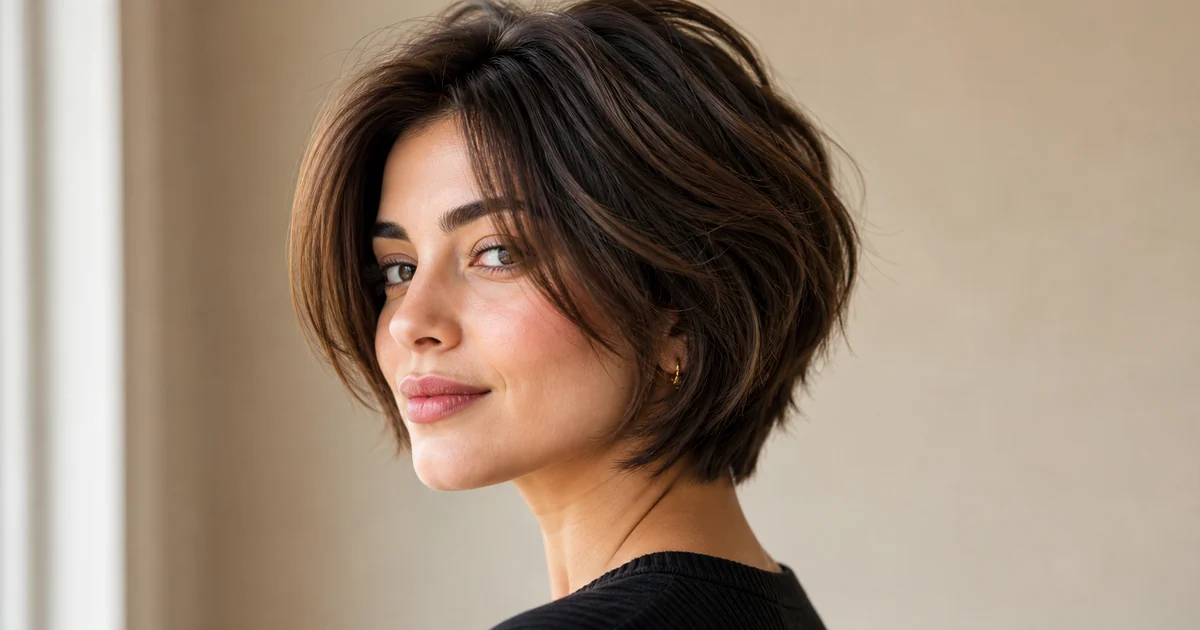
20 Short Cuts for Thick Hair at a Glance
| Style | Best For | Thinning Needed | Key Feature | Maintenance |
|---|---|---|---|---|
| Disconnected Undercut Pixie | All face shapes | Yes | Undercut removes bulk at sides | Medium |
| Textured Pixie with Fade | Oval, heart | Yes | Fade controls side volume | Medium |
| Blunt Bob with Interior Layers | All face shapes | Yes | Looks blunt, feels lighter | Low |
| A-Line Bob | Heart, square | Optional | Weight angle flatters face | Low |
| Stacked Bob | Round, square | Yes | Stacking lifts crown, reduces sides | Low |
| Lob with Long Layers | All face shapes | Yes | Layers remove bulk throughout | Low to medium |
| French Bob | Oval, round | Yes | Short length controls density | Low |
| Wolf Cut | Oval, heart | Yes | Layers break up density | Medium |
| Short Shag | All face shapes | Yes | Texture disguises thickness | Medium |
| Cropped Pixie | Oval, heart | Yes | Shortest option, lowest volume | Medium |
| Choppy Layered Cut | Square, oval | Yes | Broken ends reduce weight | Medium |
| Wedge Bob | Round, square | No | Shape channels thick hair upward | Low |
| Side-Swept Bang Lob | All face shapes | Yes | Bangs diffuse forehead weight | Low to medium |
| Asymmetric Bob | Oval, long | Yes | One-length contrast looks sharp | Low to medium |
| Ear-Length Blunt Bob | All face shapes | Optional | Short length cuts density fast | Low |
| Curly Bob | All face shapes | No | Curl pattern manages itself | Low |
| Layered Pixie | Oval, heart | Yes | Multiple lengths break up density | Medium |
| Undercut Bob | All face shapes | Yes | Hidden undercut, natural finish | Medium |
| Shaggy Lob | Round, oval | Yes | Layers throughout add movement | Medium |
| Blunt Chin Bob | All face shapes | Yes | Clean line, thinned underneath | Low |
Why Thick Hair Needs a Different Approach to Short Cuts
Thick hair refers to strand density and diameter, not curl pattern, a distinction the American Academy of Dermatology confirms comes down to follicle density rather than strand shape. You can have straight-thick, wavy-thick, curly-thick, or coily-thick hair, and each one carries more strands per square inch than average. That extra volume is what makes short haircuts for thick hair such a rewarding category, because a good cut channels all that density into shape instead of letting it sit there as bulk.
The two biggest complaints we hear from thick-haired readers are bulk at the ends and the dreaded triangle shape. Bulk happens when a stylist cuts a blunt line straight across without removing internal weight, so the ends look heavy instead of soft. The triangle or pyramid shape shows up a few weeks after a short bob or pixie grows out, when the sides expand faster than the crown and the silhouette widens at the jawline. Every entry below follows the same format, listing Who It Suits, What to Ask Your Stylist, a Maintenance Effort rating of Low, Medium, or High, and How It Grows Out, so you know exactly what you’re getting into before you book, and if face shape is your starting point, our best haircut guide walks through all seven types.
Understanding Your Thick Hair Texture Before You Choose a Cut
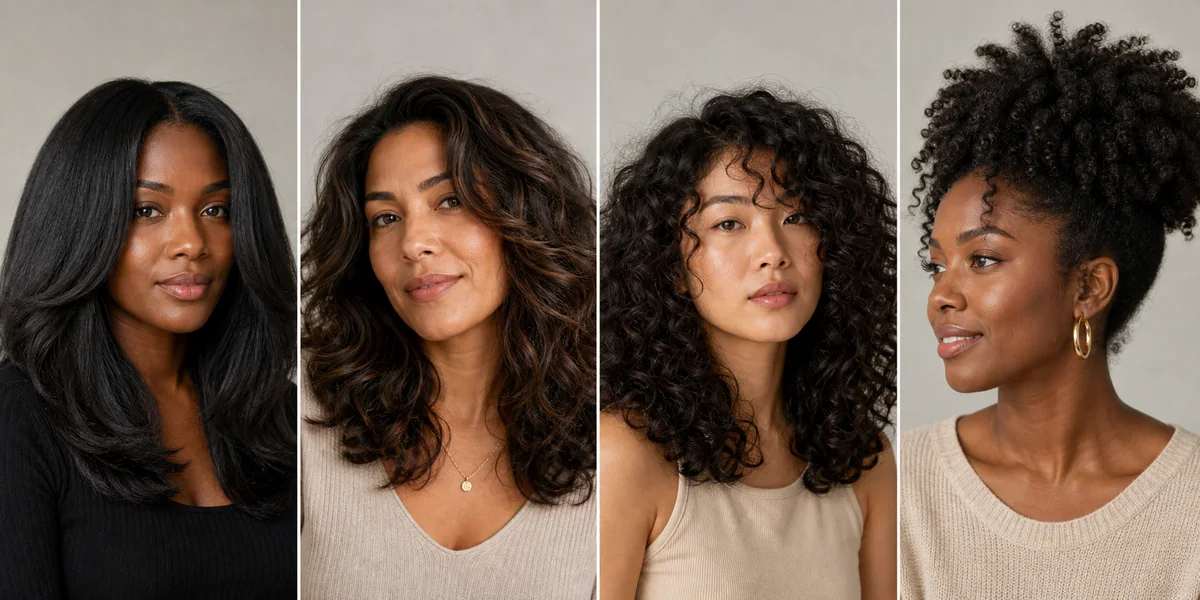
Thick hair is not one texture, and treating it as one is where most haircut advice falls short. Straight-thick hair tends to fall in a heavy, dense curtain, so it needs internal layering to move at all. Wavy-thick hair holds shape well but can frizz at the ends without enough texture, while curly-thick and coily-thick hair both shrink upward as they dry, so the finished length often looks two to three inches shorter than what was actually cut.
If you have straight-thick hair, prioritize movement through layers and point-cutting. If you have wavy-thick hair, prioritize texture that works with the natural bend instead of fighting it. If you have curly-thick or coily-thick hair, prioritize a defined, curl-by-curl shape cut dry, since cutting curly hair wet is one of the most common reasons curly cuts end up shorter or lopsided than expected. For styling ideas to go with your new cut, see curly hair ideas. Every haircut in the list below is labeled with the texture it flatters most, so you can jump straight to the entries that match your hair instead of reading through cuts that were never designed for your density.
15 Short Haircuts for Thick Hair (Pick Your Favorite)
1. Textured pixie cut
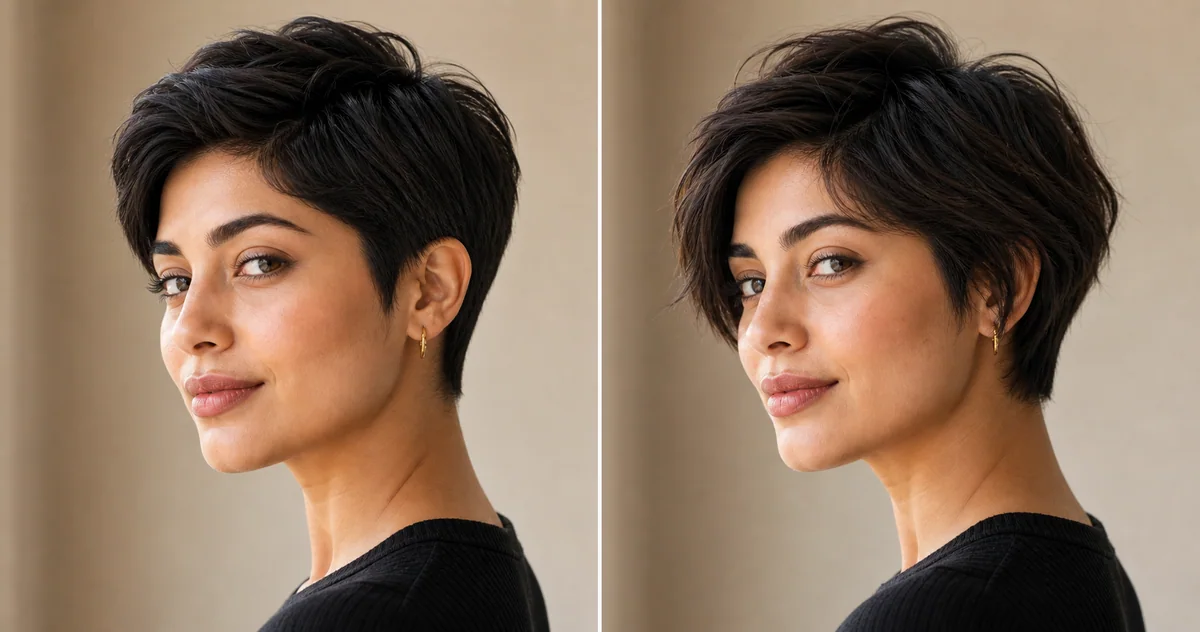
A textured pixie cut uses heavy layering and point-cutting through the crown and sides to break up density, leaving short, piecey ends instead of one thick mass. It’s one of the most requested short haircuts for thick hair because it turns volume into an asset, giving natural lift without a single dab of product.
Who It Suits: Oval and heart-shaped faces with straight-thick or wavy-thick hair.
What to Ask Your Stylist: A textured pixie with point-cutting through the crown to remove bulk, leaving length at the fringe.
Maintenance Effort: Low. A quick scrunch of texture paste is all it needs most mornings.
How It Grows Out: Thick pixies grow into a soft, slightly shaggy shape rather than a triangle. Plan a trim around the six-week mark to keep the neckline tidy.
2. Classic layered bob
The classic layered bob keeps length around the jaw or just below while adding layers throughout the interior to lighten overall weight. This is the cut most stylists recommend first when a client says she has thick hair and wants a bob without looking like she’s wearing a helmet.
Who It Suits: Round and square faces with wavy-thick or straight-thick hair.
What to Ask Your Stylist: A layered bob with long layers and thinning shears to reduce bulk at the ends, not the roots.
Maintenance Effort: Medium. It looks best with a blow-dry and round brush a few times a week, though it can air-dry in a pinch.
How It Grows Out: This bob grows into a longer layered lob rather than flaring into a triangle. Expect the shape to soften nicely for six to eight weeks before it needs reshaping.
3. Stacked bob
A stacked bob is cut shorter at the back with graduated layers that build height and fullness at the crown, then tapers toward longer pieces at the front. It works well on thick hair because the stacking uses density to build structure instead of letting it collapse flat.
Who It Suits: Oval and heart-shaped faces with straight-thick hair.
What to Ask Your Stylist: A stacked bob with graduated layers at the nape and a diagonal forward taper toward the face.
Maintenance Effort: Medium. The back needs a blow-dry with a round brush to keep the stack crisp.
How It Grows Out: On very dense or coarse hair, the stacking can start to look boxy at the back by week five or six. A mid-cycle trim of just the nape keeps the shape intact.
4. Blunt bob
A blunt bob is cut in one clean, solid line at the jaw or chin with minimal internal layering, giving it a bold, graphic silhouette. On thick hair this looks glossy rather than heavy, especially with a slight undercut beneath the top layer to remove hidden weight.
Who It Suits: Oval and long faces with straight-thick hair, since wavy or curly texture breaks up the clean line this cut relies on.
What to Ask Your Stylist: A blunt bob with an invisible undercut beneath the top layer to lighten density without losing the solid line.
Maintenance Effort: High. It needs a flat iron or blow-dry with a paddle brush most days to keep the line crisp.
How It Grows Out: This is the cut most prone to the triangle shape, since a solid blunt line depends on even length. Frequent trims every five to six weeks are non-negotiable for keeping the geometry clean.
5. French bob
A French bob sits at chin length with a soft, rounded fringe and light internal layering that keeps the shape soft rather than severe. It’s a favorite among thick-haired women who want the polish of a blunt bob without the daily flat-iron commitment.
Who It Suits: Round and heart-shaped faces with wavy-thick or straight-thick hair.
What to Ask Your Stylist: A French bob with a soft, curtain fringe and internal layers to keep the perimeter light.
Maintenance Effort: Medium. The fringe needs a quick round-brush blowout, but the rest can be finger-styled with a lightweight cream.
How It Grows Out: The soft internal layers mean this bob grows into a longer, wispy version of itself rather than a triangle. The fringe needs trimming first, usually around the four-week mark.
6. Inverted wedge bob
An inverted or wedge bob is cut shorter at the back and gradually longer toward the front, so the angle tapers dramatically into the jawline. This shape channels bulk toward the front pieces, where the extra length absorbs volume without looking heavy.
Who It Suits: Round and square faces with straight-thick hair.
What to Ask Your Stylist: An inverted wedge bob with heavy graduation at the back and a soft diagonal line toward the front.
Maintenance Effort: Medium to high. The angle relies on precise blow-drying with a round brush.
How It Grows Out: On very dense hair, the back graduation can lose definition within five weeks as new growth fills the shorter layers. Regular trims focused on just the back panel keep the wedge from flattening out.
7. Choppy shag
The choppy shag is heavily layered from crown to ends with razor-cut texture throughout, giving it a deliberately undone, piecey look that works with thick hair’s natural volume instead of against it. It’s one of the most requested low-maintenance short haircuts for thick hair because the texture hides regrowth better than almost any other style here.
Who It Suits: Oval, square, and heart-shaped faces with wavy-thick or curly-thick hair.
What to Ask Your Stylist: A choppy shag with razor-cut layers and point-cutting through the ends for maximum texture.
Maintenance Effort: Low. A texturizing spray scrunched into damp hair and air-dried is often all it needs.
How It Grows Out: Because the shag is designed to look imperfect, it grows out more gracefully than most cuts on this list, simply becoming a slightly longer shag. See our shag haircut guide for even more variations.
8. Curly bob (curly bob)
A curly bob is cut specifically on dry, undisturbed curls so the stylist can see exactly how each ringlet falls before removing any length. This matters enormously for thick, curly hair, since cutting curls wet almost always results in a shorter, uneven outcome once the hair springs back.
Who It Suits: Round and oval faces with curly-thick hair specifically.
What to Ask Your Stylist: A dry-cut curly bob, cut curl by curl, with shaping around the perimeter rather than a blunt line.
Maintenance Effort: Low to medium. A curl cream applied to soaking wet hair and left to air-dry or diffuse keeps the shape defined.
How It Grows Out: Curly-thick hair grows into a fuller, rounder version of the same bob rather than a triangle. Most curly bobs can stretch to eight or even ten weeks between cuts.
9. Tapered pixie for coily hair
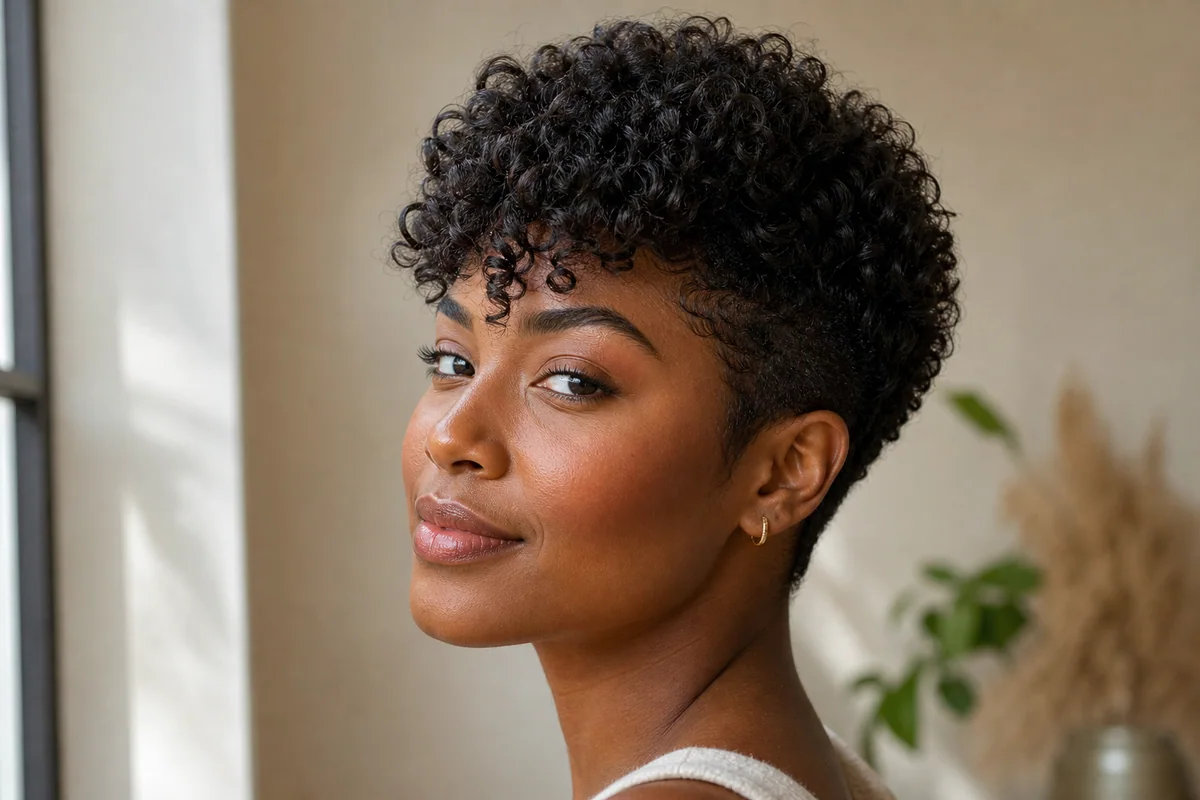
A tapered pixie for coily hair keeps more length and volume on top while tapering the sides and back close to the scalp, creating contrast between a soft, full crown and a clean, low perimeter. This works especially well on coily-thick and afro-textured hair, where shrinkage means the top always looks shorter than the actual cut length.
Who It Suits: Oval, heart, and diamond-shaped faces with coily-thick or afro-textured hair.
What to Ask Your Stylist: A tapered pixie with a low taper at the sides and shape cut dry to account for shrinkage on top.
Maintenance Effort: Low to medium. The top can be styled with a curl-defining cream and a pick for lift.
How It Grows Out: The taper needs refreshing every three to four weeks even though the top can go longer between full reshapes. The top section grows out gracefully into more volume rather than a triangle.
10. A-line bob
An A-line bob is shorter at the back and angles longer toward the front, similar to a wedge but with a softer, more subtle slope. It works well on thick hair because the front sections carry more length to balance density, while the back stays light and easy to manage.
Who It Suits: Round and square faces with straight-thick or wavy-thick hair.
What to Ask Your Stylist: An A-line bob with a gentle slope from a short nape to longer pieces at the chin.
Maintenance Effort: Medium. A quick blow-dry with a medium round brush keeps the slope smooth.
How It Grows Out: The gradual slope means it grows out evenly rather than developing a hard triangle edge. You can typically stretch this cut to seven or eight weeks before it loses definition.
11. Asymmetrical bob
An asymmetrical bob is deliberately cut with one side shorter than the other, often paired with an undercut or disconnection on the shorter side for extra edge. This works well on thick hair because the uneven lengths distribute bulk instead of stacking it evenly, which is what causes a boxy, helmet-like look.
Who It Suits: Oval and heart-shaped faces with straight-thick or wavy-thick hair.
What to Ask Your Stylist: An asymmetrical bob with one to two inches of length difference and a disconnected undercut on the shorter side.
Maintenance Effort: Medium to high. The shorter side usually needs a flat iron or blow-dry to keep the disconnection crisp.
How It Grows Out: This cut can start to look uneven once new growth fills in the shorter side, generally around the six-week mark. Plan on tightening up the shorter side specifically rather than waiting for a full cut.
12. Feathered crop
A feathered crop is a short pixie-length cut with soft, feathered layers brushed forward or to the side rather than spiked upward. This suits thick hair well because the feathering distributes weight evenly across the crown, preventing the boxy effect that can happen when thick hair is cut too uniformly short.
Who It Suits: Oval and diamond-shaped faces with straight-thick or wavy-thick hair.
What to Ask Your Stylist: A feathered crop with soft layering through the crown and a side-swept fringe.
Maintenance Effort: Low. A light mousse worked through damp hair and finger-styled is usually enough.
How It Grows Out: The feathering blends new growth into the existing shape gracefully, so this cut avoids the triangle problem almost entirely. Most women can stretch it to eight weeks or longer.
13. Soft wolf cut
The soft wolf cut blends a shag’s heavy layering with a mullet’s shorter crown and longer back sections, giving it a textured, rock-and-roll silhouette with plenty of movement. On thick hair, this looks especially full and lived-in, since the dense strands fill out the layered sections without extra volumizing product.
Who It Suits: Oval and square faces with wavy-thick or curly-thick hair.
What to Ask Your Stylist: A soft wolf cut with heavy layers at the crown, a shorter fringe, and longer, textured pieces at the back.
Maintenance Effort: Low to medium. Air-drying with a texturizing spray usually gives the best undone finish.
How It Grows Out: Like the choppy shag, the wolf cut’s heavy layering disguises regrowth well, growing into a longer, shaggier version of itself. This is one of the more forgiving cuts if you tend to stretch out salon visits.
14. Undercut pixie
An undercut pixie shaves or closely clips the lower back and sides while leaving noticeably more length on top, creating sharp contrast between the tucked-in perimeter and the fuller crown. This works exceptionally well on thick hair because the undercut removes significant bulk in one clean section, leaving the top free for texture or height.
Who It Suits: Oval and heart-shaped faces with straight-thick, wavy-thick, or curly-thick hair, since the undercut technique works across most textures.
What to Ask Your Stylist: An undercut pixie with a number two or three clipper guard underneath and length left on top for texture.
Maintenance Effort: Medium. The top needs daily styling with a texture paste, though the undercut itself is essentially maintenance-free between trims.
How It Grows Out: The undercut section grows out visibly faster than the top, so most women return every three to four weeks to clean up the clippered area. This keeps the contrast sharp and prevents the style from blurring into an undefined shape.
15. Textured lob (long bob)
A textured lob keeps length just past the chin or at the collarbone with heavy internal layering and point-cutting to keep the ends soft rather than blunt. This is often the safest entry point for thick-haired women who want the ease of a short cut without committing to something above the shoulders right away.
Who It Suits: Every face shape adapts well to a textured lob, and it flatters straight-thick, wavy-thick, and loosely curly-thick hair especially well, though very tightly coiled hair may prefer more length reduction for shape control.
What to Ask Your Stylist: A textured lob with long layers starting at the cheekbone and point-cutting through the ends to remove weight.
Maintenance Effort: Low to medium. It can be air-dried with a light mousse for a wavy finish or blow-dried straight for a sleeker look.
How It Grows Out: Thanks to the longer length and internal layering, this cut has the smoothest grow-out of any style on this list and rarely develops a triangle shape. Many women stretch eight to ten weeks between trims without losing the overall shape.
How to Style Short, Thick Hair at Home
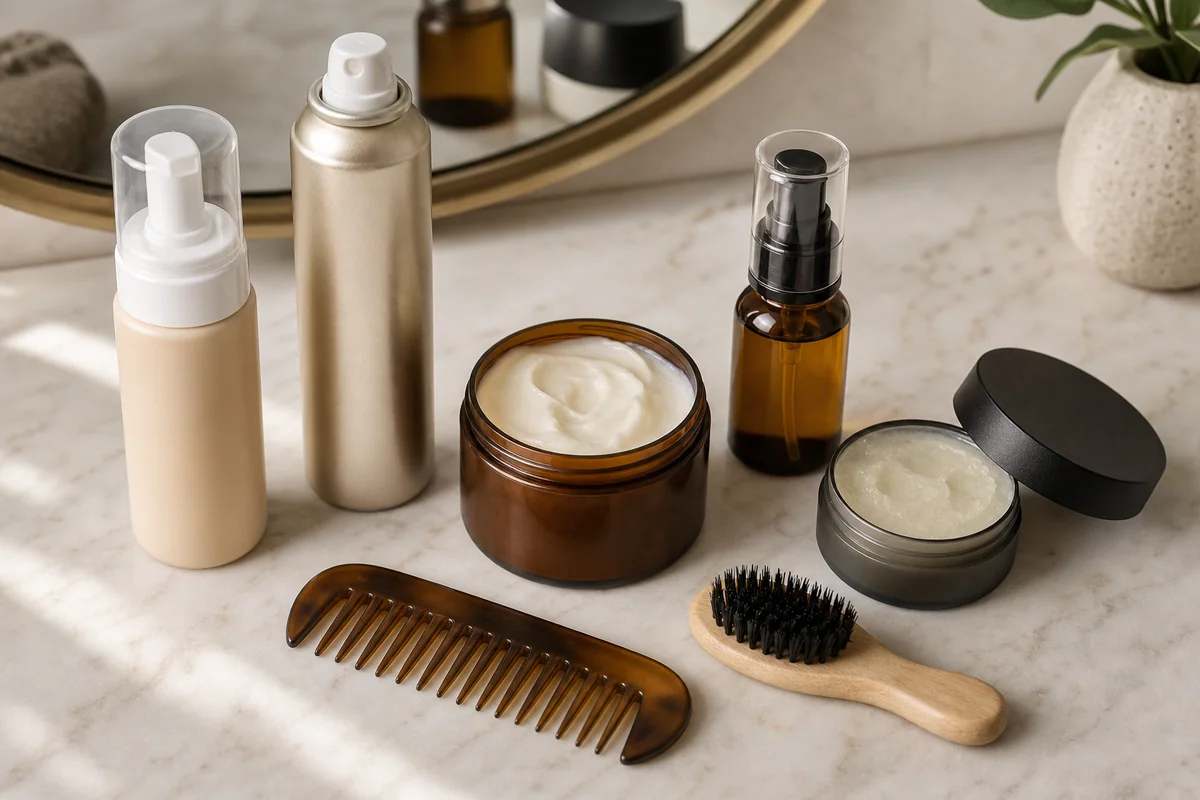
A simple, repeatable routine makes any of these cuts easier to live with day to day. Start by applying a lightweight mousse or curl cream to towel-dried hair, focusing on the mid-lengths and ends rather than the roots, since thick hair rarely needs extra volume at the scalp. From there, either rough-dry the hair with your fingers for a relaxed finish or diffuse it on a low, cool setting if you have wavy, curly, or coily texture, since high heat can disrupt curl pattern and add unwanted frizz. Once mostly dry, work hair styling picks, including an anti-frizz serum or texture paste, through the ends with your fingertips to keep the look polished through humid weather.
Daily styling time varies by texture and cut. Wavy-thick and curly-thick styles like the choppy shag or curly bob usually take five to ten minutes from product to finished look, while straight-thick styles like the blunt bob or inverted wedge that rely on a smooth blowout can take fifteen to twenty minutes. Knowing this range ahead of time helps you choose a cut that fits your morning routine instead of one that only looks great in a photo.
Maintenance Tips to Keep Your Short Cut Looking Sharp
Most short haircuts for thick hair need a trim every six to eight weeks, and thick hair tends to need trims on the shorter end of that window because the sheer volume of hair makes bulk and shape loss more noticeable, faster. Skipping a trim cycle is one of the fastest ways to end up with that triangle silhouette we mentioned earlier, since extra density accelerates how quickly the sides outgrow the back or crown. Staying close to the six-week mark, especially for structured cuts like the blunt bob or stacked bob, keeps the shape looking intentional rather than accidental.
Between salon visits, a texturizing spray worked into the ends can disguise a few extra weeks of growth by adding definition where the cut has started to soften. If your cut includes a fringe, learning to trim it yourself between appointments is a small skill that saves real frustration, since fringes lose their line long before the rest of the cut does. A stylist who understands how to cut for density rather than just length is the biggest factor in whether a short style stays low-maintenance long-term, so it’s worth being specific about your texture during every consultation.
Frequently Asked Questions About Short Haircuts for Thick Hair
What is the best short haircut for thick hair?
There isn’t one single best cut, since the right choice depends on your specific texture and face shape, but heavily layered options like the textured pixie, choppy shag, and curly bob tend to perform well across most thick hair types. These cuts remove internal weight rather than relying on a single blunt line, which keeps thick strands from looking stiff or boxy. Start by identifying your texture and choose from the entries above labeled for that type.
Will a short haircut make my thick hair look bigger?
A poorly layered cut can add volume in an unflattering way, but a well-executed short cut with proper internal thinning and point-cutting will look more controlled than long hair of the same density. The key is removing weight from within the cut rather than just trimming the ends, which is why the “What to Ask Your Stylist” scripts throughout this post specify techniques like point-cutting and thinning shears.
How do I stop my bob from looking triangle-shaped?
The triangle shape happens when the sides of a bob grow out faster than the back, so the silhouette ends up wider at the jaw than at the crown. Preventing it comes down to choosing a cut with built-in layering rather than one solid blunt line, and sticking to a trim schedule closer to six weeks rather than stretching to eight or ten. If you’re already seeing a triangle form, ask your stylist for a quick reshape of just the sides.
Are pixie cuts good for thick, coarse hair?
Yes, pixie cuts can work very well on thick, coarse hair, but they need heavy internal layering and texturizing rather than being left as one dense block on top. A textured pixie or tapered pixie accounts for coarse density by removing weight through the crown, which prevents a helmet-like look. Very coarse or coily hair often benefits from a slightly longer top section to allow for natural shrinkage. See our pixie cut styles for a closer look at how the cut varies by features.
How often should I get my hair trimmed if I have thick hair?
Most thick-haired clients do best with a trim every six to eight weeks, leaning toward the shorter end for structured cuts like blunt bobs or stacked bobs that depend on precise lines. Softer, more layered cuts like a shag or feathered crop can often stretch to eight or even ten weeks without losing shape. Your stylist can give you a more exact timeline based on your growth rate and how structured your cut is.
Short Hairstyles for Thick Hair
Thick hair benefits from short hairstyles for thick hair that remove interior bulk without making the outside look thin. Point-cutting and slide-cutting techniques keep weight distribution even, so the style sits flat and does not puff outward. A good cut on thick hair can cut your drying time in half.
Thick hair is not something to manage around a short cut, it’s something to design one for. Whichever style you save from this list, bring the exact stylist wording with you to your next appointment so you and your stylist are speaking the same language from the very first snip. For more short-hair inspiration tailored to your face shape and texture, explore our full gallery of short haircuts for women next.

Your email address will not be published. Required fields are marked *