The school bus arrives in eight minutes. Your daughter is squirming in the chair. You have a comb, some elastics, and no patience for a 45-minute Pinterest tutorial.
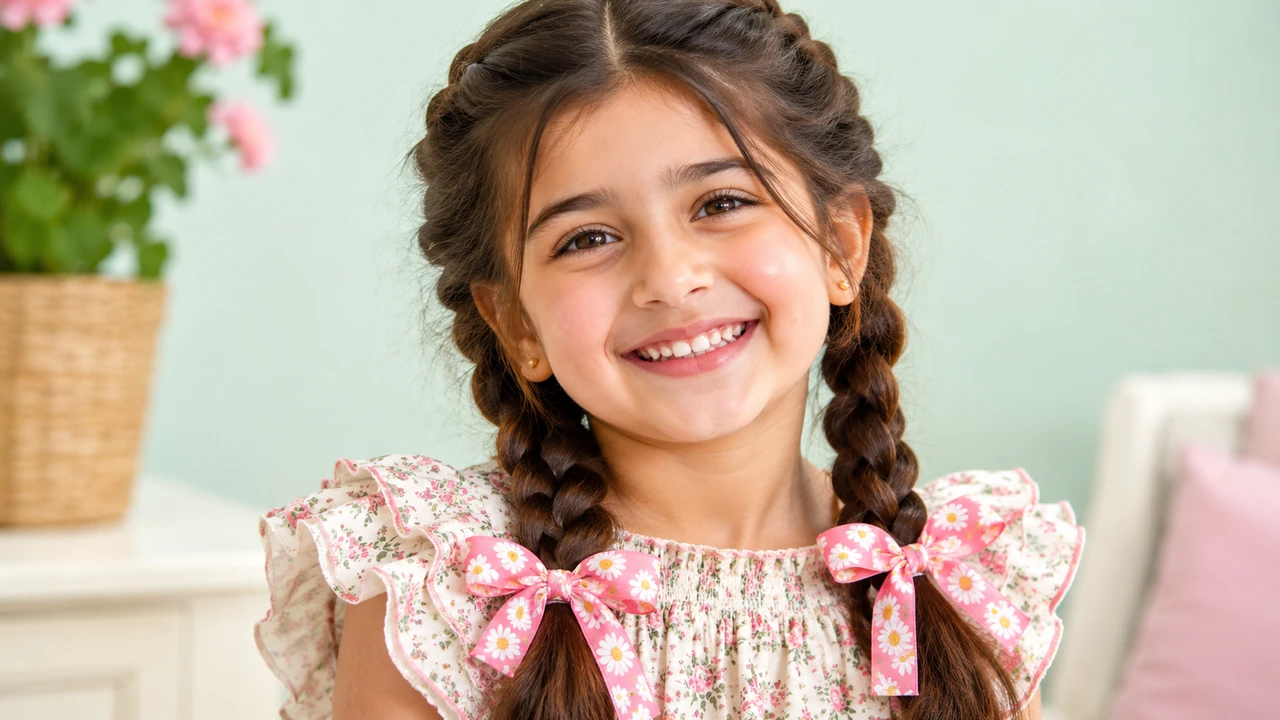
These 35 hairstyles are organized by hair type first, then by age (toddler ages 2-4, school-age 5-8, and tween 9-12), with a morning time estimate and a difficulty tag on every style. Every entry includes a note on which accessories hold best and how to adapt it for children with sensory sensitivities. Nothing here requires hot tools or more than fifteen minutes.
At the end you will find a salon phrase guide so you never have to say "just make it cute" and hope for the best again.
Easy Everyday Hairstyles for Little Girls with Fine or Thin Hair
Easy Everyday Hairstyles for Little Girls with Fine or Thin Hair
Fine hair is light, which means it slips out of elastics, falls flat before lunchtime, and shows every crooked part. The good news is that fine-haired girls can wear nearly every style, as long as you use lightweight accessories that grip without pulling and skip anything that relies on volume that isn't there. These seven styles work on fine or thin hair and take ten minutes or less from start to finish.
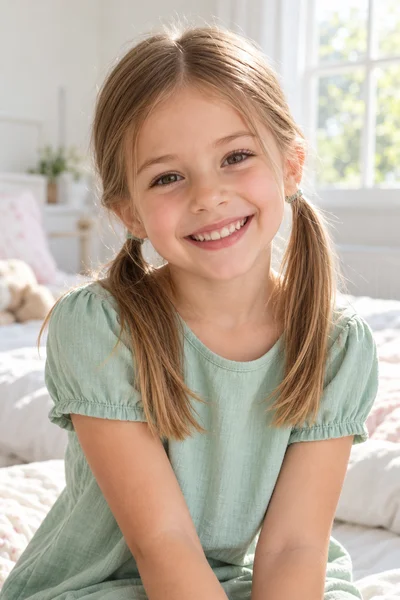
1. Sleek High Ponytail
Difficulty: Easy | Time: 3 min | Age: School-age, Tween
Gather all the hair at the crown and secure with a small snag-free elastic, smoothing the surface with a wide-tooth comb before you pull it back. A sleek ponytail works best on fine hair when the surface is slightly damp to calm flyaways at the root. The whole thing takes about three minutes and stays put through the full school day without any product.
2. Side Part with Small Bow Clip
Difficulty: Easy | Time: 2 min | Age: Toddler, School-age
Create a deep side part, tuck one side behind the ear, and pin it in place with a small grosgrain bow clip near the temple. This is the fastest style on the list and it works for mornings when you have had no time at all. Fine hair stays flat on its own, so the clip holds without gel, spray, or any extra step.
3. Simple Pigtails
Difficulty: Easy | Time: 4 min | Age: Toddler, School-age
Part the hair down the center, gather each side at about ear level, and secure with two matching snag-free elastics, keeping the tension even on both sides. Pigtails are the go-to Monday-morning style for a reason: they take under five minutes, work on every texture, and hold all day without touching up. This is the style most parents can do with their eyes half-open before coffee.
4. Single Three-Strand Braid with Ribbon
Difficulty: Easy | Time: 5 min | Age: School-age
Gather the hair into a low ponytail at the nape of the neck, braid it all the way to the ends, and tie off with a thin ribbon instead of a second elastic. The ribbon adds a finished, intentional look that makes a plain braid feel like you planned it. This style also holds longer on fine hair than a loose ponytail alone because the braid gives the strands structure throughout the day.
5. Twisted Half-Up with Snag-Free Elastic
Difficulty: Easy | Time: 5 min | Age: Toddler, School-age
Take two small sections from the front hairline, twist each one back toward the center of the head, and secure them together with a snag-free elastic. Fine hair twists easily and holds the shape without any pins or clips digging into the scalp. This style works particularly well for toddlers because there is nothing bulky or sharp pressing against the back of the head when they lean against a car seat.
6. Low Pigtail Buns
Difficulty: Easy | Time: 6 min | Age: Toddler, School-age
Create two low ponytails at the nape of the neck, then twist each one into a small bun and wrap a second elastic around it to hold the shape. Keep the buns low rather than high to avoid unnecessary pulling tension on fine strands, which can look even thinner when the roots are strained. These hold all day and look more polished than standard pigtails with very little extra effort.
7. Messy Bun with Flyaways Left Loose
Difficulty: Easy | Time: 5 min | Age: School-age, Tween
Gather the hair into a mid-height ponytail, loop it into a loose bun, and leave a few face-framing pieces hanging free at the front rather than pinning everything back. Fine hair actually suits this style because the intentional looseness reads as effortless rather than undone. Avoid pulling the bun too tight, since that can make already-thin hair look even finer at the crown.
One quick note on accessories for fine hair: lightweight snag-free elastics, thin fabric scrunchies, and small flat clips will always outperform heavy rubber bands. Thick elastics put too much tension on strands that have less structural support, and over time they cause breakage at the grip point. Stick to the softest, lightest option that still holds the style securely.
Braided Hairstyles for Little Girls: From Simple Pigtails to Protective Styles
Braided Hairstyles for Little Girls: From Simple Pigtails to Protective Styles

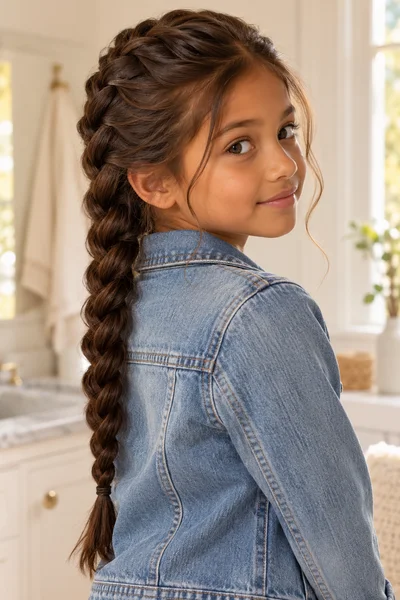
Braids range from quick pigtail braids you can finish before breakfast to full protective cornrows designed to last the school week. The styles below are arranged easiest to most involved so you can find one that matches your skill level and the time you have.
1. Pigtail Braids
Difficulty: Easy | Time: 5 min | Age: Toddler, School-age
Divide the hair into two sections and braid each one to the ends, then secure with snag-free elastics on both sides. This is the simplest braided style and a toddler classic that most parents can do on autopilot once they have done it a few times. If your daughter is fidgety, start on the side she can see and keep a snack or short video nearby while you work.
2. Bubble Braid
Difficulty: Easy | Time: 6 min | Age: Toddler, School-age
Put the hair into a ponytail, then add a second elastic about two inches down and gently pull the section between them outward to create a rounded "bubble" shape. Continue adding elastics every two inches down to the ends, puffing out each section as you go. This style looks impressive but requires nothing more than snag-free elastics placed at even intervals, making it a low-stress option even for beginners.
3. French Braid
Difficulty: Medium | Time: 10 min | Age: School-age
Add small sections of hair from the sides as you braid down the back of the head, incorporating new strands with each cross until you reach the nape of the neck. This takes practice to keep even, but the french braid tutorial breaks down every step if you want to learn from scratch. A French braid stays neat through a full school day and holds particularly well on medium-to-thick hair textures.
4. Dutch Braid
Difficulty: Medium | Time: 12 min | Age: School-age
Like a French braid, but you cross each section under rather than over, which raises the braid above the scalp and creates a more defined, three-dimensional look. This style works beautifully on thick and wavy hair and holds well for active school-age girls who are running around at recess and gym class. Start at the crown and work toward the nape, keeping your sections consistent for the cleanest result.
5. Fishtail Braid
Difficulty: Medium | Time: 12 min | Age: Tween
Split the hair into two sections and cross small pieces from the outside of each section to the opposite side, all the way to the ends. Fishtail braids look intricate but the motion is repetitive and becomes intuitive quickly once you have the rhythm down. This one is best for tweens who have enough length to show off the pattern and can sit still for about twelve minutes.
6. Cornrows
Difficulty: Takes Practice | Time: 30–45 min | Age: School-age, Tween
Cornrows are flat braids created by underhand braiding directly against the scalp in neat, even rows from front to back or in patterned shapes. See cornrow hairstyles for pattern ideas and visual references before you attempt them at home. Cornrows last two to four weeks as a protective style, but read the safety note below before pulling them tight on a child.
7. Mini Braids with Beads
Difficulty: Takes Practice | Time: 45+ min | Age: School-age, Tween
Section the hair into small, even parts, braid each section all the way down, and thread wooden or plastic beads onto the ends by looping the braid tail through. This style can last several weeks with proper care at the edges and looks especially beautiful on natural and coily hair textures. Work in even sections for the neatest result, and choose beads with smooth, rounded holes that will not catch or fray the braid.
8. Box Braids
Difficulty: Takes Practice | Time: 2+ hours | Age: Tween (professional install recommended for children)
Box braids divide the hair into square-shaped sections and braid each one down, often with added extension hair for length and thickness. They are a long-term protective style that suits tweens and typically last four to eight weeks with routine edge maintenance. For children, professional installation is strongly recommended so tension stays controlled and the session does not stretch too long.
Safety note on tight braids: The American Academy of Dermatology notes that traction alopecia, hair loss caused by repeated pulling tension at the roots, can begin at a young age, as hairstyling habits that lead to hair loss often start early in childhood. Any braid that causes redness, small bumps, or discomfort at the hairline is too tight and should be loosened or removed right away. Keep all braids comfortable at the root and give the scalp regular rest between protective styles.
For fidgety or sensory-sensitive children: Try braiding after bath time when hair is already damp and detangled, since the process goes faster and causes far less pulling and discomfort. Keep a favorite show queued up or offer a snack reserved only for hair time so your child has something to focus on while you work. Shorter sessions with small breaks will always go more smoothly than pushing through when a child is uncomfortable or overwhelmed.
Hairstyles for Little Girls with Curly or Natural Hair
Hairstyles for Little Girls with Curly or Natural Hair
Curly and coily hair looks best when you work with the texture rather than against it. These seven styles celebrate the natural pattern, and several last multiple days, which means fewer mornings spent restyling from scratch. No heat is required for any of them, and every option works on a range of curl types from loose waves to tight coils.
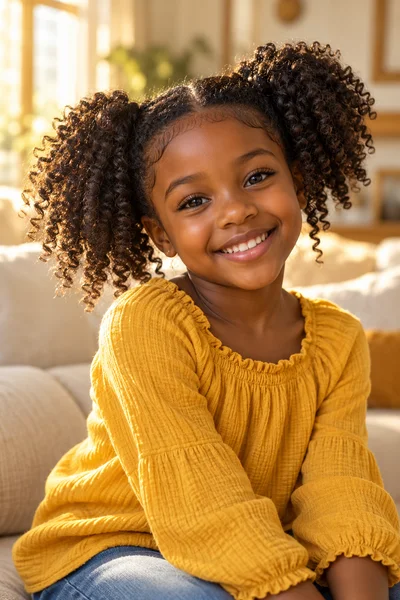
1. Wash-and-Go Puff with Wide Headband
Difficulty: Easy | Time: 5 min | Age: Toddler, School-age
After washing and conditioning, apply a leave-in or curl cream to damp hair and let it air-dry or diffuse, then secure a wide fabric headband behind the hairline to shape the curls into a puff. This is the quickest natural style on the list and one that even toddlers tend to tolerate because there is minimal pulling or manipulation involved. It holds one to two days and refreshes easily with a light mist of water and a gentle scrunch.
2. Two-Strand Twists
Difficulty: Easy–Medium | Time: 20–30 min | Age: School-age, Tween
Divide the hair into sections, apply a twisting cream to each one, and coil two strands around each other all the way to the ends. Twists protect the ends from friction, hold three to five days without retwisting, and can be worn as a twist-out on day three by gently unraveling each twist for a defined curl effect. This is one of the strongest multi-day protective styles for coily and kinky hair textures and a great Sunday-evening project.
3. Puff with Satin Bow
Difficulty: Easy | Time: 5 min | Age: Toddler, School-age
Gather all the hair to the crown or the back of the head, secure it with a satin-lined scrunchie, and clip a matching satin bow over the elastic. The satin material reduces friction against the hair shaft, which helps preserve the curl pattern and retain moisture between wash days. This small change in accessory material makes a real difference for natural hair that tends to dry out quickly.
4. Bantu Knots
Difficulty: Medium | Time: 25–35 min | Age: School-age, Tween
Divide the hair into sections, twist each one tightly into a coil, and tuck the end underneath itself to form a small, flat knot against the scalp. Bantu knots hold three to five days and can be unraveled on day two or three for a bouncy, defined curl pattern without any heat styling. They look polished enough for school pictures and hold up well through a full active school week.
5. Twist-Out Pigtails
Difficulty: Medium | Time: 30 min plus overnight set | Age: School-age
Put the hair into two-strand twists on Sunday evening, let them set overnight, and then gently unravel them on Monday morning before separating the hair into two pigtails. The twist-out pattern gives each pigtail a beautiful defined texture that holds all day without any heat. This is the ultimate Sunday-night prep that turns Monday morning into a two-minute task.
6. Afro Puff with Beaded Accessories
Difficulty: Easy | Time: 8 min | Age: School-age, Tween
Use a wide-tooth comb or an afro pick to shape the hair into a full, rounded puff, secure the base with a large snag-free elastic, and add beaded accessories along the elastic or clip them into the puff. This style celebrates the natural shape of coily hair and requires no product beyond a light moisture-setting spray or a small amount of leave-in. It holds one to two days and makes a strong visual statement without any manipulation of the curl pattern.
7. High Puff Bun
Difficulty: Easy | Time: 5 min | Age: School-age, Tween
Gather all the hair to the very top of the head, secure it with a snag-free elastic, and smooth the edges with a wide headband or a small amount of edge control applied with a soft brush. This style looks clean and polished in under five minutes once the technique is familiar, and it suits coily and kinky hair particularly well because the texture holds the puff shape without slipping. It works for school days and special occasions alike.
A note on mixed-texture or biracial hair: If your daughter has biracial or blended-texture hair, the same styles above apply: start with a detangling cream on damp hair and work from the ends upward rather than root-down. Gentle handling and appropriate moisture are widely recommended for young children's hair health, and a consistent routine keeps the hair in good baseline condition before you even begin styling. The key is patience at the detangling stage so the rest of the session goes smoothly.
For parents who want to go deeper on styles that also support length retention and healthy ends, the full guide on protective styles covers everything from twisted styles to low-manipulation options with detailed maintenance tips. These styles are especially valuable for school-age girls because many hold for a week or longer. Less daily manipulation means healthier ends over time and fewer painful detangling sessions.
Short Hairstyles and Bob Cuts for Little Girls
Short Hairstyles and Bob Cuts for Little Girls

A short cut is not a compromise. It is often the most practical choice for an active girl who dislikes sitting still during morning styling, and it frees up enormous amounts of time every single school day. The styles below take two to five minutes once the cut is in place, and each entry includes exactly what to say to your stylist so you walk out with the right cut.
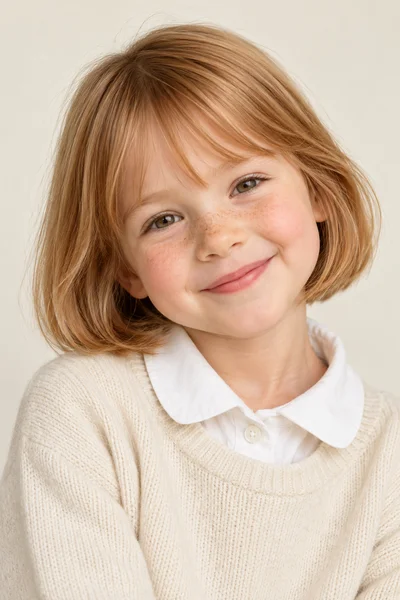
1. Rounded Bob with Bangs
Difficulty: Easy | Time: 3 min | Age: Toddler, School-age
A rounded bob sits at chin length with a soft, even curve all the way around, finished with either wispy or blunt bangs at the front. Morning styling is minimal: a quick comb-through and the style falls into place on its own without any product. Tell your stylist: "A rounded bob with a slight curve under the chin. Wispy bangs so we can grow them out easily if she changes her mind."
2. French Bob
Difficulty: Easy | Time: 2 min | Age: School-age, Tween
The French bob is a relaxed, chin-length cut with a natural fall and no hard angles at the back or strong graduation. It suits straight and wavy hair especially well and requires almost no morning effort beyond a quick comb-through. Tell your stylist: "A chin-length French bob with a natural fall. Keep it one length at the back, no graduation or layering."
3. Layered Bob for Thick Hair
Difficulty: Easy | Time: 4 min | Age: School-age, Tween
Thick hair looks heavy and boxy in a blunt bob, so interior layers remove the bulk without changing the overall length or perimeter shape. The layers add movement and make the style far easier to manage on rushed mornings when smoothing everything down perfectly is not an option. Tell your stylist: "A layered bob with interior texture to remove weight. No thinning shears, just point-cut into the ends."
4. Tousled Curly Pixie
Difficulty: Easy | Time: 2 min | Age: Toddler, School-age
A curly pixie keeps the sides and back short while leaving enough length on top for the natural curl pattern to show freely and with shape. Morning styling means applying a small amount of curl cream and scrunching, nothing else is needed. Tell your stylist: "A curly pixie with weight left on top for texture. Follow her natural curl pattern and no thinning shears, please."
5. Angled Bob with Center Part
Difficulty: Easy | Time: 3 min | Age: School-age, Tween
The angled bob is shorter at the back and longer at the front, creating a diagonal line that frames the face and adds a polished edge to everyday wear. It looks more finished than a standard bob for school events or picture day and requires only a comb in the morning to look intentional. Tell your stylist: "An angled bob, longer in the front than the back. Center part, and keep the front long enough to tuck behind the ear."
6. Stacked Bob with Soft Layers
Difficulty: Easy | Time: 4 min | Age: School-age, Tween
The stacked bob builds volume at the back through closely layered cuts while the front stays longer and flat against the face, creating a balanced silhouette. It works especially well on straight and fine-to-medium hair because the stacking creates the illusion of thickness and fullness where flat hair needs it most. Tell your stylist: "A stacked bob with soft layers at the back for volume. Keep the front at chin length and avoid over-layering the crown."
Half-Up, Ponytail, and Bun Styles by Age Group
Half-Up, Ponytail, and Bun Styles by Age Group
These are the styles parents actually reach for every school morning, and they are organized by age here so you can find what you need without scrolling through a flat list. Whether you are styling a toddler who squirms, a school-age kid who has strong opinions, or a tween who wants to start doing her own hair, there is a practical go-to option in each group. Each age group's styles are time-tested for that developmental stage, so accessories are appropriate for the age and the technique matches what is realistic for the child to sit through.
Toddler (Ages 2–4): Half-Up with Snag-Free Elastic
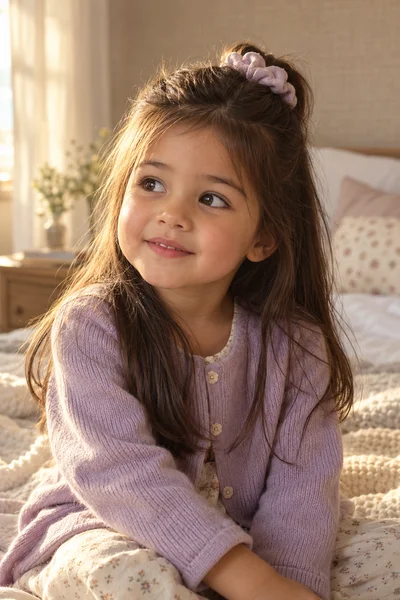
Take two small sections from the front hairline, gather them together at the top of the head, and secure with a snag-free elastic. This is the gentlest pulled-back style for very young children because the tension stays minimal and there is no bulk or hardware pressing against the back of the head when they sit, nap, or lean into a car seat. For a more varied look on weekends or special occasions, explore half up hairstyles for age-appropriate variations on this silhouette. Toddlers should only wear soft accessories: wide fabric scrunchies, snag-free elastics, and flat clips with no sharp or protruding edges.
School-Age (Ages 5–8): High Ponytail, Half-Up Bow Bun, Side Ponytail with Ribbon
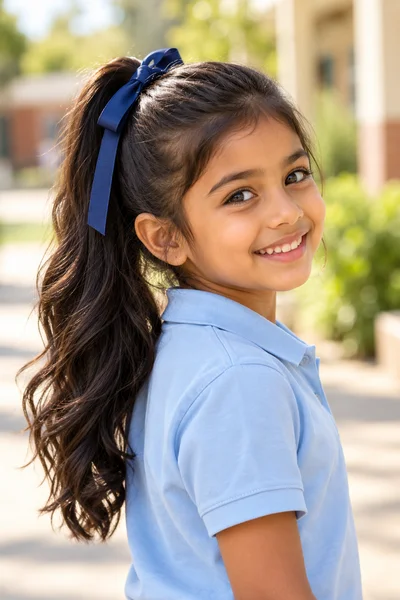
A high ponytail is the most useful style for this age group: it takes three to five minutes, keeps hair completely out of the face during the school day, and works on straight, wavy, and loosely curly hair without adjustment. For something slightly more polished on school picture day or a class event, a half-up bow bun uses the hair itself to form a fabric-style bow at the crown, which looks much more special than a clip-on and takes only about seven minutes. A side ponytail secured with a grosgrain ribbon is another reliable everyday option, particularly for girls who find center-back ponytails uncomfortable during long car rides or rest time at school.
Tween (Ages 9–12): Sleek High Bun, Braided Ponytail with Wrap, Twisted Half-Up
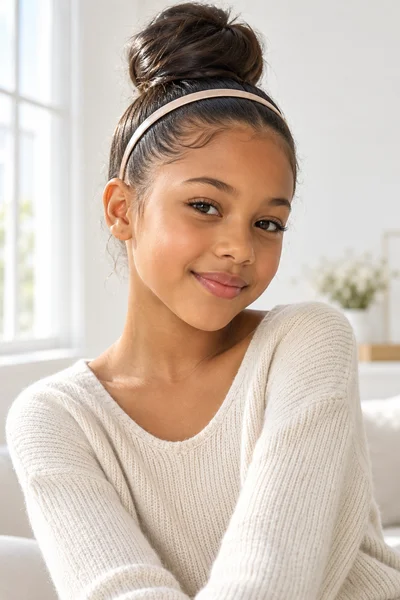
The sleek high bun is the most polished option for tweens, takes eight to ten minutes to do well, and holds reliably through a full school day and into evening activities. A braided ponytail with a hair wrap coiled around the elastic adds just enough intentional detail without requiring professional skills, and most tweens can learn this one themselves within a few practice sessions. The twisted half-up with a side part is the easiest of the three and a realistic option for tweens who want to start styling their own hair in the morning, which frees up your time considerably.
Accessories by type: Snag-free elastics, wide satin headbands, fabric scrunchies, and claw clips are the safest and most comfortable options across all age groups. Avoid rubber bands entirely, they can snap under tension and tangle tightly in hair, causing real breakage when you try to remove them. Standard bobby pins are fine for school-age and tween girls but should be kept away from toddlers who may pull them out and put them in their mouths.
Seasonal tip: In summer, a high bun or ponytail keeps hair off the neck and reduces heat discomfort through the school day. In winter, tuck the hair into a low bun before pulling on a hat so the hat does not flatten everything and generate static all afternoon when it comes off. Keeping a small fabric scrunchie in the school bag means she can adjust the style herself if it loosens during the day.
These are the styles that actually get you out the door on time. Once you have practiced each one a couple of times, the whole routine gets faster.
What to Tell Your Stylist: A Salon Phrase Guide for Girls' Hair
What to Tell Your Stylist: A Salon Phrase Guide for Girls' Hair
Most parents describe what they want vaguely and hope for the best. These phrases are specific enough to give any stylist a clear picture because they name what to do and what to avoid in the same sentence, which removes the guesswork entirely. You can read them directly from your phone at the appointment, no memorizing required.
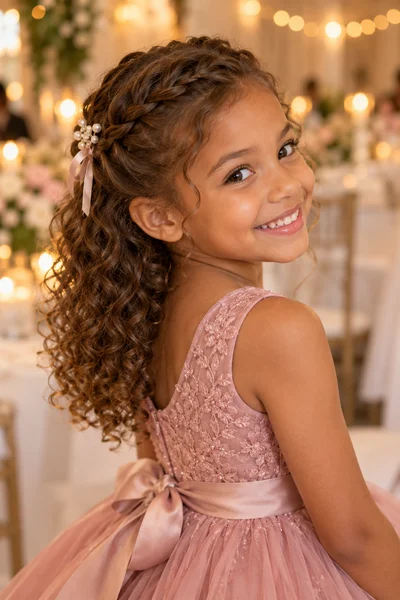
Salon Phrases You Can Say Word for Word:
- "A rounded bob with a slight interior layer for movement, chin length."
- "French braid pigtails tight enough to stay through recess, but no tension at the roots."
- "A layered cut with no thinning shears. Her hair is already fine."
- "Leave the length, just clean up the ends. She is growing it out."
- "A textured pixie with some weight on top so we can do a small clip."
- "A wash-and-go-friendly trim, just even out the shape without disrupting her curl pattern."
Bring photos when you have them, but these phrases hold up even when you don't. Most stylists genuinely prefer specific language because it reduces guesswork and eliminates the uncomfortable mid-appointment conversation where the stylist has already cut something you did not want removed. Writing the phrase on your phone before you walk in takes about thirty seconds and saves a lot of frustration.
Special Occasion Mini-Guide:
Birthday Party Updo: A soft half-up with a braid or twisted section at the crown, secured with a decorative clip or ribbon. This takes about ten to twelve minutes, holds through several hours of running around at a party, and looks special without being too formal for a kids' gathering. Practice it once the night before if you have not done it before.
Flower Girl Hairstyle: A low chignon or small bun at the nape of the neck with a few loose, face-framing pieces left out at the front. This style photographs beautifully from every angle, suits most formal dress necklines, and holds securely through a full ceremony. Ask your stylist for a light-hold finishing product appropriate for children if the event requires professional prep.
School Photo Day: A sleek half-up or neat single braid keeps things polished without crossing into too-fussy territory. Simple styles photograph more cleanly than elaborate ones, especially against a plain school backdrop, and they look intentional rather than overdone. Aim for something you can do in under seven minutes so the morning does not become stressful.
Recital Bun: A classic high bun secured with a heavy-duty elastic and a few bobby pins, with the edges smoothed for a clean stage appearance. Most dance studios provide specific requirements for recital hair, so bring those notes to the salon ahead of time or follow them at home the morning of the recital so there are no last-minute surprises. A firm-hold hairspray or edge control product will keep flyaways in place through the performance.
Save this post to your hairstyle board so you have ideas ready every school morning and before every salon visit. If you try one of these styles, the comments are a great place to share which one your daughter liked best. And if you are heading to the salon soon, take the phrase guide in the section above, it will make the appointment smoother for both of you.
Frequently Asked Questions
Frequently Asked Questions

What Is the Easiest Hairstyle for Little Girls?
Among all the cute hairstyles for little girls in this guide, pigtails, a high ponytail, and a half-up clip are the three easiest options because each one takes between two and five minutes and works on nearly every hair type without any special tools or technique. None of them require braiding skill, and all three hold through a full school day with no touchups needed. Start with whichever one your daughter sits still for longest and build from there as you get more comfortable with morning styling.
How Do I Style a Toddler's Hair Without Them Crying?
Work on damp, freshly detangled hair so you are not pulling through knots and causing discomfort before the styling even starts. Keep a dedicated distraction ready, a short video, a favorite snack, or a toy that only comes out during hair time, and move as quickly as possible to minimize the sitting time your toddler has to endure. Use snag-free elastics and a wide-tooth comb rather than rubber bands or fine-tooth combs, which catch and pull far more than necessary on young children's hair.
What Hairstyles Are Best for Little Girls with Curly Hair?
Wash-and-go puffs, two-strand twists, and Bantu knots are among the best options for curly and coily hair because they work with the natural texture and do not require heat or straightening. Two-strand twists and Bantu knots also hold three to five days, which significantly reduces the number of mornings when you need to restyle from scratch. Start on damp hair with a leave-in conditioner or twisting cream for the best hold, definition, and moisture retention throughout the week.
How Long Should Little Girls' Hairstyles Take in the Morning?
Simple styles like pigtails, ponytails, and half-up clips take two to five minutes, which is realistic for even the most rushed school mornings when you are also making lunch and finding shoes. Braided styles like French braids or Dutch braids take eight to twelve minutes and are better suited to mornings with a slightly earlier start. Cornrows and box braids require thirty minutes to several hours and are best scheduled on a weekend or done professionally, not squeezed into a Tuesday morning before the bus arrives.
Are Tight Braids Bad for Children's Hair?
Yes, braids that are pulled tight at the root put significant tension on a child's tender scalp and can lead to traction alopecia over time, according to the American Academy of Dermatology. Keep all braids comfortable at the hairline, avoid repeating the same tight style back-to-back without giving the scalp a rest, and loosen or remove any braid immediately if your child reports pain or you notice redness or small bumps along the hairline. Looser braids worn less frequently are always the safer choice for young children's developing hair and scalp.
These 35 cute hairstyles for little girls cover every hair type, every age group, and every skill level, from the two-minute pigtail to the full protective cornrow. Whether your daughter has fine straight hair, thick waves, or natural coily curls, there are at least a dozen styles here that will work on a real Tuesday morning before the school bus arrives. Come back to this before salon visits, school photo days, or any morning when you need a quick idea.
You might also like:


Your email address will not be published. Required fields are marked *