You have three hundred saved photos, four different Pinterest boards, and still no real answer when your maid of honor asks what you're doing with your hair. Learning how to choose your wedding hairstyle is not about finding one more pretty picture. It is about running your options through a short list of real factors, in order, until only two or three styles are left standing.
This guide walks through six decision factors that actually narrow the list: your face shape, your dress and neckline, your hair length and texture, your veil or headpiece, your venue and the weather, and finally locking everything in at a trial run. Along the way you will get named styles for specific situations, honest notes on styling time and how long each look lasts through a full reception, and exact wording to bring to your stylist. Every hair type and length has real options here. Some just take a little more prep than others, and that is fine.
Start With Your Face Shape
Start With Your Face Shape
Before you touch a single reference photo, take two minutes to identify your face shape, since it will quietly rule a few styles in and a few out. Stand in front of a mirror, pull your hair back, and look at the width of your forehead, the width of your cheekbones, the width of your jaw, and the overall length of your face. If a tape measure feels more precise than eyeballing it, use one across each point and compare the numbers; most brides land close to round, oval, square, heart, or long (also called oblong).
Once you know your shape, you have a starting shortlist instead of an overwhelming one. A round face tends to look elongated with a high sleek bun that lifts the crown, or with side-swept waves that add length along one side. A square jaw often softens beautifully with a low loose bun or soft undone waves that take the edge off strong angles.
A heart-shaped face, with its narrower chin, tends to balance out with a half-up style that includes soft, face-framing pieces left loose around the cheeks. A long or oblong face generally benefits from volume at the sides, which is why voluminous shoulder-length waves or a wider half-up style read as flattering on this shape. These two shapes are often mistaken for each other at a glance, so it is worth double-checking your jaw and forehead width before settling on a direction.
None of this is a hard rule, and no stylist will turn you away for wanting a style that is not "supposed" to suit your face. Think of face shape as one filter among six, not the final word. It is meant to narrow your options down from fifty photos to maybe fifteen, which is exactly the kind of progress you need at this stage. For a deeper breakdown of which cuts and updos tend to flatter each shape, our face shape guide covers the same five shapes in more detail.
Match Your Hairstyle to Your Dress and Neckline
Match Your Hairstyle to Your Dress and Neckline
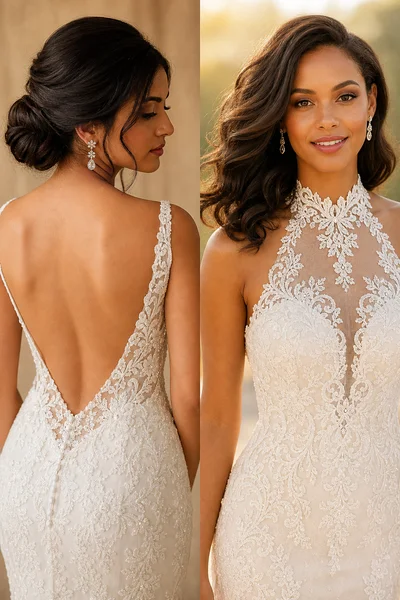
This is the factor most guides skip, and it is one of the most useful ones you have. Your dress neckline and back detail should influence your hairstyle just as much as your face shape does, because the two need to work together in every photo. Pull up a photo of your dress, or better yet try it on, and really look at what your neckline and back are doing before you commit to a look.
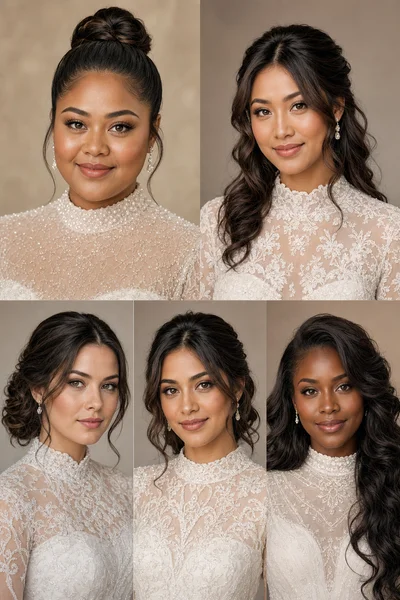
A strapless or sweetheart neckline pairs beautifully with a low or side-swept updo, since it keeps the eye moving along your collarbone without competing for attention. Soft down waves also work here, as long as they stay light rather than heavy and blunt. On the other hand, a high halter neckline or an illusion neckline with lace detail at the collar usually looks cleaner with hair pulled up and off the shoulders, so the neckline itself gets to be the focal point instead of getting lost under loose hair.
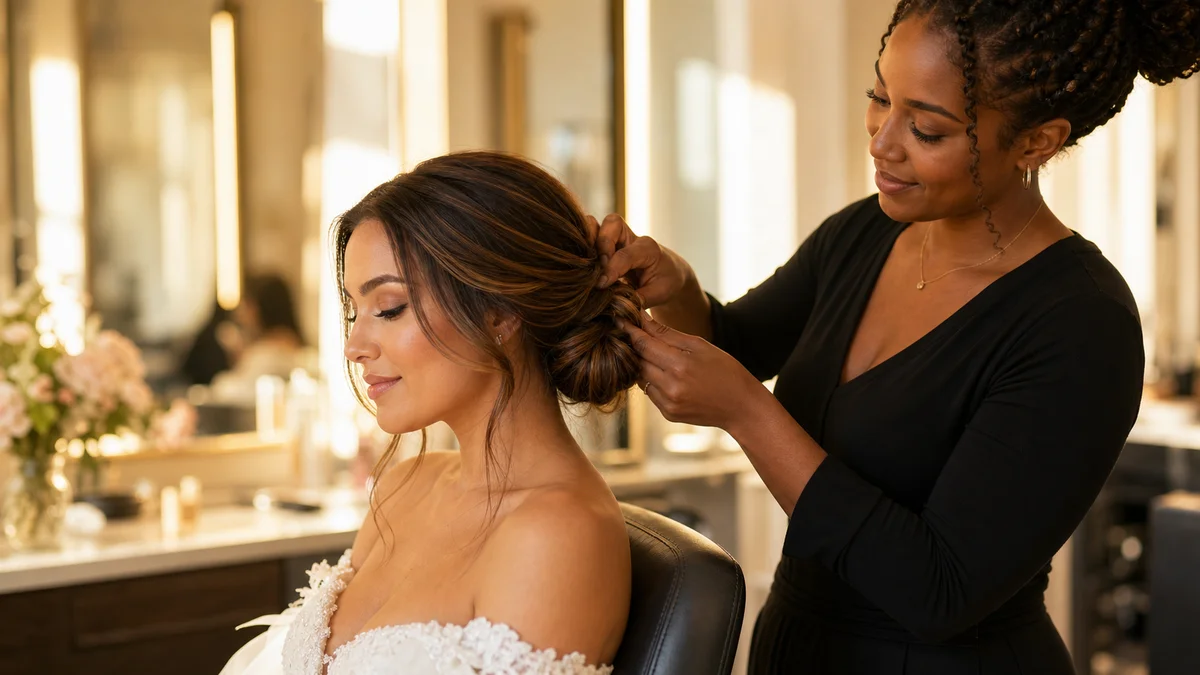
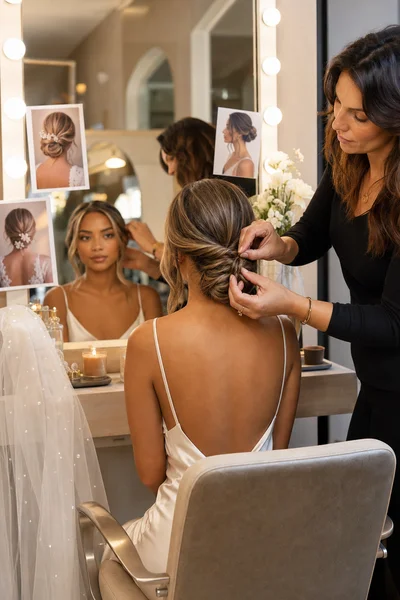
If your gown has an embellished or low back, an updo is close to essential. A low bun, a braided updo, or a twisted chignon all keep your back fully visible, which matters more than most brides expect until they see their own photos. Leaving hair down over a detailed low back is one of the most common regrets brides mention after the fact, simply because it hides work the designer put into the dress. A simple, minimal-detail gown flips this logic: since the dress is not doing much visual work on its own, your hair can carry more interest, whether that is loose waves, a braided crown, or a textured half-up style with some volume at the crown.
Choose a Style That Works With Your Hair Length and Texture
Choose a Style That Works With Your Hair Length and Texture
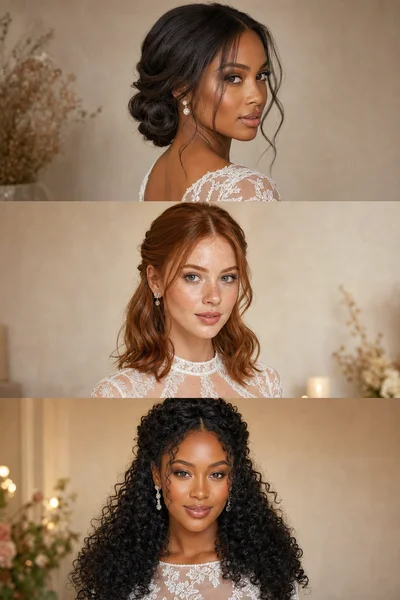
Vague advice like "updo or down" is not actually useful when you are the one sitting in the stylist's chair. What you need are named styles that match your real length and texture, plus an honest sense of how long each one takes, so here is exactly that. The breakdown below is grouped by length and texture first, so you can skip straight to the section that actually applies to you.
If you have long hair, two options consistently work well for weddings. A romantic half-up style with soft curls falls somewhere between formal and relaxed, usually takes about 45 to 60 minutes with a stylist, and photographs well from every angle. A low twisted chignon is more polished and formal, takes roughly the same amount of time to build correctly, and holds its shape exceptionally well through a long day. For more named options built specifically around longer lengths, our bridal hairstyles for long hair roundup has a wider range to browse.
Short and medium hair, meaning bob-length and above, genuinely has fewer updo options, and it is worth being honest about that rather than pretending otherwise. That said, two realistic styles still deliver a bridal feel. Textured pinned-back waves use bobby pins and a curling wand to sweep hair away from the face while keeping the ends visible, typically taking 30 to 40 minutes. A sleek low half-up with bobby pins pulls just the top section back for a clean, put-together look and can often be done in 20 minutes, which makes it realistic for a DIY bride getting ready with friends.
Curly and coily hair deserves styles that work with the natural pattern instead of fighting it into submission. A defined curly half-up, where the crown is pinned back and the rest of the curls are left to do their thing, usually takes 30 to 45 minutes and looks intentional rather than undone. A low bun with curl tendrils left loose around the face softens the whole look and takes about 25 to 35 minutes to set. Braided and twisted styles also hold up especially well on textured hair through a full day of wear, and our bridal braided updos guide has fourteen more specific options if you want to keep browsing.
Factor In Your Veil, Headpiece, or Hair Accessories
Factor In Your Veil, Headpiece, or Hair Accessories
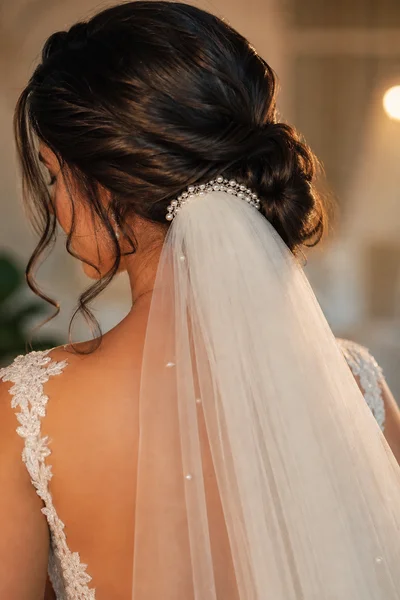
Your veil or headpiece is not an accessory you add at the end. It actually shapes which hairstyle works in the first place, and skipping this step is how brides end up loving their hair and hating how it looks with the veil attached. Figure out your headpiece plans before you lock in a style, not after.
Cathedral and chapel-length veils are heavy and long, so they generally pair best with a low updo or a low half-up style. This gives the comb a secure, low attachment point that will not compete with height at the crown or pull awkwardly against a high bun. A birdcage veil or a fresh floral headpiece works differently, since these pieces usually sit forward on the head rather than at the back, so they tend to look best with an updo that leaves the crown visible and uncluttered. If you are skipping a veil entirely in favor of hairpins, combs, or a floral crown, your hairstyle actually has more freedom to carry texture or height, since nothing needs to be tucked underneath a layer of tulle.
Whatever you decide, bring the actual veil or headpiece with you to your hair trial, not just a photo of it. Seeing how it sits with the finished style in real time is the only way to know for sure whether the attachment point works, and it is far easier to adjust in the chair than to discover a problem on the morning of the wedding. Our wedding hairstyles with a veil guide pairs specific veil lengths with specific updo styles if you want more direction here.
Account for Your Venue, Weather, and a Full Day of Wear
Account for Your Venue, Weather, and a Full Day of Wear
A hairstyle that looks perfect in your trial photo still has to survive your actual wedding day, which usually means hours outside, a first dance, and a lot of hugging. This is the factor most bridal guides leave out entirely, and it is arguably the one that prevents the most regret. Think through your venue and season honestly before you finalize anything.
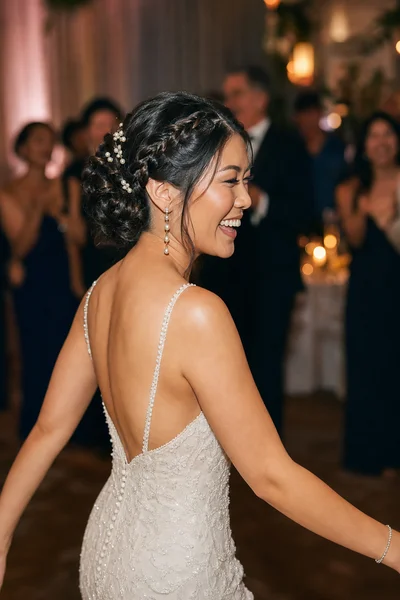
Outdoor weddings, beach ceremonies, and anything happening in summer heat or humidity call for styles that resist frizz and hold shape without relying on heavy product. Braided updos and twisted styles tend to do this well, since the hair is secured close to the head rather than left to move freely in the air. Loose down waves, by contrast, are more likely to fall flat or frizz out as the day goes on, especially near water or in direct sun. Indoor, air-conditioned, formal venues give you far more flexibility, since humidity is less of a factor and soft curls or down styles can hold their shape for most of the evening.
Longevity through the day matters just as much as how the style photographs in the first hour. Secured updos and braided styles are the most realistic bet for lasting eight or more hours of dancing without a touch-up, since there is less loose hair to lose shape or fall out of place. Loose curls and half-up styles are still lovely choices, but plan on a quick refresh with pins or a touch-up spray sometime after the ceremony, especially before your reception photos. This is not a guarantee for any specific style, since every head of hair behaves a little differently, but it is a realistic expectation to walk in with rather than a surprise to discover at hour six.
Book a Hair Trial and Know What to Ask For
Book a Hair Trial and Know What to Ask For
Once you have narrowed your list down using the five factors above, the trial run is where theory becomes reality and where you finally confirm how to choose your wedding hairstyle with confidence. According to bridal planning guidance from The Knot, most experts recommend scheduling your hair trial somewhere between one and three months before the wedding, which gives enough lead time to make adjustments without the appointment feeling rushed. Try to schedule it on a day when your hair is in its normal, slightly unwashed state rather than freshly cleaned, since that is closer to how it will behave and hold on your actual wedding morning.
Bring a photo of your dress, or the dress itself if your schedule allows it, along with your veil or headpiece and two or three reference photos pulled from the sections above. Showing up with an entire Pinterest board tends to overwhelm the conversation rather than focus it, so narrowing down ahead of time is worth the effort. This is also the appointment where you find out how a style actually looks on your head, under real lighting, rather than on a stranger's hair in a photo.
Having the right words ready makes this appointment go faster and gives your stylist something concrete to work from instead of guesswork. If you are going for a romantic half-up look, try describing it as "a soft half-up style with loose curls, volume at the crown, and a deep side part." For a polished low updo, something like "a low twisted chignon with a few face-framing pieces left out" gives your stylist a clear picture. If you are working with curly hair and want to keep your texture intact, try "a low bun that keeps my natural curl pattern, with a few curl tendrils left loose around my face" so nothing gets flat-ironed by accident.
One last reminder that is easy to forget in the excitement of planning: avoid cutting or dramatically coloring your hair in the final one to two weeks before the wedding. Even a small change in length or tone can shift how a style falls compared to your trial, and the whole point of doing a trial is to remove surprises, not introduce a new one. If you want a fuller wedding-updo resource beyond this guide, our braided updo maintenance page rounds up more braided and twisted options across hair types.
Frequently Asked Questions
Frequently Asked Questions
How Far in Advance Should I Decide on My Wedding Hairstyle?
Most brides land on a short list of two or three styles about four to six months out, then confirm the final choice at their hair trial one to three months before the wedding. Use the decision factors in this guide, starting with face shape and dress, to work out how to choose your wedding hairstyle well before that trial. Deciding too far in advance without a trial to confirm it can lead to surprises, since a photo never fully predicts how a style will sit on your own hair.
Should I Get My Hair Trial Done on My Wedding Day Makeup Trial Too, or Separately?
Many brides do book both trials on the same day, since it lets you see the complete look together and saves an extra trip. That said, a combined trial day can run long and feel rushed, so if you are prone to feeling overwhelmed by back-to-back appointments, separate days give you more room to focus on each one. Either approach works, so choose based on your schedule and how much time you realistically want to spend in a chair in one sitting.
What Wedding Hairstyle Works Best if My Dress Has a Low Back?
A low or side-swept updo is generally the strongest choice for a low-back gown, since it keeps the detail fully visible rather than hidden under loose hair. A braided updo or a twisted chignon both work especially well here, since they read as polished without adding bulk near the neckline. If you love the idea of hair down, consider a compromise like a low half-up style that still shows most of the back detail.
Can I Still Wear My Hair Down if My Wedding Is Outdoors in Summer?
Yes, though it helps to choose texture over completely straight strands, since natural or lightly curled waves tend to hold up better in heat and humidity than a sleek blowout does. Braided or twisted elements woven into a down style can also add extra hold without looking overly formal. Plan for a touch-up kit on hand regardless, since even resilient styles can use a quick refresh after several hours outside.
How Do I Make Sure My Wedding Hairstyle Lasts Through Dancing at the Reception?
Secured updos and braided styles are the most realistic option for lasting eight or more hours without falling apart, since there is less loose hair that can slip out of place. Ask your stylist to use enough bobby pins and a strong-hold setting spray specifically because you know you will be dancing, not just standing for photos. Keep a small emergency kit nearby with extra pins and a travel-size hairspray, since even the best-secured style can use a quick reset late in the night.
Learning how to choose your wedding hairstyle stops feeling overwhelming once you run it through these six factors instead of scrolling endlessly for the "perfect" photo. Save the two or three styles that actually fit your face shape, your dress, your hair type, and your venue, then bring them straight into your trial with the exact wording from this guide. From there, browse the long hair and veil hairstyle roundups linked above for even more specific inspiration before you sit down in the chair.

Your email address will not be published. Required fields are marked *