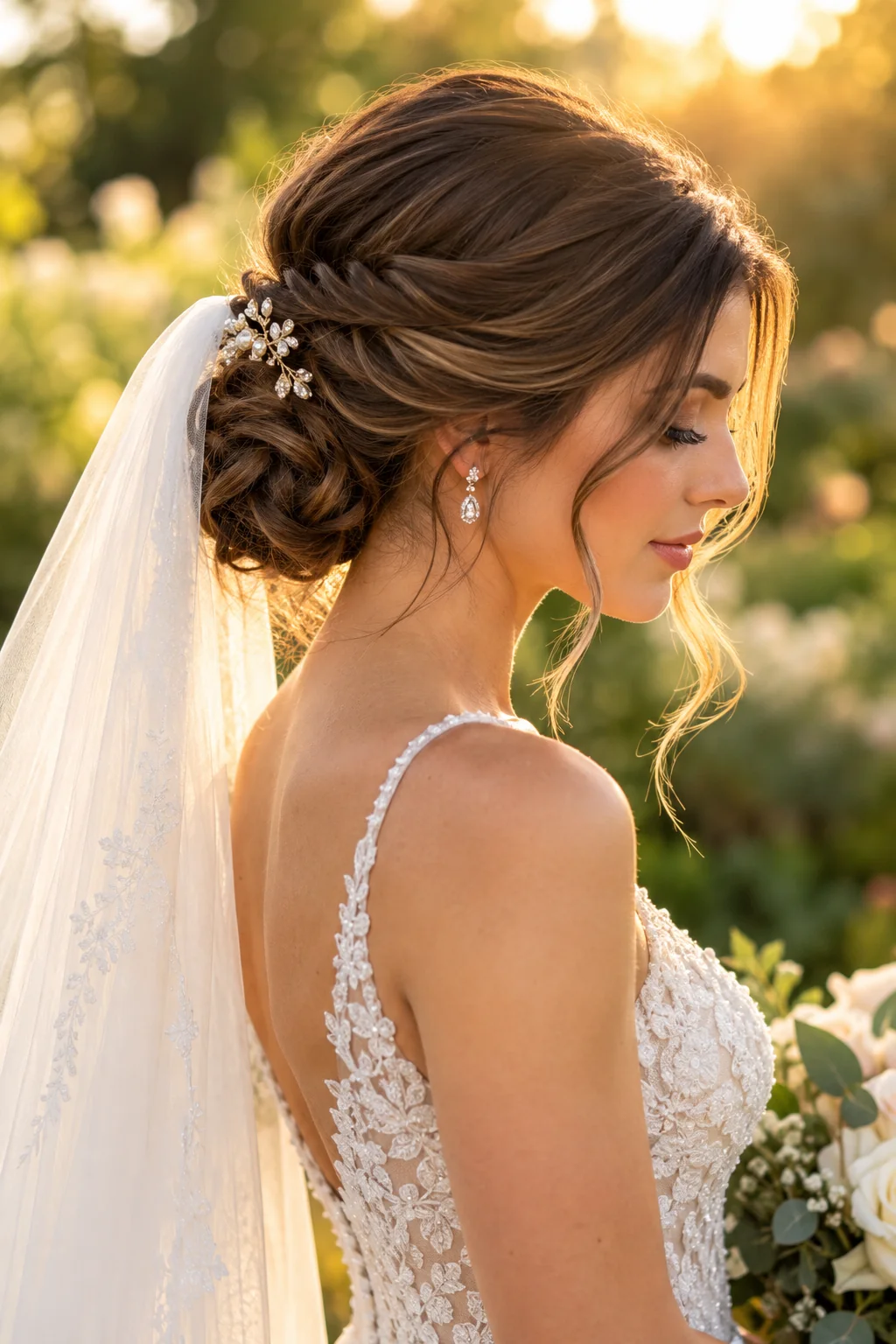
Long hair gives you the most style options of any length. But standing in front of a mirror six weeks before your wedding, staring at 200 Pinterest saves, does not feel like an advantage. This guide to bridal hairstyles for long hair cuts through the gallery overload by pairing each style with the practical details that actually matter: your hair texture, your dress neckline, your veil type, and what you need to say to your stylist so she gets it right on the first trial. Whether you are leaning toward a polished updo, a braided bun, a half up half down look, or loose romantic waves, you will leave with a clear shortlist of realistic options.
For a broader starting point before narrowing your options, browse long hairstyles to see what works at your length before moving into bridal-specific variations.
How to Choose a Bridal Hairstyle by Hair Type and Face Shape
How to Choose a Bridal Hairstyle by Hair Type and Face Shape
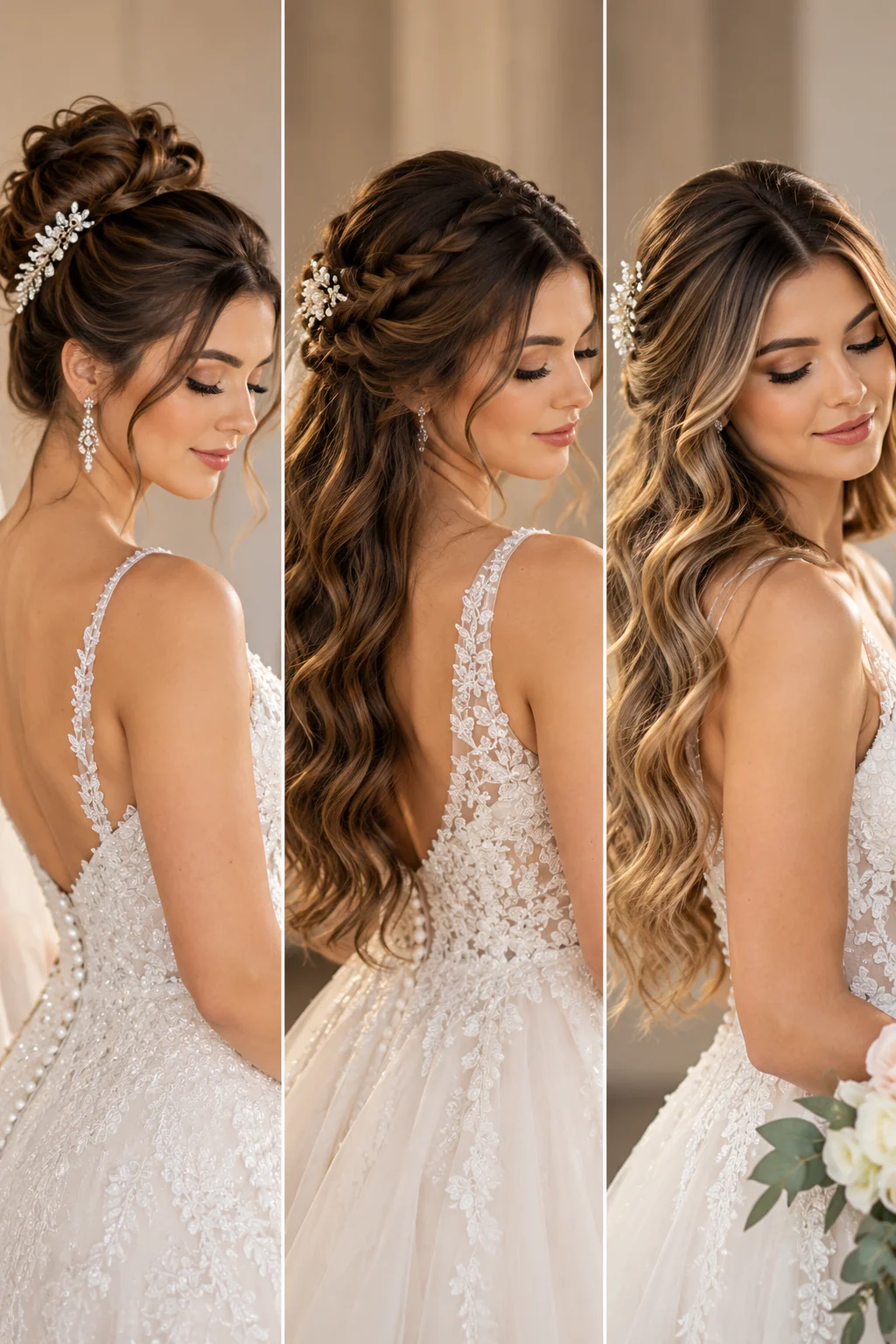
Before you fall in love with a specific style, run it through two quick filters: your hair texture and your face shape. These two factors will cut half your shortlist before you ever step into a salon, which saves you money on unnecessary trials and time on styles that will not behave the way the photo suggests.
Hair texture. Fine or thin hair holds updos best when you add texture with dry shampoo before pinning; freshly washed fine hair is too slippery to grip pins for more than a few hours. Thick hair handles heavy braids and voluminous buns well but needs strong-hold product at the root to prevent loosening through a long reception. Naturally wavy hair is the easiest to work with for boho braids and loose updos because the natural texture adds grip and makes the style read as undone rather than messy.
Face shape. An oval face works with almost every style on this list, so the main filter shifts to dress neckline and veil type. A round face benefits from volume at the crown; updos and high half-up styles balance cheekbone width and create a longer visual line. A heart-shaped face looks most balanced with soft waves worn down or a low nape bun. A square face is softened by romantic curls, wispy half-up styles, or loose waves that gently frame the jaw.
Classic Updos and Buns — Styles 1 to 10
Classic Updos and Buns — Styles 1 to 10
Updos are the most durable option for outdoor summer ceremonies, humid destination venues, and four-hour receptions that involve real dancing. If holding power matters more than showing off your length, one of the ten styles below gives you the most options within the updo category. For braided variations within this category, the bridal braided updos guide covers styles organized by face shape and hair type.
1. Low Braided Chignon
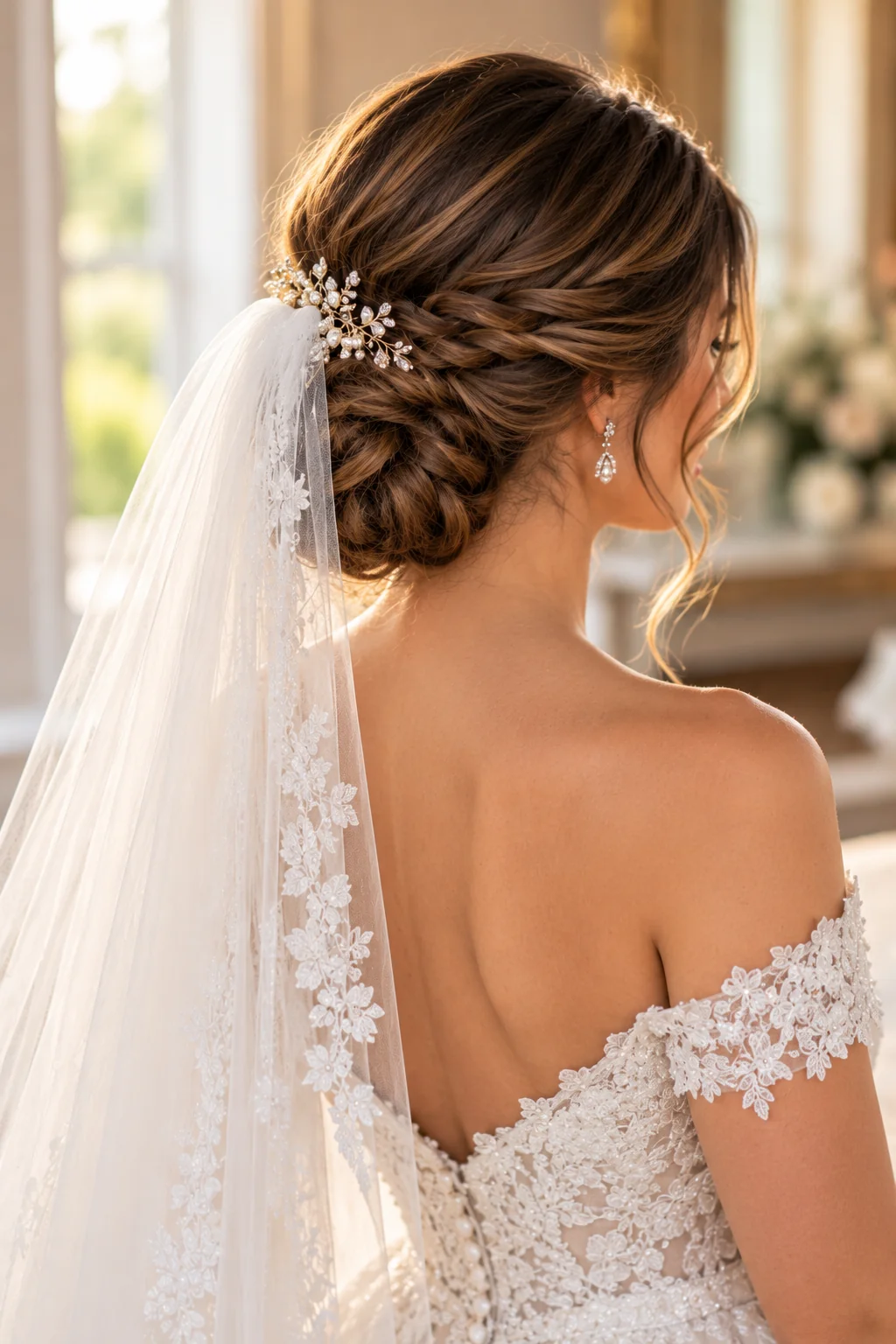
The low braided chignon is the single most requested bridal updo for a reason: it pairs beautifully with every neckline from strapless to off-shoulder, clears the back and shoulders completely, and the braided structure means it holds for twelve hours without slipping. Gather the hair at the nape, braid or twist the length before coiling it into the knot, and pin from the underside so no pins show on the surface. This works best on medium to thick hair in any texture, and it pairs naturally with cathedral or fingertip veils clipped just above the bun. Ask your stylist to insert the veil comb before the bun is fully pinned rather than after, which keeps the comb sitting flush without pulling the pin structure apart.
2. Romantic Twisted Chignon with Tendrils
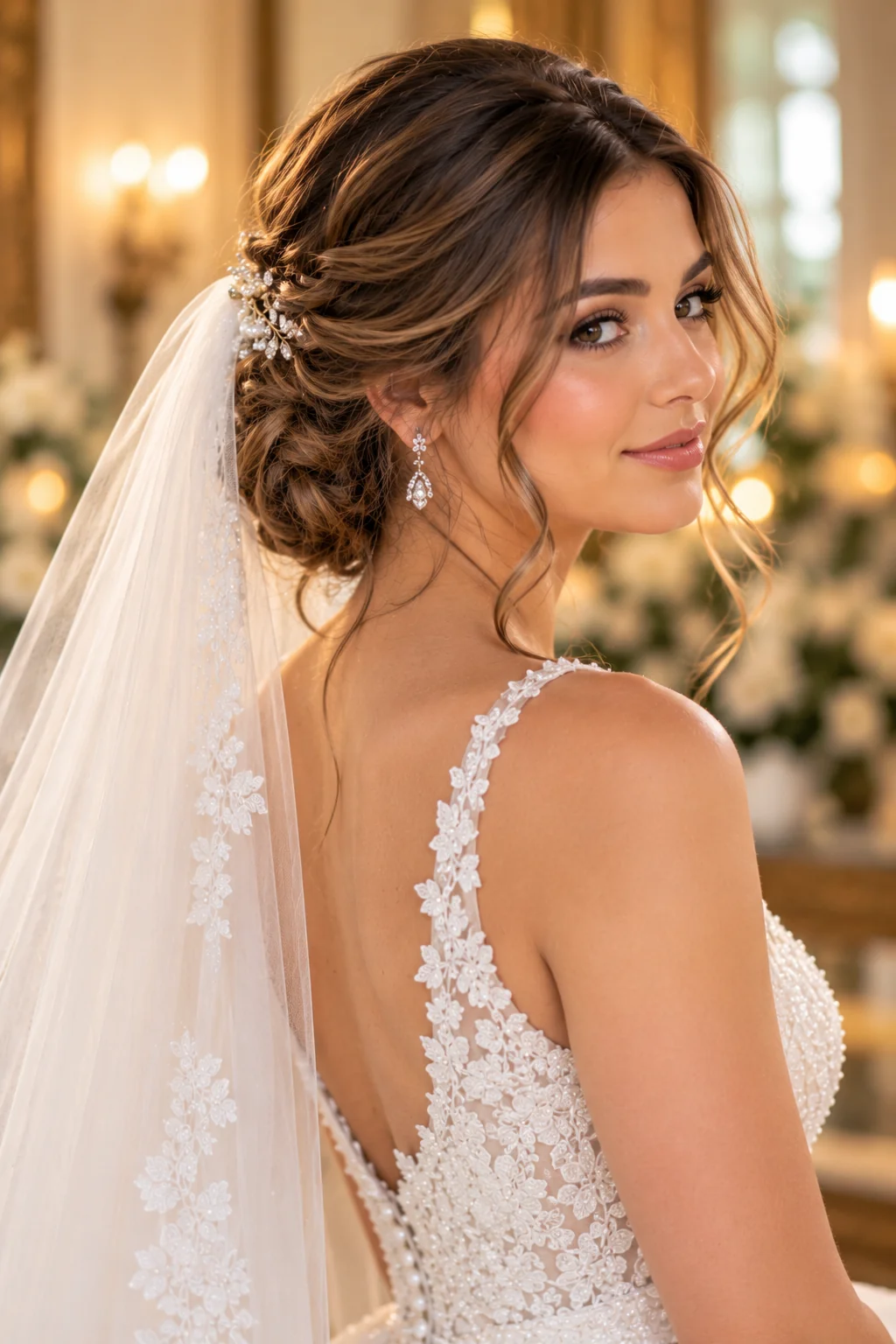
This version of the low chignon adds two or three deliberately pulled face-framing tendrils and a slightly looser knot that retains intentional softness rather than a perfectly tight finish. The tendrils transform a formal updo into something that reads as effortlessly romantic, and the soft knot suits any bride who wants updo durability without the architectural rigidity of a polished bun. Fine to medium wavy hair suits this best, and it pairs well with blusher veils or short veils rather than long cathedral styles, because the loose tendrils can compete visually with a very long dramatic veil. Run a flat iron over the tendrils to give them a gentle bend rather than a full curl, which holds longer and reads more modern throughout the day.
3. Sleek French Twist
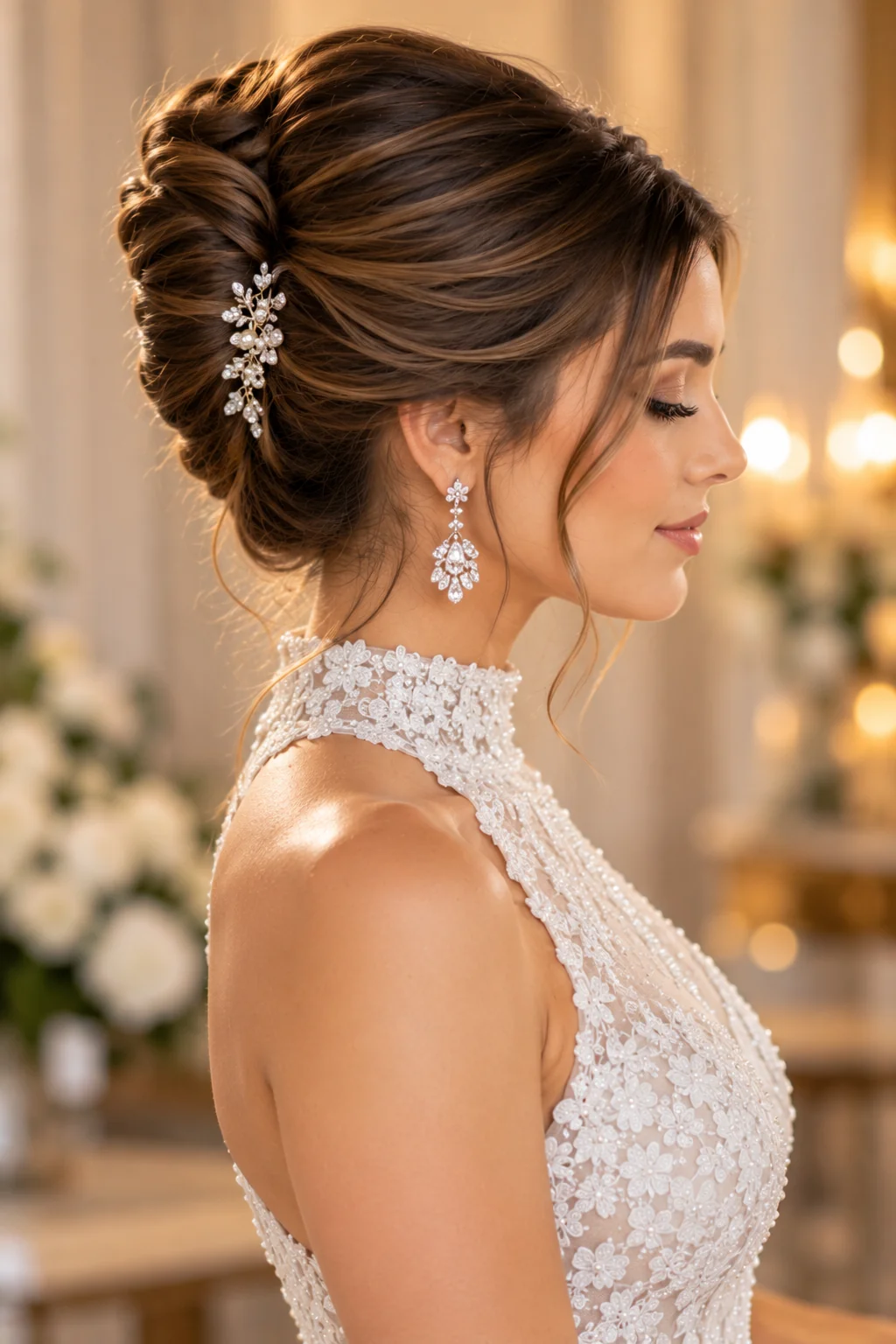
The French twist is a vertical updo that folds all the hair into a smooth column at the back of the head, creating a clean, elongating silhouette that works especially well for high-neck, boat-neck, and square-neck gowns where a low chignon can feel visually heavy at the nape. It requires strong-hold product through the length before twisting and a row of pins running vertically up the center to lock the twist in place. Straight or heat-smoothed hair in fine to medium density gives the cleanest finish, and the style is particularly striking with a dramatic chandelier earring on each side since the exposed neck and ears become a focal point. This is salon-recommended for the cleanest result; ask your stylist to smooth each section before folding rather than attempting to smooth the full twist after it is formed.
4. Polished Ballerina Bun
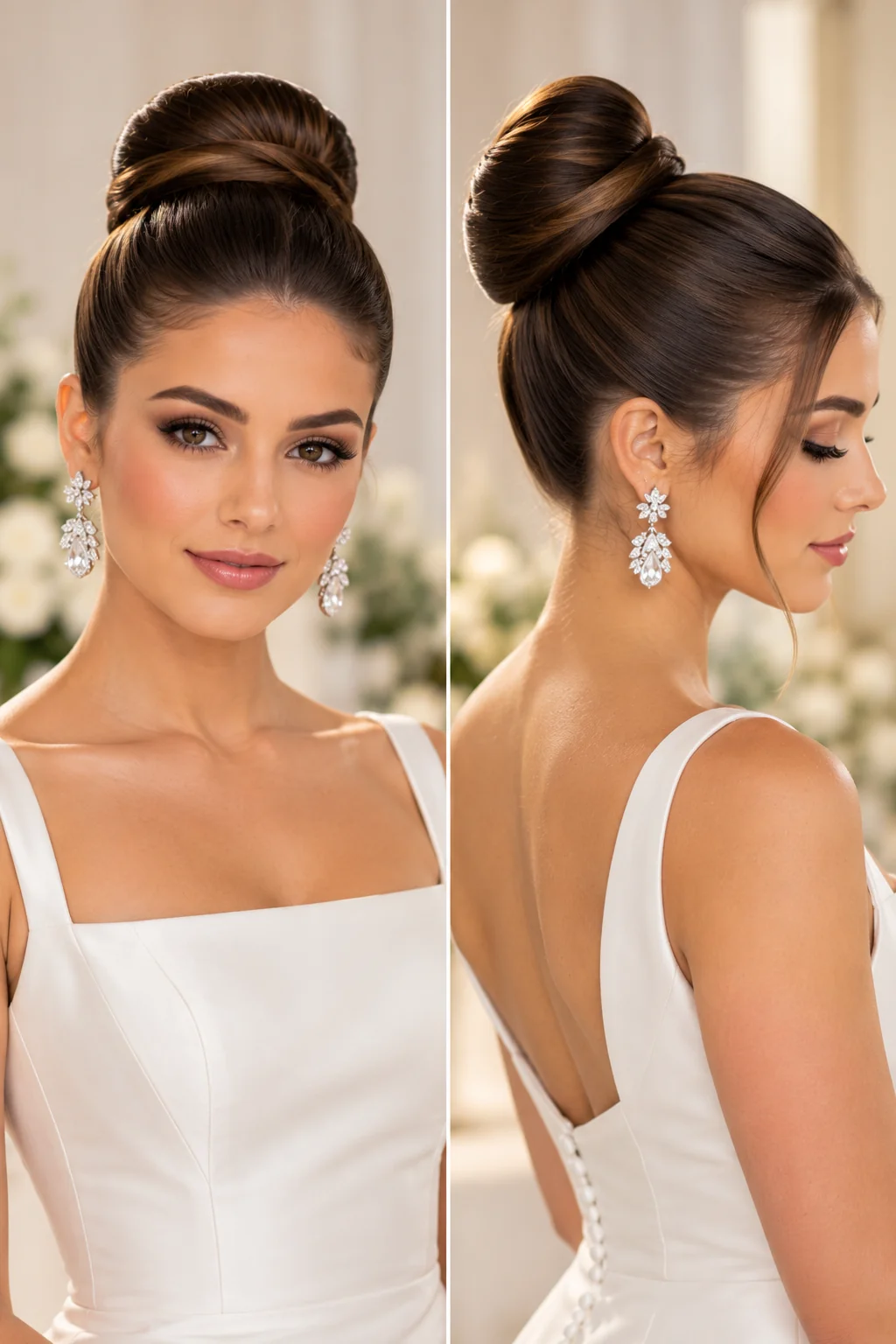
A high, smooth ballerina bun positioned at the crown creates the most elongating silhouette in the entire updo category and pairs naturally with simple sheath gowns and mermaid silhouettes where the styling is meant to be precise and architectural rather than soft or romantic. Smooth the hair into a high ponytail first, wrap the length into a neat bun, and secure with pins pushed inward rather than outward so the surface stays completely smooth. Fine or medium straight hair suits this best, and the exposed neckline and ears make this the strongest choice for brides who want to showcase dramatic earrings or a statement necklace as the primary accessory. A sleek ballerina bun holds best on clean, freshly washed hair rather than second-day hair, because the scalp needs to be fully smooth at the base for the bun to sit cleanly without bumps showing through.
5. Messy Bridal Updo
The messy bridal updo deliberately skips the precision of a polished chignon in favor of a looser, tousled structure that looks effortlessly undone while still holding all day. Divide the hair into loose sections, twist and tuck them at random intervals, and use enough pins to secure the structure without taming the natural escape of strands. This works for any hair type and is particularly satisfying on thick or naturally wavy hair that adds volume and body to the loose form; very fine hair may need a volumizing spray before pinning to create enough texture for the tousled shape to read clearly. It suits a garden ceremony, boho wedding, or any setting where a perfectly polished look would feel too formal for the atmosphere. Build the structure with setting spray worked section by section during construction rather than misted over the finished style, which seals the hold from the inside and gives each tucked section significantly more staying power.
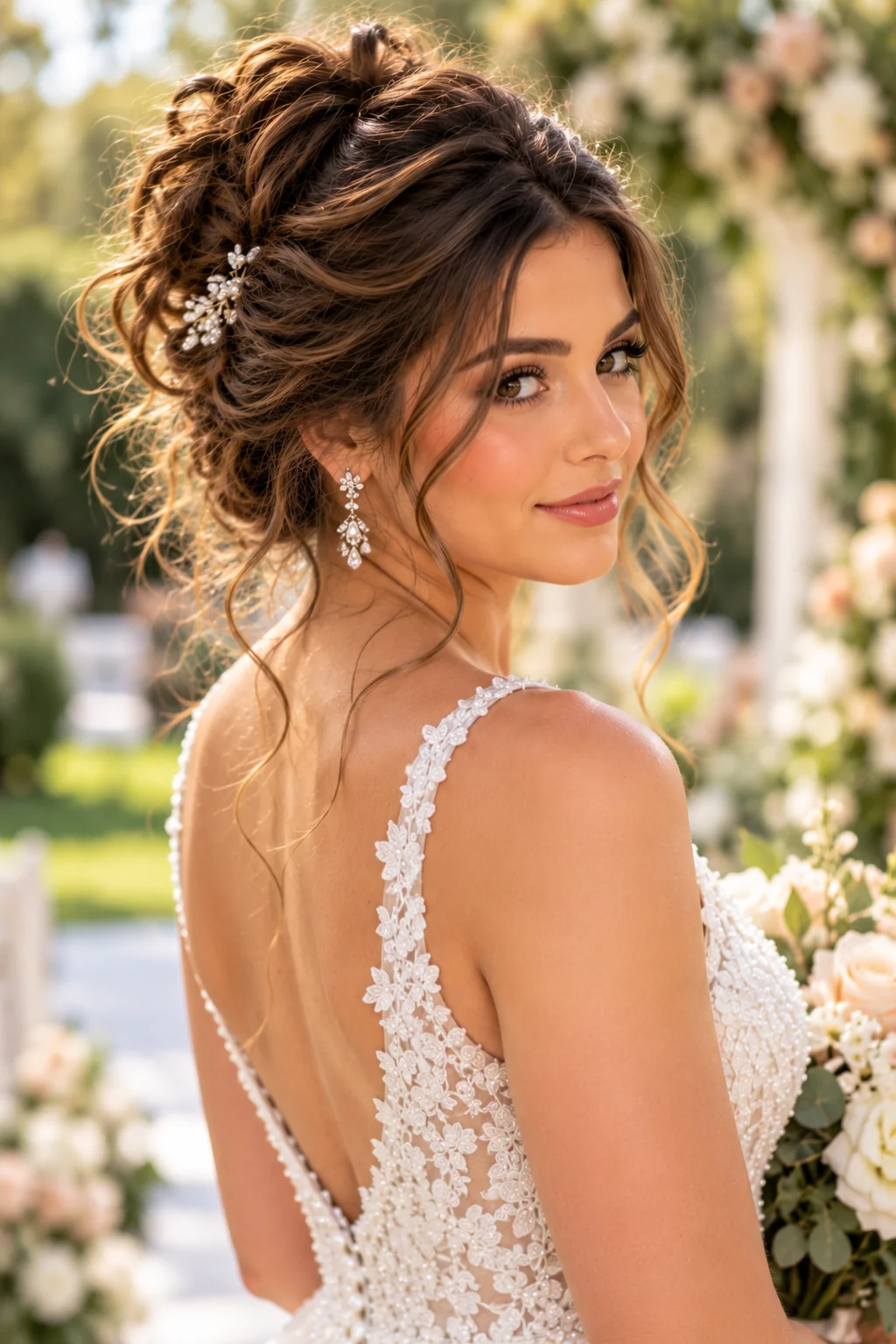
6. Knotted Low Bun with Pearl Pins
A knotted low bun takes the gathered chignon and builds it from two or three twisted sections knotted loosely together at the nape rather than coiled into a single unit, creating a more textured and dimensional surface than a smooth bun produces. Pearl pins placed throughout the knot structure catch light and serve as decoration without requiring any additional accessories, which keeps the style feeling elegant without overdone. Medium to long hair in any texture works here, and the style pairs naturally with lace or sheer gowns where the overall aesthetic calls for a delicate, romantic detail rather than a bold statement. Scatter the pearl pins in clusters of two and three rather than distributing them evenly across the surface, because irregular placement reads as deliberately styled while even distribution can look mechanical.
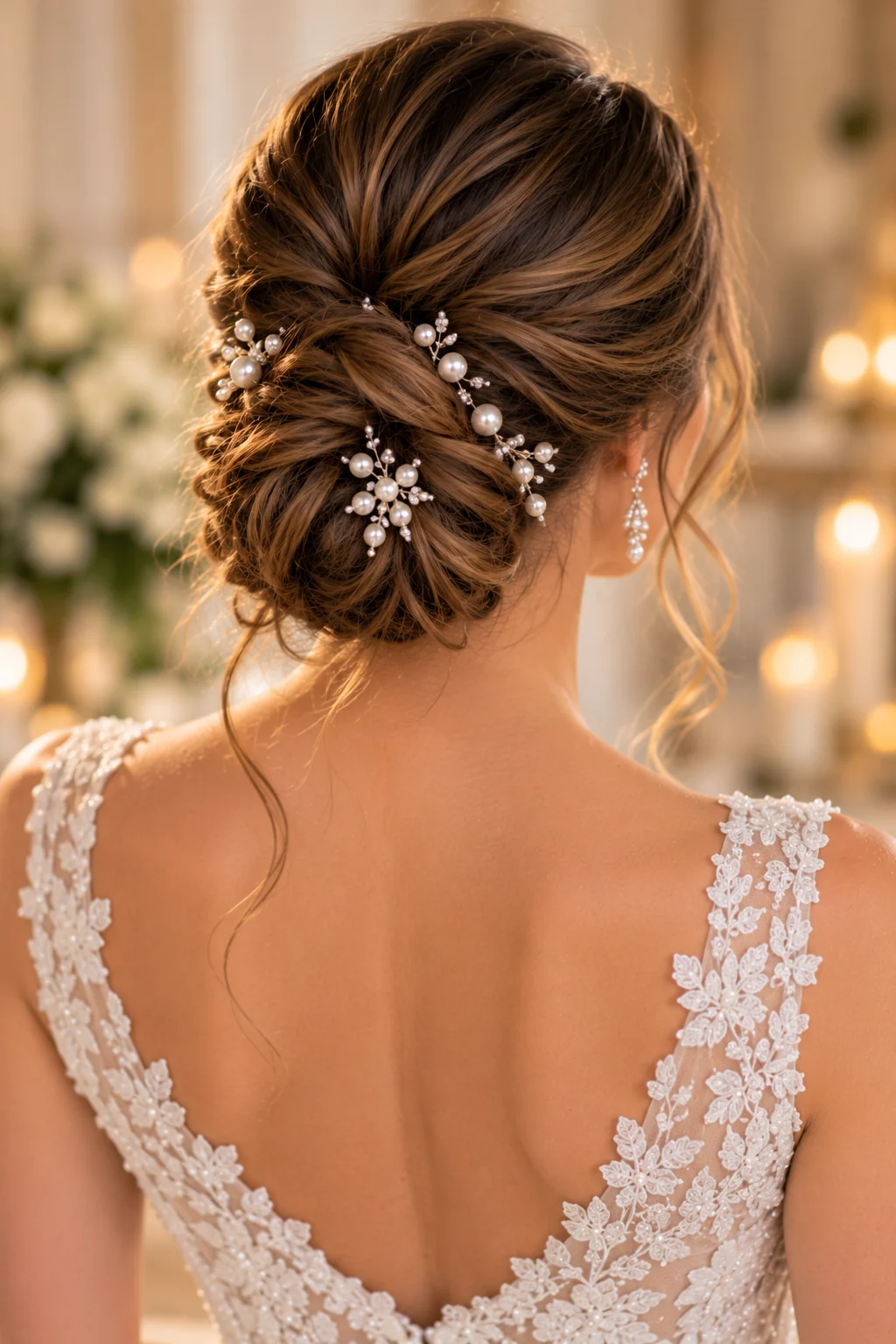
7. Rolled Chignon with Cathedral Veil
The rolled chignon, sometimes called a classic pageant bun, wraps all the hair in a single continuous roll pinned flat against the nape or the back of the head, creating a retro-inspired silhouette that pairs naturally with dramatic cathedral veils and ballgown silhouettes. The rolled structure gives the veil a wide, smooth surface to attach to, which means the veil drapes evenly without bunching at one side. Fine to medium straight hair gives the cleanest roll; thick hair may need to be divided into two sections before rolling to keep the final shape from becoming too bulky. Ask your stylist to tuck the end of the roll under and pin it on the inside rather than crossing the tail over the surface, which gives the finished style a polished, seamless finish visible from any angle on the day.
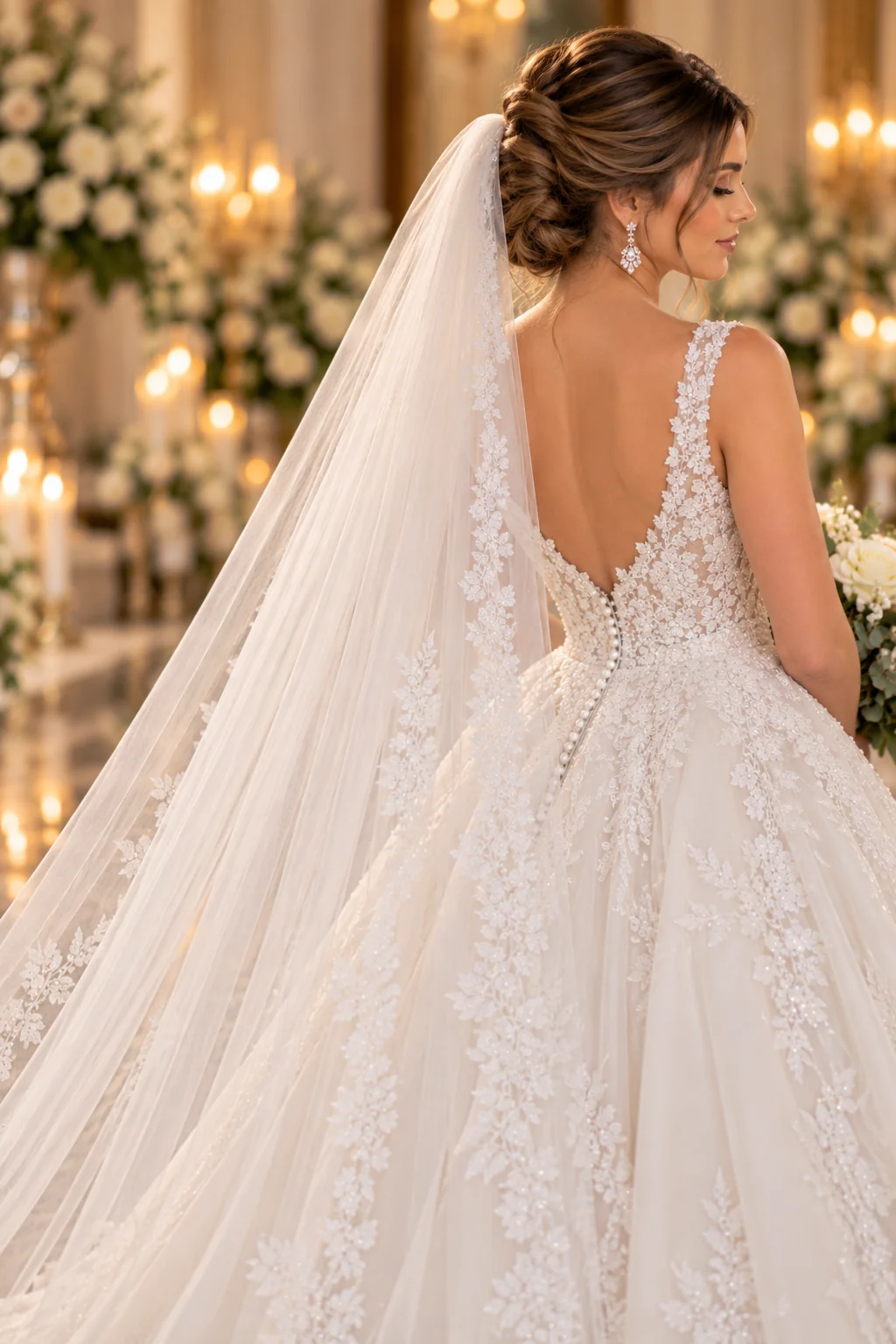
8. Sleek High Bun
The sleek high bun is a modern, minimalist alternative to the ballerina bun: slightly lower in position, less perfectly round in shape, and often left with a very subtle surface texture rather than a fully lacquered finish. It suits contemporary gown silhouettes and brides who want a polished updo that reads current rather than traditional. Straight or heat-smoothed hair in any density works here, and the exposed neck makes this a natural pairing for dramatic drop earrings or a delicate hair comb placed at the bun's base. Smooth the hair from root to tip with a light serum before pulling it up, which controls surface frizz without weighing the bun down and prevents the high ponytail base from puffing during a long reception.
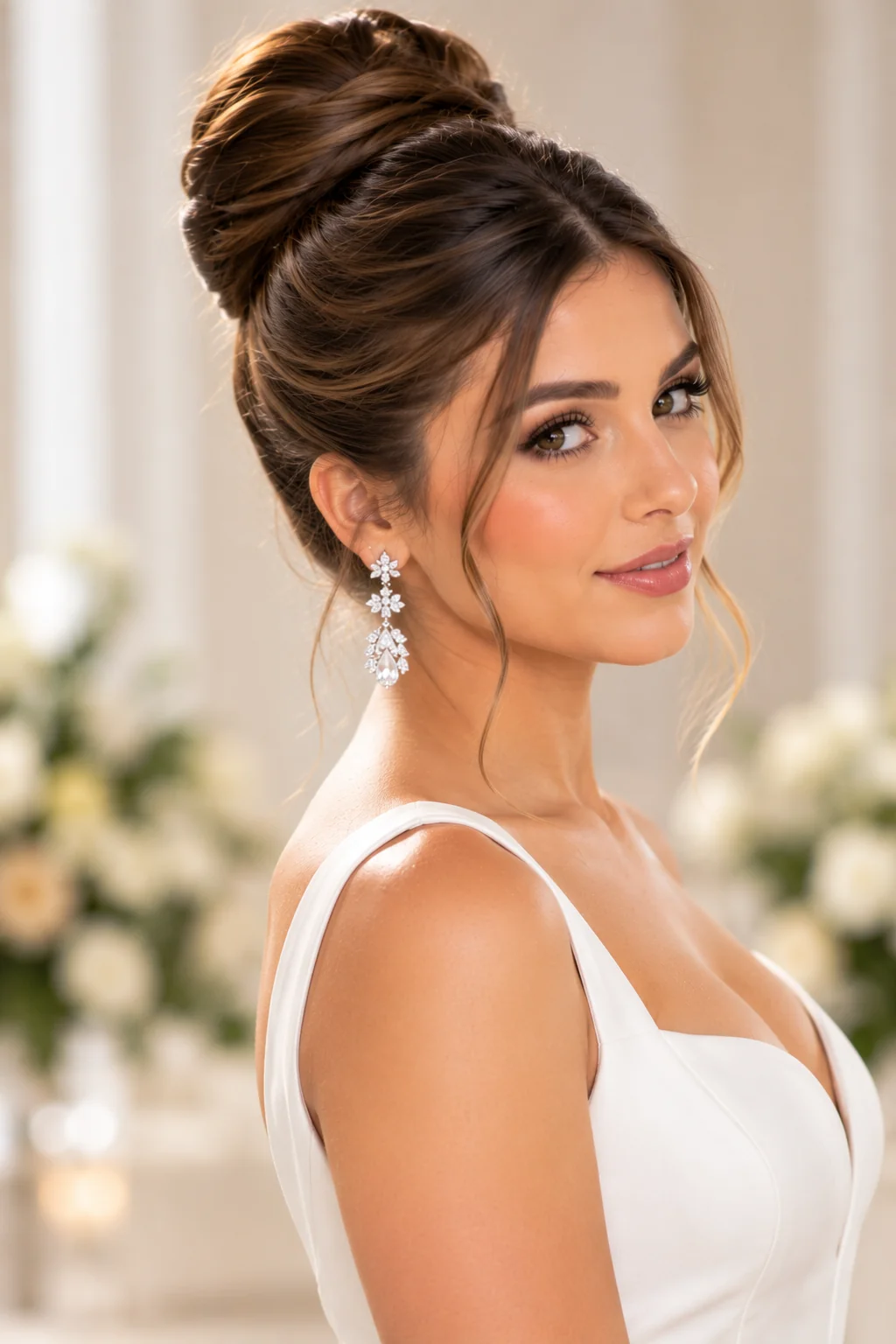
9. Textured Loose Updo
A textured loose updo uses multiple twisted or pinned sections arranged freely at the back of the head, with visible gaps between sections and intentional imperfection built into the shape. It is the middle ground between a structured chignon and a messy bun: more considered than the latter and more relaxed than the former. Wavy or naturally textured hair in medium to long lengths produces the best results because the existing texture reduces the amount of product and effort needed to make the loose sections read as intentionally styled rather than unfinished. This is a strong choice for outdoor or destination weddings where a very polished updo would soften over the course of a long day outdoors; the textured loose updo looks correct at every stage of the day, from freshly pinned at the ceremony to naturally loosened at the reception.
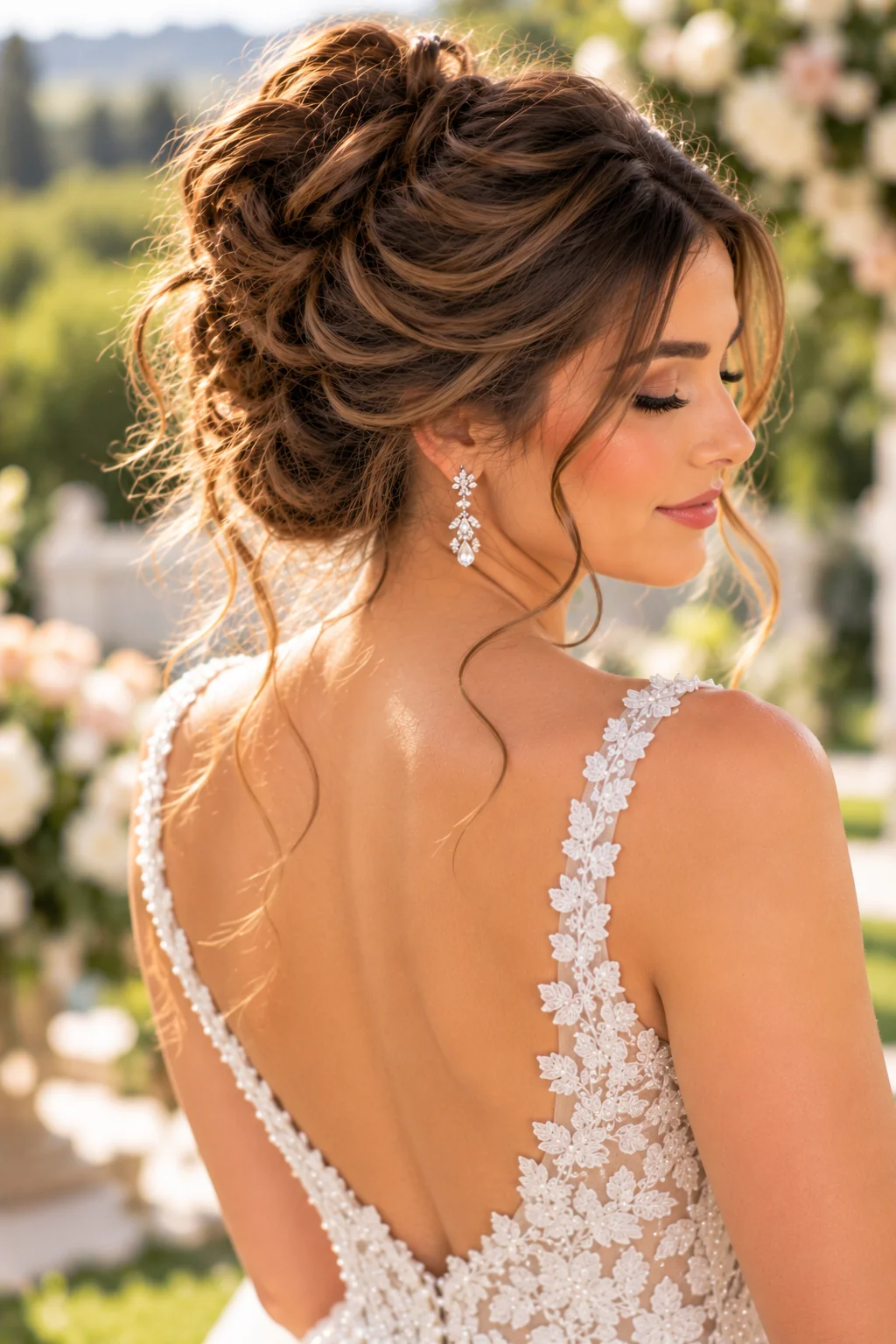
10. Sleek Polished Updo for Structured Gowns
A sleek polished updo with no loose pieces and no face-framing tendrils is the natural pairing for a high-neck or boat-neck gown, where stray pieces would look accidental rather than intentional. It also creates a clean, uninterrupted line at the back of the head that allows a cathedral or chapel veil to attach without competing with loose strands. This style requires fine-to-medium straight hair or thick hair that has been heat-straightened before pinning; if your hair is very thick or coarse, build extra time into the morning timeline for your stylist to smooth the base before constructing the updo shape. Use a fine-tooth comb and a strong-hold gel through the base to flatten every strand before pinning, which prevents the base from puffing and pushing the pins loose mid-reception.
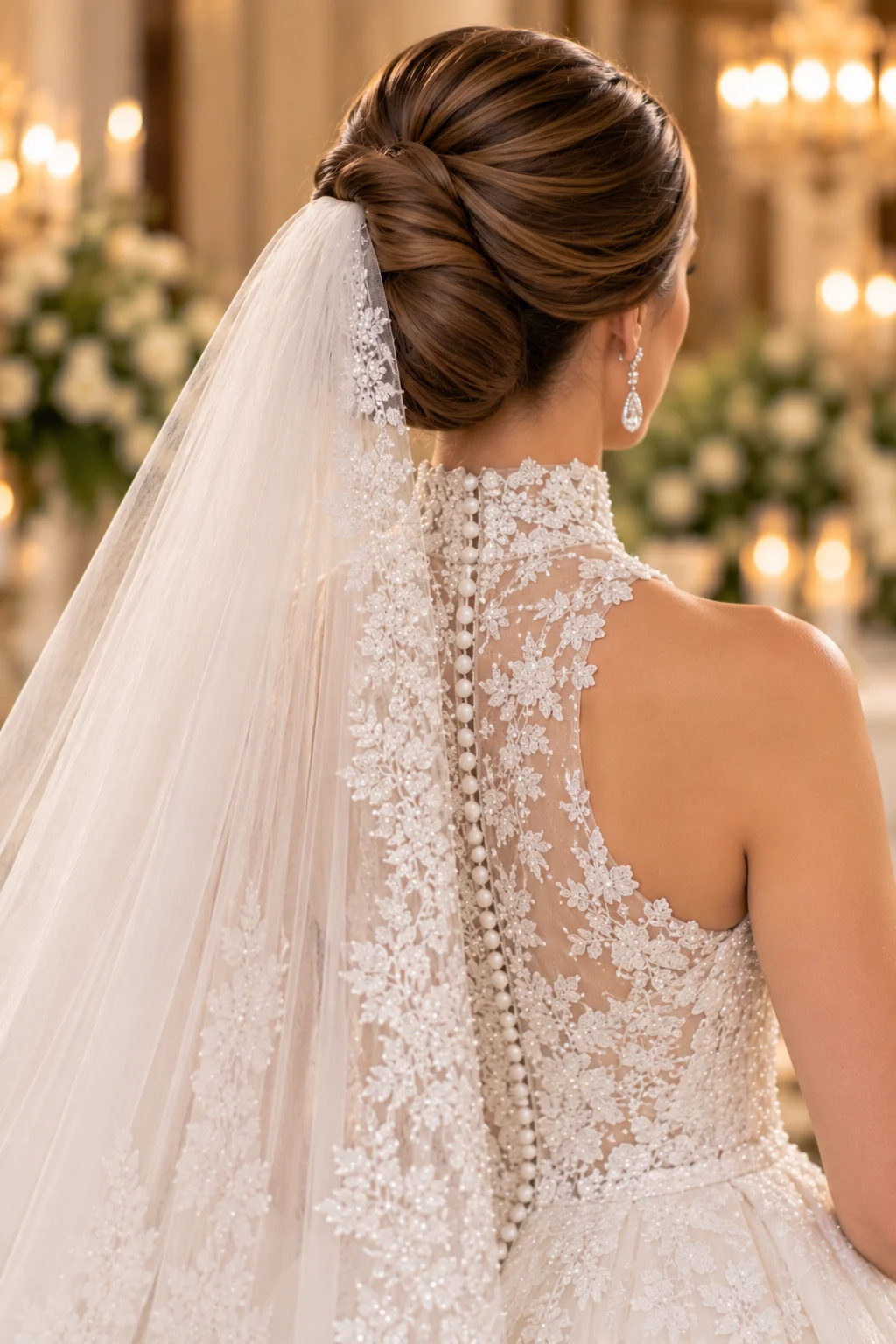
Half-Up Half-Down Bridal Styles — Styles 11 to 18
Half-Up Half-Down Bridal Styles — Styles 11 to 18
The bridal half-up half-down style is the most requested wedding hair look, and it earns that ranking honestly: it keeps hair off the face for ceremony and portrait photos while still showing the length you have grown or maintained. The eight variations below each come with specific veil, accessory, and dress neckline notes.
11. Soft Half-Up with Loose Waves
The soft half-up with loose waves works with every neckline from strapless to high-neck because the gathered section at the crown adds a focal point without changing the silhouette at the shoulders. Curl the full length first, then gather and pin the top half loosely so it blends with the waves below rather than sitting as a separate distinct section. It pairs well with blusher veils and birdcage veils, both of which attach naturally at the crown right where the gathered section sits and stay secure without pulling the style apart. Fine-to-medium hair suits this variation best, especially when the top section is built with a texturizing spray before gathering, which prevents it from sliding down during a long reception.
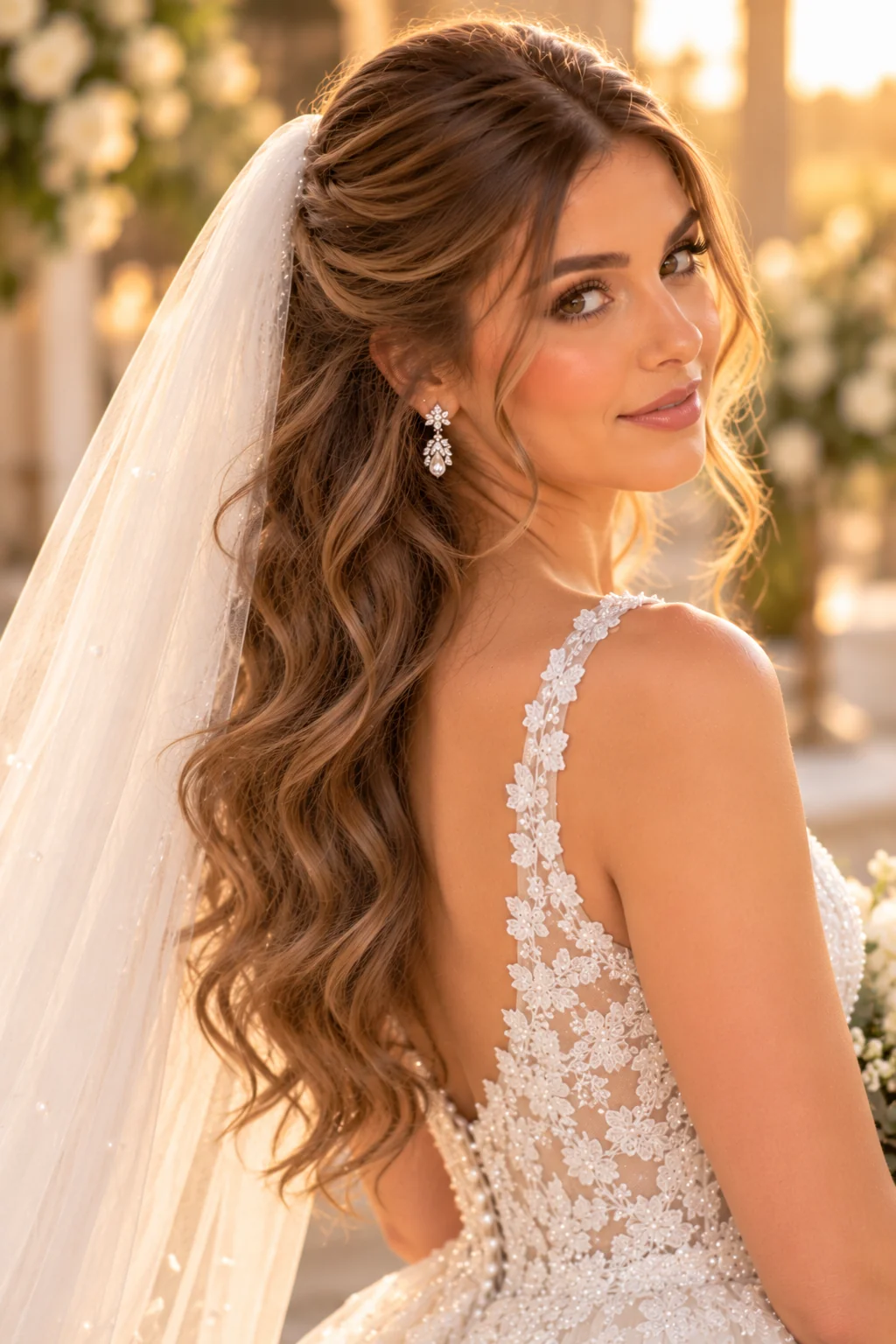
12. Braided Crown Half-Up
A braided crown half-up takes the gathered top section and replaces the pin with a crown braid that runs from temple to temple, creating a structured hold that keeps the top section firmly in place through dancing and outdoor movement. The braid also provides a natural ledge for accessories like pearl pins and small floral stems, which tuck into the braid texture without needing extra pins to stay in place. Wavy-to-naturally textured long hair produces the best braided crown because the texture adds grip and makes the braid look lived-in rather than stiff. Braid each side loosely and then stretch the braid gently lengthwise before pinning it to create the full, pillowy crown shape rather than a flat, narrow strip.
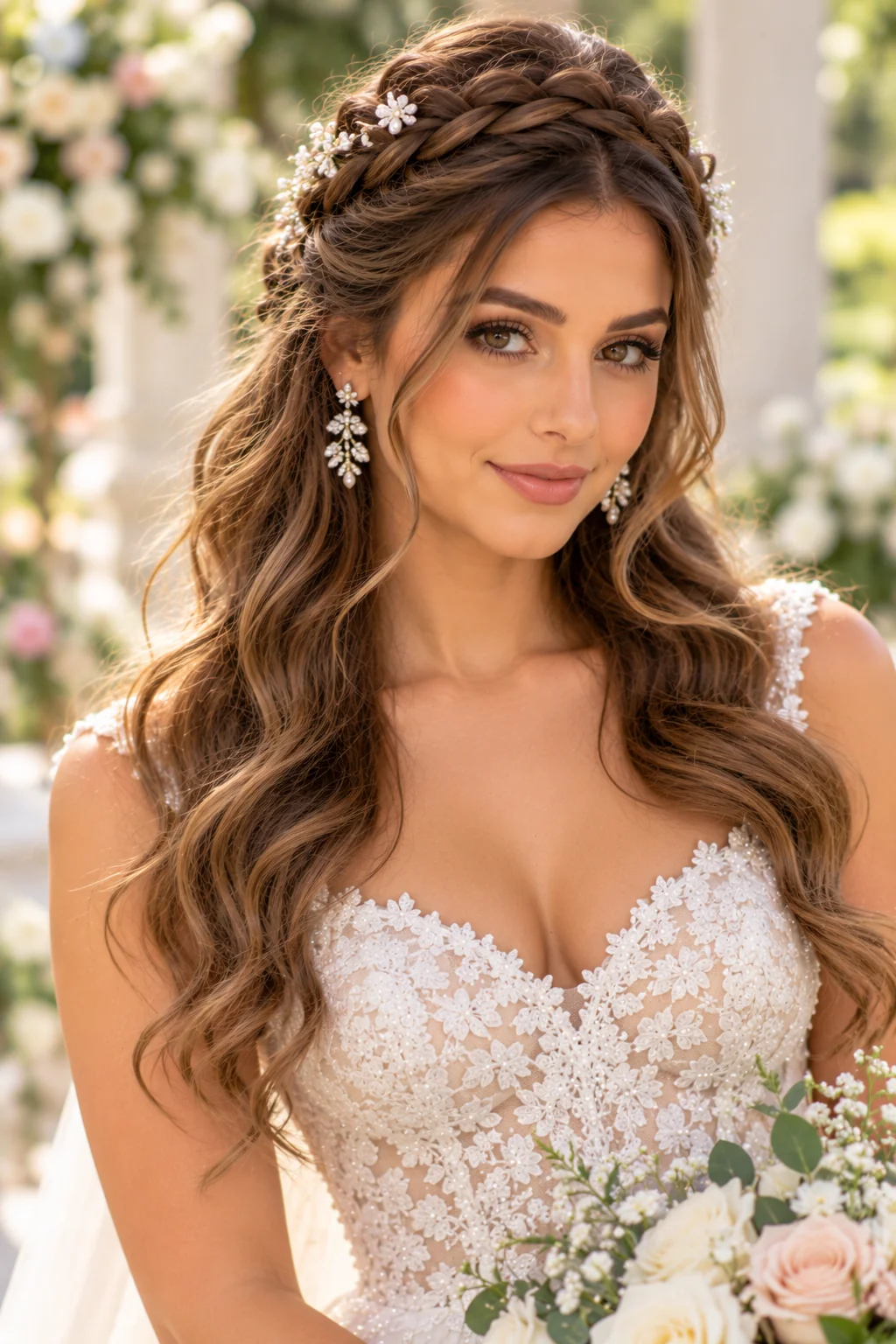
13. Waterfall Braid Half-Up
A waterfall braid runs horizontally across one side of the head and releases strands downward through the braid rather than crossing them in, creating an elegant cascading detail at the crown that reads intricate without requiring an updo. The top section is partially held back by the braid while the rest of the length flows freely, which gives this style the romance of a down look with the face-clearing structure of a half-up. Straight or lightly wavy hair in medium to long lengths gives the clearest and most defined waterfall effect, and it suits a formal dinner or elegant garden ceremony. Practice the waterfall technique at least once before the day of the event because the motion of releasing one strand and picking up a new one takes a few repetitions before the tension stays consistent.
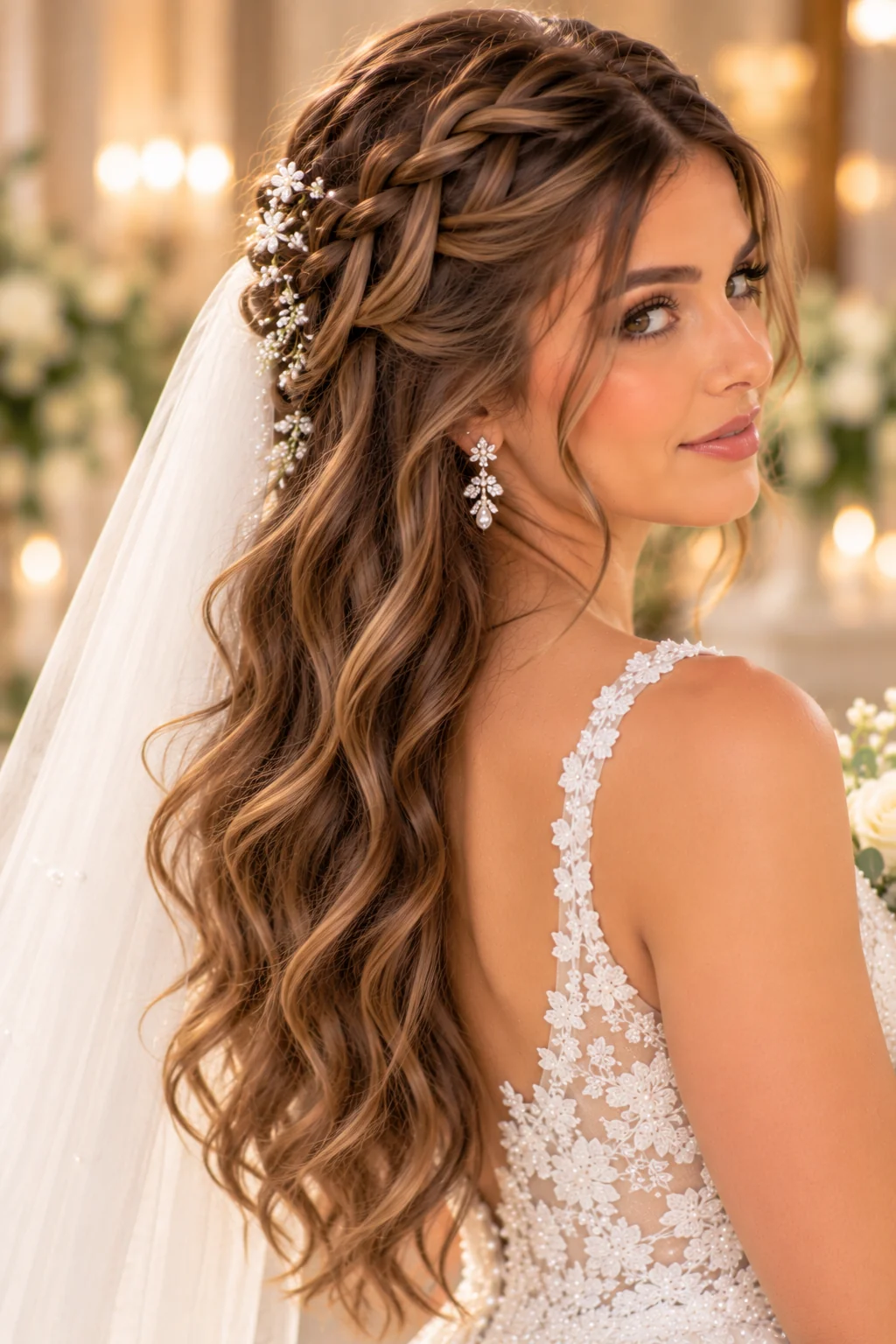
14. Twisted Half-Up with Sparkle Pins
Two sections gathered from each side of the head, twisted back and secured together at the crown with sparkle pins, create a simple and immediately festive half-up that works for any bride who wants shimmer in her hairstyle without committing to a full accessory piece. The twist adds structure and visual interest beyond a basic gathered half-up, and the sparkle pins function as both structure and decoration. Any hair type in medium to long lengths works here, and the style pairs naturally with a simple side comb or a small veil rather than a full tiara, because the sparkle pins provide enough accessory detail on their own. Use pins with different head sizes — some small, some large — for a more collected, editorial feel rather than a row of identical pins.
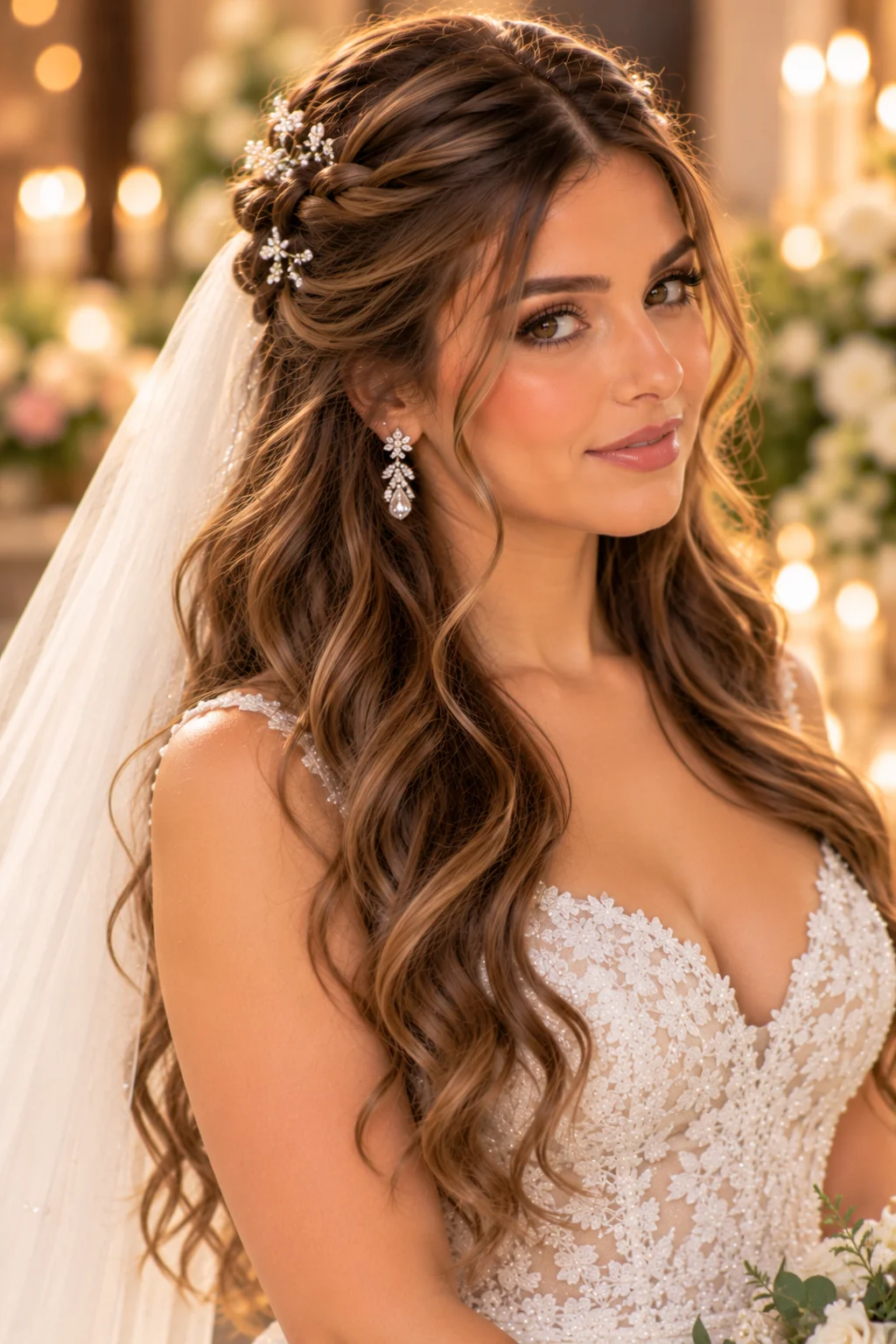
15. Half-Up with Tiara
A tiara belongs above the gathered section at the crown, secured into the body of the pinned hair, not placed on top of loose flowing hair where it will have nothing to anchor into. The soft gathered half-up provides the perfect structure for tiara placement because the pinned section gives the tiara's comb teeth something to grip firmly through ceremony and reception. Medium to long hair in any texture works here, and the height of the tiara makes this naturally flattering for round or square face shapes by drawing the eye upward. Ask your stylist to place the tiara during the trial while the style is already set, not after, so she can adjust pin placement specifically to support the tiara's comb position without disturbing the overall shape.
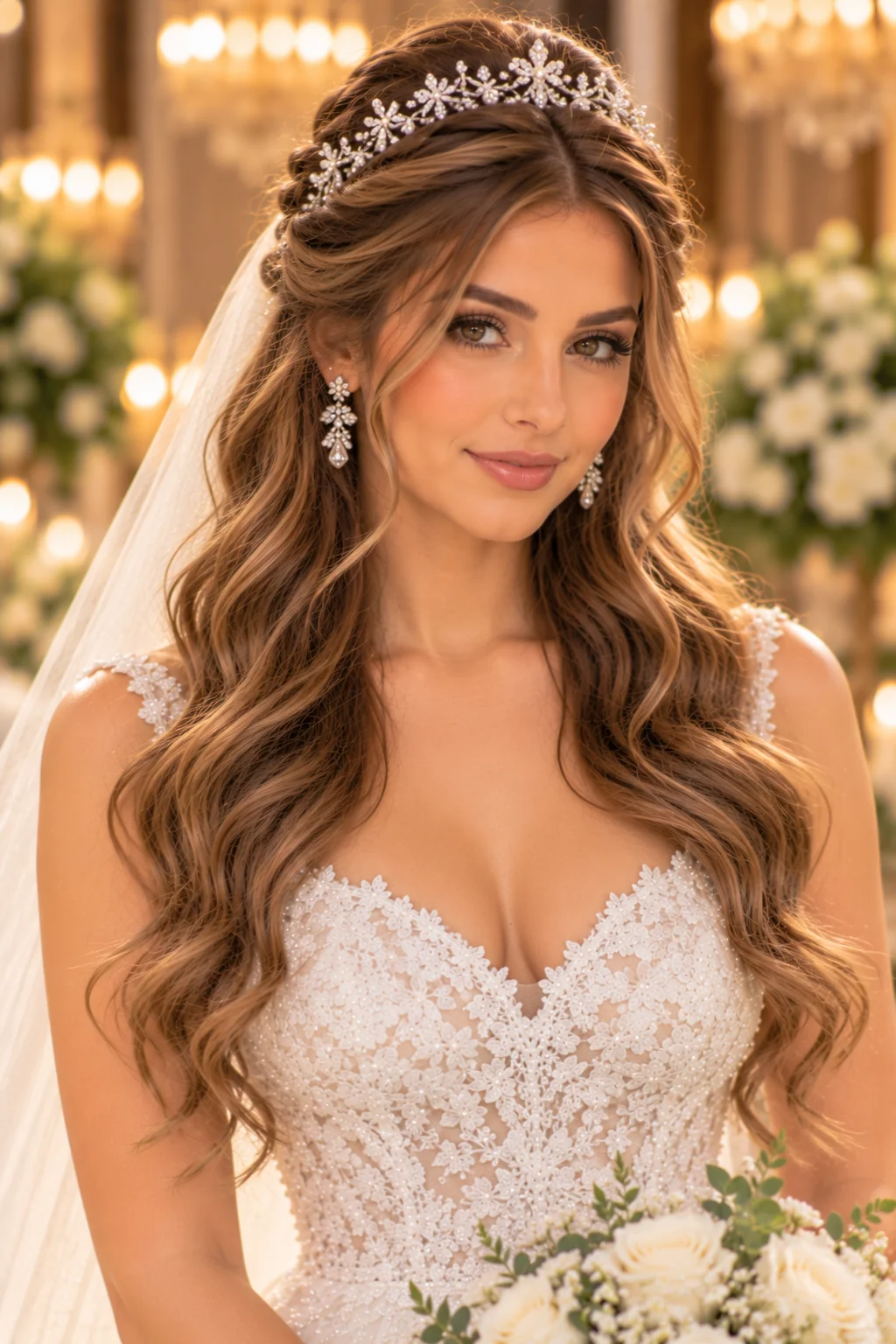
16. Half-Up with Pearl Headband
A pearl headband positioned just behind the hairline replaces the gathered pin in this variation, allowing the hair behind the band to flow freely while the band itself provides the face-clearing structure of a traditional half-up. The headband reads as a modern, clean alternative to pins and clips, especially on brides who want a minimal accessory with a contemporary feel. Fine to medium straight hair works best because the band lies smoothly against a polished surface; very thick or curly hair may cause the band to sit unevenly. Slide the band into place before applying any finishing spray so the product seals it against the hair and prevents it from shifting during the day.
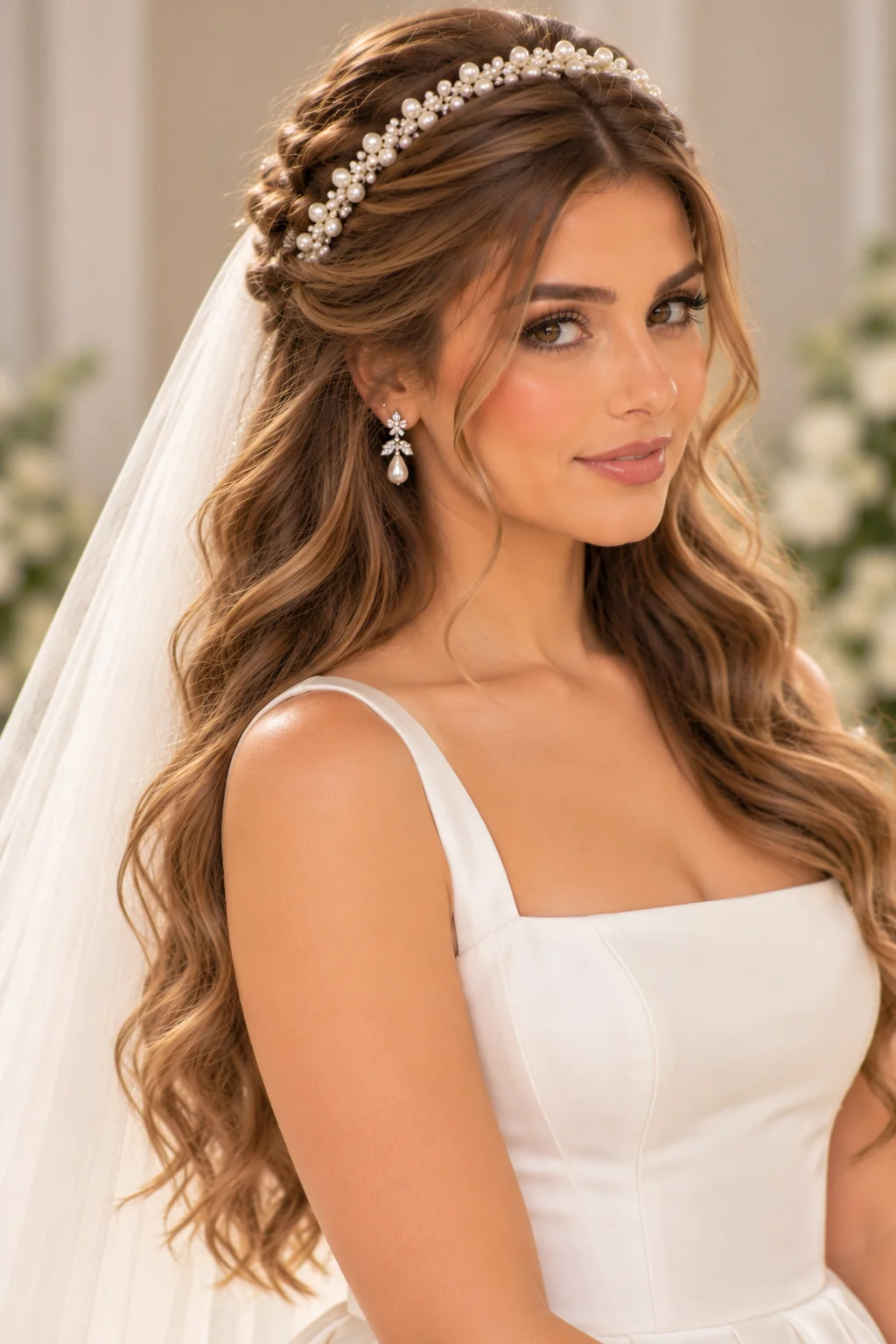
17. French Braid Half-Up with Curls
A French braid starting at the crown and secured midway down the back holds the top section firmly in place while the remaining curled length flows freely below the secured point. The French braid base is one of the highest-hold half-up structures available, which makes this the strongest choice for outdoor summer weddings where high humidity and heat tend to loosen pinned half-up styles faster than braided ones. Any hair type works here, and the style pairs naturally with a cathedral veil clipped below the braid's end point so the veil falls over the loose curls without interfering with the braid's visual line. Apply a anti-humidity finishing spray over the curls as a final step so the loose lower section stays defined rather than expanding in warm outdoor air.
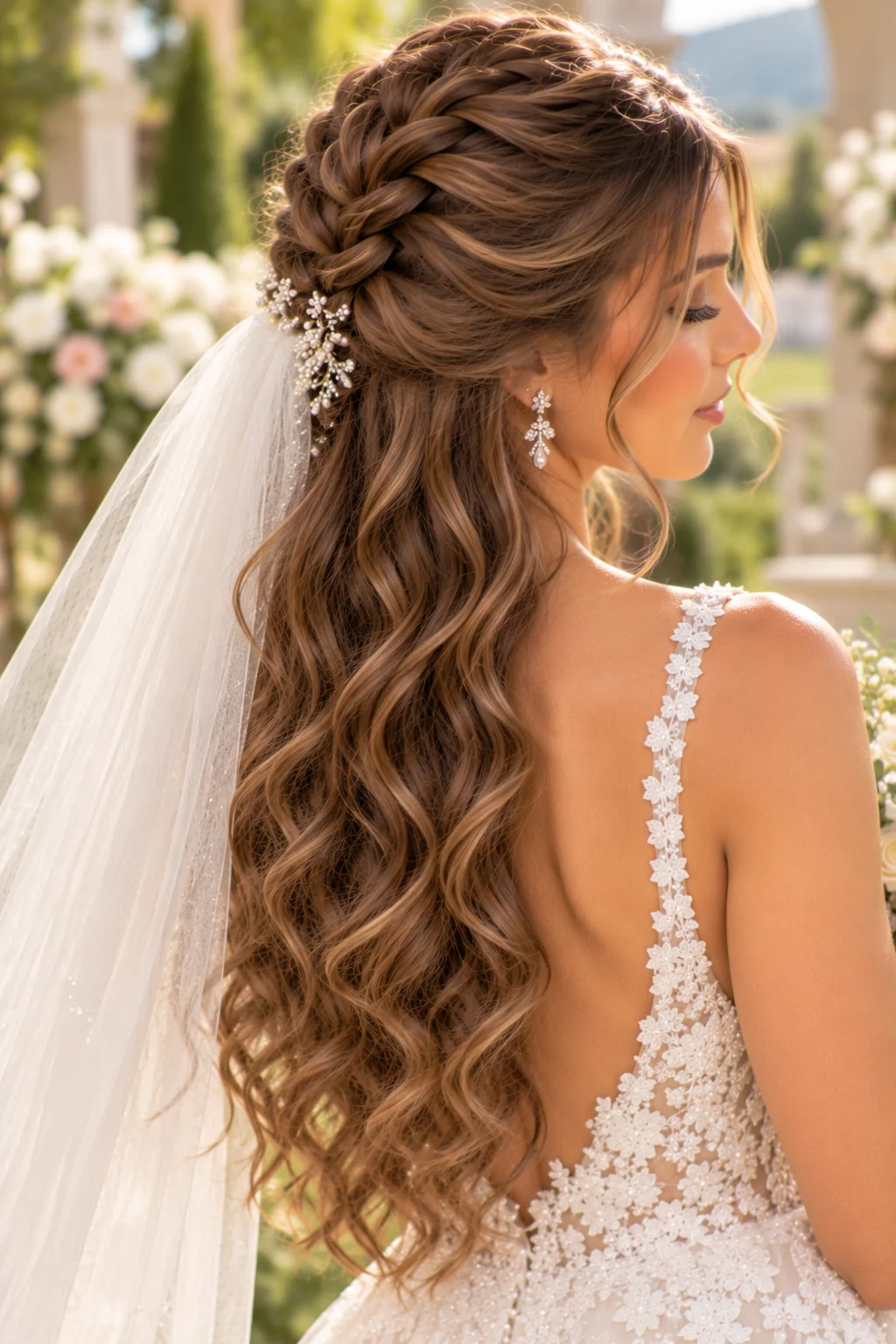
18. Boho Half-Up with Flower Crown
Gathering the top half loosely and securing it with a simple elastic hidden beneath the flower crown creates the base structure for the most relaxed and festival-influenced half-up on this list. The flower crown provides both the decoration and the hold at the crown, which means you need fewer pins underneath and the style has a lightweight, unfussy feel appropriate for a garden ceremony or outdoor destination wedding. Wavy or naturally textured hair produces the most effortlessly romantic version; very straight hair benefits from a light wave created with a one-inch curling iron before adding the crown to prevent the lower section from looking flat against the loose upper section. Choose dried or silk flowers over fresh blooms if the wedding takes place in summer heat, because fresh flowers begin to wilt after a few hours in warm outdoor conditions.
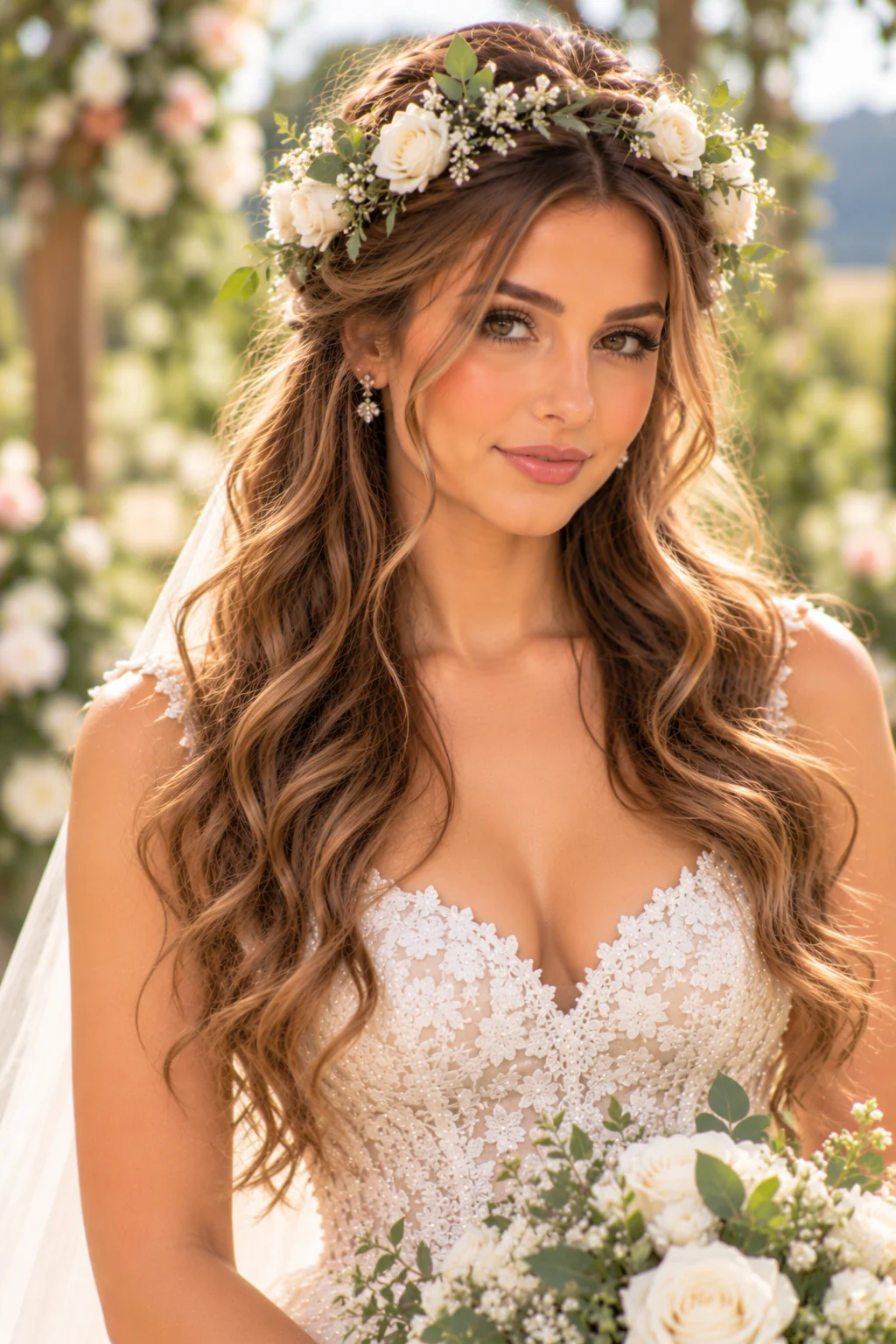
Braided Bridal Hairstyles — Styles 19 to 30
Braided Bridal Hairstyles — Styles 19 to 30
Braids are the most versatile structural element in the entire bridal category. They work as a complete style, as the foundation of an updo, or as a single detail that lifts otherwise simple waves. They also hold embellishments better than any other method, which makes them the natural pairing for pearl pins, fresh floral stems, and ribbon details. One practical note: braids on fine, freshly washed hair slip and unravel with movement. Prep your hair with a texturizing spray the morning of the wedding, or arrive with day-two hair so the strands have natural grip.
19. Halo Braid
Two braids wrapped around the head in opposite directions and pinned where they meet at the back create a complete halo or milkmaid crown that frames the face without any loose sections or a veil. This is the style where a fresh or dried flower crown sits most naturally, because the braid creates a ledge around the head that holds the crown evenly without extra pins. Medium to long hair in any texture suits this, and it fits a garden ceremony or a formal dinner when you want the effect of a crown without a rigid tiara. Braid each side starting from the hairline at the temple and working toward the back of the head, then pin the braids at the nape rather than trying to redirect them upward, which is far harder to execute cleanly without a second pair of hands.
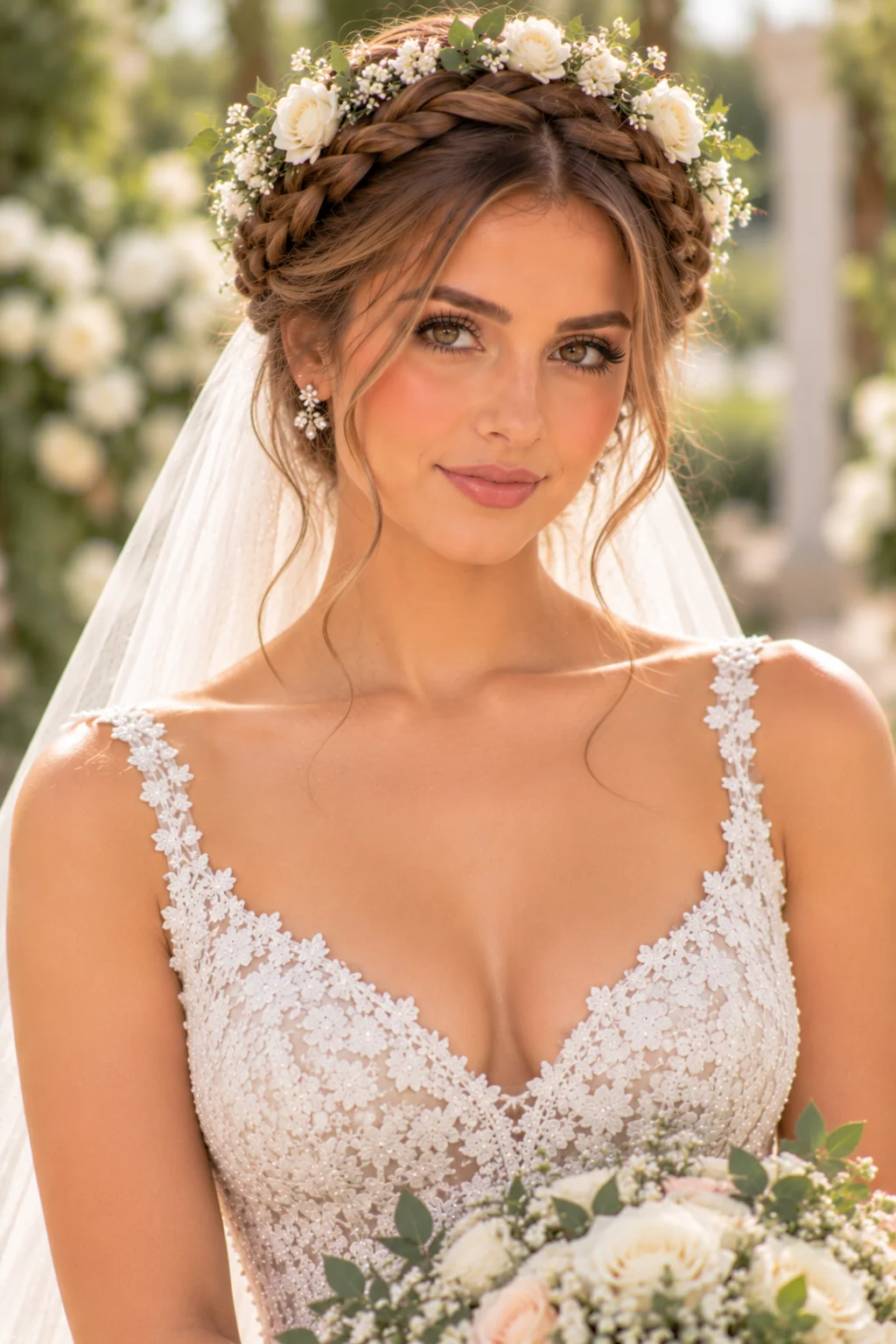
20. Boho Crown Braid with Fresh Flowers
This variation of the crown braid deliberately loosens the braid tension, stretches each section slightly after braiding, and tucks small fresh floral stems or eucalyptus leaves directly into the braid loops throughout its length rather than wearing a separate flower crown on top. The result is a more organic, wildflower-inspired look that suits outdoor and destination weddings better than a tightly braided halo does. Wavy or naturally textured hair produces the most effortlessly bohemian version, and the style holds best when the flowers are added after the braid is fully pinned, working from one end to the other so the placement stays balanced. Use flowers with short, sturdy stems rather than long-stemmed blooms so each stem can tuck cleanly into a single braid loop without bending or falling loose.
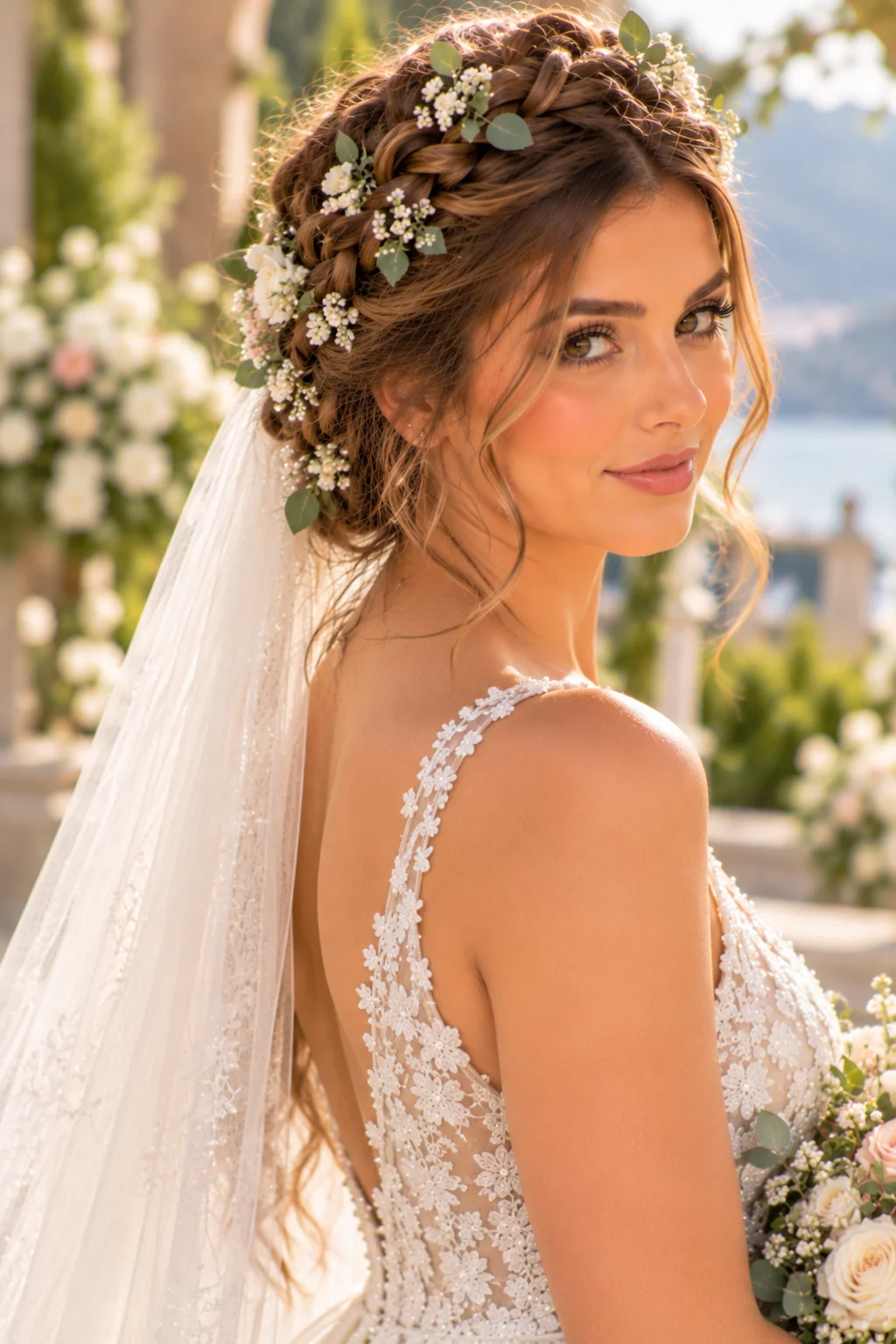
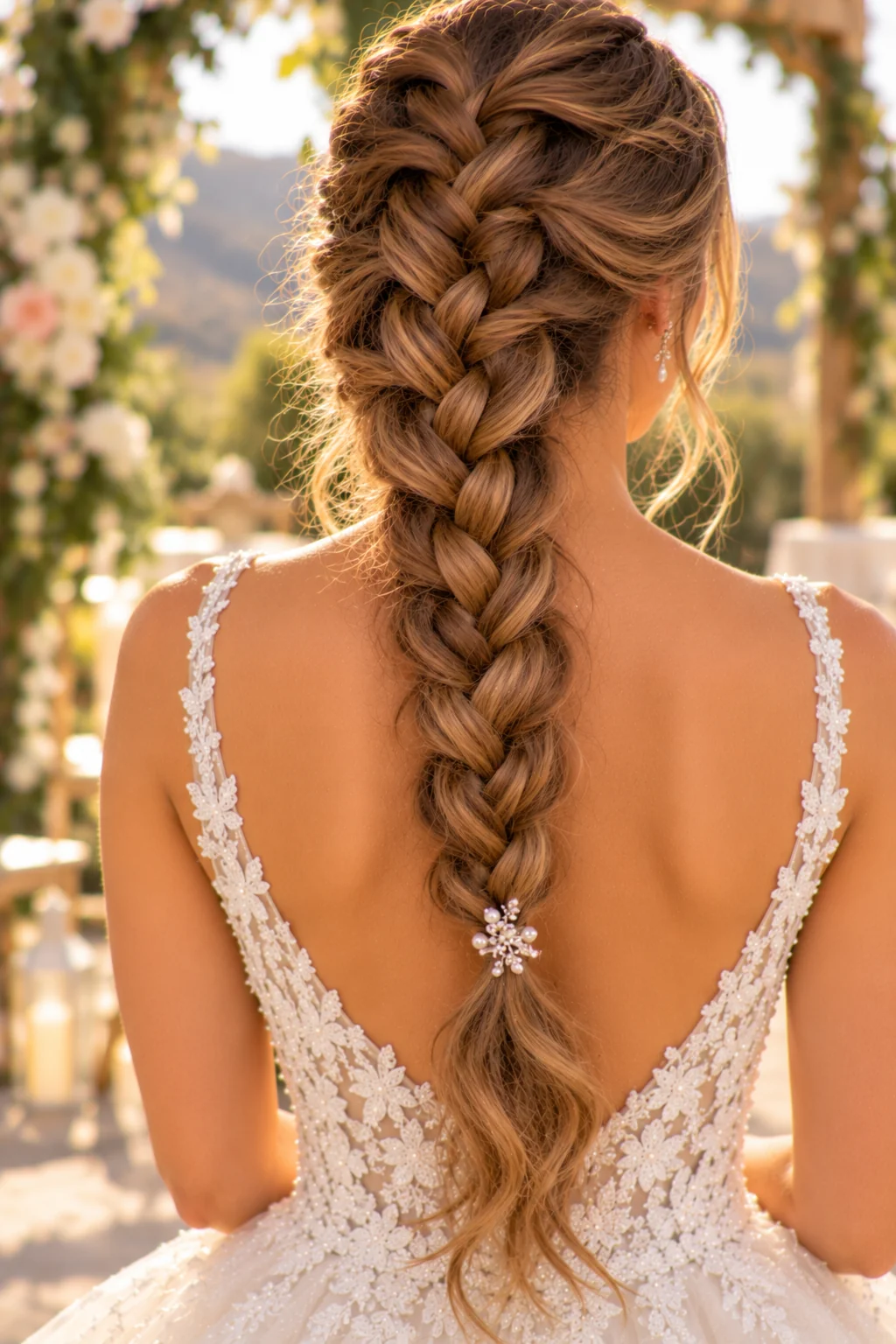
21. Fishtail Braid Down
A loose fishtail braid worn down the back is one of the most visually striking down styles in the bridal category because the texture catches light differently at every angle and reads as far more intricate than the technique actually requires once you settle into the rhythm. Pull all the hair to one side or center, divide into two sections, and alternate small slices from the outside of each across to the other side until you reach the ends. Medium to thick hair holds this best and gives the most defined result, and it suits a festive or boho ceremony where the braid itself is the primary accessory rather than an updo or veil. Once you secure the bottom, gently tug the edges of each section outward along the length to loosen the braid into a soft, romantic shape rather than a tight, narrow strand.
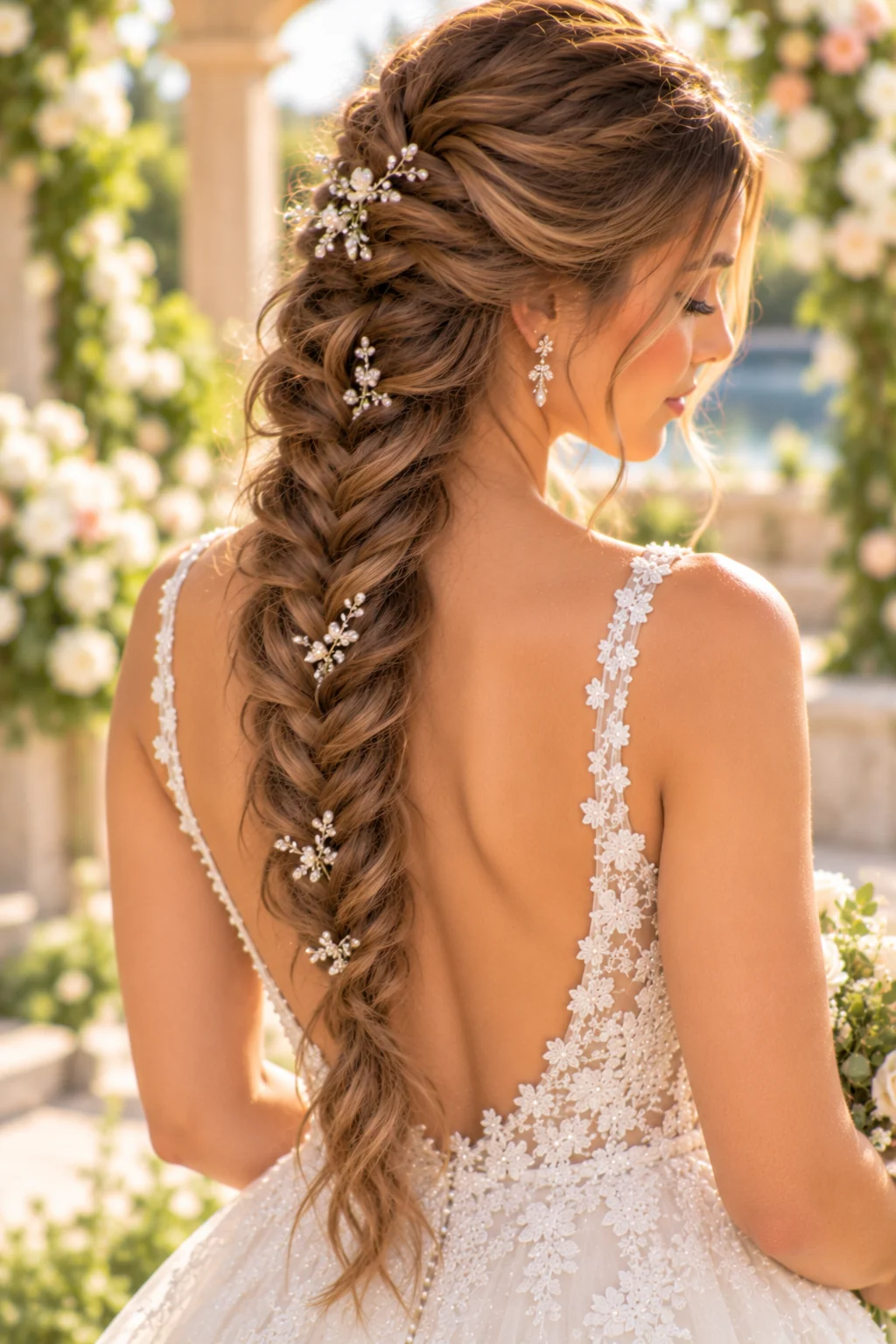
22. Braided Low Bun with Floral Pins
A braided low bun builds the bun itself from a fishtail or Dutch braid technique rather than simply pinning gathered hair into a knot, and the interlocking structure is what makes this one of the highest-hold options in the bridal category. It holds at outdoor weddings, destination weddings in humid climates, and beach ceremonies where a standard chignon can loosen significantly faster from heat and movement. Thick hair suits this best because the extra density creates a full, rounded bun without padding; fine hair can work but may need a volumizing mousse before braiding to give the bun enough body to fill out properly. Pearl pins and small floral stems tuck naturally into the braid openings and stay in place far more reliably than pins inserted into smooth hair.
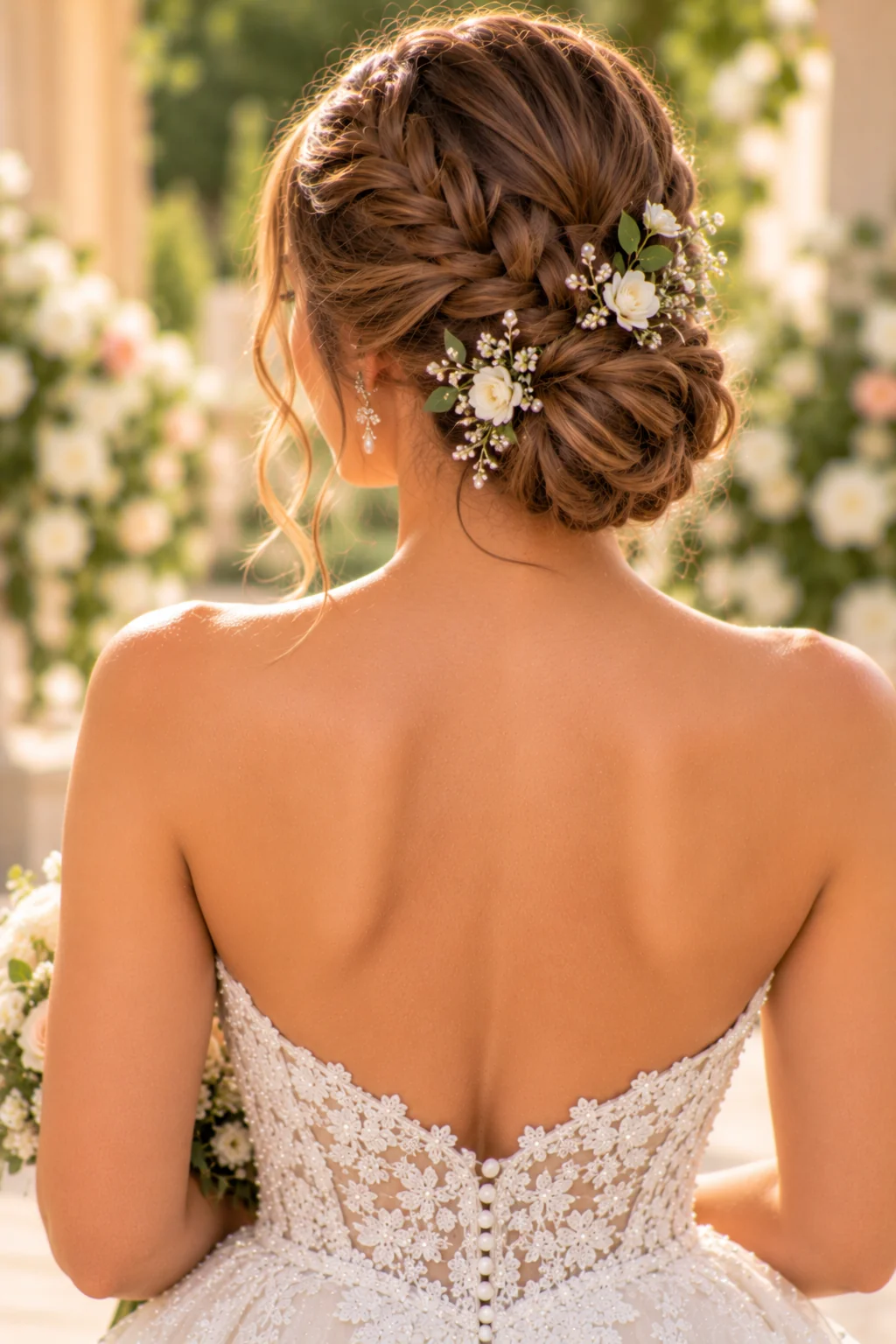
23. Waterfall Braid into Loose Waves
This style combines the waterfall braid half-up from the previous section with a full curled length below, creating a partial cascade detail that flows naturally into romantic waves without a clear visible division between the braid and the down section. It looks deliberately complex and takes less time than most brides expect, particularly for stylists familiar with the waterfall technique. Straight or lightly wavy hair gives the clearest waterfall cascade; curly hair produces a softer, more blended version where the braid transitions almost imperceptibly into the curl pattern. Secure the braid's end point with a small pearl pin rather than a visible elastic so the detail ends cleanly and blends into the hair rather than terminating with a visible fastener.
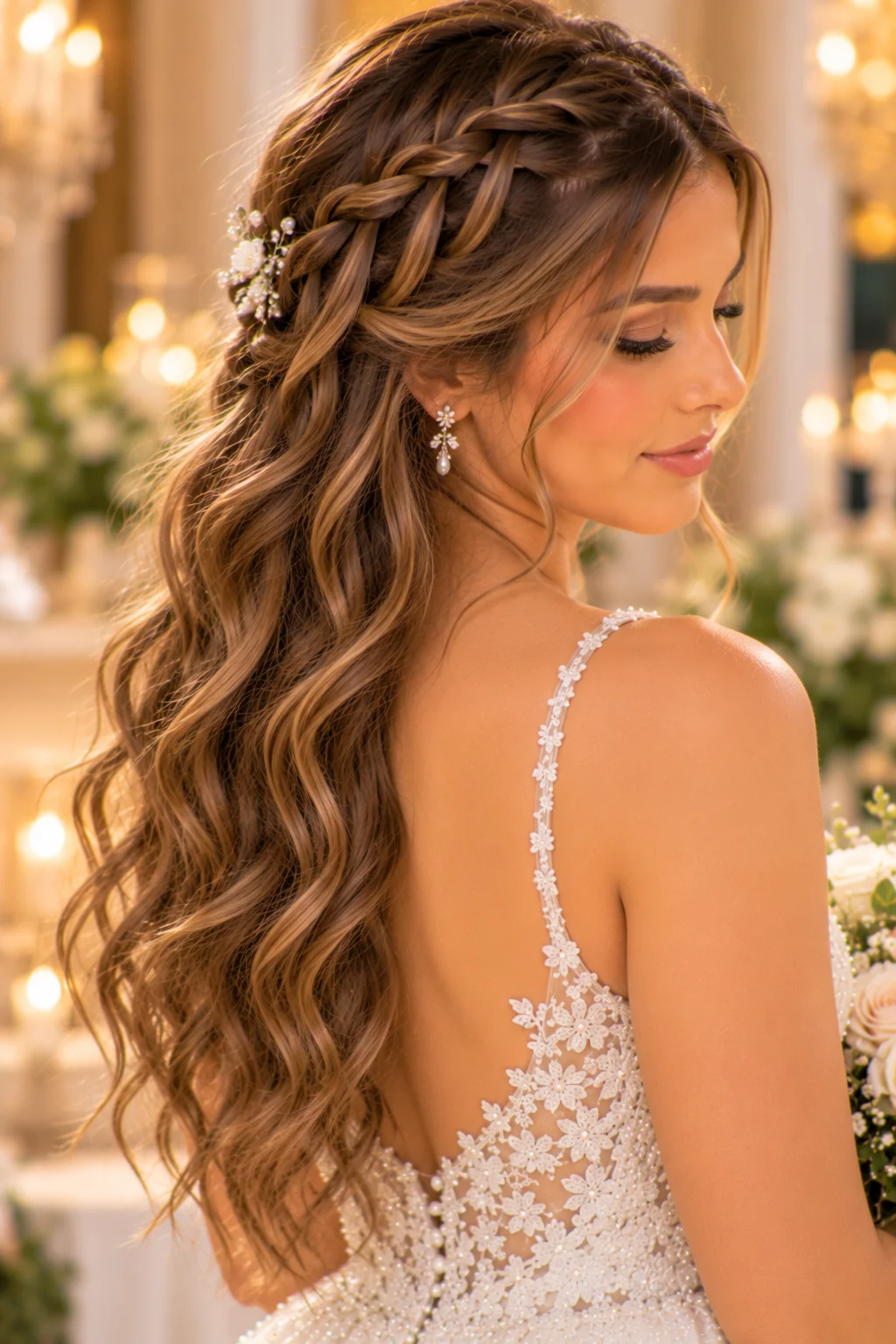
24. Dutch Braid Ponytail
A Dutch braid starting at the crown and secured into a low ponytail at the nape creates a sleek, structured alternative to a plain ponytail that looks bridal rather than casual because the visible Dutch braid adds surface detail and visual interest along the full length of the scalp. The ponytail itself can be left straight, wrapped into a bun, or curled depending on the formality level of the wedding. Fine to medium hair suits this best because the Dutch braid sits close to the scalp and shows the braid structure most clearly on smoother, finer hair; very thick hair may produce a braid that reads as bulky at the center part. Wrap a thin piece of hair around the elastic base of the ponytail before securing it with a pin so the band disappears completely and the transition from braid to ponytail looks seamless.
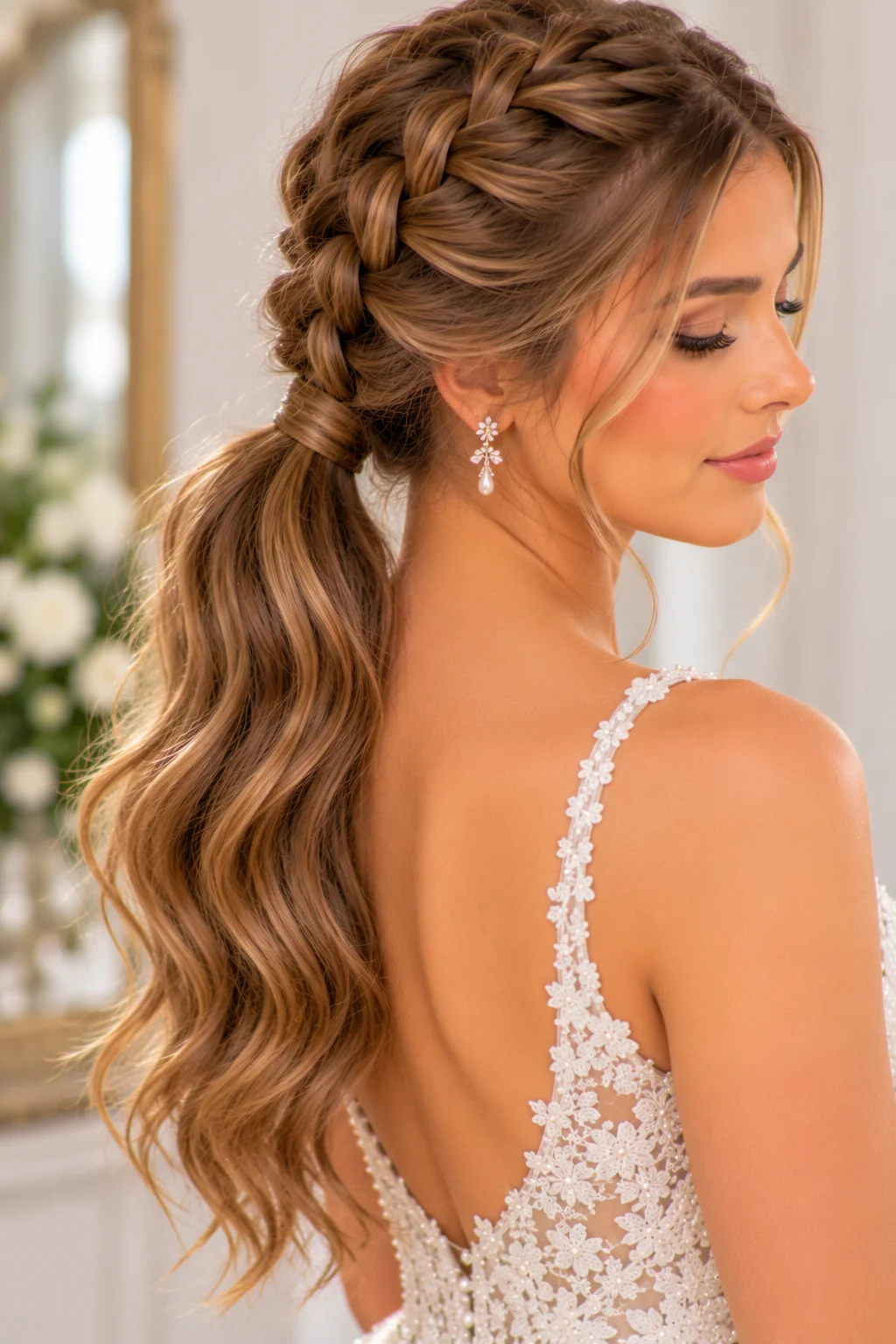
25. Braided Chignon with Pearl Pins
This style takes the braided low bun and adds a more intentional surface finish by wrapping the braid tightly and smoothing the outer coils, then placing pearl pins at deliberate intervals rather than tucking them into braid gaps randomly. The result reads as more formal and polished than a loose braided bun and suits a formal dinner or black-tie wedding where you want the texture of a braid with the elegance of a polished updo. Straight or slightly wavy medium to long hair gives the smoothest surface on the outer coils; curly hair creates a more textured outer surface that reads as romantic rather than architectural. Finish with a light mist of strong-hold spray while holding the pins in place for ten seconds, which bonds the surface coils to the pins and prevents the braid from unwinding from the outside inward during dancing.
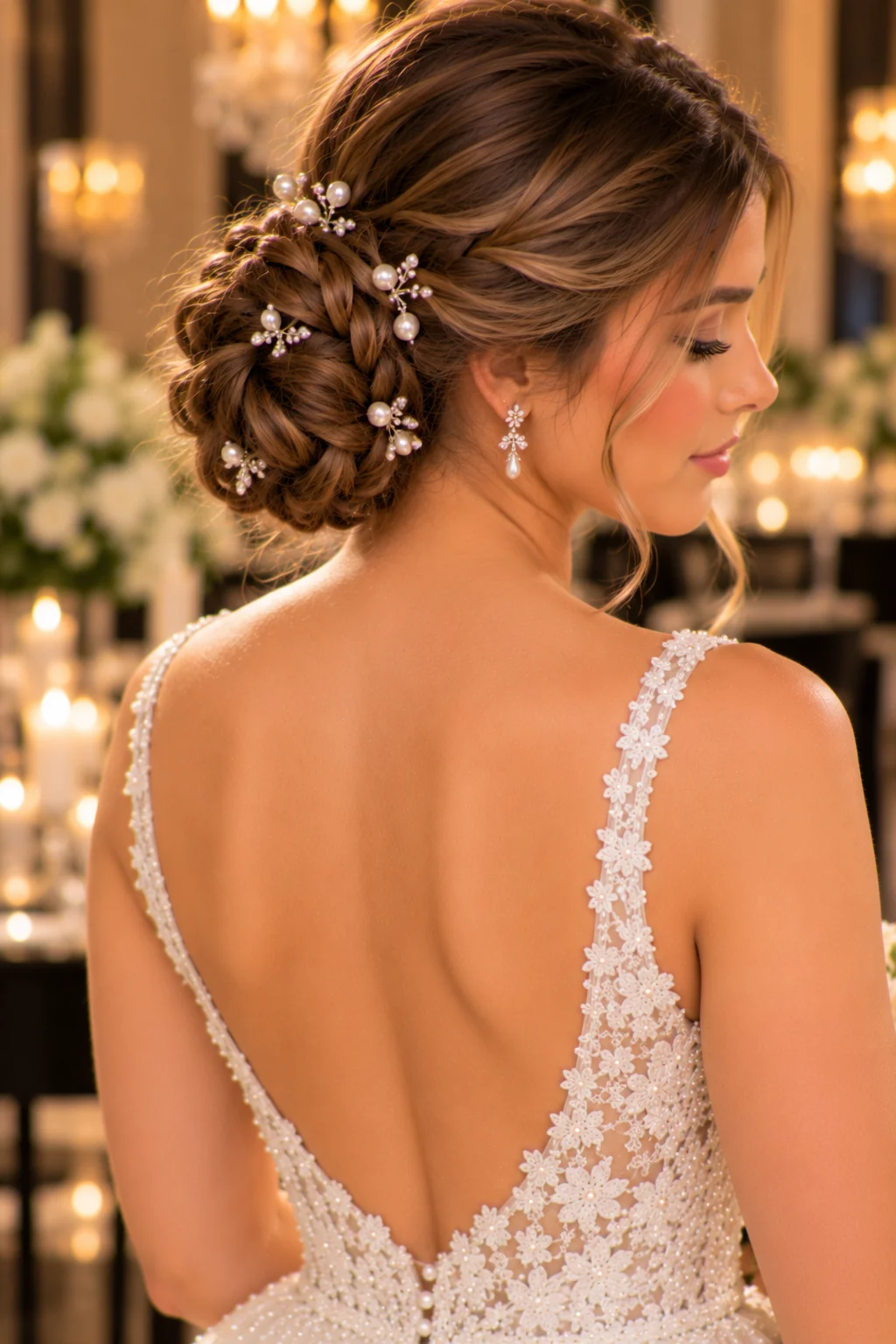
26. Side Fishtail Braid
A fishtail braid pulled to one side and draped over the shoulder creates an asymmetric, directional style that suits strapless and one-shoulder gowns particularly well because it balances the bare shoulder rather than leaving the collar area completely empty. The side placement draws the eye across the chest in a way that a centered braid cannot, and it pairs naturally with a floral pin or a statement clip placed at the crown where the braid begins. Thick or medium-density hair gives the most full, impactful side fishtail; fine hair works but may benefit from a hair extension secured at the crown to add density to the braid's body. Pull the braid gently sideways at the end of construction so it drapes naturally over the correct shoulder rather than sitting centrally against the back.
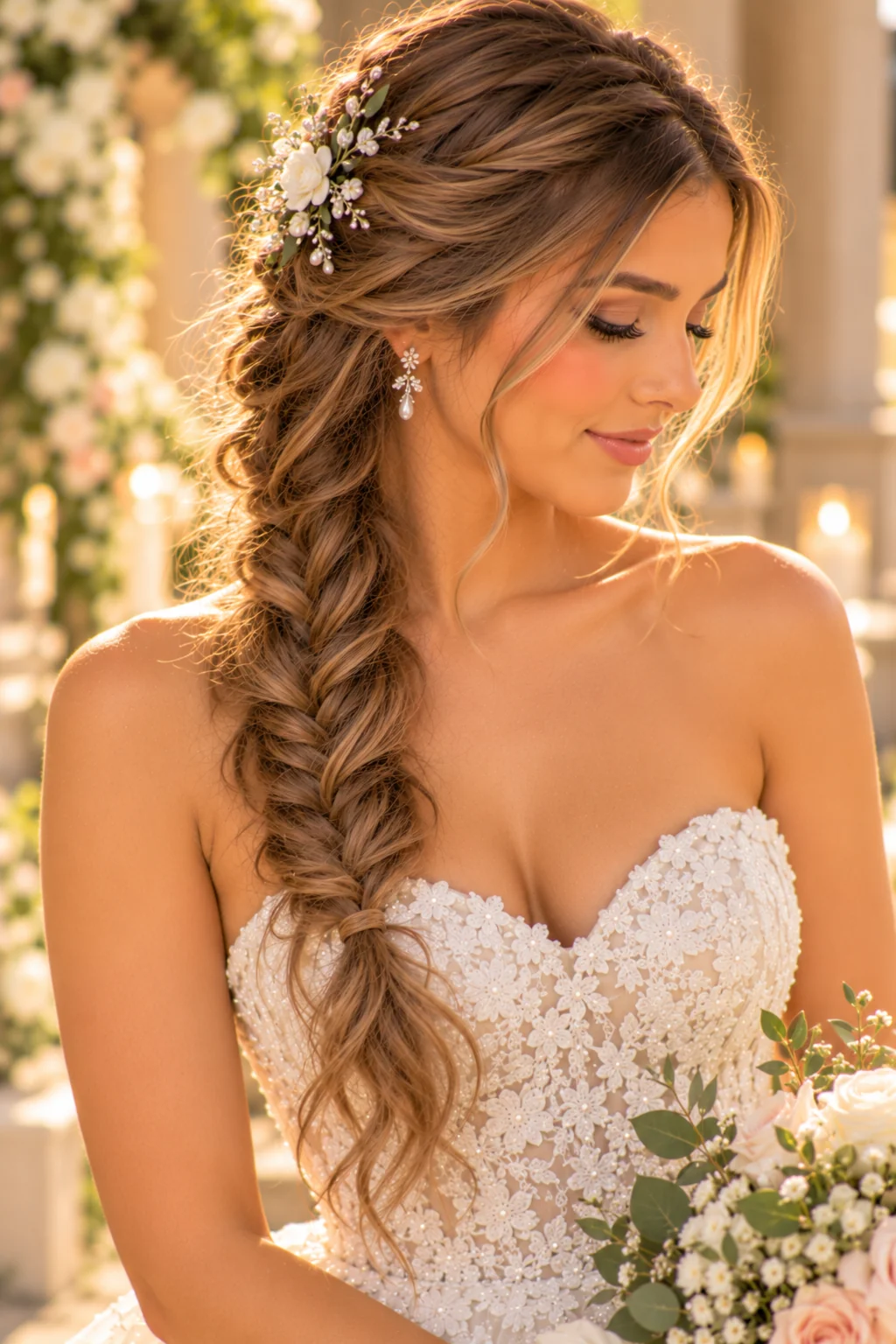
27. Pull-Through Braid into Bun
A pull-through braid creates the appearance of a thick, three-dimensional braid by threading the tail of a ponytail back through the preceding section repeatedly rather than crossing actual strands, which makes it achievable for brides who find traditional braiding techniques difficult. The braid can be coiled into a low bun at the end, pinned into place so it looks like a braided updo when viewed from any angle. Fine to medium hair actually performs surprisingly well in this technique because the repeated threading adds the visual bulk the style needs without requiring naturally thick strands. Gently tug each pulled-through section outward to puff and widen it before moving to the next, which gives the final braid its full, pillow-like three-dimensional quality.
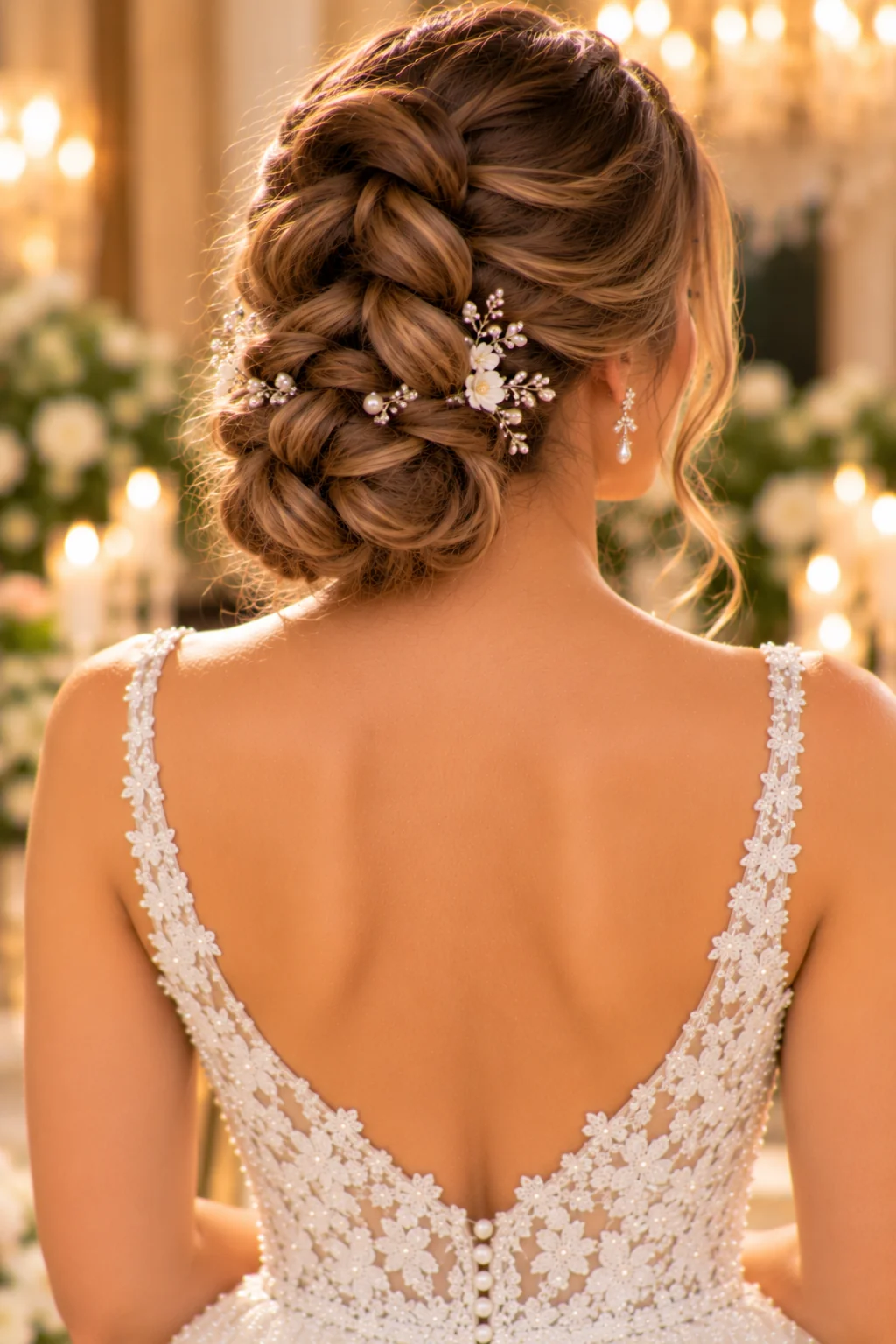
28. Braided Headband with Loose Waves
A single small braid taken from behind one ear, pinned across the crown, and secured behind the opposite ear creates a simple braided headband that lifts the style without requiring a full half-up or updo. The rest of the hair falls freely in waves or curls beneath it, giving the style the romance of a down look with a small amount of structure at the crown. Any hair type works here, particularly hair with some natural texture that contrasts with the neat braid above it. Braid the section slightly looser than feels right because the braid tightens slightly once pinned flat against the curve of the head, and a too-tight braid ends up looking strained rather than elegant.
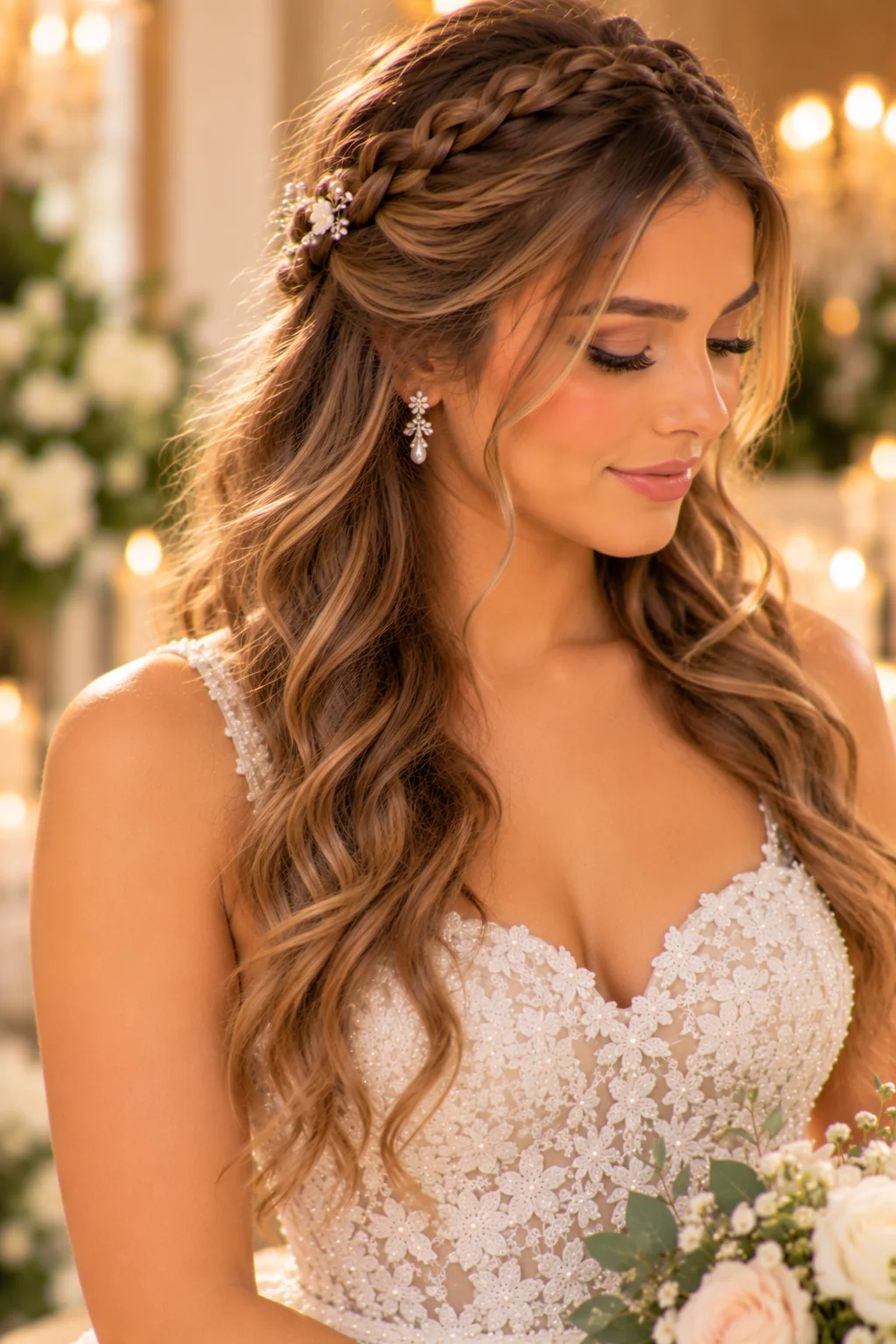
29. Four-Strand Boho Braid
A four-strand braid creates a wider, flatter surface than a standard three-strand braid and produces a distinctive woven pattern that reads as genuinely intricate from any distance. Worn down the back or draped over one shoulder, it suits boho and outdoor weddings where the braid itself is the statement rather than an accessory. Medium to long hair in any texture works here, and the four-strand technique is achievable with practice but benefits significantly from a stylist who has executed it before on wedding-day hair rather than a first attempt at your trial. Stretch each section gently outward along the length of the finished braid to open up the woven pattern and give the style its full visual width before securing the end with a pearl pin rather than an elastic.
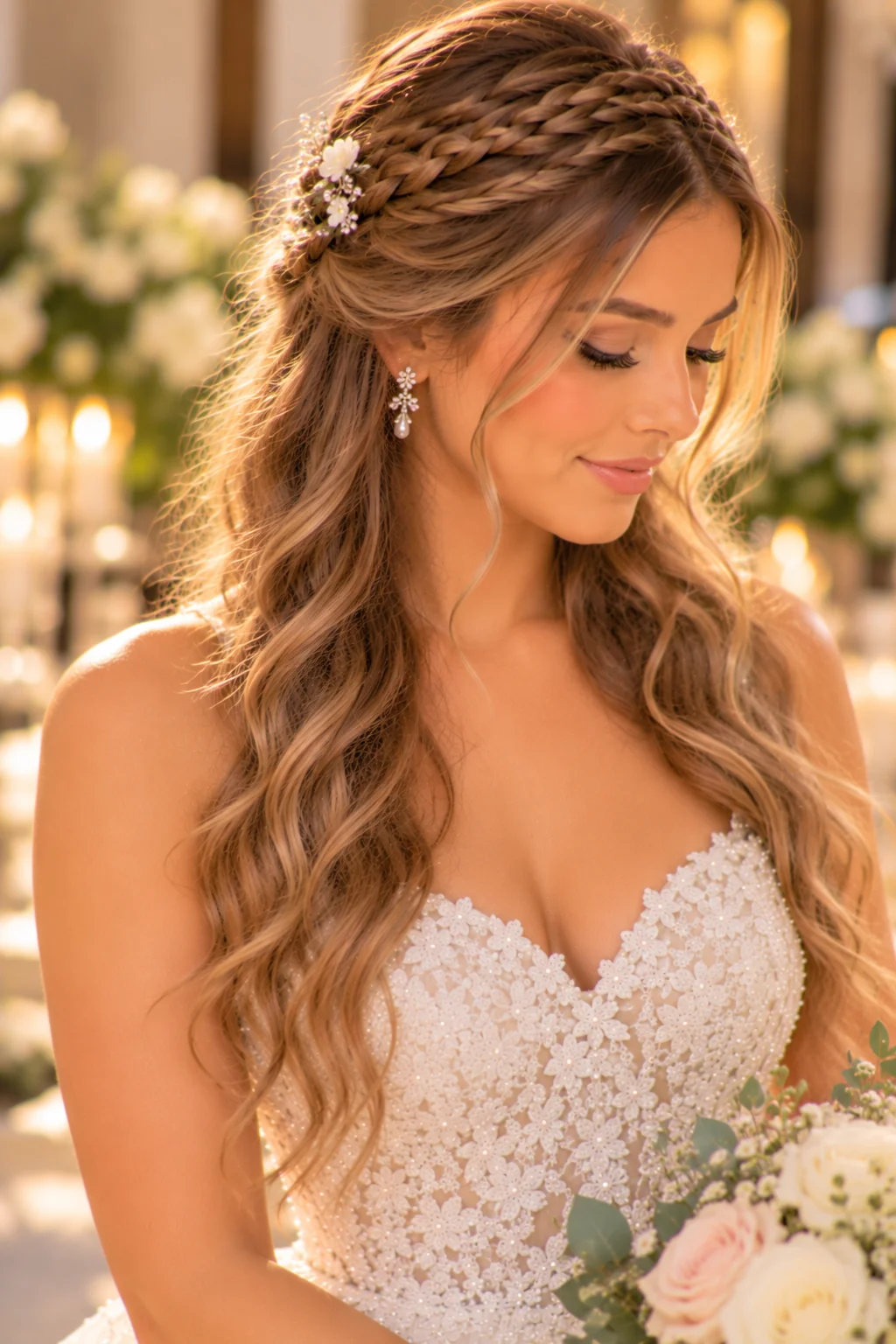
30. Micro-Braid Crown Detail
Small micro-braids taken from the front sections of the hair and pinned across the crown as a headband-style detail, with the rest of the hair left loose in waves or curls, add texture and interest to an otherwise simple down style without the commitment of a full braided updo. The micro-braids can be woven with thin ribbon or metallic thread for additional bridal detail, or left plain for a more organic look. Fine to medium hair works best for micro-braids because finer sections create cleaner, more delicate braids; very thick hair produces micro-braids that read as too chunky to sit neatly across the crown. Use a fine-tooth comb to part each micro-braid section cleanly before braiding, which gives the finished crown detail a precise, deliberate look rather than appearing pulled from a rough section.
Waves and Down Styles — Styles 31 to 40
Waves and Down Styles — Styles 31 to 40
Down styles are where most guides on bridal hairstyles for long hair both start and stop. They are also where most guides stop being useful. Saying "loose waves look great on long hair" tells you nothing about whether they will hold for four hours, which veil attaches cleanly, or how to get fine or thick hair to behave like the inspiration photo. The ten variations below each come with the practical context that gallery-style posts consistently leave out.
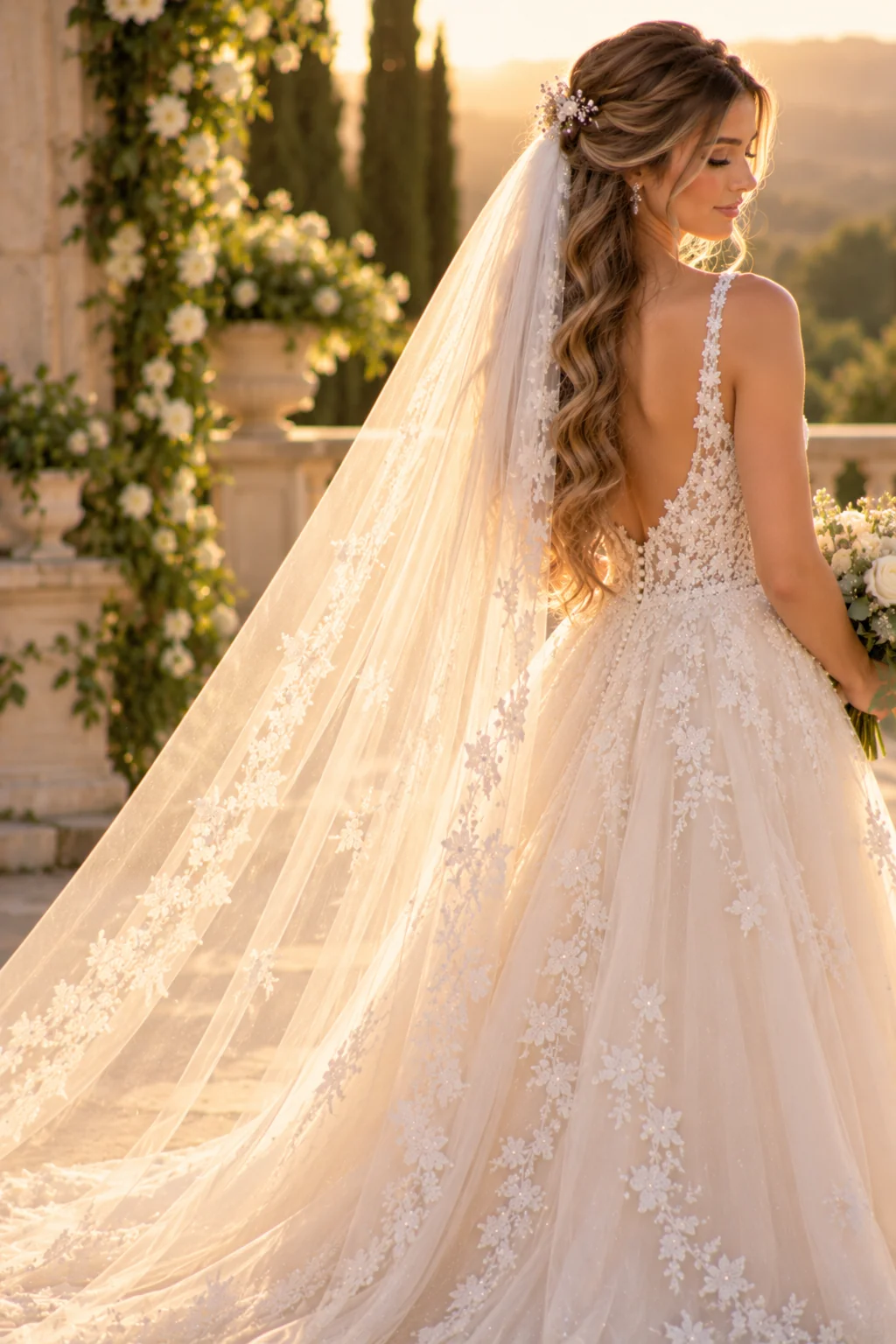
31. Loose Romantic Waves with Cathedral Veil
Loose romantic waves are the most versatile bridal down style and pair most naturally with wedding hairstyles with a veil, specifically a cathedral or chapel veil clipped at the crown or upper back of the head. Fine hair benefits from a volumizing spray applied before curling with a one-inch to one-and-a-quarter-inch barrel, which builds lift at the root before the wave pattern is set and helps the curls hold their shape without collapsing under their own weight. Thick hair holds the curl longer naturally but may need an anti-frizz serum through the mid-lengths before styling to prevent the waves from expanding in humid outdoor conditions. Clip the veil at the crown or upper back of the head, never at the nape, where it blends invisibly into the hair and becomes impossible to see in photographs.
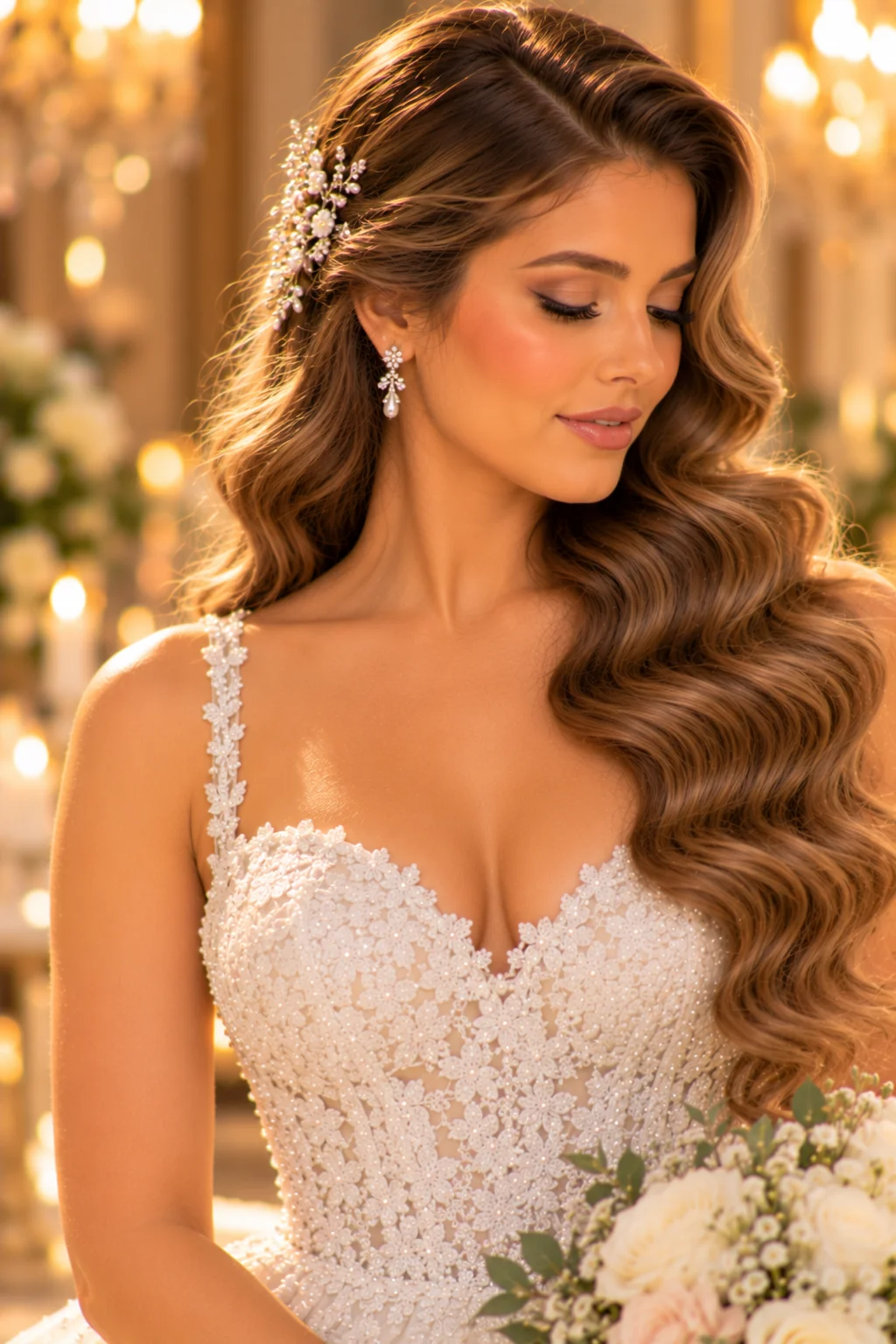
32. Classic Hollywood S-Waves
Hollywood S-waves are deep, structured curves set with a large-barrel curling iron that sit in place rather than bounce loosely, creating a polished and precisely sculpted wave pattern that reads as far more formal than romantic waves or boho styles. They pair naturally with mermaid silhouettes and strapless or sweetheart necklines where precision and glamour are the overall aesthetic goal. Because Hollywood waves read as deliberately polished, they work better with a vintage-style headband or statement earrings than with a veil, which can disrupt the clean sweep of the wave pattern at the crown. This style holds best on medium-to-thick hair; very fine hair may need a light-hold setting spray and a cool-shot finish after each curl to maintain the structured wave shape through a full wedding day.
33. Boho Tousled Waves with Flower Crown
Boho waves are intentionally undone, tousled and slightly disheveled rather than set and smooth, and they are the most forgiving style on this list for humid outdoor venues, beach ceremonies, and garden weddings where a precisely polished look would feel out of place in the setting. They pair with a flower crown or a simple decorative clip rather than a structured veil, and they suit naturally wavy or lightly textured hair that can be encouraged into shape with a diffuser and a sea-salt spray rather than requiring a curling iron on every section. The honest all-day reality with down styles is that they need more maintenance than updos, so ask your stylist to build a touch-up kit for your maid of honor: a travel-size hairspray, three or four backup bobby pins, and a small smoothing serum for any sections that loosen between ceremony and reception.
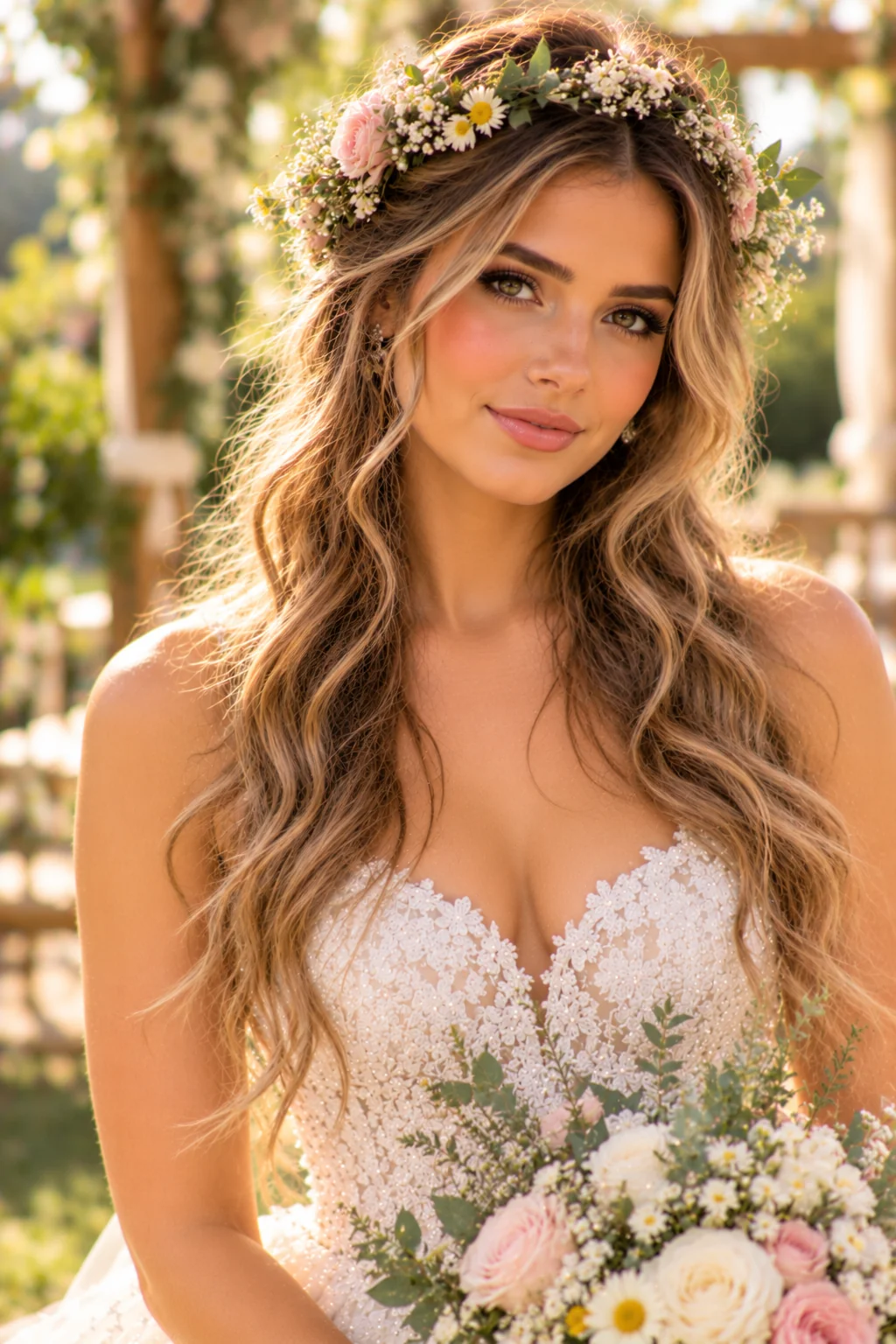
34. Beachy Waves with Floral Clips
Beachy waves are lighter and more textured than classic romantic waves, created with a diffuser or a smaller-barrel iron and enhanced with a sea-salt or texture spray that separates strands rather than blending them. Scattered floral clips placed throughout the wave pattern provide bridal detail without the weight or formality of a full floral crown. This style suits a beach ceremony, casual outdoor wedding, or elopement where the mood is relaxed and the hair is meant to look like it naturally looks good rather than as though it was styled for four hours. Scrunch the sea-salt spray through the waves while the hair is still slightly warm from the iron rather than fully cooled, which helps the texture set into the wave shape rather than sitting on top of the curl surface.
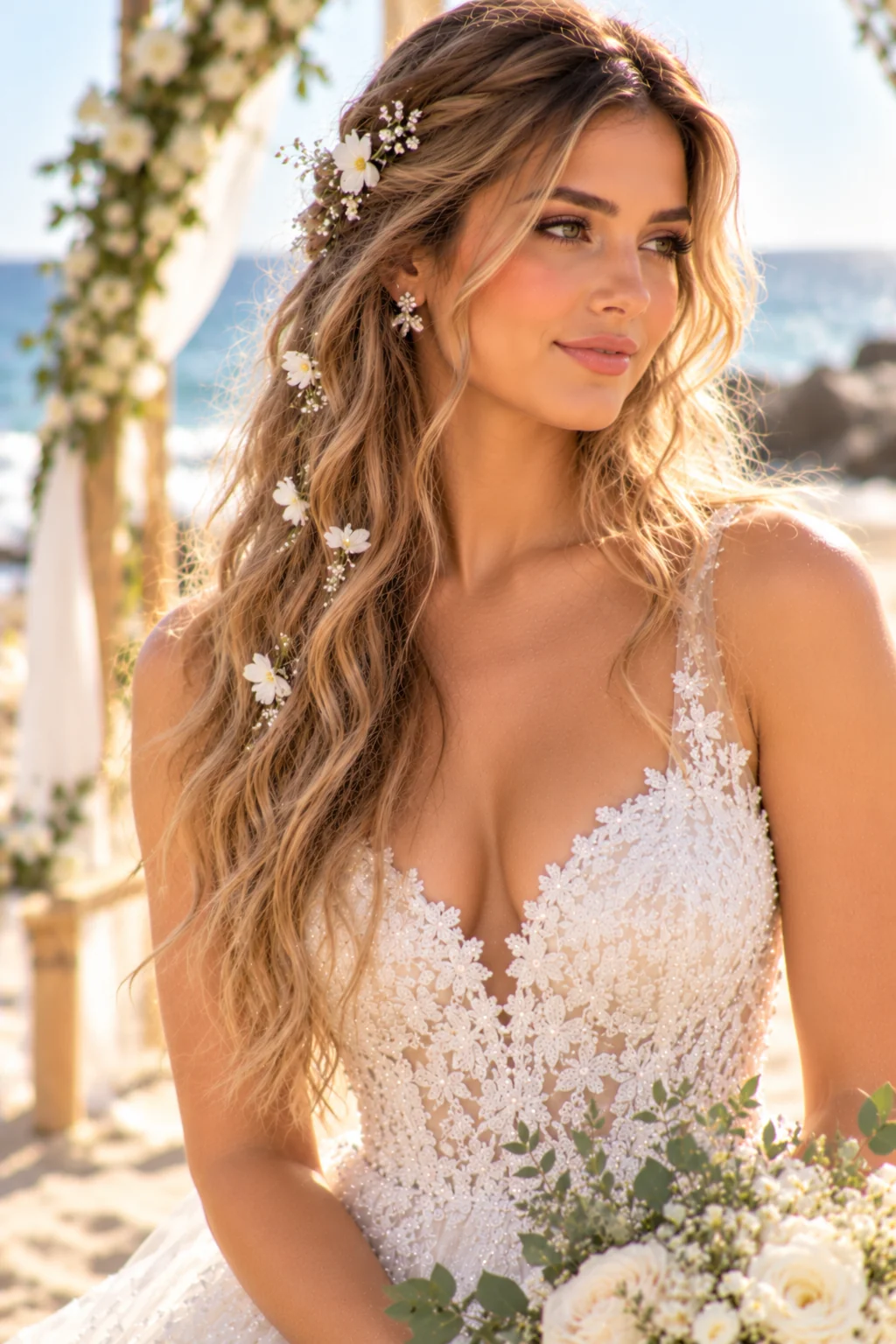
35. Sleek Straight Hair Down
Bone-straight, fully smooth long hair worn completely down creates a modern, minimal bridal look that suits contemporary gowns and brides who want their hair to provide a clean, uninterrupted line rather than a styled focal point. The success of this style depends entirely on preparation: a keratin or smoothing treatment in the weeks before the wedding dramatically reduces the effort required on the morning of, and a strong anti-humidity serum applied as a final step is non-negotiable for outdoor or summer weddings where humidity will create frizz in a straight style faster than any other. A simple veil or a delicate hair comb is the natural accessory here because the style provides no built-in decoration and needs a small bridal detail to read as intentionally wedding-appropriate rather than everyday.
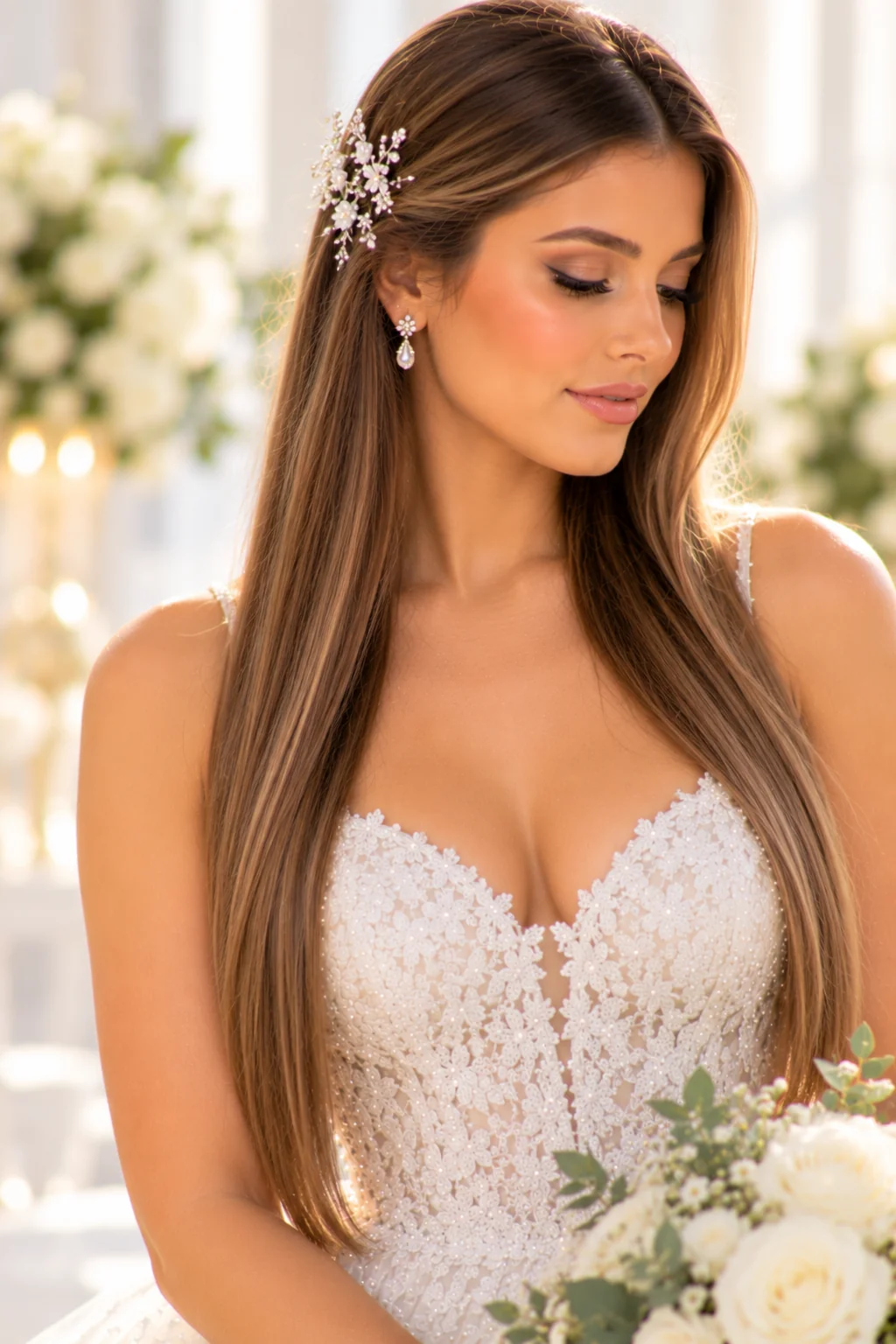
36. Voluminous Curls Down
Full, bouncy curls worn all the way down the back create the most dramatic volume and movement in the entire waves-and-down category, and they suit brides who want maximum impact and a bridal look that photographs beautifully from every angle. Use a one-inch barrel for tighter curls or a one-and-a-half-inch barrel for looser spirals, curling away from the face throughout for a more open, face-framing effect. Thick or medium-density hair gives the most impressive result; fine hair benefits from a volumizing foam applied before styling to give the curls body at the root that holds throughout the day. Set the curls in their ringlet form completely before brushing through, then brush with a paddle brush in one downward pass to blend the curls into a voluminous wave pattern rather than defined spirals.
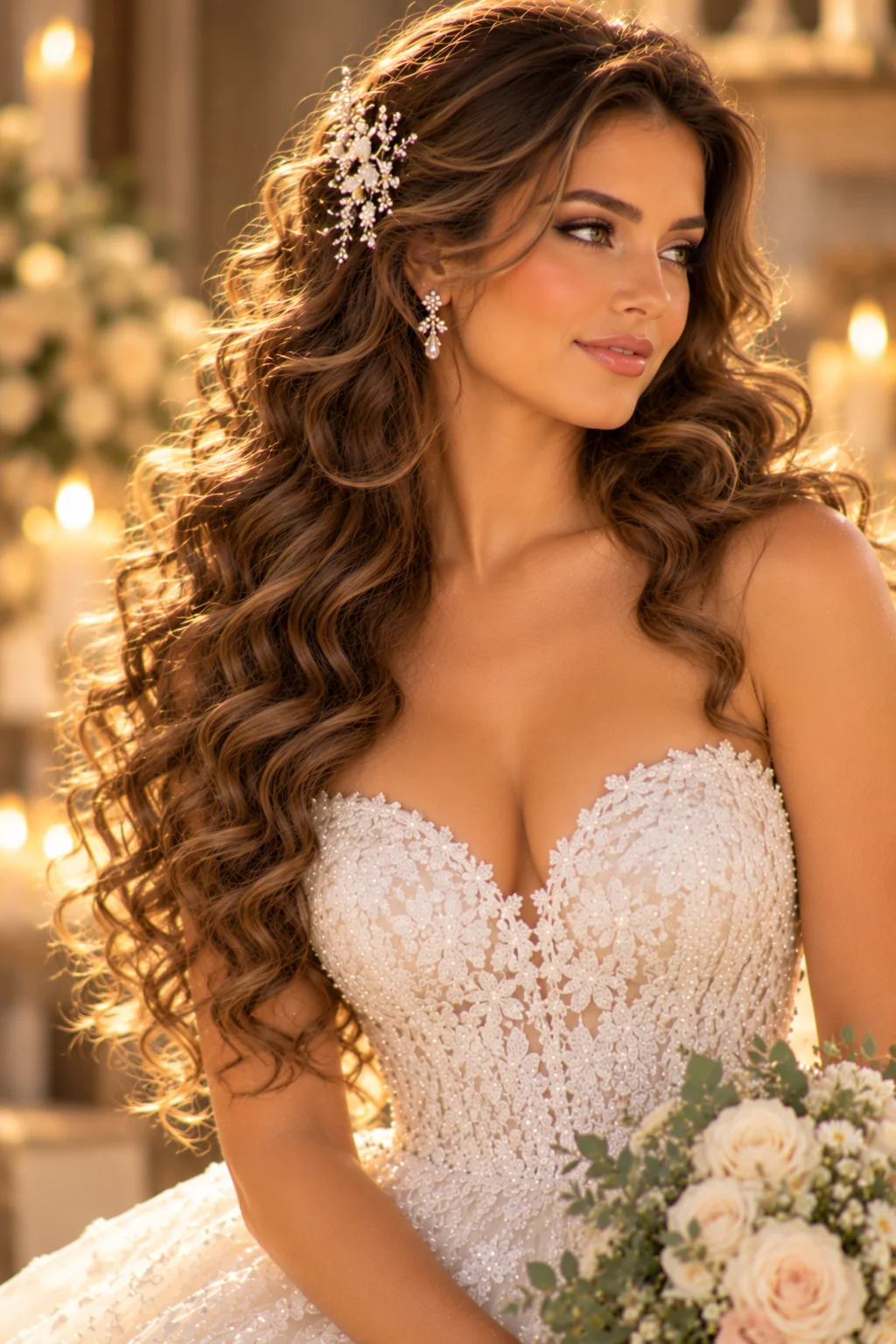
37. Side-Swept Waves with Jeweled Clip
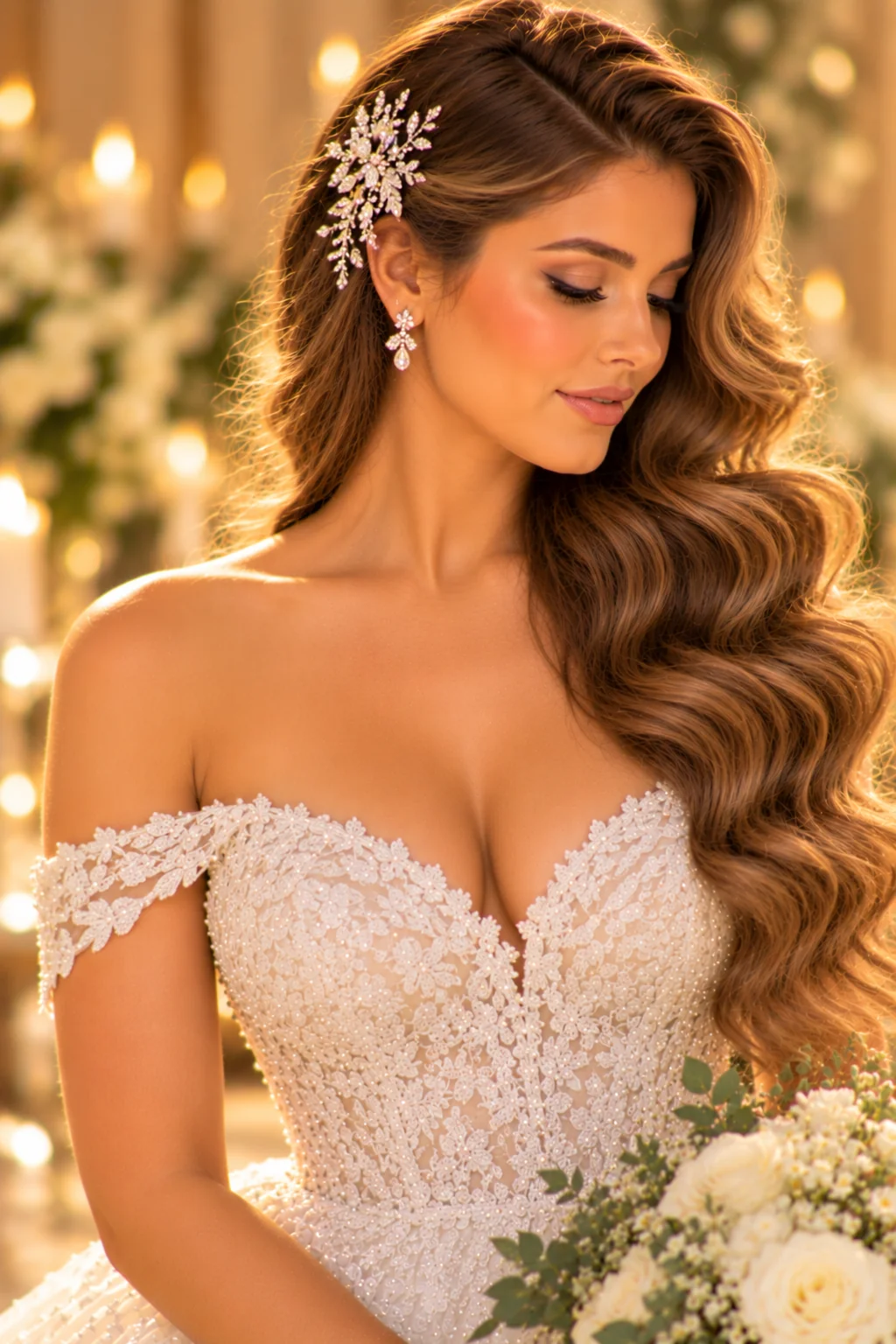
All the hair swept to one side and held in place by a large jeweled clip or comb at the ear or temple creates an asymmetric, directional style that suits off-shoulder and one-shoulder gowns by balancing the bare shoulder with a decorated opposite side. The jeweled clip provides the single accessory detail the style needs without requiring a veil or additional pins throughout the hair. Straight to lightly wavy hair in any density suits this, and the style photographs particularly well from the clip side where the accessory and the wave direction both face toward the camera. Use a strong-hold spray on the swept section before placing the clip so the hair maintains its directional flow rather than gradually redistributing its weight back toward center as the evening progresses.
38. Natural Texture Waves with Hair Vine
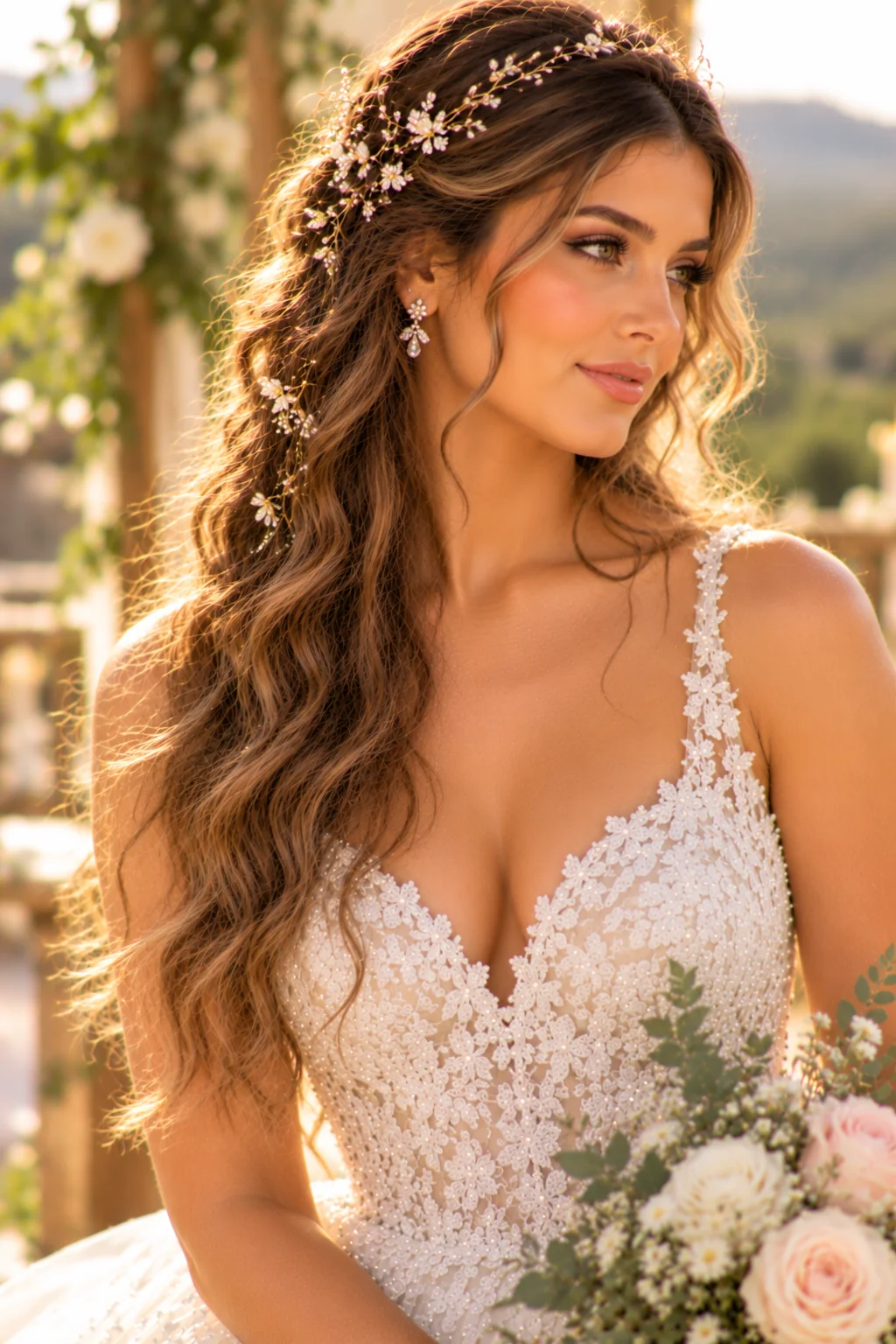
Enhancing your natural wave pattern with a diffuser and a curl-defining cream, then threading a delicate hair vine or decorative wire through the waves as a winding accessory, creates a style that celebrates natural texture as the primary visual feature rather than heat-styling it into something it is not. The hair vine provides bridal detail without structure or commitment, bending to follow whatever wave pattern your hair produces naturally on the day. Naturally wavy or curly hair at medium to long lengths produces the best result; this is the wrong choice for hair that requires a curling iron to produce any wave at all, since diffused straight hair will not create the organic wave path that makes the hair vine look intentional. Thread the vine from below the ear toward the crown and tuck the ends underneath a layer of hair so the vine appears to weave through the waves rather than lying on top of them.
39. Deep Side Part Waves
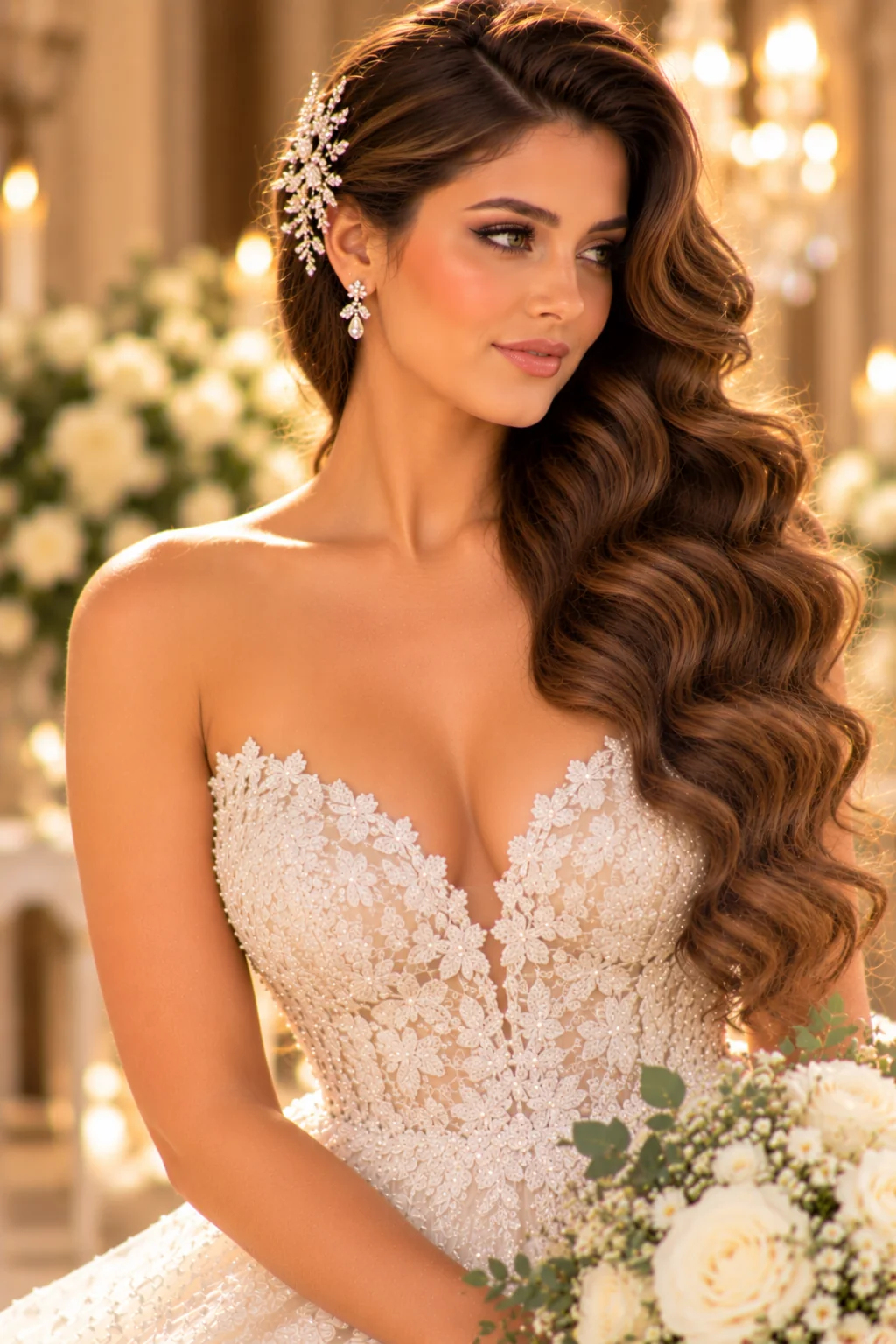
A deep side part changes the silhouette of waves completely, directing all the volume toward one side and creating a dramatic, asymmetric sweep that looks deliberately styled and confident without requiring a single pin or clip. Use a rat-tail comb to create a clean part sitting one to two inches past the center of your head before curling, then style your waves as normal and let the natural weight of the hair settle to the heavier side. Curly or wavy hair in medium to long lengths works best here, and this suits a formal dinner or a high-glamour reception look when you want something with drama and movement without the architecture of an updo. Apply curl-defining products while the hair is still damp and resist touching the waves until completely dry, which is the most effective way to get clean definition that holds throughout the evening.
40. Old Hollywood Pin Curls
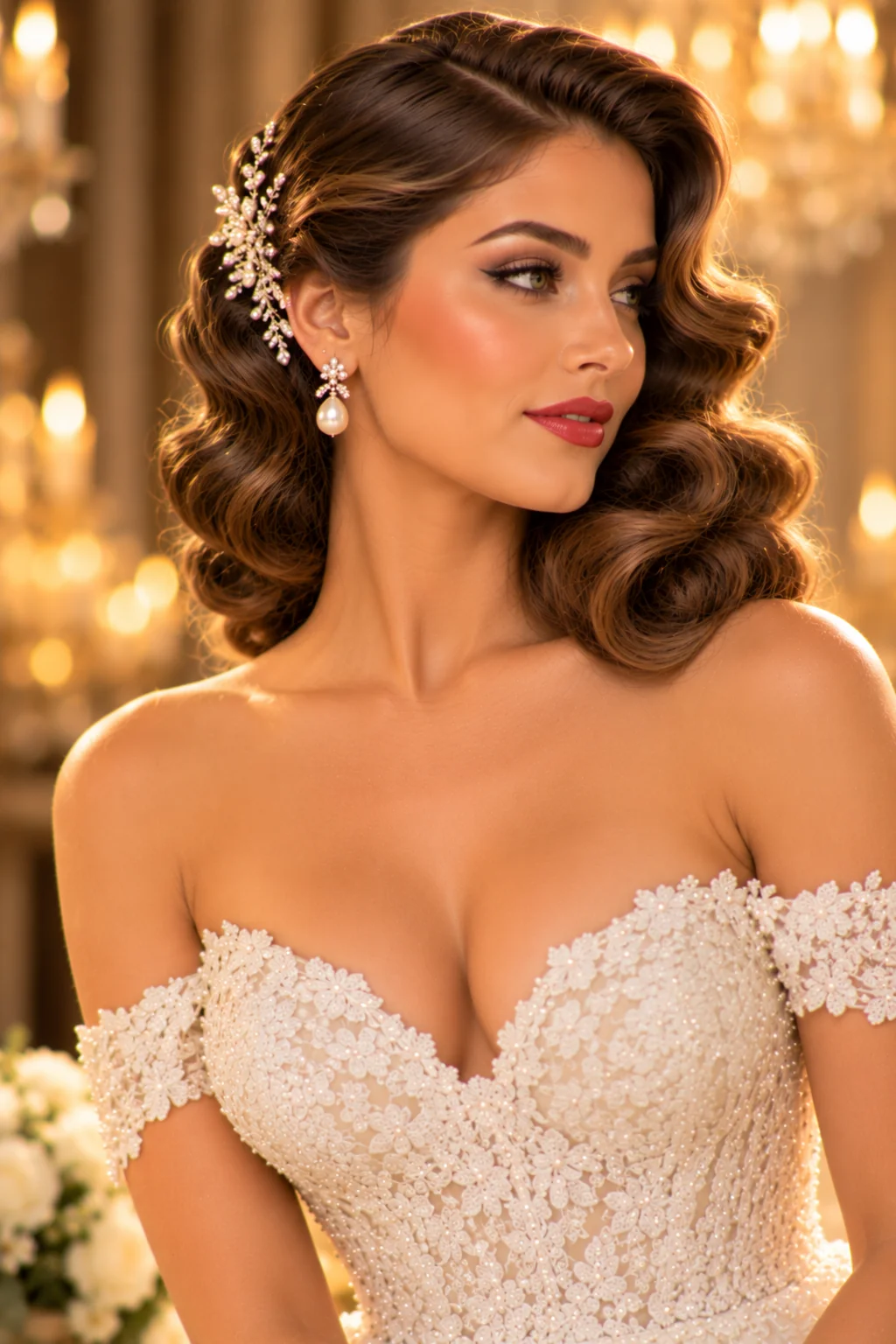
Pin curls set close to the scalp and released into a smooth, directional wave pattern create the most technically polished down style on this entire list, and the result is the closest a hairstyle can come to looking like it belongs in a 1940s film still. Small sections are curled, pinned in place while warm, allowed to cool fully, then released and brushed into a continuous wave pattern that sits sculpted and glossy rather than loose and bouncy. Fine or medium straight hair produces the cleanest pin curl wave; this is a salon-recommended style for wedding day because the precision required to set even, correctly angled pin curls consistently across the full head is difficult to achieve without professional experience. Tell your stylist: "I want Old Hollywood pin curls set close to the scalp, released into a smooth wave. I need the style to hold for six or more hours."
What to Tell Your Stylist and When to Book Your Hair Trial
What to Tell Your Stylist and When to Book Your Hair Trial
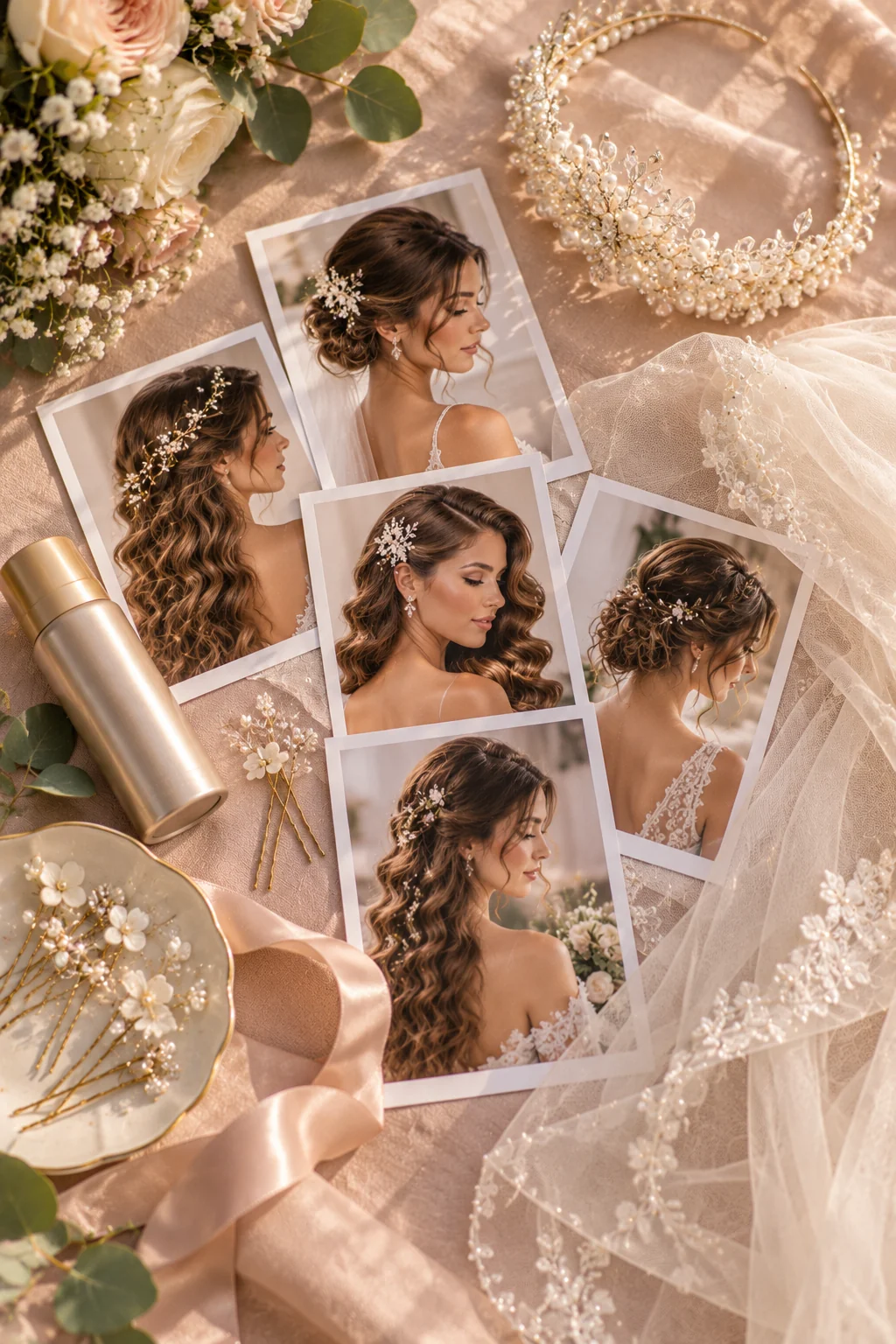
This section will save you more money and stress than any other in this guide. Most brides arrive at their hair trial with too many photos, no veil sample, and vague adjectives instead of specific direction. Then they wonder why the first trial feels off. The three topics below give you the framework to fix that before you ever sit in the chair.
When to Book and How Many Trials You Need
For peak wedding season (May through October), book your stylist six to twelve months in advance, because experienced bridal stylists in most cities are fully committed by the prior January for summer weddings. For off-season or weekday weddings, three to four months is typically enough lead time, but it is never worth waiting closer than that. Schedule your hair trial four to eight weeks before the wedding date: not earlier, because your hair cut and length should be as close to the wedding-day state as possible, and not the week before, because that leaves no time to adjust if the style needs changes after the trial. Plan for at least one paid trial; if you have fine, thick, or naturally curly hair, a second trial is worth the cost to confirm the style holds under your actual conditions.
What to Bring to Your Bridal Hair Trial
Bring three to five printed or screenshotted inspiration images, not thirty, because your stylist needs a clear directional signal rather than a gallery of contradictory textures and formality levels. Bring your actual veil or a stand-in of similar weight and length, because the fabric's weight changes how the style sits at the attachment point and affects which pin placement works best. Bring all the hair accessories you plan to wear on the day, including tiaras, combs, pins, and clips, so the stylist can build the style around them during the trial. Wear a top with a similar neckline to your wedding gown so both of you can see how the style interacts with the collar line.
Salon Vocabulary That Gets Your Stylist to the Right Style Faster
Vague words like "elegant" and "romantic" mean something different to every stylist. Use specific directional phrases instead: "low updo vs high updo," "structured vs loose," "face-framing pieces in or out," "soft hold or firm hold," and "can this style survive four hours of dancing." Tell the stylist your venue type (outdoor garden, beach, ballroom, or humid destination) because the setting directly changes which products she selects and how many pins she uses. At the end of the trial, ask: "Which pins can be removed for the reception, and what one product should I carry for touch-ups?" A built-in touch-up plan matters as much as the style itself for any look that needs to last from the first look through the final dance.
Frequently Asked Questions
Frequently Asked Questions
What Is the Most Popular Bridal Hairstyle for Long Hair?
The half-up half-down style is the most requested bridal hairstyle for long hair. It keeps hair off the face for ceremony and portrait photos while still showing the length below, and it works across dress styles, veil types, and hair textures. The soft half-up with loose waves is the most common specific variation at actual weddings.
Can I Wear a Veil With a Half-Up Half-Down Hairstyle?
Yes, and several veil styles work very well with a half-up look. A blusher veil or a birdcage veil clips naturally into the gathered section at the crown and stays secure throughout a ceremony without disturbing the rest of the style. A long cathedral veil also works with a half-up if it is positioned at the upper back of the head so the veil falls over the loose waves below rather than tucking into the gathered section and losing its visual impact.
How Long Does a Bridal Hair Trial Usually Take?
Most bridal hair trials take one to two hours, depending on the style's complexity and how much directional discussion happens during the appointment. A trial for a structured braided updo or a formal polished style typically takes longer than one for soft waves or a simple half-up. Plan for two full hours in your schedule and treat any time saved as a bonus rather than counting on finishing in sixty minutes.
What Bridal Hairstyle Works Best for Fine or Thin Long Hair?
Fine or thin long hair holds updos and half-up styles most reliably when prepped with a texturizing spray or dry shampoo before pinning, which adds grip and prevents the style from sliding during a long reception day. A braided half-up or a twisted low bun both work well on fine hair because the braid or twist structure provides a foundation that pinned smooth sections alone cannot replicate for extended wear. Avoid very heavy braided buns on fine hair, because the weight of the style will pull it out of shape faster than the pins can compensate, even with strong-hold product.
Should I Wash My Hair Before My Wedding Day?
No. Most experienced bridal stylists prefer day-two or day-three hair over freshly washed hair. Clean hair is too slippery for pins and braids to grip reliably, which means styles loosen faster and require more product to maintain what was built at the salon. Wash your hair the evening before and let it air-dry; your stylist can add dry shampoo for volume without sacrificing the grip that keeps bridal styles lasting all day.
Every bride with long hair has more options than she realizes. The right one is not the prettiest style on Pinterest. It is the one that works with her specific hair texture, dress neckline, veil type, and venue from the ceremony through the last song. Save this guide and share it with your bridal party before your first trial appointment, so everyone arrives with a clear picture of what you are working toward. Thinking about a braided style? Browse our full guide to bridal braided updos for even more options before your trial.
Your email address will not be published. Required fields are marked *