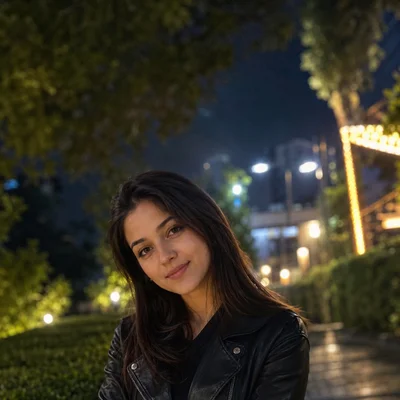
Your hair won't get you the job, but a rushed or messy style can pull a hiring manager's attention before you finish your first sentence. This post covers 22 interview hairstyles for women, organized by hair length and texture, each rated Easy, Moderate, or Needs Prep so you can plan realistically the night before. Whether your field is finance, healthcare, tech, or a creative agency, the right look for your situation is here, and it is far easier to achieve than the morning-of panic suggests.
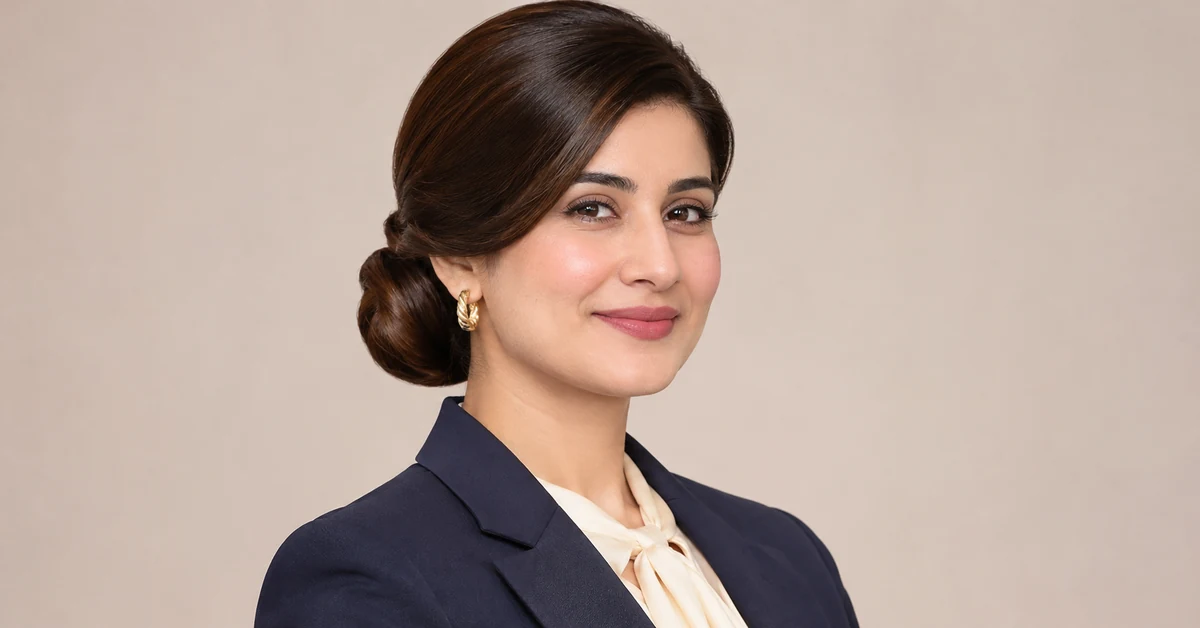
The "right" interview hairstyle depends partly on industry expectations. Conservative fields like law, finance, and healthcare reward sleek and understated styles. Creative fields, tech, and startups give you more room to show personality through texture and shape. Use that as a filter as you browse, and keep in mind that intentional always matters more than elaborate.
For everyday work hairstyles beyond the interview itself, we have a dedicated roundup of professional styles that hold up through long office hours. Most of the looks below translate directly to everyday office wear with a small adjustment to how finished you make the surface. Bookmark the ones that work for your length now, and come back to the everyday roundup once you land the role.
What Makes a Hairstyle Professional Enough for an Interview
What Makes a Hairstyle Professional Enough for an Interview
The rule is simple: your hair should draw zero attention away from your face or from what you are saying. Neat, controlled, and away from the eyes. Those three criteria apply across almost every professional setting, from a first-round phone screen to a panel interview with six hiring managers. A first impression forms in seconds, and you want that impression to land on your qualifications, not on hair falling across your face.
Industry context shapes the right call more than most style guides admit. Finance, law, and healthcare settings consistently favor sleek, classic looks: a low bun, a smooth blunt bob, or a tight low ponytail all come across as authoritative and appropriate. Tech companies, creative agencies, and media roles are considerably more open to textured natural styles, defined curls, and relaxed updos. A quick LinkedIn scroll through current employees at the company you are interviewing with gives you a reliable signal before you even reach for a brush.
Zoom Interview Tip: For video interviews, pull hair back or sweep it away from your face so it does not bleed into the background behind you. Loose waves that look great in person can register as visual noise on camera, especially if the lighting is overhead. Secure flyaways with a light-hold spray before the call and check how the style looks on screen in the 10 minutes before the interview starts. What looks polished in a mirror can compress differently on a video feed.
Setting your style the evening before an interview removes one real stressor on a high-pressure morning. A test run the night before also tells you exactly how long the style takes, and it is almost always longer than you expect, especially for styles that involve pinning or wrapping. If anything goes wrong during the practice run, you have time to fix it calmly instead of arriving rushed and frustrated.
Interview Hairstyles for Long Hair
Interview Hairstyles for Long Hair
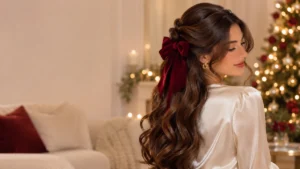
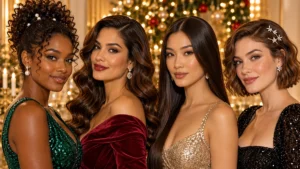
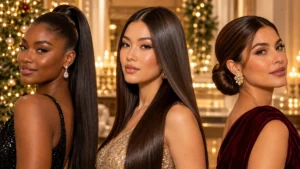
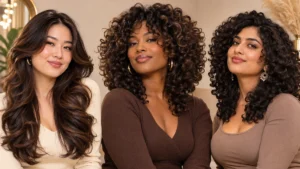
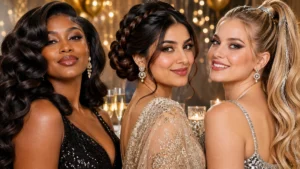
Long hair, from collar-bone length to the waist, gives you the most style options for an interview. The challenge is choosing wisely: a loose wave that looks effortless on a weekend comes across as unfinished in a professional setting. The styles below cover both updo and wear-down options so you can choose based on your industry, your tools, and how much time you realistically have on interview morning.
Sleek Low Bun / Effort: Easy
This is the interview classic for good reason: it keeps every strand off your face, works across every industry from healthcare to fashion, and takes about 10 minutes on practiced hands. Pull hair into a low ponytail, wrap it into a bun at the nape of the neck, and secure with bobby pins and a light-hold spray. Smooth any flyaways with a small amount of edge control or pomade pressed over the surface. This look also photographs well on video, making it the safest choice for Zoom interviews.

French Twist Updo / Effort: Moderate
The French twist has a clean structure that shows attention to detail without looking overdone or overly formal. Gather hair at the nape, roll it upward along the back of the head, and tuck the ends in at the top, securing with pins as you go. It works best on hair that is blow-dried smooth and suits conservative to mid-range professional settings equally well. Practice the motion once or twice before interview day; the technique becomes second nature quickly once your hands know the feel.
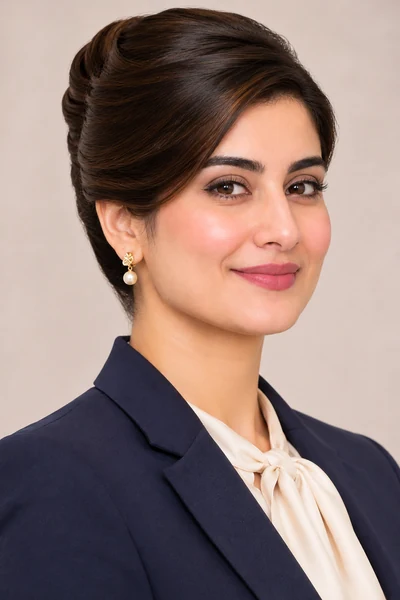
Low Chignon / Effort: Easy
A chignon is a refined cousin of the low bun, twisted rather than coiled, with a slightly more polished silhouette that suits thick hair especially well. Thick hair that makes a regular bun look too full behaves beautifully as a chignon because the twist distributes the volume more evenly at the nape. Work a small amount of smoothing serum through the length before you twist to keep the surface neat and controlled. A middle part suits conservative industries; a side part gives the same chignon a slightly softer, more approachable feel.
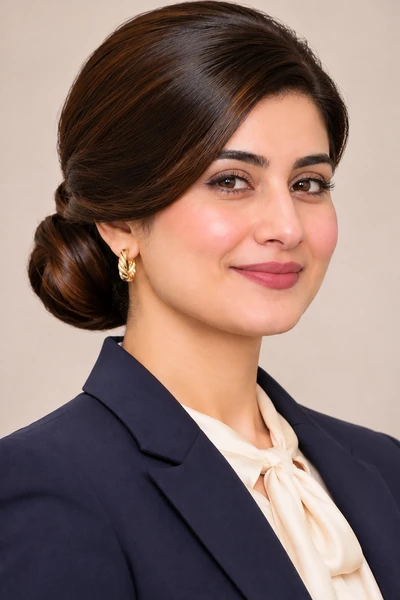
Braided Bun / Effort: Needs Prep
Pull hair into a low ponytail, create a simple three-strand braid down the length, then coil it into a bun and pin it securely in place. The texture of the braid adds visual interest without looking casual or undone, and the style holds longer through a two-hour interview than a plain bun because the braid keeps the hair from unraveling. This works in most industries, including professional ones, as long as the braid is clean and even. Because braids hold better on second-day hair, wash and condition the night before and add a light texturizer before braiding.

Neat Low Ponytail With a Wrapped Elastic / Effort: Easy
This is the simplest option on this list and one of the most reliable for long hair. Brush hair smooth, tie it low at the nape of the neck, take a thin section of hair from underneath the ponytail, wrap it neatly around the elastic, and pin it flat with a bobby pin. It takes five minutes, suits every industry from healthcare to advertising, and holds all day with no touch-ups. If flyaways at the crown are a concern, smooth a tiny amount of light-hold gel over the surface before tying the ponytail.

Side-Parted Blowout / Effort: Moderate
Wearing hair down is completely appropriate for interviews when the style is polished and controlled. A blow-dried blowout with a clean side part looks intentional and put-together, particularly for creative, media, and client-facing roles where a sleek updo might feel overly severe. Use a round brush to add volume at the crown and smooth the ends under or away from the face. Seal the finished style with a light-hold finishing spray to control flyaways through the full length of the interview.
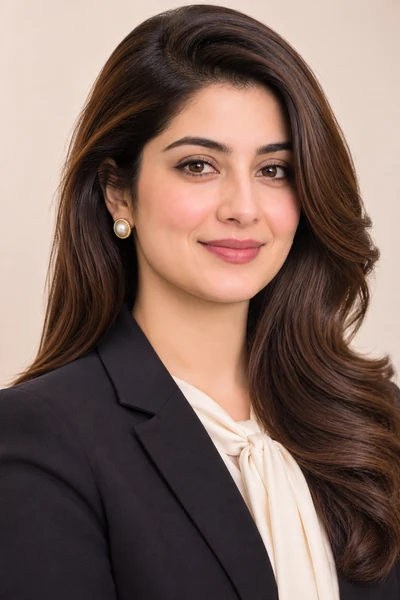
Half-Up Twist With Pins / Effort: Easy
Take the top half of the hair and twist it loosely back, then secure it with bobby pins spread in a small fan shape at the back of the crown. The bottom half hangs loose, which works well if your hair is blow-dried smooth or your natural curls are well-defined. This is a creative-field-friendly option that is polished without being severe, suiting media, tech, and marketing environments well. Avoid this style if your ends tend to frizz or curl up by mid-morning.
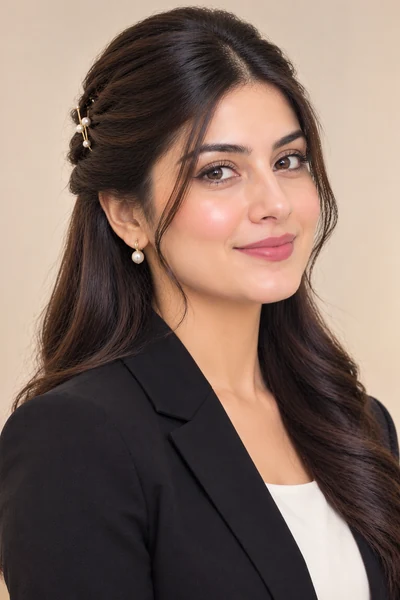
For more inspiration, see our full roundup of long hairstyles for women. It covers styles across textures and lengths, from fine and straight to thick and wavy. The interview-ready picks in that gallery overlap with several of the styles above and give you more variation on the same themes.
Interview Hairstyles for Medium-Length Hair
Interview Hairstyles for Medium-Length Hair
Shoulder-length to collar-bone hair is notoriously tricky on interview morning. It is too short for a full bun, too long to air-dry without looking unfinished, and the layers that look great every other day can become unpredictable the one morning you need them to behave. The styles below are practical solutions built specifically for this length range, not workarounds.
Half-Up Twisted Style / Effort: Easy
Separate the top section of hair from the ears forward, twist each side back toward the center, and pin them together at the back of the crown. The look is clean and structured, working well in tech, creative, and mid-level corporate settings without feeling severe or overly formal. Leave the bottom half down only if your ends are blow-dried or your natural texture is defined. Frizzy ends undercut an otherwise polished overall look. This takes about eight minutes and requires nothing more than a few bobby pins.
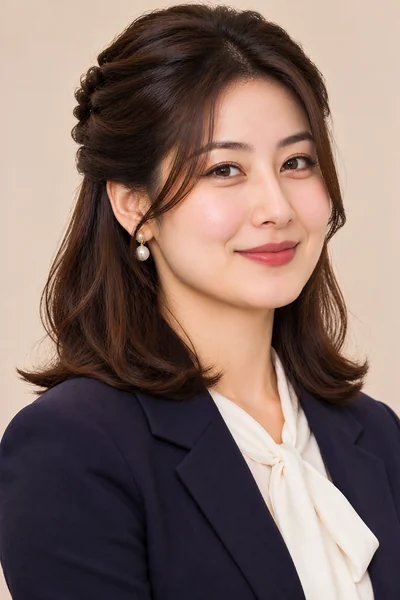
Sleek Blowout With a Center or Side Part / Effort: Moderate
If your medium hair has a good cut, a clean blowout is often all you need for an interview. Use a round brush to smooth the hair under at the ends and add a controlled amount of volume at the crown, then run a flat iron through any sections that didn't smooth fully with the brush. A center part feels modern and editorial; a side part is classic and slightly warmer. Seal with a light-hold spray to keep flyaways flat through the interview.
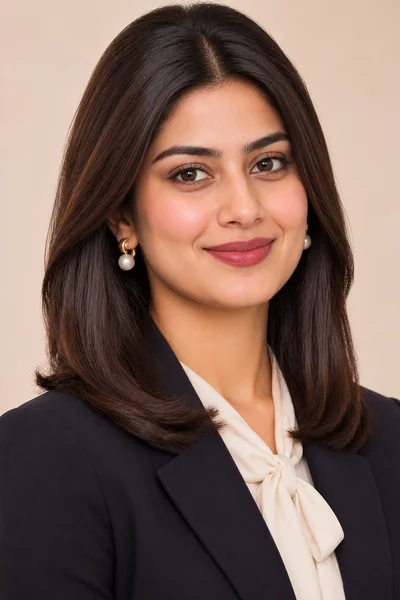
Textured Low Ponytail / Effort: Easy
Tie hair into a low ponytail and wrap a thin section of hair around the base of the elastic to hide it. If your texture is naturally wavy, scrunch a small amount of smoothing cream through the length before tying, which keeps the wave defined and controlled rather than frizzy at the surface. This is a clean option for mid-level professional settings where a full blowout feels like overkill. For extra polish, smooth the top layer lightly with a flat iron before tying.
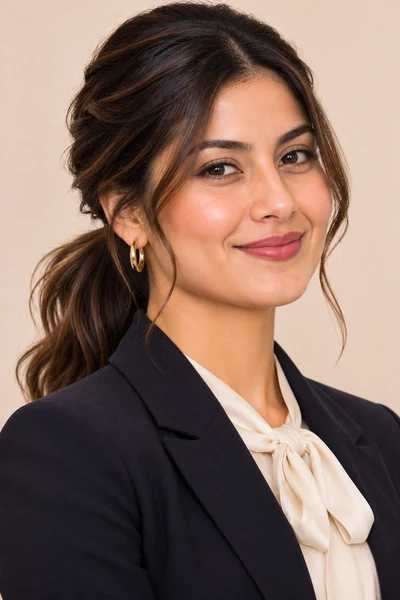
French Twist on Shorter Hair / Effort: Moderate
A French twist at medium length doesn't need to be as sculptural as the long-hair version to look polished and professional. Gather the hair at the nape, roll it upward along the back, and tuck the ends in at the top. If the ends are too short to tuck cleanly, a few bobby pins angled across the top hold everything securely and still look intentional. This is formal and structured, making it a strong choice for finance, law, or any setting where conservative presentation is expected. Practice the motion once the night before to build confidence with the roll.
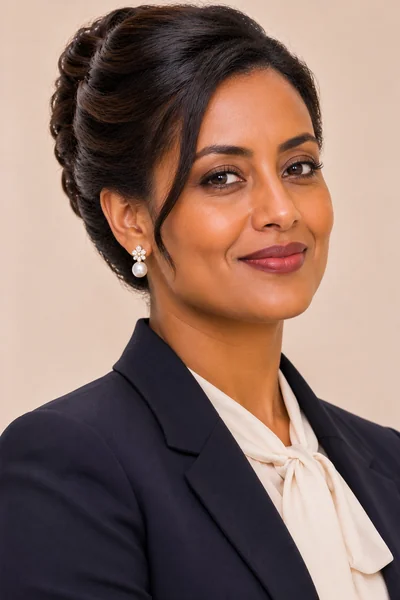
Smooth Lob With a Flat Iron / Effort: Moderate
If your medium hair sits around chin to collar-bone length, straightening it into a clean lob is one of the most reliable interview looks for this length. Section the hair and work through it with a flat iron, then smooth the very ends under slightly for a finished, contained effect. The result is clean, authoritative, and simple to repeat on the day with confidence. Finish with a small amount of frizz-control serum on the ends to prevent them from flipping up by mid-interview.
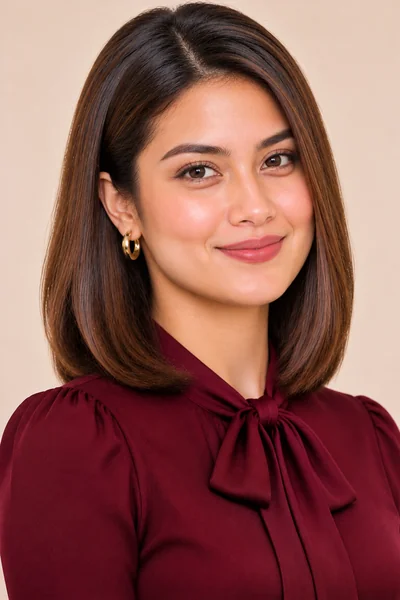
Fine or Thin Hair Note: If your hair falls limp by noon, avoid heavy styling products and skip styles that rely on volume alone for structure. Instead, apply a light-hold mousse to damp hair before blow-drying, add dry shampoo at the roots before styling, and choose structured styles. The half-up twist or French twist both hold their shape much better for fine hair than a full blowout that relies entirely on lift.
Interview Hairstyles for Short Hair

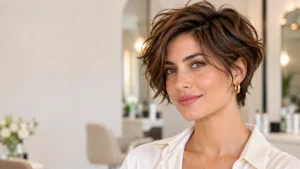
Interview Hairstyles for Short Hair
Short hair, from a textured pixie to a jaw-length bob, is one of the most naturally interview-ready lengths you can have. It already frames the face cleanly, requires less styling time overall, and looks intentional without a great deal of effort. The key for short styles is controlling texture, managing the hairline, and securing any edges that might loosen over a two-hour interview.
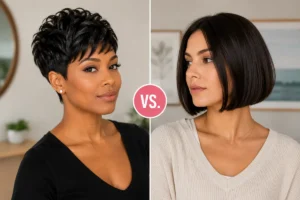
Sleek Pixie With a Side Part / Effort: Easy
A pixie cut styled with a clean side part looks sharp and confident across almost every professional setting. Use a small amount of light pomade or flexible-hold gel to smooth the sides and define the part line cleanly. The focus for this style is controlling the hairline and removing any frizz at the temples, which is where short hair tends to show stress first. This takes under five minutes once you know how your hair responds to your preferred product.
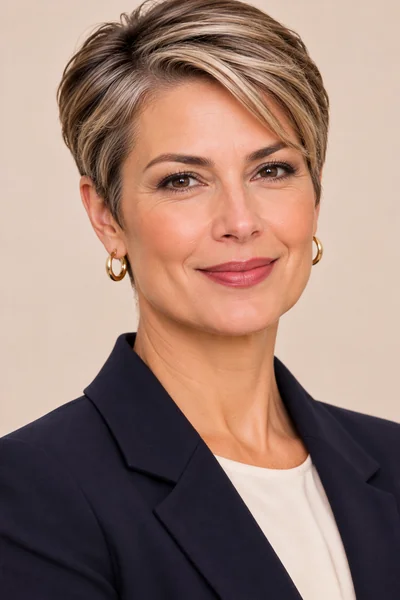
Polished Blunt Bob (Blown Dry Smooth) / Effort: Moderate
The blunt bob is one of the most authoritative short styles for an interview and one of the easiest to make look intentional. Blow-dry in sections using a paddle brush to create an even, smooth surface, then run a flat iron through once for a fully finished effect with no frizz. A middle part makes the look sharper and more deliberate; a side part softens it slightly for roles where approachability matters. This style lands particularly well in corporate, finance, and legal settings.
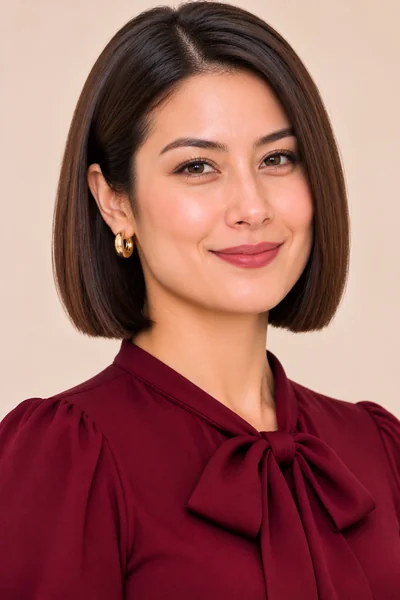
Tapered Nape Style / Effort: Easy
A naturally tapered nape style needs almost no additional styling for an interview. The shape is already built in. Keep the top section controlled with a small amount of pomade or soft-hold mousse, and the clean taper at the back handles the rest. This is a fast, low-stress option for interview mornings when you are managing a hundred other things and need your hair to be the least complicated part of getting ready.
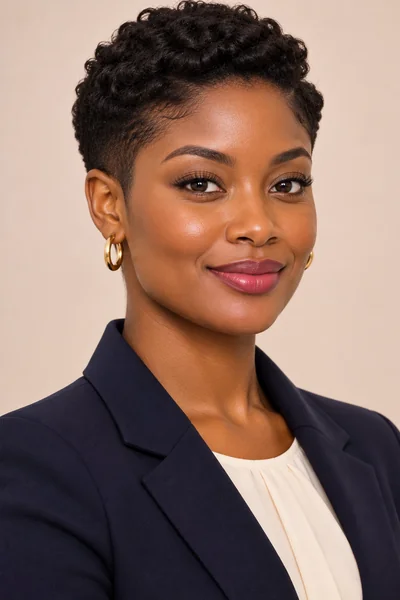
Side-Swept Short Crop / Effort: Easy
Sweeping a short crop to one side adds movement and softness without sacrificing neatness or control. Use a round brush and a blow-dryer to direct the hair to one side, then set the shape with a light-hold finishing spray. This works for creative, tech, and mid-level professional settings where a very sleek style might feel overly rigid or formal. Keep the opposite side smooth so the sweep comes across as a deliberate styling choice, not an accidental one.
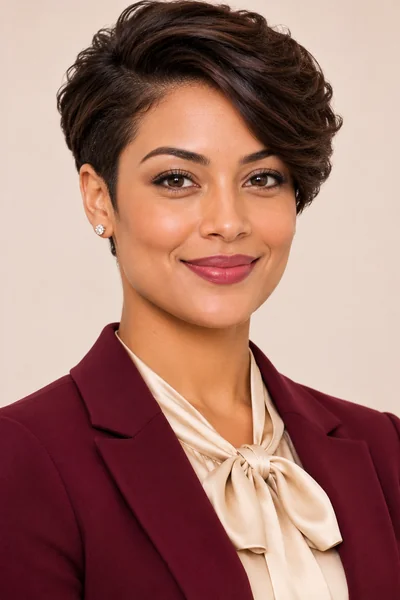
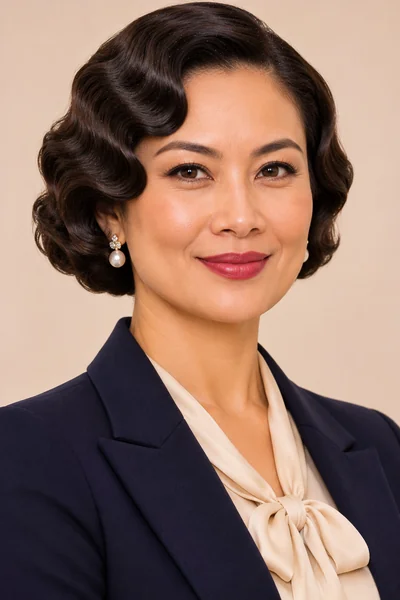
Finger-Waved Bob / Effort: Moderate
Finger waves on a short bob add structure and a polished quality that comes across as deliberate and refined in the right setting. Use a setting lotion or wave cream on damp hair, press the waves into shape with a fine-tooth comb and your fingers, and allow the hair to dry fully before the interview, ideally overnight. This style holds beautifully for hours without needing a touch-up. It suits creative, fashion, and media roles particularly well, and is a stronger fit for those settings than for strictly conservative environments.
Salon Script for Short Hair:
"Tell your stylist: I want a clean, blow-dried [bob / pixie] with smooth edges and no frizz at the hairline. I need it to hold through a two-hour interview; please finish with a light-hold spray and let me know which product you used so I can maintain it at home. If there is a specific technique for the part or the edges, walk me through it so I can replicate it at home on interview morning."
Interview Hairstyles for Curly, Coily, and Natural Hair
Interview Hairstyles for Curly, Coily, and Natural Hair
Natural and textured hair is professional, and the interview hairstyles for women in this section are not about taming your curls or smoothing them into something they are not. They are about choosing styles that hold comfortably through a long interview so your focus stays on the conversation, not on your hair. Every style below is interview-appropriate in the same way a sleek bun is: intentional, neat, and chosen with care.
Defined Twist-Out Bun / Effort: Needs Prep
Start a twist-out the night before the interview and allow the curls to set fully overnight for the most defined results. In the morning, gather the hair into a low or mid-height bun, pin loosely to preserve the curl pattern, and smooth the edges with edge control for a clean finish at the hairline. This style holds its shape for hours, keeps hair completely off the face, and looks polished in any professional setting from healthcare to creative studios. It photographs well on camera too, making it a strong Zoom interview option.
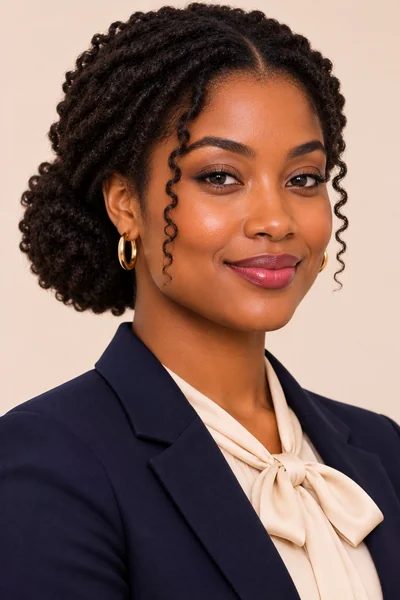
Sleek Braid-Out Low Puff / Effort: Needs Prep
Braid hair the night before, release the braids in the morning, and gather the defined texture into a low puff at the nape of the neck. The braid-out pattern gives the puff clean definition that photographs much better on a video call than loose, undefined volume, which tends to compress and blur on camera. Smooth the hairline edges for a finished, deliberate look, and secure with a soft fabric elastic and a few pins at the base. This is especially effective for Zoom interviews where camera clarity matters.
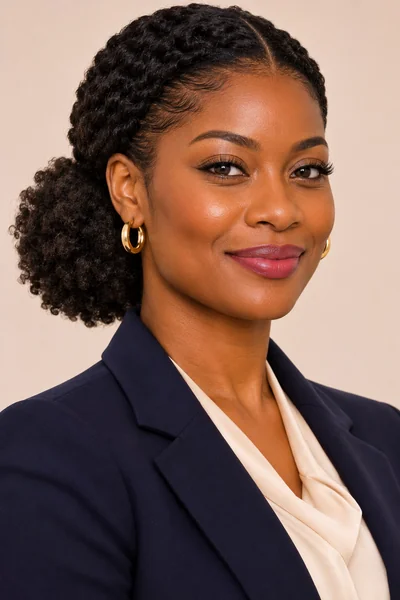
Flat-Twist Updo / Effort: Moderate
Flat twists pinned into a neat updo offer structure and a clean silhouette that works without needing an elastic or a bun. Section the hair into four to six flat twists, direct them toward the nape or crown, and pin the ends neatly under for a finished effect with no loose pieces. It holds well through the full day and suits formal settings including finance, healthcare, and law. Moisturize the hair the night before for the cleanest, most defined flat twists on interview morning.
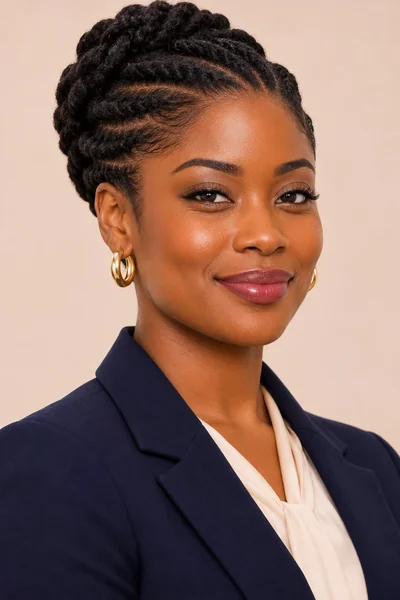
Knotless Braid Bun / Effort: Needs Prep
If you regularly wear knotless braids, gathering them into a neat low bun is one of the most practical and low-stress interview options available. The braids are already a finished, polished style. All you need is a soft elastic and a couple of discreet pins to secure the bun cleanly. This is entirely appropriate in every industry, including formal and conservative settings, as long as the bun sits evenly and no loose braids fall across your face during the interview.

Stretched Coil Half-Up / Effort: Moderate
Stretch the coils slightly at the roots using a blow-dryer with a diffuser attachment on a low heat setting or by banding overnight, then pin the top half back and allow the bottom coils to hang with definition. The stretch reduces shrinkage and gives the style a longer silhouette that looks more deliberate than a fully shrunken coil shape. Use a light oil to define the coils at the ends and a gel or edge control at the hairline for a finished perimeter. This works well for creative and mid-level professional settings.

Protective Style Note: Locs and sisterlocks are professional and appropriate at every level of the workplace, including executive interviews. For formal settings, simply make sure they are neatly secured and away from the face. A low bun or pinned-back arrangement works cleanly. If you wear protective styles regularly, they require no special modification for a professional interview environment.
Zoom Interview Tip for Textured Hair: Defined styles such as twist-outs and braid-outs photograph significantly more cleanly on video than loose, undefined volume, which tends to compress and blur on camera. For video interviews, gather the hair into a pinned updo or defined low puff so the background behind you stays clear and the focus stays on your face. Test the style on your device's camera before the call starts, because what looks neat in a mirror can look different in a front-facing camera under overhead lighting.
Browse our full gallery of curly hairstyles for more everyday texture ideas beyond the interview. That gallery includes styled looks for 3A through 4C textures, with guidance on products and techniques for each. The five interview styles above are a starting point, not a ceiling.
Night-Before Prep Checklist and Frequently Asked Questions
Night-Before Prep Checklist and Frequently Asked Questions
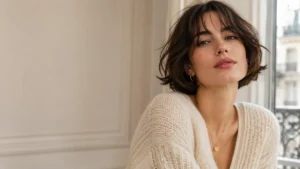
Preparing the night before an interview changes the entire experience of getting ready. Instead of making styling decisions under time pressure, you are working with a look you already tested, using tools that are already laid out, with time built into your schedule for anything that needs a small adjustment. It is a simple habit that removes one of the more unpredictable variables on an already high-pressure morning.
Night-Before Hair Prep Checklist:
- Wash and condition if your chosen style sets overnight. Twist-outs, braid-outs, and bun waves all look their best on clean, moisturized hair that has had time to dry and set properly.
- Lay out your tools the night before: bobby pins, clear elastics, smoothing spray, dry shampoo, and a light-hold hairspray, so nothing needs to be searched for during the morning rush when time is short.
- Do a full test run of your chosen style and time yourself with a clock. The real effort on interview morning is consistently longer than the estimate in your head, and knowing the true time gives you control.
- Sleep with hair loosely pinned, wrapped in a satin scarf, or secured in a protective overnight style to prevent flat spots at the crown and frizz where the pillow meets the hair. Satin and silk reduce friction significantly more than cotton; the American Academy of Dermatology recommends them for overnight hair protection and breakage prevention.
- Set a 20-minute hair buffer into your morning schedule. Even Easy-rated styles deserve breathing room on a morning where everything else is also competing for your attention.
Morning-of note: If you air-dried overnight, refresh the style with a light spritz of water and smooth with a boar-bristle brush or a denman brush before leaving. A quick flat iron pass on any sections that need it takes under two minutes when everything else is already in order from the night before. Keeping a small smoothing spray in your bag also lets you fix a single loose section without dismantling the rest of the style.
Frequently Asked Questions About Interview Hairstyles
Should I wear my hair up or down for a job interview?
Either is appropriate, as long as the style is polished and controlled throughout the interview. Up styles keep hair completely off the face, which looks focused and put-together in conservative settings, and they are the safer choice for very formal or traditional industries. Wearing hair down works well when it is blow-dried smooth or when curls are cleanly defined. The key factor is that nothing falls across your face repeatedly during the conversation, because that becomes a distraction for both you and the hiring manager.
What hairstyles look most professional for a job interview?
The most professional interview hairstyles for women include sleek low buns, low ponytails, French twists, blunt bobs, and defined natural updos, all of which are appropriate across most industries. The common thread is that every one of those styles keeps hair contained, off the face, and clearly intentional. Any style that is deliberately done rather than an afterthought shows the same standard of care you bring to every other part of the interview preparation.
Is it okay to wear curly hair to an interview?
Yes, and this does not need a qualifier or a caveat about specific industries. Defined curls, twist-outs, braid-outs, and natural updos are professional. The key is that the style is intentional and controlled, not that it is straight or chemically smoothed. Wash and define your curls the night before so you have full control over the shape in the morning, and use edge control at the hairline to give the style a clean, finished perimeter.
What hairstyle is best for a Zoom interview?
Pull hair back or secure it away from your face so it does not distract the interviewer or blur into the background on camera. Sleek buns, low ponytails, flat-twist updos, and pinned-back styles all photograph cleanly and hold their shape through the full length of a video call. Test your look on camera before the call starts; check that flyaways are controlled and that the silhouette does not compete visually with whatever is behind you in the frame.
What hairstyles should I avoid for a job interview?
Avoid very messy buns with multiple visible flyaways, styles that fall across your face repeatedly, or elaborate updos that draw the eye away from what you are saying. Very vivid or unconventional color can work depending on the industry and company culture, but in conservative fields it can become a talking point that pulls focus from your qualifications. The guiding question is simple: when the hiring manager looks at you, does your hair pull their attention away from your face? If the answer is yes, choose a different style.
You have 22 looks here. One fits your length, texture, industry, and the exact amount of time you have on interview morning. Save the one that suits your situation, test it tonight, and walk in tomorrow knowing that part is handled. For everyday work hairstyles you can wear once you land the role, browse our full professional roundup, and if you want even more ideas for your length, the long hairstyles gallery has you covered.
Your email address will not be published. Required fields are marked *