Vintage hairstyles for women are having their biggest comeback in years. Old Hollywood waves are showing up on red carpets, victory rolls are all over Pinterest, and the 1970s shag has become a salon staple again. This guide covers 35 styles organized by decade, from the 1920s finger wave to the 1970s Farrah flip, with a face-shape note, hair texture suitability, a difficulty rating, and one everyday-wear adaptation tip for each look. Scan by era, filter by what your hair can do, and bring this post to your next salon visit.
Vintage vs. Retro: What Is the Difference?
Vintage vs. Retro: What Is the Difference?
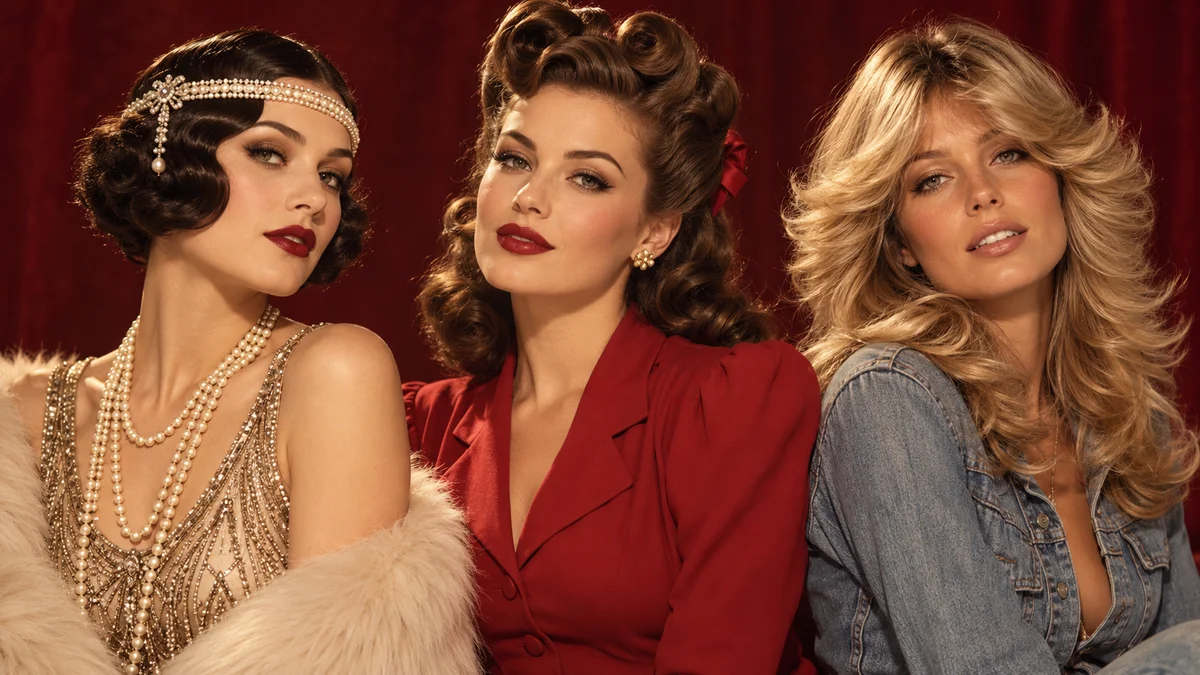
Before you start pinning, it helps to know what each term means in practice. A vintage hairstyle originates from a specific historical decade (finger waves from the 1920s, victory rolls from the 1940s, Farrah waves from the 1970s) and is meant to replicate the original technique as closely as possible. A retro hairstyle takes inspiration from those eras without being an exact replica, usually with looser technique, modern products, and a more adaptable finish.
This matters for you practically. A true vintage look, such as hot-set pin curls or a precision-set Marcel wave, requires specific tools and more time to achieve. A retro version lets you take the spirit of the look and simplify it with a curling iron, dry shampoo, and a quick finish. This guide covers both, labeled so you always know what level of effort you are actually signing up for before you commit to a style.
1920s and 1930s Vintage Hairstyles for Women
1920s and 1930s Vintage Hairstyles for Women
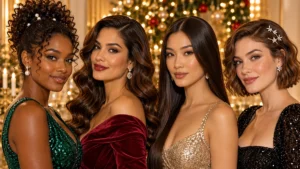
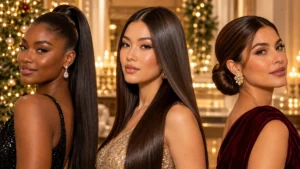
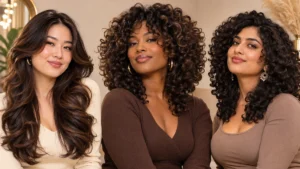
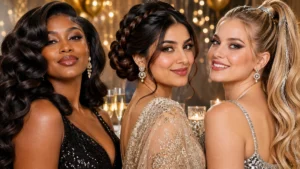
The 1920s and 1930s produced some of the most architectural hairstyles ever created. Hair was worn close to the head, sleek or softly waved, with shape and structure doing all the work rather than volume. These six styles suit women who love a polished, graphic look that photographs beautifully and skips all the bulk.
Finger Waves
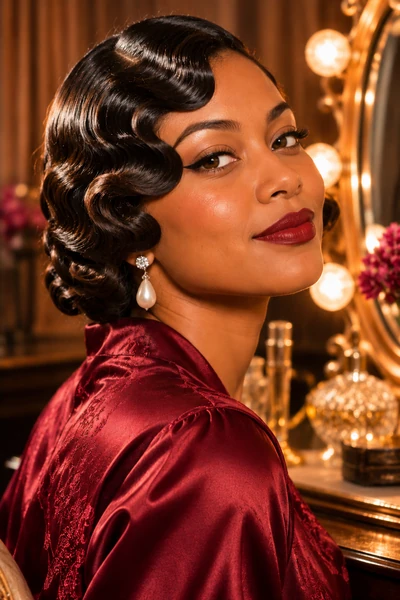
Finger waves create sculpted S-curves along the hairline using a fine-tooth comb and strong-hold gel on wet hair, resulting in one of the most iconic looks of the jazz age. They are best for oval and long faces, and they work well on fine to medium straight hair.
Difficulty: Advanced. Use a crimping iron on just the top sections to suggest the look in half the time for a wearable daily version.
The Blunt Bob with a Deep Side Part
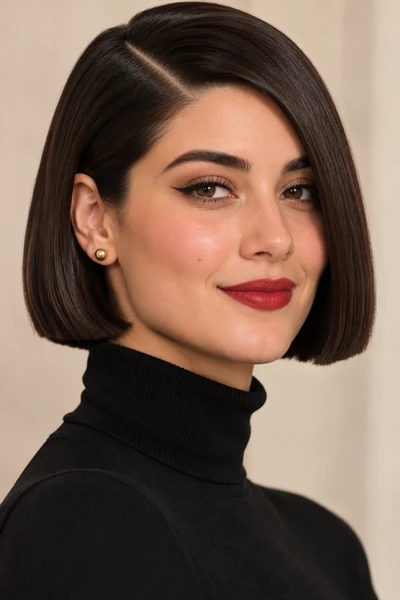
This is a cut, not just a style, which means you will need a salon appointment to achieve the blunt, precision ends that define the 1920s bob. Best for oval and square faces, it works on straight to wavy, fine to medium hair, and is a Beginner-level style to maintain once the cut is in place. If you already have a bob at home, a strong side part and flat-ironed ends are enough to approximate the look. For modern versions of this silhouette,
Difficulty: Beginner to style, once cut.
Marcel Waves
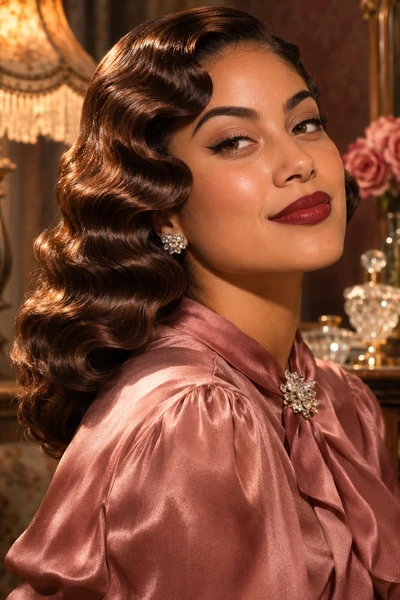
Marcel waves look similar to finger waves but are tool-set rather than pin-set. A curved Marcel iron or similar heated iron, used alongside a comb to guide the wave shape, creates the deep, even S-pattern waves without the holding gel or wet pin-setting that finger waves require. Best for oval and long faces, they work on straight, fine to medium hair, and the looser technique makes them more approachable than finger waves for most people.
Difficulty: Intermediate. Run a large-barrel curling iron through sections and press the waves flat with your palm while still warm for a softer, everyday version of the look.
The Gibson Girl Updo
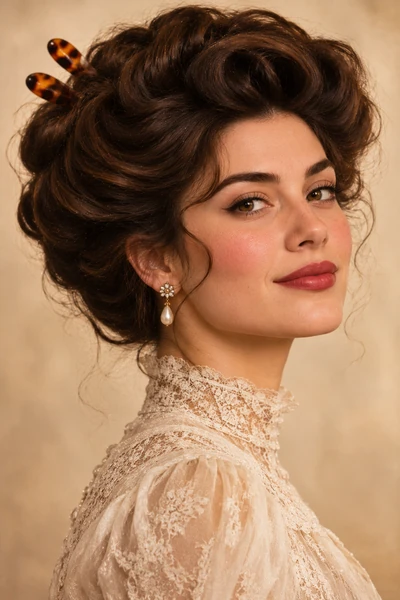
A full, rounded pompadour-style updo with hair swept loosely to the crown and secured at the back, the Gibson Girl originates in the 1890s and was still seen into the early 1920s before the bob and finger waves became the dominant silhouette. It is best for long and narrow face shapes, where the width at the crown adds visual balance, and it works on medium to thick hair. Fine hair benefits from a volumizing mousse before building the shape.
Difficulty: Intermediate. Skip the full pompadour and create soft volume at the crown with a round brush before pinning the sides back for a practical daily adaptation.
The Sleek Chignon
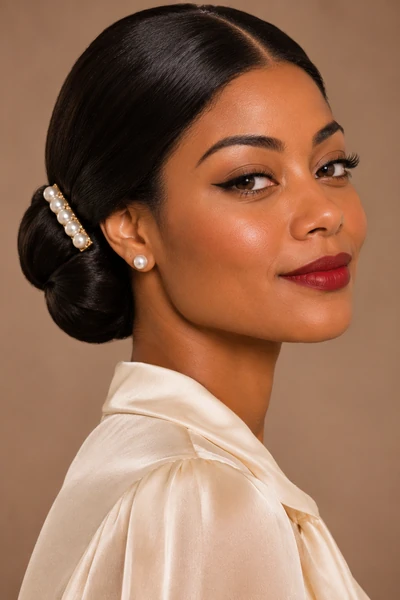
Clean, low, and unfussy, the sleek chignon was a staple of 1930s sophistication and requires almost no effort to recreate today. It is best for oval and heart faces and works on any texture. Straight hair sets most cleanly, but curly or coily hair smoothed and pinned at the nape creates an equally elegant result.
Difficulty: Beginner. A low bun with a center part, no flyaways, and a pearl or gold hair clip is essentially a modern chignon that works for any occasion from desk to dinner.
The Faux Bob
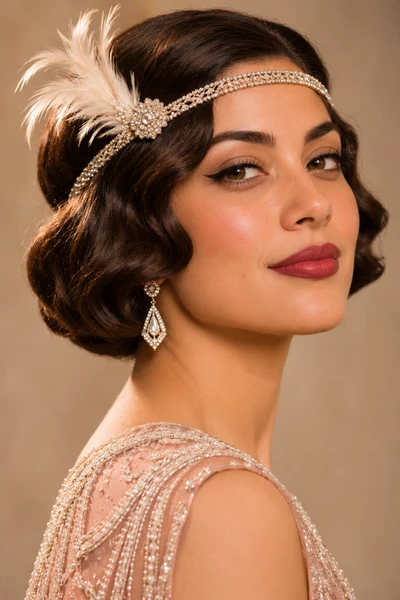
For women who want the 1920s bob look without cutting their hair, the faux bob involves tucking and pinning longer hair under at the nape to create the appearance of a short blunt cut. Best for oval, square, and round faces, it works on straight to wavy hair of any density and is one of the most practical vintage looks to pull off at home.
Difficulty: Beginner. Secure all the pinned sections with bobby pins and finish with a light-hold spray. This style stays in place reliably without damaging any hair.
1940s and 1950s Vintage Hairstyles for Women
1940s and 1950s Vintage Hairstyles for Women
The 1940s and 1950s are the era most women picture when they say “vintage hair.” Curls were glamorous, volume was intentional, and the finish was always polished. These twelve vintage hairstyles for women are also among the most searched retro looks online. No other guide on the current first page tells you clearly which works on your hair type or gives you a realistic time estimate.
Not sure which style suits your texture? Jump to the hair texture guide at the bottom of this post. Most women find two or three eras with styles that work for their texture, and the guide narrows that down quickly.
Victory Rolls
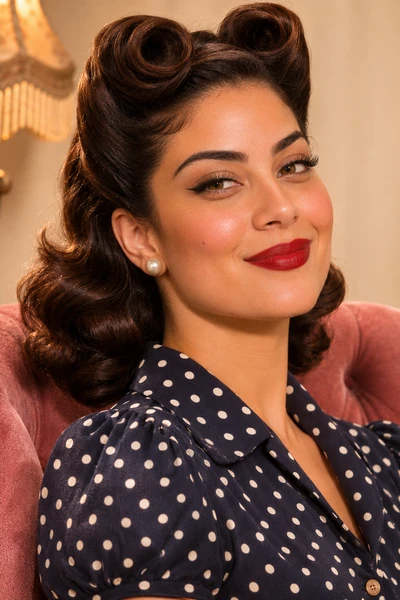
Victory rolls are two or more barrel-shaped rolls at the front of the hairline, formed by sectioning, backcombing, and rolling the hair outward before securing with pins. They are best for oval and long faces, and they work on short to medium hair in straight to wavy textures. You need at least 4-6 inches of length at the front for the roll to form properly.
Difficulty: Intermediate to Advanced. If you have never done these before, ask your stylist to walk you through the sectioning technique at your next visit before attempting them at home on your own.
Pin Curls
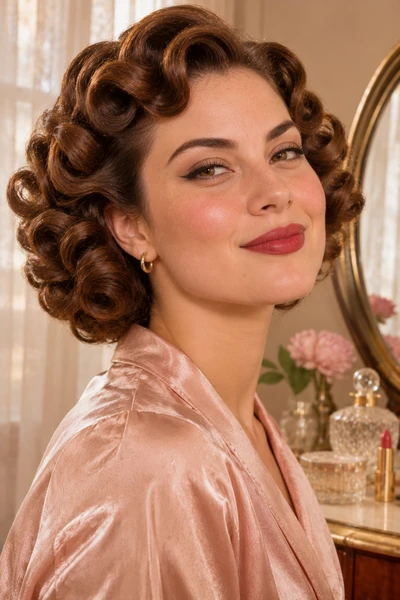
Pin curls are formed by wrapping small sections of damp hair into flat, circular coils and securing them with clips until fully dry, making them one of the only vintage techniques that is completely heatless. Overnight pin curls are gentle on fine or color-treated hair, while hot-set pin curls dry faster with a blow-dryer on low heat. They are best for oval and round faces, work on all textures including coily hair (use a curl-defining cream for definition), and are rated Beginner with practice. Set just the front sections overnight and leave the rest loose for a soft, hybrid look that reads as intentional rather than costume.
The Bouffant
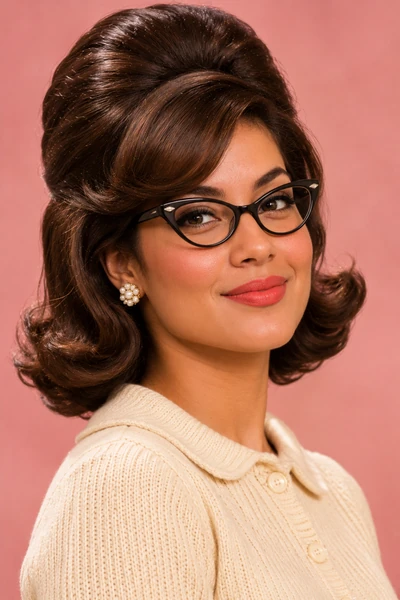
The full 1950s bouffant requires significant backcombing, volumizing spray, and strong-hold hairspray to build and maintain real height, which puts it in the Advanced category. A modern adaptation, however, is simply a gentle crown tease with a medium-hold spray. That version is fully Beginner-level and perfectly wearable on a weekday. Best for round and square faces, where the vertical volume adds apparent length, the bouffant works best on thick hair, though fine hair can achieve a softer version with dry shampoo for grip.
Difficulty: Beginner (modern version) to Advanced (full height). Tease only the crown section, smooth the top layer over it, and mist lightly with finishing spray.
The Rockabilly Pin-Up Ponytail
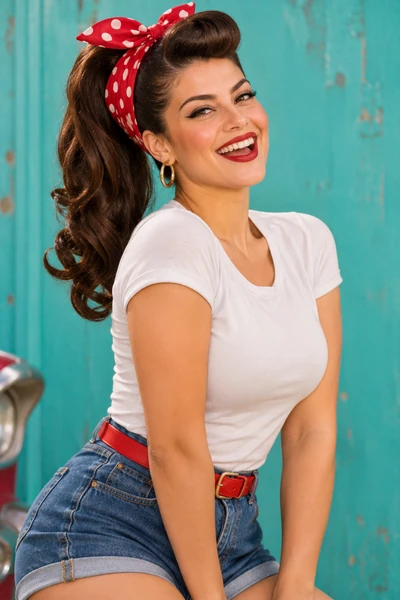
A high, sleek ponytail with a slightly pouffed bump at the front hairline, often finished with a bandana, bow, or scarf tied at the base. It is best for oval, heart, and long faces and works on straight to wavy, medium to long hair.
Difficulty: Beginner. Skip the bandana for work and wear the front bump with a clean, sleek ponytail. The result reads as modern and polished rather than period-specific, which makes it a versatile everyday option.
The Poodle Cut
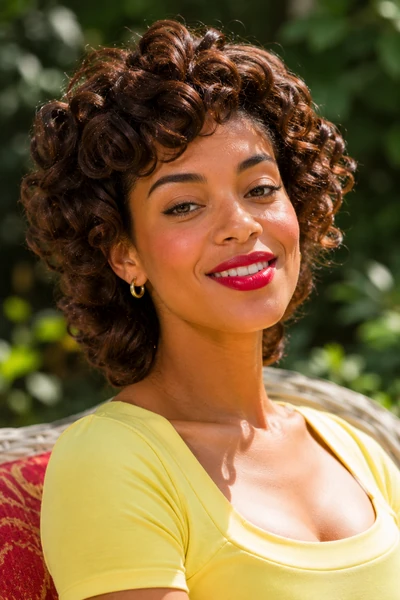
The poodle cut is a short, layered cut with tight curls all over, and it requires a salon visit to achieve the right shaping and layering. Best for round and oval faces, it works well on naturally curly and coily hair, which provides the built-in texture the style is designed around.
Difficulty: Beginner to style, once cut. This cut looks its best air-dried with a curl cream and zero heat. It is one of the few vintage styles that rewards low-maintenance styling.
The Pageboy Haircut
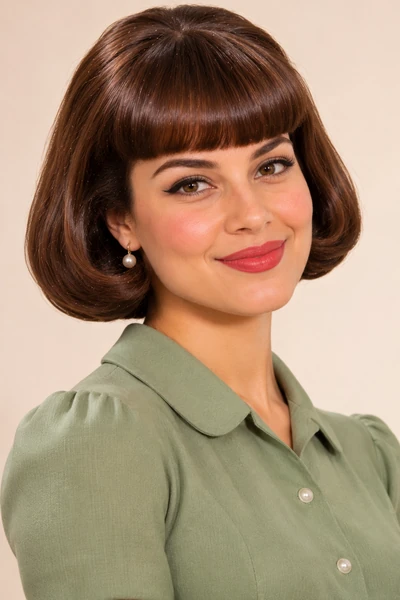
A chin-length cut with a rounded, inward-curled edge and a blunt fringe, the pageboy was a hallmark of 1950s put-together style and still looks modern today. Best for oval and square faces, it works on fine to medium straight hair, which holds the inward curl most cleanly.
Difficulty: Beginner to style, once cut. Blow-dry the ends under with a medium round brush and a small amount of smoothing mousse. The style sets itself in a single step.
Soft Retro Curls
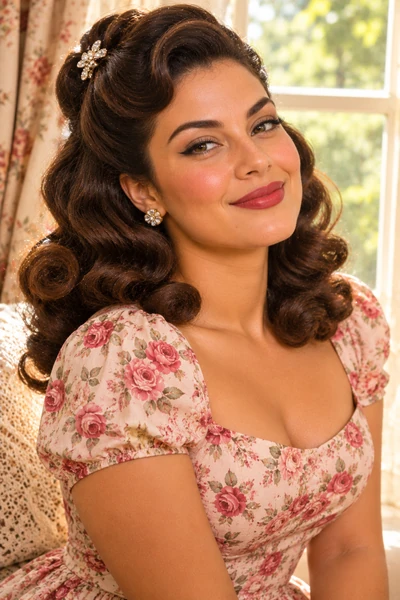
A half-up arrangement with loose, set curls at the sides and crown, soft retro curls give a vintage feel without committing to a full period look. Best for all face shapes, this style works particularly well on naturally wavy and curly hair, which is already most of the way there before any styling begins.
Difficulty: Beginner. Curl with a 1.5-inch barrel, finger-comb the curls loosely, and clip back the top section. The whole process takes under 15 minutes from start to finish.
The Vintage Bob with Rolled Ends
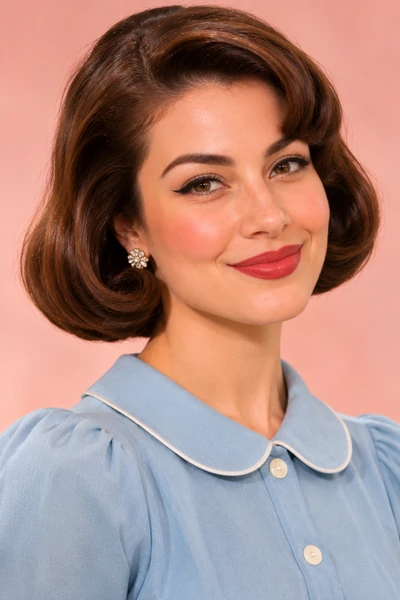
A chin-length bob where the ends are curled gently inward using a flat iron or rollers, creating a soft, face-framing curve that gives any bob a 1950s feel without a dramatic change. Best for oval and heart faces, it works on straight to slightly wavy, fine to medium hair.
Difficulty: Beginner. Use a 1-inch flat iron on the last two inches of your bob only, roll the ends under, and set with a light-hold spray.
The Veronica Lake Side Sweep
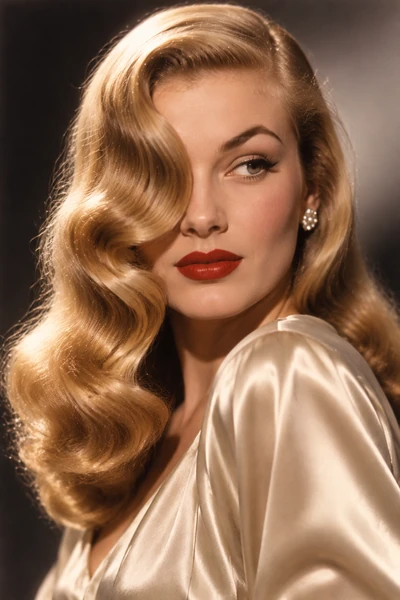
A long, sweeping wave that falls dramatically over one eye, the Veronica Lake look is all about soft, romantic movement from the crown to the shoulder. It is best for heart and oval faces, where the side sweep adds width at the cheekbones and softens a wider forehead, and it works on straight to wavy, fine to medium hair.
Difficulty: Intermediate. Blow-dry hair entirely to one side with a large round brush and finish with a setting spray rather than a structured wave for a softer, wearable daily version.
The Pin-Up Bandana Style
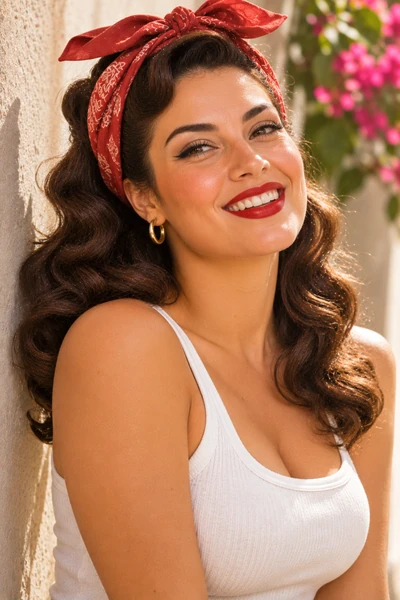
A headscarf or bandana folded and tied at the top of the head with curls or waves left loose below. The pin-up bandana is both the most casual and the most recognizable vintage look on this list. Best for all face shapes, it works on any hair texture and requires no particular styling technique whatsoever.
Difficulty: Beginner. Fold the scarf into a 2-inch strip, tie it at the crown, and wear with whatever curl or wave your hair naturally has. This is already an everyday style that needs no adaptation at all.
The Pompadour Roll
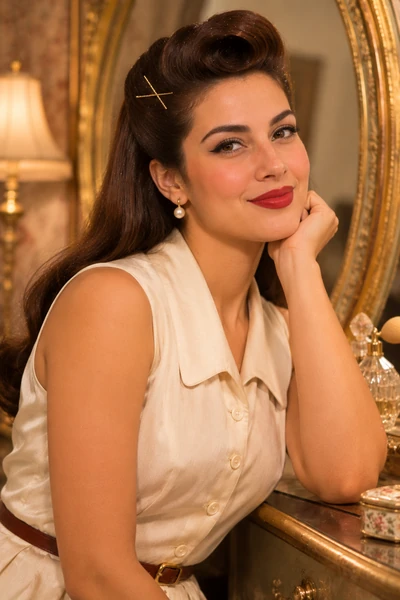
A front section of hair rolled back and away from the face to create height at the crown, the pompadour roll is a softer, more wearable alternative to the full bouffant. Best for long and oval faces, it works on medium to thick hair that has some natural grip.
Difficulty: Intermediate. Use a small section at the very front only, roll it loosely backward, and secure with two crossed bobby pins. The back and sides of the hair can stay down or be pulled into a low style.
The Sweetheart Wave
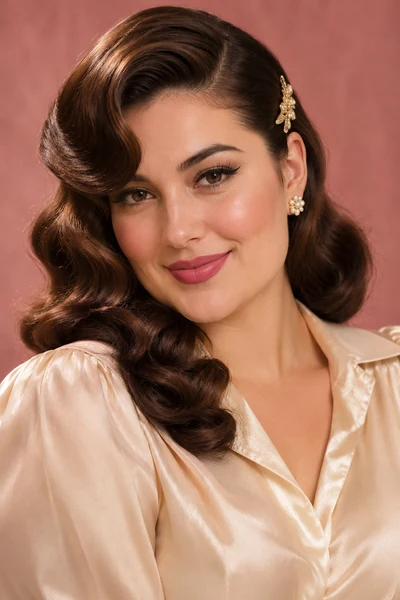
A gentle, off-center wave that falls forward across the forehead and cheek, inspired by 1940s wartime glamour photography, the sweetheart wave is softer and more romantic than a victory roll. Best for square and oval faces, where the soft diagonal line eases angular features, it works on straight to wavy, fine to medium hair.
Difficulty: Intermediate. Blow-dry the front section toward one side with a round brush, then finish with a light-hold mist to keep the wave in place without crunch.
1960s and 1970s Vintage Hairstyles for Women
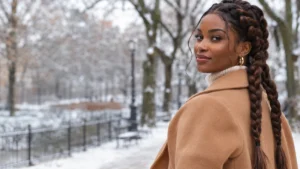
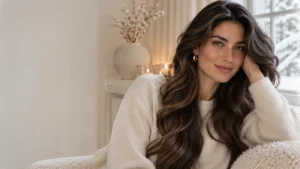
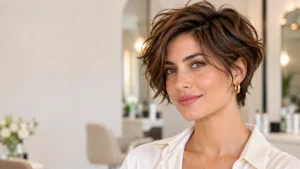
1960s and 1970s Vintage Hairstyles for Women
The 1960s and 1970s broke every rule that came before. Hair got bigger, then freer, then bigger again. These two decades produced the beehive and the boho braid in the same twenty-year window. Women with naturally curly and coily hair often have an advantage with many of these vintage hairstyles for women: the Brigitte Bardot volume, the shag, and the Farrah wave all embrace texture rather than resist it.
The Beehive
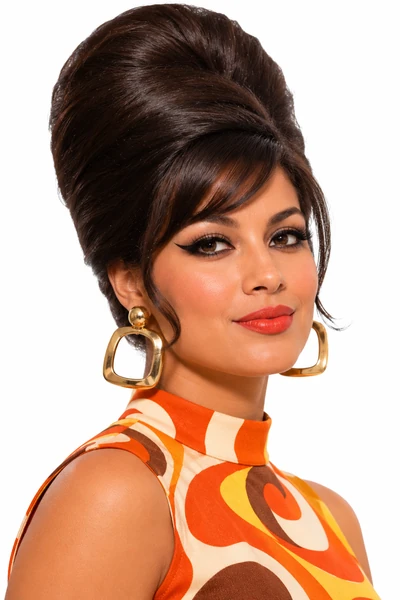
A tall, structured cone of hair built up from the crown using backcombing, hot rollers, and heavy-hold spray, the beehive is bold, theatrical, and completely iconic as a 1960s statement look. Best for long and oval faces, it works best on thick hair, which holds the structure without caving or flattening throughout the day.
Difficulty: Intermediate. Hide a small donut bun insert underneath a teased top section for a shorter, faster version that gives you the silhouette in five minutes rather than twenty-five.
The Mod Flip
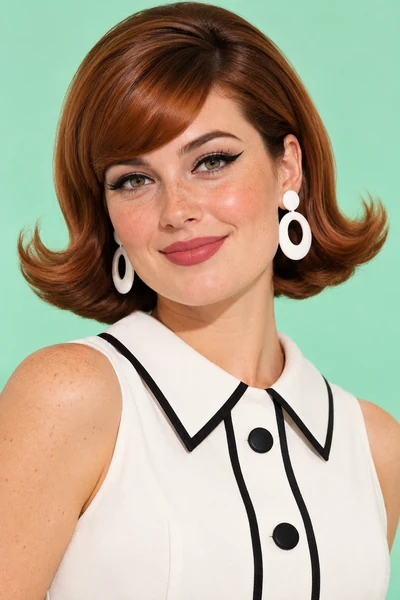
A chin-length or shorter style where the ends are curled dramatically outward and slightly upward, the Mod flip is light, graphic, and the easiest vintage look on this entire list to recreate at home. Best for oval and round faces, it works on fine to medium straight hair and requires no special tools beyond a round brush.
Difficulty: Beginner. Blow-dry your ends outward and upward with a medium round brush. The heat from your dryer alone sets this style without any additional curling iron needed.
Brigitte Bardot Volume Waves
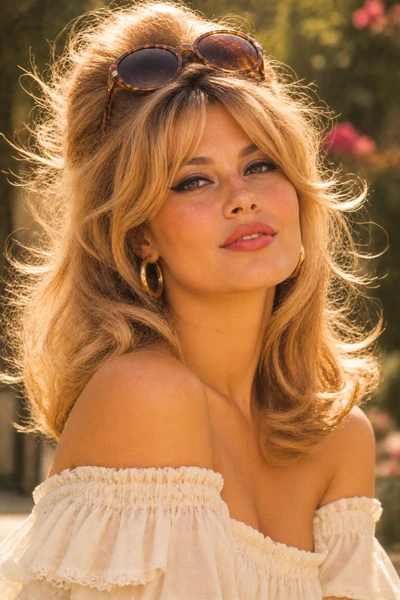
Full-bodied, tousled volume at the crown with soft, undone waves throughout. This is one of the few vintage styles that flatters naturally wavy and curly hair without asking you to force straight perfection. Best for oval and square faces, it works on wavy, curly, and coily hair, which provides the natural volume and texture that makes the look authentic rather than effortful.
Difficulty: Beginner. Apply volumizing mousse to damp hair, diffuse fully, then tease the crown gently and break up the curls with your fingers for a lived-in, editorial result.
Feathered Layers
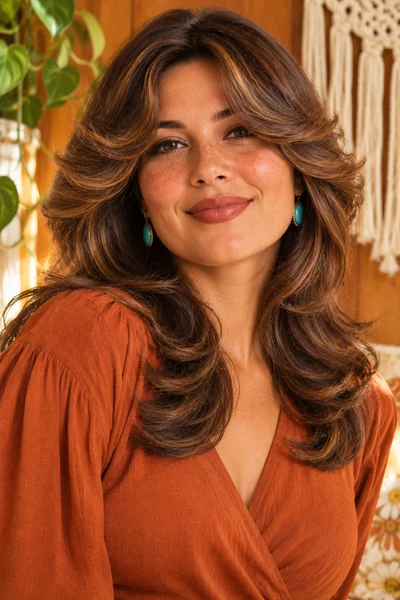
Long, face-framing layers blown back and outward with a round brush to create the winged, feathered effect associated with 1970s glamour, feathered layers are a style that requires the right cut as a foundation. Best for oval, heart, and round faces, they work on medium to thick straight or wavy hair, which holds the outward direction most reliably.
Difficulty: Intermediate. Rough-dry your hair with a paddle brush for general volume, then use a round brush only on the front sections to shape the feather. The back can air-dry or be left natural.
The Shag Haircut
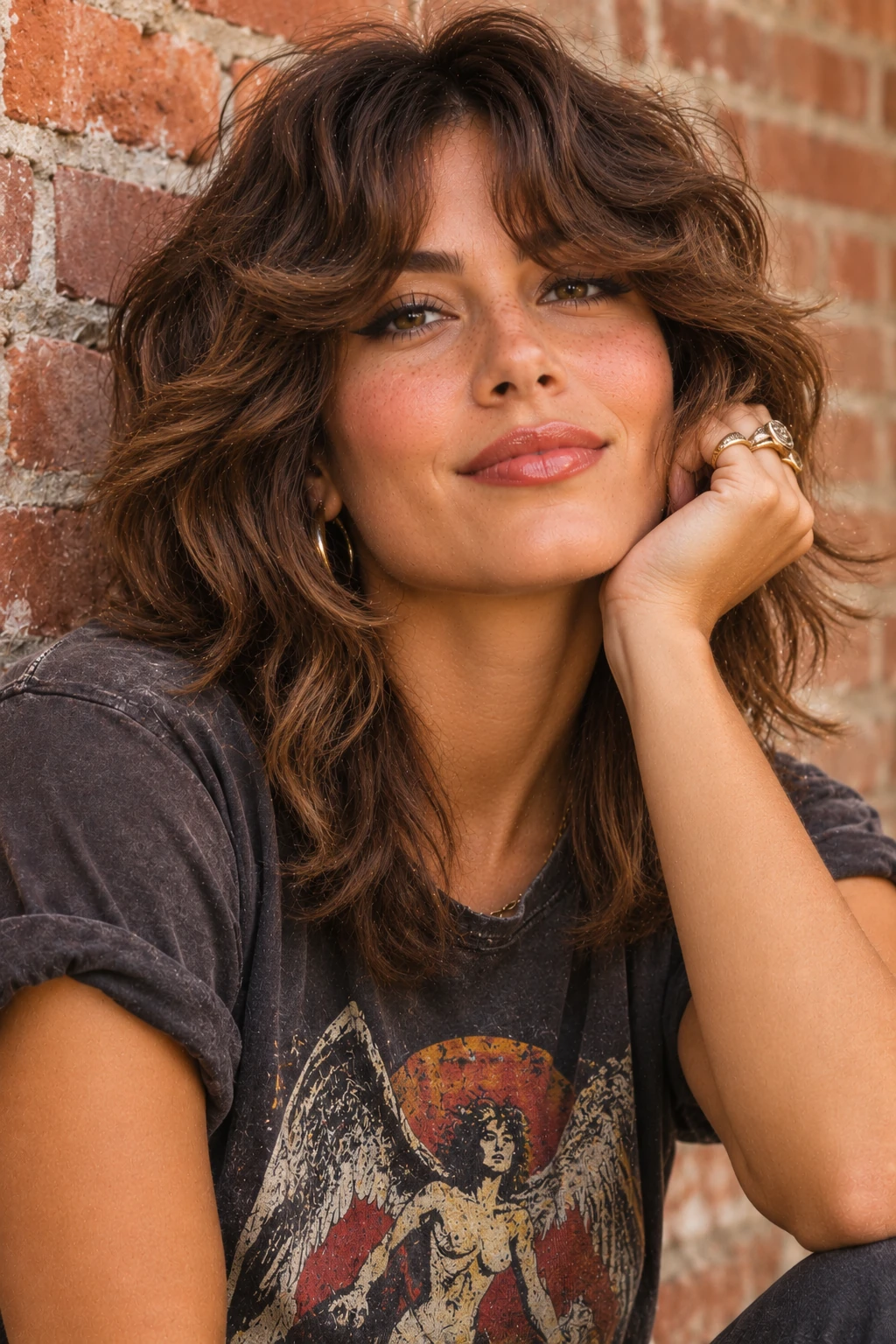
A layered, textured cut with curtain bangs and choppy, graduated ends that brought rock-and-roll attitude to the 1970s, the shag looks effortless because it is specifically designed to air-dry beautifully. Best for all face shapes, it works on thick, curly, and wavy hair most naturally, where natural movement adds to the lived-in quality of the cut.
Difficulty: Beginner to style, once cut. Scrunch with a curl cream or texturizing spray, let it air-dry completely, and the cut does all the styling work on its own.
The Long Straight Centre Part
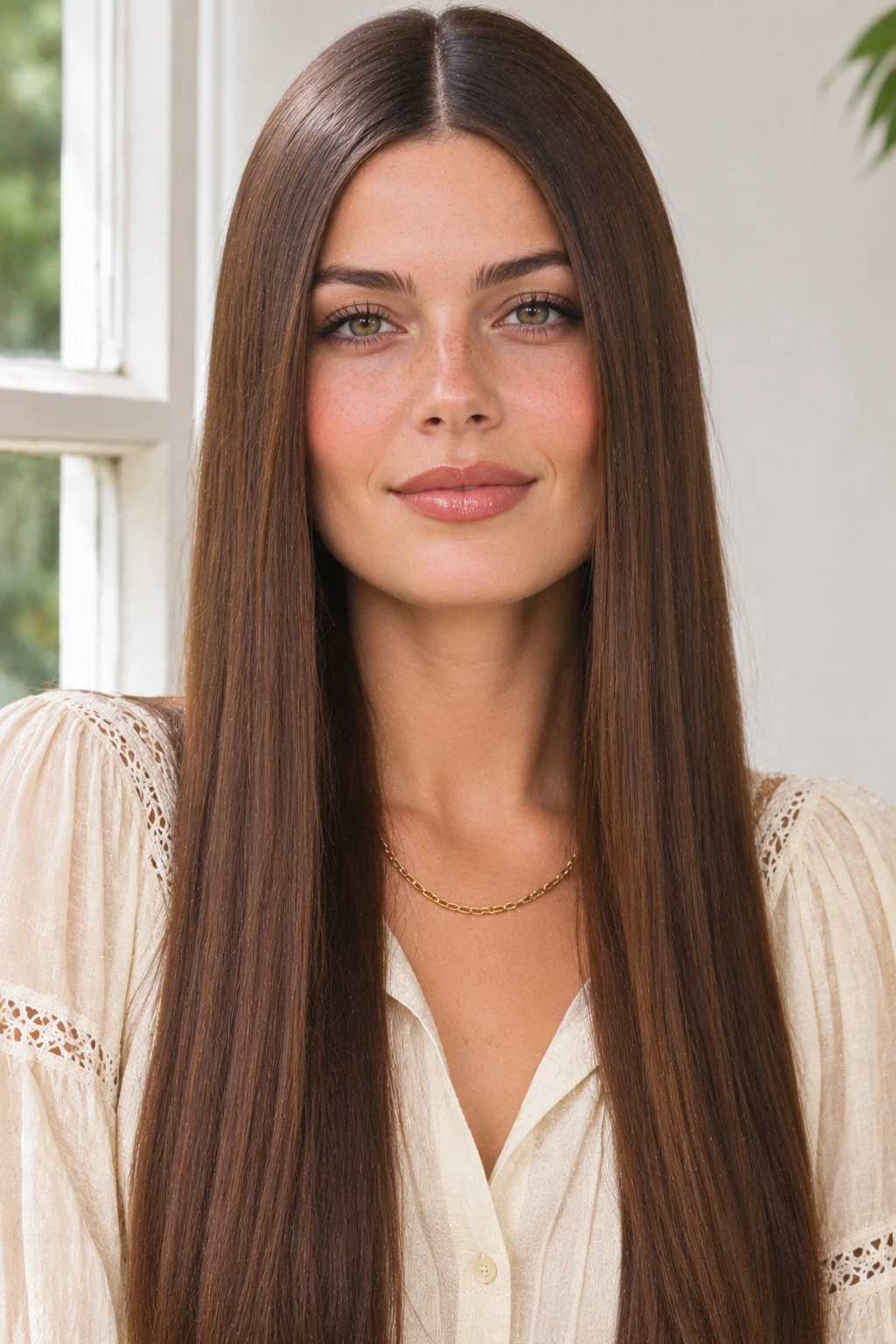
Long, glossy, ruler-straight hair divided by a precise center part. It is the simplest style on this list and a defining look of 1970s counterculture. Best for oval and long faces, it works on straight to slightly wavy hair in any density, though thick hair creates the most dramatic, graphic effect.
Difficulty: Beginner. Flat-iron from roots to ends in small sections, apply a single drop of smoothing serum to the mid-lengths, and draw the part with a fine-tooth comb.
Farrah Waves
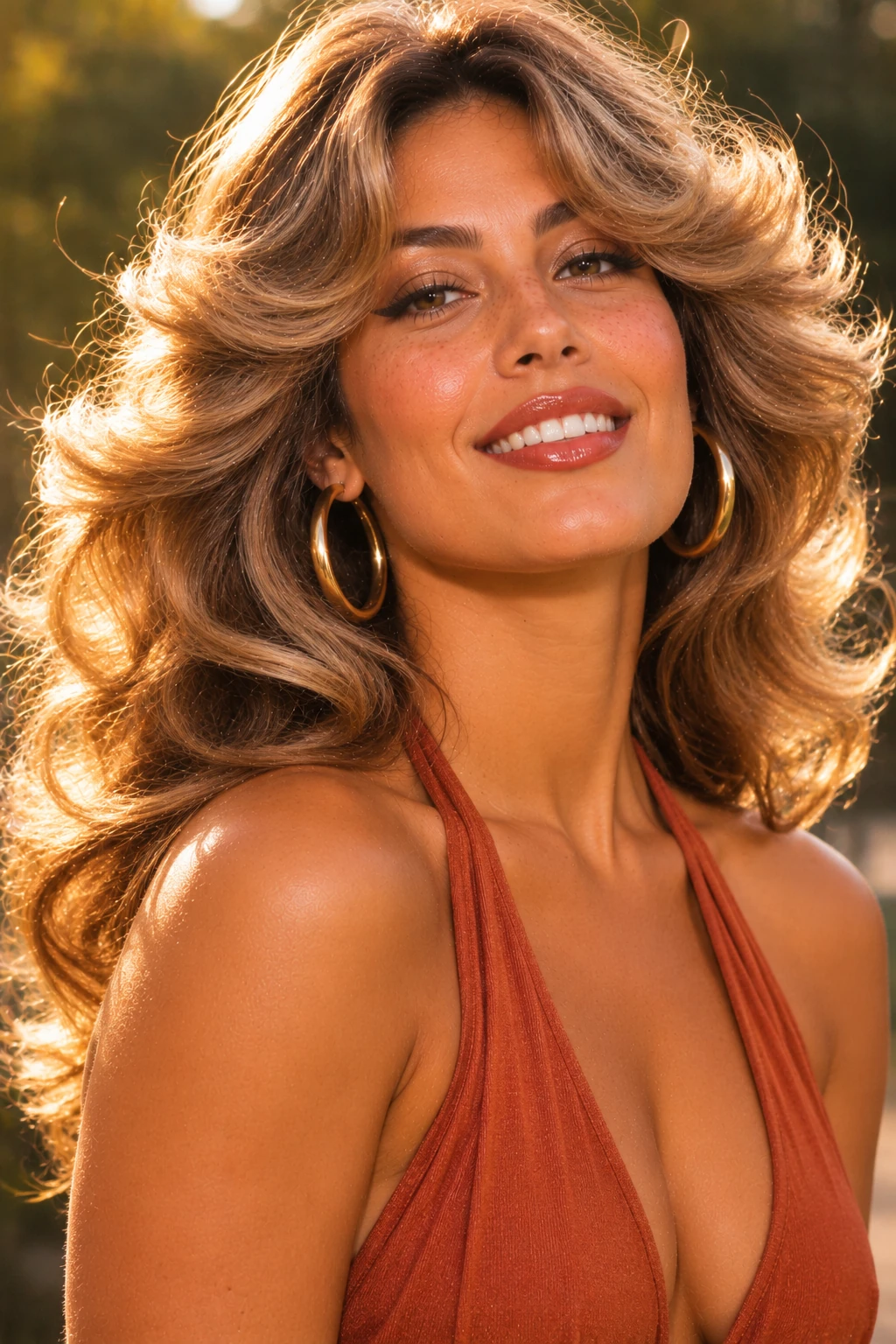
Large, voluminous curls blown back from the face with a swept, airy quality that defined 1970s glamour, Farrah waves require a large-barrel curling iron (1.5-2 inch) and a round brush blow-dry to lift the roots before curling. Best for oval, long, and heart faces, they work on medium to long, straight to wavy hair.
Difficulty: Advanced for first-timers. Wrap hair around large Velcro rollers on a fully rough-dried blowout, leave in for 20 minutes, then release and gently separate the curls with your fingers.
The Vintage Pixie Cut
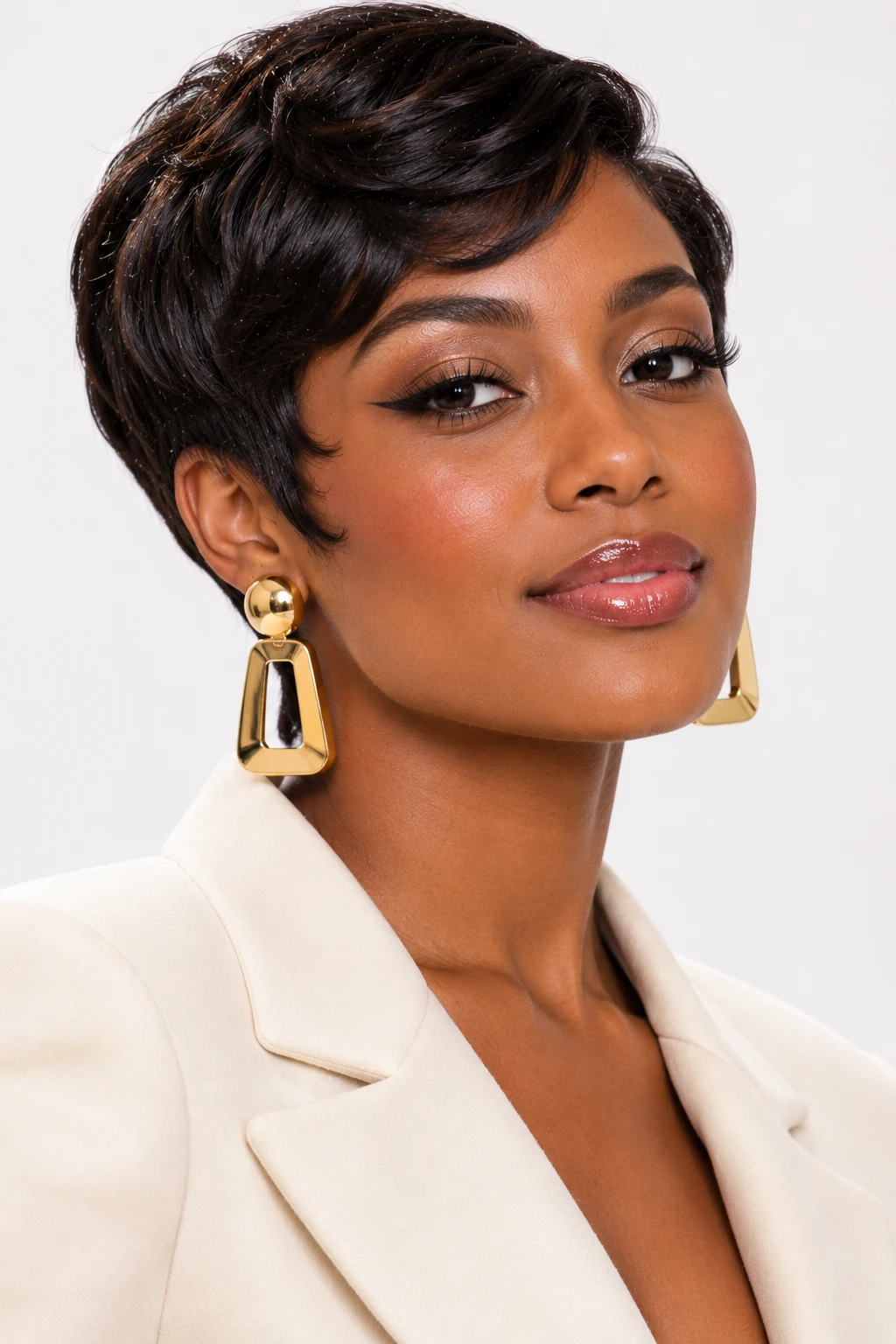
A short, close-cropped cut with a side part and soft, face-framing layers at the temples, the 1960s pixie is more delicate and deliberate than modern versions and benefits enormously from the right shaping at a salon. Best for oval and heart faces, it works on any hair texture and is essentially maintenance-free once cut.
Difficulty: Beginner to style, once cut. A tiny amount of pomade worked through the crown and sides with your fingertips is the entire morning routine this cut requires.
The Flip Bob
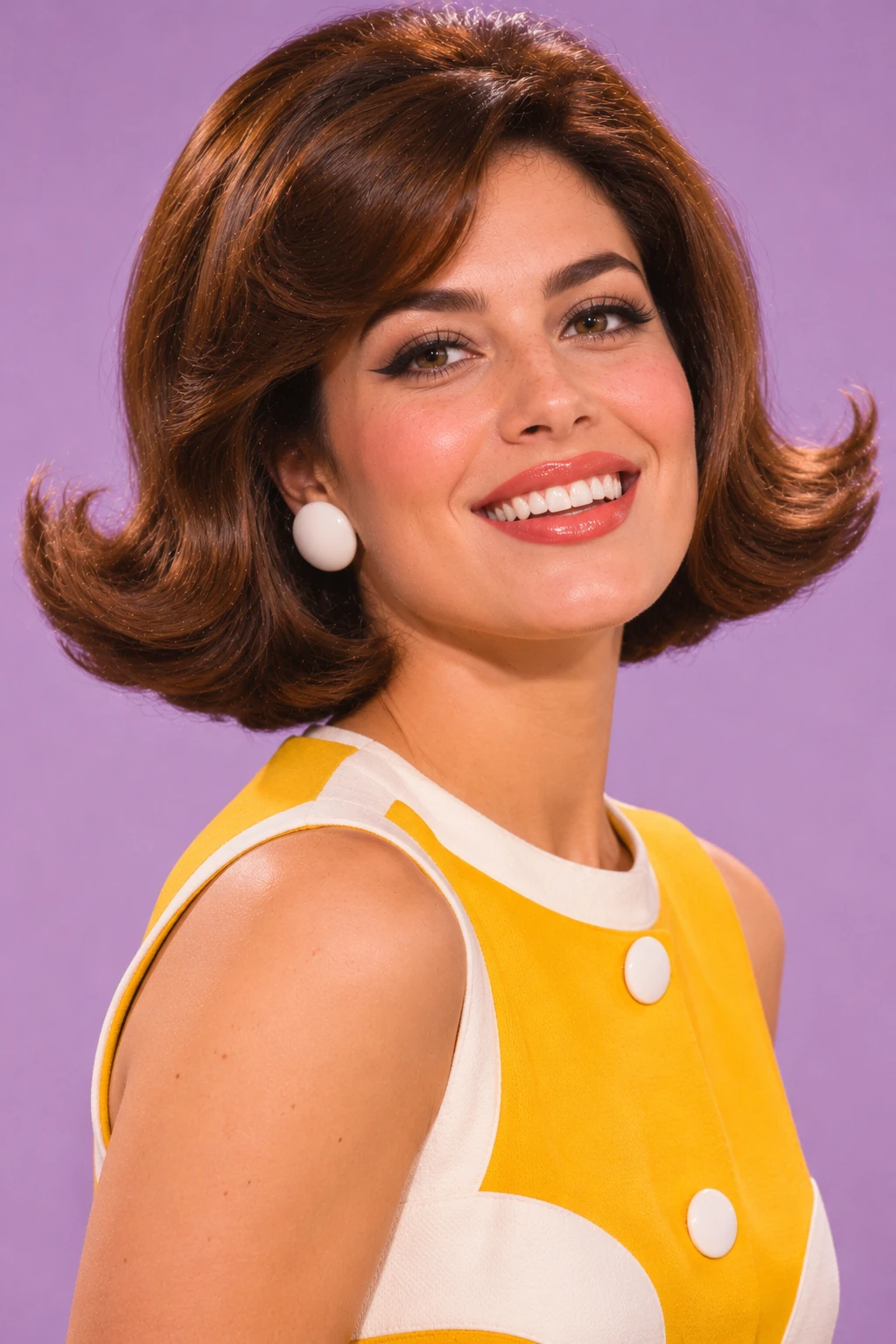
A bob-length style where the ends flip outward and slightly upward, popularized by 1960s television and film, the flip bob is a cheerful, feminine look that holds up well on modern hair. Best for round and oval faces, it works on straight to wavy, fine to medium hair.
Difficulty: Beginner. Set the ends on large Velcro rollers for 15 minutes after blow-drying, then release and mist lightly with a medium-hold spray to keep the flip in place.
The Boho Braid

Loose, undone braids worn with natural texture and a carefree finish, the boho braid defined 1970s festival style and remains one of the most flattering looks across all hair types and textures. Best for all face shapes, it works on any texture including coily hair braided from natural curls.
Difficulty: Beginner. Pull the finished braid slightly loose from the base to the tip after tying it off. This softens the look from formal to effortless and makes it appropriate for any setting.
The Disco Blowout
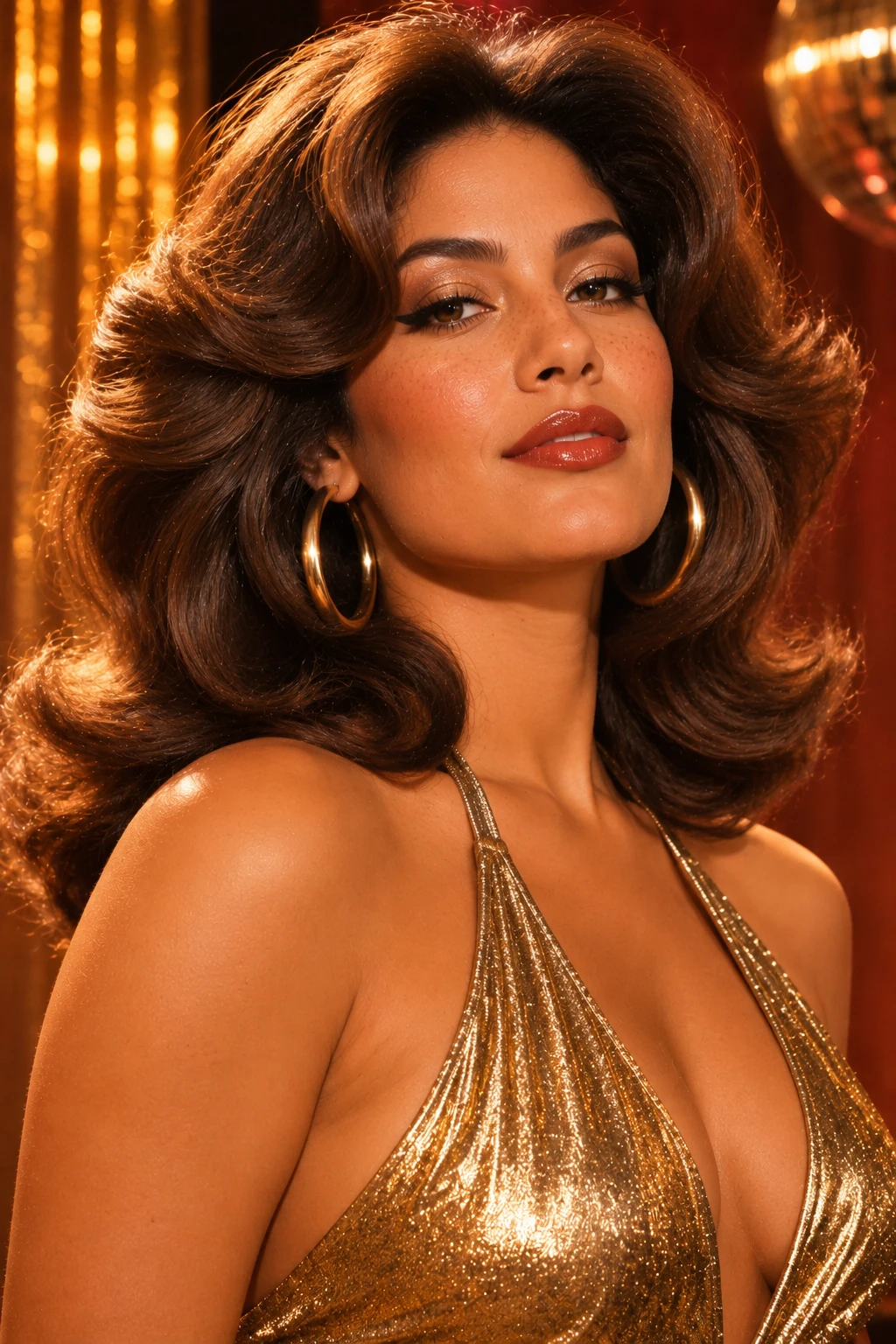
A full, rounded blowout with high root lift and smooth, controlled ends. This is the kind of hair that owned Studio 54 in the late 1970s and photographs with unmistakable confidence. Best for oval and long faces, it works on medium to thick hair with natural body, which provides the height and shape the style depends on.
Difficulty: Intermediate. Rough-dry for maximum volume first, then use a round brush only on the last 3-4 inches of each section to smooth the ends without collapsing the root lift.
Old Hollywood Updo Hairstyles That Work for Any Occasion
Old Hollywood Updo Hairstyles That Work for Any Occasion
Old Hollywood hairstyles sit in the sweet spot between everyday and special-occasion. They read glamorous enough for a formal event but polished enough for a work dinner or a date night. These vintage hairstyles for women are also among the most pinned retro looks on Pinterest. The silhouettes are timeless and the techniques are more achievable than they look.
Old Hollywood Waves
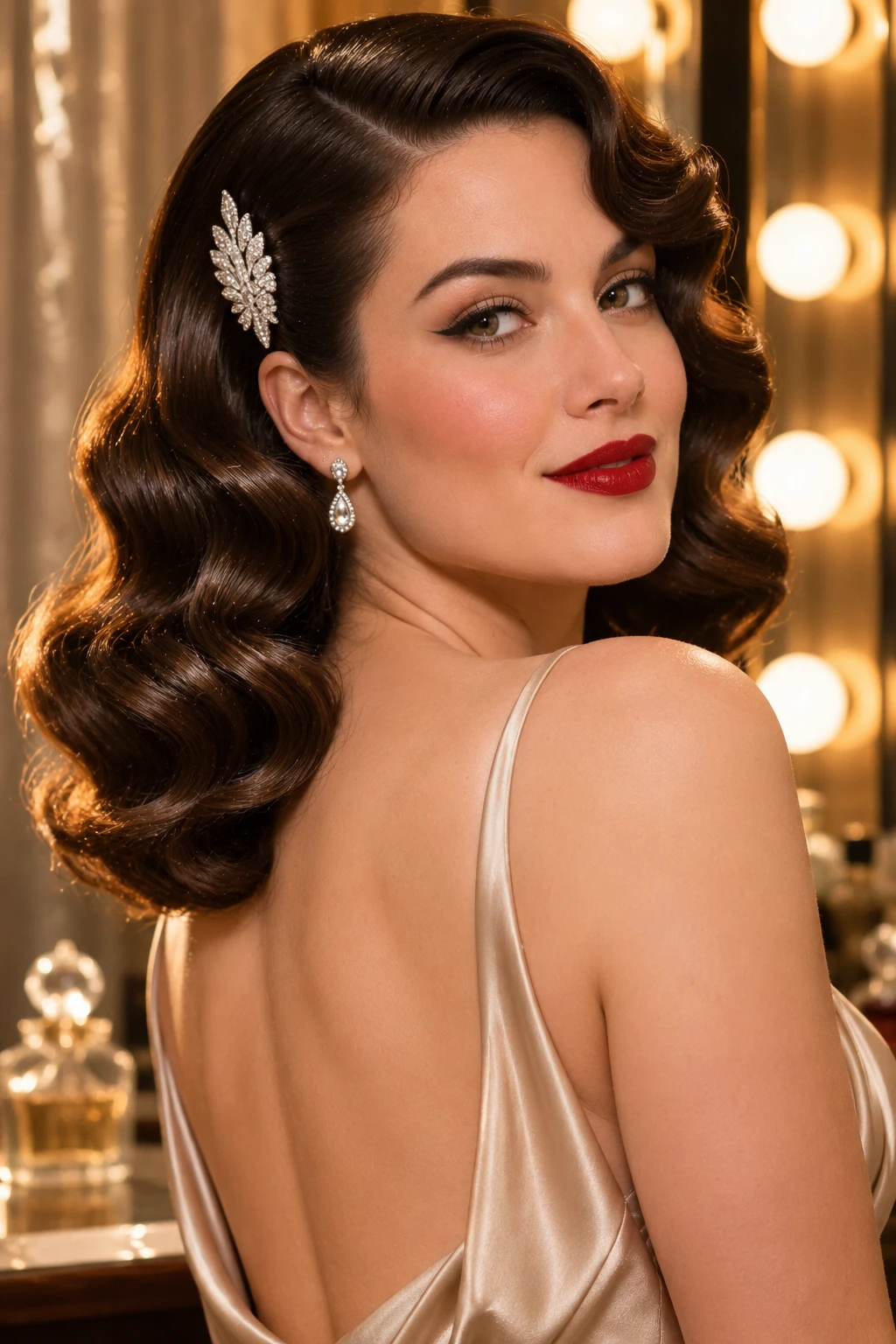
Deep, glossy waves set with a large-barrel curling iron or hot rollers and finished with a strong-hold setting spray, Old Hollywood waves are among the most searched vintage styles on Pinterest and among the most photogenic. Best for oval and long faces, they work on straight to wavy, shoulder-length and longer hair.
Difficulty: Intermediate. Place three large Velcro rollers on a fully dry blowout, leave for 15 minutes, release carefully, and smooth gently with a wide-tooth comb for waves that photograph stunningly.
The French Twist

Hair is gathered, folded, and tucked into a clean vertical roll at the back of the head, secured with pins from the inside, creating a silhouette that is both formal and deceptively simple. Best for oval and long faces, it works on any density from shoulder-length upward.
Difficulty: Intermediate. At a salon, ask for: “A classic French twist. The ends should be tucked in rather than fanned out at the top, and I’d like a smooth finish rather than a textured one.”
The Chignon
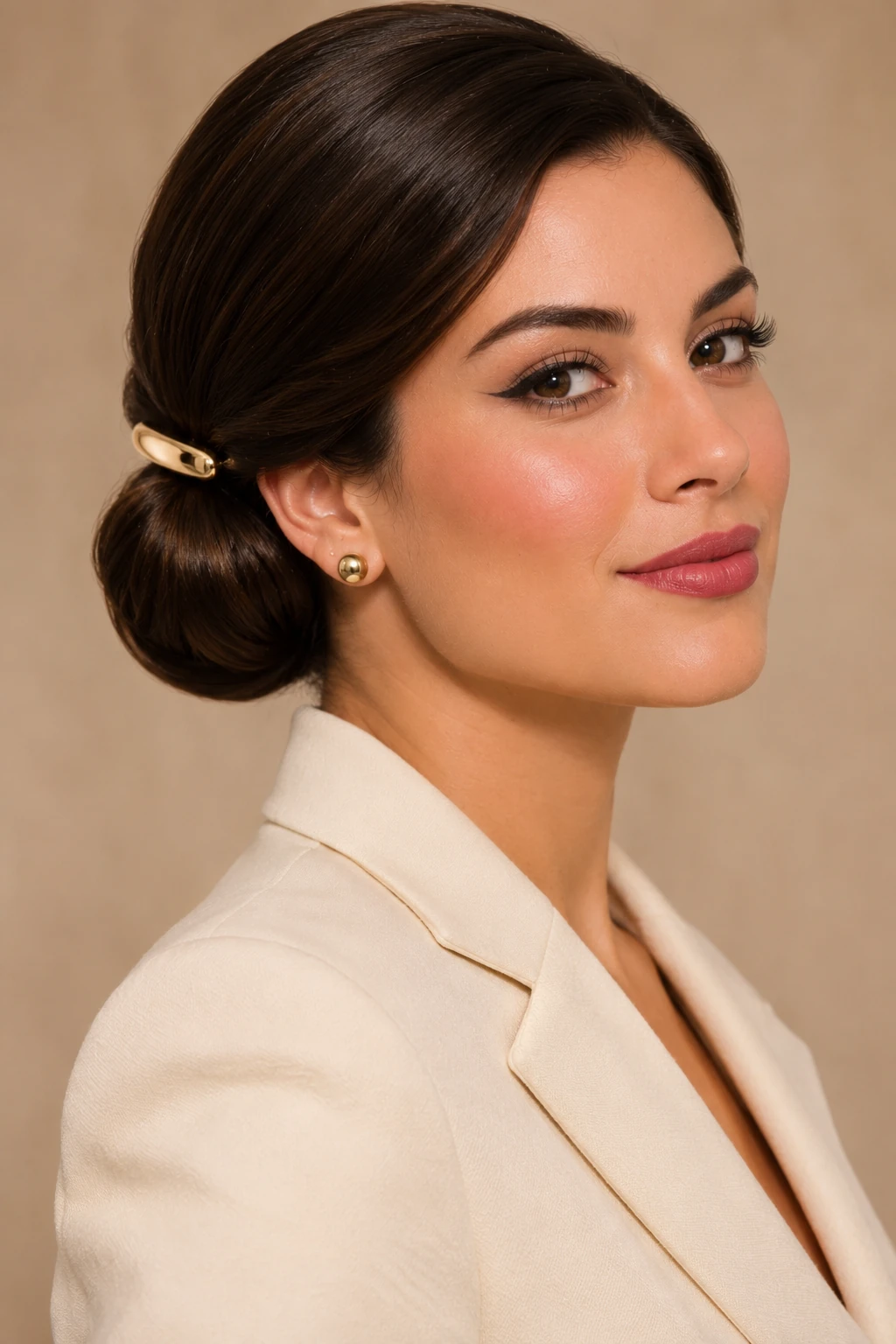
A smooth, low bun worn at the nape with no volume at the crown, the chignon is the most versatile formal style in this entire guide and works as well at a gala as it does at a job interview. Best for all face shapes, it works on any texture. Smooth it, braid it, or twist it before pinning for different results from the same basic shape.
Difficulty: Beginner. A twisted low bun secured with one strong pin and finished with a slim barrette is already a chignon. This may be a 90-second morning routine.
The Victory Roll Updo
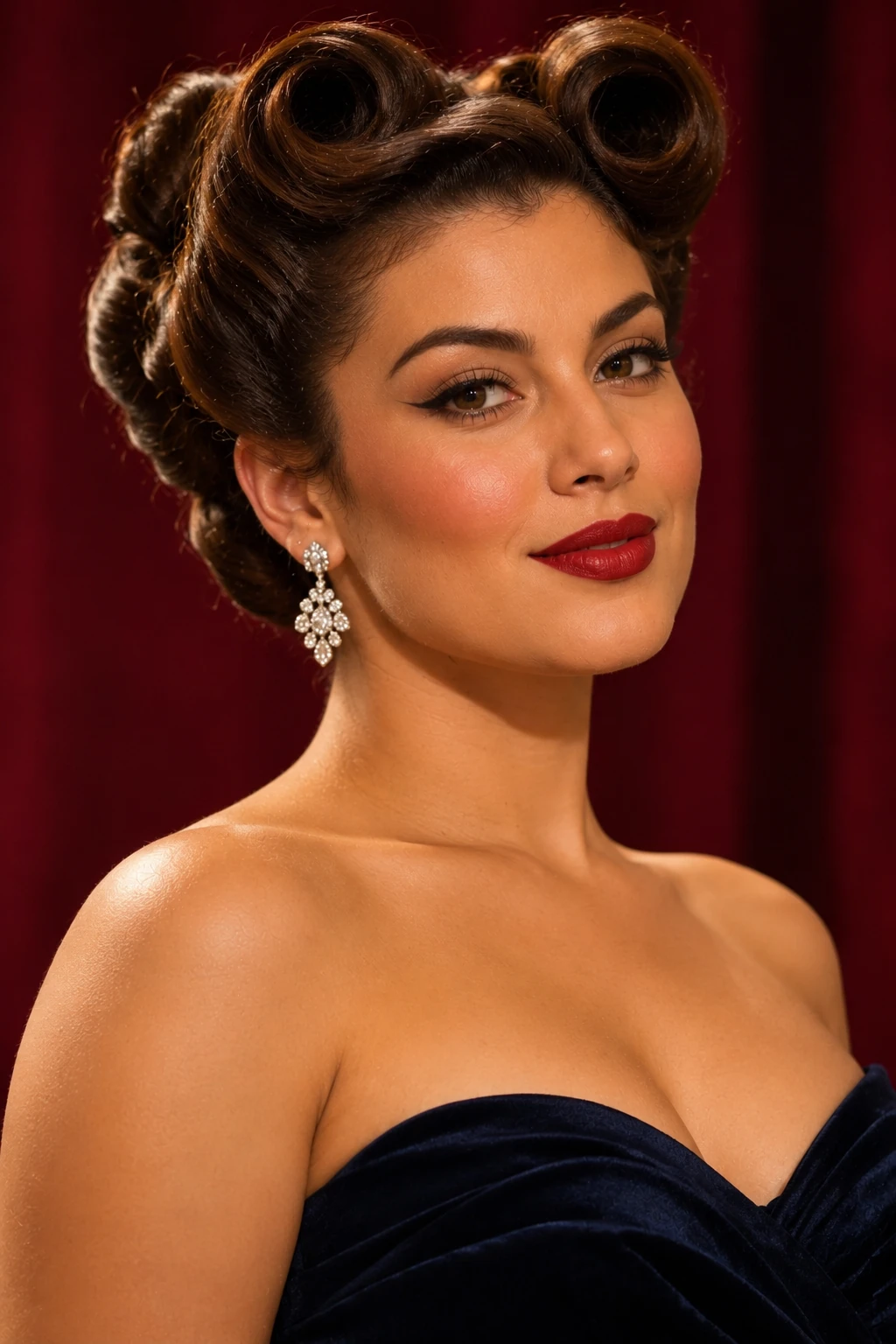
A full updo version of victory rolls, where the front rolls are anchored in place and the remaining hair is swept up or pinned elegantly at the back, the victory roll updo is the most theatrical style in this guide. Best for oval and long faces, it works on short to medium lengths at the front with longer hair at the back.
Difficulty: Advanced. Reserve this style for special occasions. The setup time is significant, but the result is show-stopping for a wedding, party, or editorial shoot.
The Glamour Waves Half-Up Style
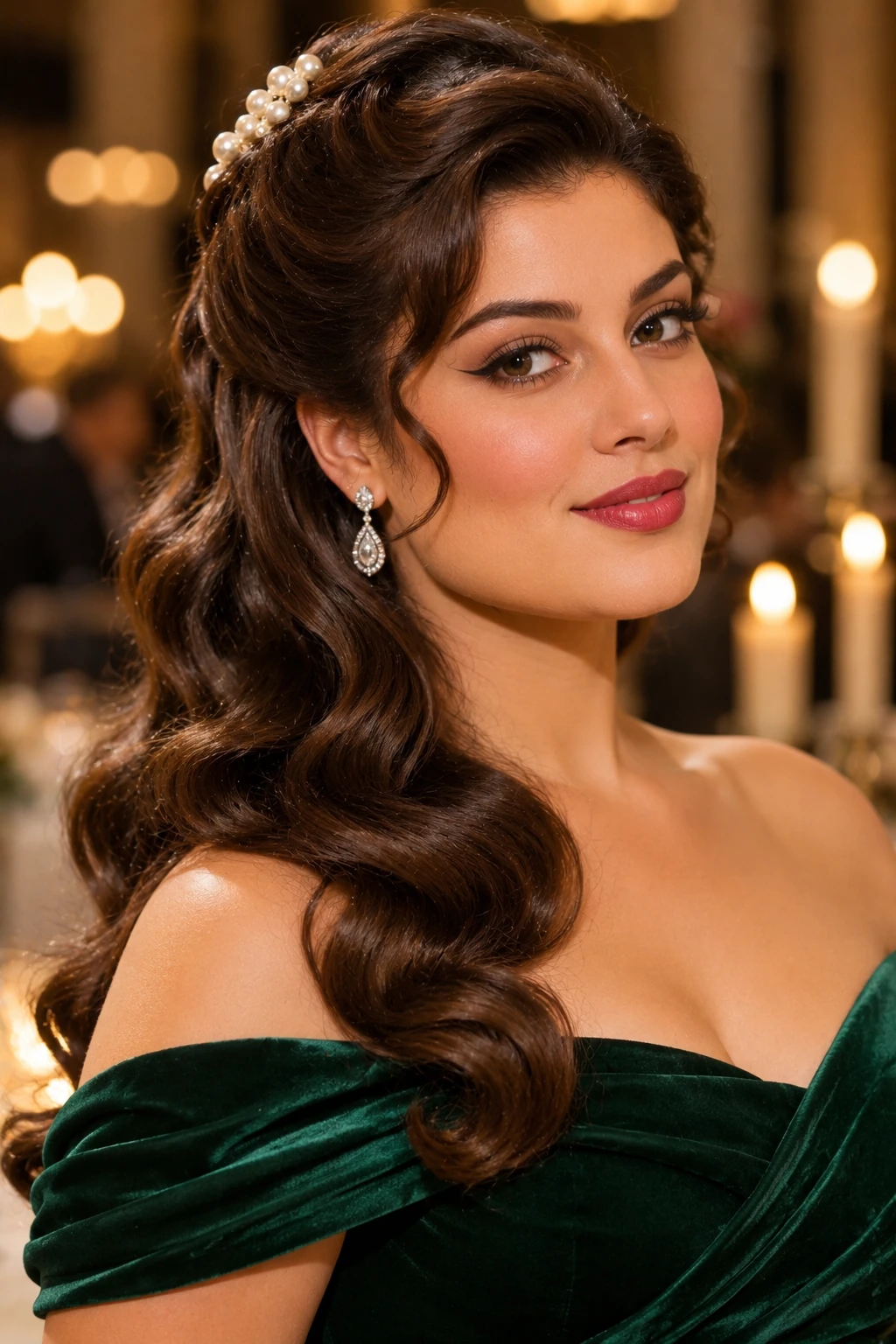
The top half of the hair is pinned back at the crown while the bottom half falls in soft, Old Hollywood-style waves brushed to one side. This style gives you the look of a formal updo with a fraction of the effort. Best for oval and heart faces, it works on straight to wavy, medium to long hair.
Difficulty: Beginner. Curl, let the curls cool and set, then lift and pin back just the top section. This look is ready in under 15 minutes and holds all evening.
The 1930s Nape Roll
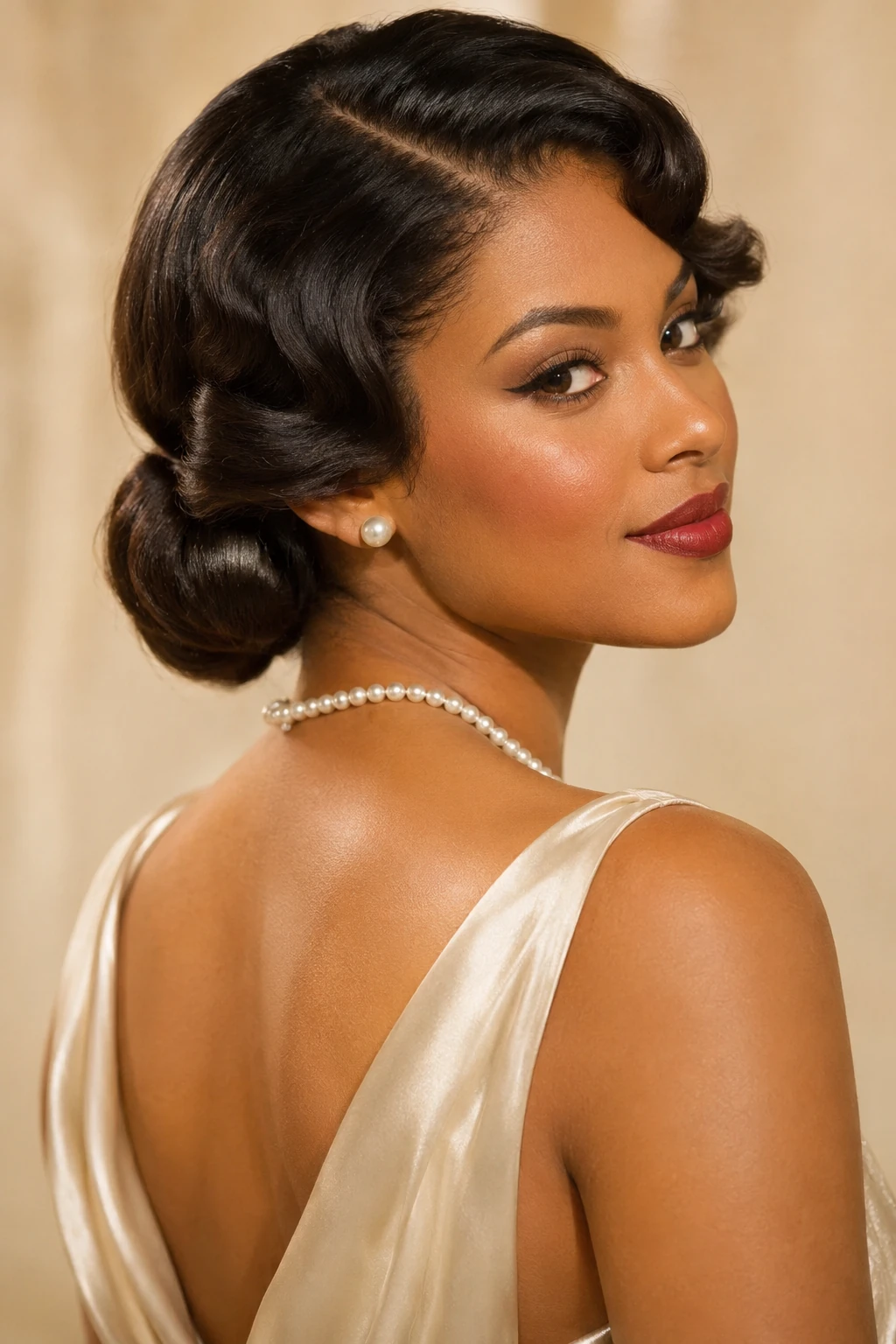
Hair gathered at the nape and rolled inward before pinning, creating a clean, low silhouette with a sculptural curl at the base. The nape roll is the quieter, more intimate cousin of the French twist. Best for oval and long faces, it works on medium to long hair in any texture.
Difficulty: Beginner. This is a slightly elevated version of a low bun. The only difference is the direction of the final roll and a few extra pins to secure the curve.
How to Wear Vintage Hairstyles Every Day (Face Shape, Hair Texture, and Stylist Tips)
How to Wear Vintage Hairstyles Every Day (Face Shape, Hair Texture, and Stylist Tips)
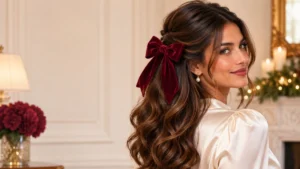
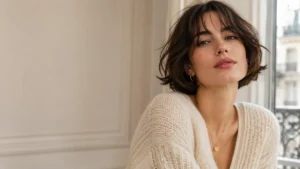
Finding vintage hairstyles for women that you love wearing is step one. The styles that actually work are the ones that suit your face shape, cooperate with your natural hair texture, and come with enough information for a stylist to execute them without guessing. This section covers the practical gap that no competitor in the current top ten addresses.
Vintage Hairstyles by Face Shape
Matching vintage styles to your face shape means the look works with your features rather than against them, and it is the simplest way to narrow down 35 options to a useful shortlist. If you are not sure which category your face falls into, our
- Oval: Most vintage styles work well. Lean toward finger waves, victory rolls, and Old Hollywood waves, which highlight balanced proportions without adding unwanted width or length.
- Round: Side-swept styles tend to flatter most. The Veronica Lake sweep, a side-parted bouffant, and feathered layers all create a diagonal line that adds the appearance of length to the face.
- Square: Soft curls, waves, and the Brigitte Bardot volume look all soften a strong jawline with movement and texture. Marcel waves and soft retro curls work particularly well here.
- Heart: Styles with volume at the nape, such as the chignon, the nape roll, or a low victory roll updo, balance a wider forehead by drawing the eye downward toward the jaw.
Use “tends to flatter” as your benchmark throughout. Face shapes are useful guidelines, not rigid rules, and your personal preference always takes precedence. The most flattering vintage hairstyle is ultimately the one you feel most confident wearing.
Vintage Styles for Curly, Coily, Fine, and Thick Hair
This is the section no other guide on vintage hairstyles for women currently online delivers in a useful way. Every hair type has vintage styles that work with its natural texture rather than fighting it, and knowing which ones they are saves you a lot of frustrating styling time. For heat-tool techniques, the
- Fine hair: Pin curls, Marcel waves, and the Mod flip all create the illusion of more volume using technique rather than product. These styles were designed for fine, flat hair and perform well on it.
- Thick hair: The bouffant, beehive, and Old Hollywood waves all benefit from the weight and grip that thick hair naturally provides. The shag cut also performs well on thick hair and requires almost no product to look intentional.
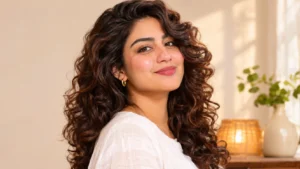
- Curly and wavy hair: Brigitte Bardot volume, soft retro curls, and the shag are built entirely on natural texture. These styles look their best when the curls are embraced rather than forced into submission with heat.
- Coily hair: Pin curls are one of the most compatible vintage techniques for type 4 hair. The natural coil pattern holds the curl shape without heat or manipulation. Victory roll variations and bandana styles also adapt beautifully to coily textures. For more ideas that bridge vintage and contemporary styling, our roundup of
What to Ask Your Stylist
Knowing what to say at a salon appointment matters. These five phrases communicate the vintage look you want clearly enough that any experienced stylist will know what to do. You can read them directly from your phone at the appointment, as stylists appreciate the specificity.
- “I’d like pin curls set with rollers or clips (not a curling iron) for a defined, flat 1950s curl look.”
- “I want victory rolls: two sections at the front that roll up and away from the face, like a 1940s pin-up style.”
- “I’d like a Marcel wave: it’s a deeper, more sculpted wave than a regular curl, almost like a finger wave but set with a tool.”
- “Can we do a soft bouffant, not full 1950s height, just a small crown tease with a smooth finish over the top?”
- “I’d like a classic French twist with the ends tucked in, a polished finish, and no texture at the top.”
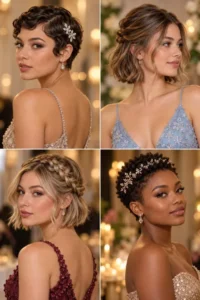
For a visual reference to bring to your appointment,
Your email address will not be published. Required fields are marked *