

Braids look flawless on install day, and then somewhere around week two the edges start to frizz, the shine fades, and your scalp starts begging for attention. That is not a sign your protective style is failing. It is simply what braids do without the right maintenance routine, and it happens to almost everyone who wears them.
The best products for braids are not about buying everything on a shelf. They are about knowing exactly what to reach for and when, from the first week you leave the salon chair to the day you take the style down. This guide walks through 12 products organized by braid type and week of wear, plus real troubleshooting for itchy scalp, frizz, and buildup.

How to Build a Braid Maintenance Routine by Braid Type and Week
How to Build a Braid Maintenance Routine by Braid Type and Week
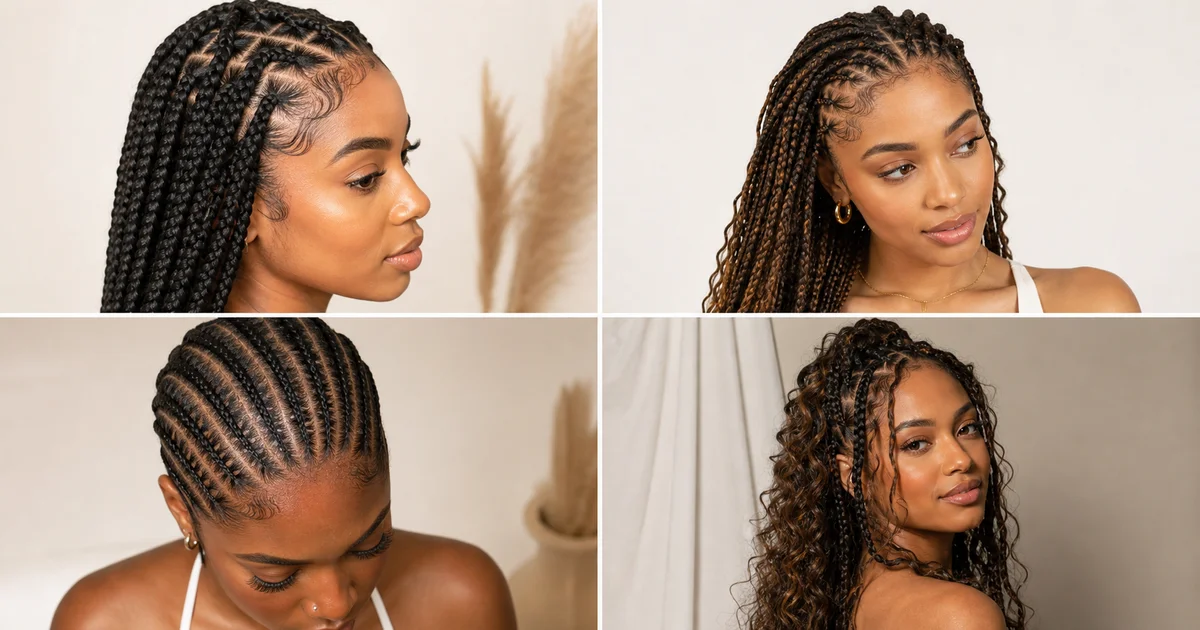
Not every protective style needs the same care, and that is the piece most product lists skip. Box braids carry more tension at the root and frizz around the hairline faster, so product has to reach deeper into the part. Box braid styles hold up well with a simple routine once you account for that. Knotless braids start with your natural hair at the root, meaning lighter tension, but knotless braids dry out quickly at the ends, so moisture matters more than hold. Cornrows sit tight against the scalp with no gap for product to move through, making them most prone to itch and buildup, while boho and goddess braids dry out fast and need detangling.
Freshness also follows a rough timeline most guides never mention. Week one is about protection, weeks two through four bring moisture and edge maintenance to the front, and weeks five through eight shift the focus to buildup control and scalp monitoring, since tension signs are most likely to show up by then. Braids can look fresh anywhere from four to eight weeks depending on your hair texture, braid size, and how closely you follow a routine, so treat the ranges below as a flexible framework.
The 12 Best Products to Keep Braids Looking Fresh
The 12 Best Products to Keep Braids Looking Fresh
Here is the full lineup of the best products for braids, broken down by what each one actually does and when to reach for it during your routine. Some belong in your daily routine from day one, while others only earn a place once buildup or itch shows up weeks later. Move through them in order, and match each pick to your braid type and week using the timeline above.
Edge Control
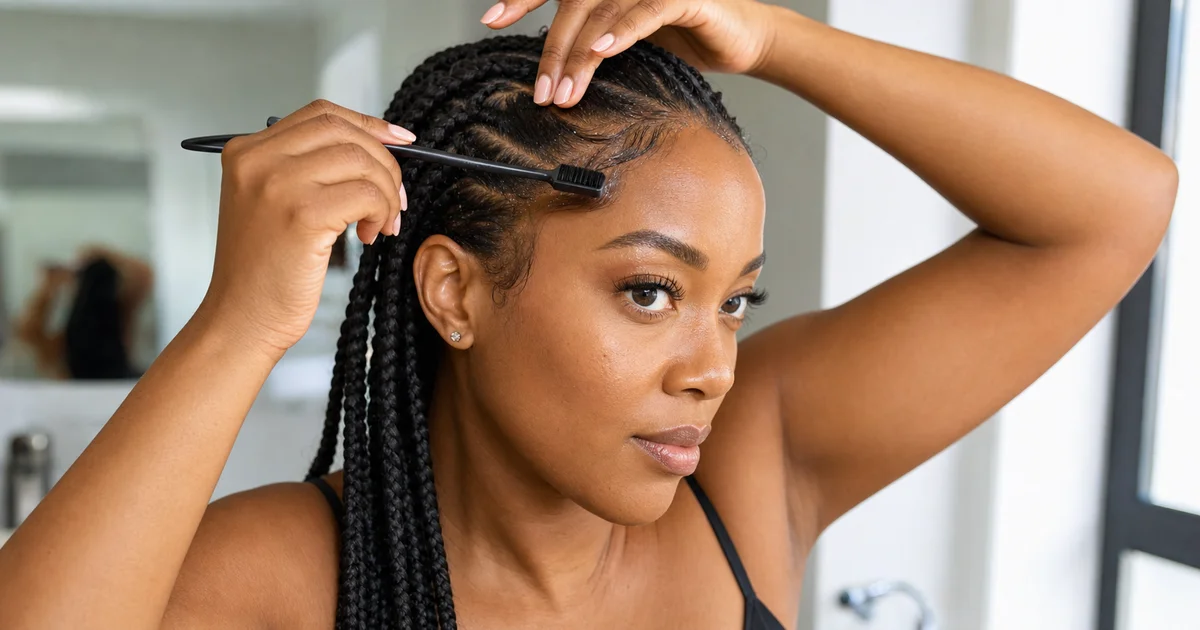
Edge control is the first product most people reach for, but hold strength matters more than shoppers realize. Light-hold formulas suit fine or loose edges, since a strong-hold gel can crack by day two, while coarser hair calls for a firmer hold. Apply a small amount with a soft-bristle brush along the part rather than your fingers, which causes most of the flaking people blame on the product. A gentle, buildable gel with aloe vera near the top of the ingredients works well for daily use.
Hydrating Braid Spray or Refresher Mist
A refresher mist and a leave-in conditioner are not the same thing, though product lists often use the terms interchangeably. A mist is light and water-based, meant for daily or every-other-day use between days three and ten, right when braids start looking dry for the first time. Look for water listed first, followed by aloe vera juice or glycerin rather than heavy oils, and spritz lightly over the length before smoothing with your palms.
Leave-In Conditioner
A leave-in conditioner goes deeper than a mist and is meant to be used weekly rather than daily. Apply it at the scalp first, then smooth any leftover product down the length of each braid, focusing on box braids and boho braids since they lose moisture faster than tight cornrows. Choose a lightweight, water-based formula rather than a thick, creamy one meant for loose natural hair, since heavier products sit on top of braided hair instead of absorbing.
Lightweight Scalp Oil
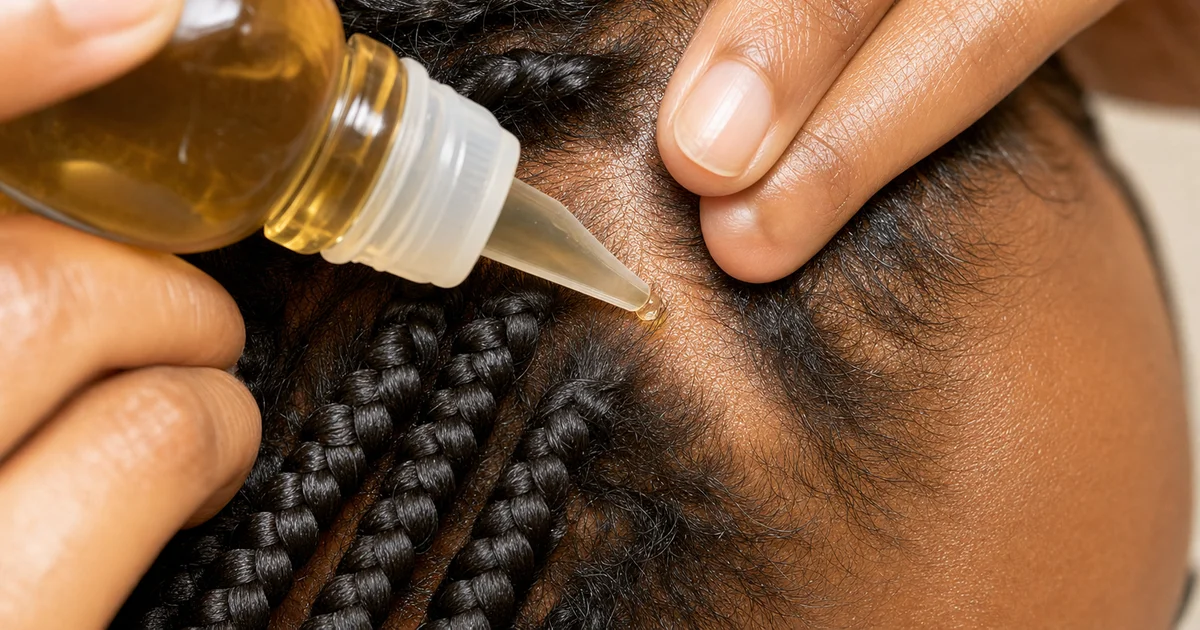
Scalp oil deserves more care than most lists give it, because the wrong oil works against you. Heavy, wax-like oils can clog follicle openings under tight braids and worsen buildup and itch, while a lightweight oil like jojoba or grapeseed absorbs fast and mimics your scalp’s natural oil. Apply a few drops with a nozzle applicator two to three times a week starting in week two, and save thicker butters for your hairline or ends only.
Hair and Scalp Balm or Serum
A scalp balm or serum is a more targeted step than a general oil, earning its place for itch relief on cornrows and other tight, close-to-scalp styles. Look for soothing ingredients like tea tree oil, peppermint, or witch hazel rather than heavy fragrance, which can aggravate a sensitive scalp. Apply it only to the scalp, never the braid, massaging gently into any tight or itchy area two to three times a week.
Braid Sheen or Shine Spray
A shine spray is a cosmetic finishing step, but it is often what makes braids look salon-fresh weeks after your appointment. Because it sits on the surface rather than absorbing, less is genuinely more, and a light mist held several inches away is all it takes. Saturating the style tends to backfire, leaving braids greasy rather than polished, so save it for events and photos.
Foaming or Styling Mousse
A styling mousse solves a different problem than gel, smoothing flyaways and taming new growth around the hairline without the stiff, cracked finish gel can leave. This works well for knotless and boho styles, which often have looser baby hairs that do not need a strong hold. Work a small amount between your palms and smooth it over the hairline, especially useful around week three or four as new growth softens the parts.
Anti-Frizz Serum
An anti-frizz serum earns its spot for the days between refresh sessions, when humidity or sweat starts to show on your edges and exposed ends. A few drops rubbed between your palms and smoothed over the hairline knock down frizz almost instantly, without the heaviness of a full mist or leave-in. Some frizz around the hairline is normal by week two or three, and a serum is a quick fix rather than a sign something has gone wrong.
Satin Scarf or Bonnet (Nighttime Protection)
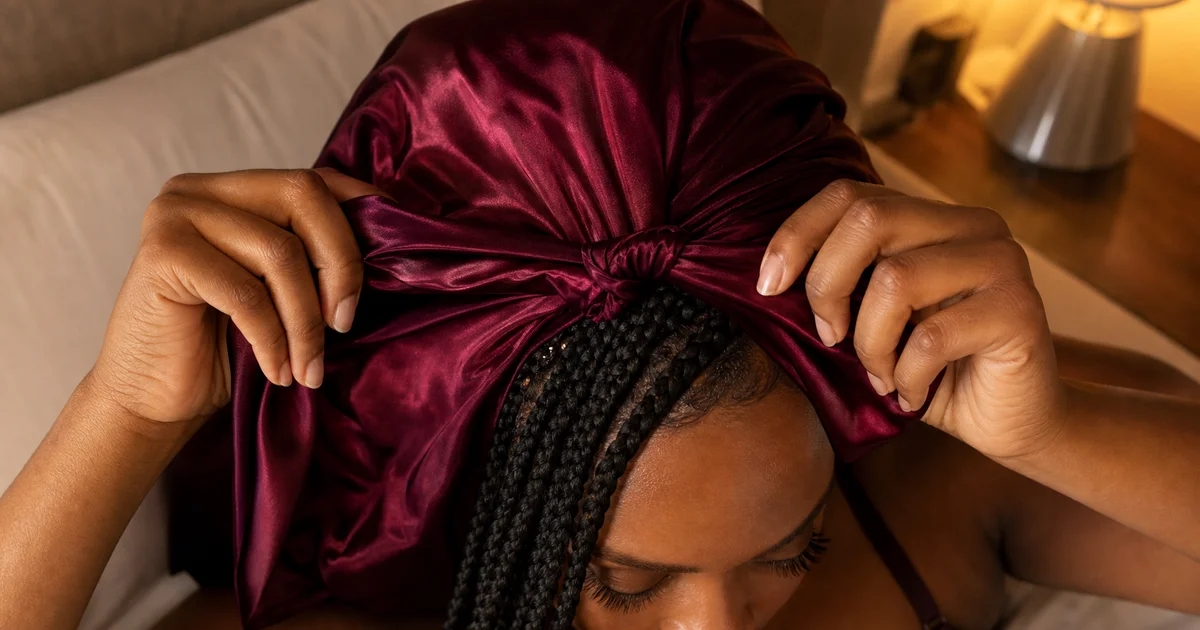
Most product lists mention a satin scarf without explaining why it works, and that gap matters more than it seems. Cotton pillowcases create friction overnight that roughens the hair cuticle and dries out moisture you worked to put in, while satin and silk let hair glide across the surface instead of catching on it. Tie a scarf or pull on a bonnet every single night, since the protection only works with consistent use.
Silk Pillowcase (Bonnet Alternative)
A silk pillowcase offers the same friction-reduction benefit as a scarf or bonnet and works well for readers who find scarves uncomfortable or prone to slipping off overnight. The mechanism is identical: a smooth surface means less friction against your braids and edges through the night. Treat it as a supplement to good scalp care rather than a replacement, since a smooth pillowcase alone will not solve buildup or itch.
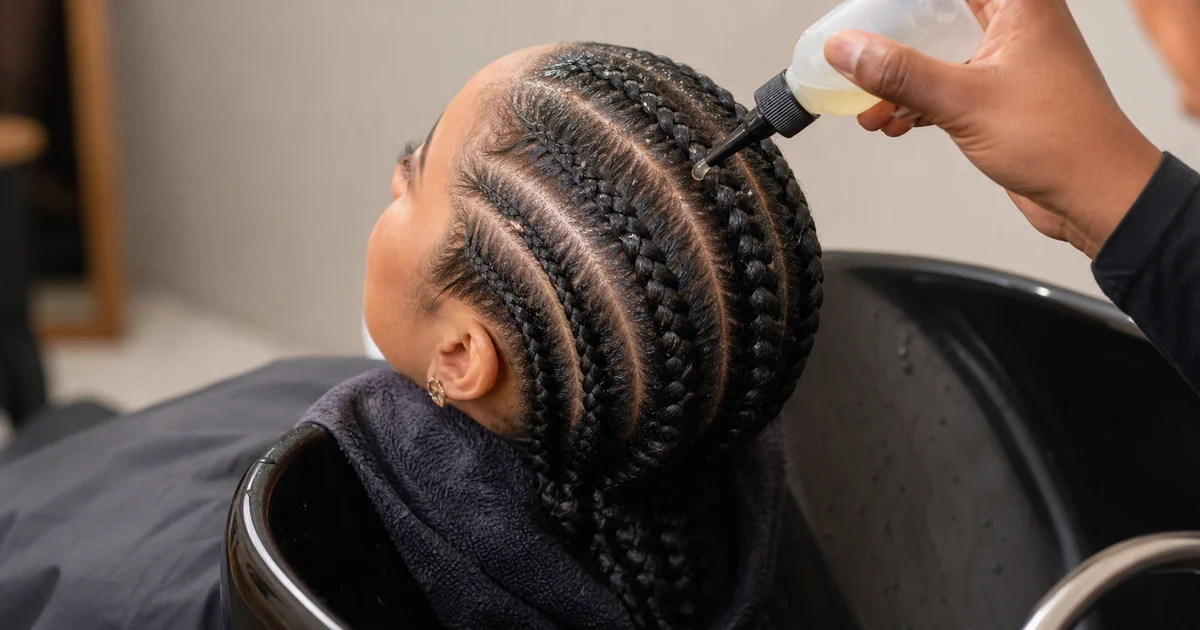
Clarifying or Dry Shampoo for Scalp Buildup
Buildup is one of the biggest gaps in most braid care advice, and it is often the real reason braids look dull and feel itchy by week three or four. A diluted clarifying shampoo applied with a nozzle applicator can lift that residue without disturbing the braid pattern. Plan to use a rinse around week three or four rather than weekly, since overusing it can leave the scalp too dry.
Detangling or Rat-Tail Comb for Touch-Ups
A detangling or rat-tail comb might seem like an odd addition to a product list, but it earns its place in both mid-style upkeep and takedown-day protection. Between salon visits, it helps smooth loose baby hairs and re-define parts that look uneven, using the pointed end carefully and only at the scalp. This tool becomes especially useful on takedown day, when gentle detangling protects the hairline from the tension that rushing can cause.
Common Braid Problems and How to Fix Them
Common Braid Problems and How to Fix Them
Even with a solid routine, braids come with a few predictable trouble spots. The four issues below cover almost everything readers run into between install day and takedown, along with which product actually addresses the root cause rather than just masking the symptom. Catching these early keeps a minor irritation from turning into a bigger setback for your scalp or hairline.
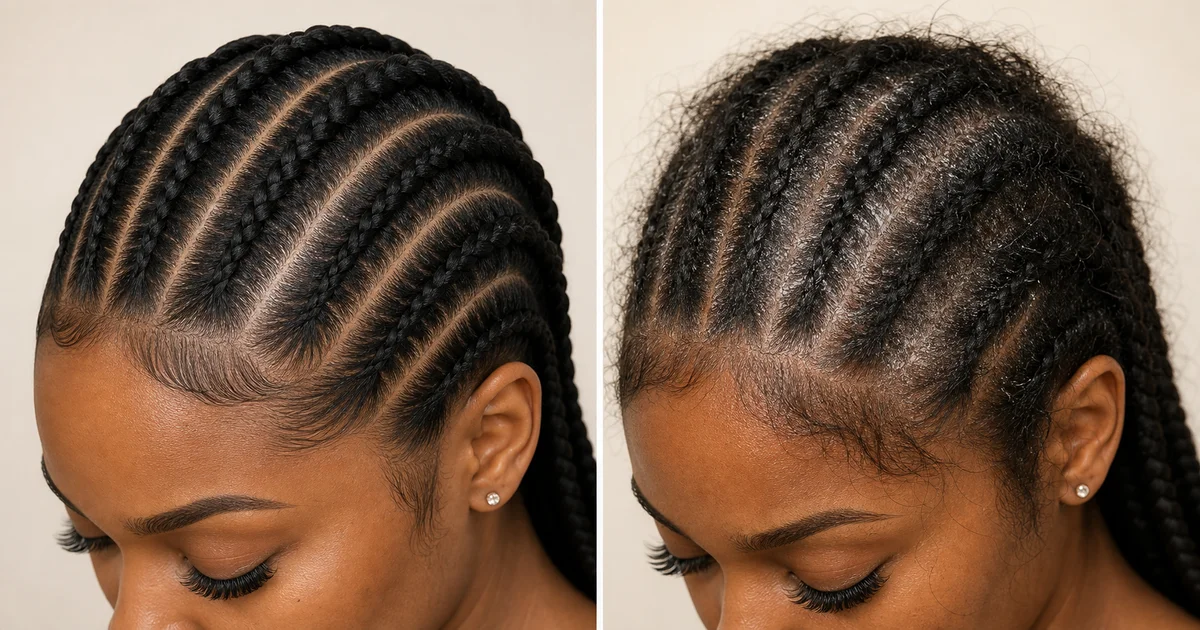
- Itchy scalp: This is usually caused by product buildup, tight tension at the root, or a scalp that was already dry before your braids went in. Reach for a scalp balm or serum a few times a week, and consider a diluted witch hazel rinse if the itch feels persistent. Healthline’s guidance on itchy scalp care recommends keeping the scalp clean and avoiding harsh scratching, since scratching with your nails can break the skin and worsen irritation.
- Frizzing edges: Some frizz around the hairline by week two or three is normal and not a sign your style has failed. Revisit your edge control hold strength, since a formula too light for your texture will not hold past day one, and wear a satin scarf or bonnet every night without exception.
- Product buildup: A scalp that feels waxy, heavy, or itchy days after your last application is usually a buildup issue rather than dryness. A light clarifying rinse every one to two weeks lifts that residue without disturbing the braid pattern.
- Hairline tension or breakage: Persistent soreness, small bumps along the hairline, or visible thinning at the edges are warning signs that should never be ignored. According to the American Academy of Dermatology, hairstyles that repeatedly pull on the hair can contribute to traction alopecia, so loosen or remove the affected braids and see a dermatologist if soreness continues.
Braid Maintenance Schedule by Week
Braid Maintenance Schedule by Week
Pulling everything above into one timeline makes it easier to know what to reach for without rethinking your routine every morning. Treat this as a flexible framework, since every scalp and braid type behaves differently. Use it as a checkpoint each week to catch small issues before they turn into bigger ones.
- Week 1: Focus on protection rather than heavy product use. Tie a satin scarf or bonnet every night, use a light sheen spray only if needed, and let your scalp settle before introducing oils or balms.
- Weeks 2-4: A refresher mist, weekly leave-in conditioner, and edge control touch-ups become part of your routine. Start introducing scalp oil two to three times a week once initial tenderness has faded.
- Weeks 5-8: Shift focus toward buildup control with a clarifying rinse and watch for tension warning signs. A foaming mousse or anti-frizz serum earns its keep as new growth softens your original parts.
- Takedown day: Detangle gently with a rat-tail or wide-tooth comb, follow with a full clarifying wash, and finish with a deep conditioning treatment before your next install. Treating takedown day as part of your protective styles routine sets your natural hair up for a healthier next style.
Frequently Asked Questions About Keeping Braids Fresh
Frequently Asked Questions About Keeping Braids Fresh
How long do braids stay looking fresh? Most braids look their best for four to eight weeks, depending on your hair texture, braid size, and how consistently you follow a maintenance routine. Tighter styles like cornrows tend to show new growth sooner, while box braids often stretch closer to eight weeks.
How often should you moisturize braids? A lightweight refresher mist works daily or every other day, a leave-in conditioner once a week, and scalp oil two to three times a week after the first week.
Can you wash braids without ruining them? Yes, a light clarifying rinse every one to two weeks is actually one of the best ways to keep braids fresh. Apply diluted shampoo to the scalp with an applicator bottle, massage gently, and rinse without scrubbing or twisting.
What helps an itchy scalp under braids? An itchy scalp usually comes from buildup, tight root tension, or dryness present before your install. A scalp balm applied a few times a week, paired with a witch hazel rinse if needed, addresses most cases.
How do you stop braids from frizzing? Some frizz around the hairline is normal, not a failure sign. Using the right edge control hold for your texture, applying with a soft brush, and wearing a bonnet every night make the biggest difference.
With the best products for braids in your routine, your style can look salon-fresh from install day to takedown, as long as you match each product to the right week and braid type. A few consistent habits, like nightly satin protection and a light clarifying rinse every couple of weeks, do more for how fresh your braids look than any single product on this list. Pin this routine, and once your braids come out, browse the braided hairstyles gallery for inspiration on what to try next.


Your email address will not be published. Required fields are marked *