


A round face does not need to be fixed. It just needs a cut that adds height, angles, or asymmetry in the right places. This guide breaks down 10 short haircuts for round faces that create a real slimming effect, explains why each one works for your hair type, and gives you exact words to use at the salon. No vague "flattering" promises, just real mechanics and real trim schedules.
Why Certain Short Haircuts Slim a Round Face
Why Certain Short Haircuts Slim a Round Face
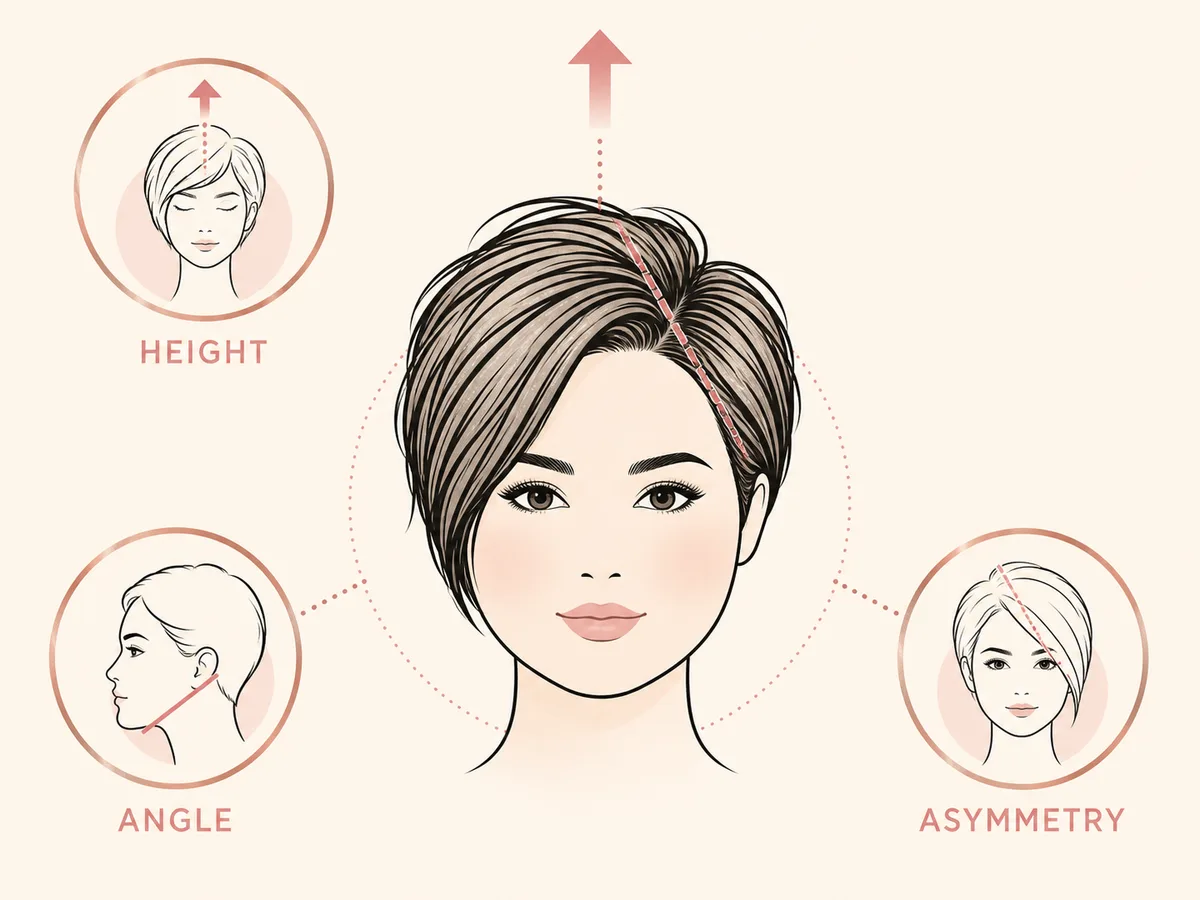
Every cut on this list works because of three visual principles, not luck. Height at the crown adds vertical length, stretching the face instead of widening it. Diagonal or angled lines along the jaw, like a bob cut longer in front, break up a round jawline's soft curve so it reads as more defined. Asymmetry, whether a deep side part or an uneven fringe, disrupts the perfect circle that makes a round face look wider than it is. Texture matters too: fine hair usually needs volume-building layers and root lift, while thick hair needs weight removed through thinning shears or razoring so it does not add bulk at the jawline. No single haircut works for every round face, so keep your own texture and styling time in mind as you read through the cuts below.
Professional stylists lean on these same height, angle, and asymmetry principles when consulting clients, a method also outlined in this guide to choosing haircuts by face shape.
If none of these ten feel like your exact match, short haircuts is worth browsing before your appointment.
Best Pixie Cuts for Round Faces
Best Pixie Cuts for Round Faces
Pixies get a bad reputation for being "all or nothing," but the right version does more slimming work per inch of hair than almost any other cut on this list. These three variations cover different chin shapes, cheek fullness, and texture needs.
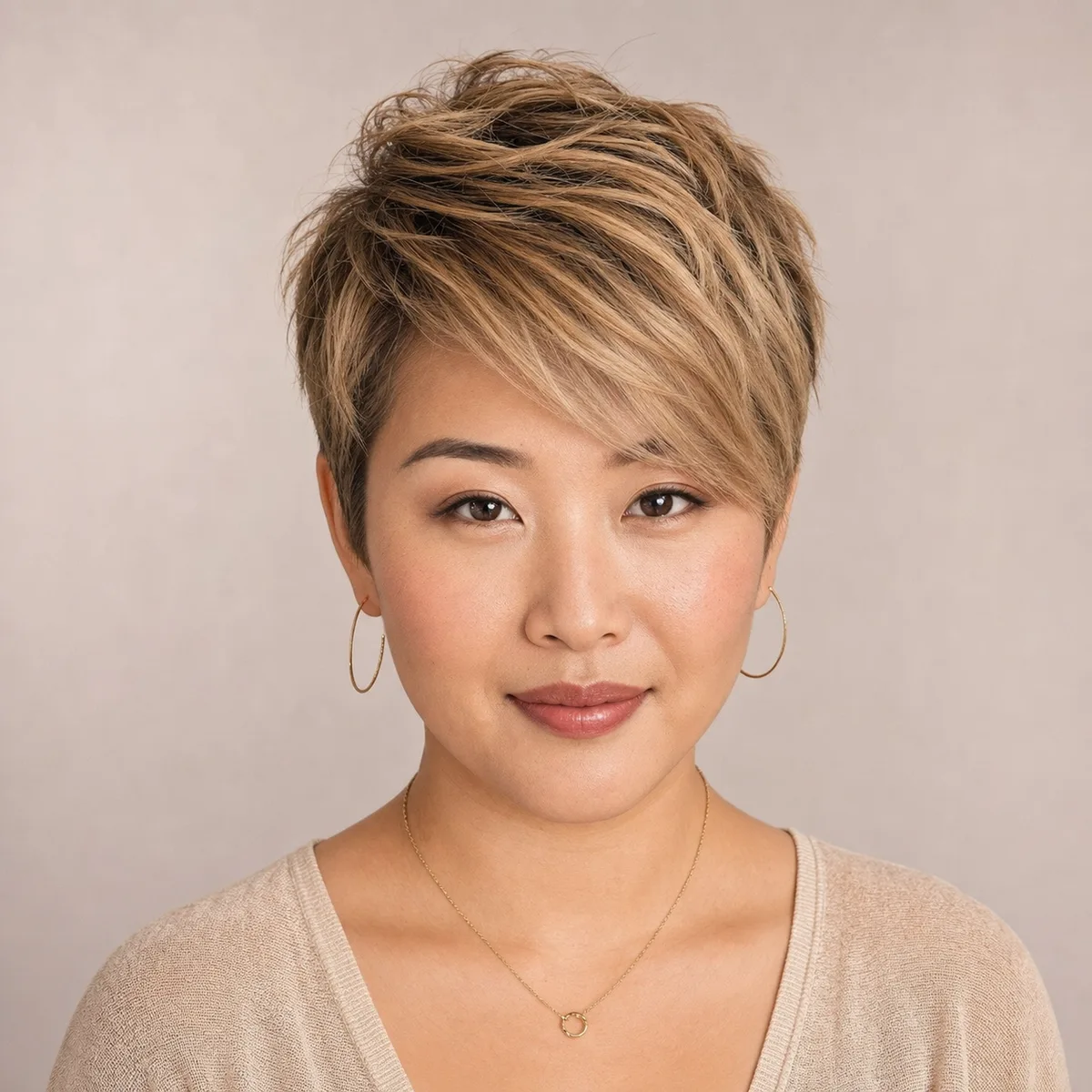
Textured pixie with side-swept bangs
This cut suits round faces with fuller cheeks and a shorter chin, on fine to medium hair that holds texture well. Thick hair can wear it too with more aggressive point-cutting. The mechanic: side-swept bangs create a diagonal line across the forehead that breaks roundness, while short, textured layers keep the sides close instead of adding width.
What to Tell Your Stylist: Ask for a textured pixie with heavy point-cutting throughout, side-swept bangs grazing the eyebrow, and short layers kept close at the temples.
Trim Frequency: Every 4 to 5 weeks.
Daily Styling: Takes about 5 minutes with texturizing paste on damp hair.
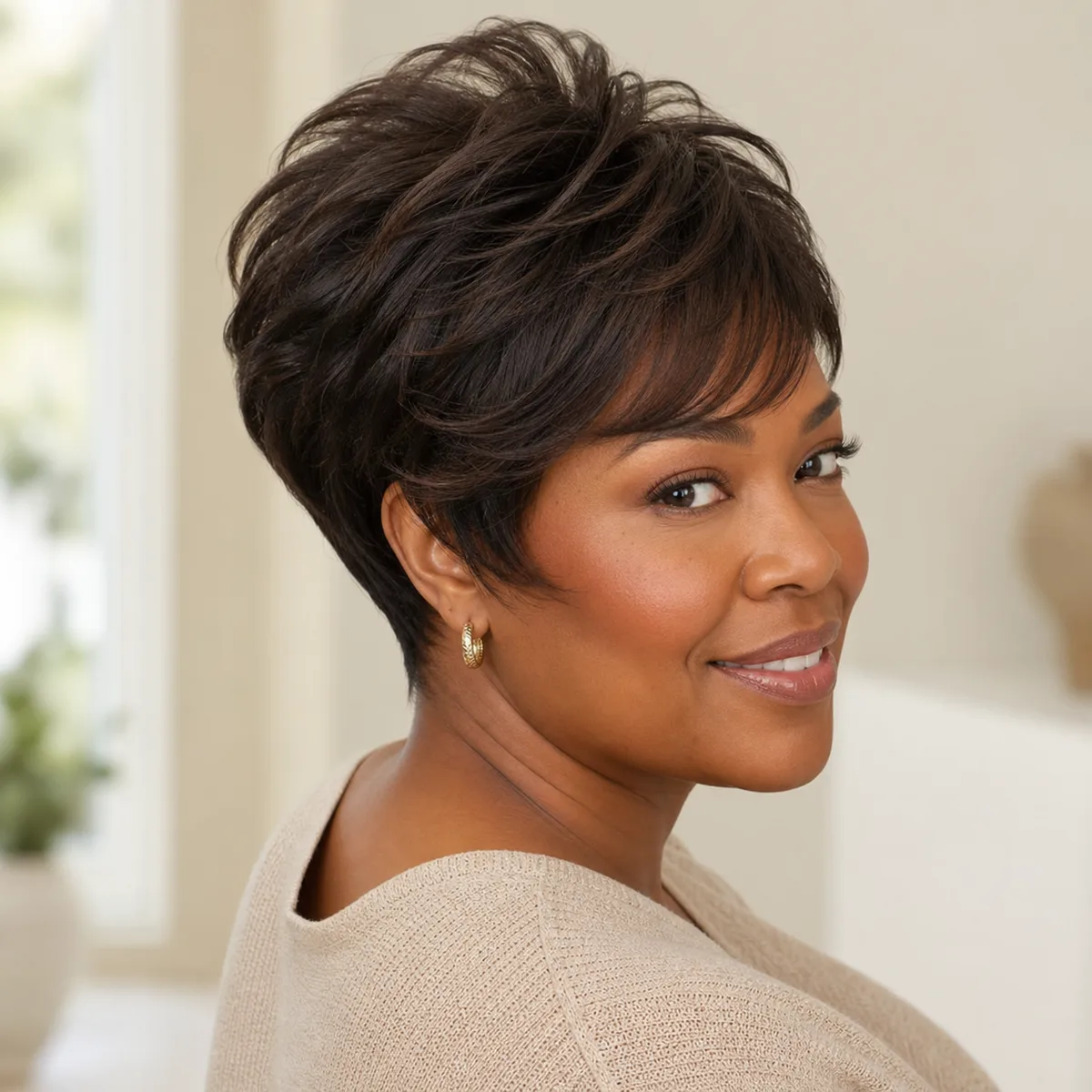
Long pixie with volume at the crown
A long pixie suits round faces with a fuller lower face or soft double chin, since length stays concentrated at the top and back. It works best on fine to medium density hair, which gives the crown something to lift. The mechanic is vertical height: lifting the roots at the crown adds visual length, counteracting width at the jaw and cheeks.
What to Tell Your Stylist: Ask for a long pixie with extra length left at the crown, a tapered nape, and layers that build volume rather than lie flat.
Trim Frequency: Every 5 to 6 weeks.
Daily Styling: Runs about 8 minutes with a round brush and lightweight mousse.
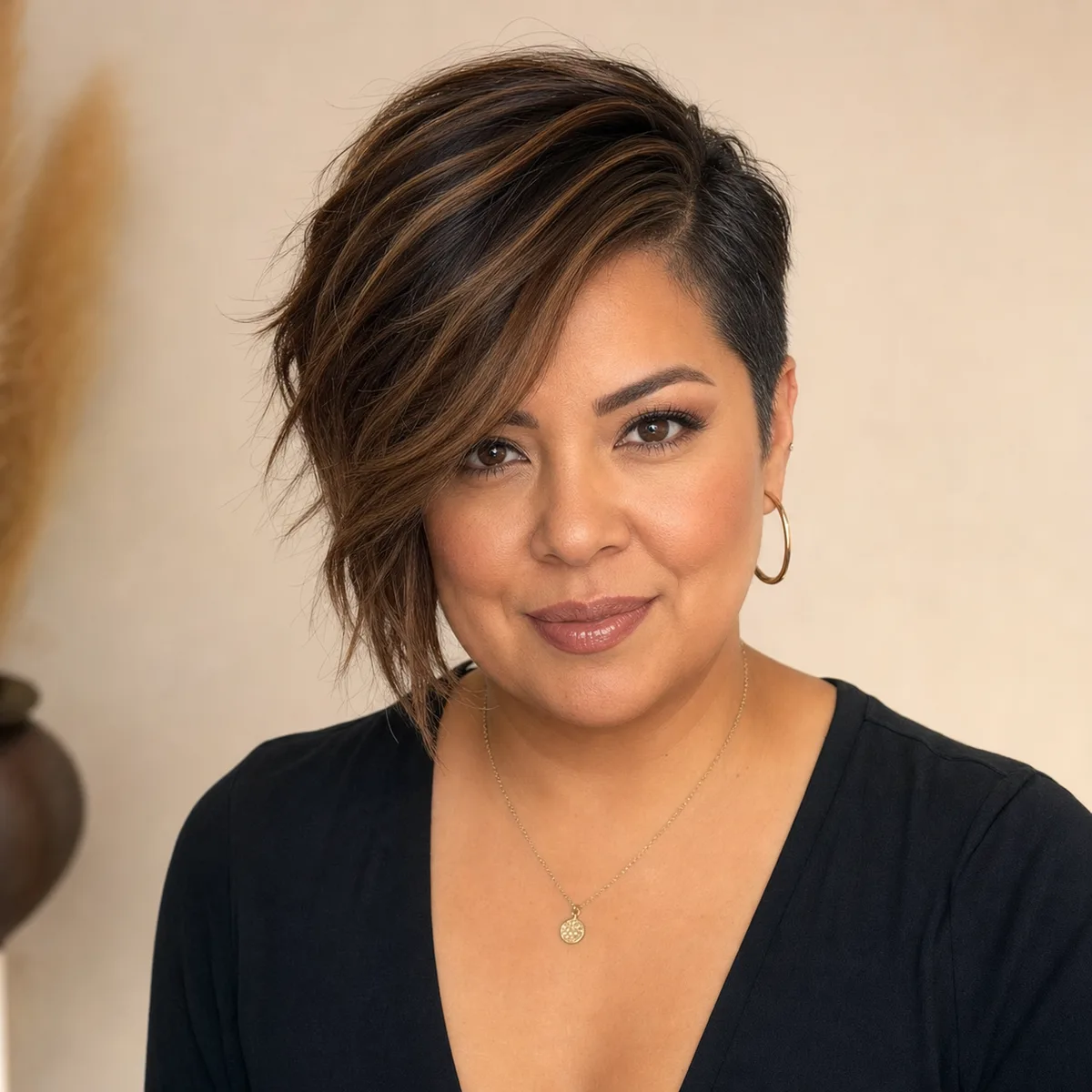
Asymmetrical pixie cut
This version suits round faces with strong, even features, since asymmetry does the heavy lifting rather than length distribution. It works well on straight to slightly wavy hair with medium density. The mechanic is pure asymmetry: an off-center part and uneven length break the circular symmetry of a round face, so the eye reads angles instead of curves.
What to Tell Your Stylist: Ask for an asymmetrical pixie with a deep side part, one side cut shorter than the other, and razored ends for a piecey finish.
Trim Frequency: Every 4 to 6 weeks.
Daily Styling: Takes 5 to 7 minutes with texturizing cream and a flat iron touch-up.
Flattering Bob Styles for Round Faces
Flattering Bob Styles for Round Faces
Bob haircuts are the most requested short style for round faces, since length and angle are easy to customize around the chin and jaw. These three versions each solve a slightly different concern.
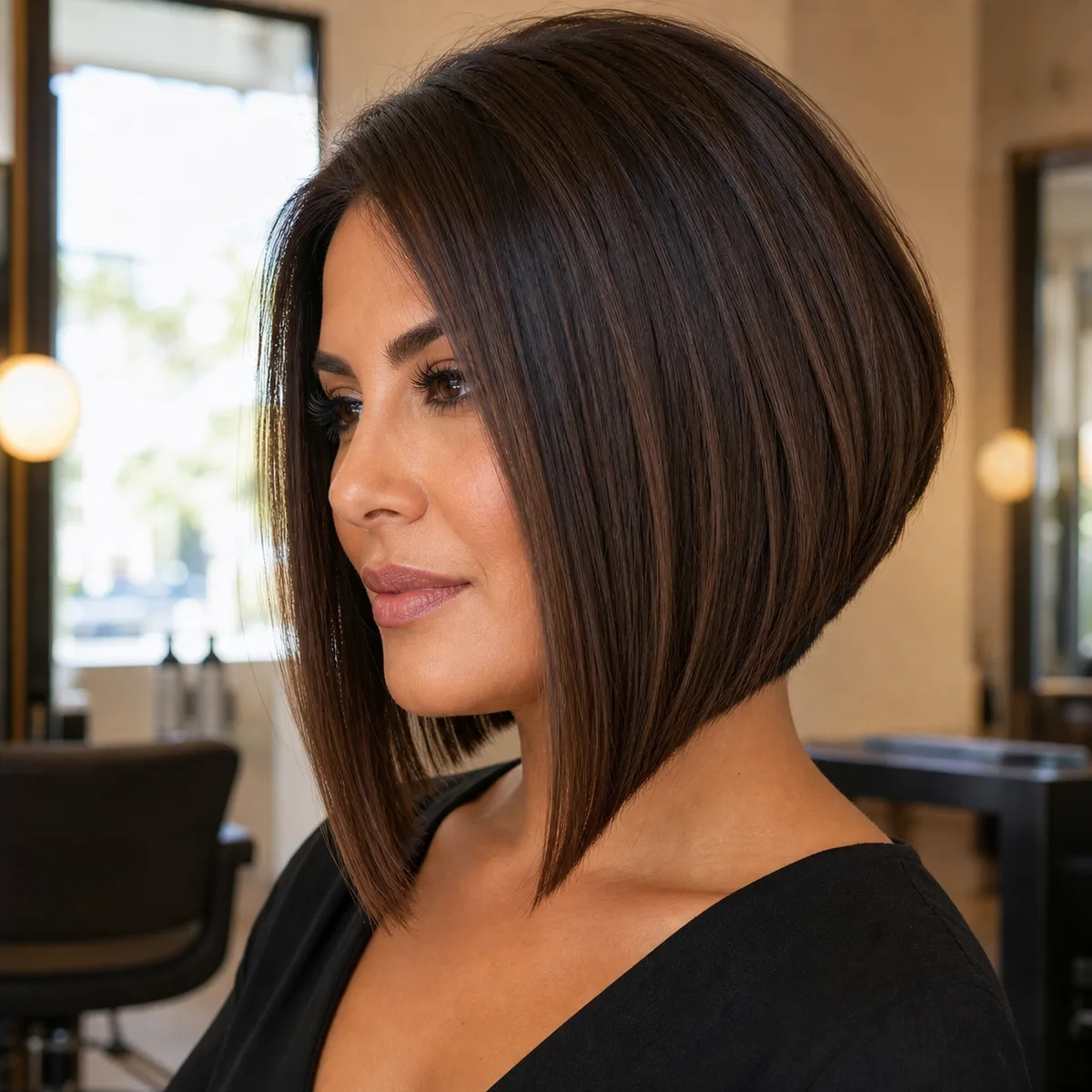
Angled bob (longer in front)
An angled bob works best on round faces with a fuller lower cheek or soft, undefined jawline, and flatters nearly every texture. Thick hair benefits especially, since the extra length in front gives weight somewhere to go instead of ballooning at the sides. The mechanic is the diagonal line itself: cutting the front noticeably longer than the back narrows the face and adds length toward the chin.
What to Tell Your Stylist: Ask for an angled bob with the front pieces landing at the collarbone and the back cut into the nape, with a strong diagonal line and no blunt horizontal ends.
Trim Frequency: Every 6 to 8 weeks.
Daily Styling: Takes about 10 minutes with a flat iron, or 5 minutes air-drying if your hair is naturally straight.
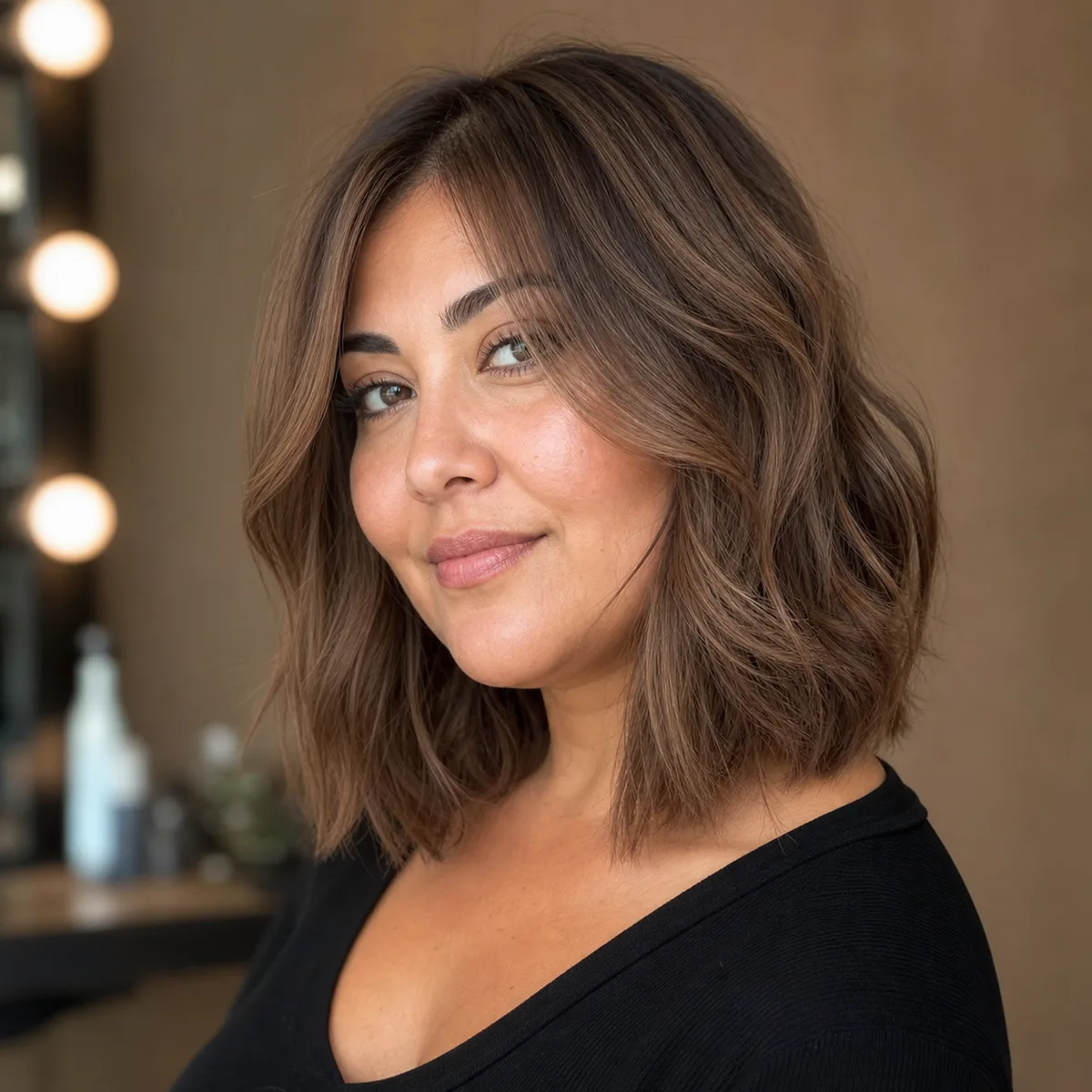
Layered bob with face-framing pieces
This cut is ideal for round faces that want softness without losing the slimming benefit, and works well on fine to medium hair. Curly and wavy textures do well too, since layers show natural texture instead of forming a face-widening triangle. The effect comes from face-framing layers that fall past the cheekbone, creating a vertical line where round faces are widest.
What to Tell Your Stylist: Ask for a layered bob with face-framing pieces cut to hit at the cheekbone and jaw, internal layers for movement, and no heavy blunt perimeter.
Trim Frequency: Every 6 to 8 weeks.
Daily Styling: Runs 7 to 10 minutes with a round brush or curling wand.
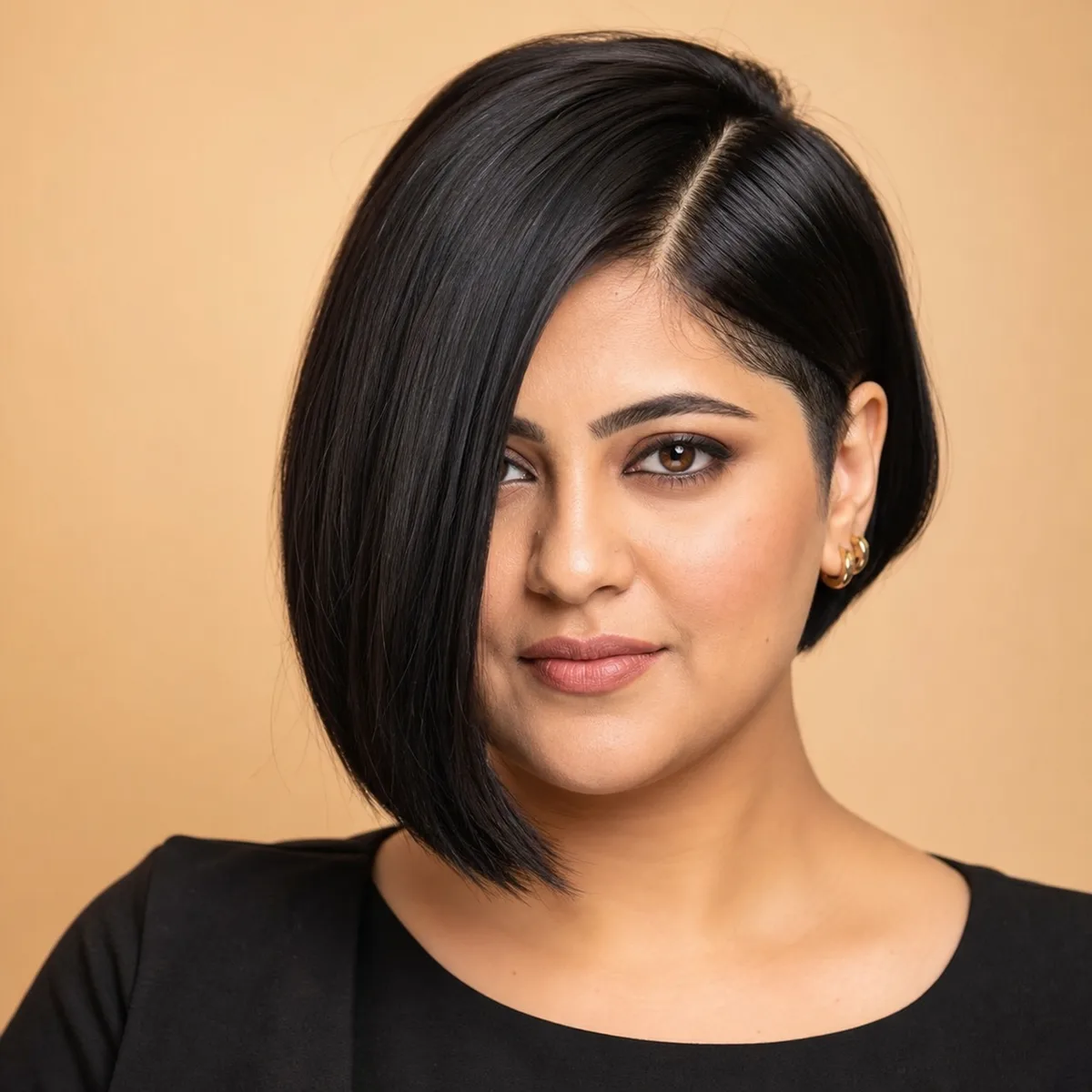
Asymmetrical bob with a deep side part
Best suited to round faces with strong, symmetrical features who want a bolder, editorial slimming effect, this bob works well on straight to slightly wavy hair with medium to thick density. The mechanic combines two slimming principles: the deep side part creates instant asymmetry, and the uneven length between sides adds a diagonal line a symmetrical bob cannot deliver.
What to Tell Your Stylist: Ask for an asymmetrical bob with a deep side part, one side several inches shorter than the other, and a smooth, glossy finish rather than heavy texture.
Trim Frequency: Every 6 weeks.
Daily Styling: Takes about 10 minutes with a flat iron.
Shag and Textured Cuts for Round Faces
Shag and Textured Cuts for Round Faces
The final four cuts round out the list with more texture-driven options, including two built specifically for a fuller lower face and a more mature hair type.
Short shag with curtain bangs
A short shag with curtain bangs suits round faces of nearly any cheek fullness, since shaggy layers and center-parted bangs do the slimming work at the top of the face. It performs best on wavy to curly textures with medium to thick density. The mechanic combines height and framing: curtain bangs add soft vertical lines, while heavy layering removes bulk that would otherwise widen the silhouette.
What to Tell Your Stylist: Ask for a short shag with heavy layering throughout, curtain bangs parted in the center and blended into the sides, and a razored, textured finish.
Trim Frequency: Every 8 to 10 weeks.
Daily Styling: Takes just 5 minutes with texturizing spray scrunched through damp hair.

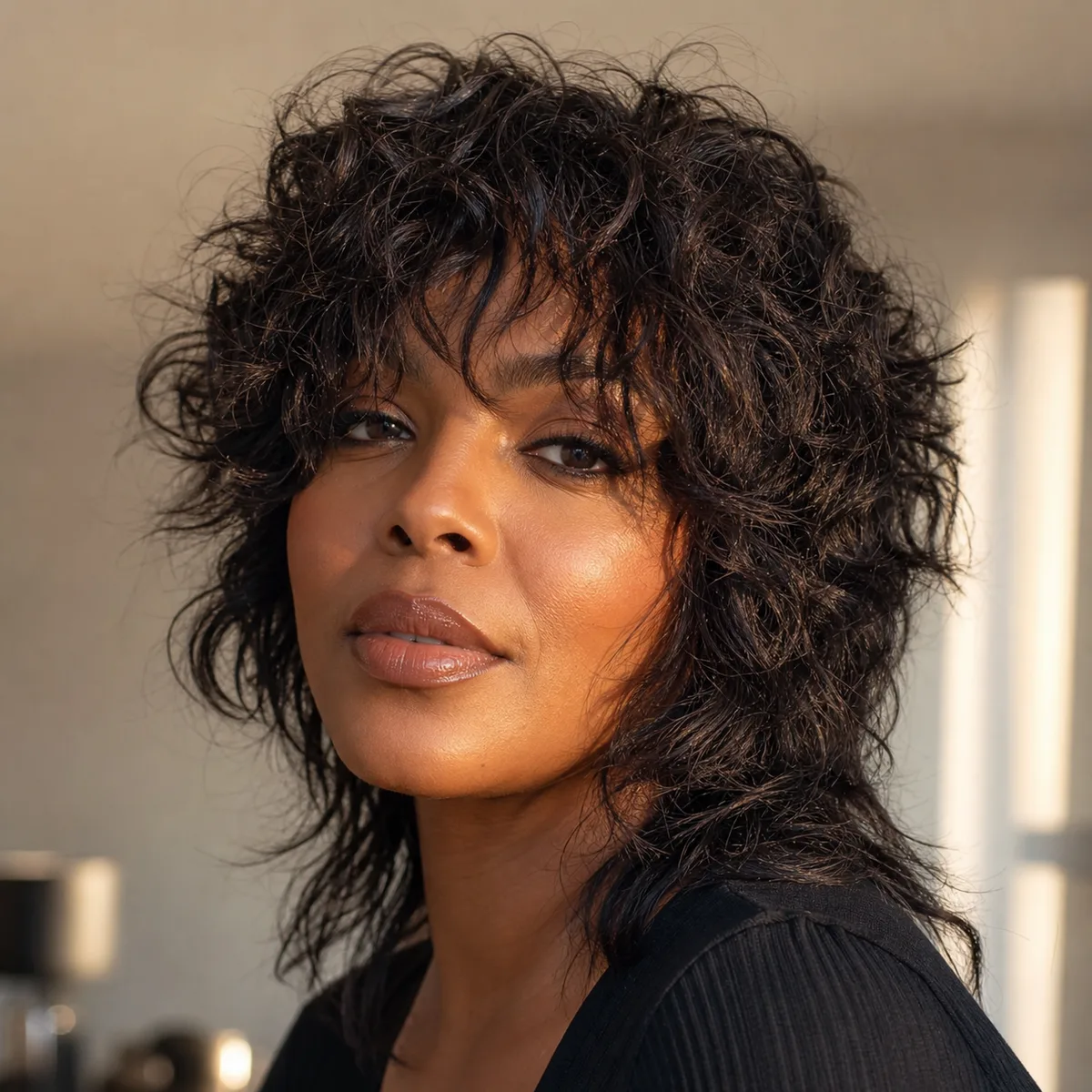
Wolf cut with face-framing layers
The wolf cut, a shaggier cousin of the classic shag, suits round faces with medium to full cheeks and works best on wavy or curly hair with medium to thick density. Straight hair can wear it too with a perm or texturizing spray. The slimming effect comes from aggressive face-framing layers cut at sharp angles past the cheekbone, creating multiple lines around the widest part of the face.
What to Tell Your Stylist: Ask for a wolf cut with heavy face-framing layers starting at the cheekbone, a shaggy, choppy crown, and razored ends for texture.
Trim Frequency: Every 8 to 10 weeks.
Daily Styling: Takes 5 to 8 minutes with texturizing spray and finger-scrunching.
Chin-length crop for double chin
This cut is built for round faces carrying extra fullness at the jaw or a soft double chin, and works on straight to wavy hair of any density. The mechanic is direct: keeping the length right at the chin creates a line that lifts and defines the area. Cutting shorter exposes more fullness underneath, while cutting longer than the collarbone elongates the jaw in a less flattering way.
What to Tell Your Stylist: Ask for a crop that ends precisely at the chin, angled slightly forward at the front, with soft layers around the jaw and no blunt ends that sit directly under the chin.
Trim Frequency: Every 5 to 6 weeks.
Daily Styling: Takes 7 to 10 minutes with a round brush to curve the ends inward.

Softly layered pixie-bob for women over 40
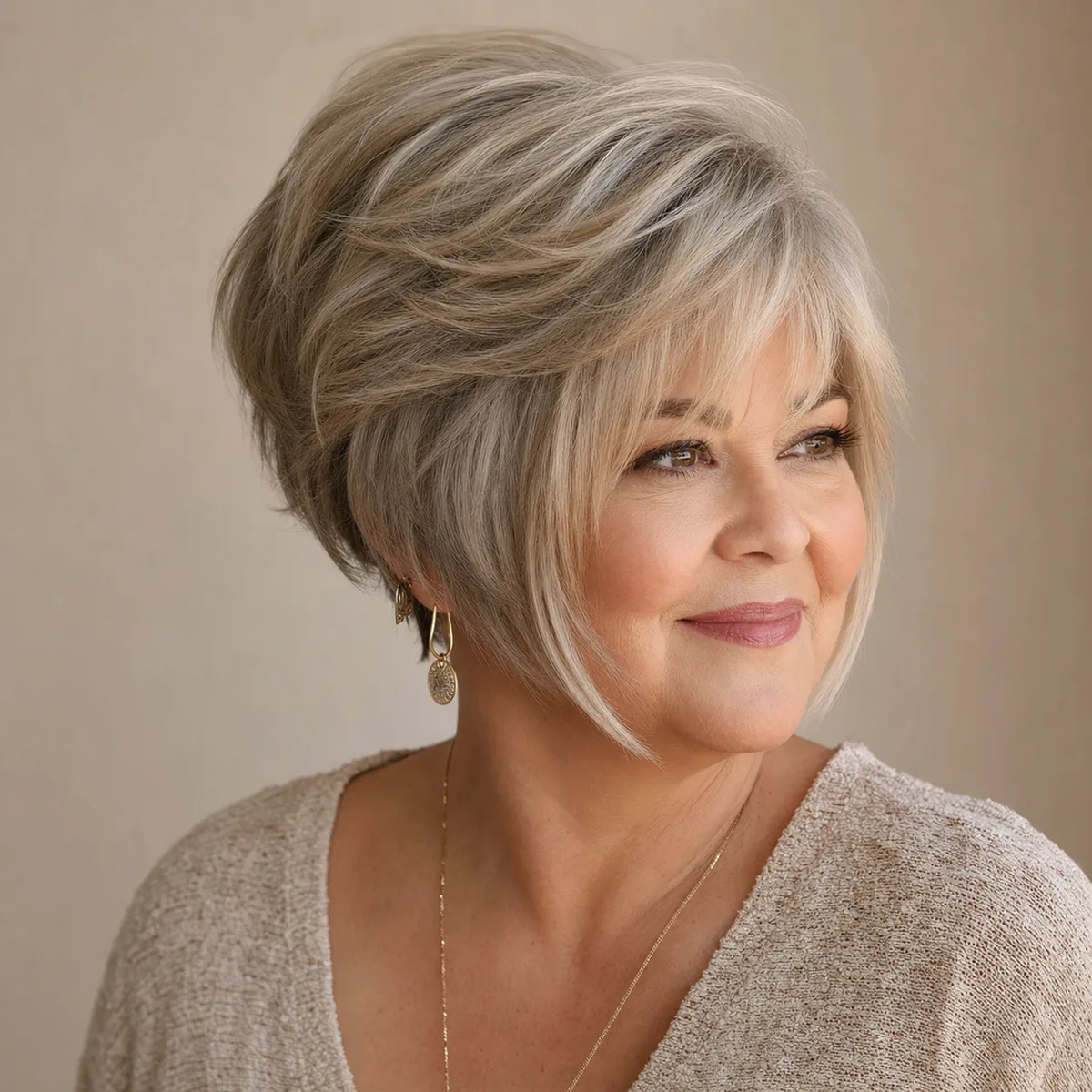
This hybrid cut, sitting between a long pixie and a short bob, suits round faces of any age but is especially popular with women over 40 who want lower maintenance without sacrificing shape. It works beautifully on fine, more mature hair, since soft layers add movement without dragging down thinning strands. The mechanic combines crown height with a soft, angled perimeter around the jaw.
What to Tell Your Stylist: Ask for a soft, layered pixie-bob with volume built at the crown, a slightly angled perimeter grazing the jaw, and face-framing pieces kept light rather than heavy.
Trim Frequency: Every 6 to 8 weeks.
Daily Styling: Runs 5 to 7 minutes with a round brush and lightweight volumizing mousse.
How to Choose the Right Cut for Your Hair Texture and Maintenance Level
How to Choose the Right Cut for Your Hair Texture and Maintenance Level
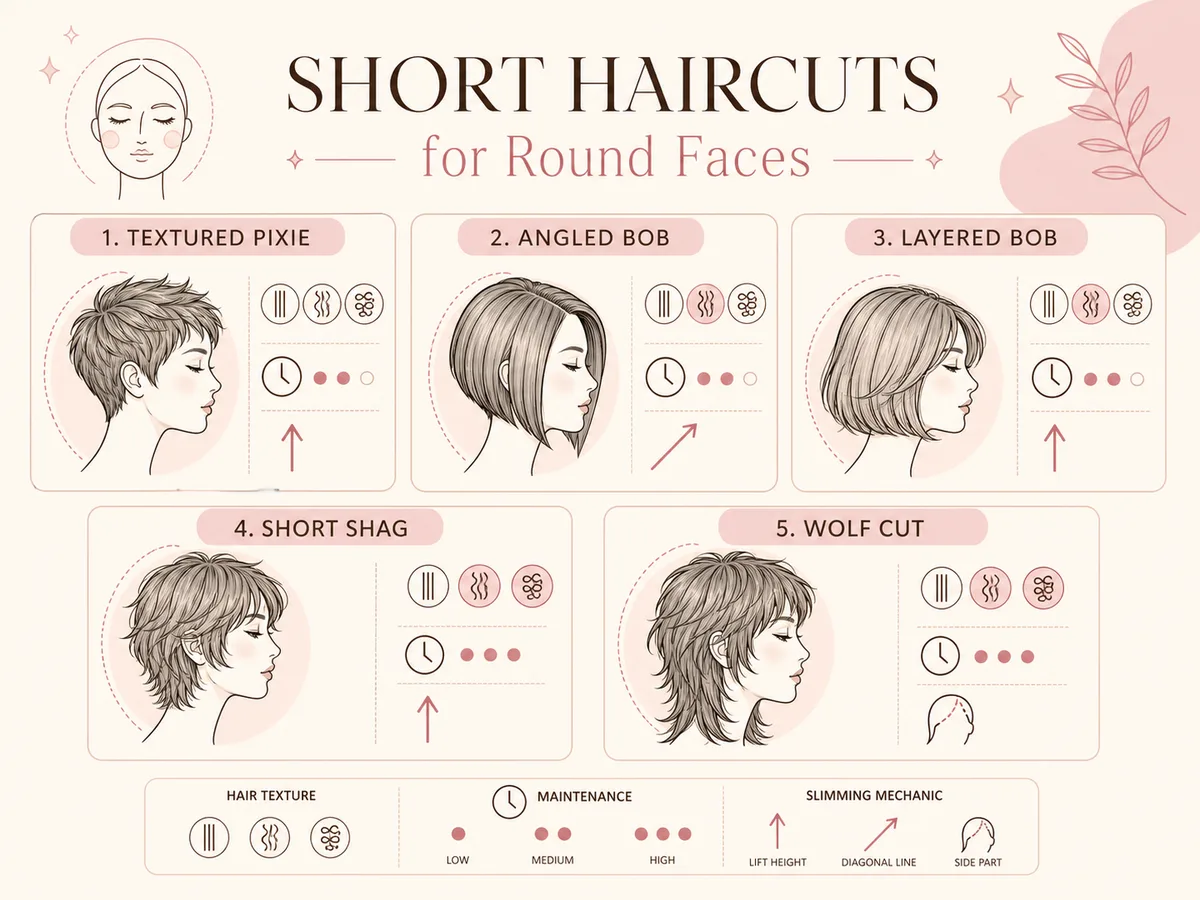
Face shape is only half the equation, and texture often decides whether a cut looks effortless or like a constant styling battle. Straight hair holds a crisp line best, so lean toward the angled bob, the asymmetrical bob, or the chin-length crop. Wavy hair suits the layered bob with face-framing pieces, the short shag, or the softly layered pixie-bob. Curly hair does particularly well with the wolf cut, the short shag, and the long pixie, since curls naturally create the volume these cuts are designed around. Coily hair tends to shine in the textured pixie or long pixie, since shrinkage adds the crown height that gives these cuts their slimming lift. Whatever your texture, styling products can help the cut behave the way it did the day you left the salon.
On maintenance, the short shag, the wolf cut, and the softly layered pixie-bob are your lowest-effort options, since all three look intentionally undone and forgive a few extra weeks between trims. The asymmetrical bob and the chin-length crop need the most consistent upkeep, since both rely on a precise line that softens as soon as it grows out of place. If you want something breezy for warmer months, summer short haircuts round up more low-maintenance options.
A pixie typically grows into bob-friendly length around month 4 to 6, so you can treat pixie trims as a gradual transition rather than starting over. Bobs and shags grow out more gently, often stretching an extra 2 to 3 weeks past their ideal trim window, giving you flexibility if a salon visit needs to move.
Frequently Asked Questions
Frequently Asked Questions
What haircut makes a round face look thinner? Any cut that adds height at the crown, introduces a diagonal line along the jaw, or breaks symmetry with a deep side part or uneven length will visually slim a round face. The angled bob, the long pixie with crown volume, and the asymmetrical bob are three of the strongest examples here.
Is a pixie cut or a bob better for a round face? It depends more on your hair density and how much daily styling you want than on face shape alone. Pixies suit fine to medium hair that benefits from crown lift, while bobs suit thicker hair that needs extra length to balance weight.
What short haircuts work for a round face with a double chin? The chin-length crop and the angled bob longer in front are the two strongest choices, since both place length and angle directly at the jaw to lift and define it. Avoid cuts that end well above or below the chin.
How often do I need to trim a short haircut to keep it flattering? Most short cuts need a trim every 4 to 8 weeks. Precision cuts like the asymmetrical bob or chin-length crop need trims closer to 4 to 6 weeks, while shaggier cuts like the wolf cut or short shag can stretch to 8 or 10 weeks.
Choosing a short haircut for a round face comes down to matching the mechanic, whether height, angle, or asymmetry, to your texture and how much time you want to spend styling each morning. Save the cut that matches your hair type and goals, screenshot the stylist script above, and bring both to your next appointment. If none of these ten felt like your perfect match, short hairstyles has plenty more options worth exploring before you book.



Your email address will not be published. Required fields are marked *