Curly hair trends move fast in 2026, and not every viral look will behave the same on your curl pattern. This roundup breaks down 10 trending curly hairstyles women are actually wearing this year, and it goes a step further than most lists you have already scrolled past. For each style, you will find the curl patterns it flatters, the face shapes it suits, an honest maintenance label, and the exact words to hand your stylist so the cut you leave with matches the photo you saved.

The Gist: Why Trending Curly Hairstyles Are Everywhere Right Now
The Gist: Why Trending Curly Hairstyles Are Everywhere Right Now
Curly hair is having a quiet, confident moment. More women are asking for curl-pattern-specific cutting instead of a generic trim, choosing air-dried texture over daily heat styling, and picking shapes that work with their natural curl instead of fighting it. That shift shows up in every style on this list, from the loose, lived-in shag to the polished special-occasion updo.
Here's how to use this list: each entry tells you which curl pattern it fits best (using the standard 2A through 4C typing scale), which face shapes it flatters, how much upkeep it takes weekly, and the exact phrase to use in the chair. Your curls won't look identical to the photo, and that's normal, since curl pattern, density, porosity, and even the day's humidity all shape the final result. More on why in the FAQ below.
10 Trending Curly Hairstyles to Try This Year
10 Trending Curly Hairstyles to Try This Year
This is the core of the list: what each style looks like, which curl types and face shapes it flatters, how much upkeep to expect, and what to say to your stylist. Read straight through, or jump to the one that already caught your eye on Pinterest.
Curly Shag Haircut
The curly shag is everywhere right now. Heavy internal layering strips out bulk so natural curl can create movement instead of a round brush doing the work. It works best on 2B to 4A curl patterns, where curl or wave holds separation without frizzing into a triangle shape, and it flatters round, oval, and heart face shapes, since the face-framing pieces soften angles and add height at the crown. Maintenance sits at low to medium, since the layers hide regrowth well and you can usually stretch trims to every 10 to 12 weeks. Ask your stylist for a curly shag with heavy internal layering and face-framing pieces, cut dry so you can see how the curl actually falls.

Curly Bob Haircut
The curly bob has traded its safe, symmetrical shape for more attitude, usually landing chin to shoulder length with layers cut in for movement. It works across most curl patterns once the stylist customizes the internal shape to your density and porosity, and it flatters nearly every face shape, especially oval and square, where the jaw-grazing length highlights bone structure. Maintenance runs medium, since the shorter length shows regrowth faster and usually needs a trim every 8 to 10 weeks. Tell your stylist you want a layered curly bob, chin to shoulder length, cut curl by curl for shape.

Curly Pixie Cut
Curly pixie cuts are back, leaning into curl definition instead of the tightly cropped, product-heavy pixies of years past. The cut looks most defined on 2B to 3B patterns, where individual curls hold their shape without disappearing into shrinkage, and it suits oval, heart, and diamond face shapes especially well, since the short length draws attention up toward the cheekbones and eyes. Daily styling is low once you know your routine, though trims come more often, closer to every 4 to 6 weeks. Ask for a curl-by-curl pixie cut, dry cutting only, with no length pulled straight while cutting. If you want more inspiration before committing to a short cut, browse curly pixie ideas for more lengths and patterns worth saving.

Deva Cut (Curl-by-Curl Cut)
The deva cut, also called a curl-by-curl cut, solves the biggest complaint about traditional cutting: hair cut wet and stretched straight rarely falls the way it is supposed to once it dries and springs back. It adapts to nearly any texture, from 2C waves through 4C coils, and suits most face shapes since the stylist customizes the outline to your features rather than a template. Maintenance lands in the medium range, with most clients returning every 10 to 14 weeks depending on regrowth. When booking, ask for a deva cut or curl-by-curl dry cut, with no length cut while your hair is wet or stretched.

Curly Top Knot
For gym days and errand runs, the curly top knot keeps volume and shape at the crown instead of scraping curls flat into a bun. Curl pattern barely matters here, since the style relies on gathering hair rather than showing off individual curl definition, though it works best on medium-to-long curls, shoulder length or beyond, so shorter curls don't slip out. Daily effort is low, usually under five minutes once you learn to twist without flattening the root. This one comes down to styling rather than cutting, though a curl-by-curl cut with layers helps the knot sit fuller.

Curly Bangs (Curly Fringe)
Curly bangs are trending again, cut longer and with more layering than the blunt curly fringes of the past. They hold their shape best on 2A to 3A patterns, where curl clumps stay defined near the forehead, and they flatter long, oval, and heart face shapes, since the fringe visually shortens the forehead and adds width at the brow. Maintenance runs medium to high, since bangs need more frequent trims and usually daily diffusing. Ask your stylist for curly bangs cut dry with room for shrinkage, blended into layers rather than cut as a blunt piece.

Half-Up Curly Style
The half-up style solves the everyday problem of wanting your curls visible without them falling into your face all day. It works from loose waves to tight coils, since the technique doesn't depend on a specific curl shape, and it flatters round, oval, and heart face shapes, since lifting the crown elongates the face and balances fuller cheeks. Maintenance is low, just two to three minutes with a clip or hair tie. Like the top knot, this is more about styling than cutting, though layers throughout the length help the pulled-back section sit with more shape. Curly hairstyle ideas has more everyday, low-effort curly looks if this one caught your eye.

Curly High Ponytail
A sleek, smoothed root paired with full, voluminous curl left loose is what turns a basic workout pony into a genuine trend. Nearly every curl pattern works, since the style relies on gathering rather than showing off root-level curl definition, and it suits most face shapes, especially oval and heart, where the high placement draws the eye upward. Maintenance sits at medium, mainly because keeping the front section smooth takes some edge control plus a light mist to refresh curls between wears. Again, it's a styling call more than a cutting one, though a curl-by-curl cut with layers adds more visible movement once the hair is gathered up.

Long Layered Curly Shag
This longer version of the shag uses heavy layering to create bounce and keep the weight of length from pulling curls flat. It shows off spiral movement best on 3A to 4B patterns, where curl separates into distinct, bouncy sections, and it flatters oval, heart, and long face shapes, since the layers add width around the cheeks and stop length from stretching the face. Maintenance runs medium, with a trim every 10 to 12 weeks to keep the layers from growing into one heavy mass. Ask for a long curly shag with heavy internal layering, cut dry for spiral movement rather than just length removal. Fans of this cut will also want to browse layered curl looks for more ways to add bounce and shape through layering.

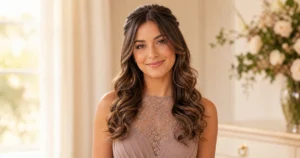
Curly Updo for Special Occasions
Current updos pin curls up while letting individual pieces stay loose and defined, rather than smoothing texture into submission for formal settings. All curl patterns work here, since the technique relies on pinning and sectioning rather than one specific curl shape, and it suits most face shapes, since an experienced stylist can adjust height and face-framing pieces to your features. Maintenance for the styling session itself runs medium to high, often taking 30 to 60 minutes to pin properly, though it needs no daily upkeep once it's done. Ask your stylist for an updo built around your natural curl pattern, pinning sections up while leaving pieces loose for texture, not smoothed flat before pinning.

How to Match a Trending Curly Hairstyle to Your Curl Pattern
How to Match a Trending Curly Hairstyle to Your Curl Pattern
Curl typing runs from 2A, the loosest beachy waves, through 4C, the tightest coils with the most shrinkage. Knowing roughly where your hair falls makes this list easier to use, so see Healthline's curl type guide for a fuller breakdown of the 2A through 4C system.
If your curls fall in the 2A to 2C range, the half-up style, curly bangs, and curly bob tend to hold shape best. These patterns have less natural volume at the root and less shrinkage than tighter curls, so styles with built-in lift, like the half-up or a well-layered bob, photograph closer to the inspiration image.
For 3A to 3C patterns, the curly shag, deva cut, and long layered curly shag are strong choices. This middle range clumps naturally once moisturized, which is exactly what heavy layering shows off, though shrinkage is noticeable enough that a curl-by-curl or dry-cutting approach matters for an accurate length.
If you fall into 4A to 4C, the deva cut, curly pixie cut, and curly updo tend to be the most rewarding, since tighter coils show the most dramatic transformation when cut curl by curl instead of stretched straight. Coily hair in this range also tends to hold updo styles well without much product.
Curl pattern is only part of the equation. Density and porosity change how any style looks once you leave the chair. Denser hair reads fuller and holds more shape in styles like the shag or updo, while finer curls may need extra layering to avoid looking flat by midday.

Styling and Maintenance Tips for Trending Curly Looks
Styling and Maintenance Tips for Trending Curly Looks
Every style on this list holds up better with the right wash-day routine. Start with a moisture-focused shampoo and a leave-in conditioner. Dermatologists cited by the American Academy of Dermatology generally recommend this pairing for curly hair, which is naturally more prone to dryness. Diffusing on low heat preserves curl clumping and volume better than air-drying alone, though air-drying works fine on days when you want to skip heat altogether.
Refresh curls between wash days with a mix of water and a small amount of leave-in conditioner scrunched through dry sections. Sleeping in a satin or silk bonnet, or switching to a satin pillowcase, reduces friction and helps curls hold their shape overnight. These two habits make a bigger visible difference than most product switches.
Curl-by-curl cuts need trims more often than blunt cuts, since curls grow out at slightly different rates and can hide unevenness longer. Most styles above need a trim every 8 to 14 weeks. Heading into warmer months? This guide to curly summer looks covers styles built for heat and humidity.

FAQ: Realistic Expectations for Curly Hairstyles
FAQ: Realistic Expectations for Curly Hairstyles
Why won't my curls look exactly like the photo? Curl pattern, density, and porosity all vary, so two women with the same general curl type can get different results from the same cut. Humidity, salon products, and whether hair was cut wet or dry also change the outcome. Treat every photo on this list as a starting reference, not an exact blueprint, and tell your stylist which elements matter most to you.
How long does it take for a curly cut to settle into its shape? Most curly cuts need a few days to two full wash cycles before the true shape settles, since freshly cut curls look different right after cutting than once washed and styled at home. This is especially true for deva and curl-by-curl cuts. Give a new cut at least one full wash cycle before deciding it needs adjusting.
Can I ask my stylist to recreate a specific trending style? Yes. Bring a clear photo along with the stylist wording from this post, and be specific about layering, length, and whether you want the cut done wet or dry, since those details affect the outcome more than the style name alone. A good stylist will tell you honestly if your curl pattern needs a slight adjustment.
Does curl pattern change which trending style will work best? Yes. It's one of the biggest factors, which is why this post pairs each style with curl-pattern suitability instead of treating all curls the same. Looser patterns favor layering and gravity-based styles, while tighter coils often show more dramatic results from dry, curl-by-curl cutting. Density and porosity add another layer of nuance on top.
How often should I trim curly hair to keep a trending shape? Most styles on this list hold their shape with a trim every 8 to 14 weeks, though shorter cuts like the curly pixie need trims closer to 4 to 6 weeks. Curl clumps can mask split ends longer than straight hair does, so sticking to a consistent schedule keeps the shape closer to the photo you saved.
These ten trending curly hairstyles prove curly hair doesn't need to be smoothed or minimized to look current. Whatever your curl pattern, there's a version built to work with your texture. Save the one that matches your curl pattern, screenshot the stylist wording, and you're ready to book.
Your email address will not be published. Required fields are marked *