

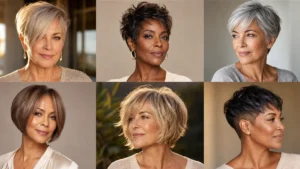
Going gray does not mean giving up a great haircut. The right short gray haircuts for women over 50 can make silver, white, or salt-and-pepper hair look deliberate, modern, and easy to live with instead of something you are just tolerating until the color grows out. This guide pairs every short gray haircut idea with the details competitors skip entirely: the best face shape, the hair texture it flatters, a real maintenance level, and the exact words to hand your stylist so you walk out with the cut you actually pictured.
Instead of scrolling through dozens of photos with zero context, use the filters below to find your category, then jump into the full style breakdown for pixies, bobs, or shags and crops. Whether you are fully silver, still salt-and-pepper, or actively transitioning away from color, there is a shape here built around your face and your hair, not a generic "flattering on everyone" claim. Each of the three category guides linked below carries the same face-shape, maintenance-label, and salon-wording format as the notes on this page.

How to Choose Your Best Short Gray Haircut
How to Choose Your Best Short Gray Haircut
Before you fall in love with a photo, run it through three quick filters: your face shape, your hair texture and density, and how much time you genuinely want to spend styling each morning. A cut that photographs beautifully on a stranger with a long face and fine, straight hair will not necessarily behave the same way on your round face with thick, wavy strands. Matching the shape to your actual features and texture, not just the trend, is what makes a short gray haircut look like it was made for you instead of borrowed from a magazine.
Throughout this guide, every style carries one of three maintenance labels so you know what you are signing up for before you sit in the chair. Low maintenance means trims every 8 to 10 weeks and a cut that air-dries well with minimal product. Medium maintenance means trims every 6 to 8 weeks with some daily styling, usually a quick blow-dry or a bit of texturizing cream. High maintenance means trims every 4 to 6 weeks along with regular blow-drying, flat ironing, or precise product use to keep the shape crisp.
Gray and white hair also grows in with more visible root regrowth than colored hair does, since there is often more contrast between the new growth and the surrounding strands. Shorter, texturized cuts and softer, blended shapes tend to hide that regrowth line far longer between salon visits than one-length, sleek styles do. If you already love the haircuts over 50 roundup, this guide builds on it specifically for gray, silver, and salt-and-pepper hair. For a deeper look at matching any haircut to your bone structure, our face shape guide is a useful companion to the notes below.
Short Gray Pixie Cuts
Short Gray Pixie Cuts
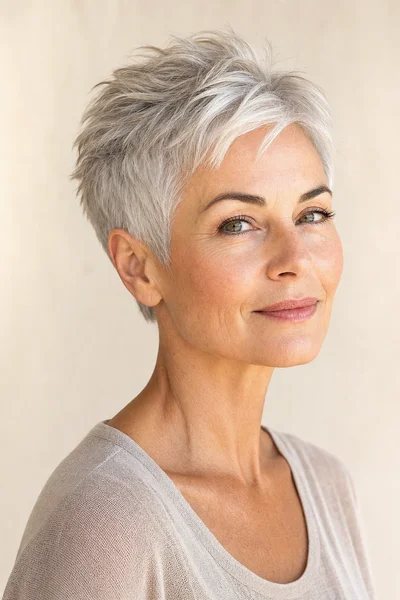
Pixies remain one of the most popular short gray hairstyles for women over 50 because they show off cheekbones, cut down on drying time, and let silver tones catch the light beautifully. The classic silver pixie keeps the sides fitted and close, which flatters oval and heart faces, while the wispy pixie with crown volume builds height at the top instead, which suits round faces and fine or thinning hair particularly well. Our full gray pixie cuts breakdown covers 12 pixie variations in total, from a bold undercut pixie to a curly silver pixie built around natural curl pattern, each with a face-shape match, a maintenance label, and the exact salon wording to ask for.
Short Gray Bob Haircuts
Short Gray Bob Haircuts
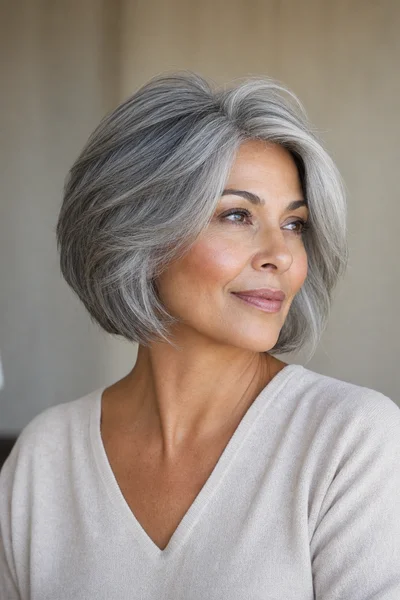
Bobs give a little more length and coverage than a pixie while still keeping styling time short, which is why they remain some of the most requested short gray haircuts for women over 50. A layered silver bob removes weight gradually from the ends for a soft, polished look, while a blunt gray bob keeps one clean line for a sleek, almost glass-like finish on fully silver or white hair. Our full gray bob haircuts guide covers 14 bob variations, including stacked, angled, asymmetrical, curly, and glasses-friendly options, each labeled for maintenance and paired with real styling notes.
Short Gray Shags, Crops, and Textured Cuts
Short Gray Shags, Crops, and Textured Cuts
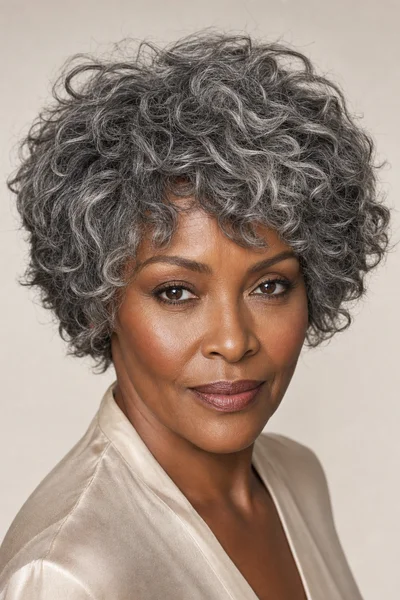
Shags, crops, and other heavily textured shapes bring more movement and visible volume than a classic pixie or bob, which makes them especially useful for fine or thinning gray hair. Broken-up layers scatter light and create the appearance of density without adding length or weight, so these cuts often photograph fuller than they actually are. Our full gray shags and crops roundup covers 9 texture-forward options, including a wolf-inspired crop, a voluminous crown cut for crown-area thinning, and a curly silver shag built specifically around natural curl pattern.
How to Care for Short Gray Hair
How to Care for Short Gray Hair
Trim frequency should follow the maintenance label attached to each cut above, but there is a gray-specific reason those windows matter more than they might for colored hair. Gray and white strands often have a different texture than the surrounding hair, sometimes coarser or more resistant to styling, which means regrowth can look more noticeable sooner, especially in structured cuts like a blunt bob or a tapered nape. Sticking to the trim window for your specific cut, rather than stretching it out, keeps the shape crisp and keeps regrowth from reading as unkempt rather than intentional.
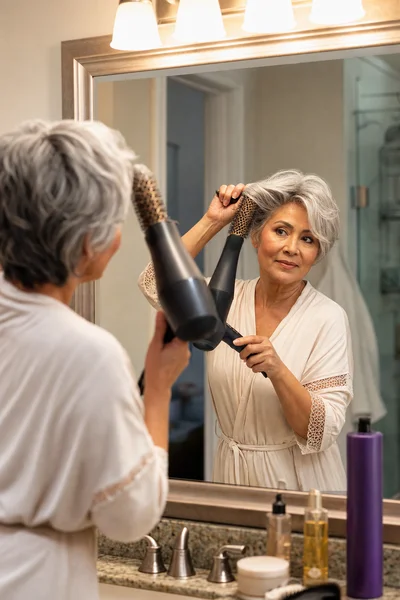
A few general care habits go a long way for short gray hair day to day. A purple or violet-toned shampoo used once or twice a week can help counter the yellowing or brassiness that gray and white hair sometimes picks up from hard water, sun exposure, or certain styling products. Gentle heat styling, meaning lower temperatures and a heat protectant, helps preserve the natural shine gray hair can have, since gray strands tend to be more porous and prone to dryness than pigmented hair. According to the Cleveland Clinic, hair naturally loses pigment as we age because pigment-producing cells gradually become less active, which is simply a normal part of aging rather than something to correct or reverse.
If you are transitioning from colored hair to gray, a short cut is one of the easiest ways to get through that in-between phase without a long, awkward grow-out period. Cutting hair shorter removes more of the colored length at once, so there is less contrast to manage between old color and new gray growth. Many women choose to go shorter at the start of a gray transition, then let the cut grow out a little between trims as the last of the color grows away.
FAQs About Short Gray Haircuts for Women Over 50
FAQs About Short Gray Haircuts for Women Over 50
What is the best short gray haircut for a round or thin face?
A stacked bob, a wispy pixie with crown volume, or an angled bob all work well for round or thin faces because they add height or a diagonal line that elongates the face. Avoiding one-length, rounded shapes without any layering tends to give the most flattering result. Ask your stylist to build in extra height at the crown regardless of which cut you choose.
What is the most low-maintenance short gray haircut?
A cropped pixie for fine hair, a feathered gray crop, or a chin-length bob for glasses wearers are among the lowest-maintenance options across this guide, since all three can be air-dried and only need trims every 8 to 10 weeks. Look specifically for the "Low" maintenance label in each style breakdown if minimal daily styling is your top priority. These cuts also tend to hold their shape longest between salon visits.
How often should you trim gray hair?
Trim frequency depends on the specific cut, but a general range is every 8 to 10 weeks for low-maintenance shapes, every 6 to 8 weeks for medium-maintenance cuts, and every 4 to 6 weeks for high-maintenance, precision shapes like a blunt or tapered bob. Gray hair regrowth can be more visible sooner than colored regrowth in structured cuts, so sticking closer to the shorter end of your range keeps the shape looking its best. Your stylist can also help you find a slightly longer or shorter window based on how quickly your particular hair grows.
What is the best haircut when transitioning from color to gray?
Shorter cuts with soft layering, such as a layered silver bob, a long pixie, or a wavy silver lob, tend to blend the demarcation line between old color and new gray growth the most effectively. Cutting the hair shorter overall also removes more of the colored length at once, shortening the awkward in-between phase. Many stylists recommend starting with one of these shapes right at the beginning of a gray transition rather than waiting.
Do short gray cuts work for fine or thinning hair?
Yes, and in many cases a short cut is more flattering on fine or thinning gray hair than longer styles, since removing length removes the weight that makes fine hair fall flat. Texture-heavy cuts like a shag, a stacked bob, or a piecey crop are particularly effective because the broken-up layers create the appearance of density. Pairing any of these cuts with a light root-lifting product and a round brush blow-dry adds even more fullness at home.
Choosing a short gray haircut for women over 50 comes down to matching the shape to your face, your texture, and how much time you actually want to spend styling it each morning, not just picking whatever photo caught your eye first. Save your one or two favorite styles and screenshot the exact stylist wording so you are ready to describe it clearly at your next appointment. A great haircut makes gray hair look like a choice, and with the right cut, it absolutely is one.


Your email address will not be published. Required fields are marked *