A gorgeous bridesmaid hairstyle can still fight your dress if nobody thought about the neckline first. A sleek low ponytail that flatters a halter top can look bare against a strapless sweetheart bodice, and a face-framing updo built for an illusion neckline can compete with a backless gown's best feature. That is the gap this guide closes.
Below you will find 25 bridesmaid hairstyles organized by the dress necklines they actually flatter, not a random scroll of pretty photos. Every entry tells you why the style works with that neckline, which hair texture, length, and face shape it suits best, how much effort it takes to maintain, and the exact wording to hand your stylist. Use the neckline overview below to find your category, then click through to the full guide with all 5 styles for your dress.
How to Match a Bridesmaid Hairstyle to Your Dress Neckline
How to Match a Bridesmaid Hairstyle to Your Dress Neckline
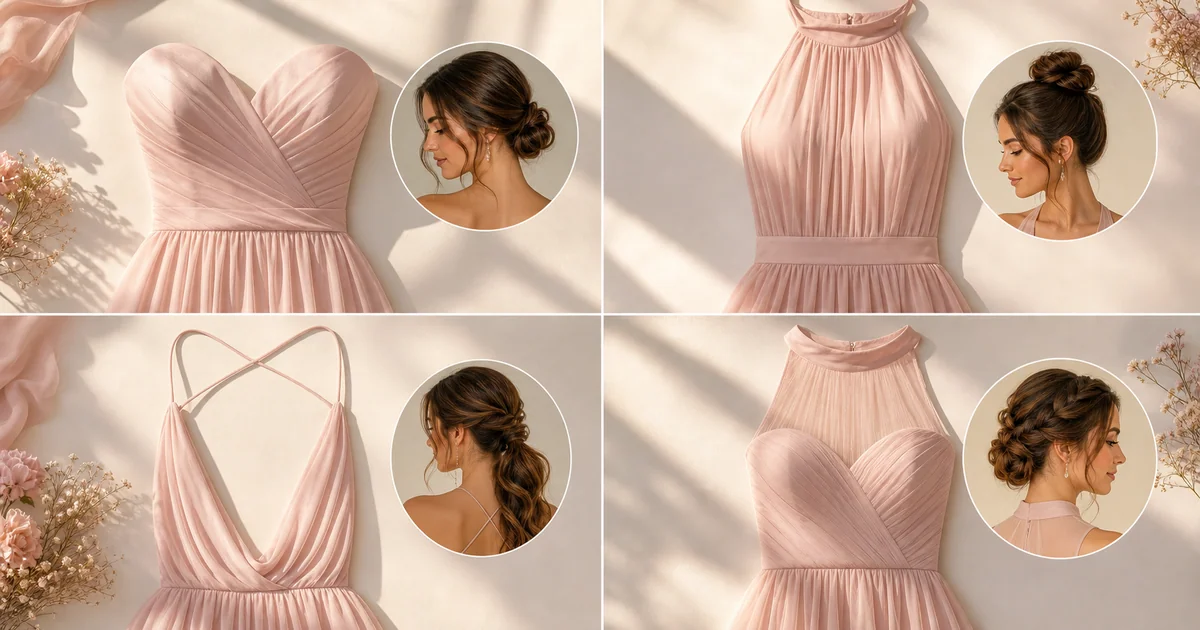
Your hairstyle should support your neckline, not compete with it: strapless and sweetheart bodices suit an updo or swept-back style that keeps shoulders bare, while high-neck and illusion necklines pair better with soft, face-framing hair. Each entry below lists best texture, length, face shape, and effort level, per the face shape guide; extensions or pins can adapt most styles to a different length.
25 Bridesmaid Hairstyles by Dress Neckline
25 Bridesmaid Hairstyles by Dress Neckline
Strapless and Sweetheart Dresses
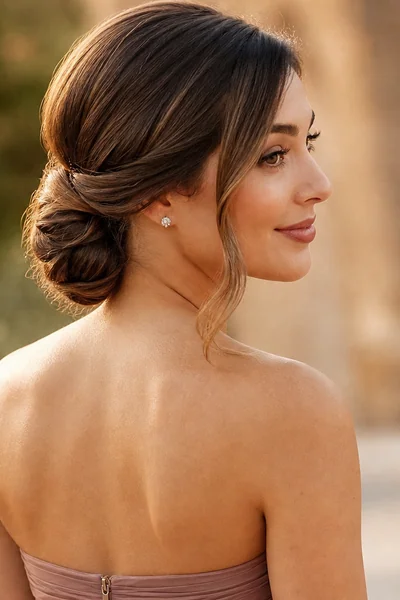
Strapless and sweetheart necklines put your shoulders and collarbone on full display, so the strongest bridesmaid hairstyles here either lift hair fully off the neck or sweep it to one side without hiding that bare skin. A standout pick is the low chignon, a smooth twisted bun at the nape that keeps shoulders completely exposed and flatters round or heart-shaped faces on straight to wavy hair. See all 5 bridesmaid hairstyles for strapless dresses, including a low-maintenance loose-waves option and a vintage finger-waves updo.
Halter and Off-Shoulder Necklines
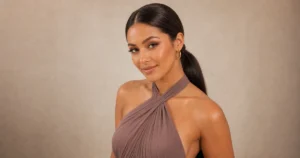
Halter necklines already draw the eye toward the neck and shoulders, so the best styles here sit close to the head or fall to one side rather than adding competing volume. The sleek low ponytail is a strong default, a glassy, smoothed-back look that keeps the neckline the focal point on straight or lightly wavy hair. See all 5 bridesmaid hairstyles for halter and off-shoulder dresses, including side-swept curls and an asymmetrical pinned-waves option built for off-shoulder gowns.
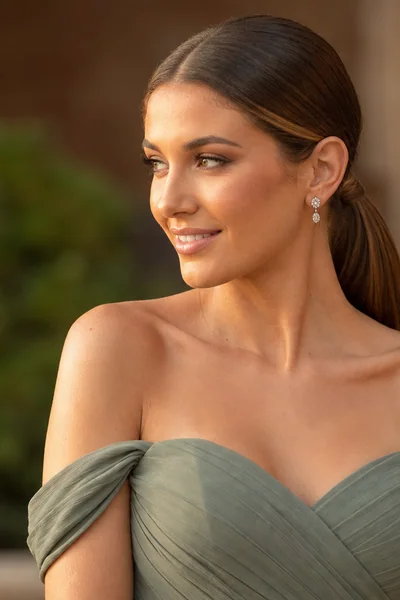
Backless Dresses
A backless dress needs a hairstyle that stays out of the way and keeps the open back visible, especially in photos taken from behind. The low braided bun sits well below where most backless cuts begin, keeping the back fully visible while adding texture on medium to thick hair. See all 5 bridesmaid hairstyles for backless dresses, including a sleek low bun and a fishtail braid updo for dresses with a keyhole detail.
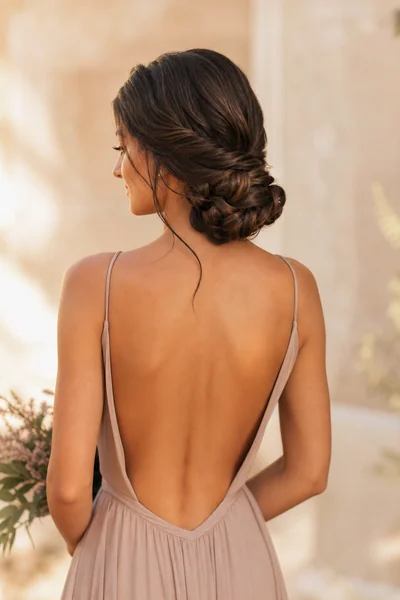
High-Neck and Illusion Necklines
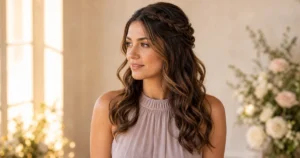
High-neck, long-sleeve, and illusion necklines already add plenty of visual interest up top, so hair with soft movement near the face tends to balance the look better than a severe slicked-back style. Loose curls with face-framing layers add warmth without covering the neckline's own detail, working best on wavy to curly hair. See all 5 bridesmaid hairstyles for high-neck and illusion necklines, including a braided crown and a soft waterfall braid half-up.
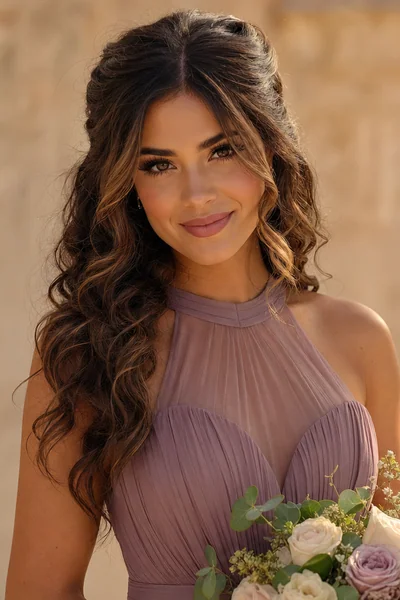
Half-Up and Braided Styles for Any Neckline
If you cannot decide between wearing your hair up or down, or your bridal party spans several different neckline styles, a half-up or braid-forward look is one of the most flexible choices on this entire list. The classic half-up half-down with curls flatters nearly every face shape and works across strapless, sweetheart, and off-shoulder dresses alike. See all 5 half-up and braided bridesmaid hairstyles for any neckline, including a boho braid crown and a Dutch braid into half-up.
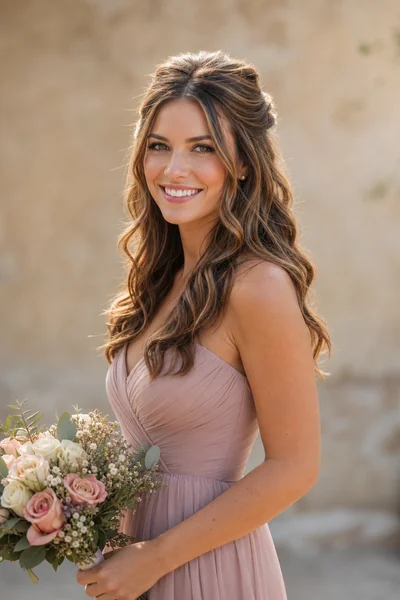
How to Keep Your Bridesmaid Hairstyle Looking Great All Day
How to Keep Your Bridesmaid Hairstyle Looking Great All Day
Ask your stylist for crossed bobby pins and a light-hold root spray plus a finishing spray, since braided and pinned styles outlast loose curls in humidity, per research on hair and humidity. Pack pins, travel hairspray, and hair ties for touch-ups, and see braided updo maintenance tips between ceremony and reception.
Coordinating Hairstyles Across a Bridal Party with Different Hair Lengths and Textures
Coordinating Hairstyles Across a Bridal Party with Different Hair Lengths and Textures
Rather than forcing one identical style on different hair lengths, choose a shared style family, like a low updo, that flexes to each bridesmaid's length and texture: a chignon for long hair, a braided bun for medium, a tucked-under style for a short bob. Share reference photos with every stylist ahead of time.
Frequently Asked Questions
Frequently Asked Questions
How far in advance should I test my bridesmaid hairstyle? Book a trial run at least three to four weeks before the wedding, ideally with the same stylist who will do your hair on the day. This gives you time to see how the style photographs, how long it actually lasts, and whether it needs any tweaks before the real event. It also gives you a chance to bring a backup option if the first choice does not work with your hair the way the photo suggested.
What if my hair is much shorter than the other bridesmaids'? Choose a style from the same style family as the rest of the group rather than trying to force an identical look, since a shorter bob can still read as coordinated with a low bun, a half-up look, or a sleek tuck. Clip-in extensions can also add length and volume temporarily if the group wants a more matching silhouette. Talk to your stylist about which of the styles above adapts most easily to your current length before the trial run.
Can I wear my hair down at a formal wedding? Yes, loose waves or curls can absolutely work at a formal wedding, especially with a strapless, sweetheart, or off-shoulder neckline where hair down does not compete with the dress. For a very high-neck or heavily embellished bodice, adding face-framing layers or a half-up element usually looks more intentional than hair worn completely loose. The key is matching the formality of your curl or wave pattern to the formality of the dress itself.
How do I make an updo last through dancing? Ask your stylist for extra pins placed in an X pattern at stress points like the nape and crown, since these hold significantly more weight than single straight pins. A strong-hold finishing spray applied right before the ceremony, plus a small touch-up kit with a few spare pins for the reception, covers most of what dancing will loosen. Braided or twisted styles also tend to hold up better through movement than smooth, pin-only buns.
What should I tell my stylist to match my dress neckline? Bring a clear photo of your dress neckline along with the exact salon-ask wording from the neckline guide for the style you want, since specific phrasing like "low chignon at the nape" gives a stylist far more to work with than "something elegant." Mention your hair's natural texture and length honestly so your stylist can adjust the technique rather than promising a photo result that does not match your starting point. If you are coordinating with other bridesmaids, also mention the shared style family the group has chosen so your version stays consistent with theirs.
Choosing a bridesmaid hairstyle gets a lot easier once you stop scrolling endless galleries and start matching your dress neckline, hair texture, and effort level on purpose. Find your neckline category above, save your favorite look from the full guide, and bring its salon-ask wording to your trial appointment so your stylist knows exactly what you want from the first try. For more on making a braided style last from the ceremony through the last dance, our full Braided Updos for Weddings and Formal Events wedding updo guide is worth a read next.
Your email address will not be published. Required fields are marked *