

Most fishtail braid tutorials teach you the crossing motion and then leave you alone with a braid that starts sliding apart by lunchtime. Learning how to fishtail braid your own hair is only half the job; the other half, the part almost nobody covers, is making it survive a full workday, a workout, or a night out without turning into a frizzy mess by 3 p.m.
This guide walks through the full self-application technique, step by step, with the mirror and hand-position tricks that make braiding on yourself doable. Then it goes further by diagnosing exactly why fishtail braids come undone based on your specific hair type, so you can fix the real problem instead of dousing everything in hairspray and hoping. By the end, you will know how to fishtail braid your own hair with realistic expectations for how long it lasts and what to do when it loosens.
What Is a Fishtail Braid (vs. a French Braid)
What Is a Fishtail Braid (vs. a French Braid)
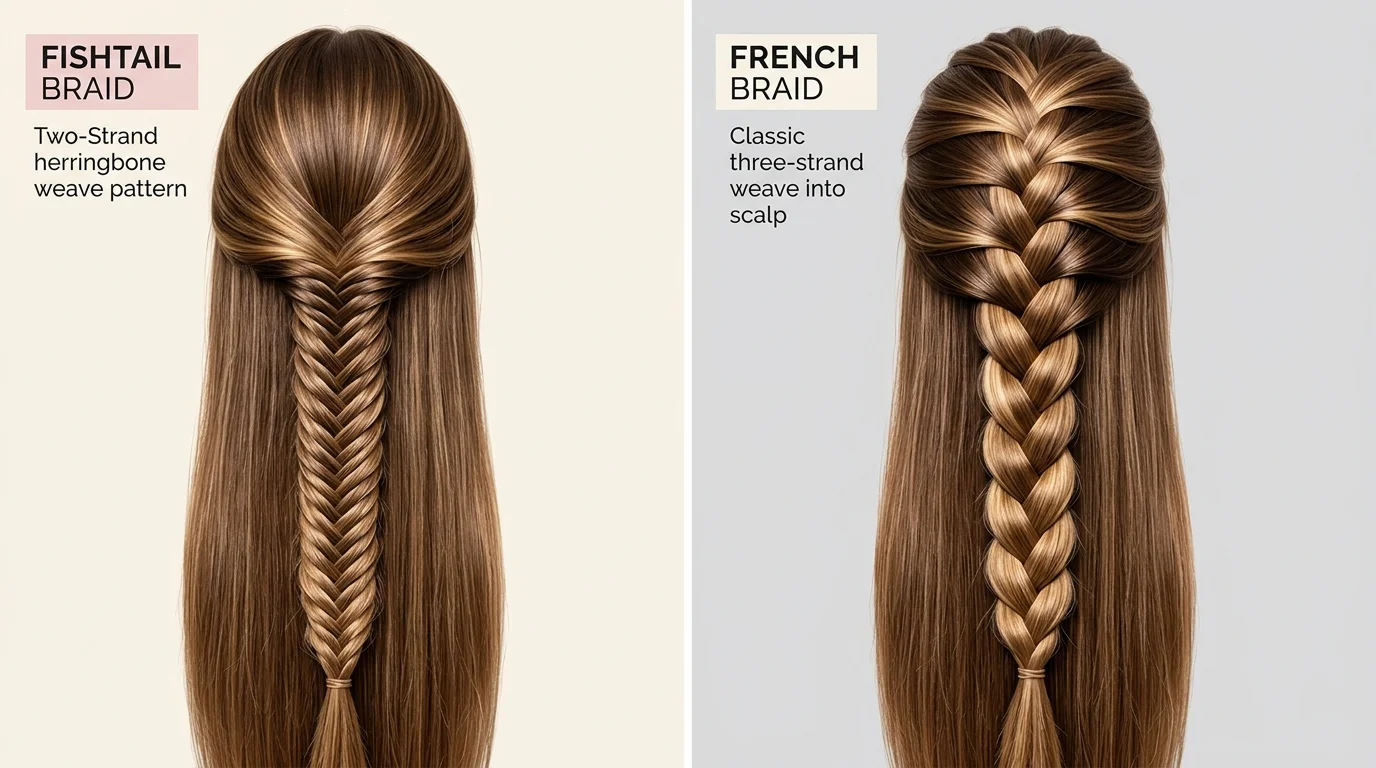
A fishtail braid, sometimes called a herringbone braid, is built from just two sections of hair instead of three. You take a small piece from the outer edge of one section, cross it into the other, then repeat the same motion from the opposite side down the length of your hair. It looks intricate once finished, but the motion itself is simpler than a French braid, which needs three strands and fresh hair added in as you go.
A French braid weaves three strands while pulling in fresh hair from the scalp at each pass, part of why it can feel harder to manage solo. A fishtail braid skips that added-hair step and just alternates small pieces between two sections, making it more forgiving for anyone braiding their own head without a second pair of hands. If you've tried a french braid tutorial and found the three-strand weave tricky to see in a mirror, the fishtail's two-section structure is often the easier place to start.
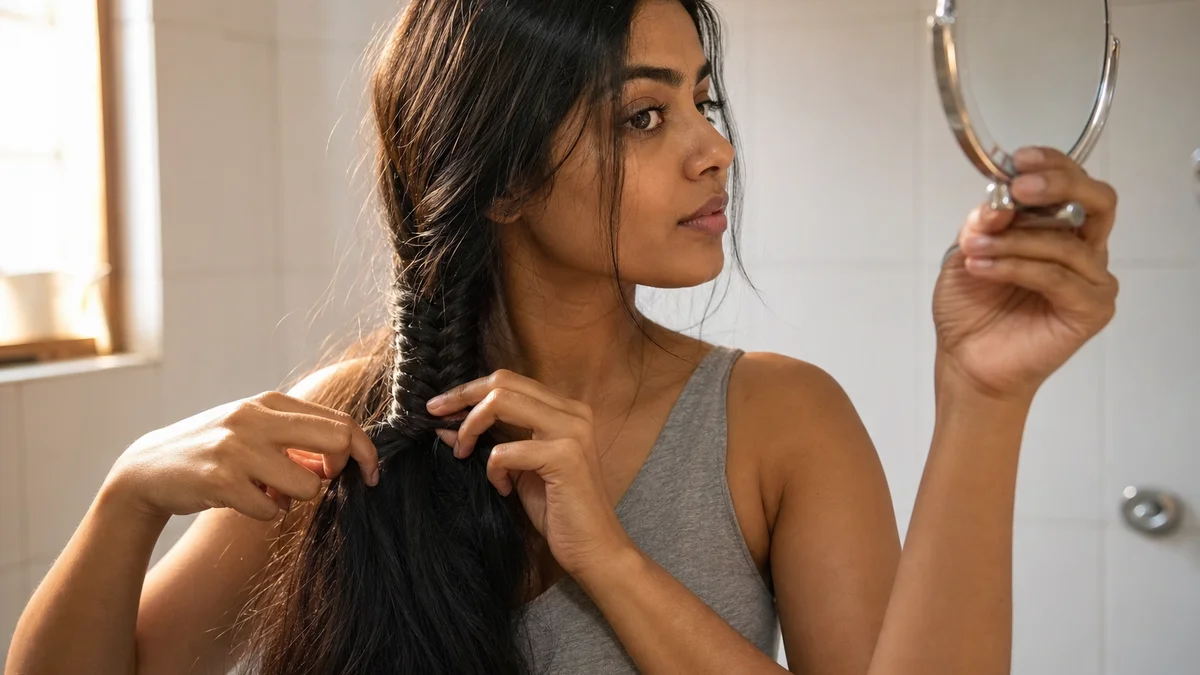
This guide is built specifically for braiding your own hair, not practicing on a friend. Every instruction below assumes you're working in a mirror, reaching behind or over your own shoulder, and checking progress by feel as much as by sight, which is a genuinely different skill than braiding someone else's hair.
How to Fishtail Braid Your Own Hair: Step-by-Step
How to Fishtail Braid Your Own Hair: Step-by-Step
This is the core technique, broken into a sequence you can follow by feel and mirror glances. Read through it once before you start so you know what's coming, then work through it slowly the first few times. Speed comes with repetition, not with rushing your first attempt.
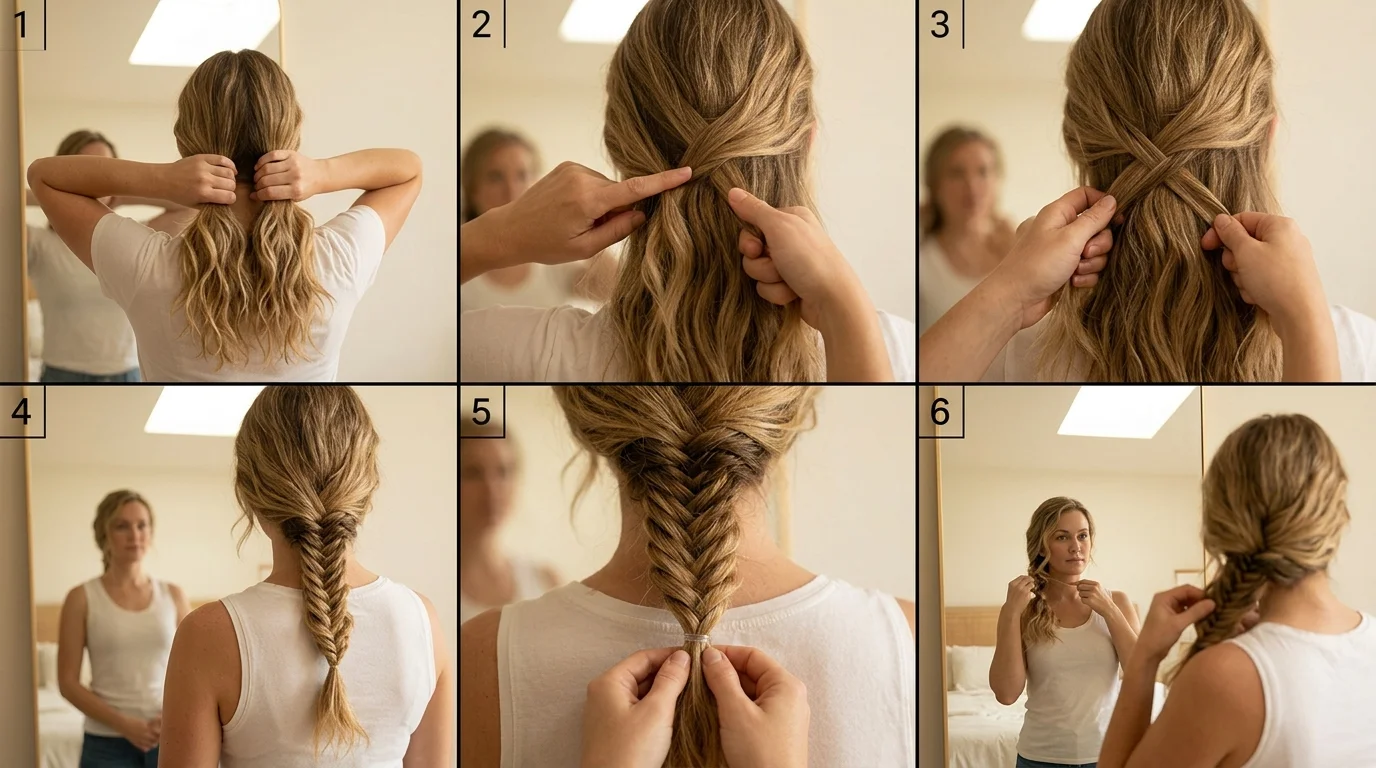
- Gather your hair into a low ponytail at the nape, or leave it loose and split it into two even sections at the crown for a braid that starts higher up. Even sections matter, since uneven ones are a top reason a fishtail braid loosens unevenly later.
- Take a small piece of hair from the outer edge of the right section and cross it over the top into the left section. Keep this piece thin, roughly two fingers wide, since smaller pieces create the tighter, more textured weave that holds longer.
- Repeat on the left side: take a small piece from the outer edge of the left section and cross it into the right section. This alternating rhythm, right then left, is the entire technique, and it becomes automatic once your hands learn it.
- Continue alternating sides down the full length of your hair, keeping tension as consistent as you can. This is where self-braiding differs most from having someone braid you: since you can't see straight down the back of your head, work slightly lower and looser at the crown than a stylist would.
- When you reach the end, secure the tail with a soft hair tie without metal clasps that can snag delicate ends. Gently tug the outer loops from top to bottom to loosen and widen the braid for a fuller finish if you want more volume.
Smaller, more even sections at every step are the biggest factor in how long your fishtail braid holds, more than any product sprayed on afterward. A tight, even weave has less room to shift than a loose one built from big, mismatched chunks of hair.
Mirror and Hand-Position Basics
Braiding your own hair well starts with seeing your own hair well. Set up your mirror situation before you touch a single strand. A large wall mirror paired with a smaller handheld mirror angled behind your head gives you a clear view of the crown and nape, the two areas hardest to judge on yourself. Prop the handheld mirror on a shelf, or hold it in your non-dominant hand for the first pass, until you get a feel for the angle that works in your bathroom.
Two hand positions tend to work best for solo fishtail braiding. Braiding low at the nape lets you bring your hands down in front of your body where you can watch what your fingers are doing, making it the easiest starting position for beginners. Braiding over one shoulder, pulling the section forward near your collarbone, suits longer hair or anyone who finds reaching behind their head uncomfortable.
Whichever position you choose, the trick to keeping tension even with only two hands is anchoring one section against your body while the other hand works. Pin the section you're not actively crossing under a finger or against your collarbone so it can't loosen while your other hand pulls a piece from the opposite side. That habit alone prevents the slow, section-by-section loosening that ruins a braid halfway through, long before you reach the hair tie at the end.
Prep Your Hair for a Braid That Holds All Day
Prep Your Hair for a Braid That Holds All Day
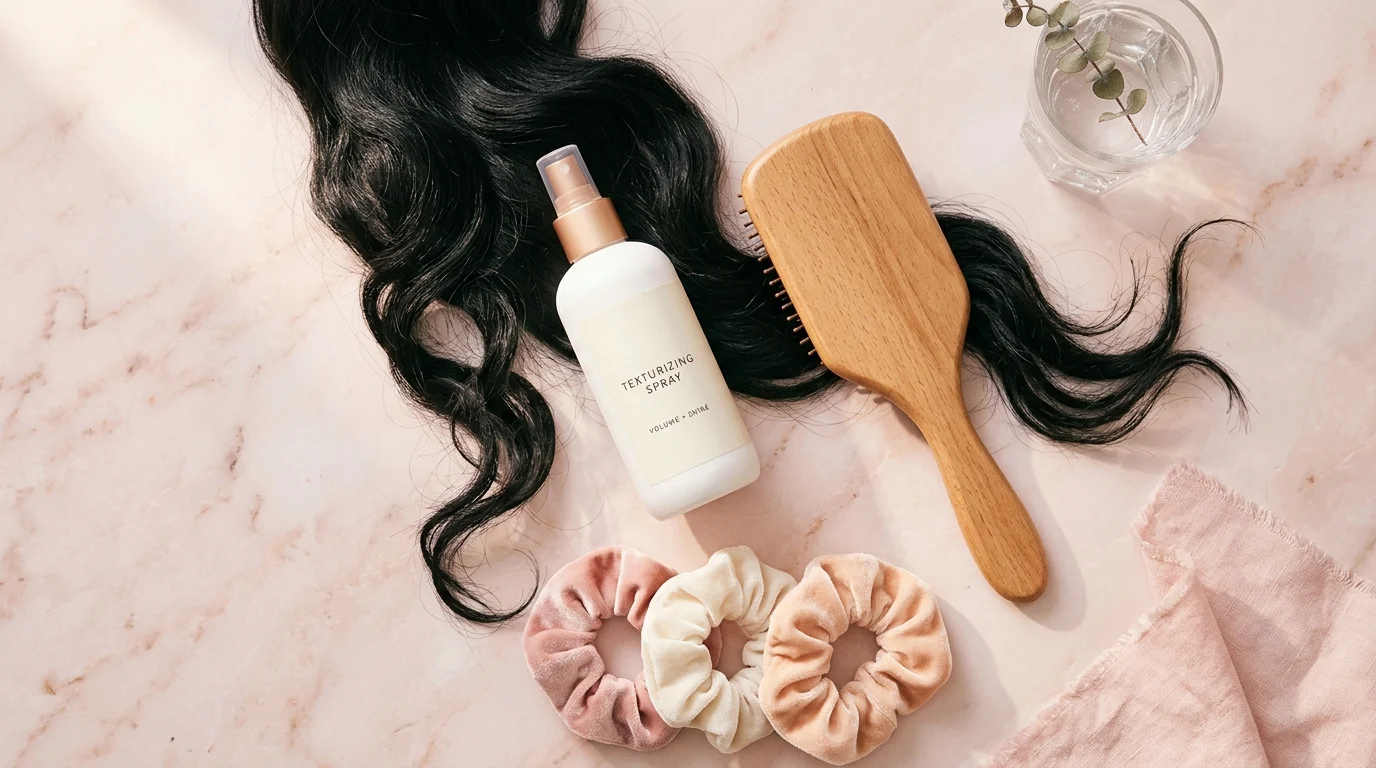
What you do before you start braiding matters just as much as the technique itself. Freshly washed, silky-smooth hair is harder to braid tightly because there's nothing for the small sections to grip onto, which is why second-day or day-old hair almost always holds better. If your hair is freshly washed and you don't want to wait, a dry texturizing spray or sea-salt spray gives clean hair the same grip that natural oils build up over time.
Apply texturizing spray at the roots and mid-lengths, not just the ends, since the sections you cross near the crown are under the most tension and most likely to slip first. A light misting worked through with your fingers, rather than a heavy saturating spray, keeps the texture believable without making hair feel stiff. Texture over product quantity is what separates a braid that grips itself into place from one that slides loose.
Detangling before you braid is the other prep step worth doing properly rather than rushing. Brush out every knot from root to end so you're not fighting a snag mid-braid, since stopping to work one out almost always loosens the section you were holding and throws off tension for the rest of the braid.
Why Fishtail Braids Fall Apart (and How to Fix It by Hair Type)
Why Fishtail Braids Fall Apart (and How to Fix It by Hair Type)
This is the section most tutorials skip, and it answers the real question behind how to fishtail braid your own hair so it holds. Every hair type unravels for a different reason, so the fix has to match the cause instead of defaulting to a generic spritz of hairspray. Find the type below that matches your hair and apply that fix before your next braid.
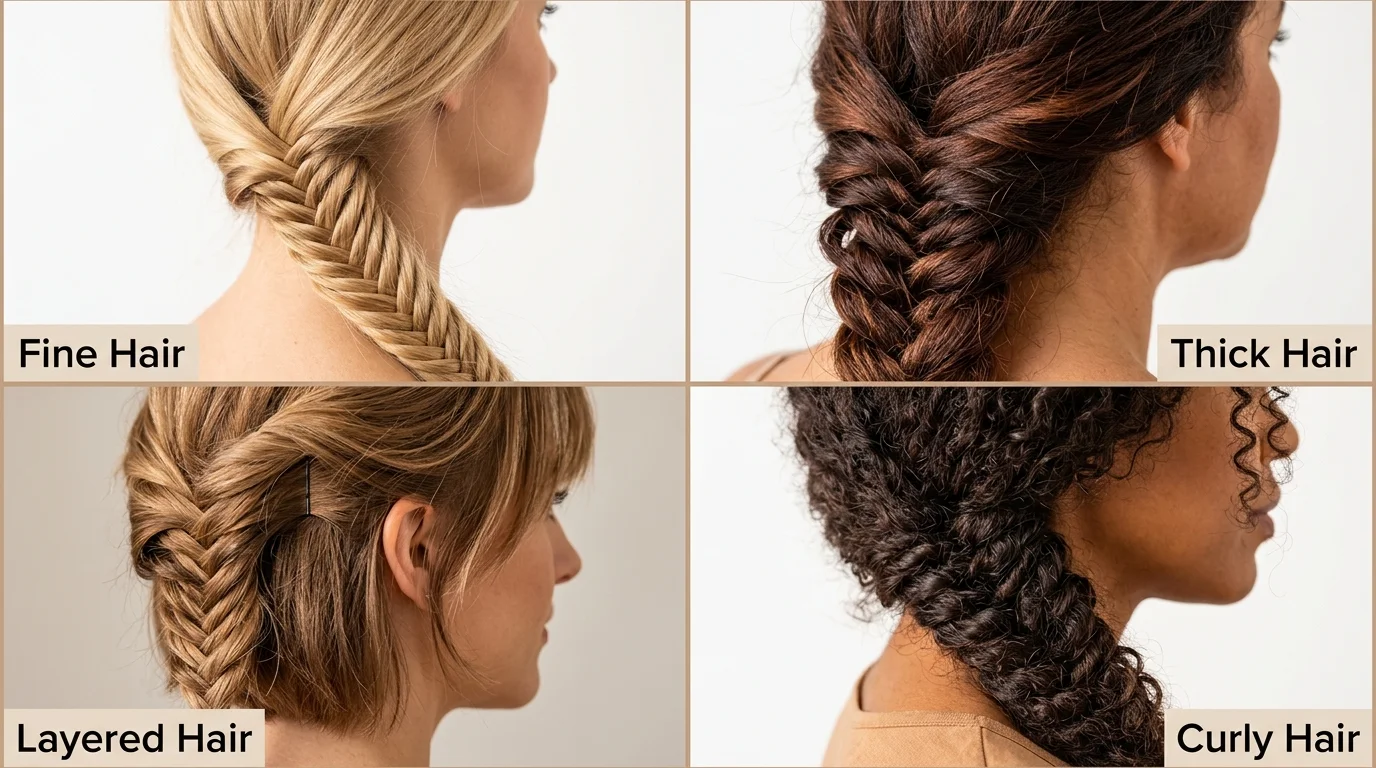
- Fine or slippery hair: Strands slide against each other because there's nothing for the braid to grip onto. That's the most common reason fine hair braids loosen within an hour. Fix this with a texturizing spray applied before you start, paired with noticeably smaller sections than you might think you need. A tighter weave gives slippery strands fewer chances to slide free.
- Thick or heavy hair: A fishtail braid on thick hair often loosens simply from its own weight pulling the crown downward over the course of a day. Start the braid slightly tighter than feels natural right at the crown, and consider adding a second small hair tie or a bobby pin partway down the length to reinforce the section that carries the most weight.
- Short layers and face-framing pieces: Shorter strands around the hairline and crown tend to pop out of the braid within the first hour, no matter how carefully you cross the longer sections. Fix this by tucking problem pieces into the braid with a small bobby pin as you work past them, or setting them with a touch of gel before you start so they lie flat instead of springing loose.
- Curly or coily texture: Curls resist a flat, smooth cross and can make the braid look bulkier while also loosening unevenly in some spots faster than others. A light styling cream worked through damp or dry curls before braiding stretches the texture just enough to create smoother, more even sections without erasing your natural curl pattern.
Freshly washed hair deserves its own mention too, since clean, product-free hair is at its slipperiest right after a wash. That's exactly when the texturizing spray from the prep section above earns its keep.
How Long a Fishtail Braid Actually Lasts (Realistic Expectations)
How Long a Fishtail Braid Actually Lasts (Realistic Expectations)
Knowing how to fishtail braid your own hair is only useful if you also know how long it will realistically last. A fishtail braid doesn't hold the same way through every activity, and pretending otherwise sets you up for disappointment by mid-afternoon. For a typical desk or office day with minimal movement, a well-sectioned braid usually holds cleanly from morning until evening with barely any touch-up needed, assuming you followed the prep and hair-type fixes above instead of skipping straight to braiding.
A workout, humid weather, or a windy day outdoors is a different story, and expecting the same all-day hold there is where most people feel let down. Sweat and moisture loosen the crown section first, so plan on some flyaways by the end of a gym session or a humid afternoon outside. Re-pinch the top sections with your fingers and smooth on a touch of texturizing spray or gel over any loose baby hairs; it takes under a minute and refreshes the whole look.
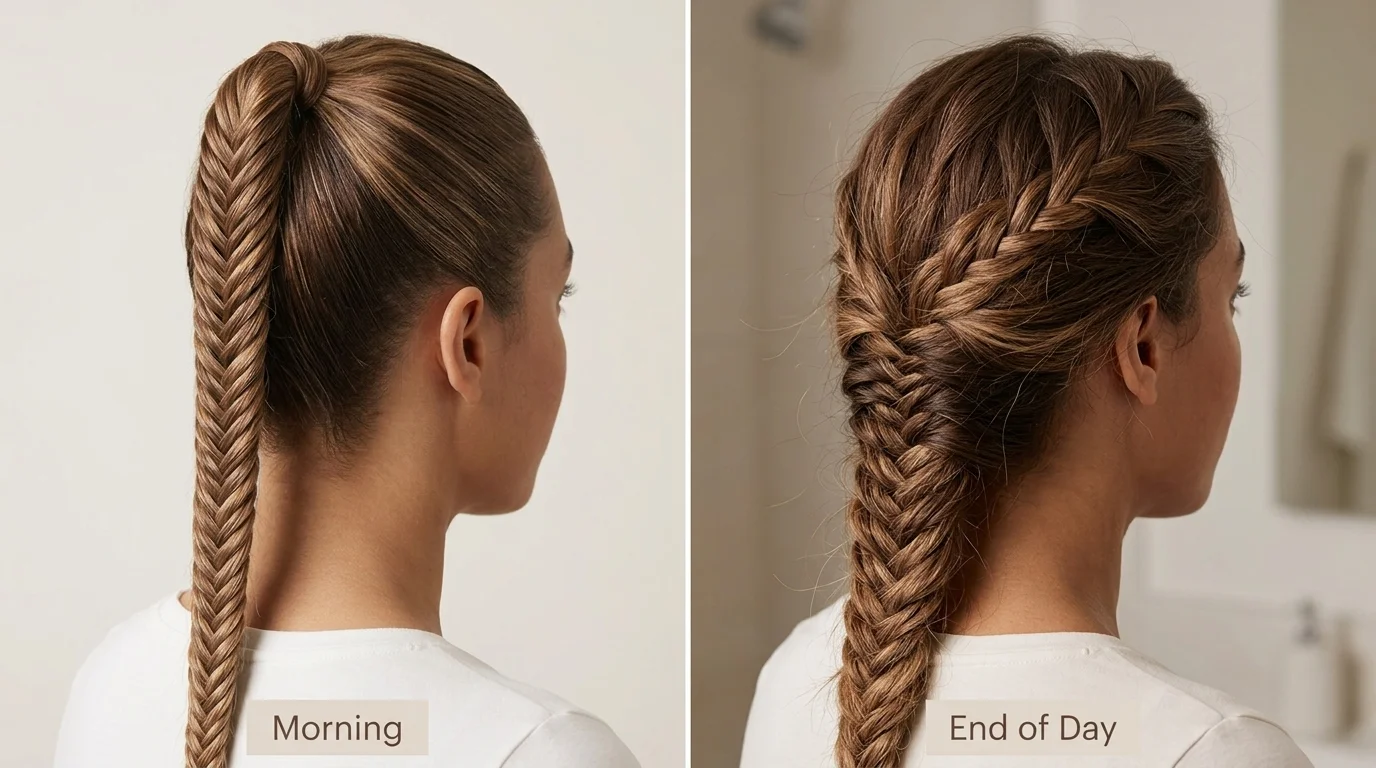
Overnight wear is worth planning for separately if you want your braid to survive into a second day. Wrap it loosely in a silk or satin scarf, or gently pineapple it on top of your head before bed, to protect it from the friction of a cotton pillowcase that would otherwise fray the ends and loosen the crown. In the morning, a light mist of texturizing spray and a gentle re-pinch of the top sections usually refreshes a slept-in braid instead of forcing you to redo it from scratch.
Fishtail Braid Variations and Styling Ideas by Occasion
Fishtail Braid Variations and Styling Ideas by Occasion
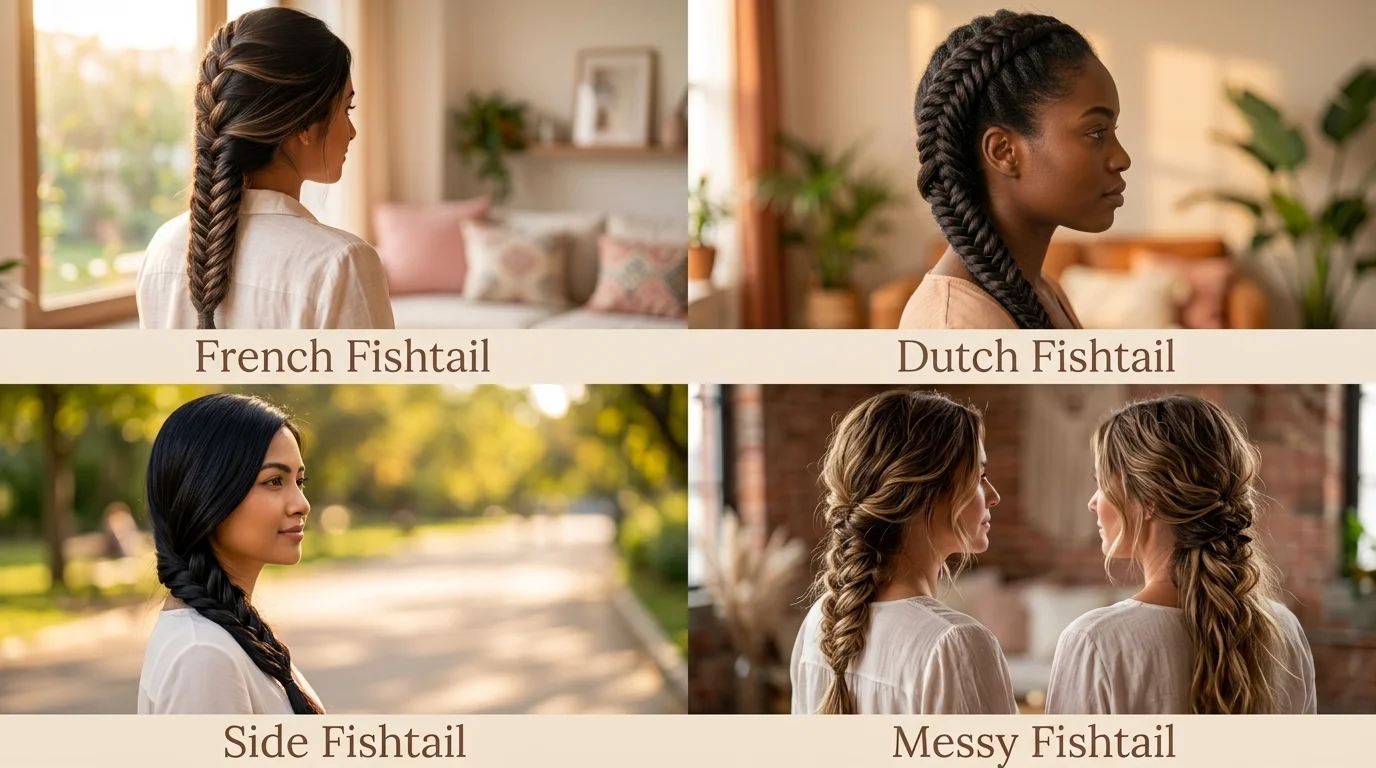
Once the basic fishtail braid feels comfortable, a few simple variations let you match the style to the occasion without learning an entirely new technique. A French fishtail starts with the pull-through motion of a French braid at the crown, adding in hair from the sides as you go, then finishes as a standard fishtail down the rest of the length. It creates a fuller, more polished look near the roots.
A Dutch fishtail braid uses the same alternating crosses but tucks each piece under rather than over. That pushes the weave forward and gives it a slightly raised, more dimensional look that photographs well.
A side fishtail braid, pulled over one shoulder and left a little loose, reads as more casual and relaxed, making it a natural pick for weekend errands. A loose, slightly messy fishtail, where you gently tug each loop wider after securing the end, suits beach days and casual summer outings and tends to look intentional rather than undone.
Fishtail braids are forgiving across most face shapes and lengths. A fishtail crown or half-up style pulls face-framing pieces back and adds definition, which suits rounder or fuller face shapes wanting more structure up top; a half up half down roundup has more ideas in that direction. Short hair from chin-length to collarbone can still join in with a mini fishtail accent woven into a half-up style instead of a full braid down the back.
For more braid inspiration beyond the fishtail, a braided hairstyles roundup covers other protective and everyday styles worth trying next.
Frequently Asked Questions
Frequently Asked Questions
Why does my fishtail braid loosen at the crown first? The crown carries the most tension and movement throughout the day, so it's usually first to loosen regardless of hair type. Start your sections slightly tighter right at the crown, and re-pinch that area midday if needed.
Why do my sections keep slipping on layered hair? Layers create strands of different lengths within the same section, so shorter pieces often slip free before the longer ones do. Tuck short face-framing layers in with a small bobby pin as you braid past them, as covered in the hair-type section above.
How tight should a fishtail braid be, and how do I know if it is too tight? It should feel snug and secure without pulling at your scalp or causing headache-level tension. Dermatologists warn that constant pulling tension on the scalp, known as traction alopecia, can cause lasting damage if a style is worn too tight too often. If your scalp feels sore or tender hours later, loosen your grip next time.
My arms get tired halfway through. How do I make braiding my own hair easier? Brace your elbows against your body or rest them briefly on a counter in front of a mirror to reduce the strain. Braiding low at the nape, rather than high at the crown, also shortens the reach and makes the process less tiring for beginners.
Can I fix a loose section without redoing the whole braid? Yes. Gently unravel the braid back to just above the loose section, re-cross that portion with smaller, tighter pieces, and continue down the rest of the length exactly as before.
Fishtail braids reward a little patience. Now that you know how to fishtail braid your own hair from start to finish, the hold problem mostly comes down to matching the fix to your hair type rather than spraying on more product. Bookmark this for your next low-key hair day, and try the Dutch fishtail next time you want extra lift and dimension.


Your email address will not be published. Required fields are marked *