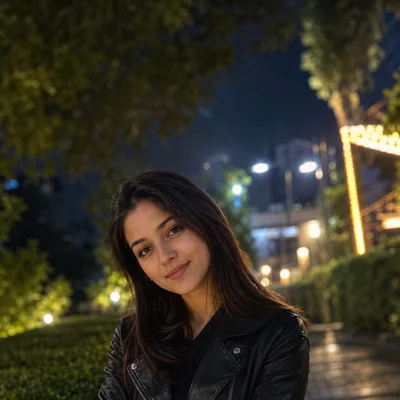
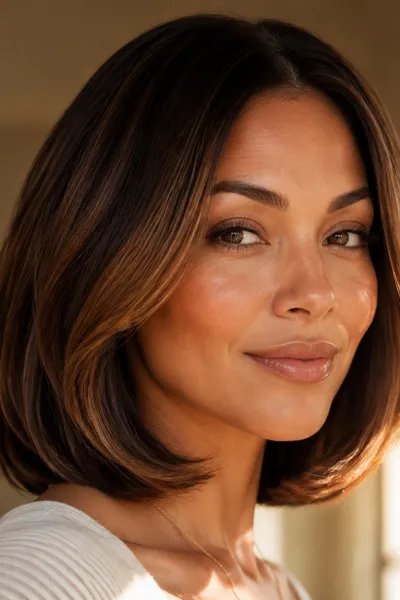
A lob (long bob) sits between chin and collarbone, and it might be the most flexible haircut you can ask for this year. Whether your hair is pin straight, loosely wavy, or full of curl, there is a version of this cut built around your exact texture and face shape. Below you will find 22 lob haircut ideas, and every single one comes with a real "Best For" callout so you know exactly who it flatters and why, not just a pretty photo to scroll past.
What Is a Lob Haircut?
What Is a Lob Haircut?
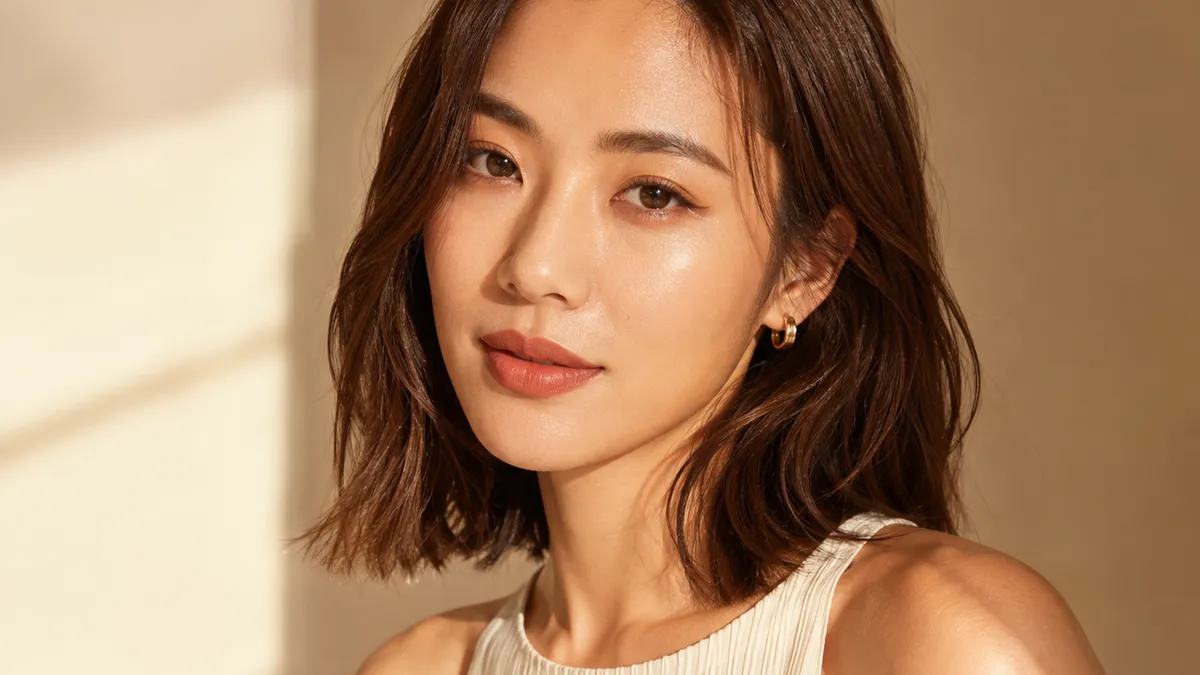
A lob is a long bob that typically falls anywhere from the chin to the collarbone, landing in that in-between zone that is longer than a traditional bob but shorter than shoulder-length hair. It keeps the shape and personality of a bob (movement near the face, a defined line at the ends) while giving you enough length to still tie it back in a low ponytail or add loose waves on a lazy morning. That extra few inches is exactly why so many women use a lob as their transition cut when they are not ready to commit to something shorter.
The lob vs bob debate mostly comes down to length and versatility. A classic bob usually stops above or right at the jawline, which puts more emphasis on your cheekbones and neckline, while a lob extends past the jaw toward the collarbone, softening that same emphasis and giving you more styling options day to day. If you are still not sure which length or shape works best on you, our face shape guide breaks down exactly how to read your own face shape before your next salon visit.
22 Lob Haircut Ideas to Try This Year
22 Lob Haircut Ideas to Try This Year
Every entry below pairs a specific face shape with a specific hair texture, along with the actual reason that combination works. That is intentional. Most lob roundups either skip this step entirely or claim a style "works for everyone," which is not useful advice when you are trying to describe a cut to your stylist with any confidence.
1. Classic Blunt Lob
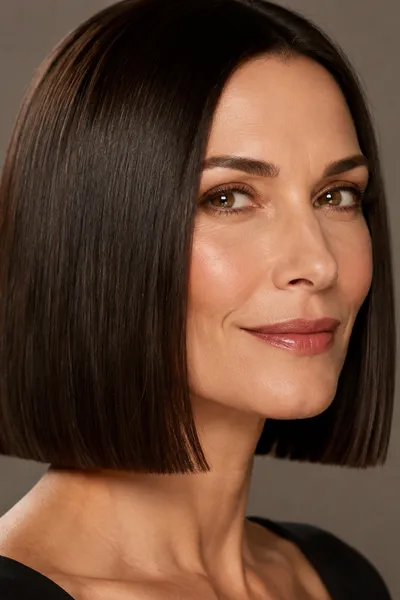
This is the lob in its purest form: one clean, straight line cut at collarbone length with no layering to soften the ends. The blunt edge creates the illusion of thickness because all the hair falls at the same weight line, which reads as fuller and more polished from every angle. Best for: oval and heart-shaped faces with straight or lightly wavy hair, since the blunt, weighted line sits at the collarbone and gives these face shapes a clean, structured anchor point without narrowing the face further. Ask your stylist for a one-length cut with minimal to no layers and a precision finish so the line stays crisp between trims.
2. Textured Lob with Layers
A textured lob uses light internal layering and a razor or point-cutting technique to remove bulk without shortening the overall length. It keeps the collarbone-grazing shape of a classic lob but trades the heavy, blocky ends for something softer and more lived-in. Best for: round faces with thick hair, because the layering thins out density at the ends while the remaining shape still elongates rather than widens the face. Tell your stylist you want "point-cut ends" specifically, since that phrase gets you texture without the choppiness of a full shag.
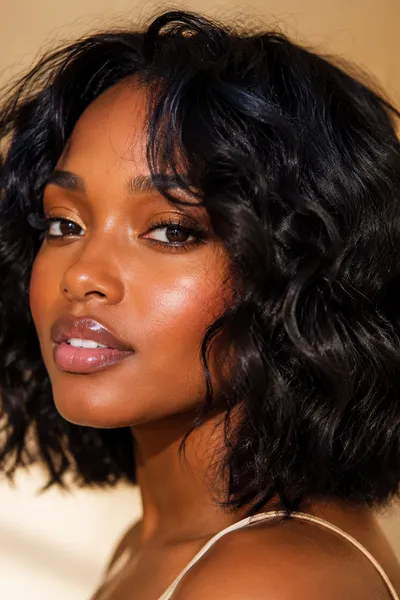
3. Wavy Beach Lob
This version leans fully into natural-looking movement, with loose S-waves running through the whole length rather than a straight or blown-out finish. It has an easy, undone quality that still looks intentional, which is why it shows up so often in warm-weather lob roundups. Best for: square faces with fine to medium wavy hair, since the soft waves break up strong jaw angles and add gentle curve where a square jawline is otherwise the most defined feature. At the salon, ask for long layers cut wet so the waves fall naturally instead of needing constant curling-iron touch-ups.
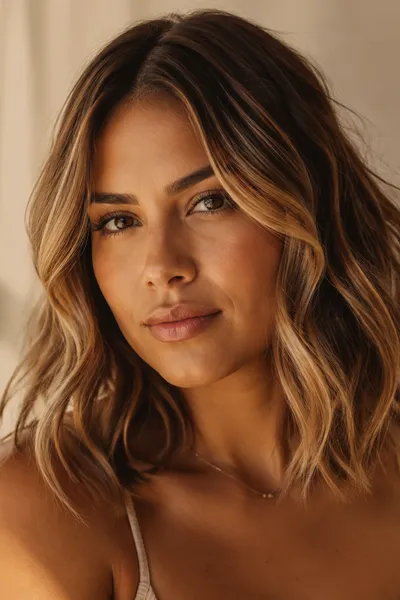
4. Lob with Curtain Bangs
Curtain bangs part down the center and sweep outward on either side, framing the face without ever fully covering the forehead. Paired with a lob, they add a soft, face-hugging shape at the front while the rest of the cut stays clean and simple. Best for: long or oblong faces with straight or wavy hair, because the horizontal sweep of the bangs visually shortens the length of the face and adds width right at eye level. Request "curtain bangs blended into face-framing layers" so the fringe grows out gracefully instead of needing a trim every three weeks.
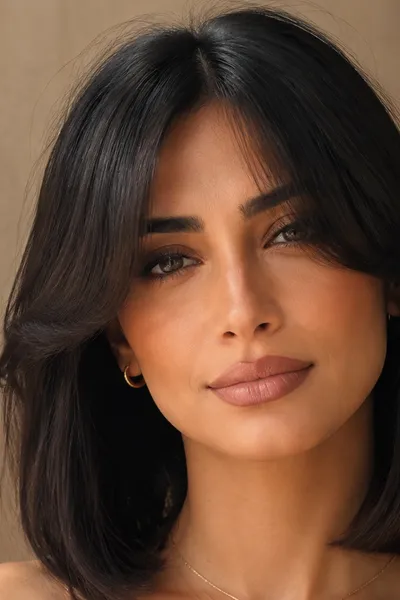
5. Asymmetrical Lob
An asymmetrical lob is cut noticeably shorter on one side than the other, often with one side sitting near the chin and the other extending closer to the collarbone. That diagonal line creates a deliberate, editorial break from a symmetrical shape. Best for: round faces with straight hair, since the diagonal line disrupts the natural roundness of the face and creates a slimming angle that a symmetrical cut simply cannot. Bring a photo to your appointment and specify which side you want shorter, since this cut only works if the asymmetry is precise rather than approximate.
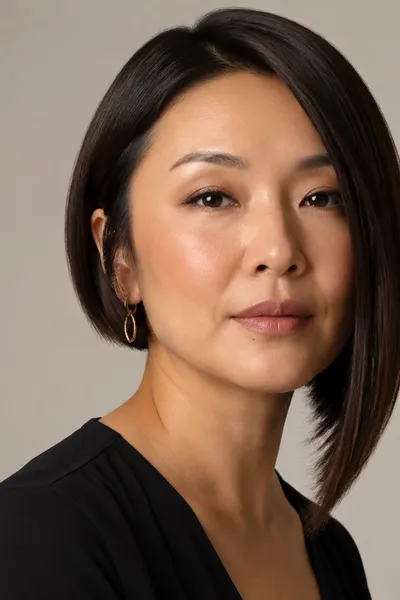
6. Sleek Straight Lob
This is a lob styled with a flat iron or blowout brush until it is glass-smooth from root to end, with zero texture or wave interrupting the line. It has a polished, almost mirror-like finish that photographs beautifully and reads as effortlessly put-together. Best for: diamond-shaped faces with naturally straight hair, because the sleek, uninterrupted line draws attention to strong cheekbones without adding competing texture around the narrowest part of the face. Ask for a light gloss treatment at your appointment, since shine is what actually sells this look, not just straightness.
7. Lob with Face-Framing Layers
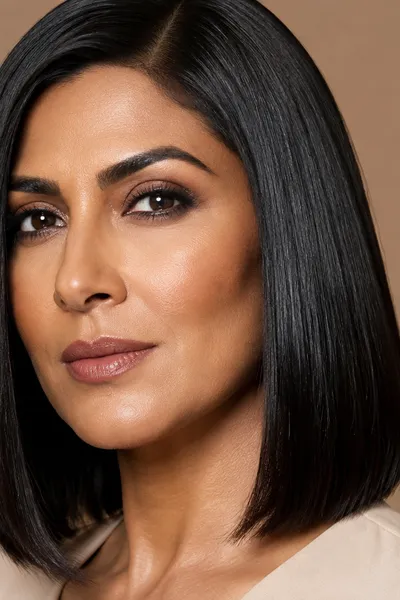
Face-framing layers are shorter pieces cut around the front of the face, usually starting near the cheekbone or chin, while the rest of the lob stays at one length in the back. They draw the eye toward the center of the face and add movement right where you want it most. Best for: heart-shaped faces with wavy hair, since the shorter framing pieces soften a wider forehead and pull visual focus down toward the jaw and chin, balancing the narrower point at the bottom of the face. Ask your stylist to keep the layers starting at cheekbone height rather than higher, so they frame rather than shorten the whole style.
8. Choppy Lob
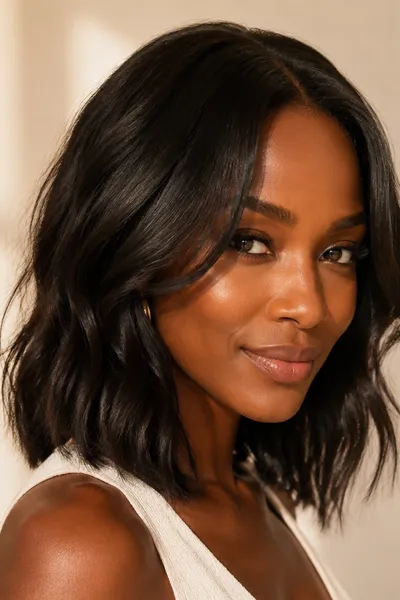
A choppy lob uses heavier, more aggressive texturizing than a standard textured cut, with visible chunks and disconnected pieces throughout the ends. It has an edgier, more undone finish that works well with a slightly messier styling routine. Best for: square faces with thick, coarse hair, because the deep texturizing removes real bulk from dense hair while the choppy ends break up the hard, straight lines of a square jaw. Request "deep point cutting" by name, since a lighter texturizing technique will not create enough disconnection to soften thick, coarse strands.
9. Inverted Lob
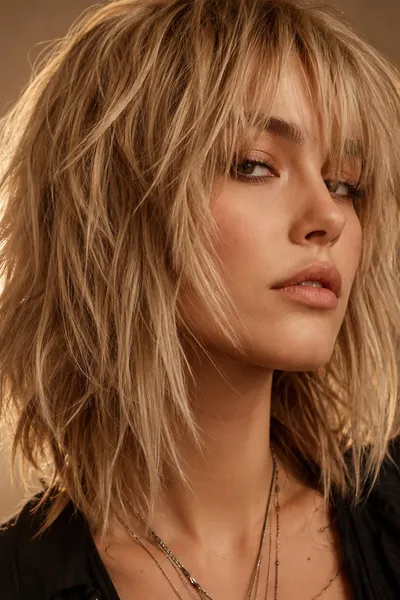
An inverted lob is stacked shorter in the back and left longer in the front, creating a distinct angle when viewed from the side, and that stacking adds volume and lift at the crown and nape while the front pieces taper down toward the collarbone. Best for: round faces with straight or fine hair, because the added height at the back elongates the head shape and the longer front pieces create a slimming vertical line down each side of the face. Our guide to haircuts for round faces covers more cuts built around this same elongating principle if this shape catches your eye. Ask for "graduated stacking in the back" so your stylist knows exactly how much lift to build in.
10. The Low Bob (2026 Trend Pick)
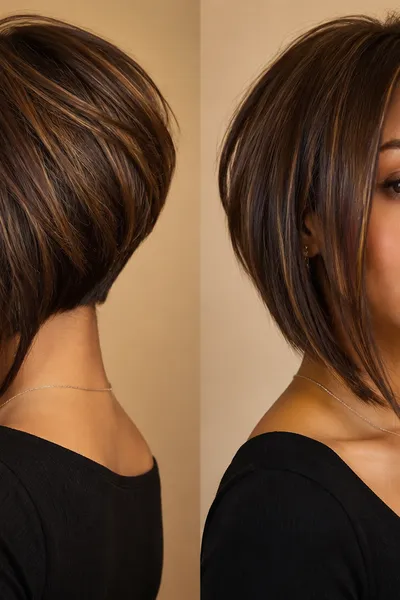
The low bob is the freshest name in this whole roundup, a lob grown out slightly past its usual collarbone stopping point toward the top of the chest, keeping the bob's identity as a defined, intentional line while pushing the length further than most lobs go. That extra length is exactly why stylists are calling it a distinct 2026 trend rather than just a longer lob. Best for: oval and rectangle faces with straight to medium-thick hair, since the added length elongates rather than shortens, which flatters faces that already read as long or narrow. According to Who What Wear, celebrity hairstylist Chris McMillan (whose longtime clients include Jennifer Aniston) says the low bob is "really taking over" for 2026, describing it as soft, wearable, and meant to move rather than a sharp, rigid cut. If you want to try it without fully committing, ask your stylist to simply skip your next trim by a few weeks and see how the length settles before deciding on the final line.
11. Lob with Balayage
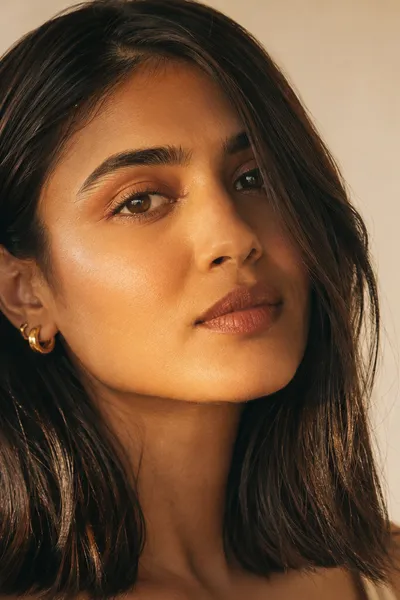
Balayage is a hand-painted highlighting technique that places lighter pieces mainly around the face and at the ends, leaving the roots darker for a soft, sun-kissed gradient. On a lob, that placement naturally draws the eye toward the front and center of the face rather than out to the sides. Best for: round faces with medium to thick wavy hair, because keeping the lightest pieces closer to the center of the face creates a narrowing effect instead of adding visual width at the temples. Ask your colorist for "face-framing balayage" specifically, so the brightest pieces land exactly where they will do the most flattering work.
12. Ombre Lob
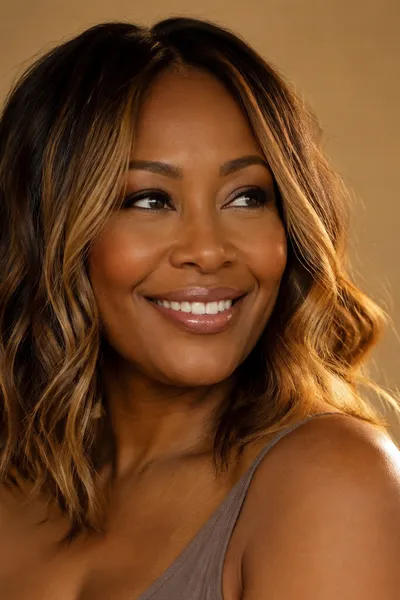
Ombre is a more graduated, horizontal color transition than balayage, moving from a darker root through the mid-lengths and finishing noticeably lighter at the very ends. On a lob, that horizontal break in color happens right around the collarbone, which is a strong focal point. Best for: long or oblong faces with straight, thick hair, because the horizontal color line at the ends creates a visual stopping point that shortens the perceived length of the face and hair together. Request a "soft ombre" rather than a high-contrast version if you want the transition to look grown-out and low-maintenance between color appointments.
13. Side-Swept Lob
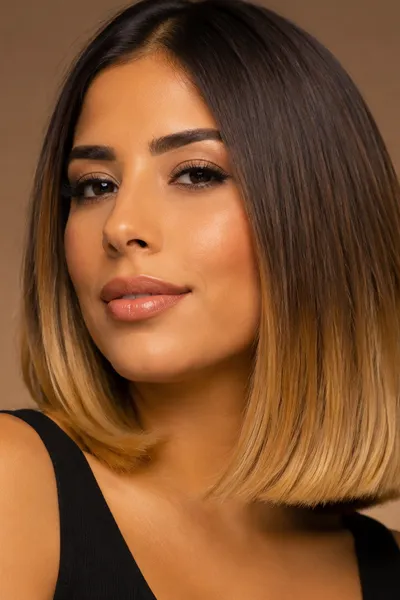
A side-swept lob keeps the overall length even but styles the front section to sweep across the forehead to one side, similar to a soft side bang without a hard cut line. It softens the front hairline while keeping the rest of the cut simple and low-maintenance. Best for: square faces with fine, straight hair, because the diagonal sweep across the forehead breaks up a strong, straight hairline and draws the eye on an angle instead of straight across the widest part of the face. Use a round brush and blow-dryer pointed downward along the part to train the sweep, and a light-hold spray will keep fine hair from falling flat by midday.
14. Lob with Money Pieces
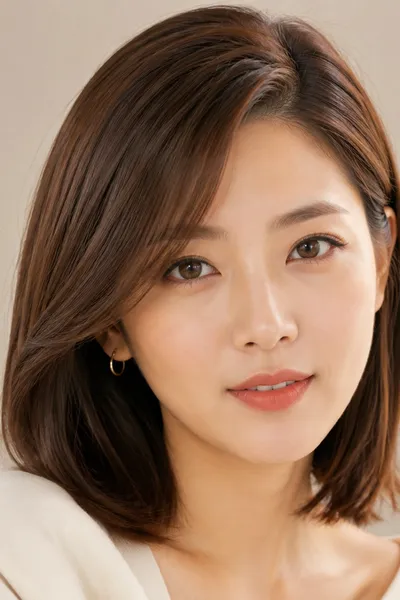
Money pieces are two bold, bright highlight strands placed right at the front of the face, framing it on either side while the rest of the hair stays closer to its natural or base color. They are a lower-commitment way to get a face-framing brightness effect without a full head of highlights. Best for: heart-shaped faces with straight or wavy hair, since the bright pieces sit right at the narrower chin area and pull visual attention downward, helping balance a wider forehead. Ask your colorist to place the pieces starting at the cheekbone rather than higher up, which keeps the effect looking natural rather than stripe-like.
15. Shaggy Lob
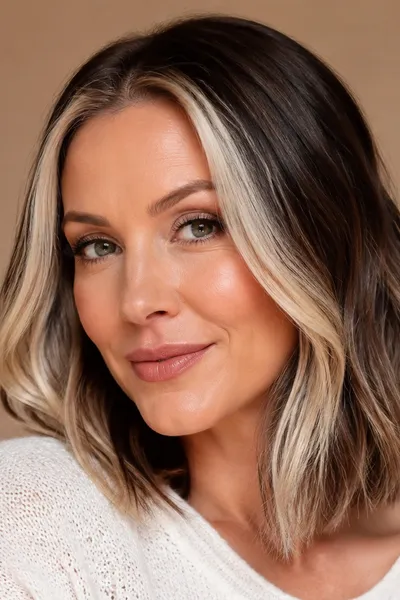
A shaggy lob combines heavy layering throughout the crown and ends with a slightly disheveled, rock-and-roll finish, often paired with wispy bangs. It removes significant weight from the top of the head while keeping the length at collarbone, giving the whole style a lot of built-in movement. Best for: oval faces with thick, coarse hair, since the layering lightens dense hair from root to end while an oval face shape has the balanced proportions to handle that much added texture without looking overly busy. Ask specifically for "shag layers cut with a razor," which creates the soft, feathered edges this style depends on.
16. Stacked Lob
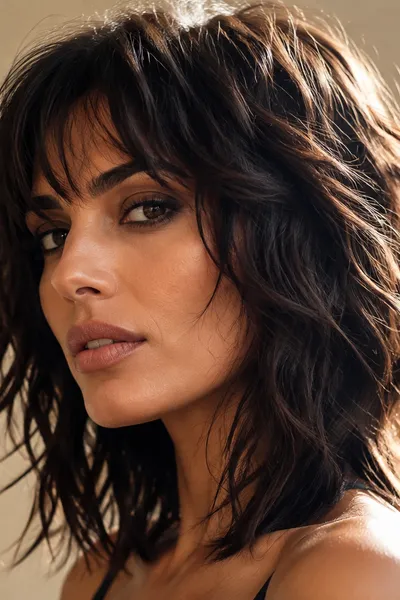
A stacked lob concentrates layers and volume at the back of the head, similar to an inverted lob but with even more deliberate stacking and often a slightly shorter overall length. It builds noticeable height and fullness right at the crown and nape rather than throughout the whole head. Best for: oval faces with fine hair, because oval's balanced proportions can carry the extra volume without looking top-heavy, while the concentrated stacking gives fine strands the fullness and body they otherwise lack. Ask your stylist for "stacking at the occipital bone," which is the technical term for exactly where this volume should be built.
17. Collarbone-Length Lob
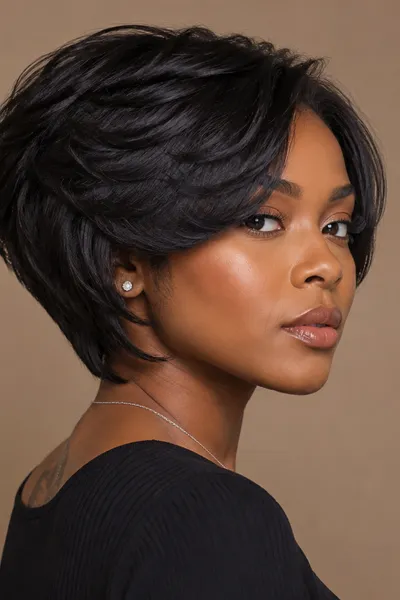
This entry is the lob at its most literal, cut precisely to graze the collarbone with minimal layering and a clean, simple line. It sits at the exact midpoint between a bob and shoulder-length hair, which is part of why it remains one of the most requested lengths at salons. Best for: round faces with medium to thick hair, since this specific length falls just low enough to elongate the face slightly, unlike a shorter chin-length bob that would emphasize the roundest part of the cheeks. Bring a ruler-level clear reference photo to your consultation, since even half an inch of extra length changes how this cut reads on a round face.
18. Lob for Curly Hair
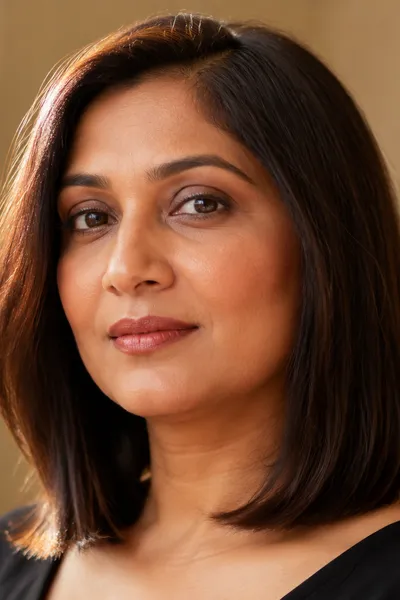
A lob built for curly hair is cut dry, curl by curl, so the stylist can see exactly how much each curl will shrink up once it dries and springs into its natural shape, and layers are typically added throughout to prevent the ends from forming a heavy, triangular shape as they get shorter toward the top of the head. Best for: oval and heart-shaped faces with naturally curly hair, because layering combined with curl shrinkage naturally reduces bulk at the sides, which keeps curls from adding unwanted width. For more inspiration on layering ratios that work well with curl patterns, our layered curly cuts roundup goes deeper into shaping curls specifically. Always confirm with your stylist that they cut curly hair dry rather than wet, since a wet cut on curls almost always ends up shorter than intended once it dries.
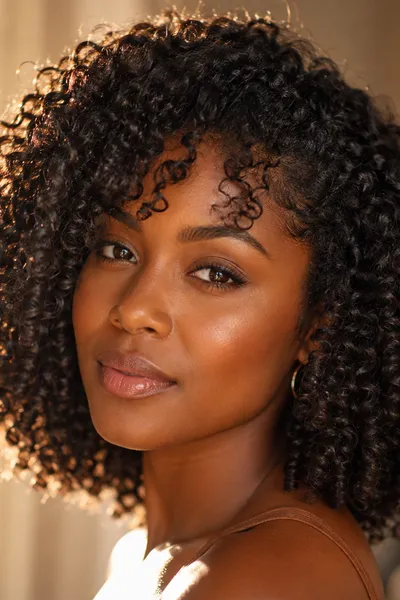
19. Lob for Fine Hair
A lob designed for fine hair keeps layering minimal to almost none, since fine strands lose density fast once you start removing weight from them. Instead, the cut relies on a single blunt line at the ends to trick the eye into reading the hair as thicker and denser than it actually is. Best for: round or oval faces with fine, straight hair, because the blunt weight line adds the appearance of fullness exactly at the point where fine hair typically looks its thinnest, right at the ends. Ask for a "one-length blunt cut with minimal layers" and consider a volumizing mousse at the root before blow-drying to extend the effect through the day.
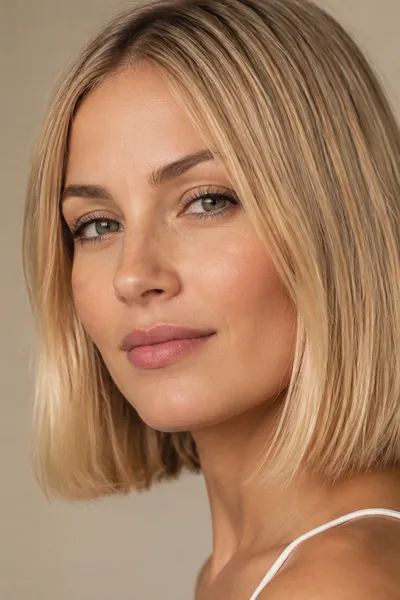
20. A-Line Lob
An A-line lob is cut shorter in the back and gradually longer toward the front, creating a diagonal line similar to the letter A when viewed from the side. That diagonal draws the eye downward and along an angle rather than straight across. Best for: square faces with straight or wavy hair, since the diagonal graduation softens the ninety-degree angles of a square jaw and pulls focus toward the chin instead of the corners of the jawline. Ask your stylist for a "graduated A-line" with at least two inches of difference between the shortest back point and the longest front point for the angle to actually read.
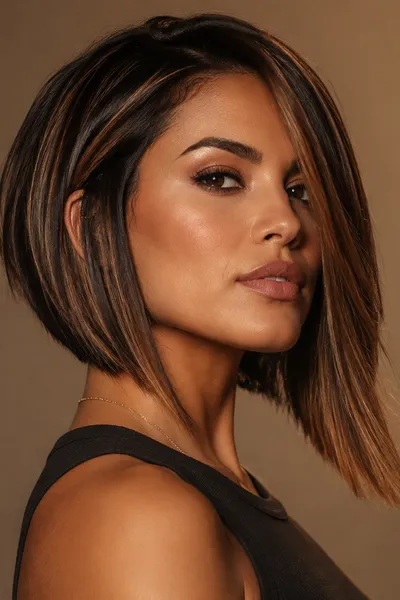
21. Lob with Blunt Bangs
Blunt bangs are cut in one straight, heavy line across the forehead, typically sitting just above the eyebrows, and they pair with a lob to create two bold, defined lines in one style. Unlike curtain bangs, they fully cover the forehead rather than sweeping to the sides. Best for: long or oblong faces with straight or wavy thick hair, because a full, heavy fringe visually shortens the length of the face more effectively than any other bang style on this list. Plan for a touch-up trim roughly every three to four weeks, since blunt bangs grow out noticeably faster than the rest of a lob.
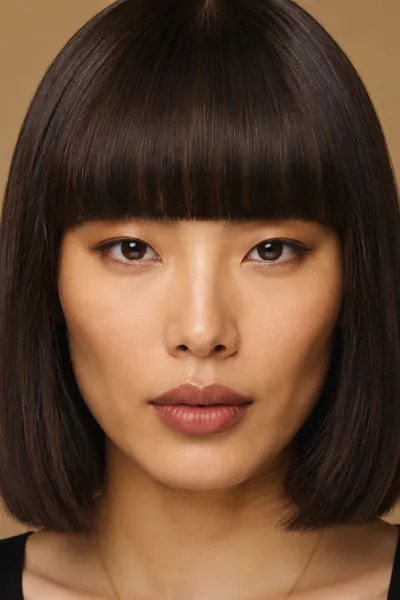
22. Rounded Lob
A rounded lob keeps the ends soft and slightly curved rather than blunt or choppy, often achieved by rounding off the corners at the front of the cut with scissors after the main line is set. It has a gentler, more classic finish than a sharp blunt lob. Best for: heart-shaped faces with straight or wavy hair, since the soft, rounded ends counterbalance a pointed chin instead of adding another sharp angle to an already angular lower face. Ask your stylist to "round the corners" specifically after your main cut is finished, since this is a finishing detail rather than a separate cutting technique.
How to Style a Lob at Home
How to Style a Lob at Home
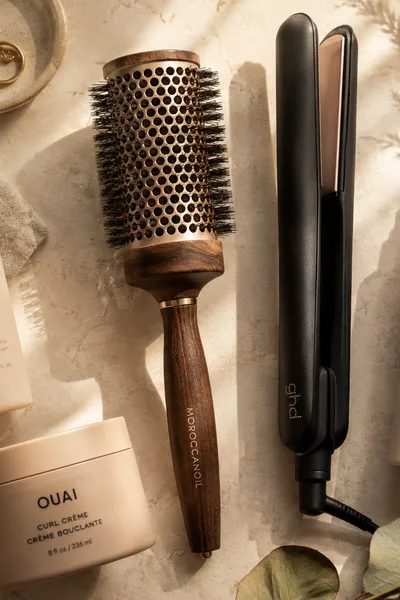
If you want a heat-styled finish, start with a heat protectant on damp hair, then use a medium round brush and blow-dryer to add smooth volume at the roots, finishing the ends with a one-inch flat iron for either a sleek line or soft bends. Rotate the flat iron away from your face on the last pass through each section to create movement without a full curl. For a low-effort air-dry route, apply a curl cream or texturizing spray to damp hair, scrunch gently from ends to roots, and let it dry naturally or with a diffuser on low heat. Either method works well on a lob because the shorter length holds a shape faster than long hair does, so you spend less time styling either way.
FAQ: Lob Haircut Ideas
FAQ: Lob Haircut Ideas
What Is a Lob Haircut?
A lob, short for "long bob," is a haircut that falls somewhere between the chin and the collarbone, longer than a classic bob but shorter than shoulder-length hair. It keeps the shape and personality of a bob while offering more length to work with for updos, ponytails, and layered styling. That extra versatility is why it's remained one of the most requested haircuts across face shapes and hair textures for the past few years.
What's the Difference Between a Lob and a Bob?
The main difference is length: a bob typically stops at or just above the jawline, while a lob extends down to the collarbone or slightly beyond. That extra length changes how the cut frames the neck and shoulders, generally softening the look compared to the sharper, more graphic line of a classic bob. Both cuts can be styled with layers, bangs, or texture, so the length difference is really the deciding factor when choosing between them.
How Do You Style a Lob Haircut at Home?
You can go sleek with a round brush and flat iron for smooth volume and defined ends, or keep it low-maintenance with a curl cream and air-drying for natural texture. Both routes are covered in more detail in the styling section above, and either one takes less time than styling longer hair because a lob's shorter length holds its shape more easily. Whichever method you pick, a lightweight product is usually enough since the shorter length rarely needs heavy holding power.
Does a Lob Work for Round or Heart-Shaped Faces?
Yes, but the specific version of the lob matters more than the length alone. An inverted or collarbone-length lob tends to work best for round faces because the added height in back and slight extra length help elongate the face, while a stacked or face-framing lob works well for heart-shaped faces because it balances a wider forehead against a narrower chin. Bringing a photo of the specific variation to your appointment helps your stylist adjust the exact placement for your face.
How Often Do You Need to Trim a Lob Haircut?
Plan on a trim every six to eight weeks if you're wearing a blunt lob, since that clean one-length edge starts to look uneven the fastest once split ends creep in. Layered or textured versions are more forgiving and can usually stretch to eight to twelve weeks between visits without looking grown-out. If your lob includes bangs, though, those need their own separate schedule of roughly every three to four weeks regardless of how the rest of the cut is holding up. Sticking closer to the shorter end of whichever range applies to your version keeps the shape looking as sharp as it did on day one.
With 22 lob haircut ideas covered here, the easiest next step is picking the entry whose "Best For" line actually matches your own face shape and hair texture rather than the one with the prettiest photo. Save this post or screenshot your top pick before your next salon visit, and bring that specific "Best For" reasoning with you so your stylist knows exactly what you are going for and why it will work on you. A lob is forgiving enough to adjust in small ways at your next trim, so do not be afraid to start with one version and fine-tune it once you see how it grows out on your own hair.

Your email address will not be published. Required fields are marked *